






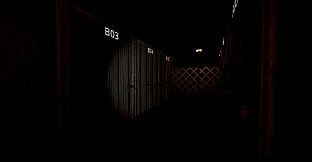
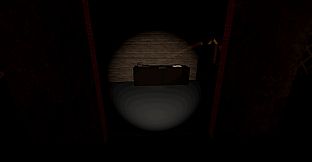
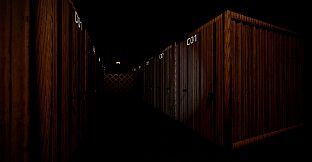
UNIT 44 is an indie simulation adventure horror game set on PC where players take the role of a night security guard at a container storage yard. The core premise revolves around routine tasks that gradually reveal unsettling inconsistencies in records and physical reality. The experience emphasizes observation and documentation over direct confrontation or action sequences.
Gameplay
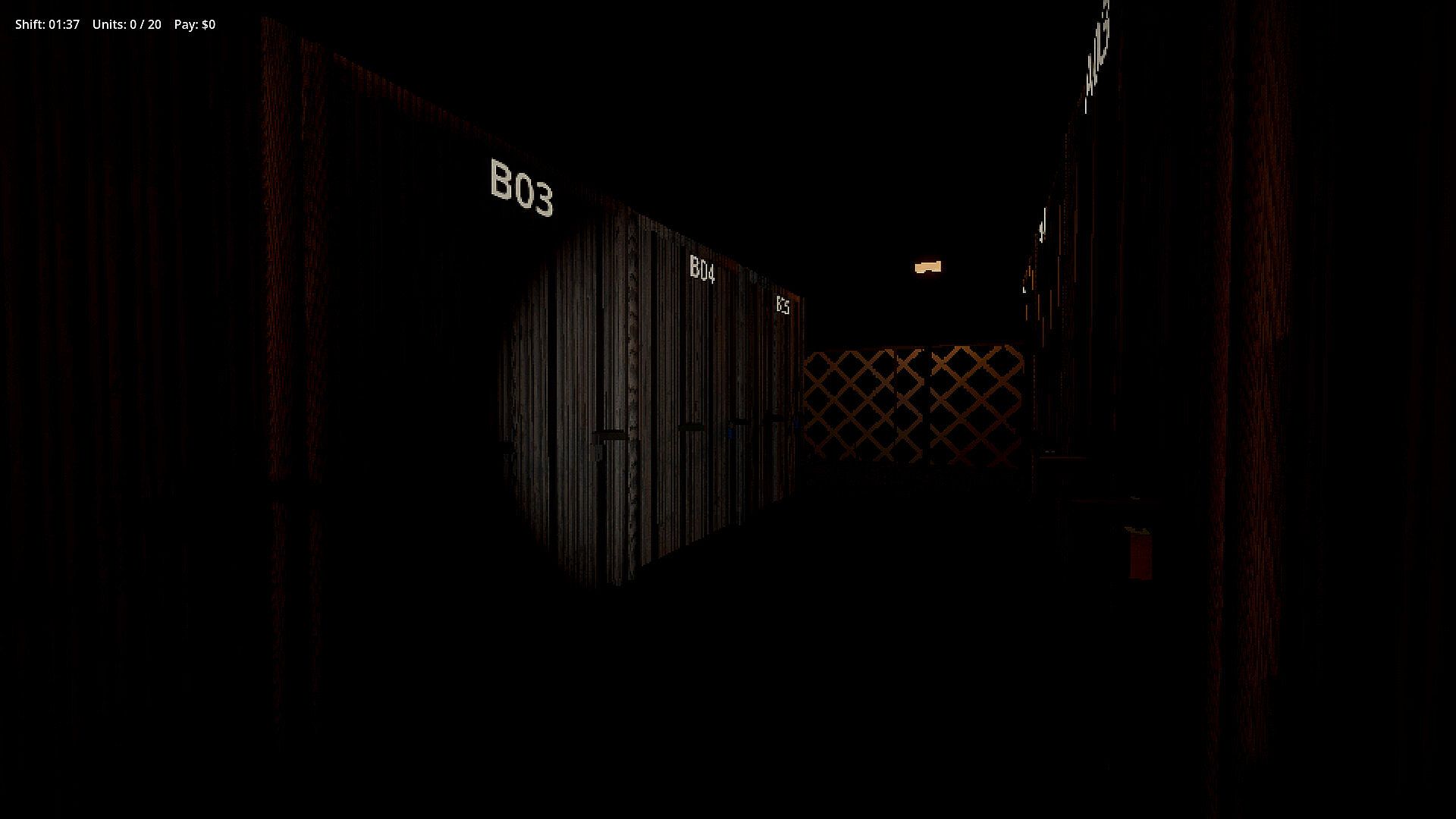
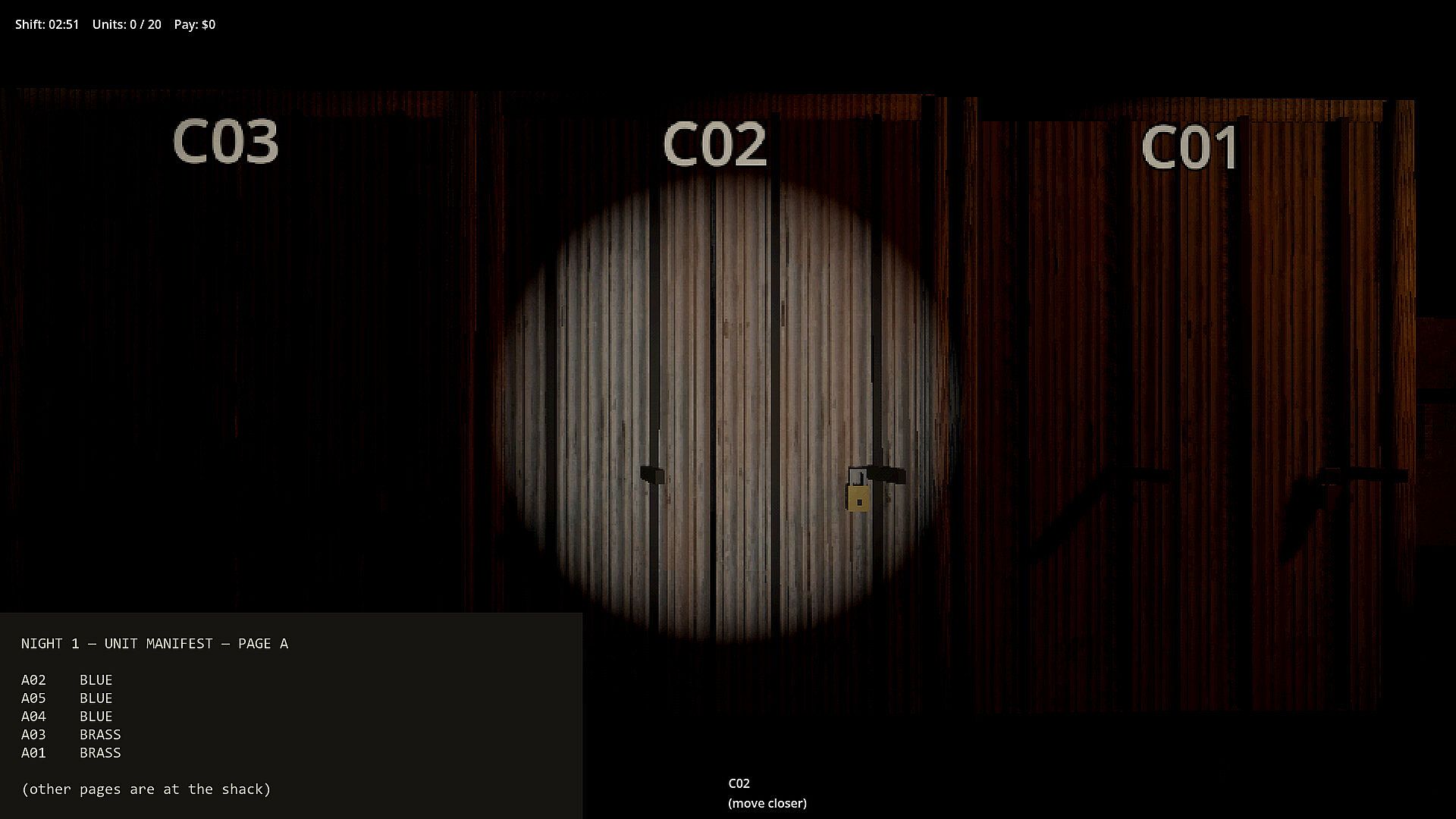
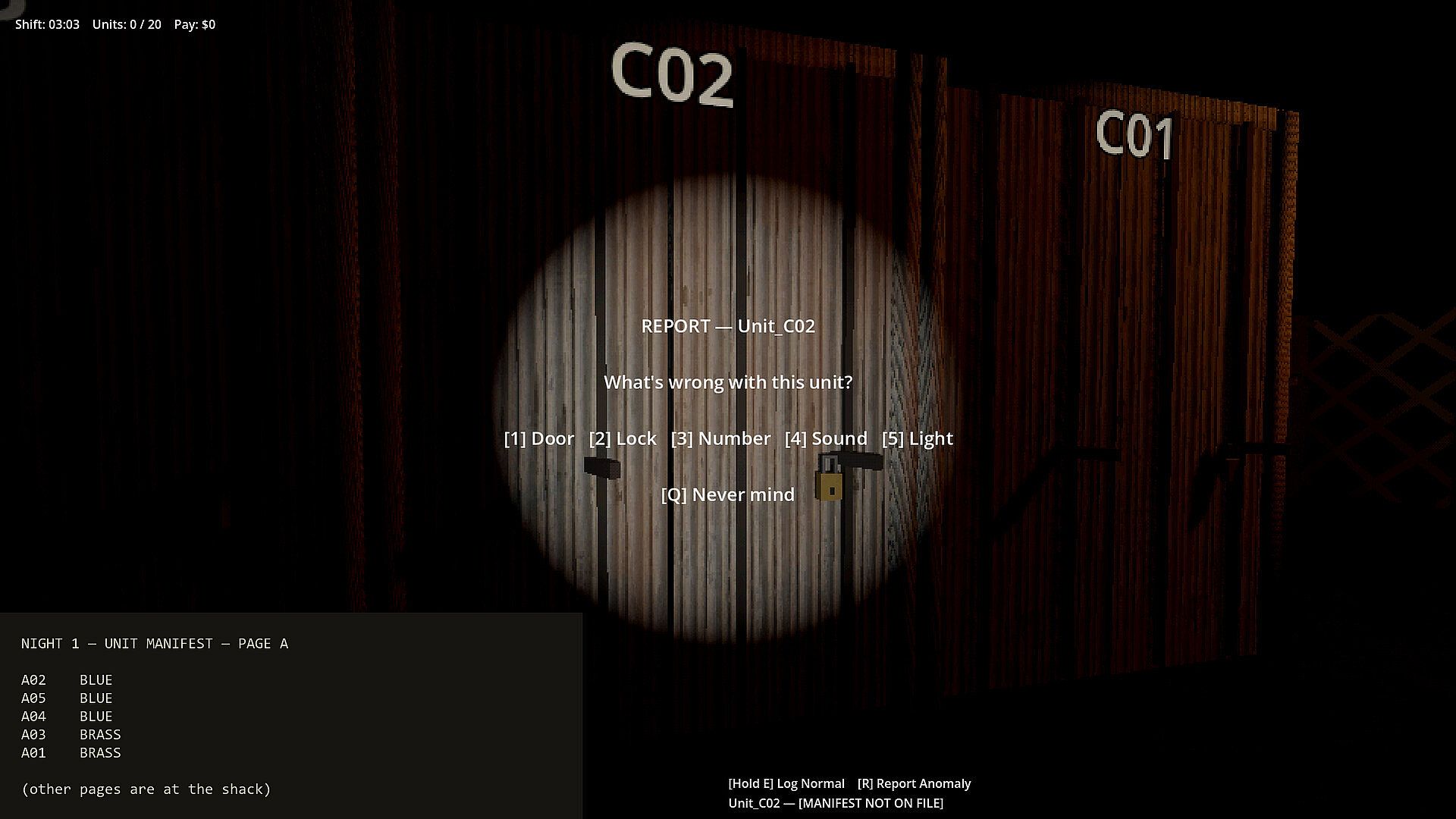
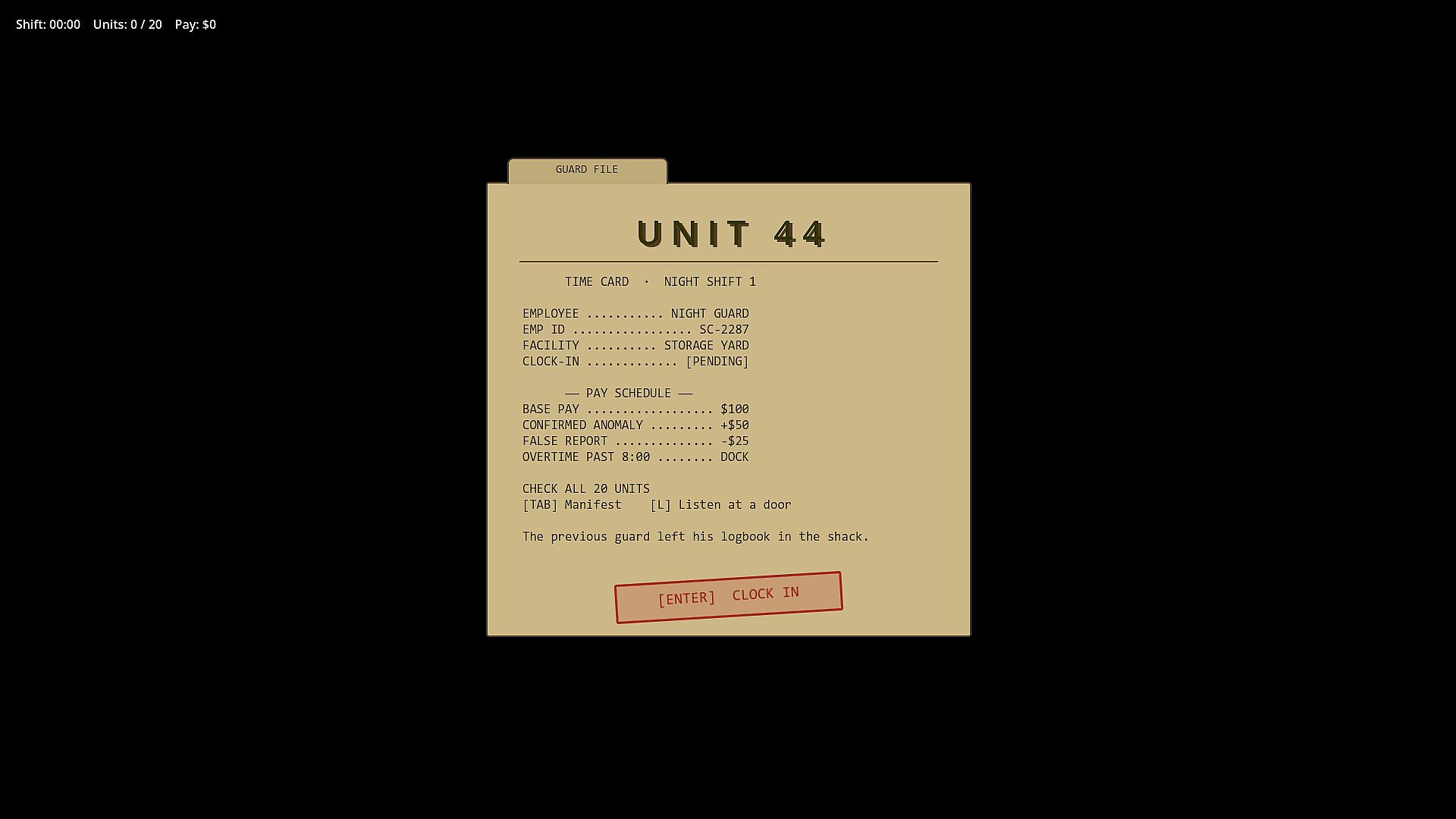
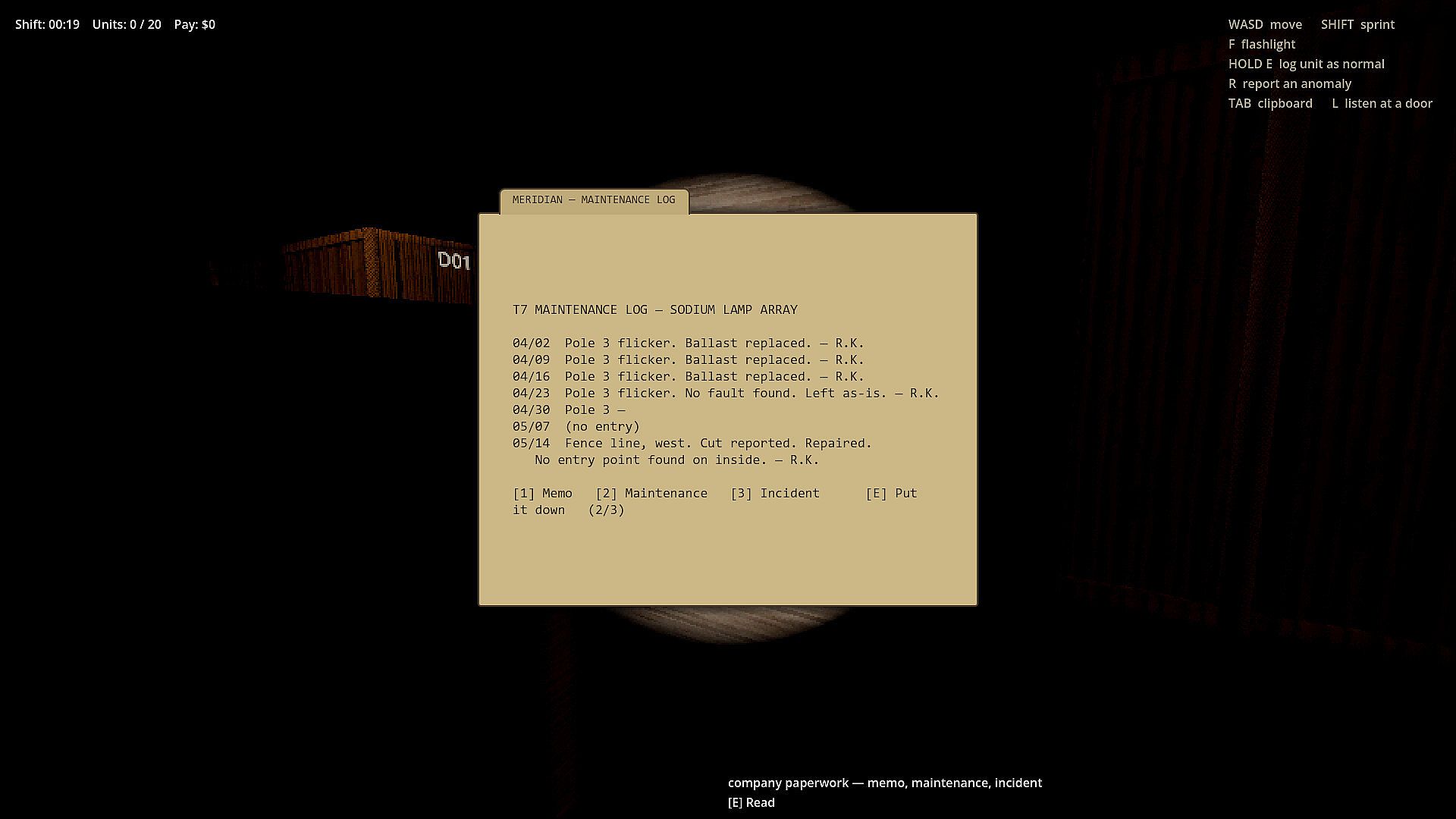
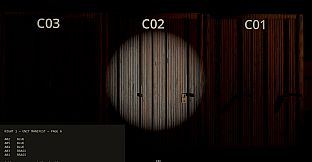
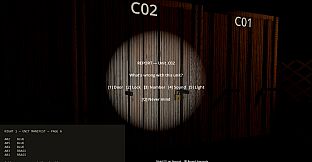
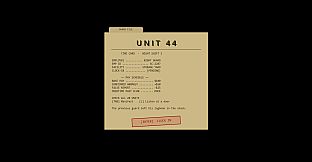
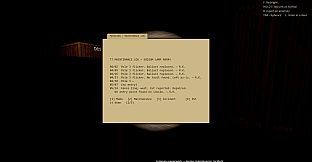
The central loop involves patrolling the yard each night, counting containers, and cross-referencing findings against a provided manifest. Players must note discrepancies such as mismatched locks, relocated units, or entries for containers that appear unexpectedly. Reporting occurs at a central shack before dawn, with accuracy determining pay or penalties. Over the course of the nights, the reporting form expands with new categories to capture increasingly odd details. The guard's predecessor left behind a personal logbook that conflicts with official personnel files, prompting players to compare the two accounts and form their own conclusions about what is accurate.
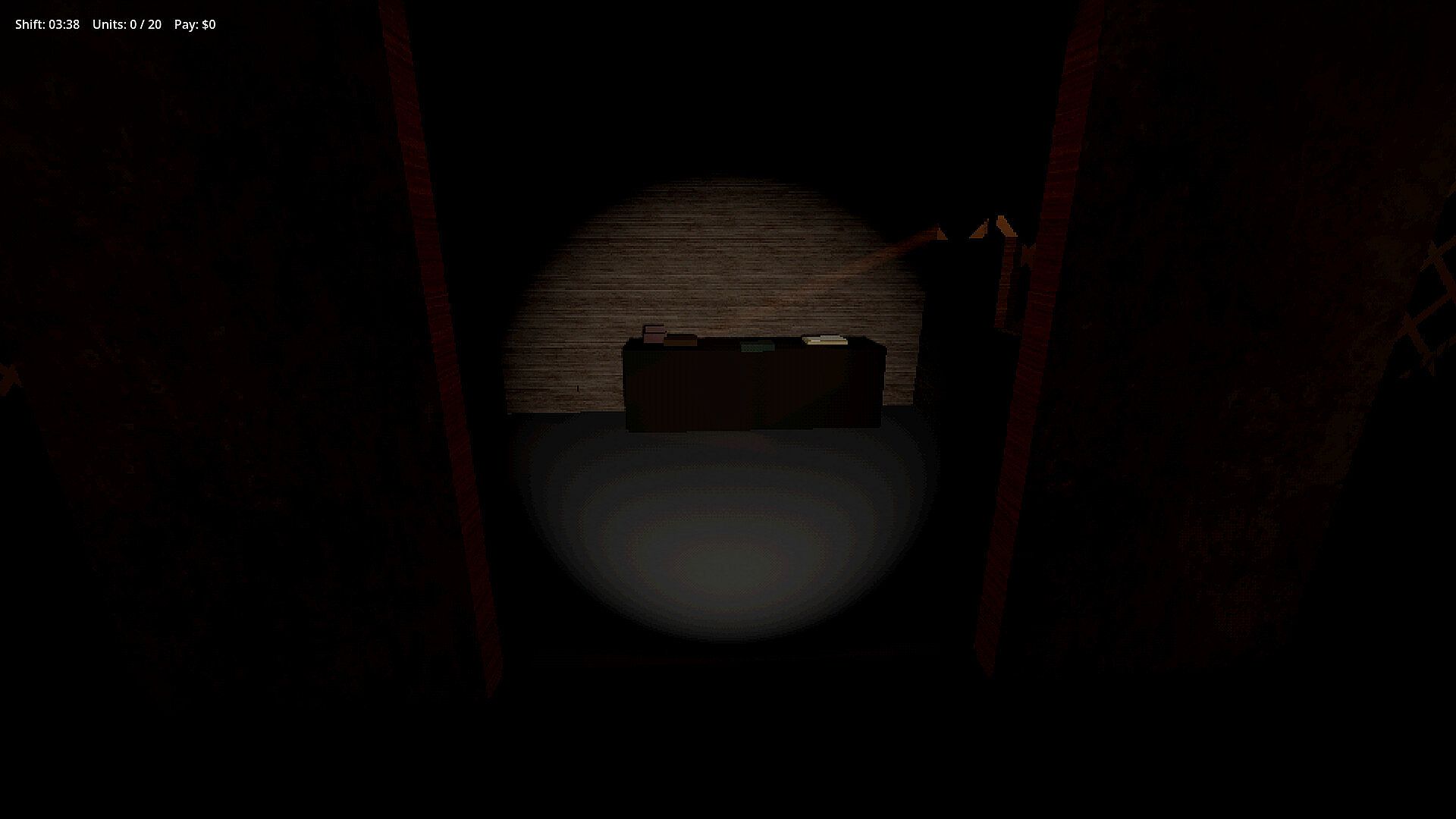
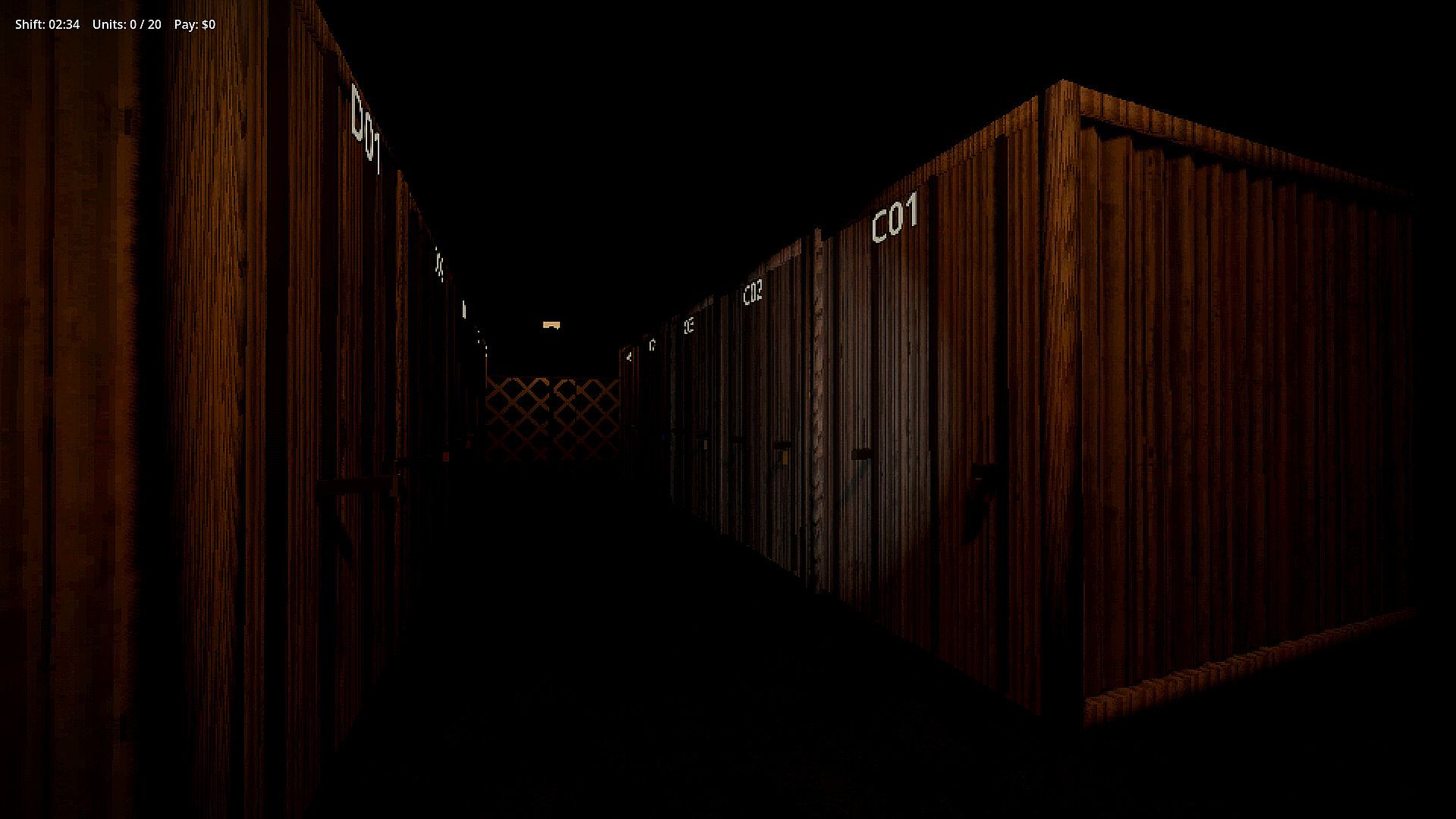
Dread builds through these document interactions and environmental observations rather than sudden threats. Players decide what details to include or omit in reports, which influences how the situation develops. The presentation uses low-resolution textures, dithering, and CRT-style visuals to evoke an older computing era, reinforcing the focus on mundane yet eerie administrative work. The entire session lasts two to three hours and remains self-contained without additional content layers.
Game Modes
UNIT 44 operates as a single continuous experience across five nights. Each night presents a distinct set of contradictions for players to identify and address through their reports. There are no separate modes or variations; progression depends entirely on what the player notices and chooses to document. The structure encourages replay to explore different reporting choices and uncover alternate conclusions.
Narrative and Atmosphere
The story unfolds through conflicting paperwork and subtle environmental shifts rather than dialogue or cutscenes. Notes from the previous guard provide personal context that clashes with company records, forcing players to weigh which version aligns with observed events. This approach creates tension from uncertainty about what is real versus fabricated or overlooked. The horror stems from the growing realization that standard procedures cannot account for the anomalies accumulating in the yard.
Player agency centers on perception and documentation. Nothing actively pursues the guard; instead, outcomes arise from patterns spotted or ignored during patrols. This design rewards careful inspection of manifests, logs, and physical surroundings while allowing different paths based on final report submissions.
Is It Worth Playing?
UNIT 44 suits players interested in short, focused horror experiences driven by investigation and decision-making rather than combat or exploration in the traditional sense. Its complete runtime and emphasis on multiple endings based on reporting choices make it suitable for those seeking a self-contained session with replay value tied to different interpretations of events. The intentional retro visual style and absence of jump scares appeal to fans of atmospheric, document-centric horror. Those who prefer fast-paced action or multiplayer elements will find little here, but the game delivers a deliberate, consequence-based structure for its intended audience.











