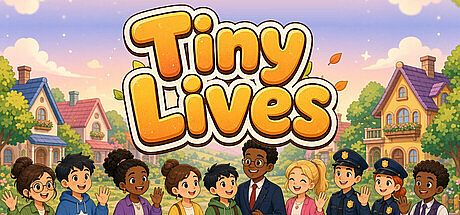


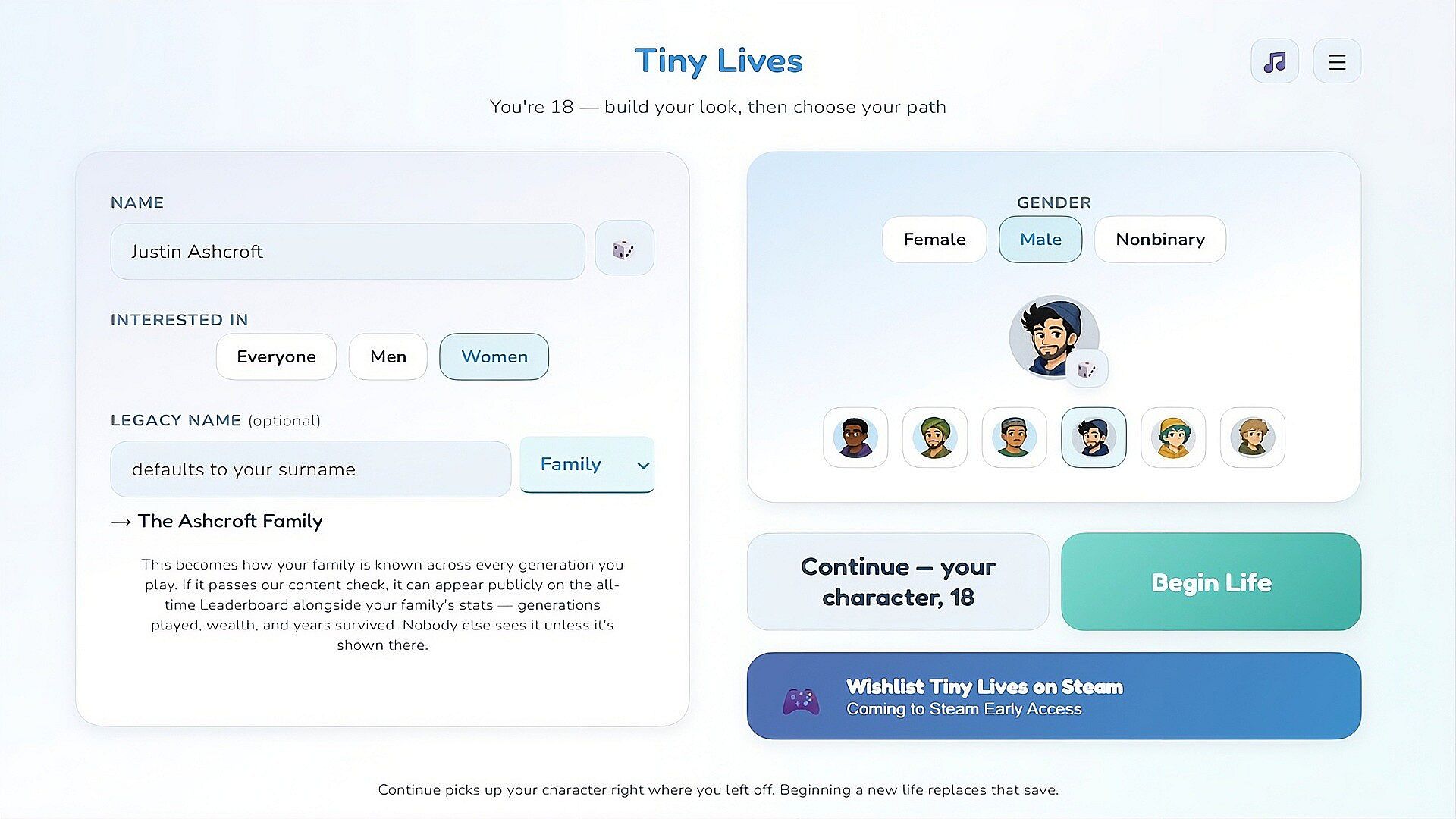
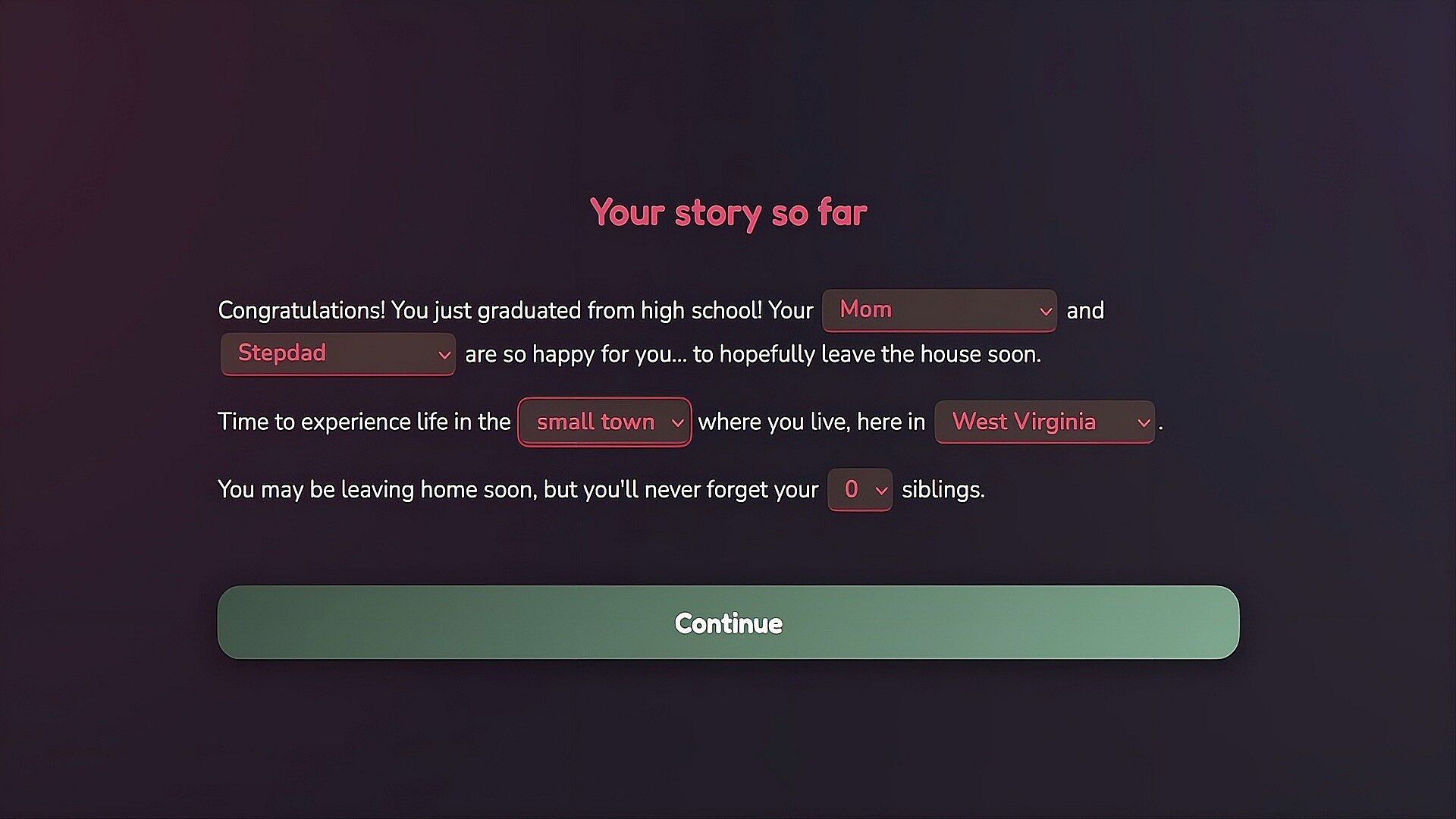

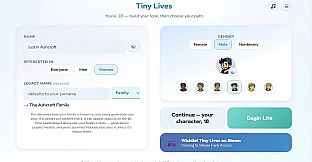





Tiny Lives is a life simulation game available on PC in Early Access. Players begin as an 18-year-old with a name, modest savings, and an open future, advancing through daily decisions that shape careers, relationships, family, and legacy across multiple generations.
Gameplay
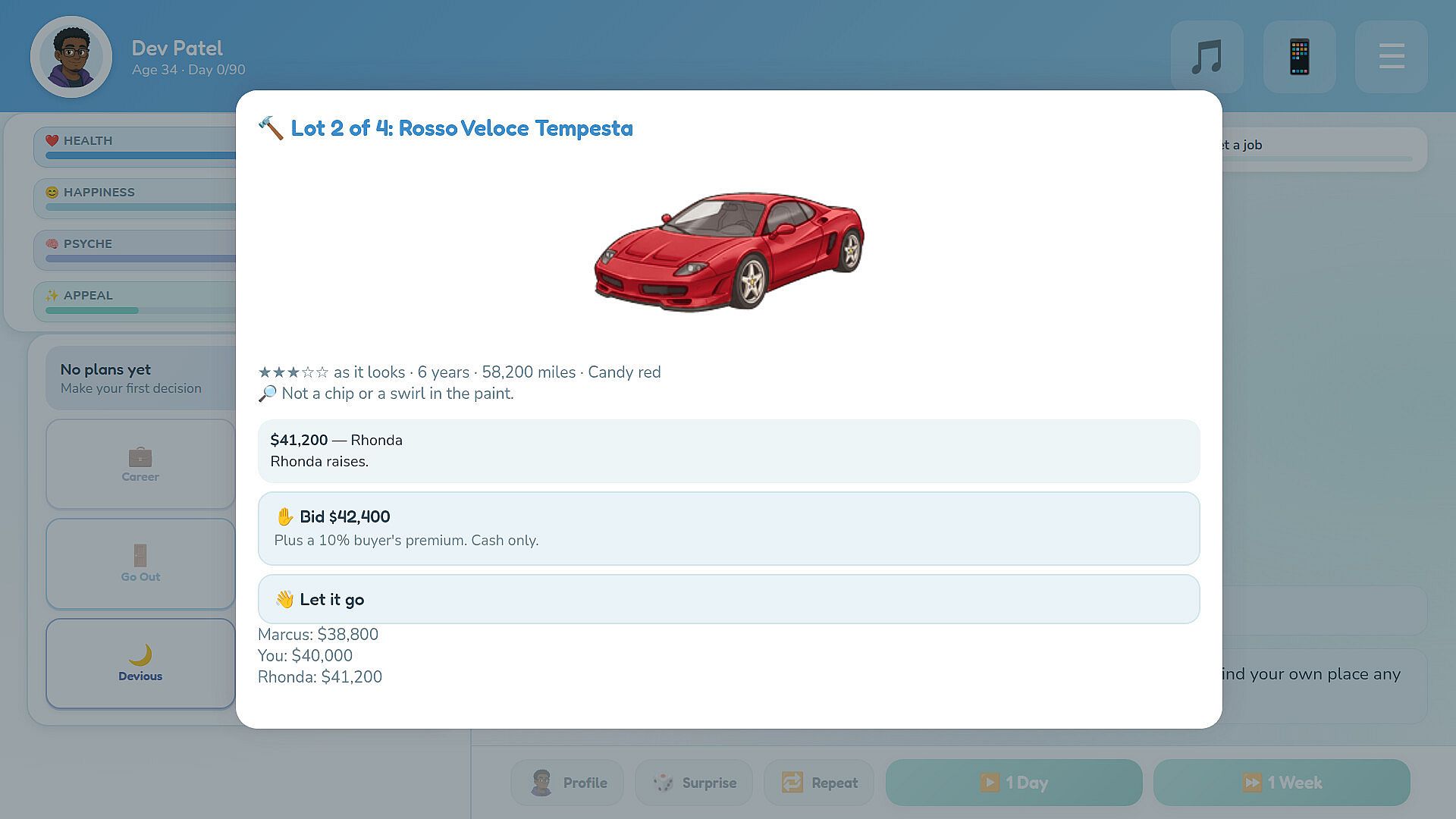
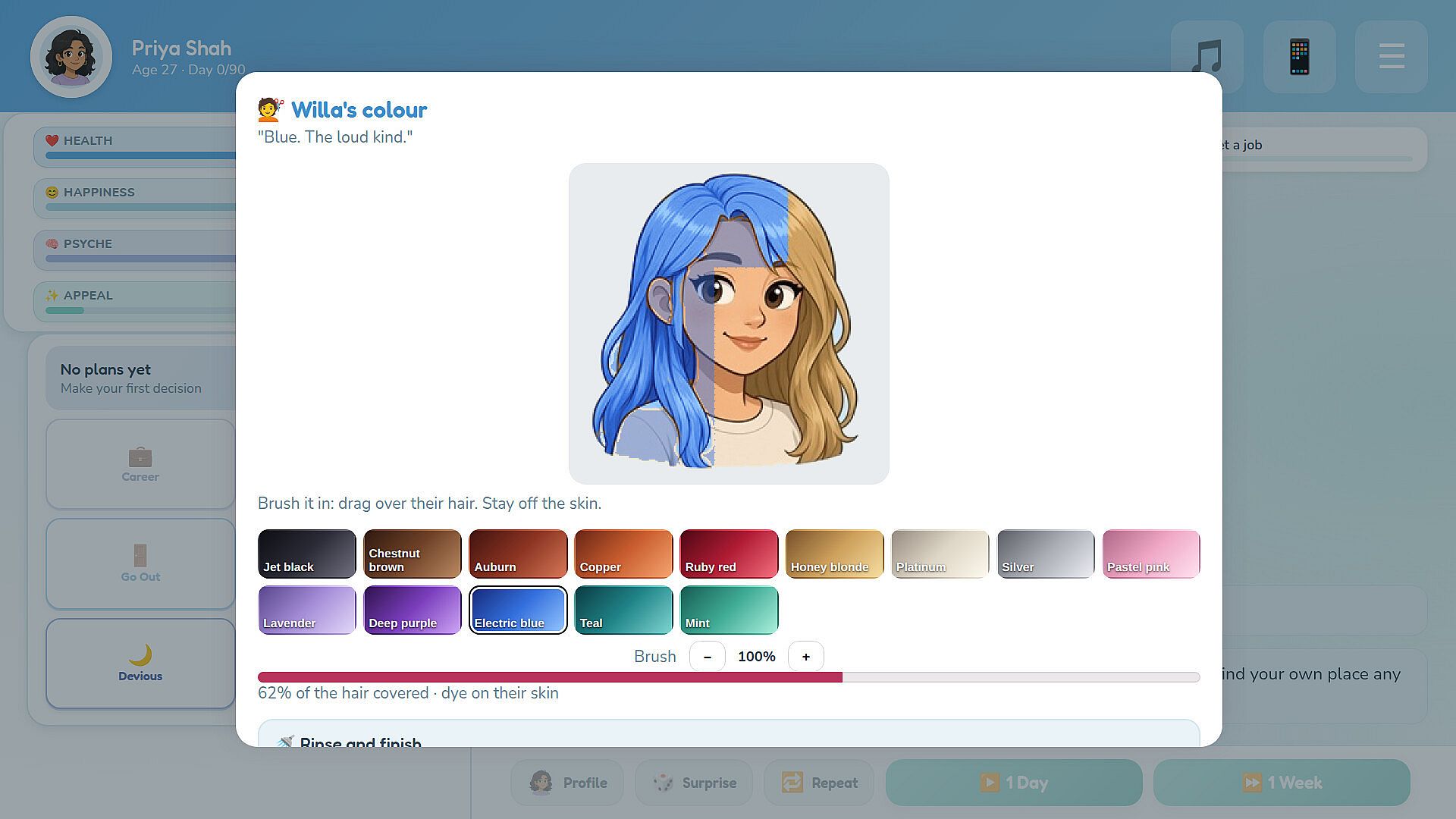
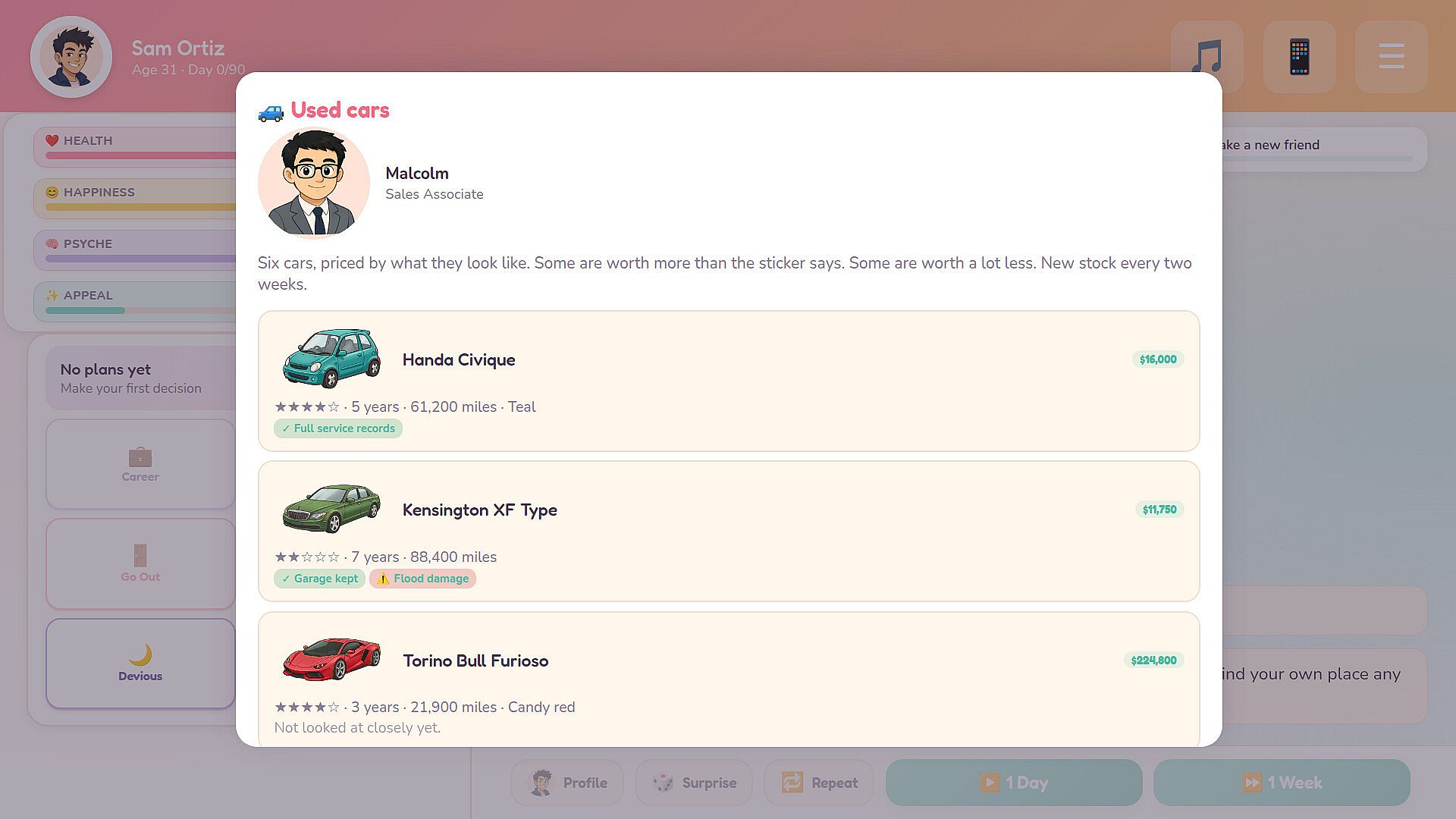
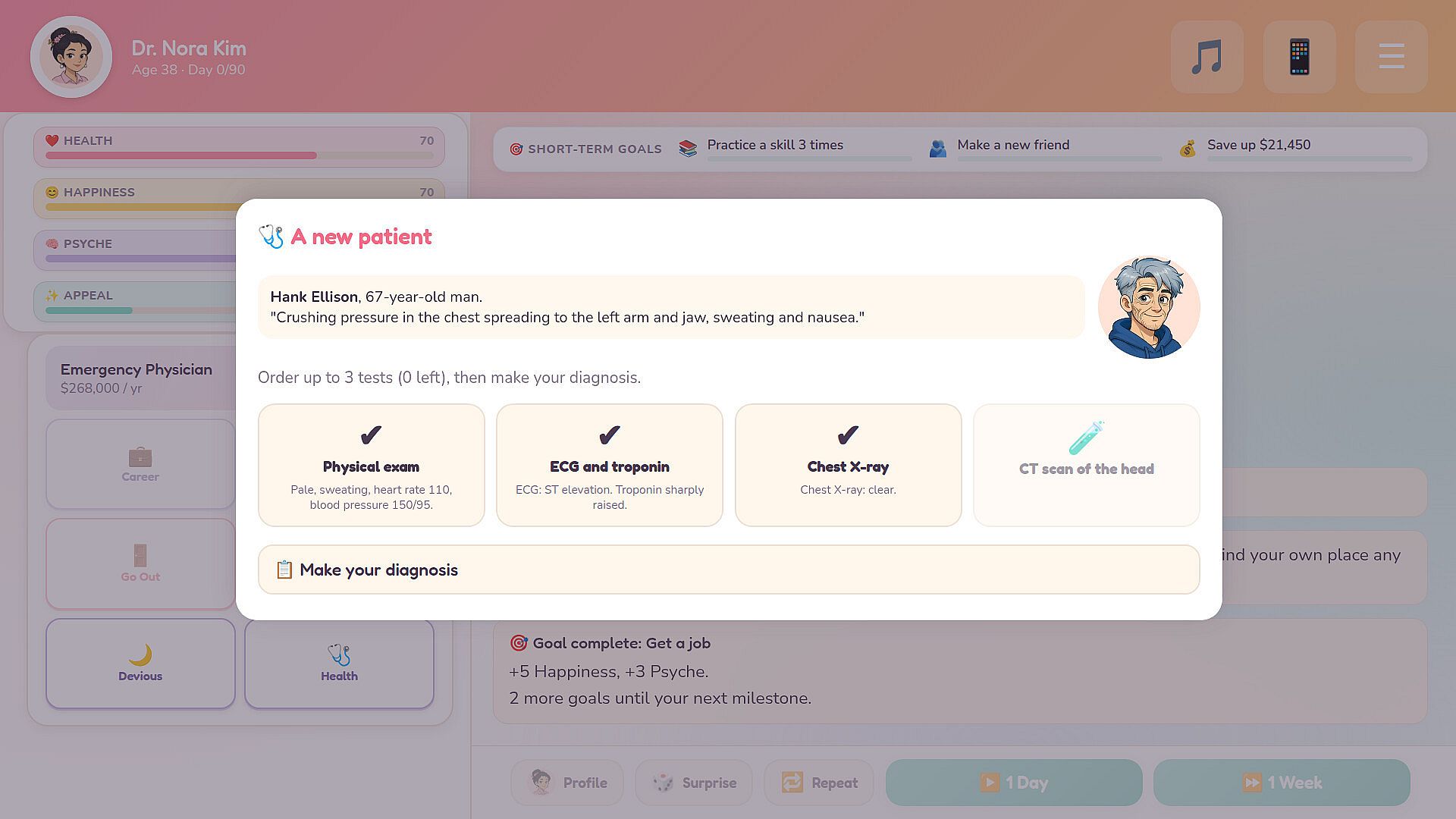
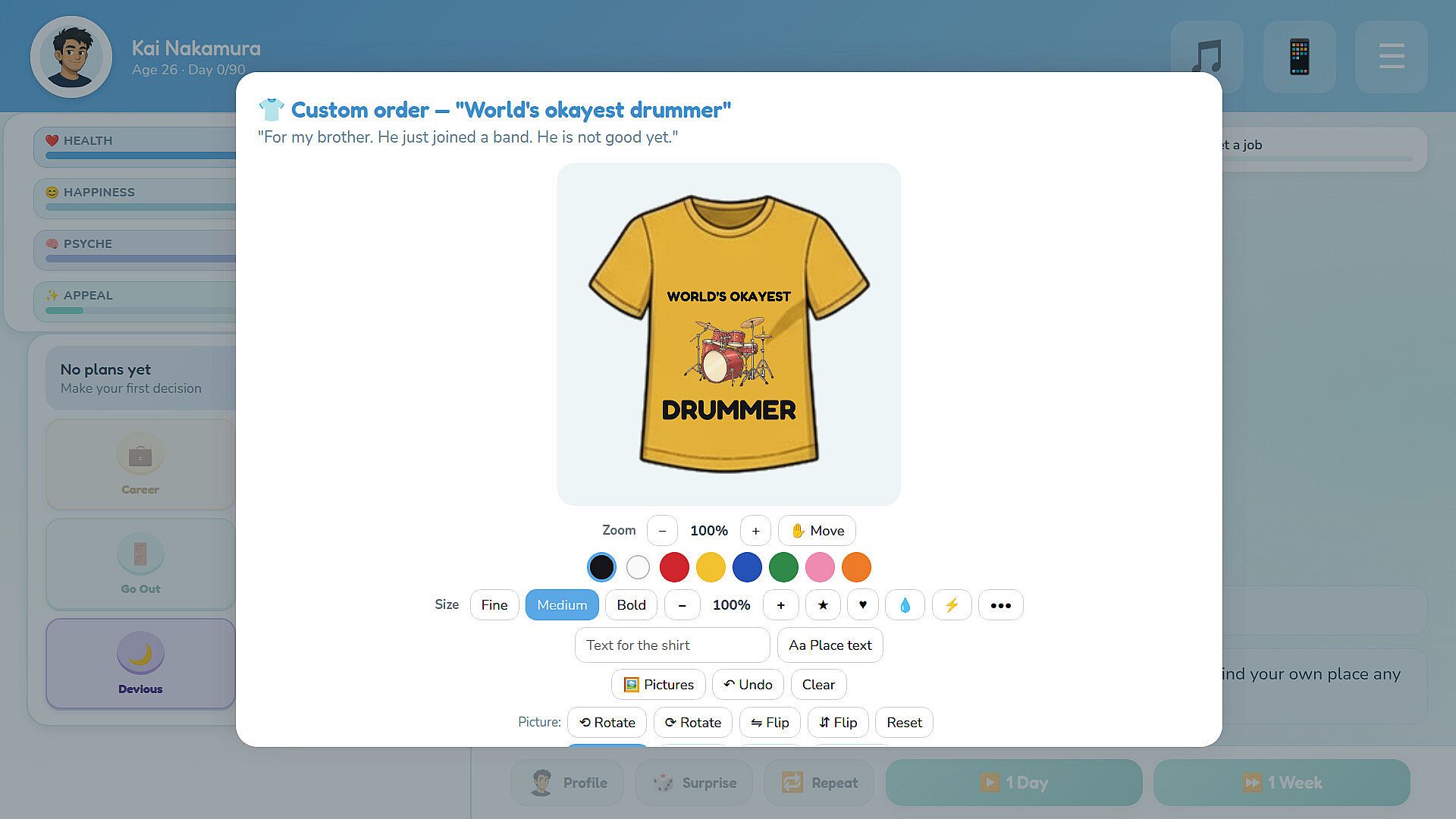
The core loop centers on living one day at a time in a world where other characters maintain their own schedules and opinions. Partners respond independently to proposals about children, relocation, or major purchases, sometimes agreeing outright, sometimes offering reluctant approval, or refusing entirely. Friends decline social plans based on their own commitments, children recall past treatment, and coworkers may form bonds or claim credit for shared efforts. Daily activities extend beyond simple menus to include sailing a dinghy through choppy waters, preparing meals for a partner, navigating card games with bluffs, competing in pub trivia, and negotiating prices on vehicles, homes, or souvenirs during trips that present fresh choices each day.
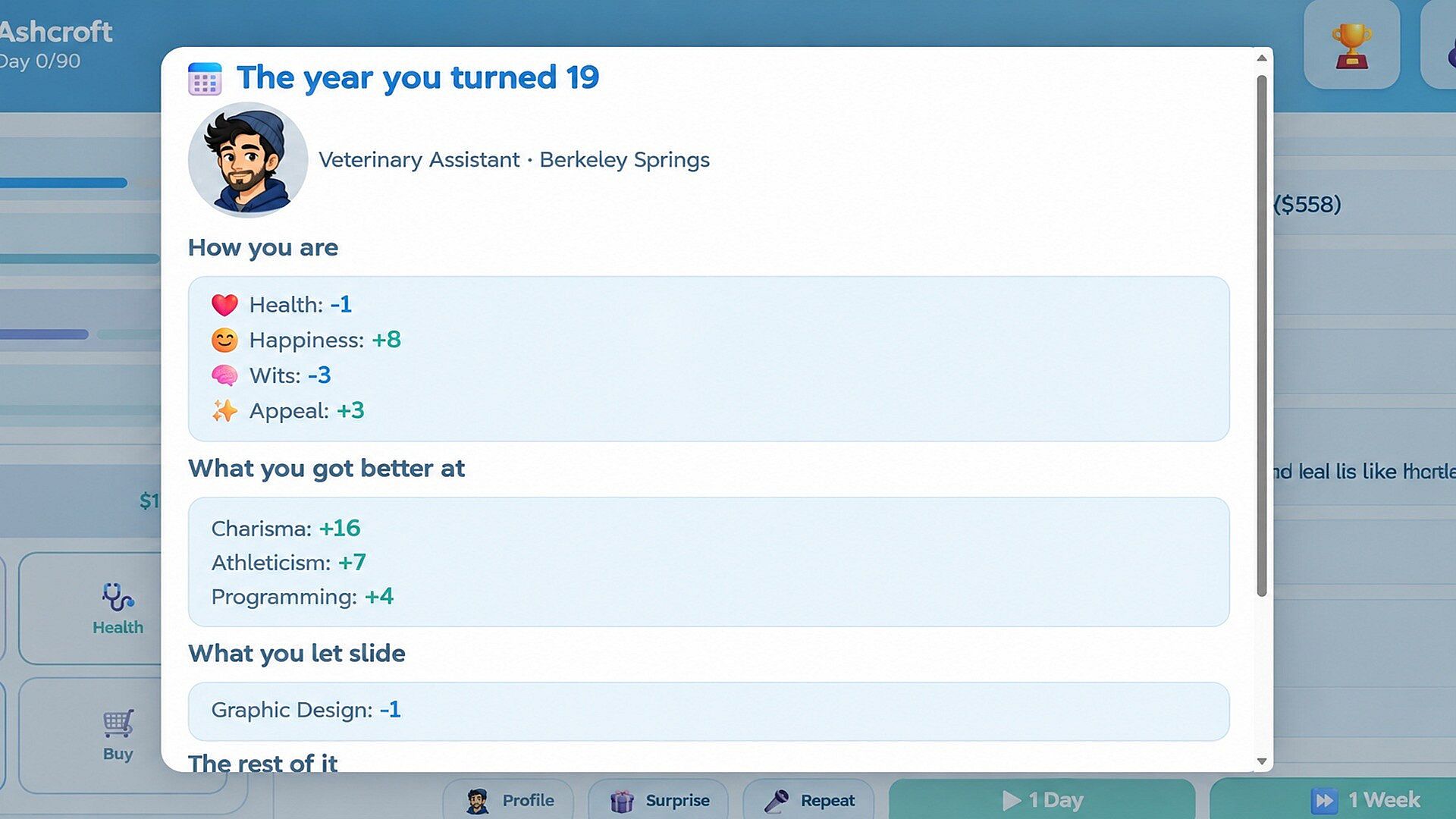
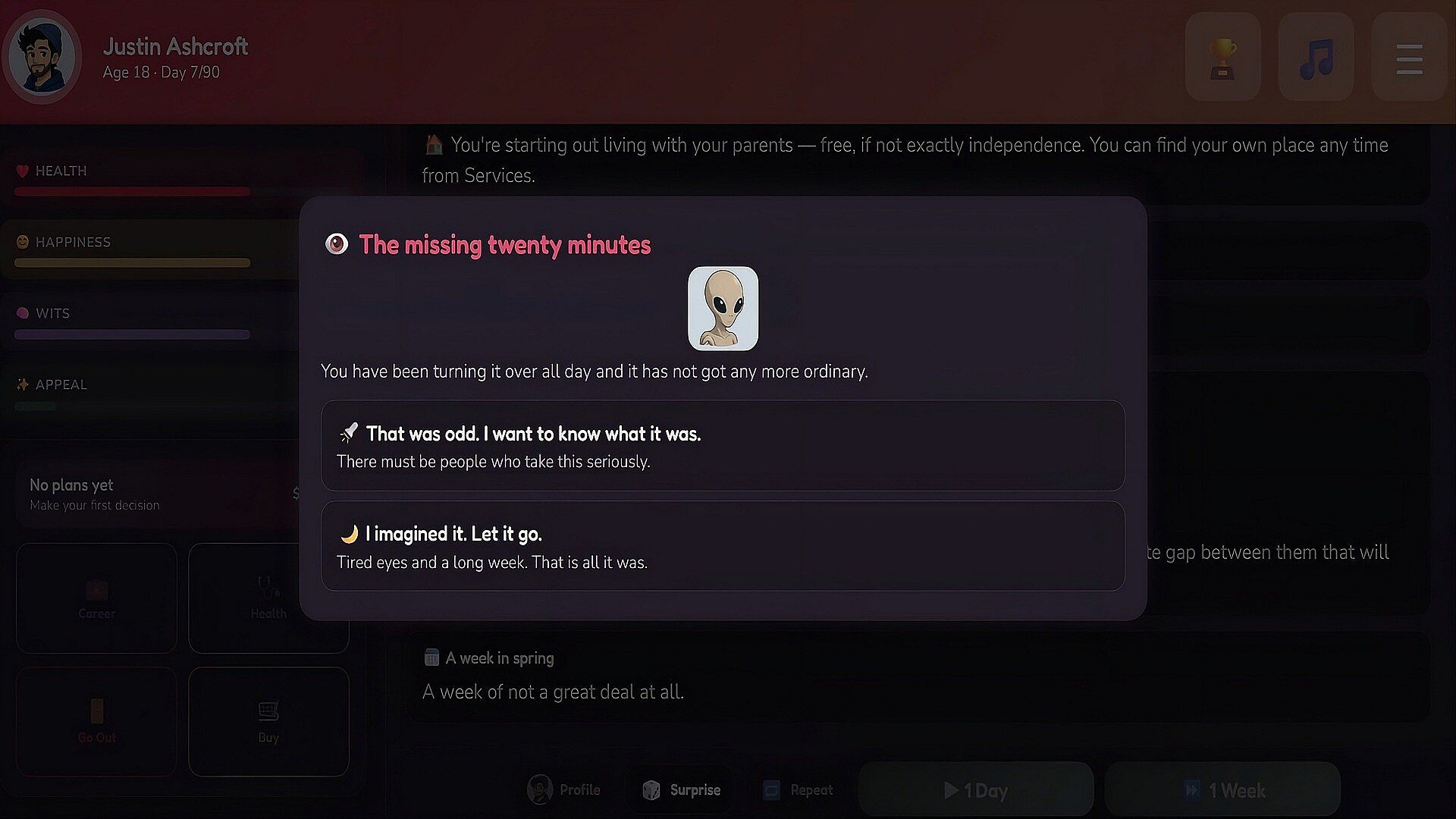
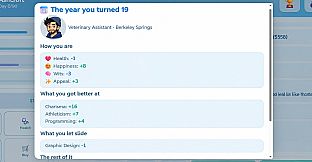
Progression covers employment paths from entry-level positions to business ownership and eventual retirement, supported by savings and stock market investments. Home and vehicle purchases add layers of financial management, while reputation tracks choices between legitimate work and involvement with a crime family, where advancement from lookout roles to larger operations carries lasting consequences. Strange encounters in wooded areas introduce combat encounters that reward observation of enemy patterns, with options to summon allies or document discoveries in a bestiary.
Game Modes
Tiny Lives operates as a continuous single-player life simulation without separate named modes. The experience unfolds through open-ended daily play that blends career advancement, relationship building, family management, and occasional unusual events. Players can steer toward conventional paths of work, marriage, child-rearing, and generational continuity, or explore riskier routes that affect reputation and options. The structure supports repeated playthroughs by allowing the story to continue with a surviving spouse or child after the original character passes, carrying forward family elements and accumulated wealth or status.
Relationships and Legacy
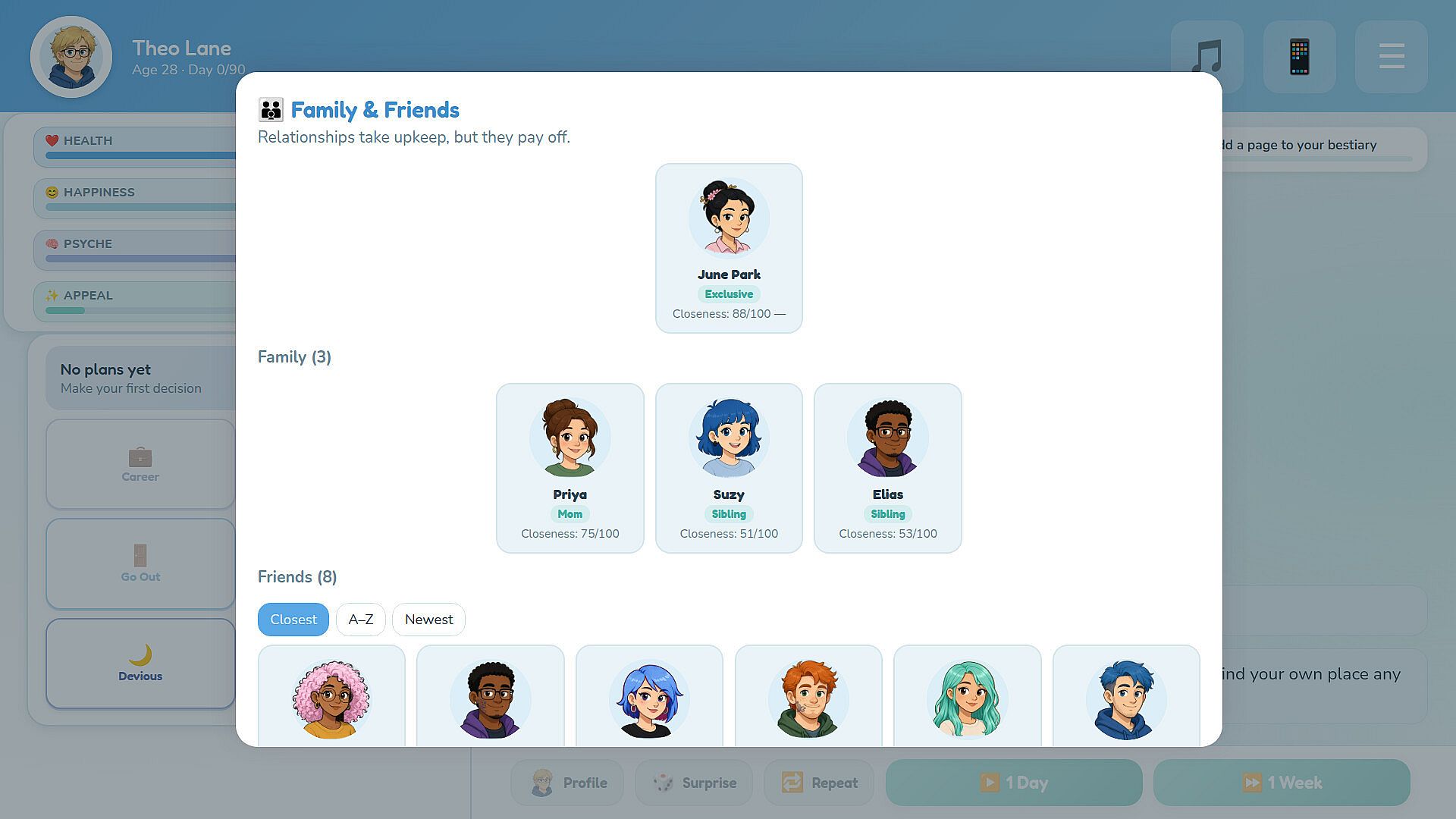
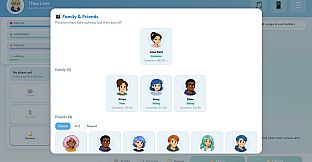
Interpersonal systems emphasize agency on all sides. Romantic partners participate in decisions about weddings, name changes, and shared finances. Raising children involves homework assistance, college funding, and later caregiving for aging parents. These interactions create persistent memory effects that influence future events and character responses. The generational element lets players observe how early choices echo through heirs who receive portions of prior accomplishments while facing their own independent challenges.
Is It Worth Playing?
Tiny Lives suits players who enjoy detailed life simulation focused on realistic social dynamics and long-term planning rather than fast-paced action. The emphasis on NPC autonomy and multi-generational storytelling provides depth for those interested in career negotiation, financial decisions, and branching personal histories. Availability on PC in Early Access means the experience continues to evolve, with the provided activities and systems offering a solid foundation for extended sessions. Those seeking a thoughtful, choice-driven simulation of everyday and extraordinary life events will find the mechanics align closely with that interest, particularly if they value consequences that persist across in-game lifetimes.