




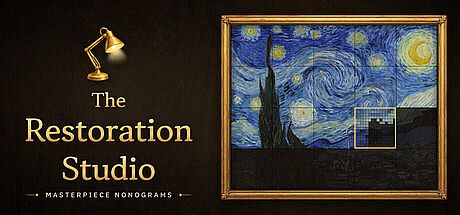


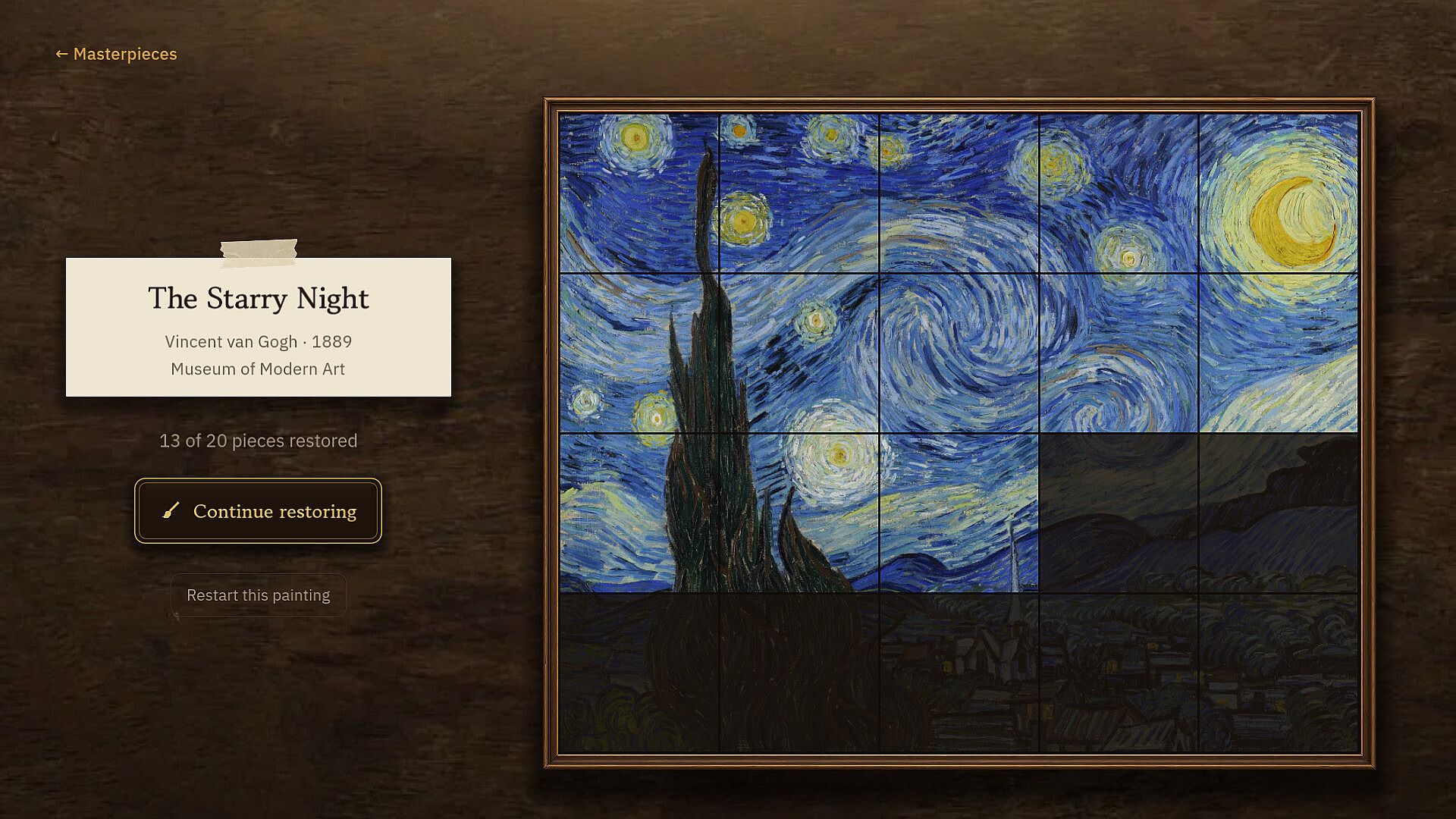
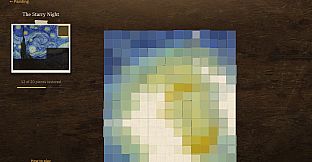
The Restoration Studio: Masterpiece Nonograms is a casual indie puzzle game built around nonogram logic challenges. Players restore famous paintings by solving these grid-based puzzles, with each completed solution revealing more of the original artwork in its proper colors and orientation.
Gameplay
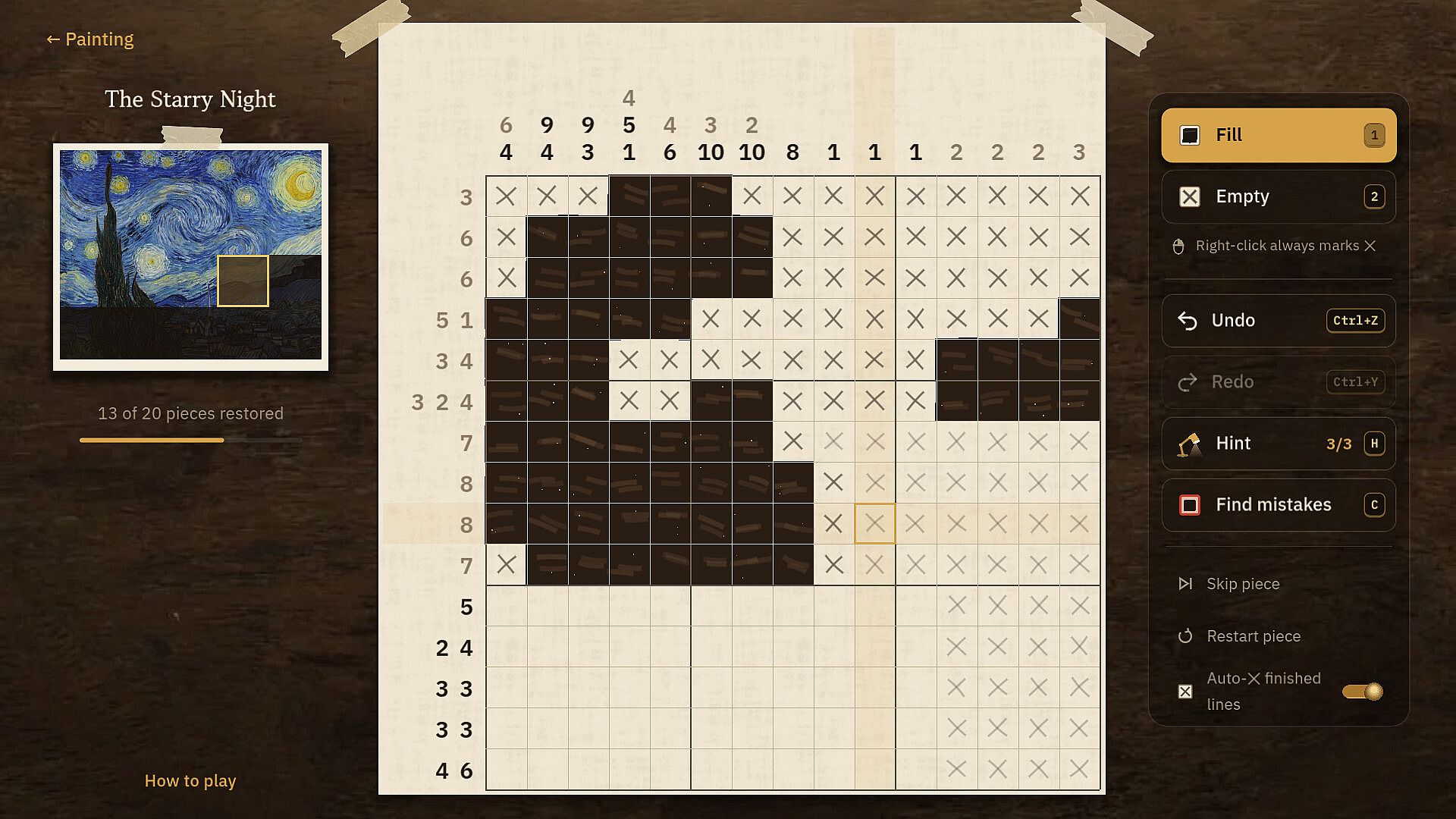
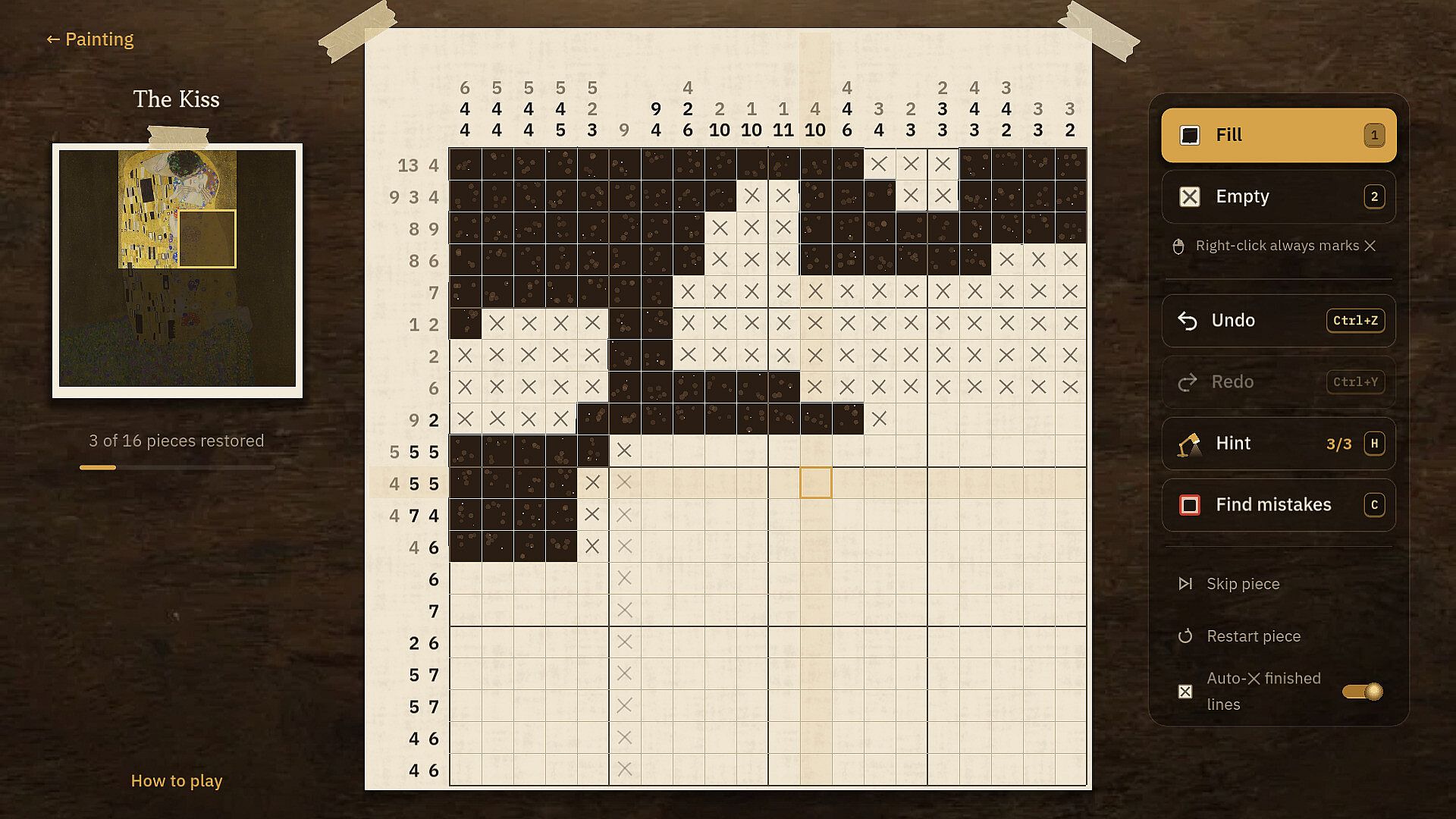
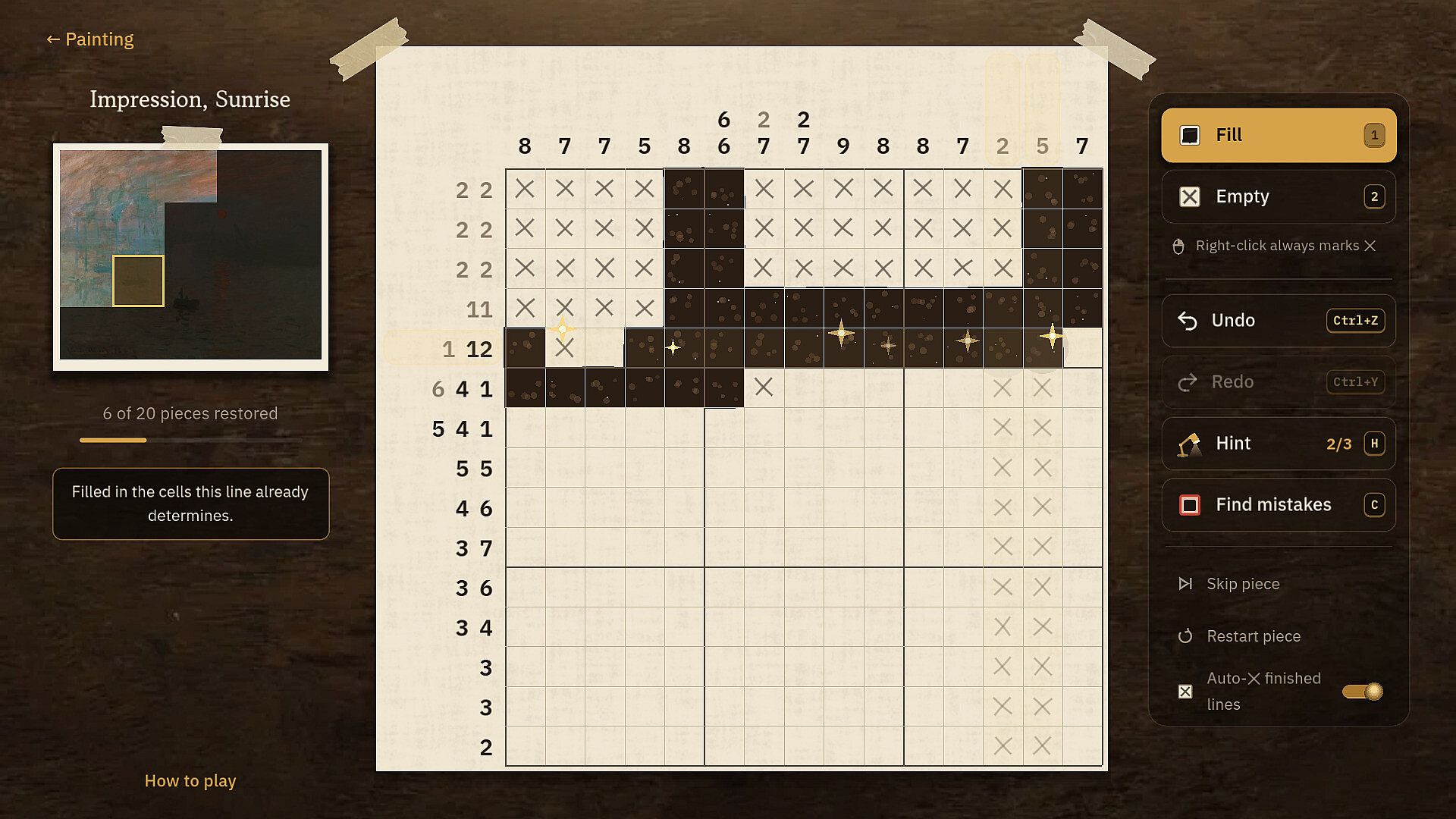
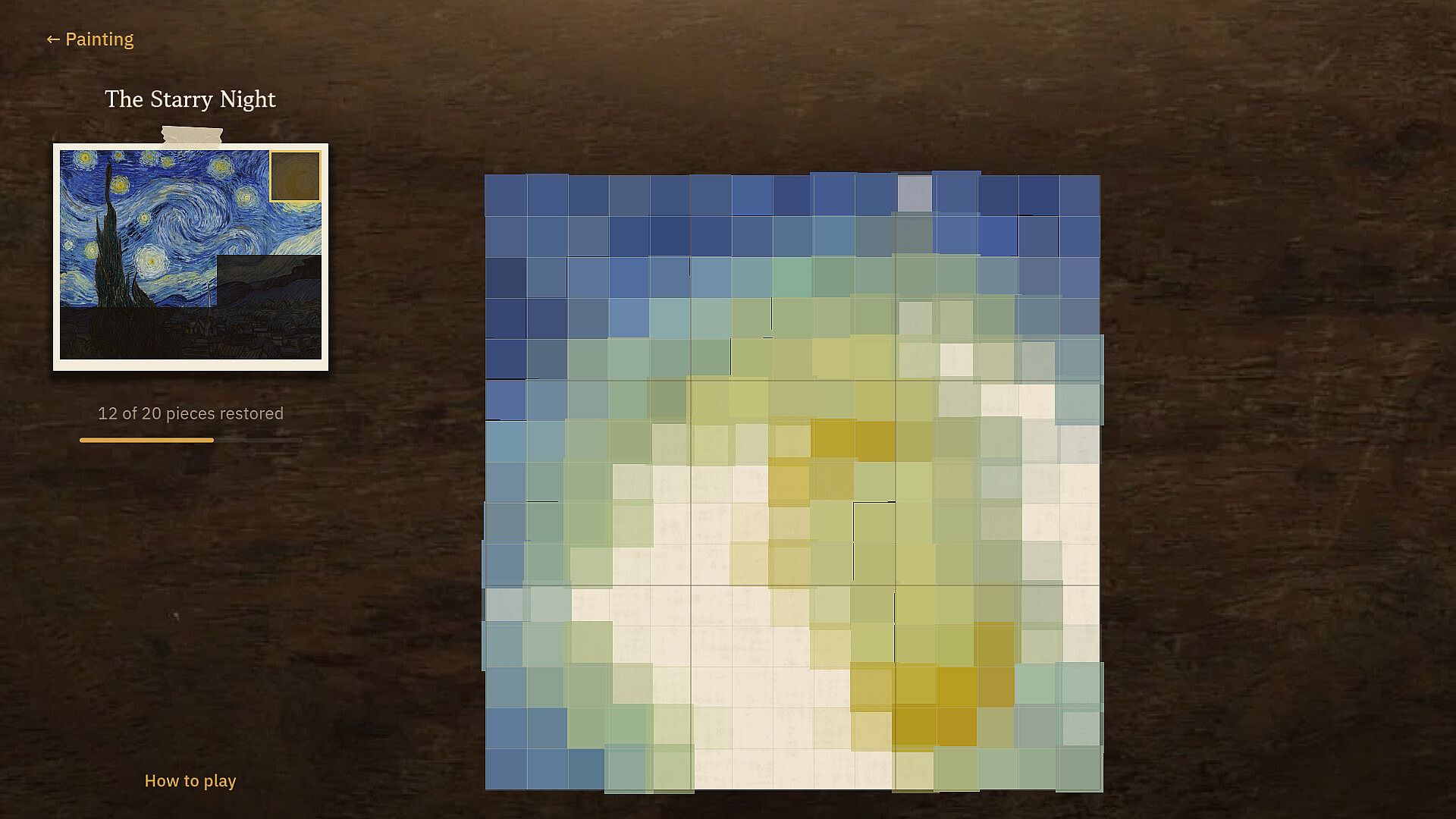
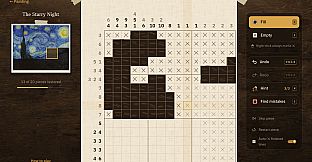
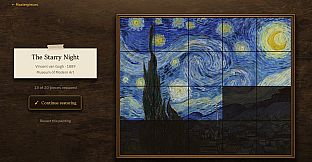
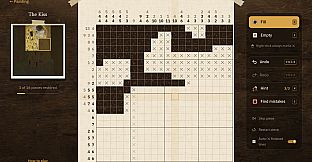
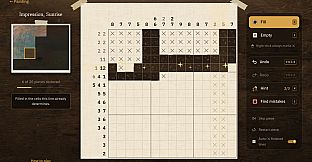
Nonograms form the core of every session. Numbers along the edges of each grid indicate runs of filled cells, and solvers mark cells to match those clues exactly. Pieces of the target painting arrive rotated or flipped, which removes any shortcut from visual recognition alone. Solving the nonogram aligns the piece correctly and restores its colors.
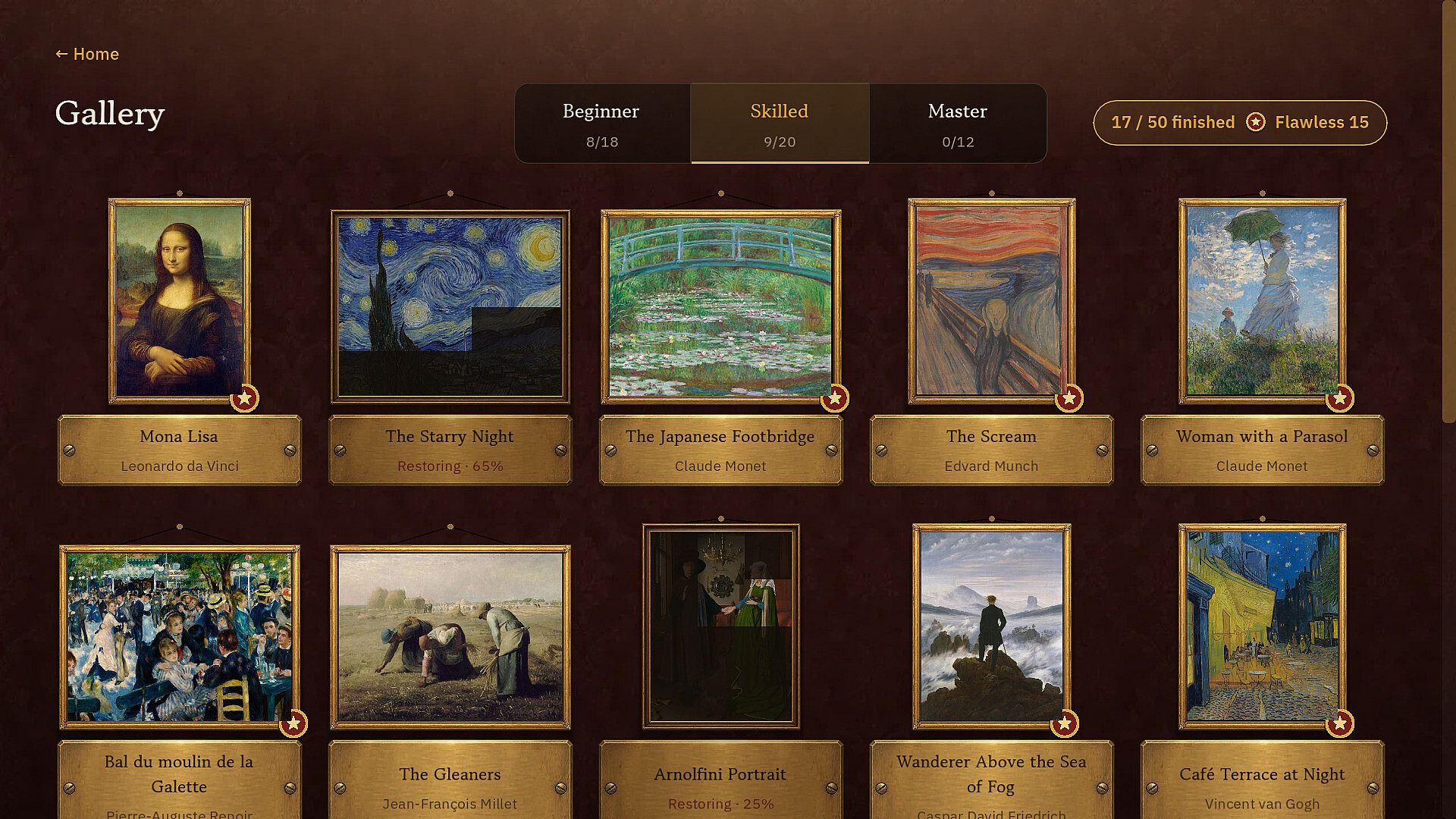
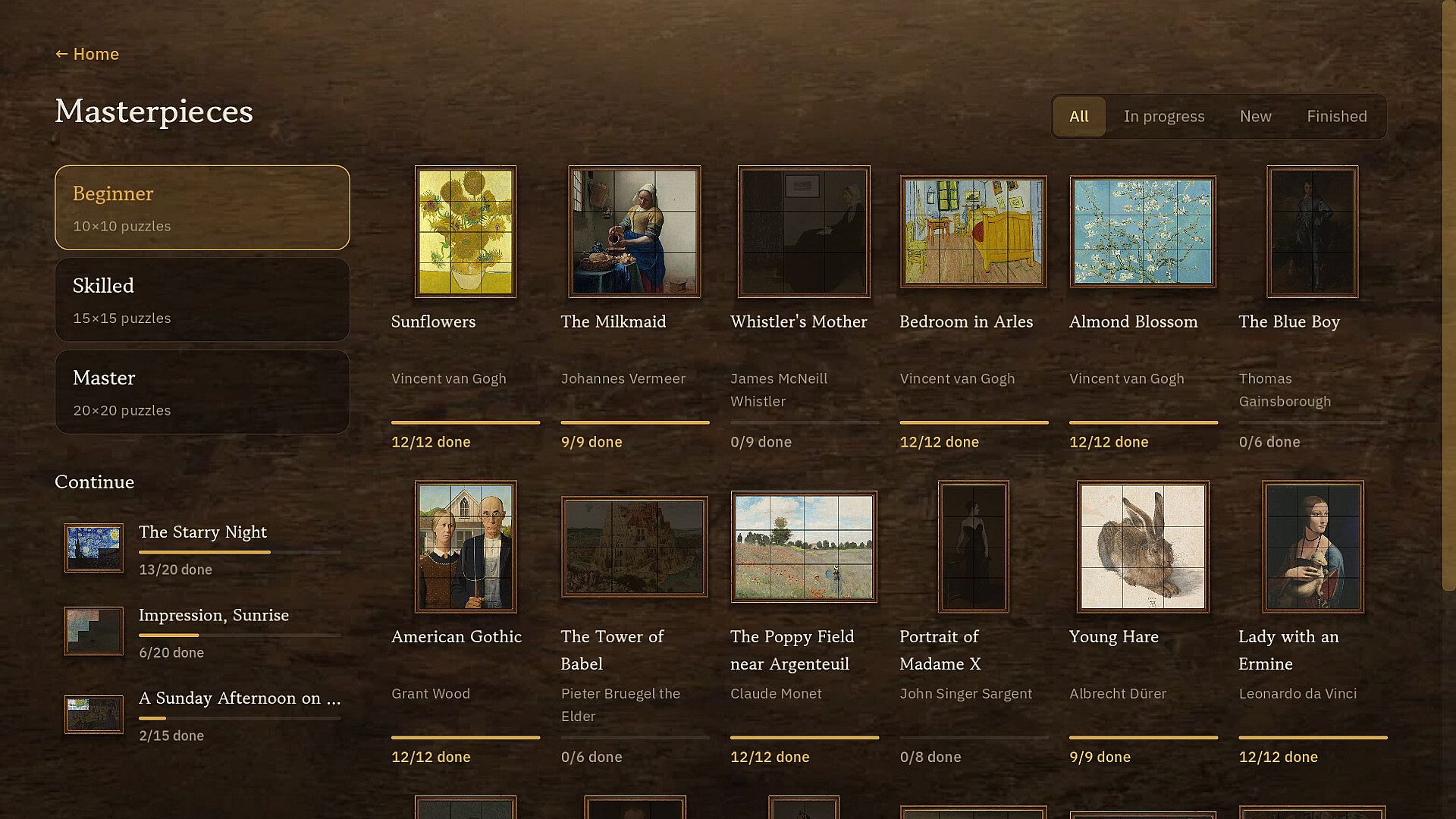
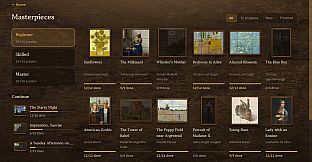
Three difficulty tiers organize the content by grid size. Beginner puzzles use 10x10 grids across 18 paintings. Skilled puzzles expand to 15x15 grids for 20 paintings. Master puzzles reach 20x20 grids for the remaining 12 paintings, producing 708 puzzles overall. A separate practice puzzle introduces the rules without risk.
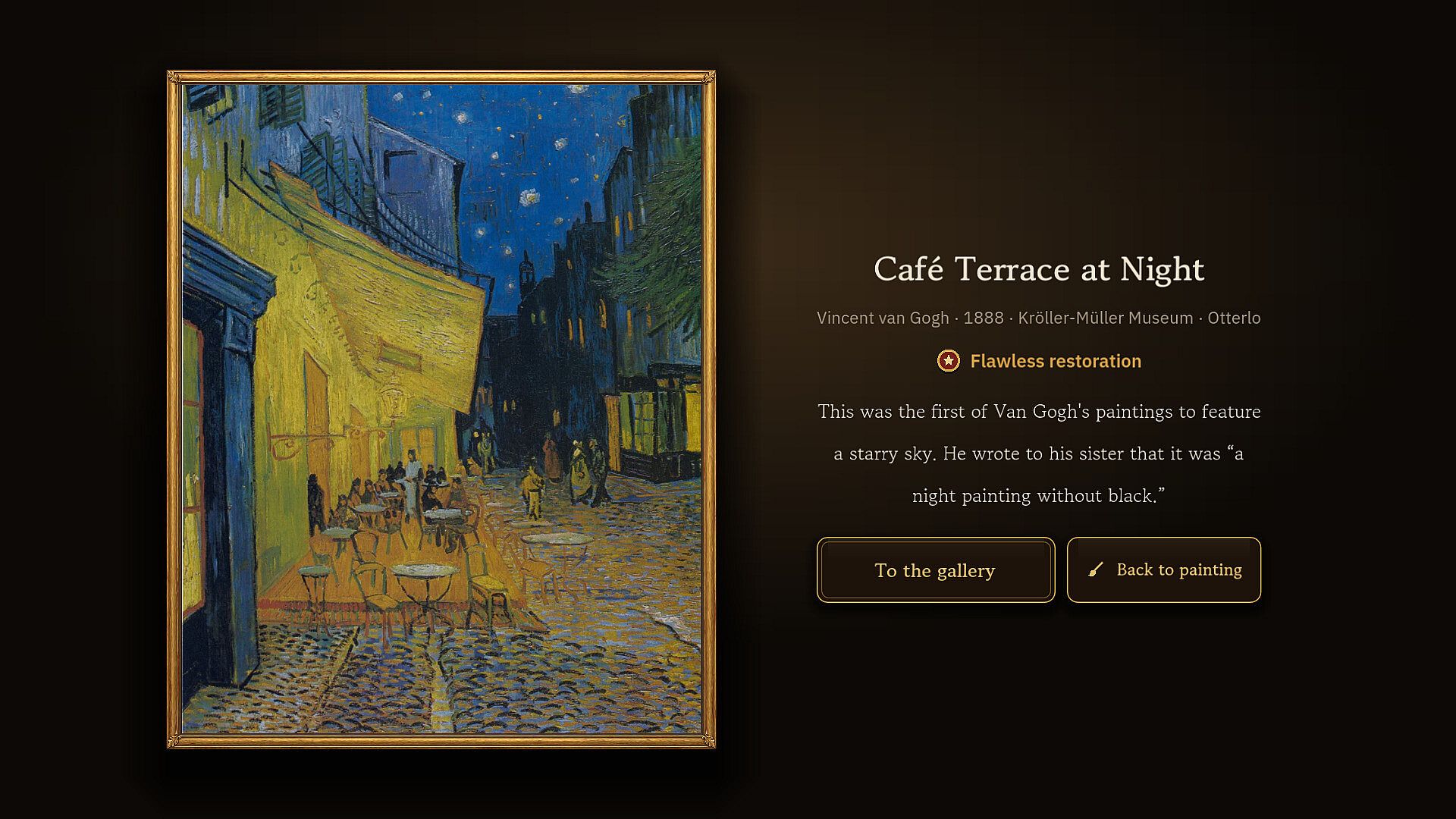
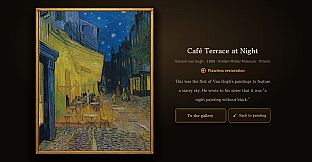
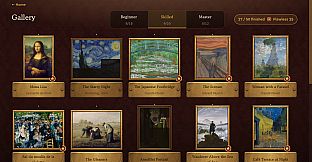
Progress saves automatically after every move. Players can drag across multiple cells to fill them at once, right-click to place exclusion marks, and use unlimited undo and redo. Finished lines automatically mark leftover cells with exclusion marks, though this option can be disabled. Full keyboard support allows play without a mouse. When progress stalls, three hints per piece reveal a correct cell, a mistake finder highlights errors, or a skip piece option advances to the next section. Paintings completed without any assistance receive a flawless restoration seal once hung in the gallery.
Game Modes
The game offers three distinct grid-size modes that scale in complexity. Beginner mode introduces the mechanics on smaller 10x10 grids. Skilled mode increases the challenge with 15x15 grids that demand more precise clue interpretation. Master mode presents the largest 20x20 grids for players seeking extended logical sequences.
Each mode ties directly to specific paintings, so completing a grid size unlocks the corresponding artwork for display. The structure encourages steady progression through increasing puzzle sizes while maintaining the same restoration goal across all modes.
Gallery and Presentation
Every finished painting appears in a personal gallery with its artist name, creation year, and collection details. A short background story accompanies each piece, adding context beyond the visual restoration. Six original piano tracks, including Debussy's Clair de Lune, the Aria from Bach's Goldberg Variations, and Chopin nocturnes, play during play sessions. The game supports twelve languages for menus and text.
Is It Worth Playing?
This single-player experience suits anyone who enjoys deliberate logic puzzles without timers or failure penalties. The absence of lives or time limits keeps sessions relaxed, while the combination of nonogram solving and gradual artwork restoration provides a clear sense of accomplishment. Controls remain consistent across keyboard and mouse input, and quality-of-life options such as auto-marking and adjustable hints accommodate different play styles. Players who appreciate art history alongside puzzle mechanics will find the gallery presentation rewarding. Those seeking fast action or competitive elements may prefer other genres, but the steady, methodical pace aligns well with casual puzzle fans looking for extended solo sessions on PC.











