






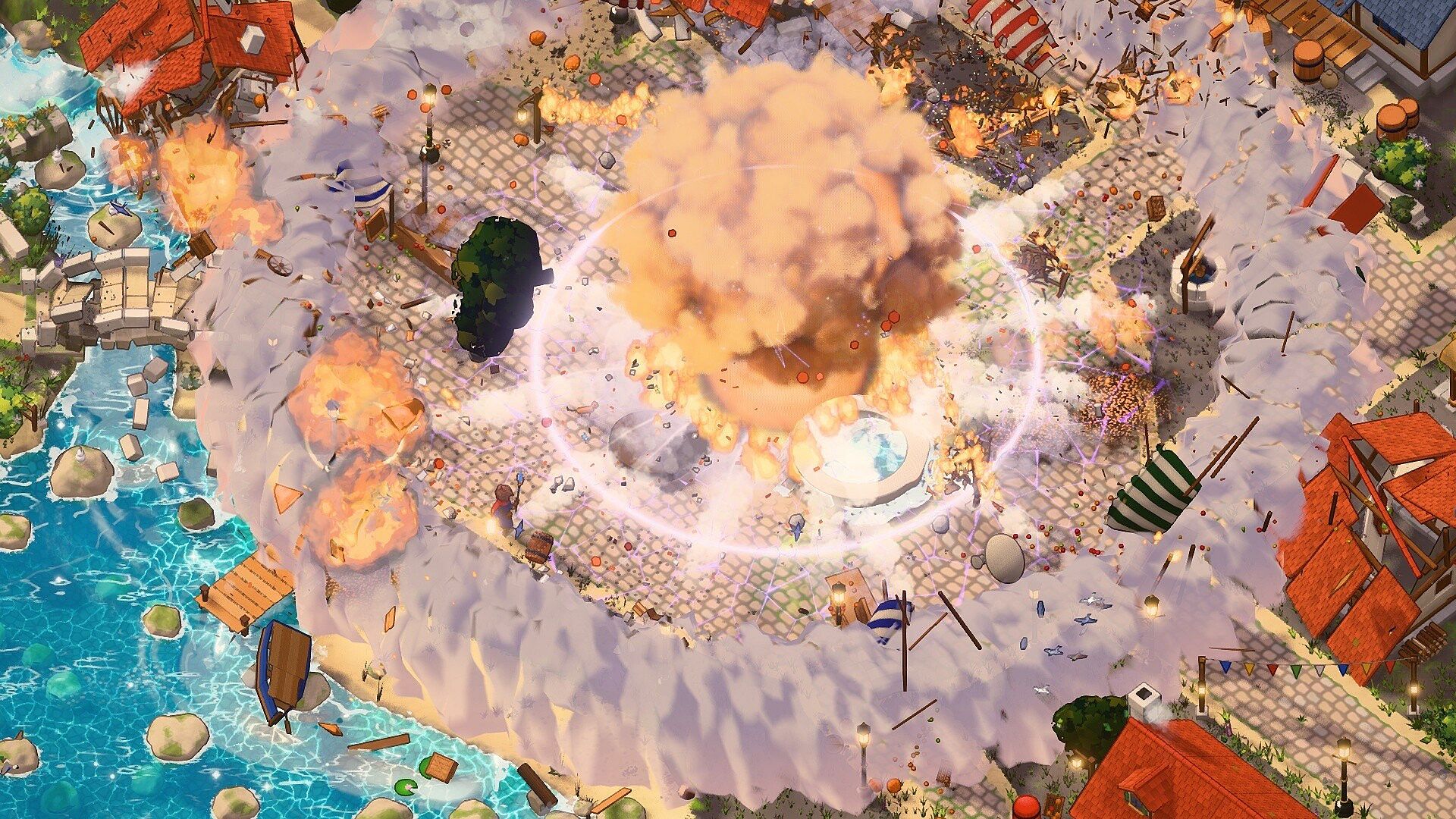
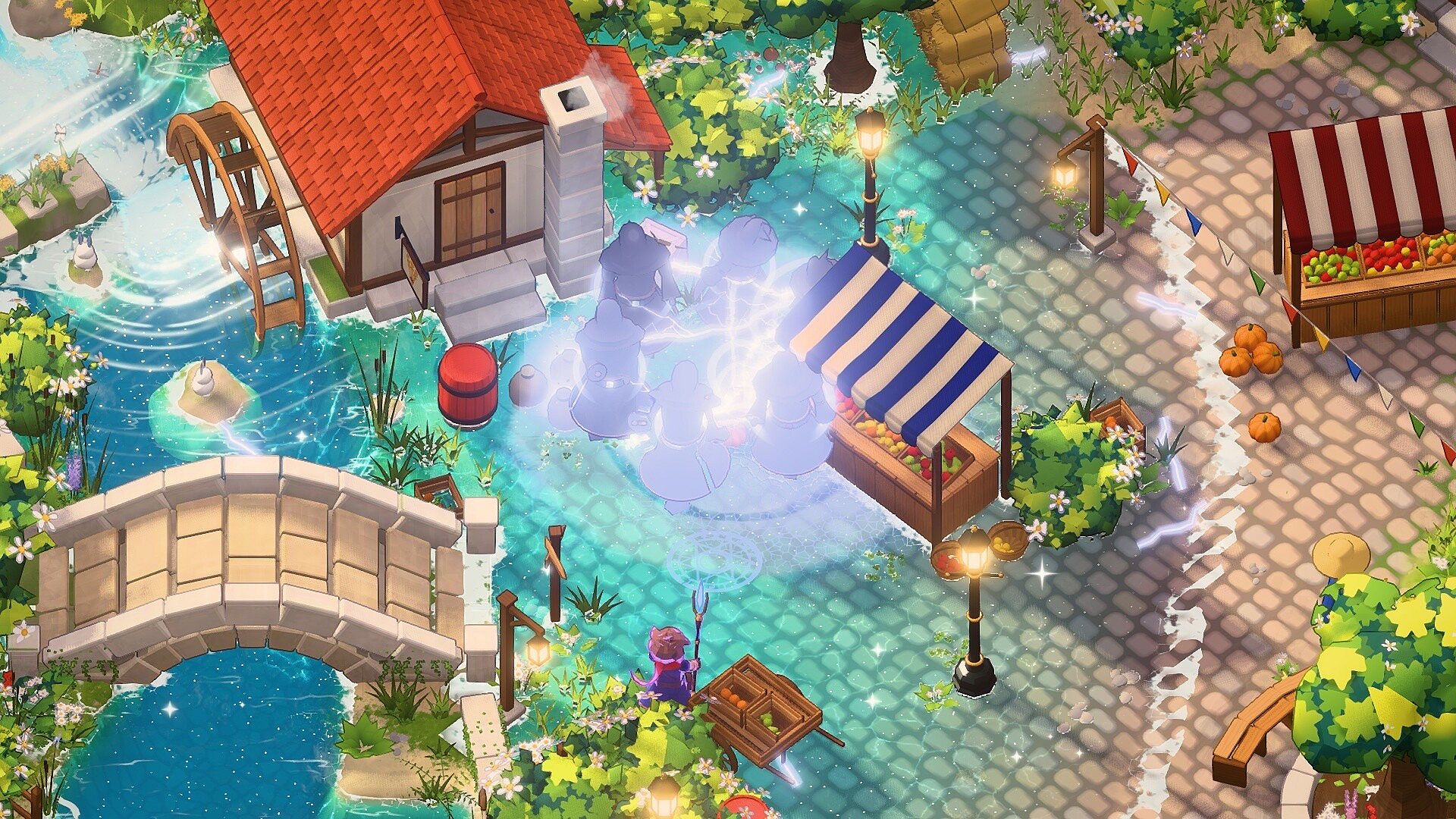
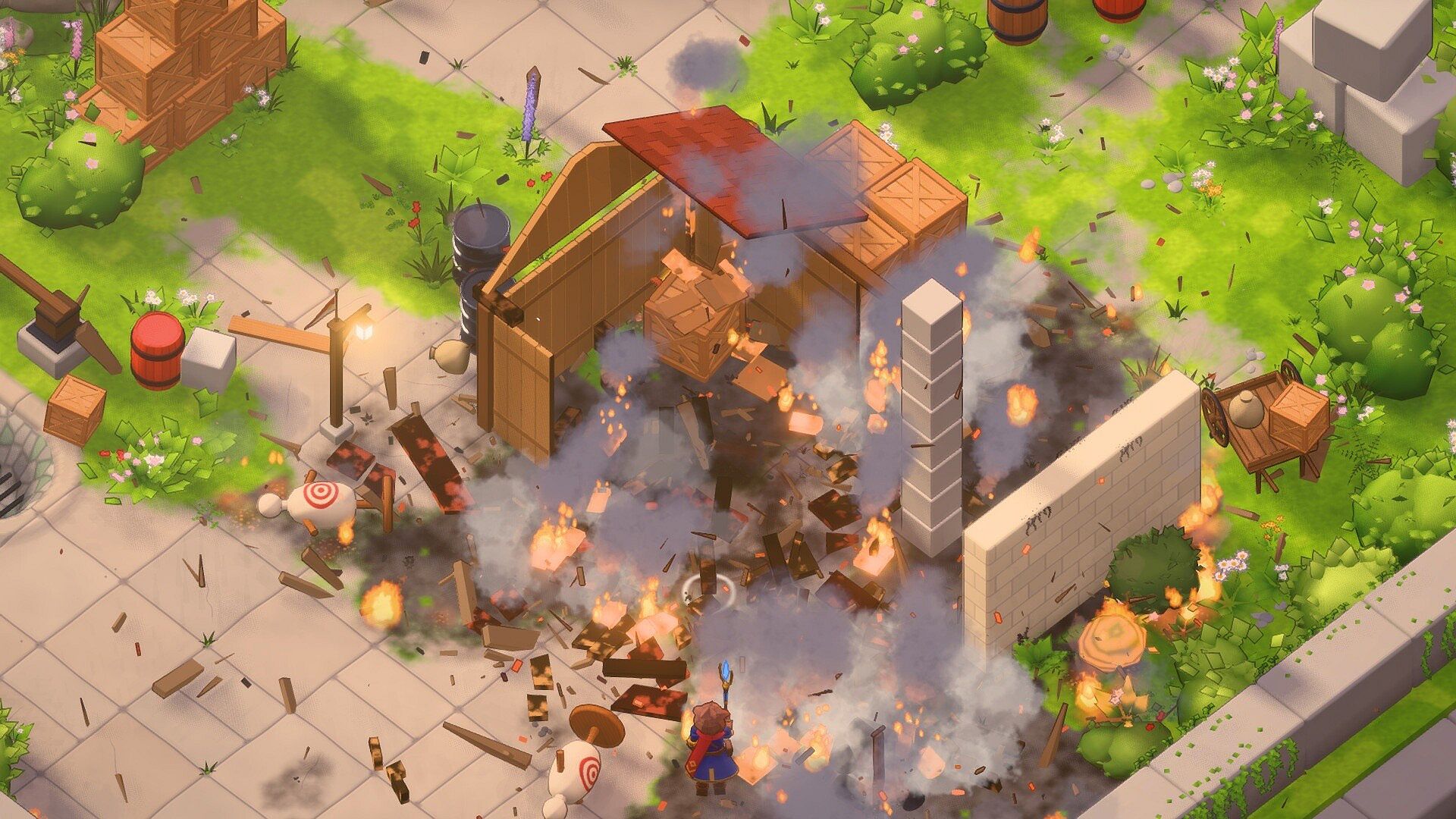
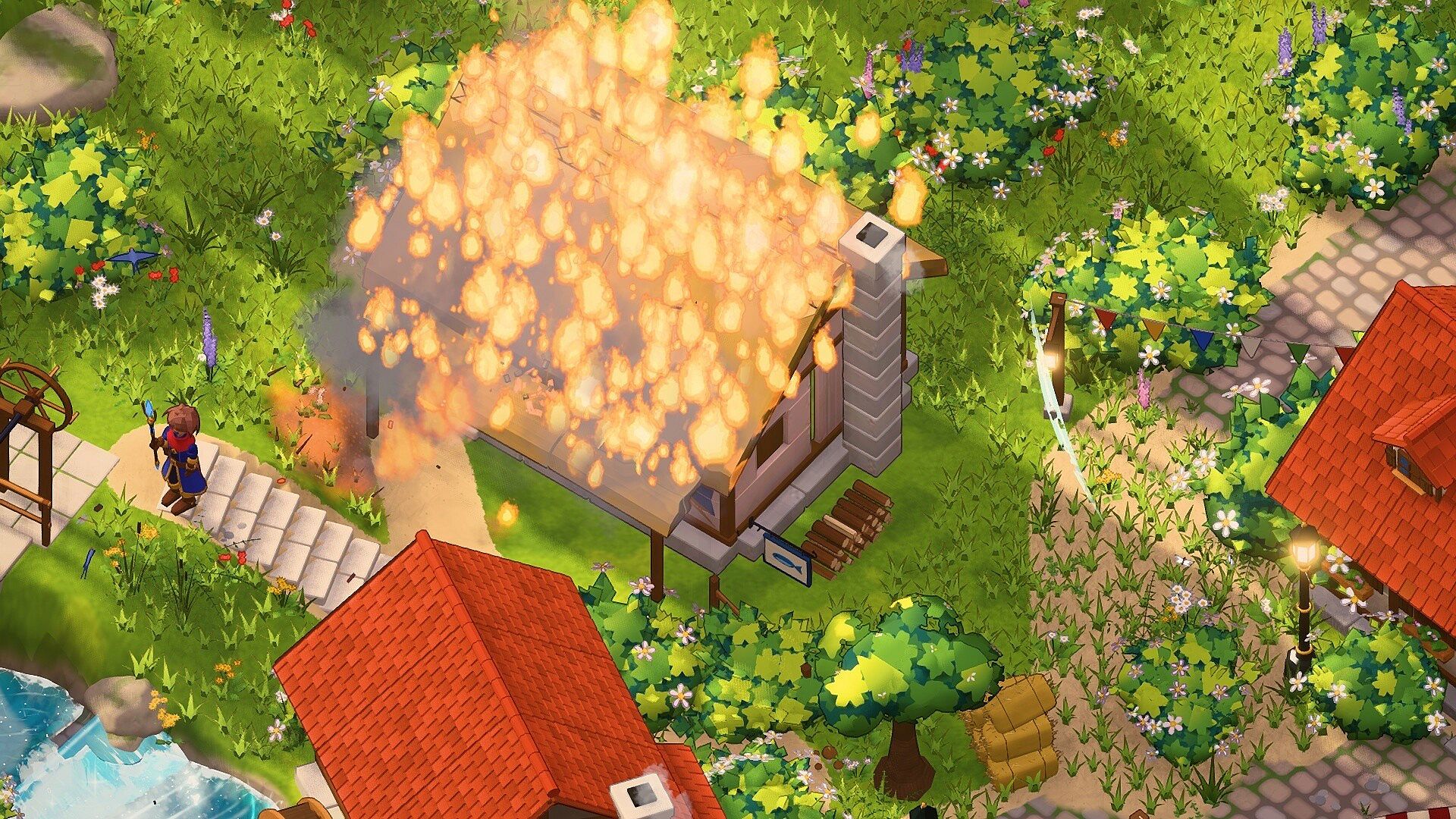
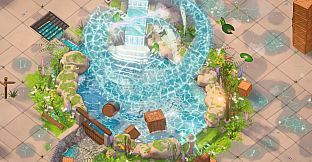
Spellspill: Magic Destruction Sandbox is a physics-driven action and simulation title built around spell casting that interacts with a fully simulated world. Players manipulate fire, ice, lightning, wind, and water to reshape environments in real time, where water flows with volume, fire spreads across connected surfaces, and structures collapse when supporting elements are destroyed.
Gameplay
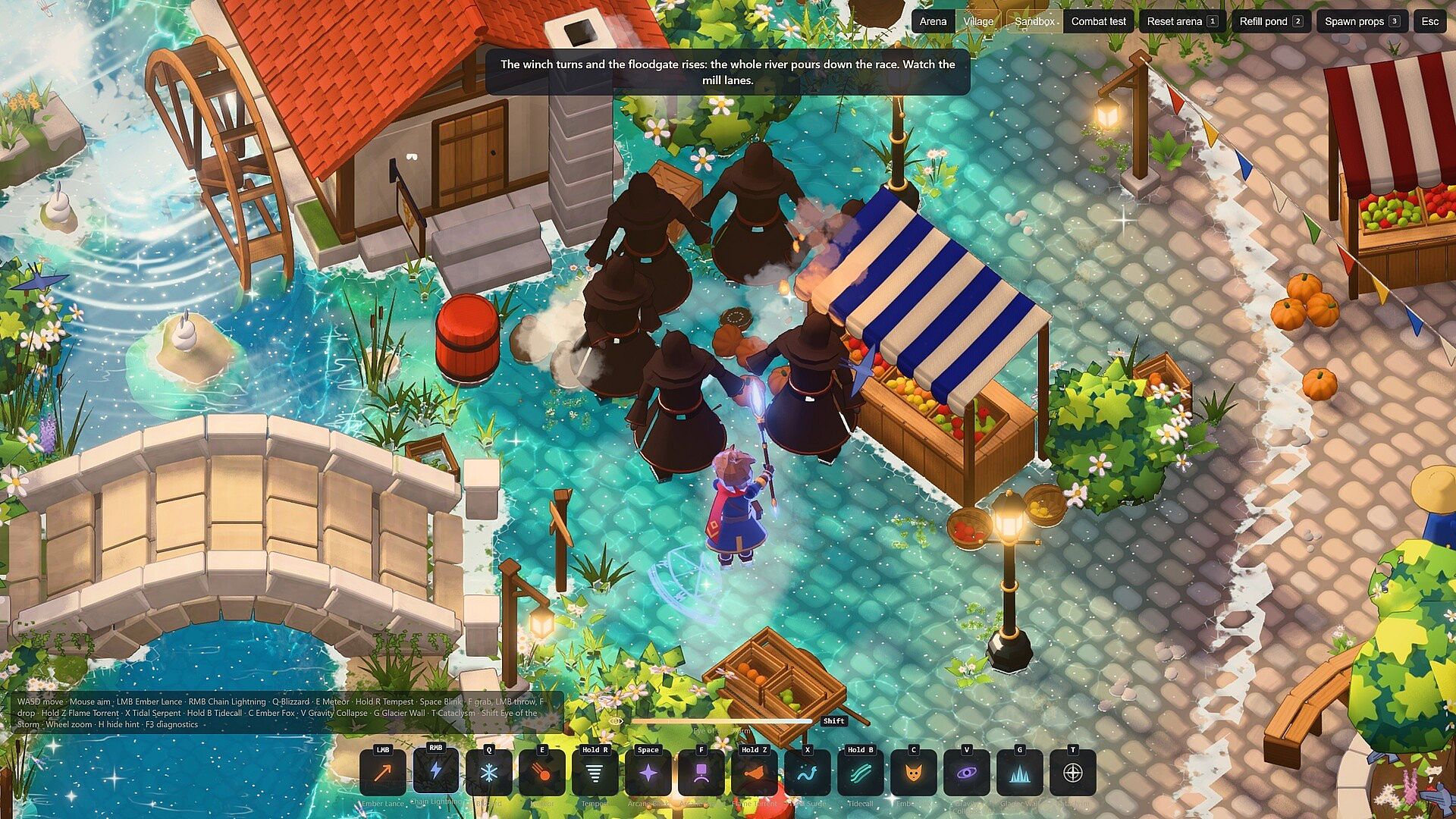
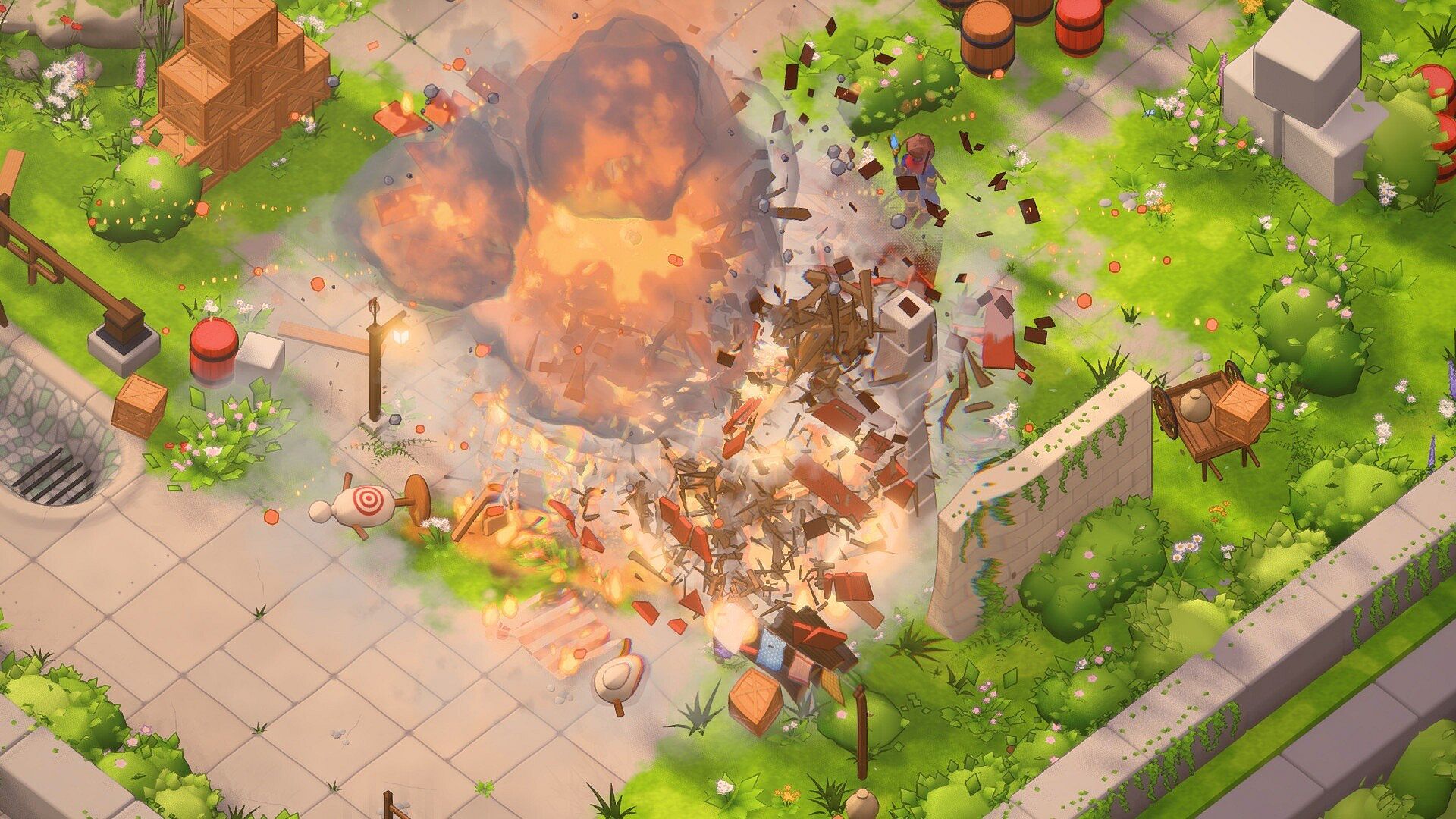
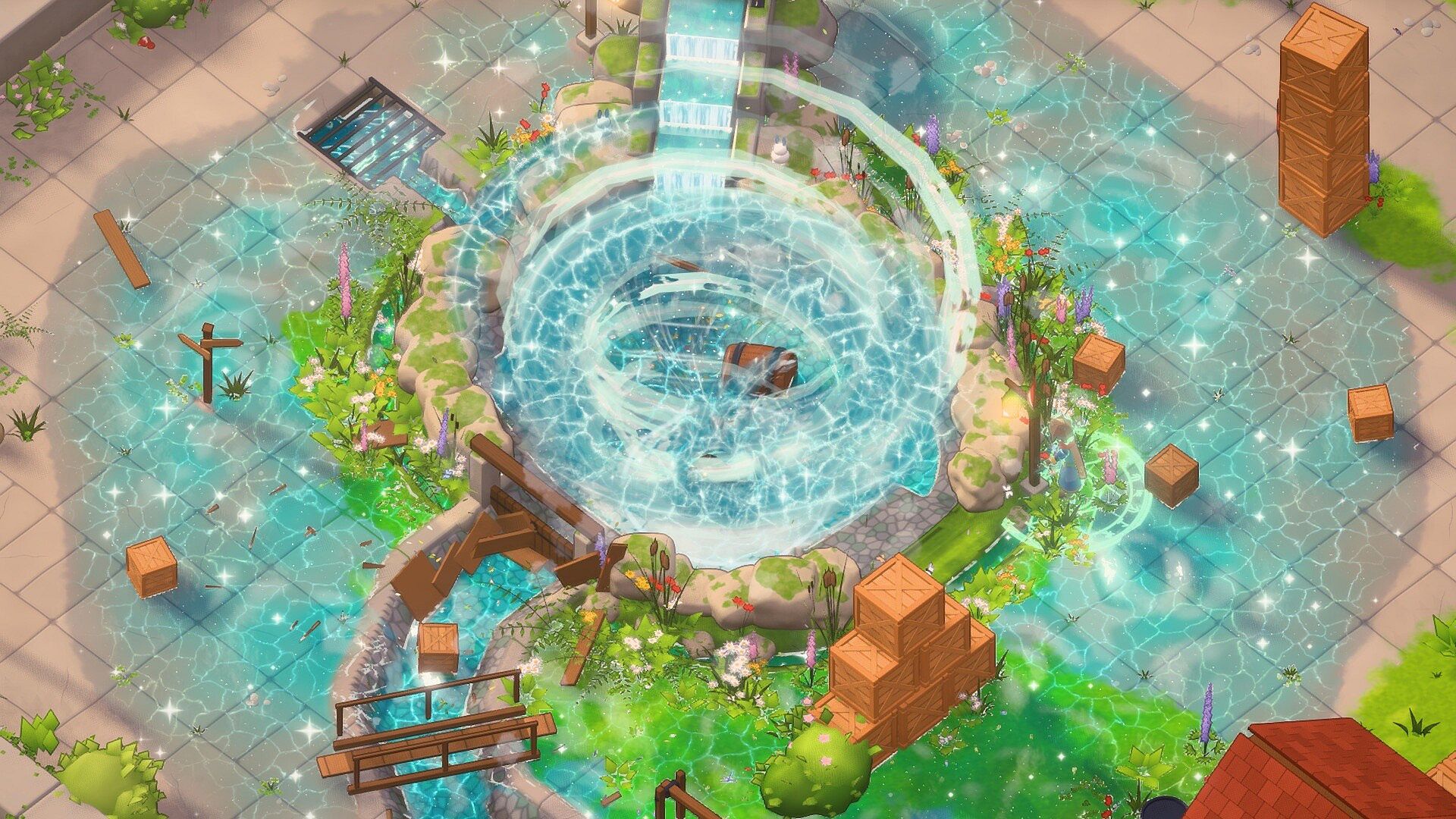
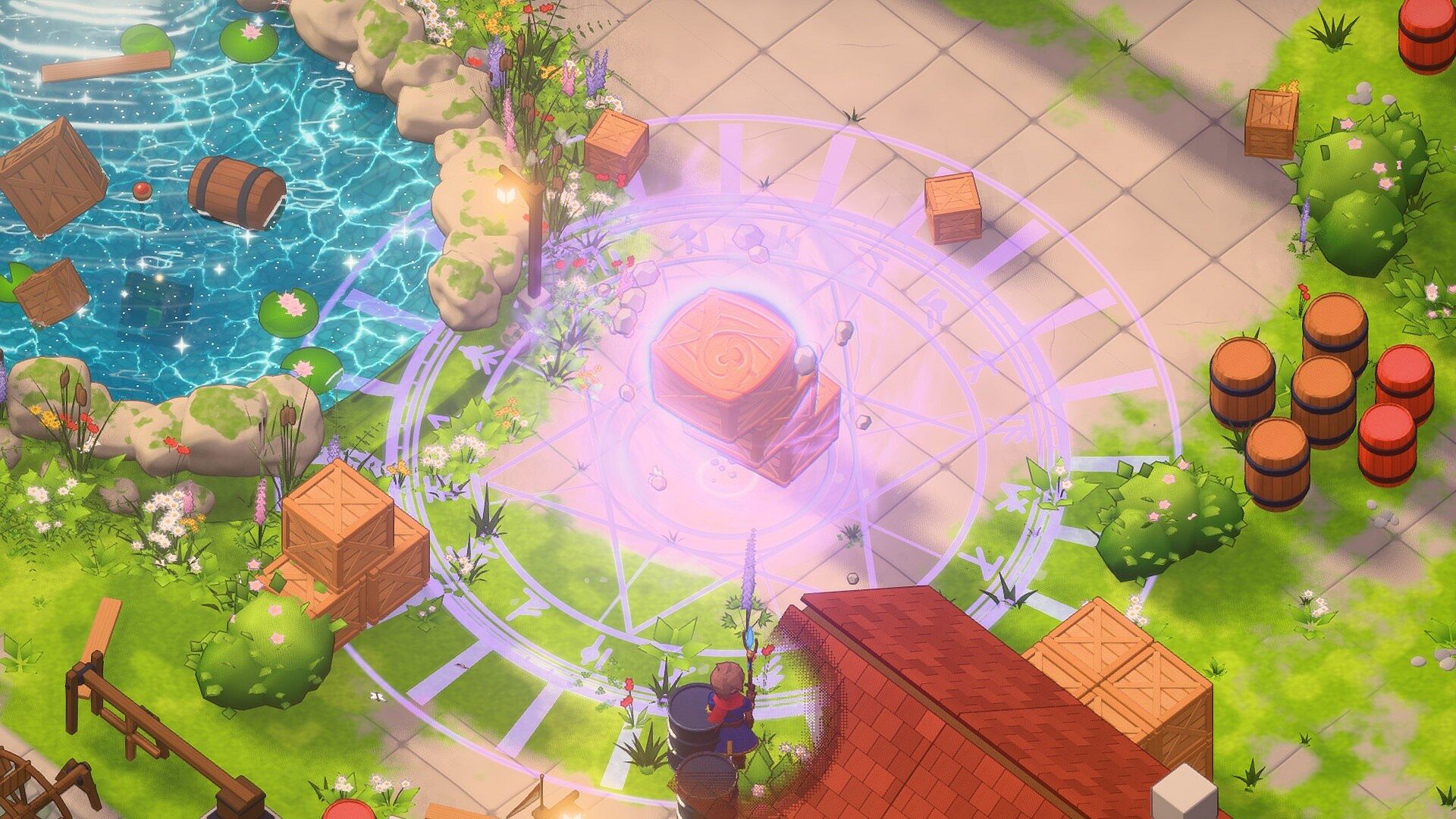
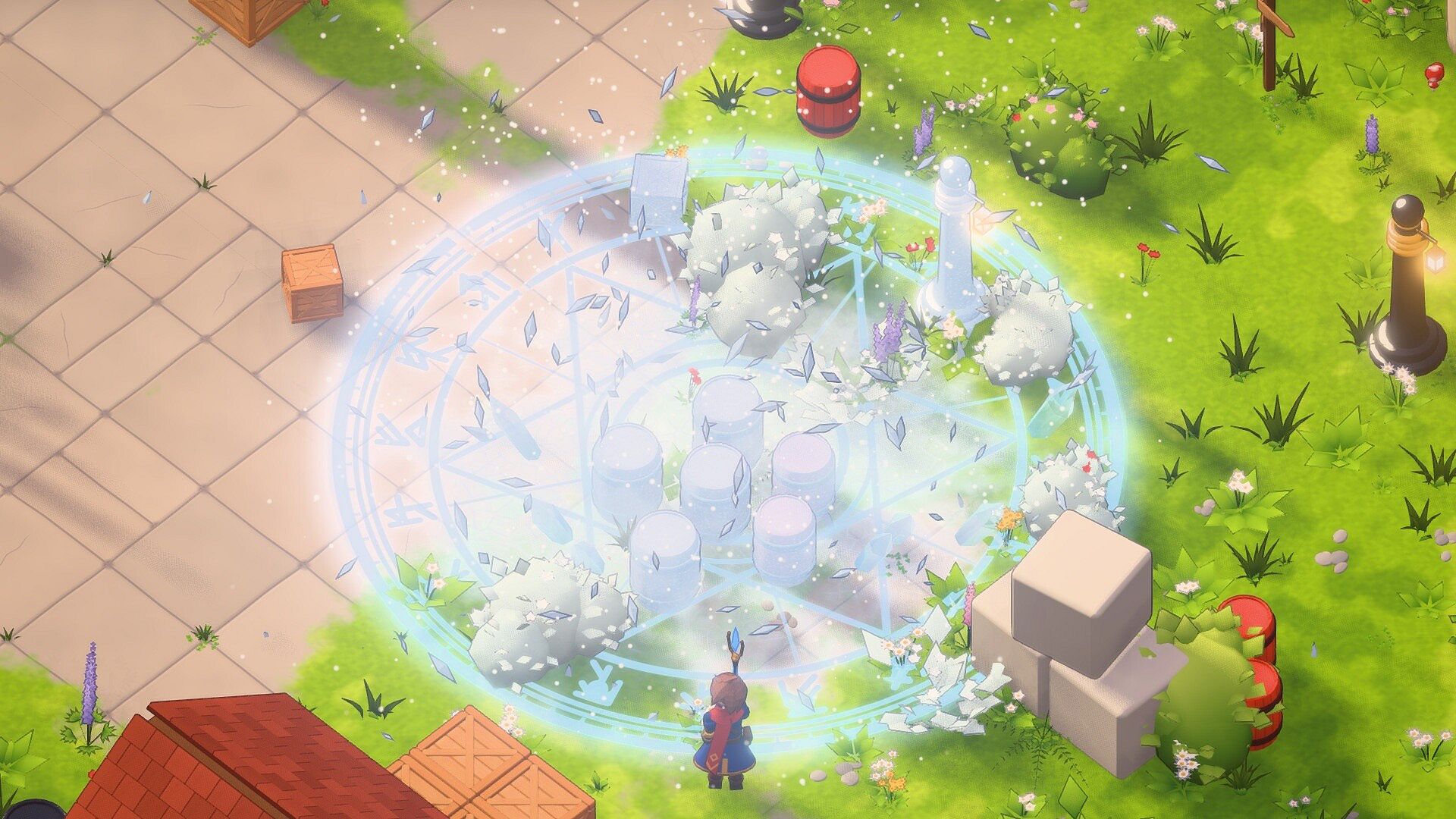
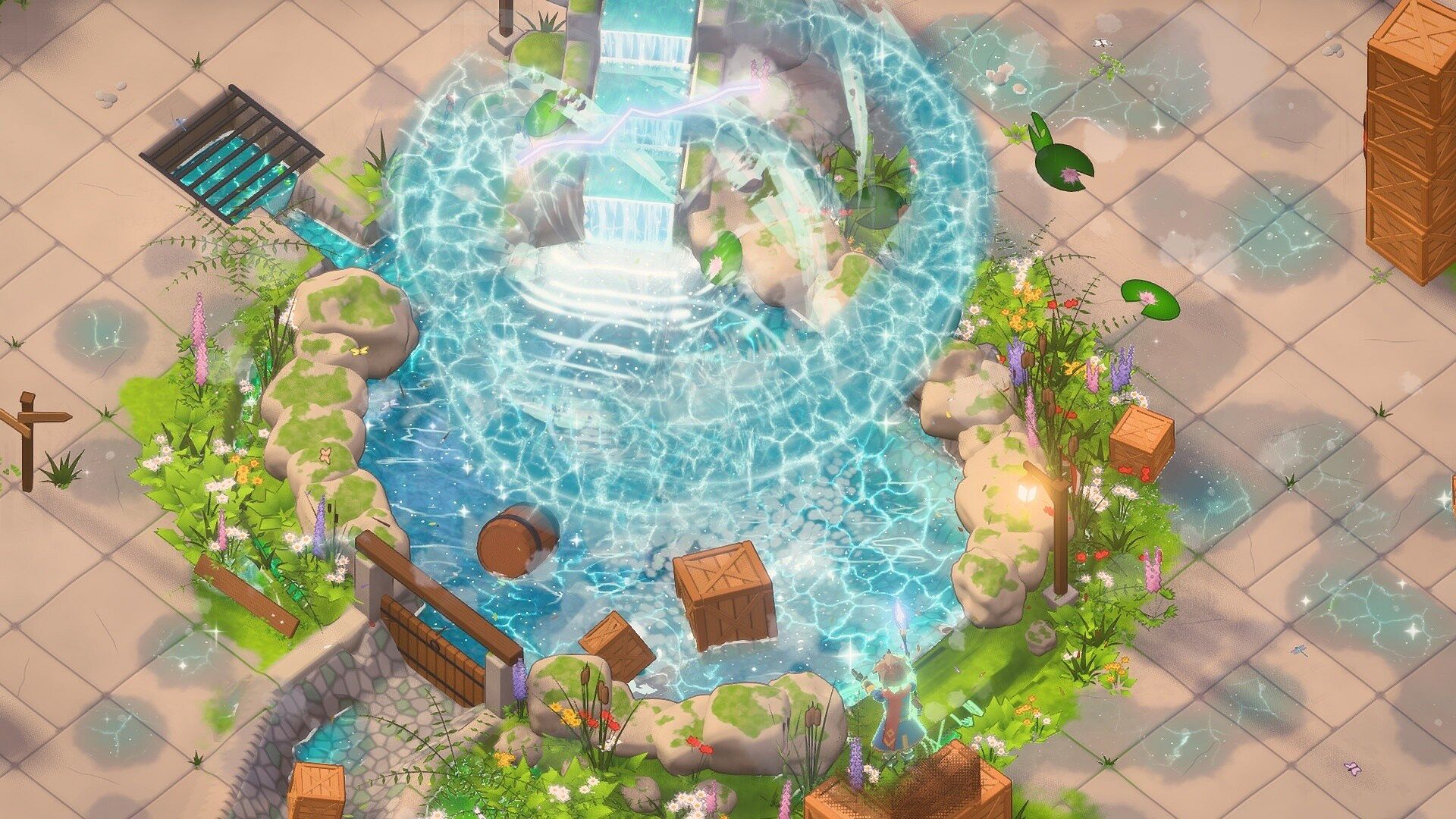
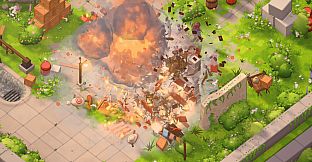
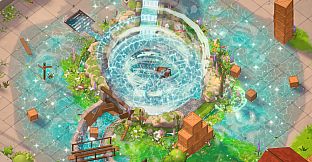
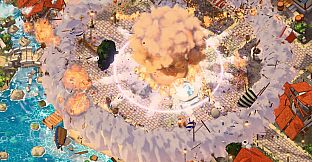
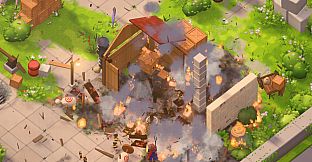
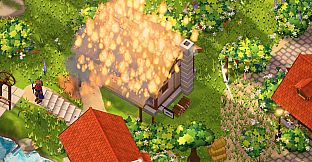
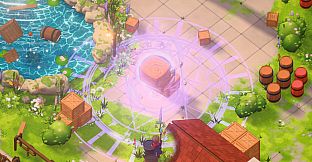
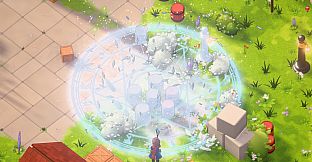
The core loop centers on experimenting with spells that produce consistent physical outcomes. Casting Ember Lance sets wooden structures ablaze, allowing flames to travel between boards and beams until weakened sections snap and roofs or walls give way. Arcane Grasp lets players pull plugs from ponds to create whirlpools or flip sluice gates to redirect water flows that turn waterwheels or flood squares. Chain Lightning travels through puddles and connected objects, striking distant targets when conditions align. Blizzard freezes surfaces for crossing, while Meteor impacts shatter ice into floating pieces. Tempest generates wind that spreads fires or lifts burning objects, and Tidecall draws water into rising ribbons that can extinguish flames or strike enemies. Glacier Wall forms ice barriers that later melt into additional water. Gravity Collapse draws objects inward before igniting them and leaving craters. Cataclysm releases a fireball whose shockwave travels outward to destabilize distant buildings.
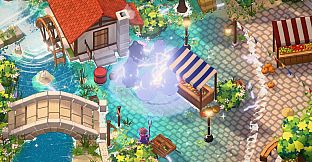
These interactions create layered results. Wet surfaces conduct lightning farther, frost extinguishes fuses, and wind carries flames across gaps. Players can also grab loose items such as crates or debris to reposition them. Two distinct maps support these systems: a compact stone arena featuring a pond, waterfall, mill race, and timber house, plus a larger village layout with cottages, stalls, a watermill, fountain, and lake. Water levels change visibly when floodgates or basins are manipulated, and effects like puddles or steam persist across multiple casts.
Game Modes
Sandbox mode grants access to every spell with short cooldowns, allowing unrestricted testing of destruction chains and environmental reactions. Combat test mode introduces waves of melee husks that react to physics, ragdolling on defeat and losing limbs that can then be manipulated. Both modes operate under the same rules on either map, with mouse and keyboard controls handling all inputs. No scoring system or boss encounters exist in the current build.
The game remains in Early Access, so available content focuses on these core systems while additional features receive development attention.
Planned Features
Future updates center on a level editor that will let players construct custom physics sandboxes and puzzles using the same water, fire, and breakable building mechanics, with options to share creations. Additional planned elements include a destruction mode that rewards larger scale collapses, more physics-based puzzles, expanded enemy encounters with boss fights, and further spells. These additions will expand the single-player focus without introducing multiplayer elements at this stage.
Is It Worth Playing?
Spellspill suits players who enjoy hands-on experimentation with interconnected systems rather than structured objectives or combat progression. The emphasis on observable cause and effect, from spreading fires to shifting water volumes, delivers satisfying results when spells interact in unexpected ways. As an Early Access title, the experience centers on the two current modes and two maps, with ongoing work toward the level editor and expanded content. Those drawn to simulation and destruction sandboxes will find the physics consistency and spell variety engaging for repeated sessions of creative testing. The absence of a full campaign or scoring keeps the focus narrow, making it most appealing to users comfortable with iterative development and limited scope.











