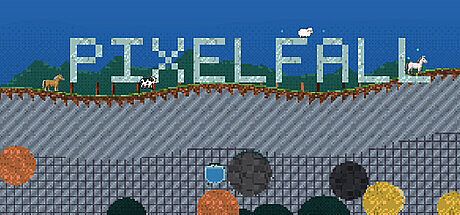


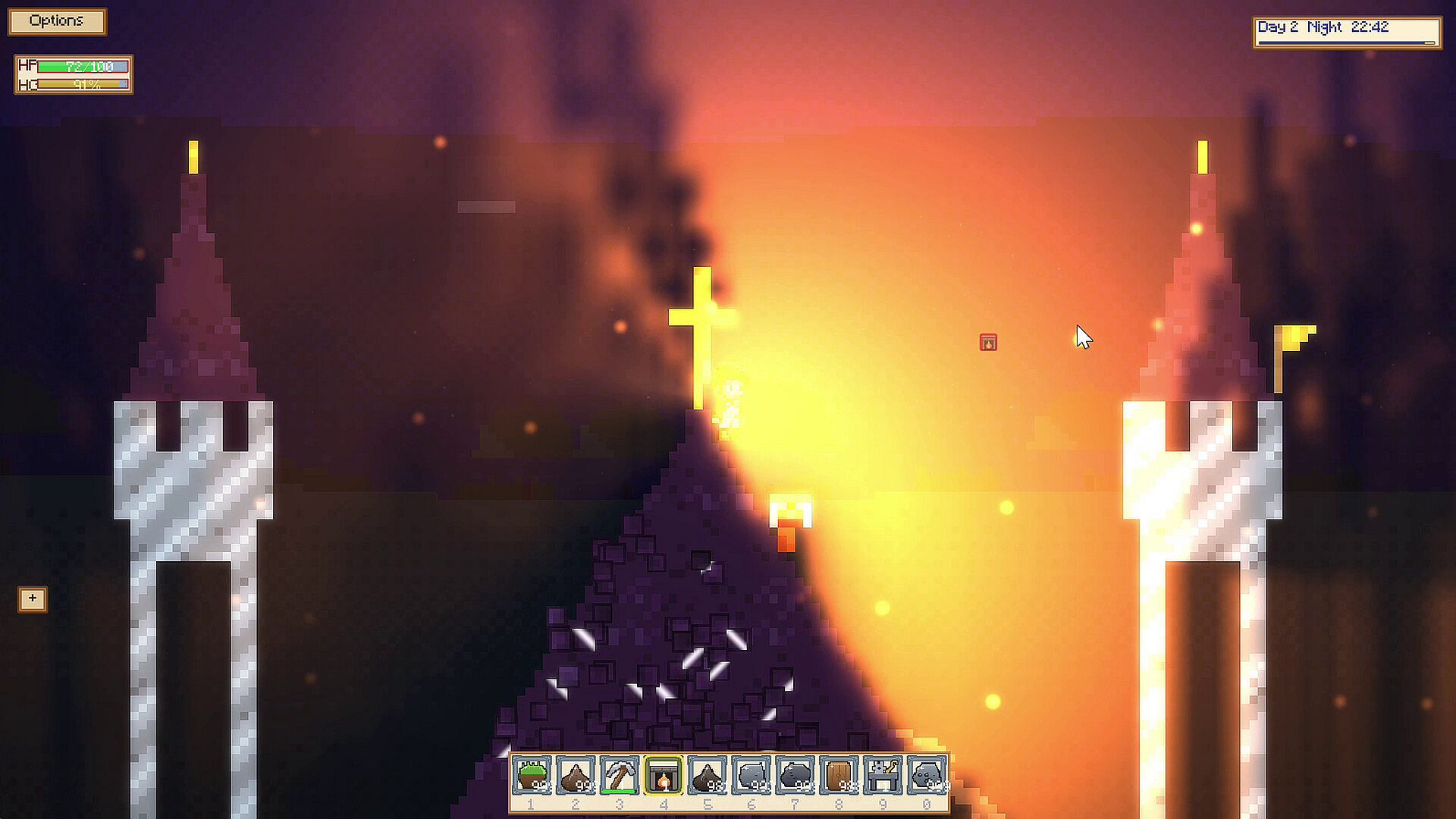
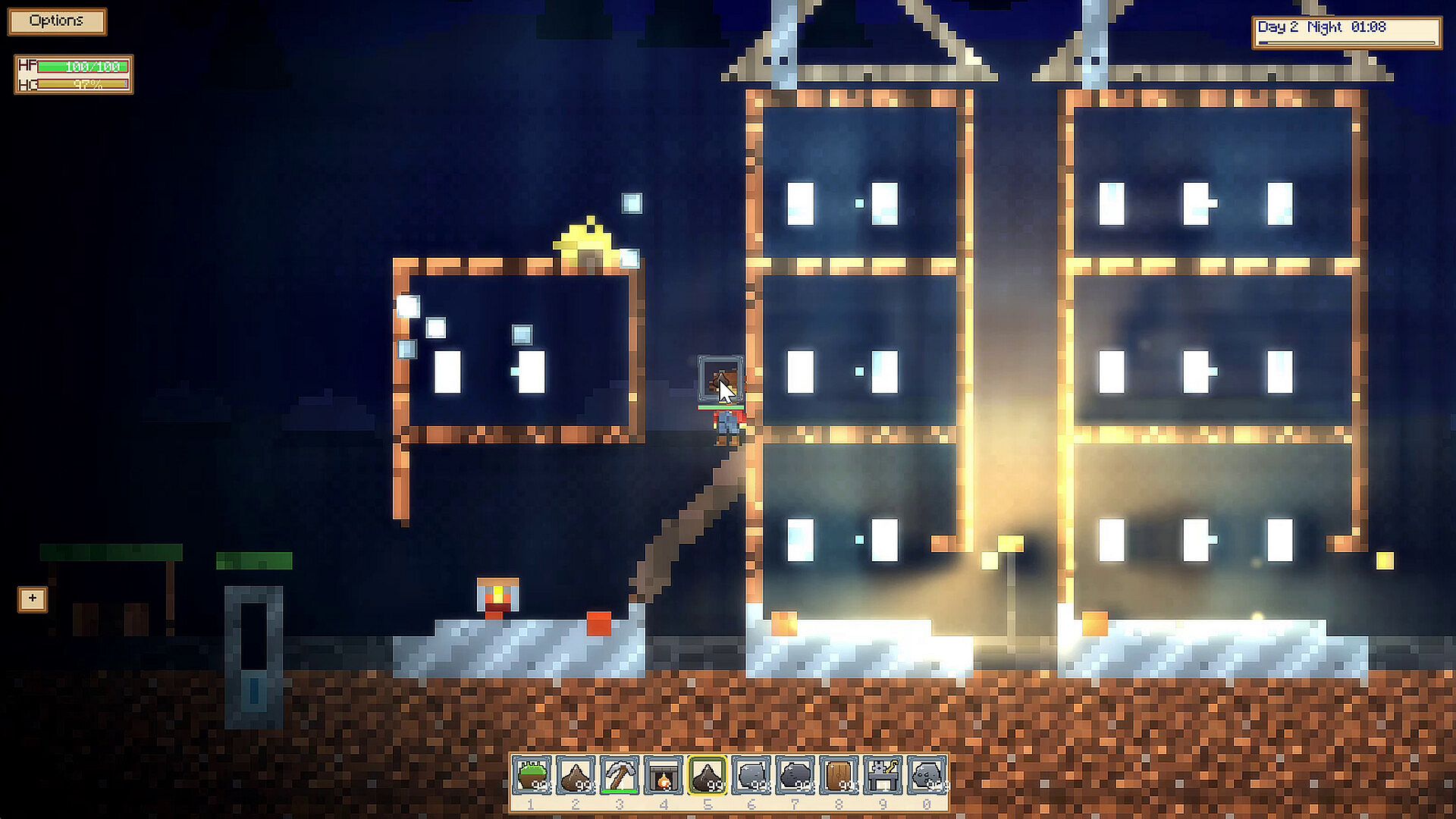
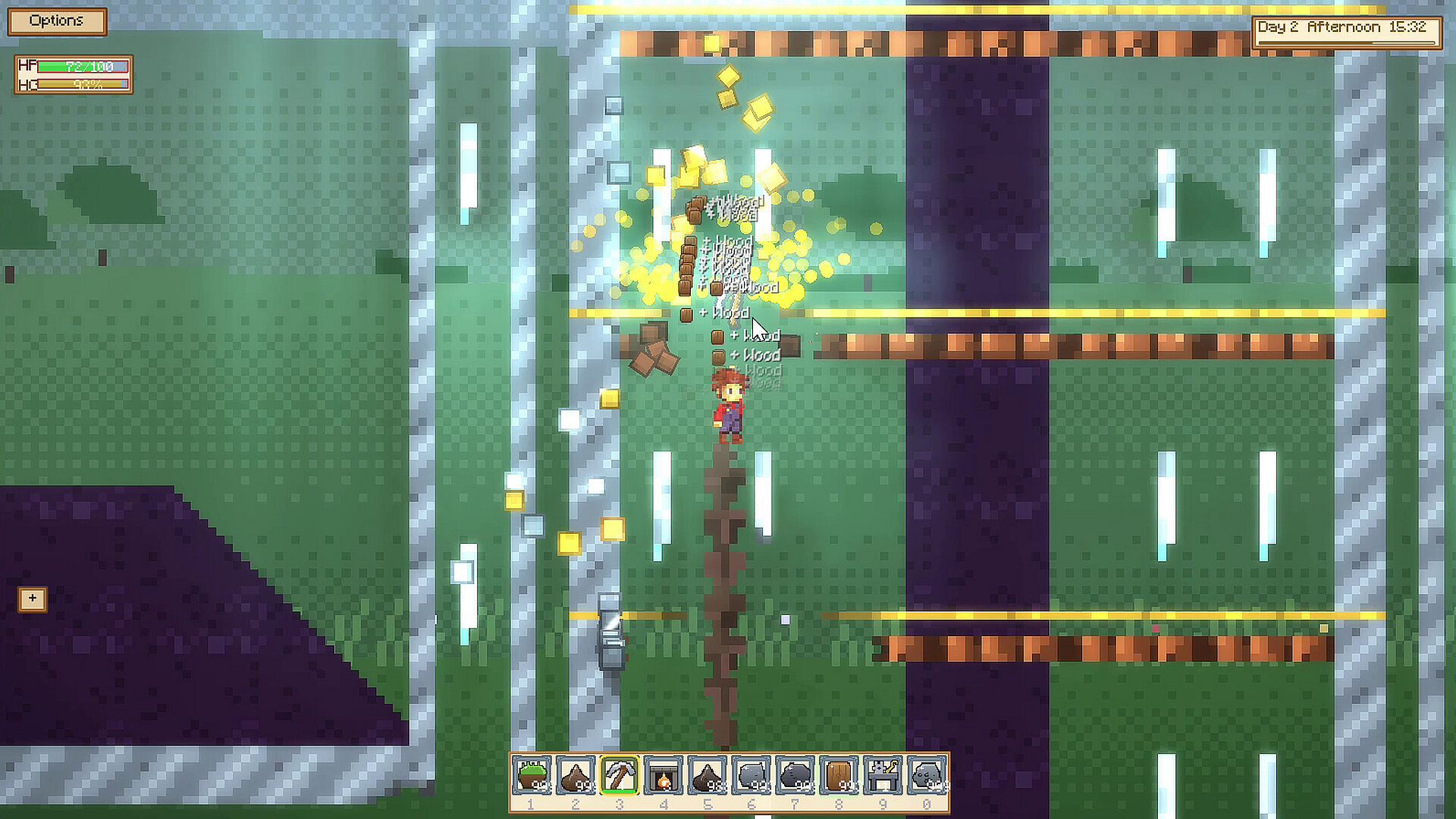
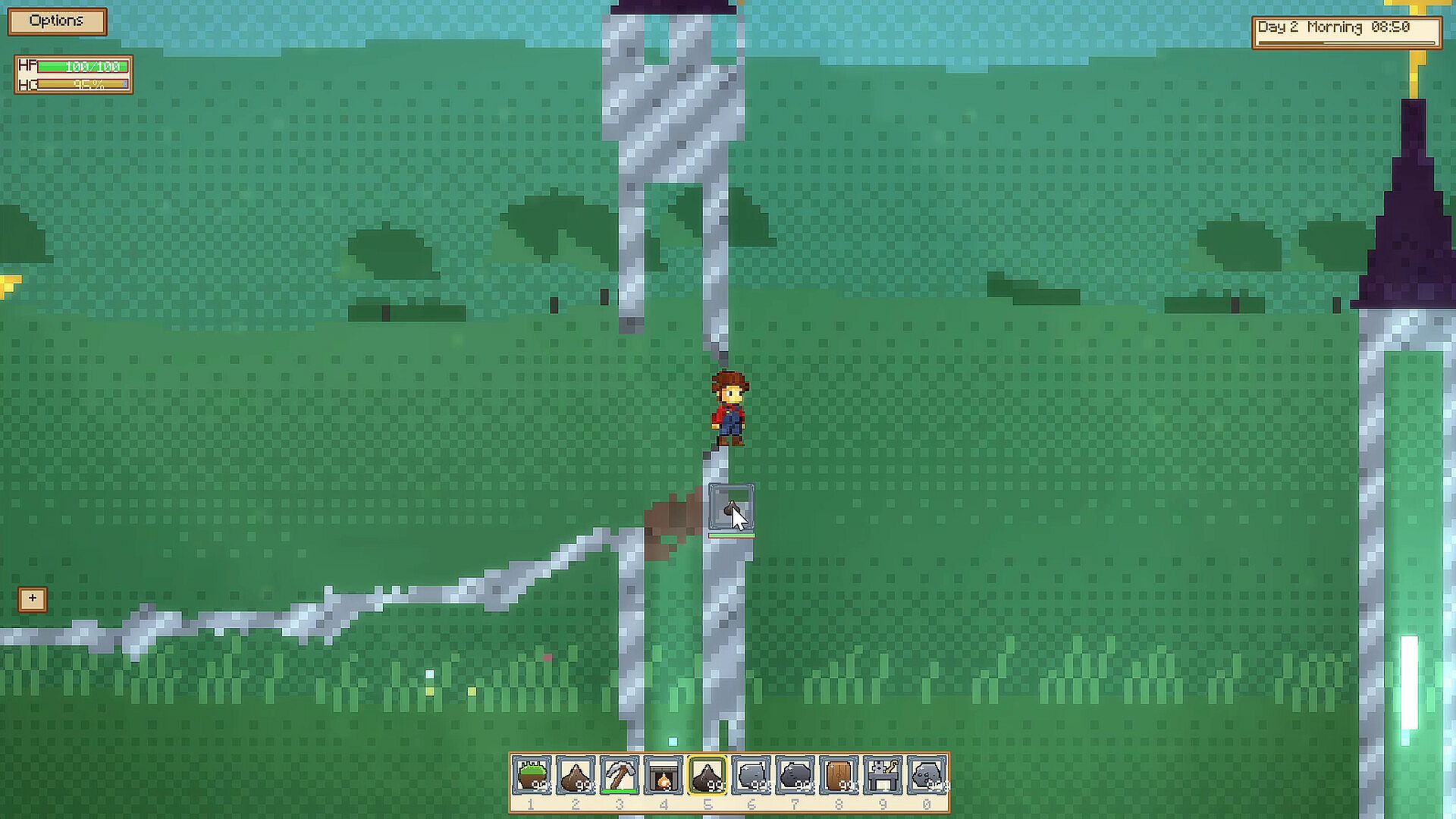
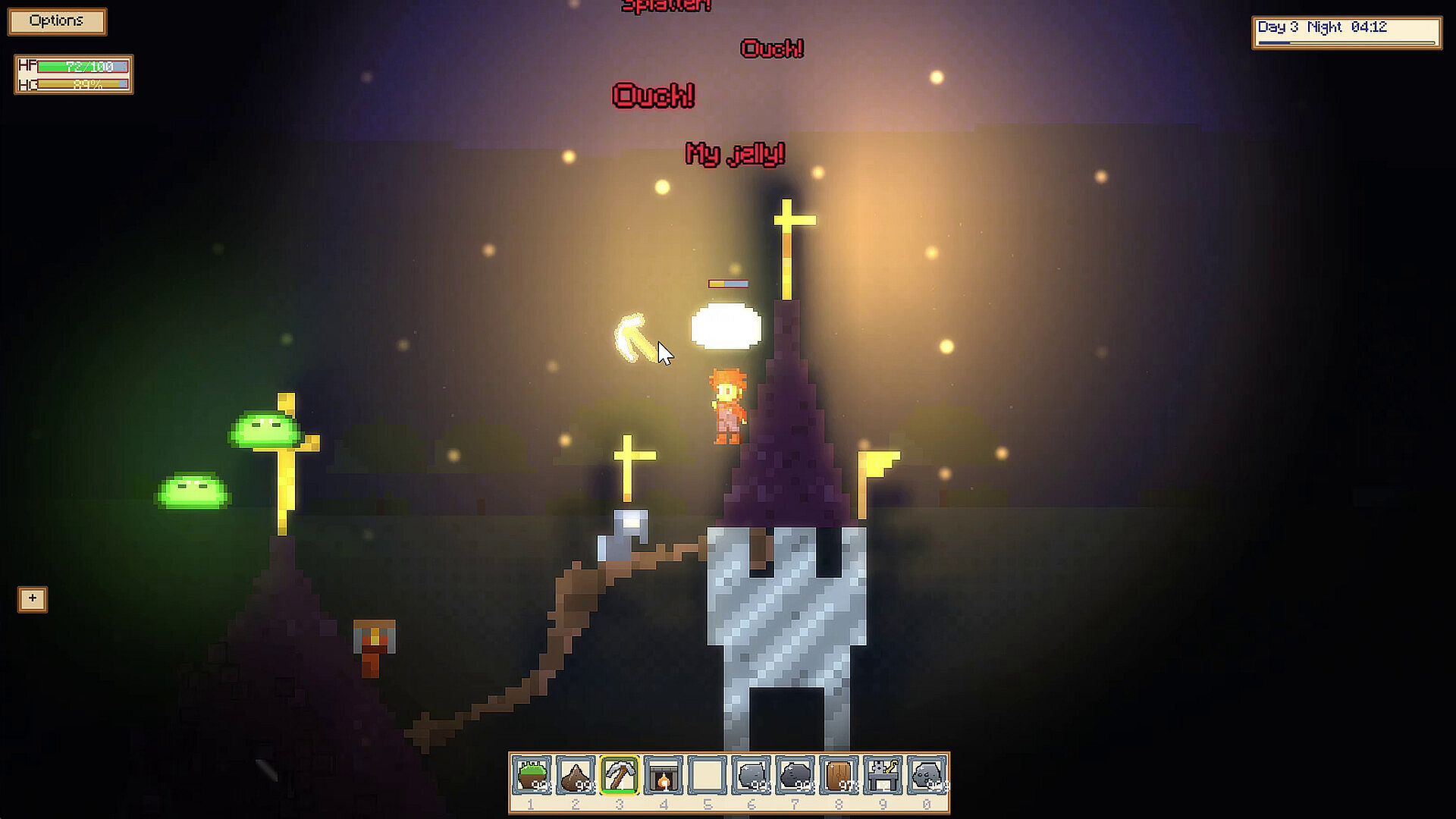
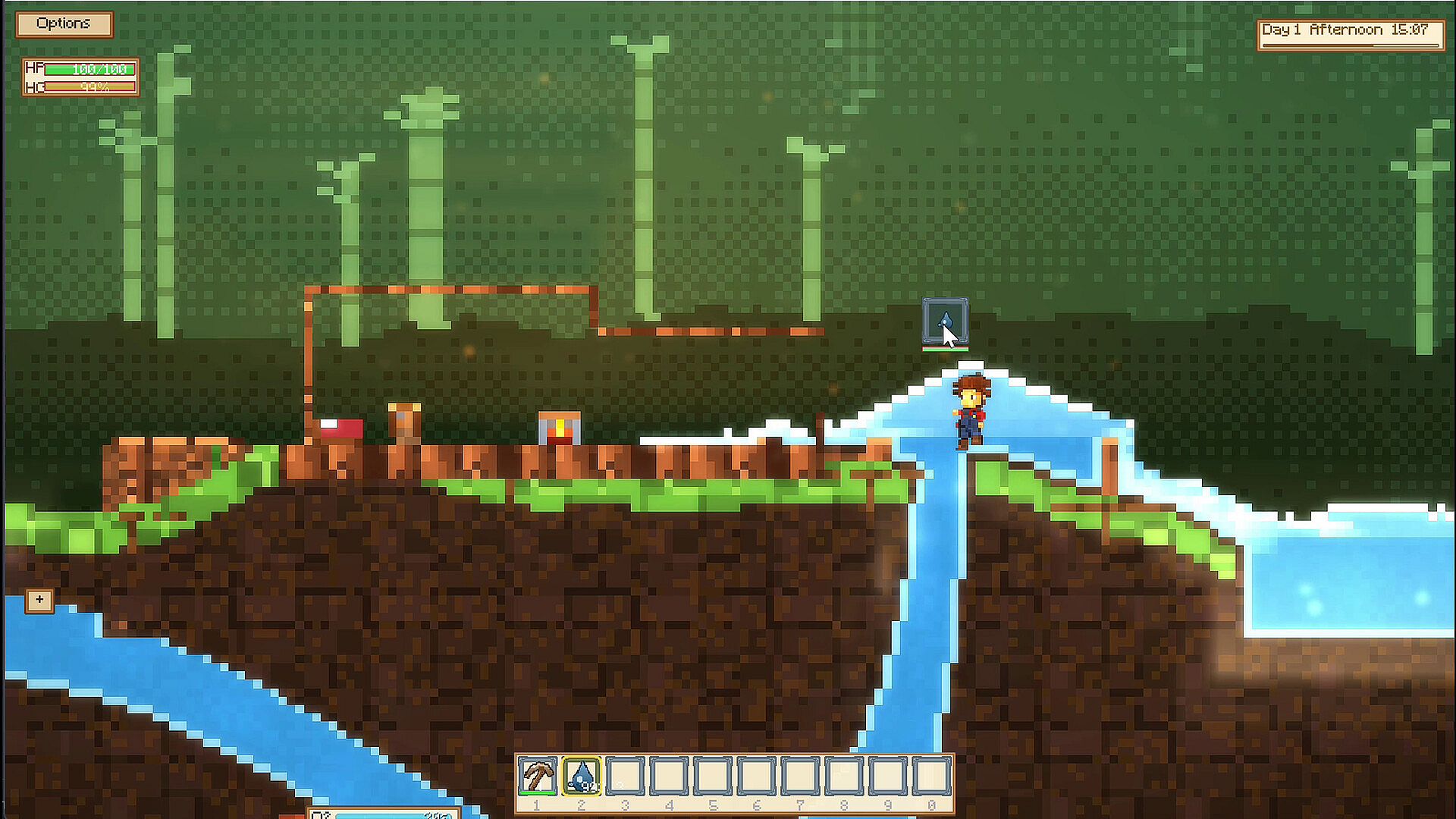
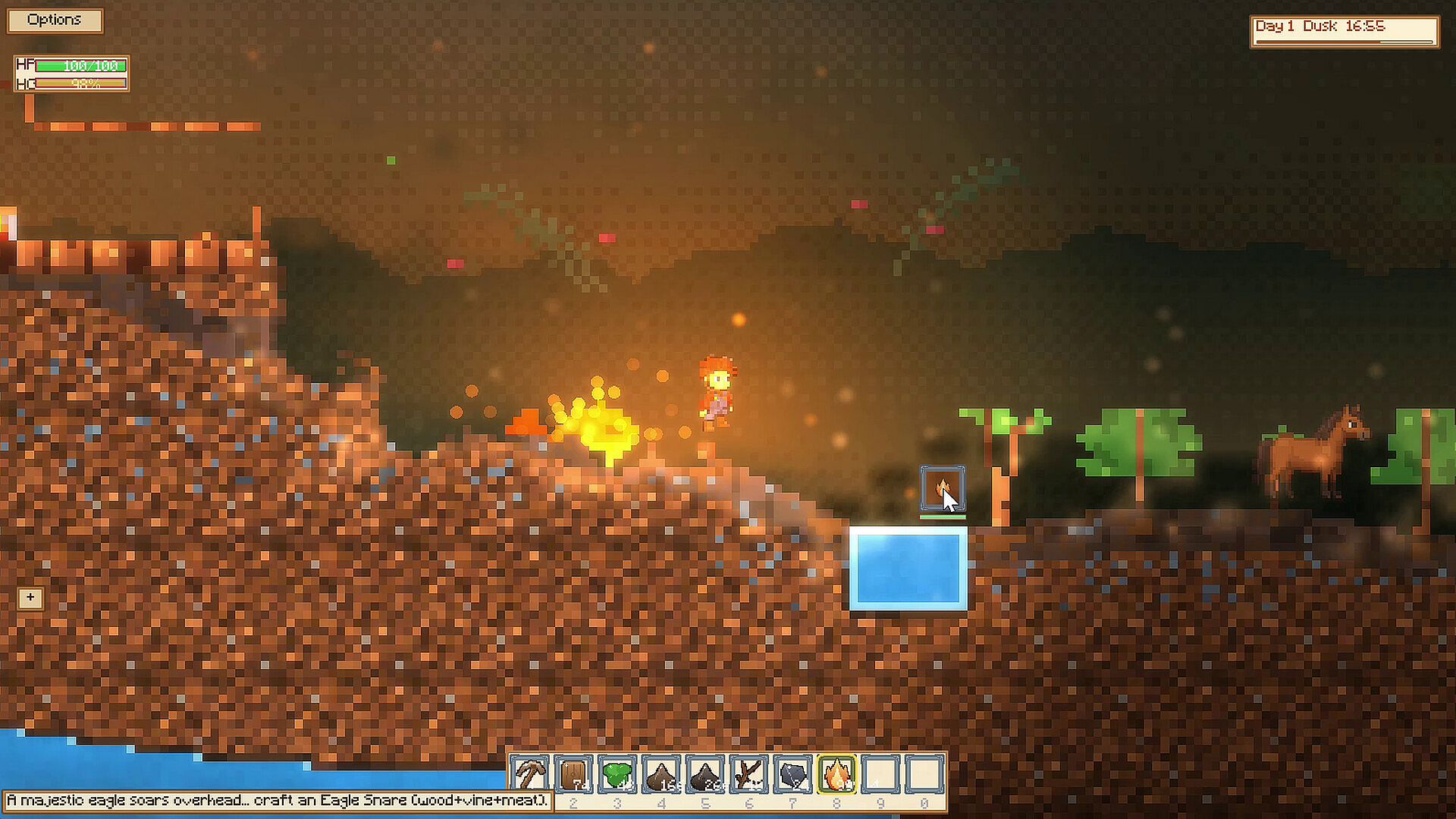
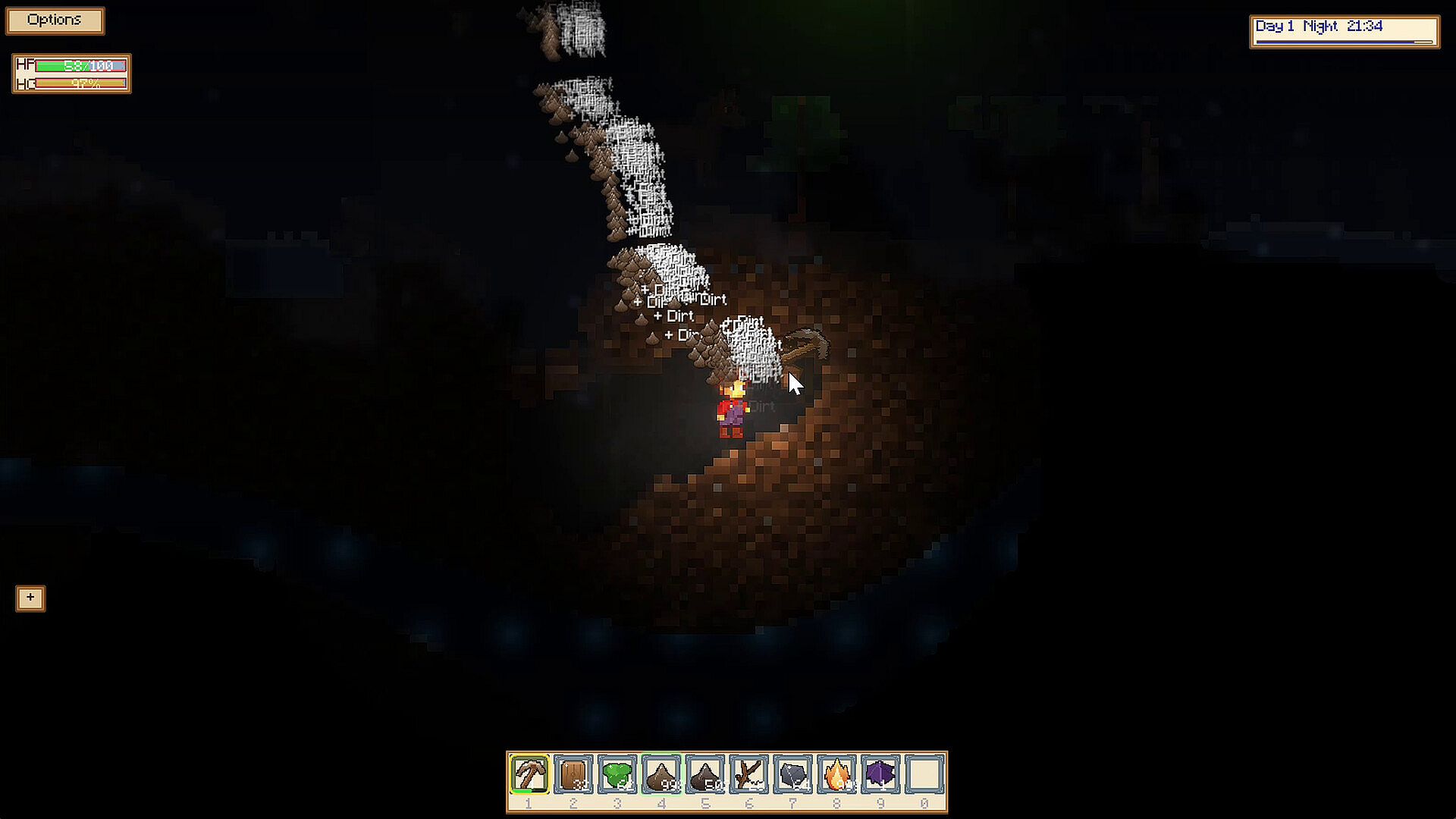
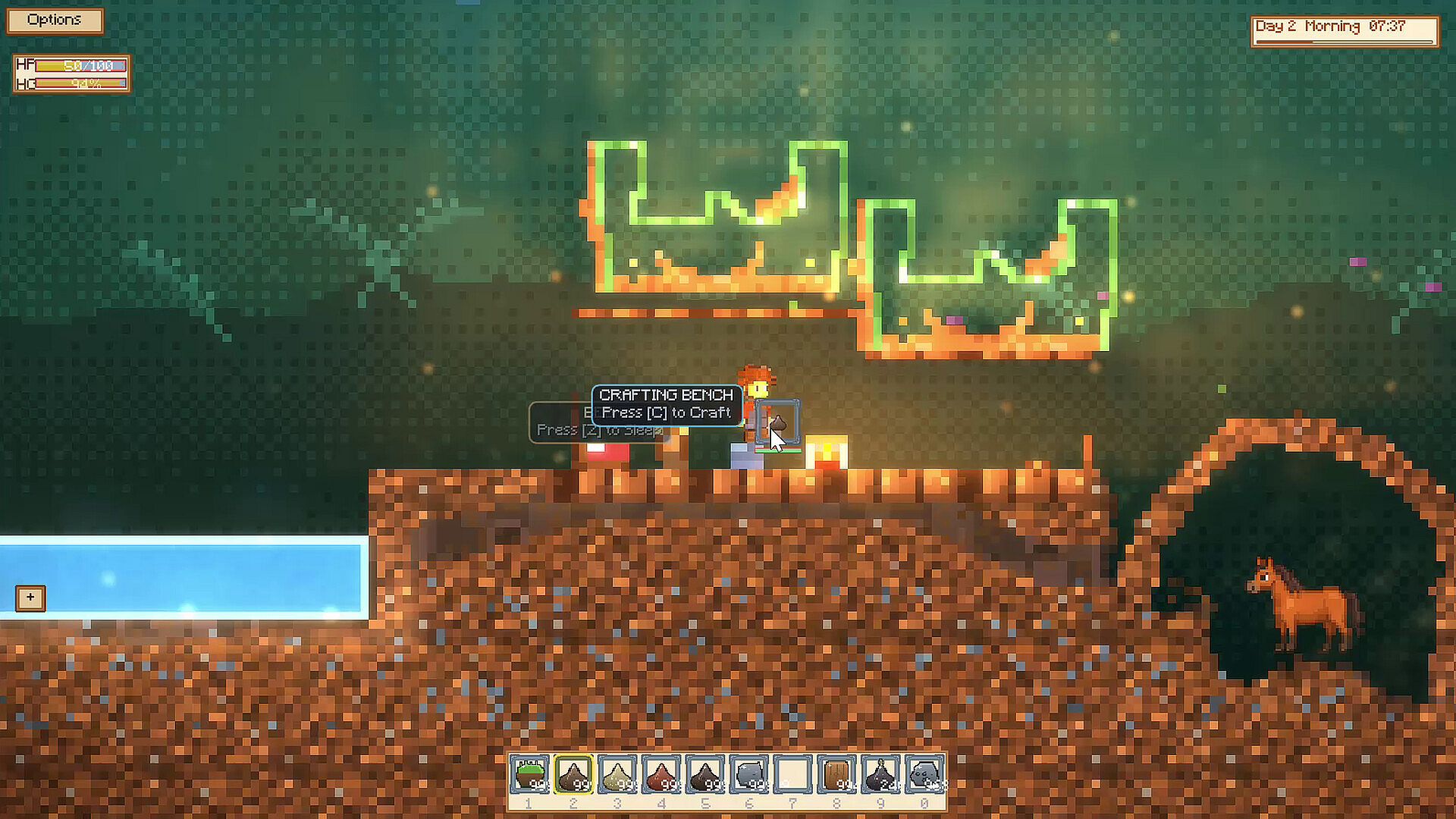
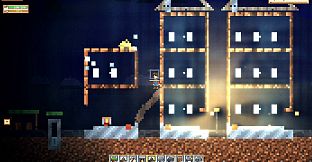
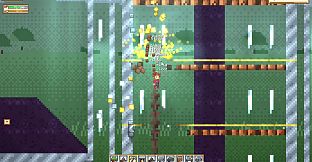
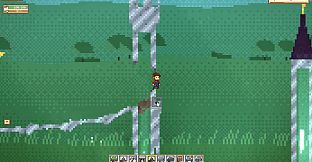
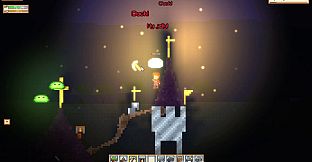
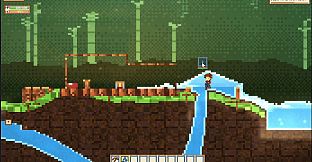
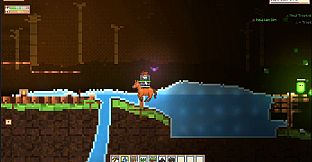
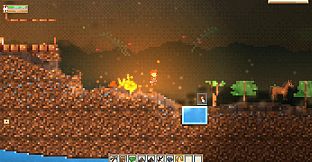
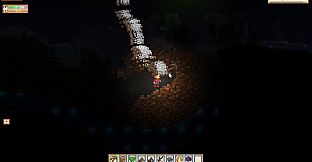
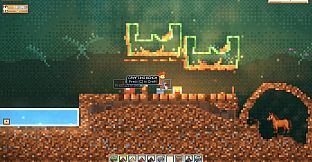
PixelFall is a pixel-art action, indie, simulation, and adventure game in early access on PC that centers on a living cellular-automata world where every element behaves according to real physics rules. Sand shifts underfoot, water seeks its level, fire spreads naturally, and lava hardens into stone, creating a sandbox environment that players shape directly rather than observe through scripted events.
Gameplay
The core loop revolves around exploration and interaction with a fully simulated vertical world that stretches from abyssal oceans and terraced trenches through deep caverns filled with glowing hazards and false floors, up to a massive volcano that erupts on its own schedule and beyond into floating islands of meteorite, crystal, dark matter, and void. A pixel-art space radar with animated contacts helps track distant features while nebulae and galaxies provide parallax depth in the background.
Players dig channels that let oceans follow, freeze waterfalls to create climbable surfaces, and alter terrain to solve environmental challenges or gain advantages. Tools progress from basic flint implements to advanced obsidian and plasma options, while vehicles range from simple sleds to rockets. Farming involves growing crops with variable rarity and traits such as Giant or Lush, which support cooking and alchemy systems. Brewing produces elixirs for warping, cloaking, or emergency survival at depth. Blueprints painted at an Assembly Table can be stamped into the world at full scale for structured building and automation projects.
Hand-animated characters and fourteen-plus creatures with hand-drawn animation sheets populate thirteen distinct biomes. An original chiptune-impressionist soundtrack, composed movement by movement in a style reminiscent of Debussy rendered on NES hardware, underscores movement and discovery throughout the seamless environment.
Game Modes
PixelFall operates as a single-player experience focused on free-form progression through its unified world. Players navigate the vertical expanse at their own pace, combining exploration, resource gathering, crafting, and combat without separate match-based or competitive structures. The design emphasizes persistent changes to the environment that carry forward as the player ascends or descends layers.
World and Creatures
Seven Keepers guard amulets of the Heart scattered across each generated world. These bosses occupy authored arenas where victory requires more than direct combat. The Deep Shark uses surrounding water as armor, demanding that players drain trenches or freeze surfaces. The Sand Leviathan moves through powder and must be stranded on bare rock. The Frost Colossus draws strength from winter conditions, so melting its arena becomes essential. Similar environmental manipulation applies to the remaining keepers.
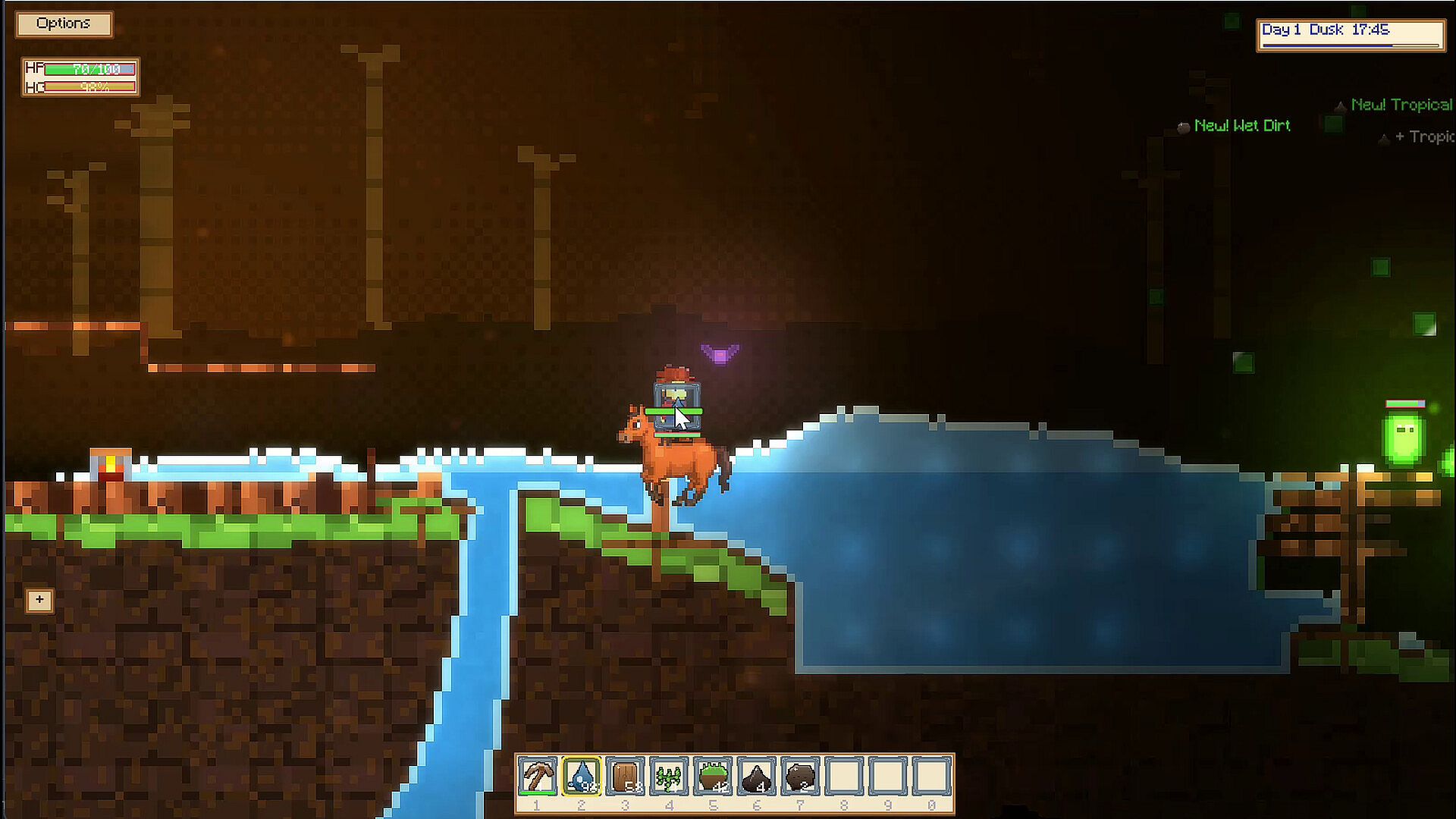
The world includes active threats such as meteors that streak in with audible warnings, swarm hunts that circle camps at dusk, diving bats, breaching sharks, and regrowing spore gardens. A wild horse can be tamed through repeated feeding, named, and ridden across the landscape under god rays and parallax skies, providing reliable transport that requires protection to avoid permanent loss.
Is It Worth Playing?
PixelFall suits players who enjoy deep sandbox simulation combined with action and adventure elements in a single-player setting. Its cellular-automata foundation allows creative problem-solving during both traversal and the seven keeper encounters, where altering the environment often proves more effective than standard combat. Early access status means the game continues to evolve with additional content and refinements expected over time.
Those drawn to pixel-art worlds with original soundtracks, tool progression, farming, brewing, and vehicle crafting will find substantial systems to engage with across the seamless vertical expanse. The emphasis on physics-driven interactions and persistent world changes rewards experimentation and careful planning, particularly for players comfortable with indie titles that prioritize simulation depth over linear storytelling.