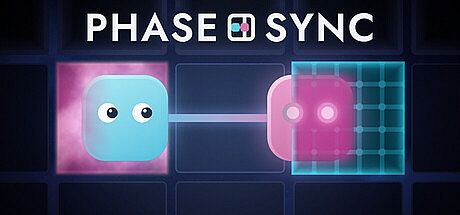


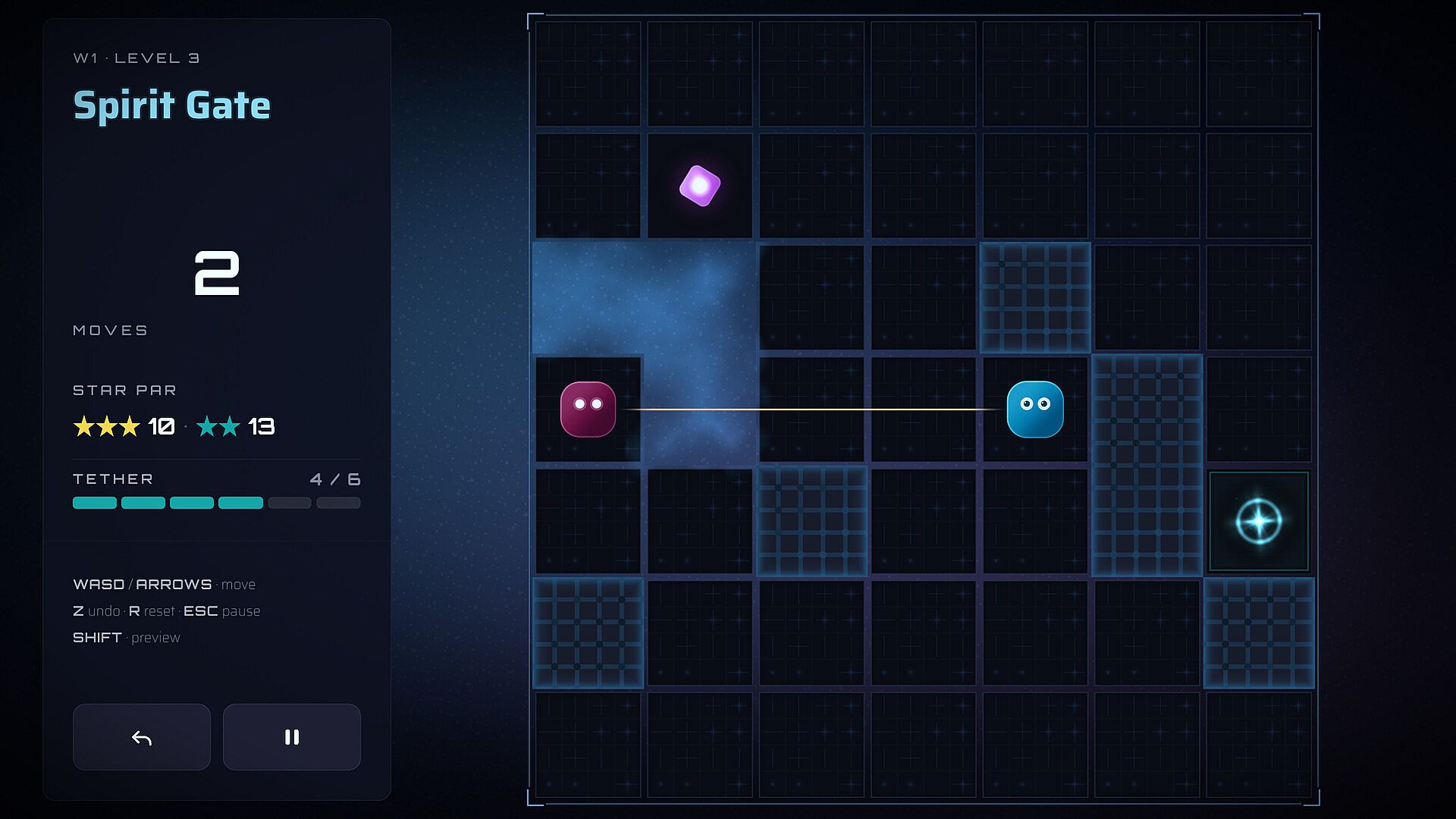
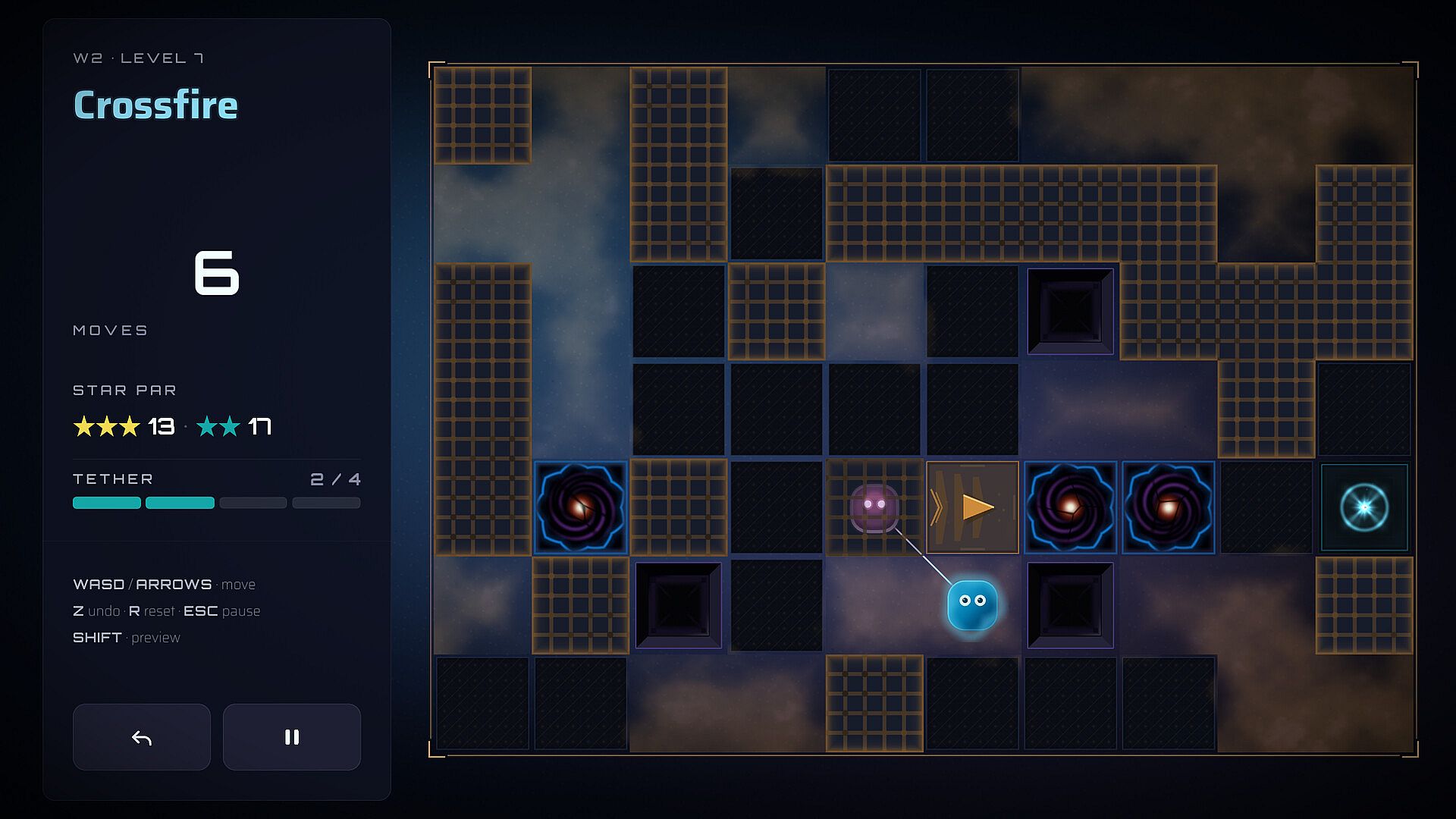
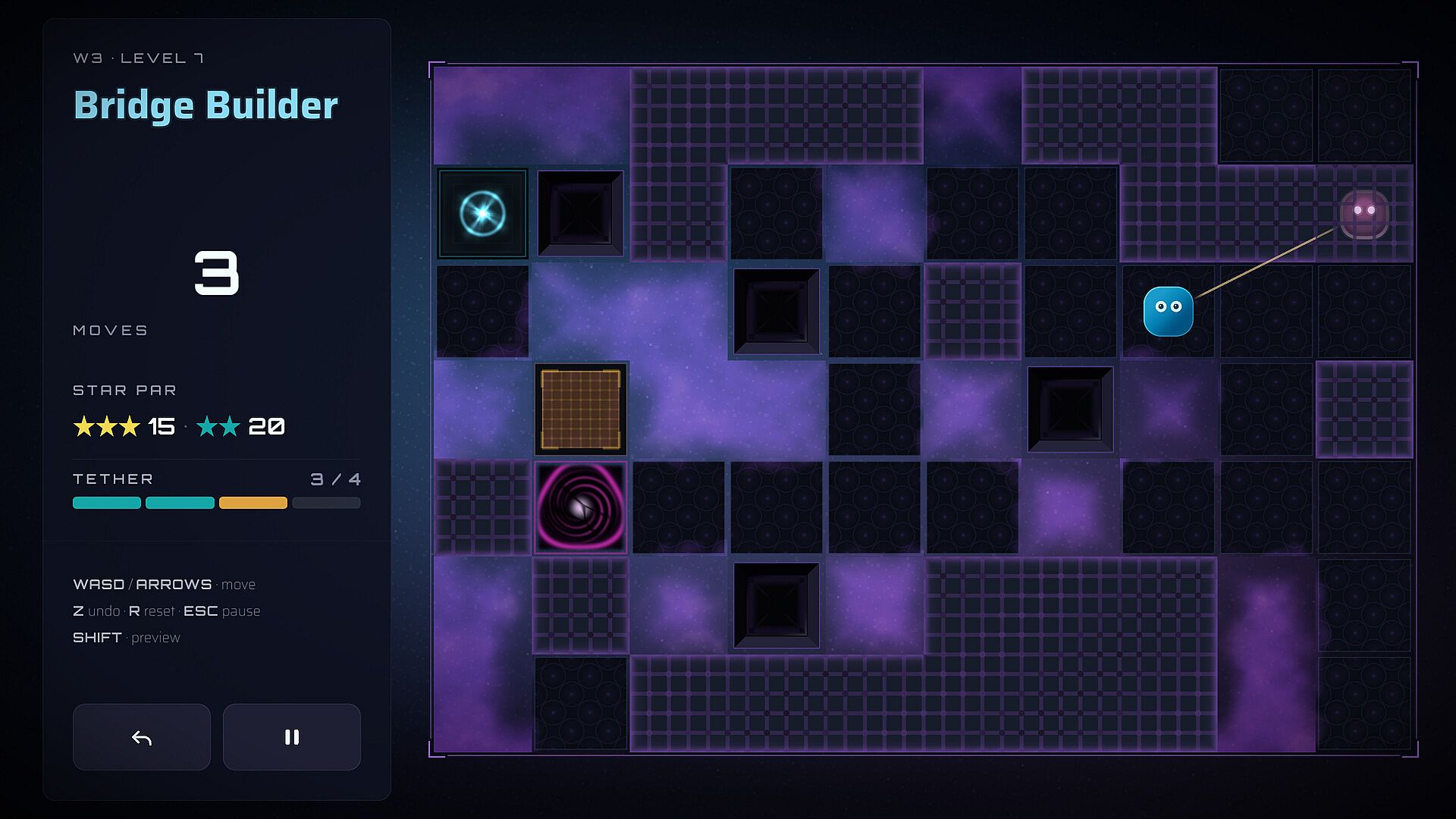
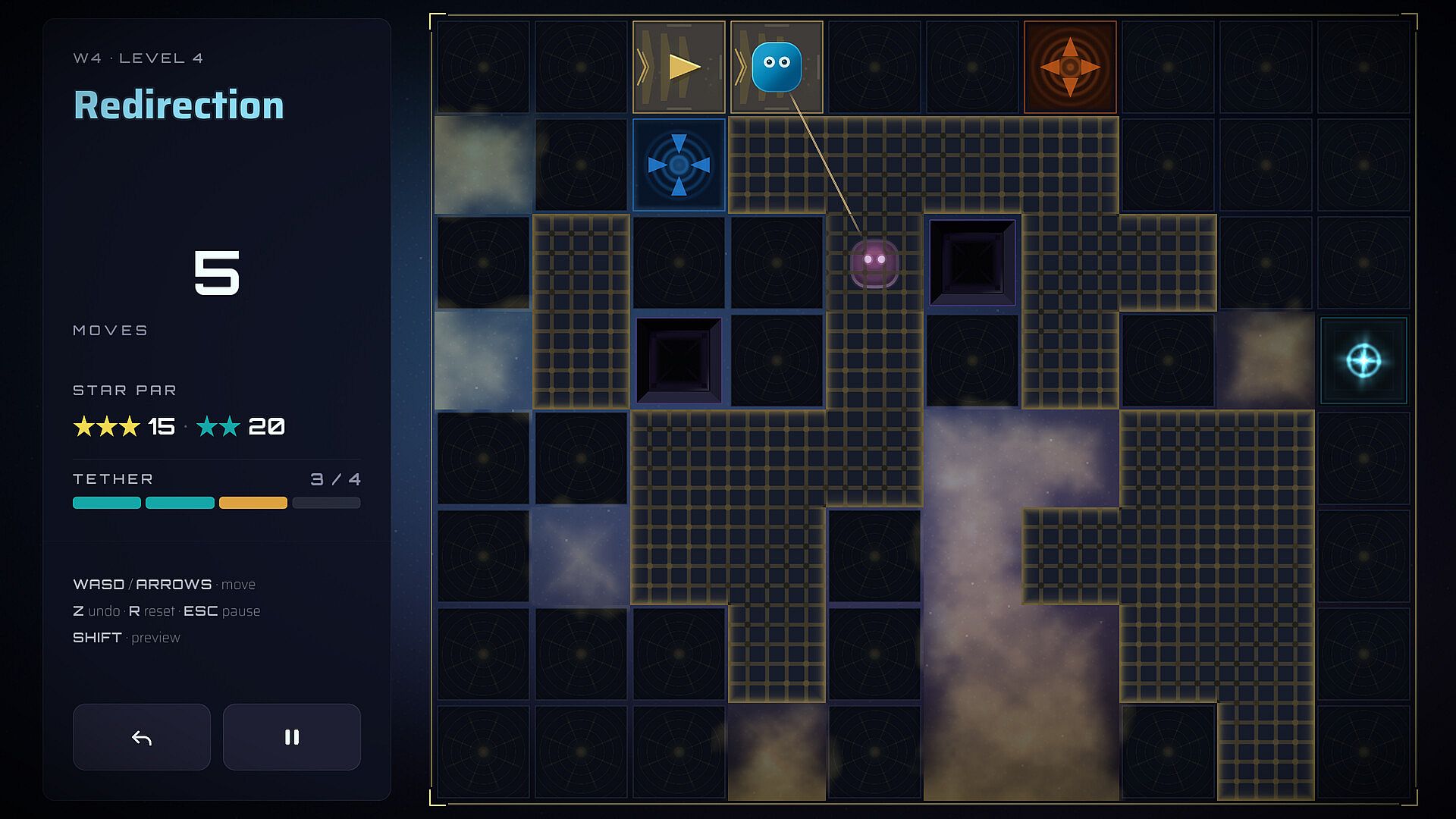
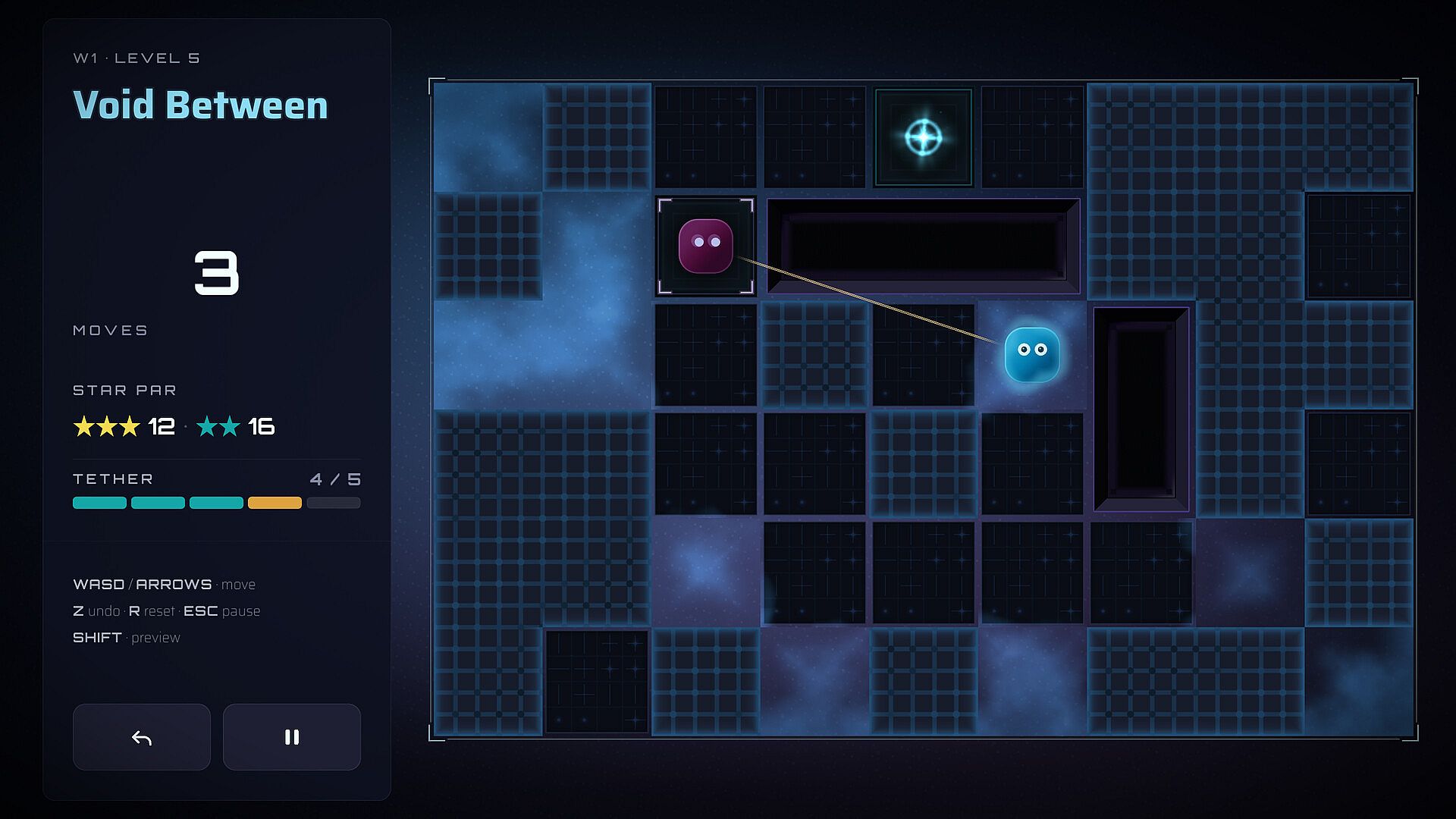
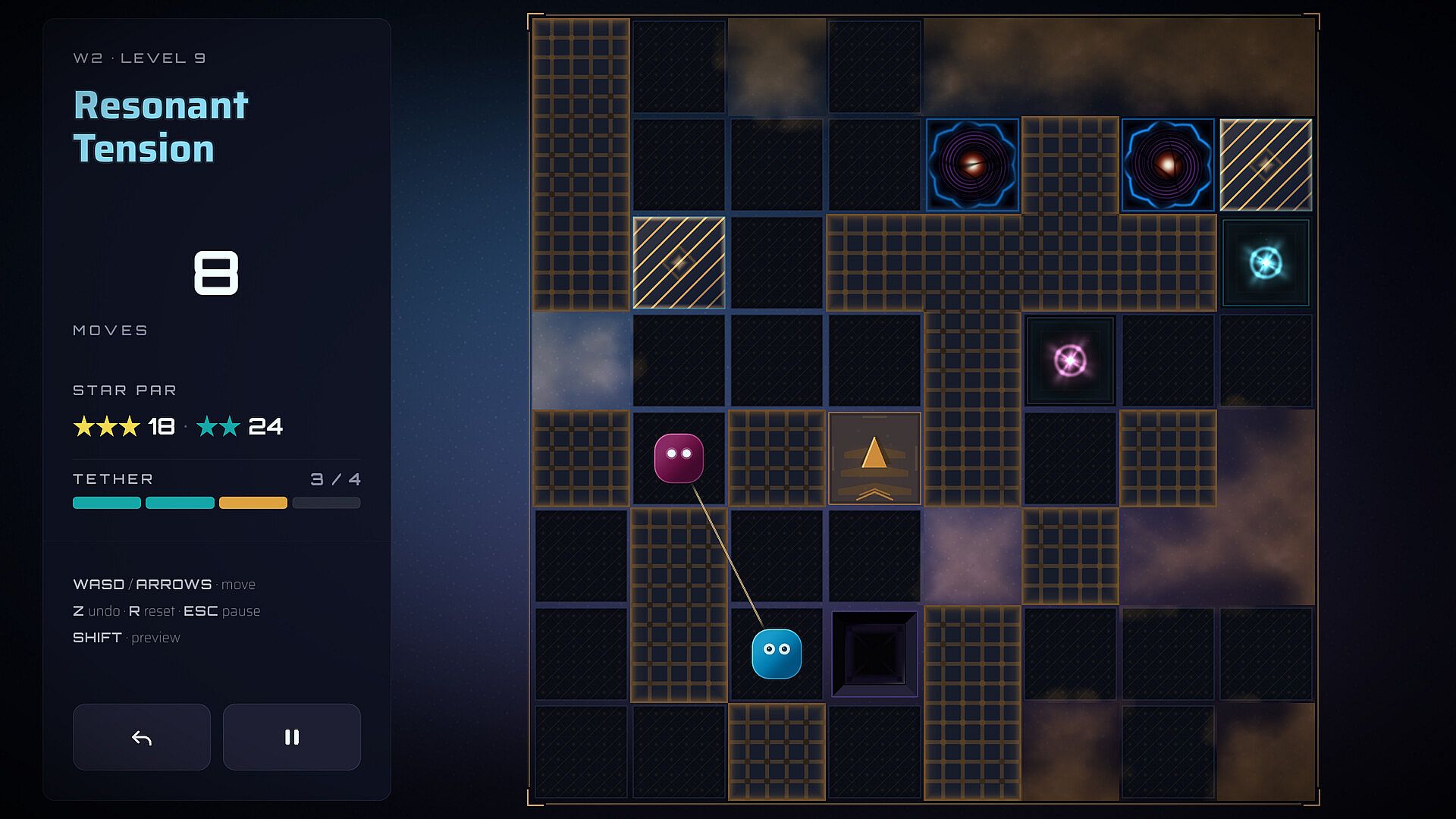
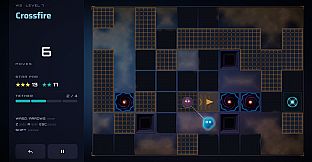
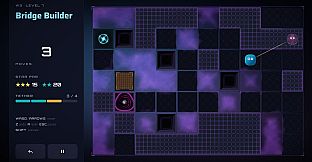
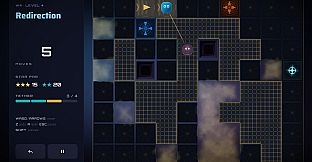
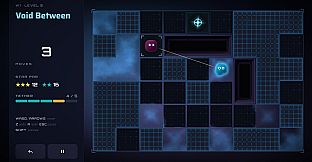
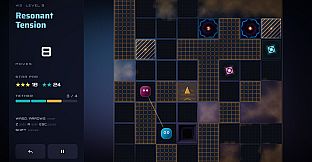
Phase Sync is a single-player indie casual spatial puzzle game for PC. Players guide two characters, Wanderer and Echo, through interconnected paths using one shared move at a time. The core challenge revolves around navigating physical and spirit walls that affect each character differently while respecting a tether that restricts how far apart they can stray.
Gameplay
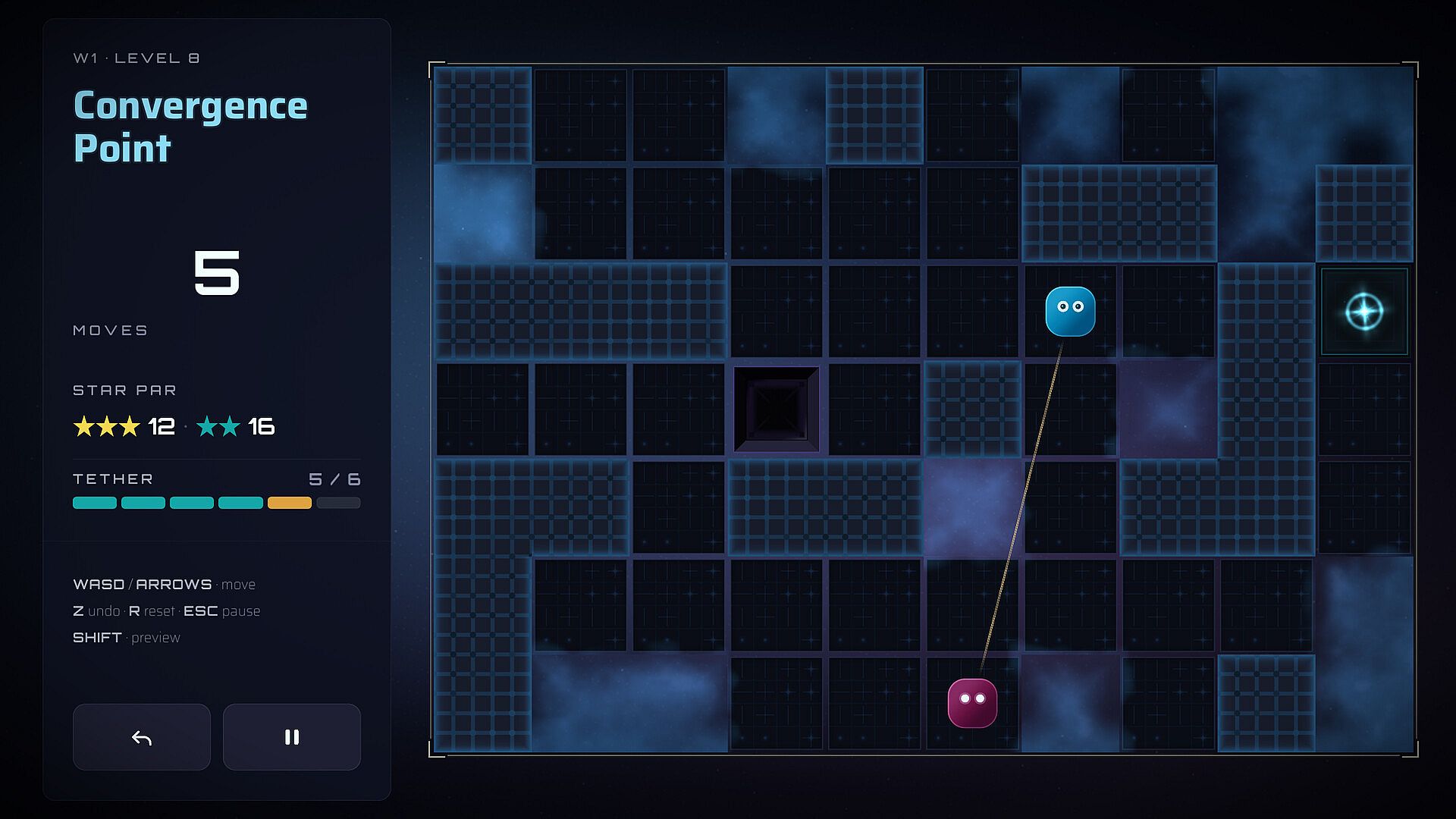
The central loop requires planning simultaneous movements for both characters. Physical walls block Wanderer but allow Echo to pass, while spirit walls work in the opposite way. This asymmetry creates opportunities to align routes that would otherwise be impossible with a single character. The tether enforces proximity, blocking any move that would stretch the connection too far and forcing careful sequencing of steps.
Players must route Wanderer toward the exit while protecting Echo from hazards and keeping both within range. Optional Memory Fragments appear along detours and reveal fragments of the pair's backstory through exploration. Controls support keyboard, mouse, or gamepad, with options for colorblind palettes and reduced motion to accommodate different preferences. Unlockable character skins provide minor visual variety without altering core mechanics.
Game Modes
The main campaign spans four worlds and 60 puzzles that introduce mechanics progressively. Awakening focuses on learning to separate and reunite the characters using selective walls. Risk adds one-way passages and hazards that primarily threaten Wanderer. Shelter introduces pushable blocks to reshape paths and shield Echo from spirit-based dangers. Reunion incorporates magnets that displace one character to bridge gaps in reach.
Completing a world unlocks its corresponding Challenge Mode, which contains another 60 levels in total. Here each character has an independent exit and locks in place upon arrival, requiring players to decide the order of completion. Phase Shift tiles in later worlds alter passability for both characters when triggered. A separate Daily Challenge lets players attempt new puzzles daily and maintain a streak, while campaign levels can be replayed to reduce move counts.
Core Mechanics and Progression
Every puzzle emphasizes spatial reasoning and constraint management. The tether acts as a dynamic limit that turns potential shortcuts into blocked moves, encouraging backtracking and alternative routes. Walls create complementary paths that players must synchronize, while later elements like blocks and magnets add layers of environmental interaction. Replays reward optimization, and the undo and reset functions support experimentation without frustration.
Progression builds steadily across the worlds, layering new tools onto established rules rather than introducing unrelated systems. This structure suits players who enjoy methodical puzzle solving over fast reflexes or resource management.
Is It Worth Playing?
Phase Sync targets fans of thoughtful single-player puzzle games that reward planning and observation. Its dual-character tether mechanic and wall-based asymmetries offer a distinct spatial challenge within the indie casual genre. Accessibility features and multiple control options broaden its appeal, while the campaign plus Challenge Mode and Daily Challenge provide substantial replay value through optimization and variety. As an upcoming title with no released player data yet, its worth depends on interest in precise, constraint-driven puzzles that emphasize route-finding over combat or narrative depth. Those who appreciate similar spatial indie experiences will likely find the described systems engaging once available.