

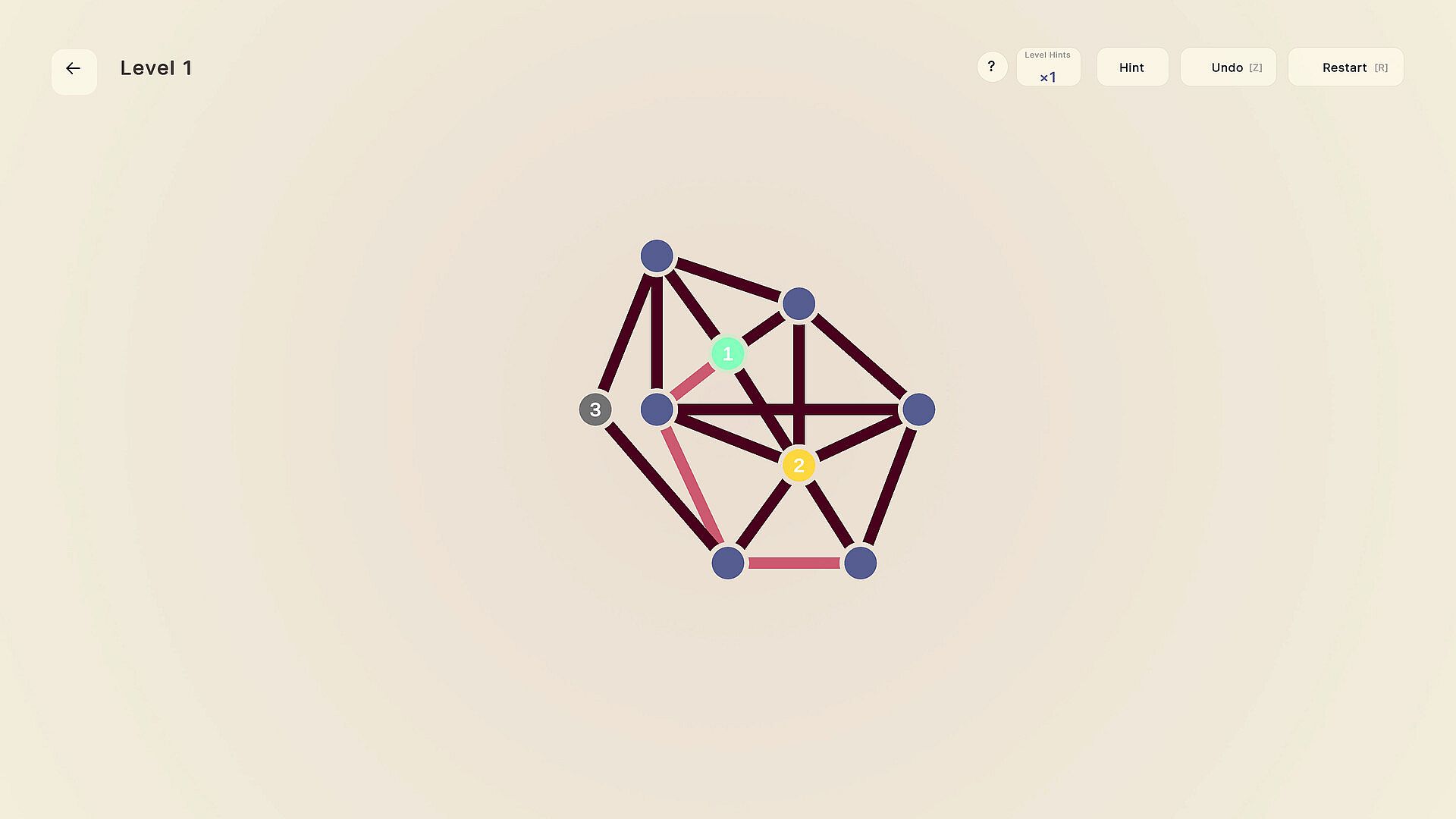
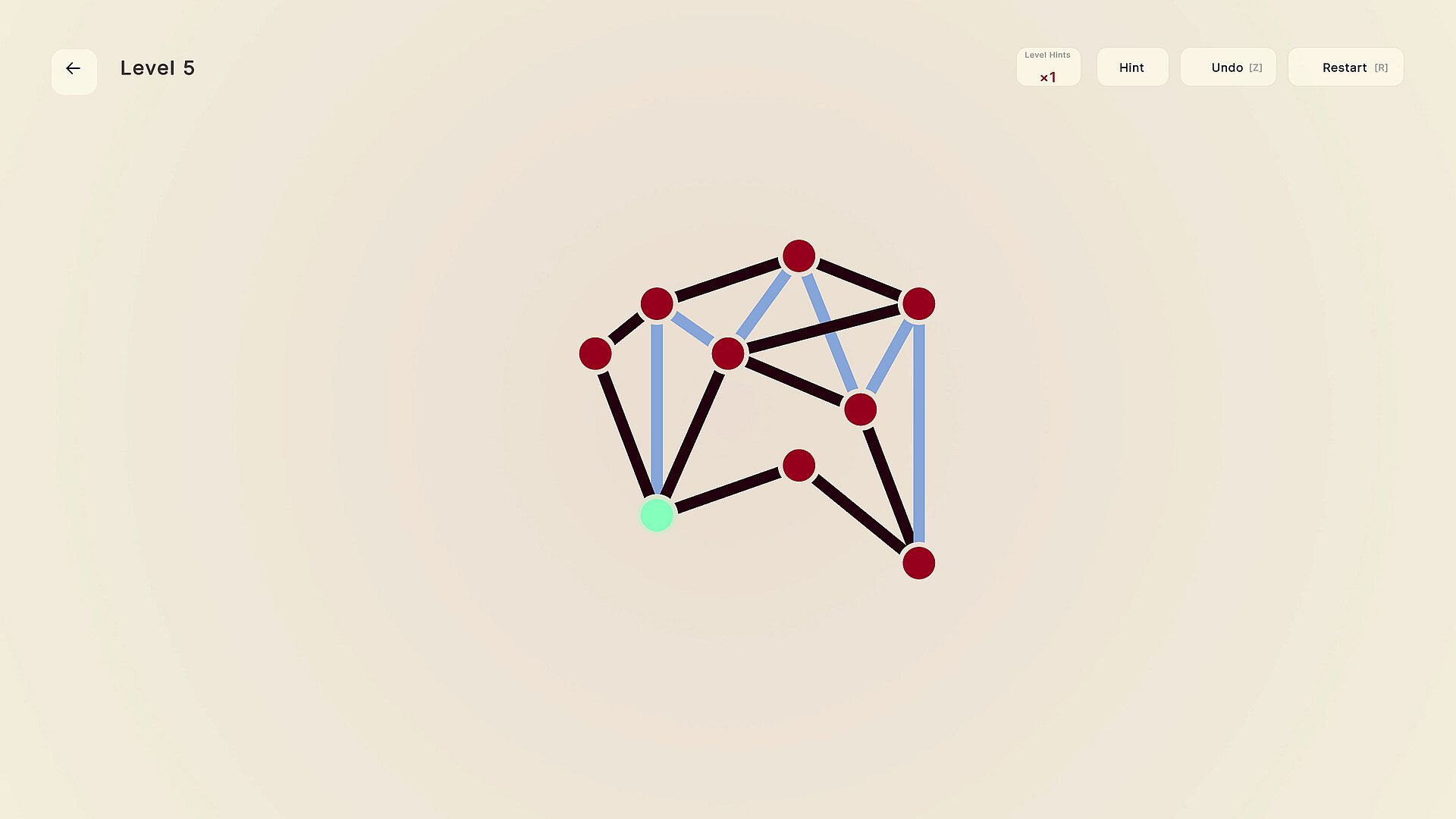
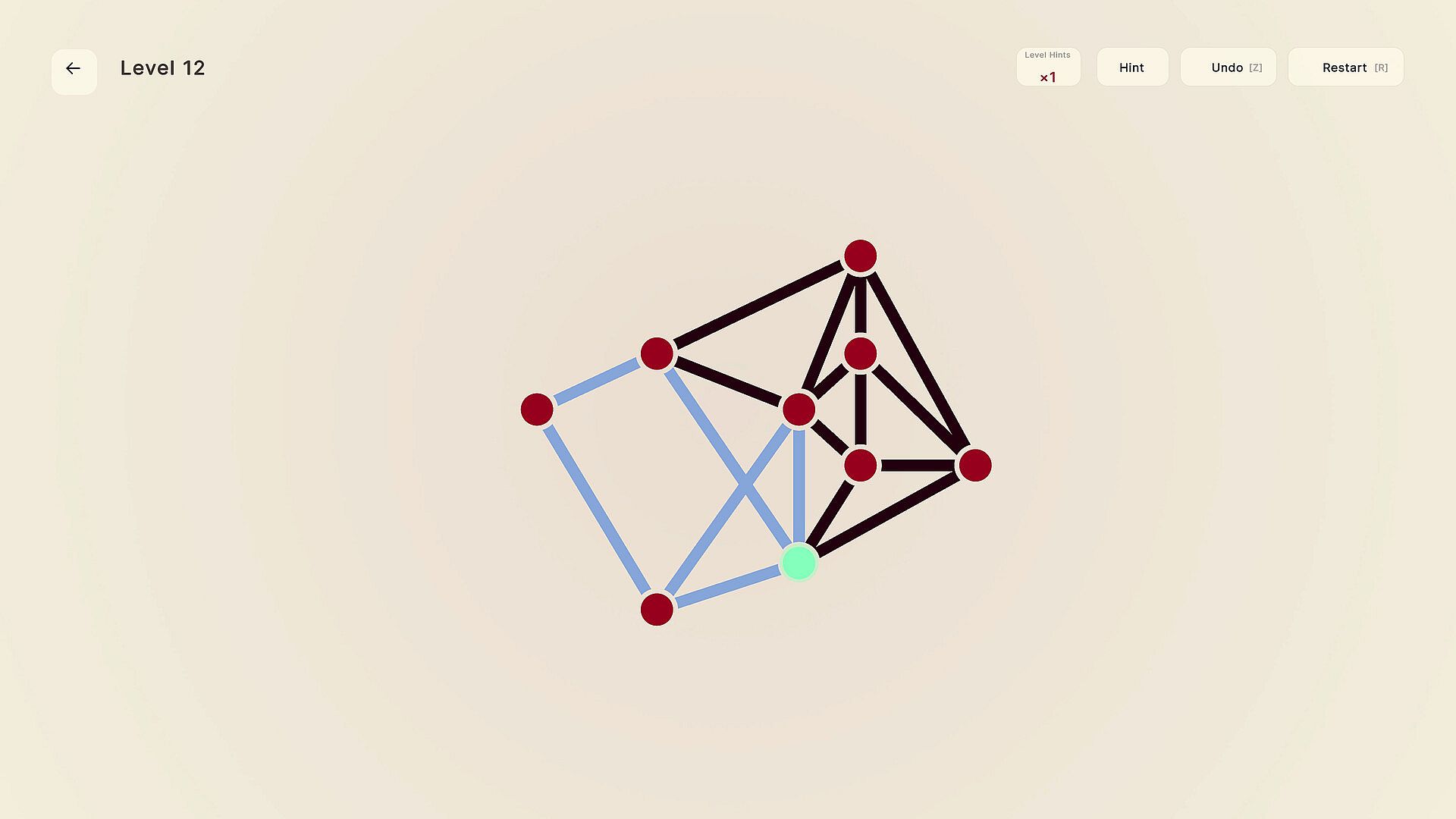





One Line Wonder is a casual indie logic puzzle game for PC that challenges players to trace every path in a network of connected points exactly once. The core idea revolves around drawing one continuous line through an entire shape without retracing any edge, creating a satisfying sense of completion with each solved level.
Gameplay
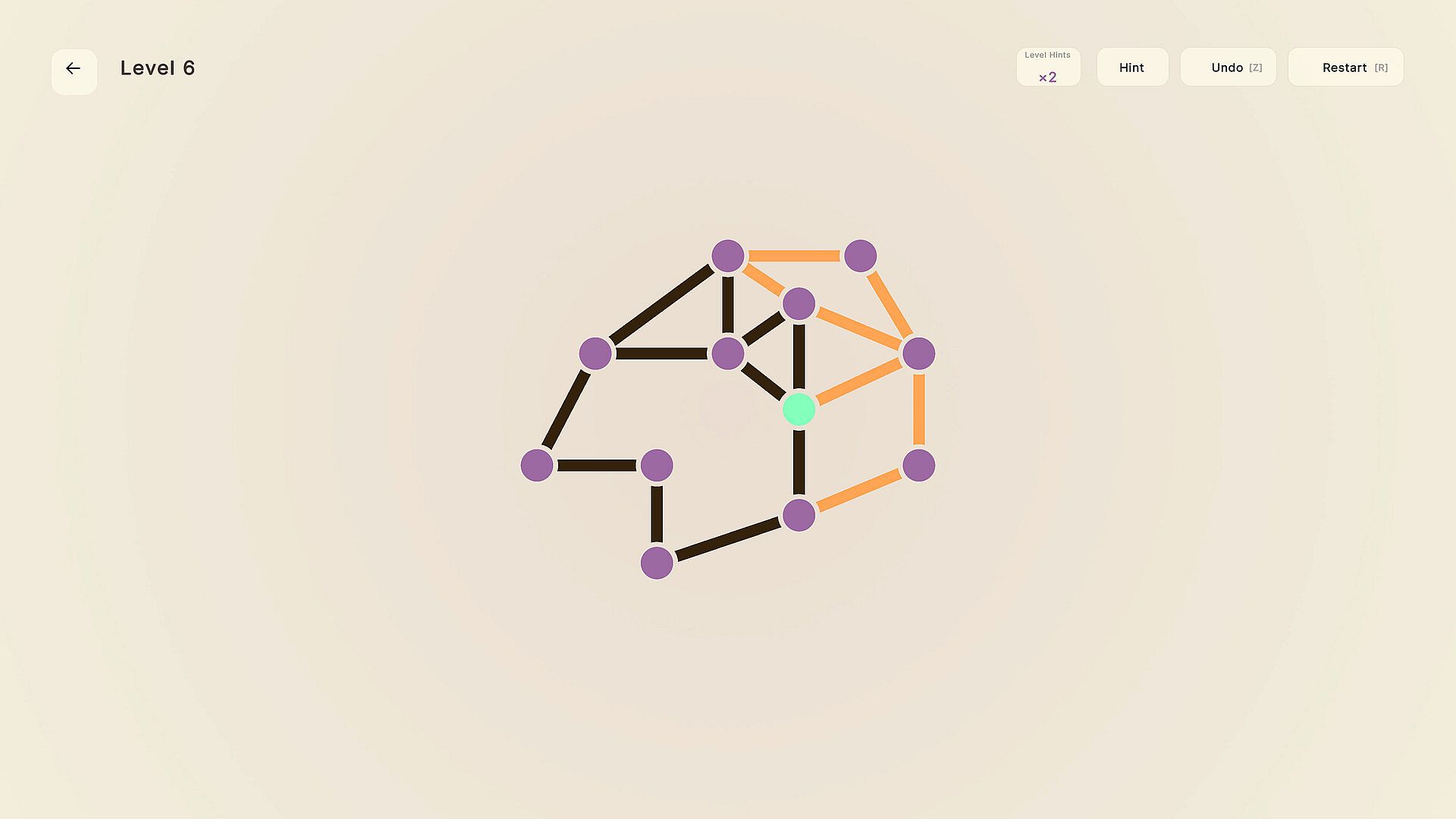
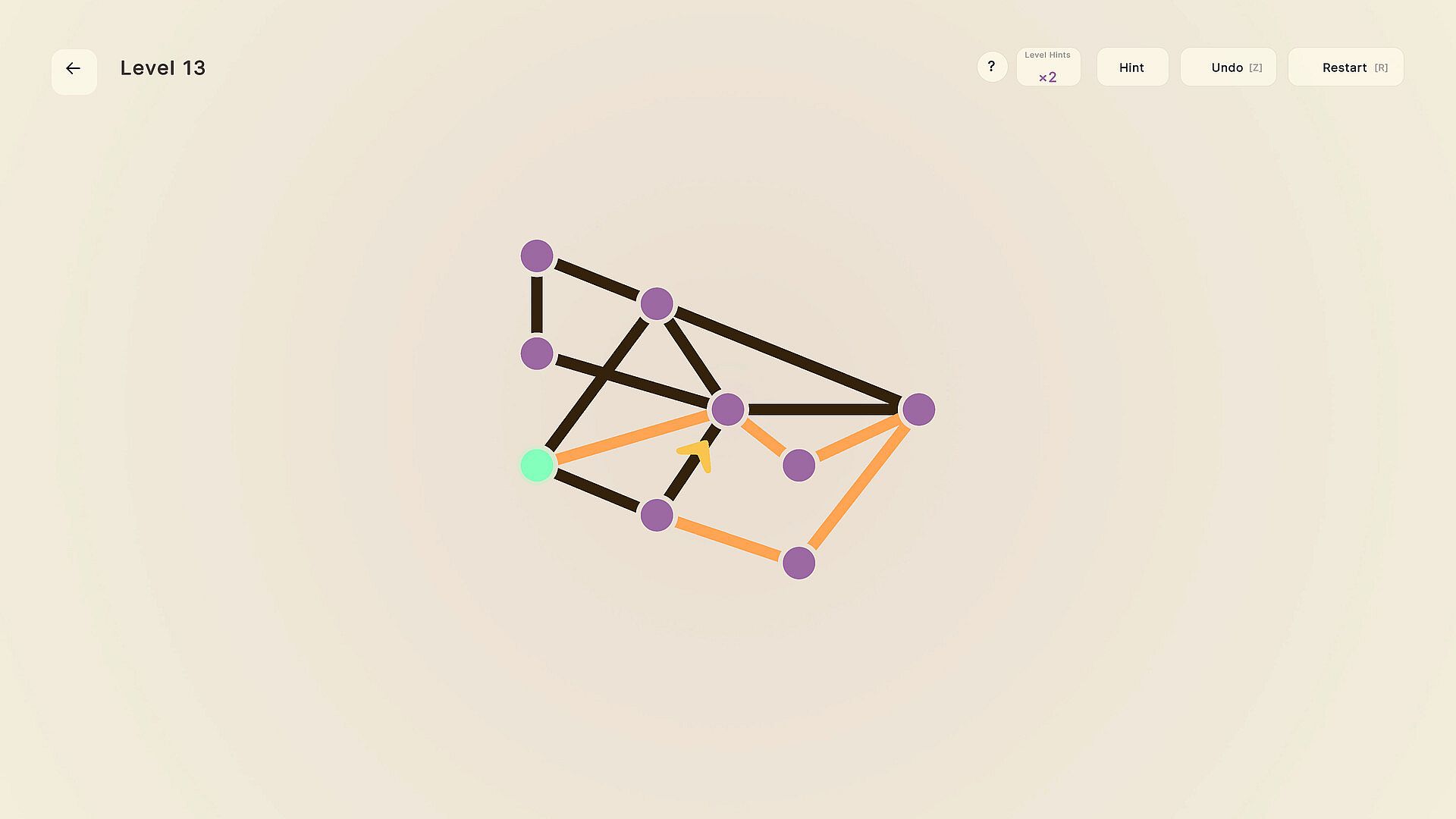
The experience centers on a straightforward yet demanding mechanic. Levels present grids or networks of points linked by paths. Players select a starting point and then draw a single unbroken line that covers every segment precisely once. This requires foresight to avoid dead ends or blocked routes as the layouts grow more intricate.
Controls remain simple with mouse input on PC, allowing precise drawing and adjustments. The game builds difficulty gradually, introducing new constraints that force players to rethink their approach on later stages. Special rules appear in certain puzzles to alter how lines can be drawn or what paths must be included, adding layers without overwhelming newcomers.
Support features like hints, undo options, and instant restarts keep the focus on problem solving rather than frustration. The presentation stays clean and minimalist with colorful elements that highlight the shapes without distraction. No timers appear, so sessions can stretch as long as needed for careful planning or trial and error.
Game Modes
One Line Wonder operates entirely as a single player experience built around its curated collection of logic puzzles. There are no separate competitive or multiplayer modes, keeping the emphasis on personal progression through the level sequence.
Progression follows a linear path of increasing complexity, where each completed puzzle unlocks the next. Additional rules serve as variations within this structure, presenting fresh challenges without branching into distinct game types. Players move at their own pace across the full set of puzzles.
Visual Style and Accessibility
The minimalist design uses bright colors and simple shapes to keep attention on the puzzle itself. This approach suits short or extended play sessions equally well, with no pressure from time limits or failure states beyond the natural challenge of finding the correct path.
Touch style controls translate smoothly to mouse use, making the game approachable for a wide range of players. Features such as hints and restarts further lower barriers for those new to one line puzzles while still rewarding deeper strategic thinking on tougher layouts.
Is It Worth Playing?
One Line Wonder appeals most to fans of relaxed logic puzzles who enjoy methodical problem solving. Its gradual difficulty curve and lack of timers create an inviting environment for experimentation and discovery, with each solved level delivering a clear moment of satisfaction.
The game suits players seeking a casual indie title that can be picked up for brief sessions or longer focused efforts. Special rules keep later stages engaging without requiring prior experience with similar games. Those who prefer high pressure or action oriented experiences may find the pace too measured, but the core loop remains consistent and rewarding for its intended audience.
Overall the title delivers on its promise of accessible yet thoughtful puzzles through careful planning or iterative attempts, making it a solid choice for anyone drawn to minimalist path tracing challenges on PC.