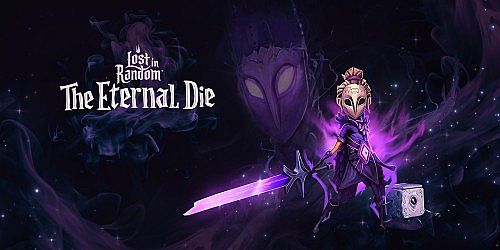



Lost in Random: The Eternal Die is a single-player isometric action roguelite that blends real-time combat with dice-driven risk and reward. Players control Queen Aleksandra as she fights through the confines of the Black Die in a bid for redemption and vengeance. The game shifts the series into a faster-paced format while retaining its gothic whimsy and board-game inspired elements, making it a focused experience centered on repeated runs and incremental growth.
Gameplay
Combat unfolds in an isometric view across procedurally generated rooms. Aleksandra wields one of four weapons at a time: a sword for balanced strikes, a hammer for heavy blows, a bow for ranged attacks, or a lance for reach and precision. Each weapon supports basic attacks and charged strikes that deliver greater impact. Fortune, the sentient die companion, serves as a core tool. Players throw Fortune into groups of enemies to trigger area damage scaled by the roll result, then retrieve it manually to continue the assault.
Card abilities add tactical layers, with a selection of fifteen options available across runs for effects like elemental bursts or crowd control. Relics form the backbone of customization, with over one hundred options collected during expeditions. These items slot into a grid-based inventory where matching three relics of the same color grants stat boosts such as increased weapon damage or improved dice effects. The system encourages deliberate placement and occasional sacrifices to optimize builds. Permanent upgrades between runs allow weapon enhancements and new starting options, creating a steady sense of advancement even after failed attempts.
Game Modes
The game operates entirely in a single-player roguelite structure with no separate multiplayer or alternative modes. Each attempt begins in a hub area known as the Sanctuary before entering one of four distinct biomes filled with enemies, hazards, and secrets. Runs progress room by room toward world bosses, culminating in a confrontation with Mare the Knight. Procedural generation ensures varied layouts and enemy placements on every attempt, while the core loop of combat, relic collection, and retreat upon defeat drives replayability. Alternative endings tied to specific achievements add motivation for multiple completions.
Progression and Builds
Between runs, collected resources fund upgrades that persist across attempts. Weapons gain modifications for playstyle shifts, such as altered charged attacks or elemental infusions. Relics and blessings expand options further, allowing players to emphasize dice rolls, card synergy, or raw combat power. The grid management for relics introduces an extra layer of strategy, as color matches provide multiplicative benefits but space remains limited. This setup rewards experimentation without overwhelming newcomers, as early runs focus on learning enemy patterns and basic tool use before deeper customization opens up.
Is It Worth Playing?
The title delivers a satisfying roguelite loop with responsive combat and meaningful progression that rewards persistence. Its visual style carries over the distinctive gothic aesthetic from the original game, supported by a fully voiced cast and atmospheric presentation. Reviews highlight the addictive quality of run-to-run improvements and the accessibility of its systems compared to more punishing entries in the genre. It suits players who enjoy action-focused roguelites with light strategic elements, particularly those drawn to the series' quirky world or seeking a shorter, self-contained experience on the Nintendo Switch. The game stands on its own as a spin-off without requiring prior knowledge, though familiarity with the setting enhances the narrative context around Aleksandra's journey. Overall, it offers solid value for fans of the style through its tight execution and replay incentives.