








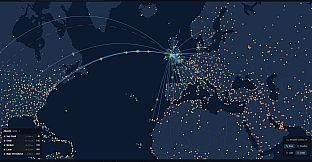
Load Factor is a single-player economic strategy and simulation game where players build and manage an airline from a small turboprop operation into a worldwide network. Set on a detailed model of the real world with over 3,100 airports, the experience centers on realistic decision-making around aircraft selection, route planning, scheduling, and pricing in a competitive market driven by genuine passenger demand.
Gameplay
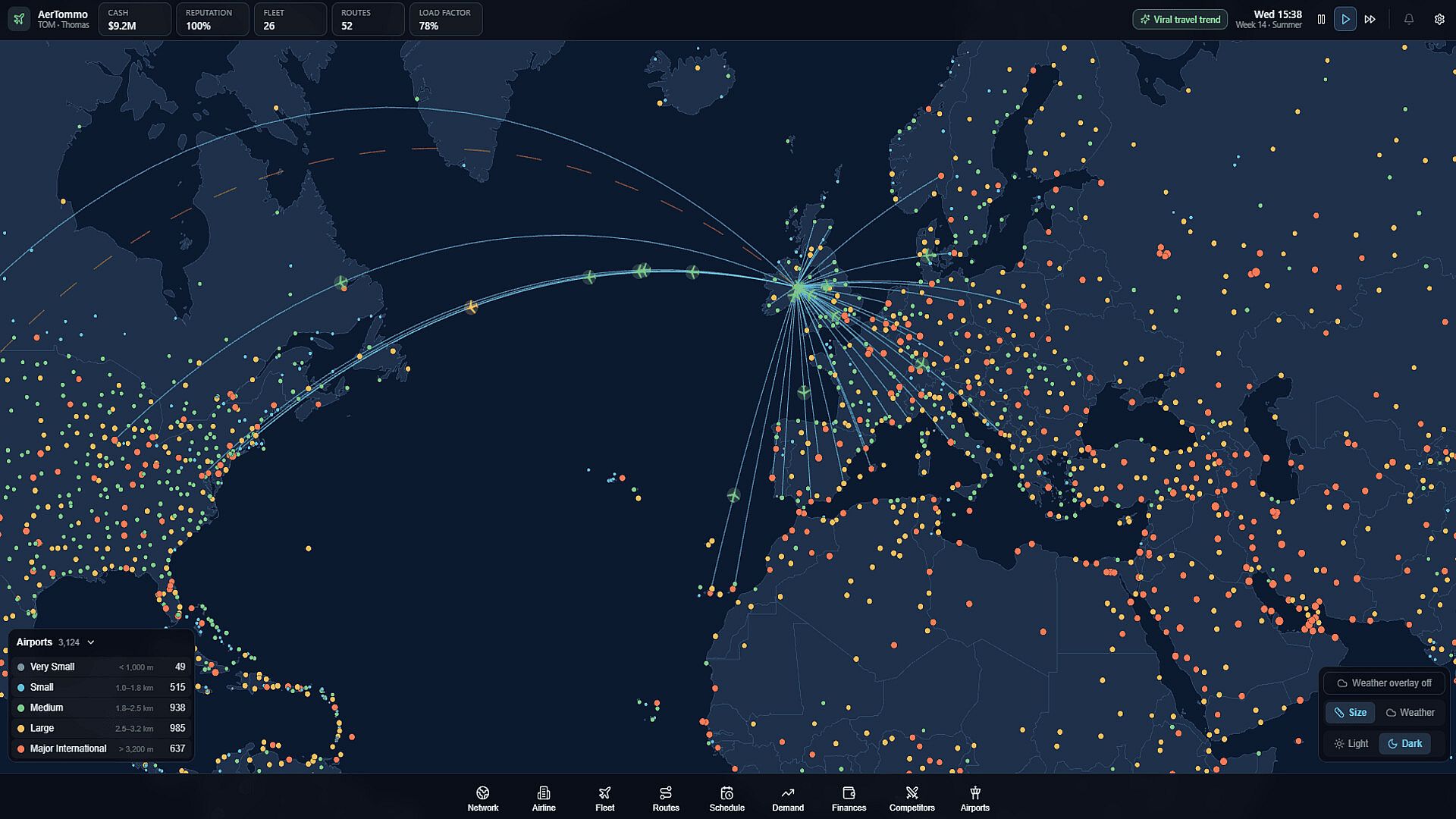
The core loop revolves around five key choices that shape every aspect of operations: selecting aircraft, choosing routes, determining departure times, setting flight frequencies, and establishing fares. These decisions play out across a rendered globe where each airport reflects actual geography, runway lengths, and dynamic weather conditions that can disrupt schedules.
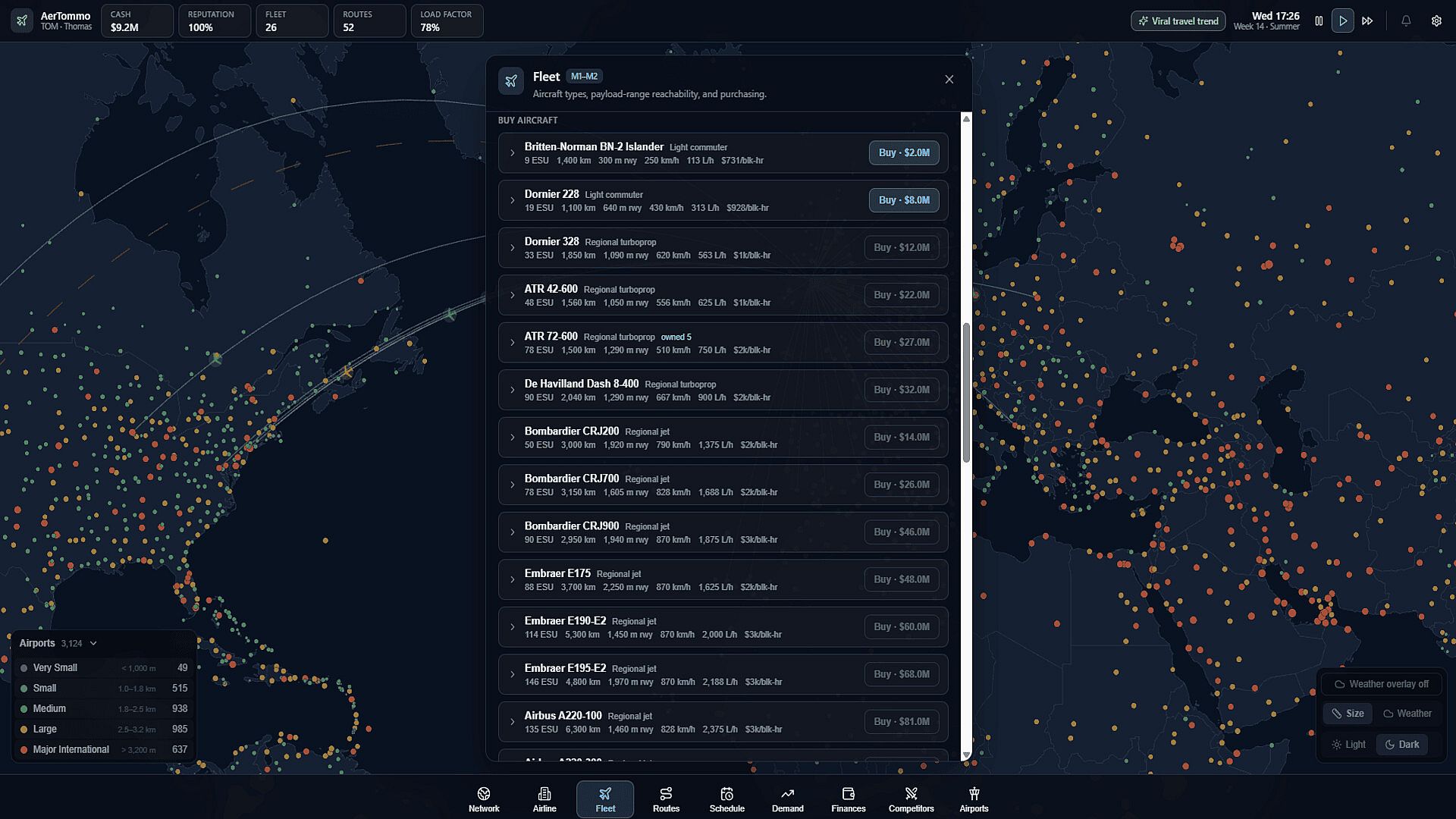
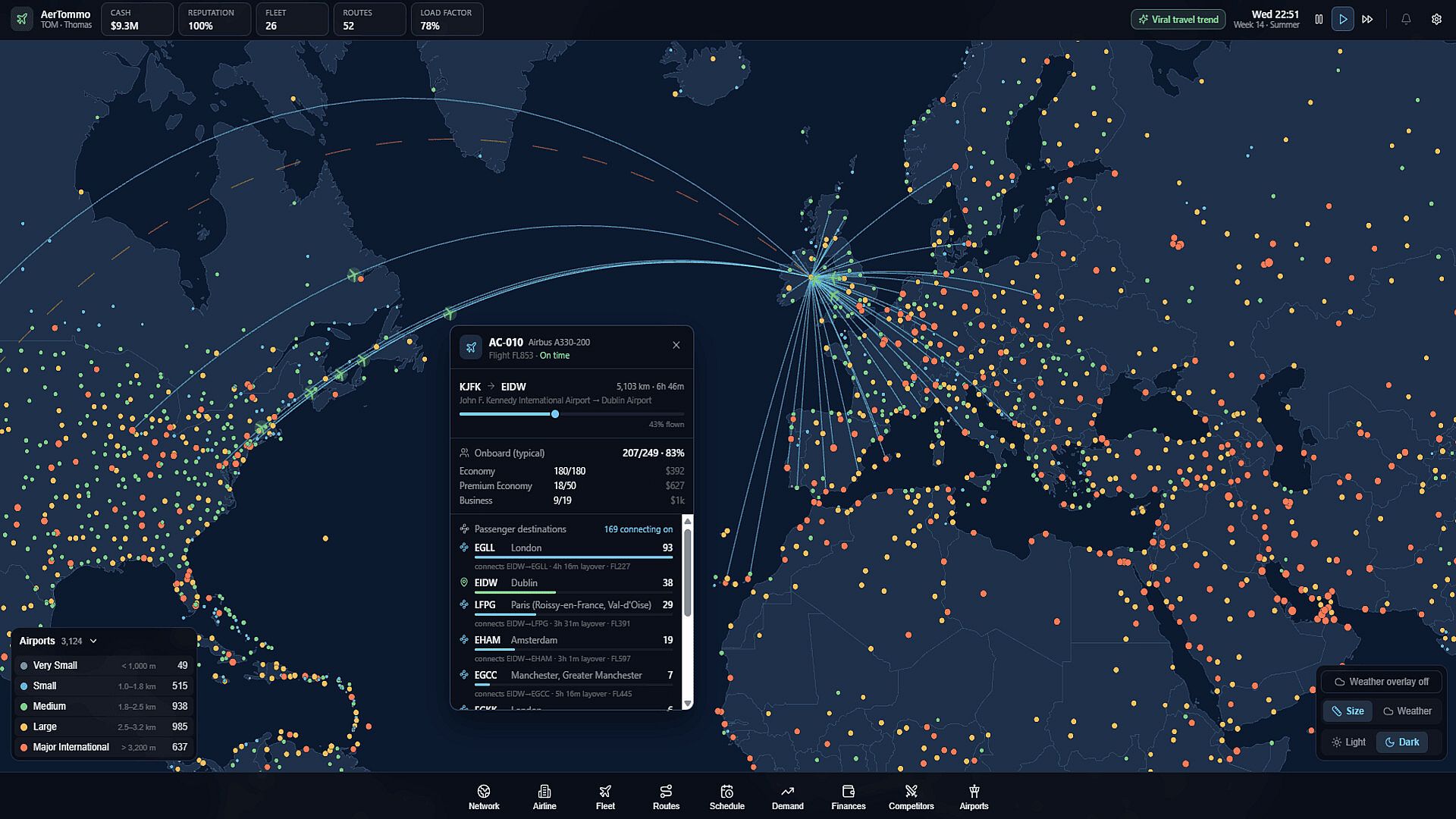
Passengers follow an emergent demand model influenced by distance, city size, connections, and price sensitivity rather than artificial triggers. Successful service on a route encourages natural traffic flow through a player's hub, while poor choices lead to empty flights and mounting losses. Fleet management involves nearly 40 real aircraft types, each governed by payload-range physics, with options to purchase outright or lease. Cabin configurations add another layer, as routes evolve from leisure-focused to premium demand over time.
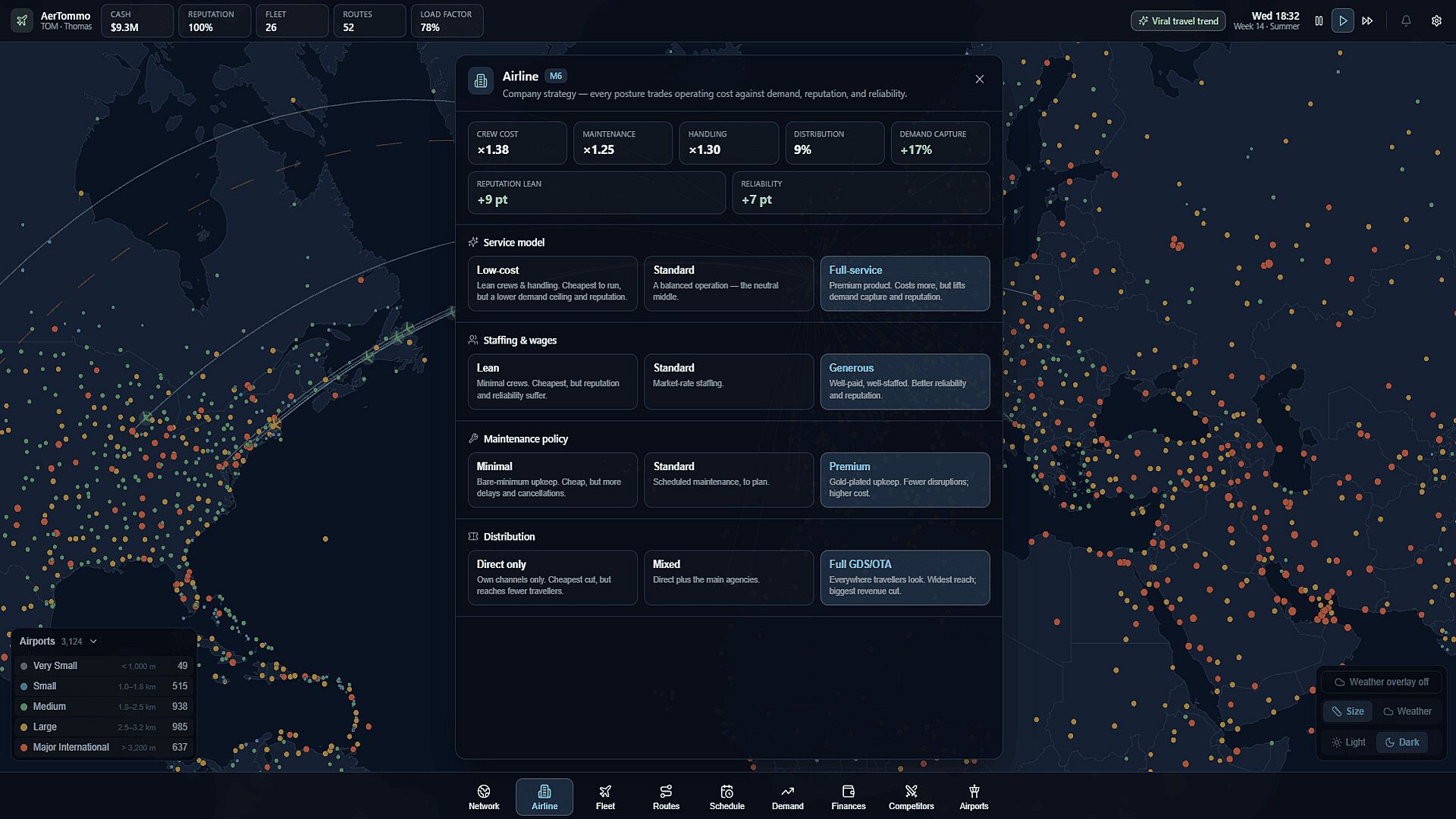
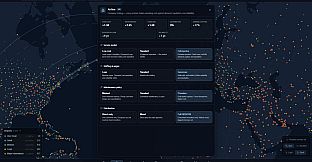
Financial systems track live fuel prices alongside crew, maintenance, airport fees, and distribution costs through detailed weekly route profit-and-loss reports. Company posture settings for service, staffing, maintenance, and distribution influence reliability, reputation, and expenses. Market research purchases lift the fog of war on potential routes, and full-week scheduling accounts for turnarounds, curfews, and continuity.
Game Modes
Load Factor operates as a single-player simulation with AI competitors that react to player actions in the shared market. There are no separate named modes or multiplayer options confirmed at this stage. The experience emphasizes deep systems play focused on honest economics and network building rather than scripted scenarios or competitive lobbies.
Key Mechanics and Systems
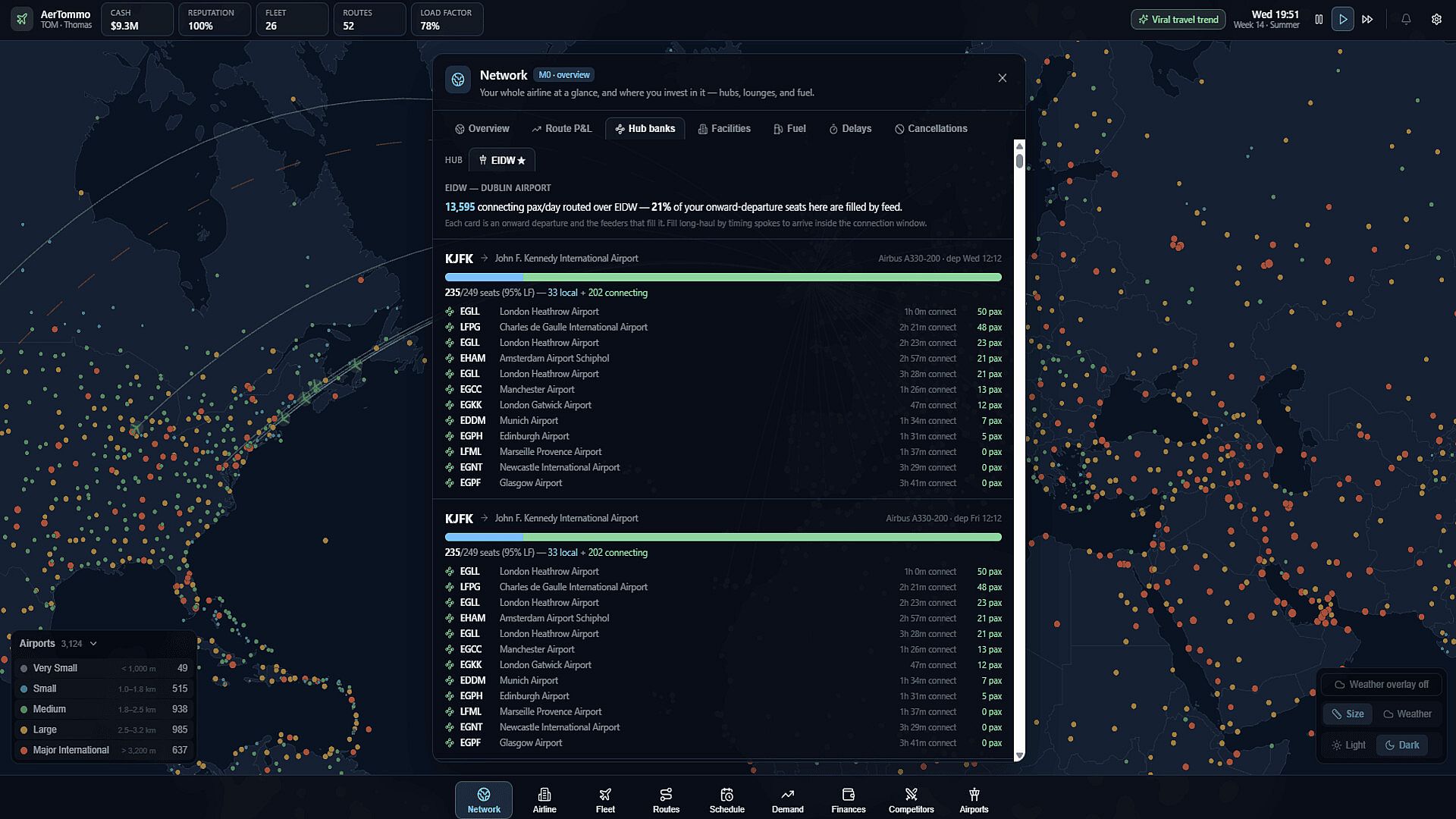
Mechanics reward precise network planning over raw spending power. Hub-and-spoke structures develop organically when routes and connections align well, without artificial bonuses. Weather events test schedule resilience, while slot limits at airports add operational constraints. The simulation includes bankruptcy as a failure state, keeping pressure on financial performance at every stage.
Players can adjust aircraft across weekly rotations and monitor how small changes in frequency or timing affect overall contribution margins. Demand maturation on established routes creates opportunities for premium pricing as reputation builds, encouraging long-term thinking about market development.
Is It Worth Playing?
Load Factor targets players drawn to realistic airline economics and intricate simulation systems. Its focus on verifiable real-world data, from aircraft performance to airport details, delivers a grounded experience without simplification. As a title entering Early Access in 2026, the core loop of aircraft selection, route management, and financial oversight is already in place, with plans for further refinement based on player input.
This style suits those who enjoy tracing routes, optimizing schedules, and analyzing detailed reports over action-oriented or casual play. The absence of hand-holding and emphasis on emergent outcomes make it a strong fit for dedicated strategy enthusiasts seeking depth in the airline management genre.












