




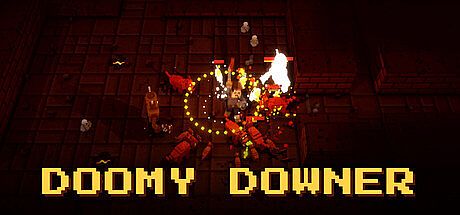


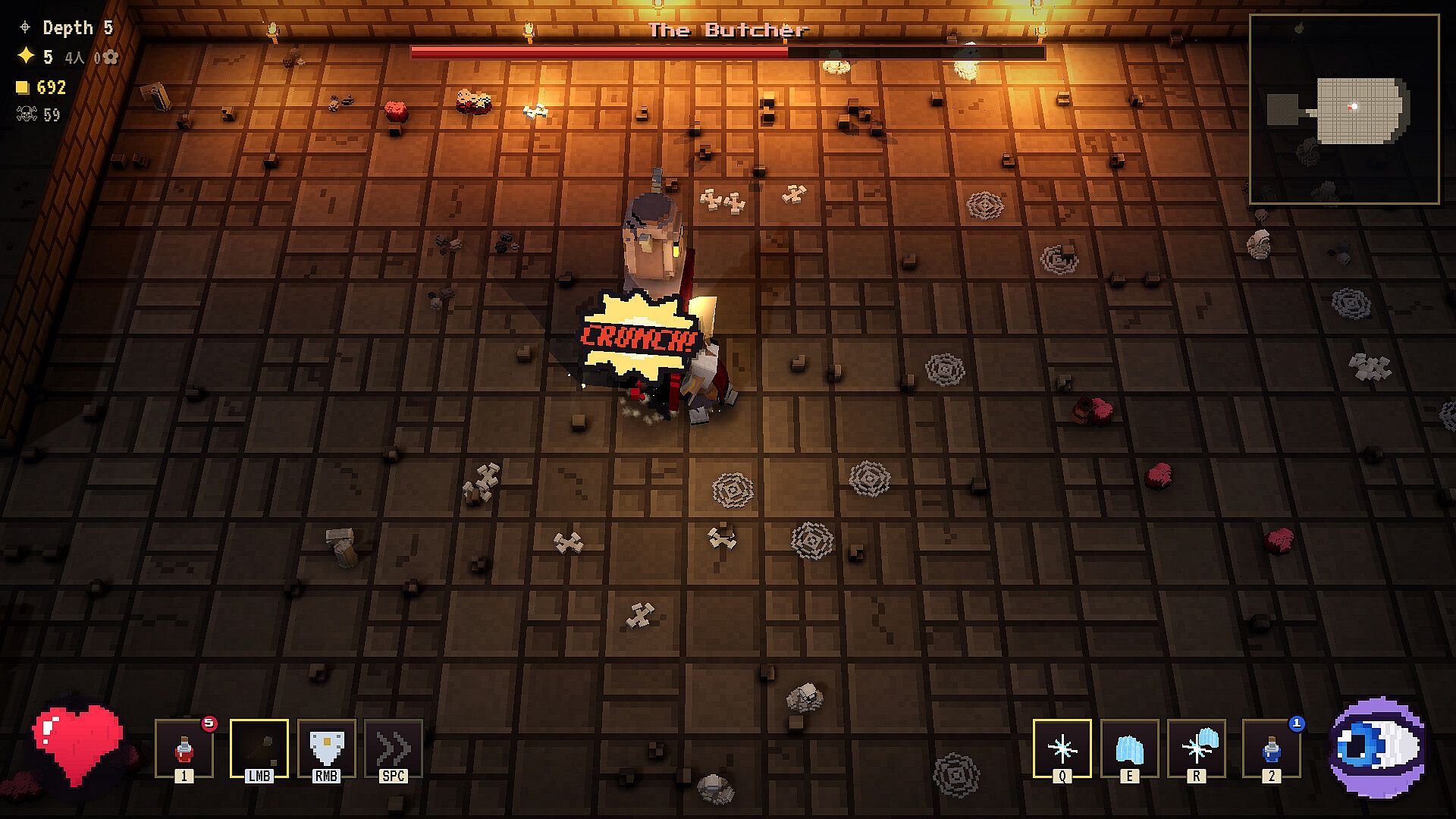
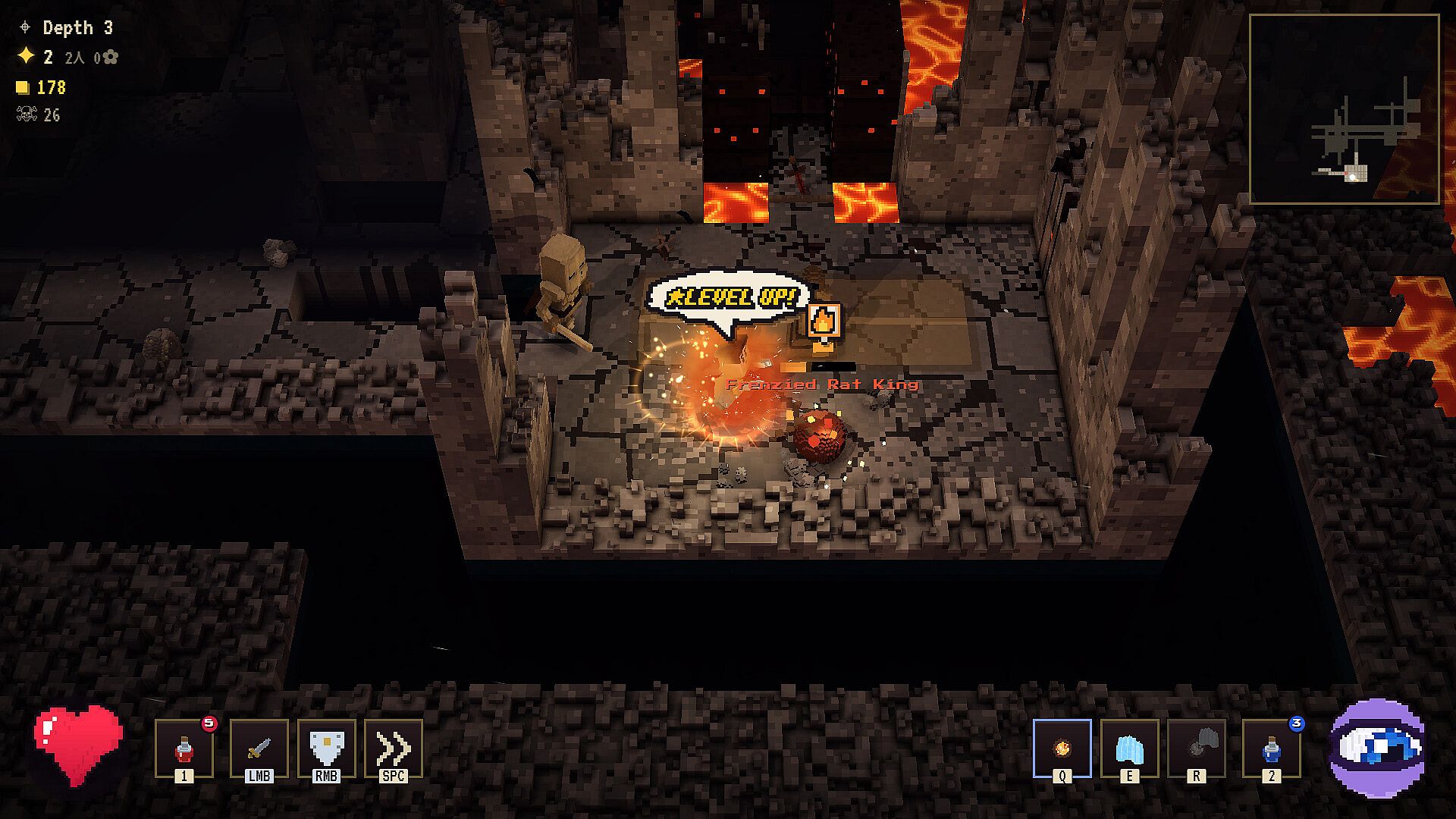
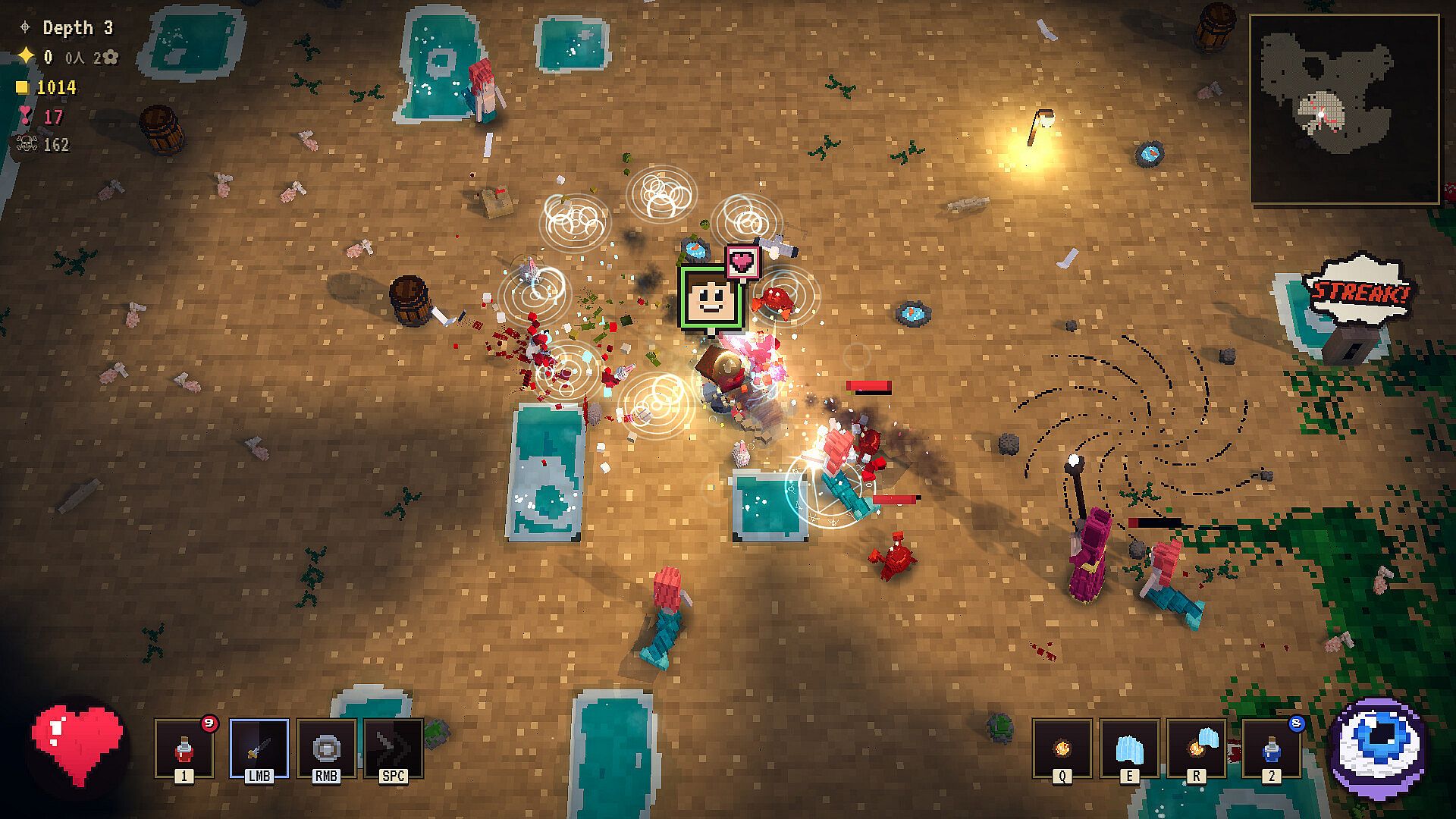
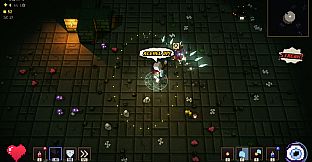
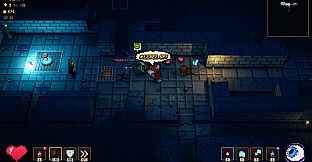
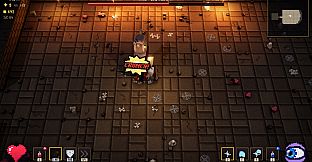
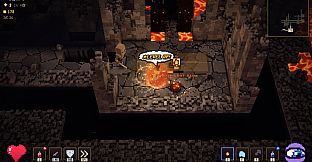
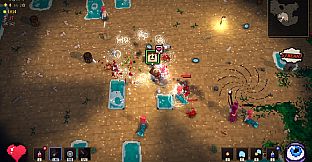
Doomy Downer is a top-down action-roguelike set in a voxel world where a reluctant hero gets pulled from his armchair into a grim descent. The small blocky protagonist has no choice about heading down through layers of rot, bone, flooded passages and flames, but players control every decision on how the run unfolds. Combat centers on timing and resource management rather than button mashing, with visual cues guiding every exchange.
Gameplay
Every enemy attack ends with a telltale glint that signals the right response. A gold flash allows a clash or parry that sends projectiles back at the attacker, while a red glint means the only option is a roll. Stamina fuels swings, blocks and dodges; running dry leaves the hero winded and limited to blocking or shuffling until recovery. Hits register only when the weapon connects, producing satisfying impact sounds and animations. Breaking an enemy's poise staggers them for increased damage, and perfect dodges briefly slow time. At most two foes commit to attacks simultaneously, with others circling until their turn arrives.
Progression comes entirely through equipment. Eight weapon classes each carry distinct movesets, from basic combos on swords to charged special arts on mauls or bows. Magic arrives solely via rings that cast spells such as Emberfall or Soul Siphon, limited only by cast time and mana. Five rarity tiers include set bonuses and powerful affixes that add elemental damage, projectile echoes or area effects. Eleven archetypes reward wearing three or five matching pieces to activate resonances, some of which summon allies like bone thralls or spirit wolves. The Flesh Altar lets players reroll, temper or salvage gear using gold and organs harvested from kills. Six legendary foes each guard a unique item that can evolve when fed kills alongside the right catalyst.
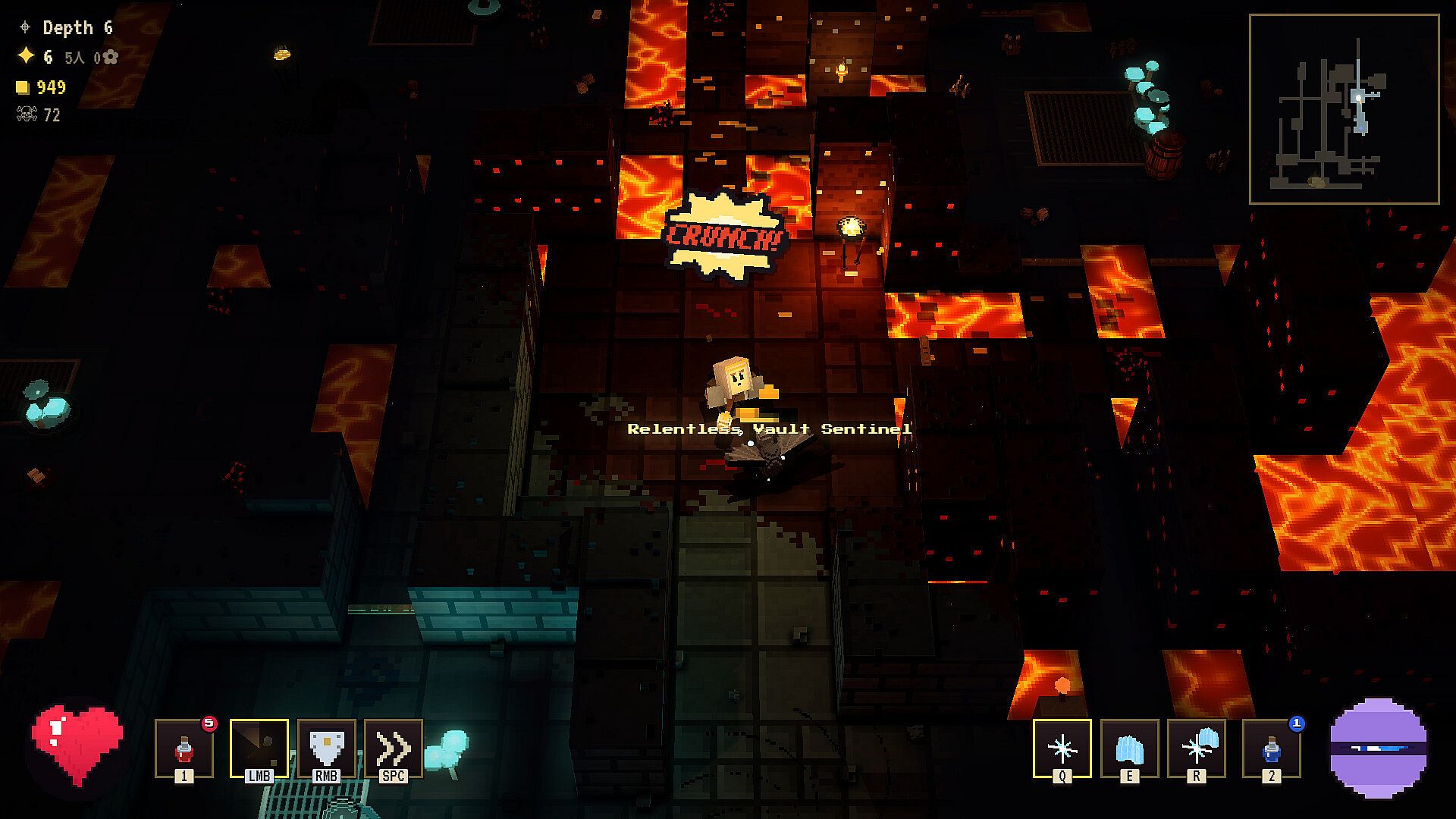
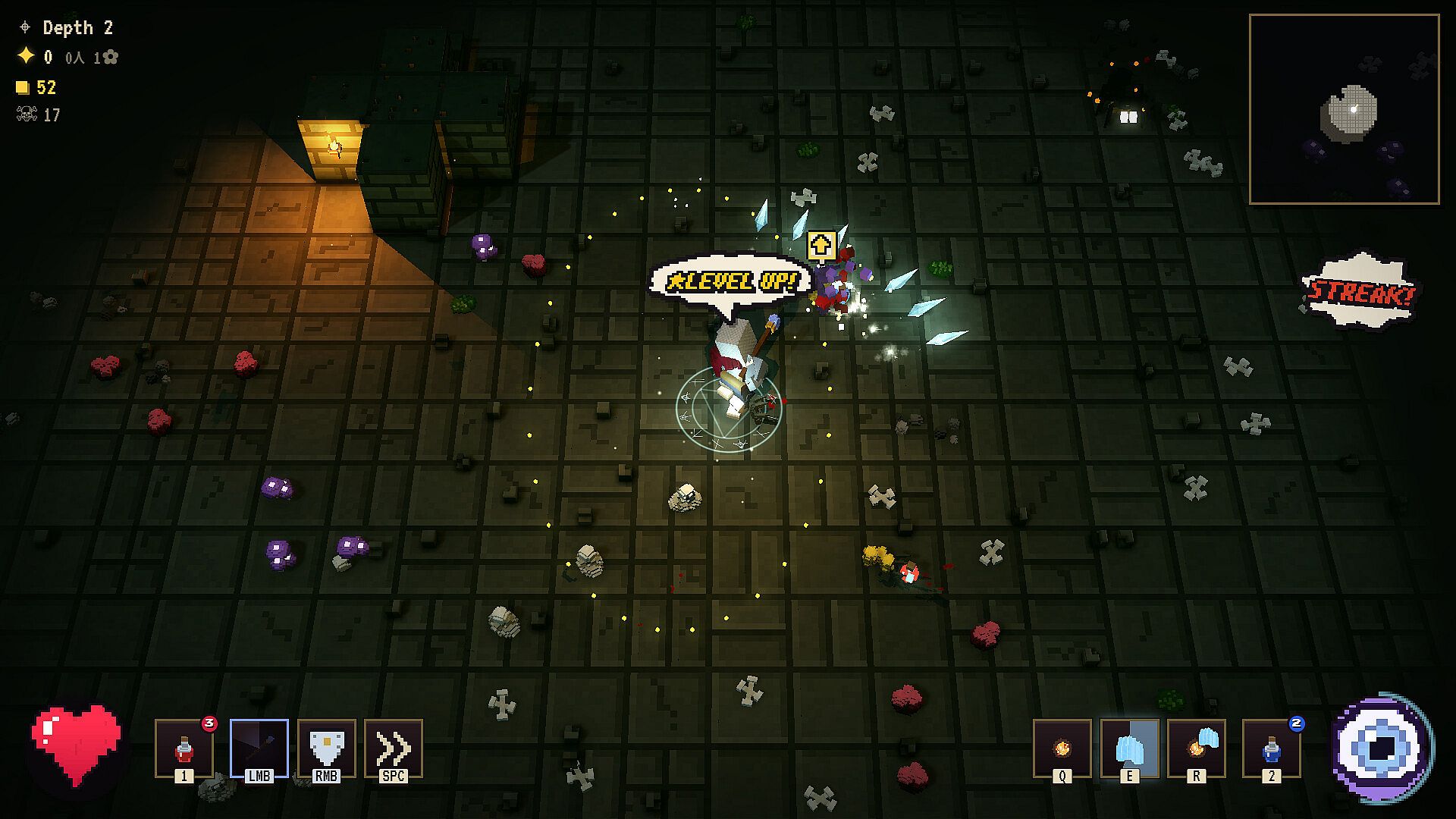
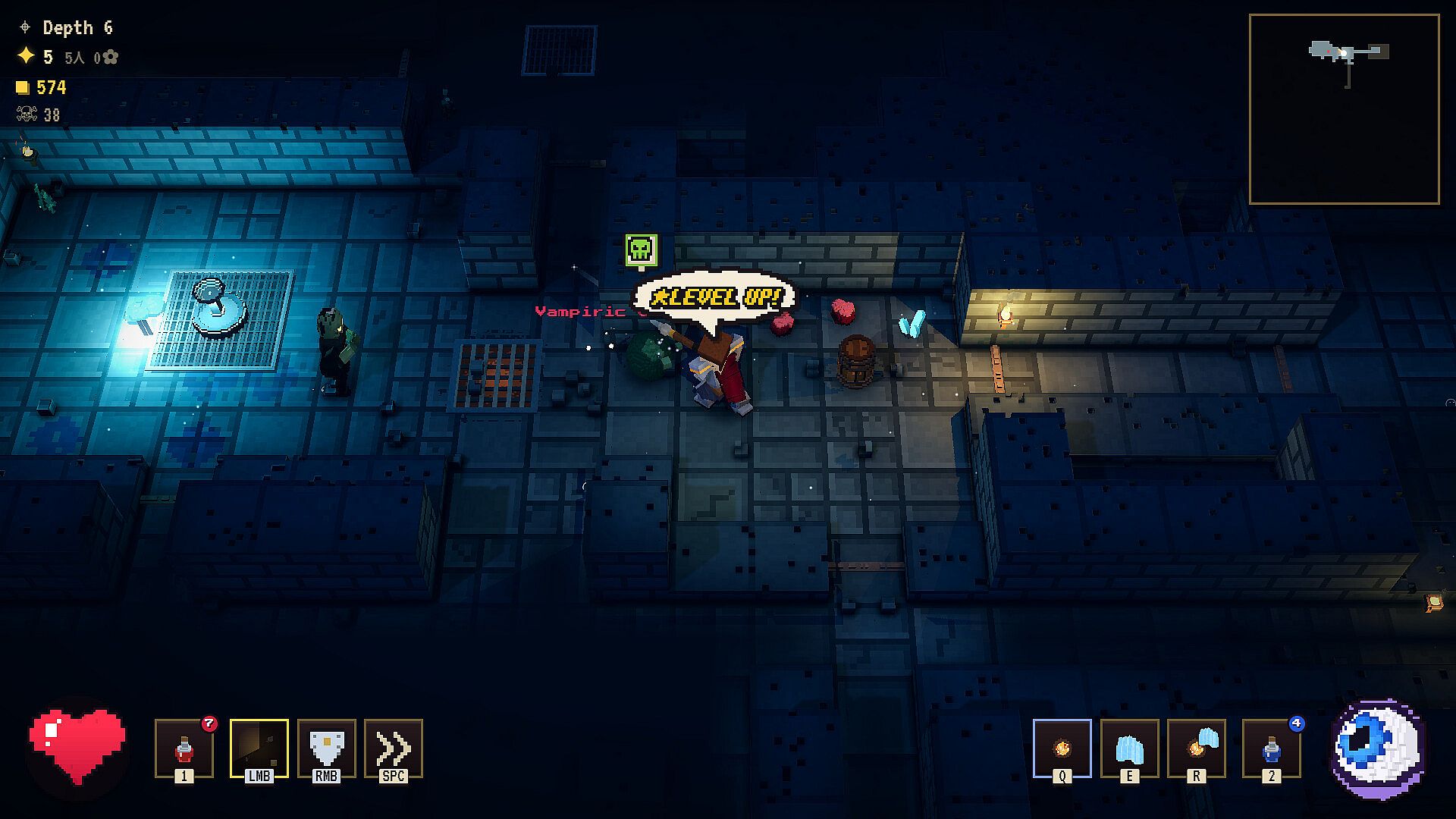
Every creature functions as a jointed voxel puppet. Killing blows sever limbs, disabling attacks or mobility for the remainder of the fight. Bosses carry health on individual limbs, so removing the arm that hurls fireballs ends that threat. Some bosses consume minions to regrow parts, which players can sever in turn. Gore effects toggle off in the options menu. Visual feedback replaces numbers: a pixel heart fills to show health, a beating heart tracks stamina, and a cartoon eye represents mana that closes as it drains. The hero's face conveys readiness, exhaustion or key moments through expressions and stickers.
Game Modes
The core experience follows a single continuous descent across five dungeon realms and six outdoor areas, each with distinct natives, landmarks and weather. Floors transition seamlessly underfoot, shifting ground, light and atmosphere without loading screens. At every staircase two gates appear: one of flowers leading to brighter meadows filled with streams of cute enemies that reward massacre streaks and soul collection, and one of thorns opening into harsher lava halls or misted crags where fewer but stronger elites demand careful duels. Nothing indicates the safer path, forcing players to choose based on preference or risk tolerance.
Completing a run places a statuette in the armchair-side curio cabinet as a permanent record. After defeating the final boss the descent continues in endless mode, with bosses rotating across attempts. All assets, animations, sounds and music generate entirely through code, eliminating traditional files and enabling consistent procedural variety.
Exploration and Progression
Seventy creatures populate the realms, including shielded soldiers, ceiling ambushers, blink stalkers, rat kings and mimics. Ten bosses rotate between runs, each with unique telegraphed abilities. Loot defines builds without skill trees, so swapping rings or armor immediately alters playstyle through new spells, affixes and resonances. The code-generated world ensures every run feels fresh even after many attempts, while options for rebindable keys, adjustable screen shake, text size, hit-stop and graphics quality support varied play preferences.
Is It Worth Playing?
Doomy Downer suits players who enjoy deliberate, readable combat systems and build experimentation through gear alone. Its dismemberment mechanics and dual gate choices add meaningful decisions that affect both short-term survival and long-term runs. The absence of numbers and reliance on visual and facial feedback creates an intuitive loop that rewards observation over memorization. Singleplayer focus and endless mode after the initial victory provide replay value for those who appreciate roguelike structure without overwhelming complexity. Availability on PC makes it accessible for anyone drawn to action-roguelike experiences with strong emphasis on timing, resource management and procedural environments.











