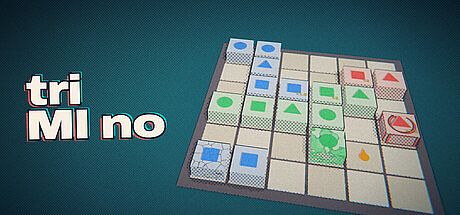


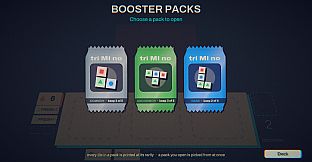
tri MI no is a single-player roguelike tile puzzle game developed for PC in the indie and casual genres. It centers on opening booster packs, selecting tiles, and placing them on a grid to build chains of colors and shapes that meet escalating score targets across ten levels per run.
Gameplay
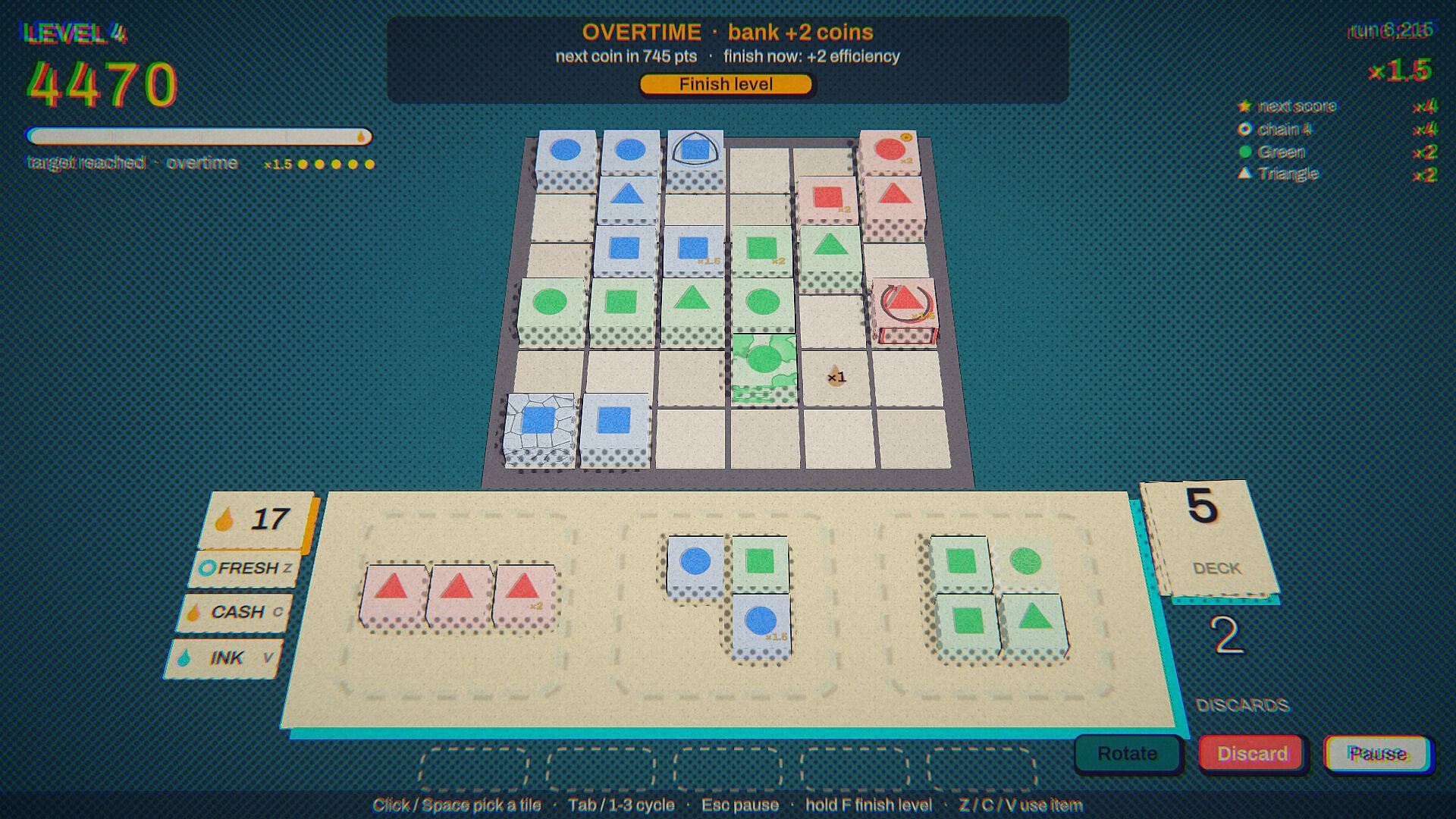
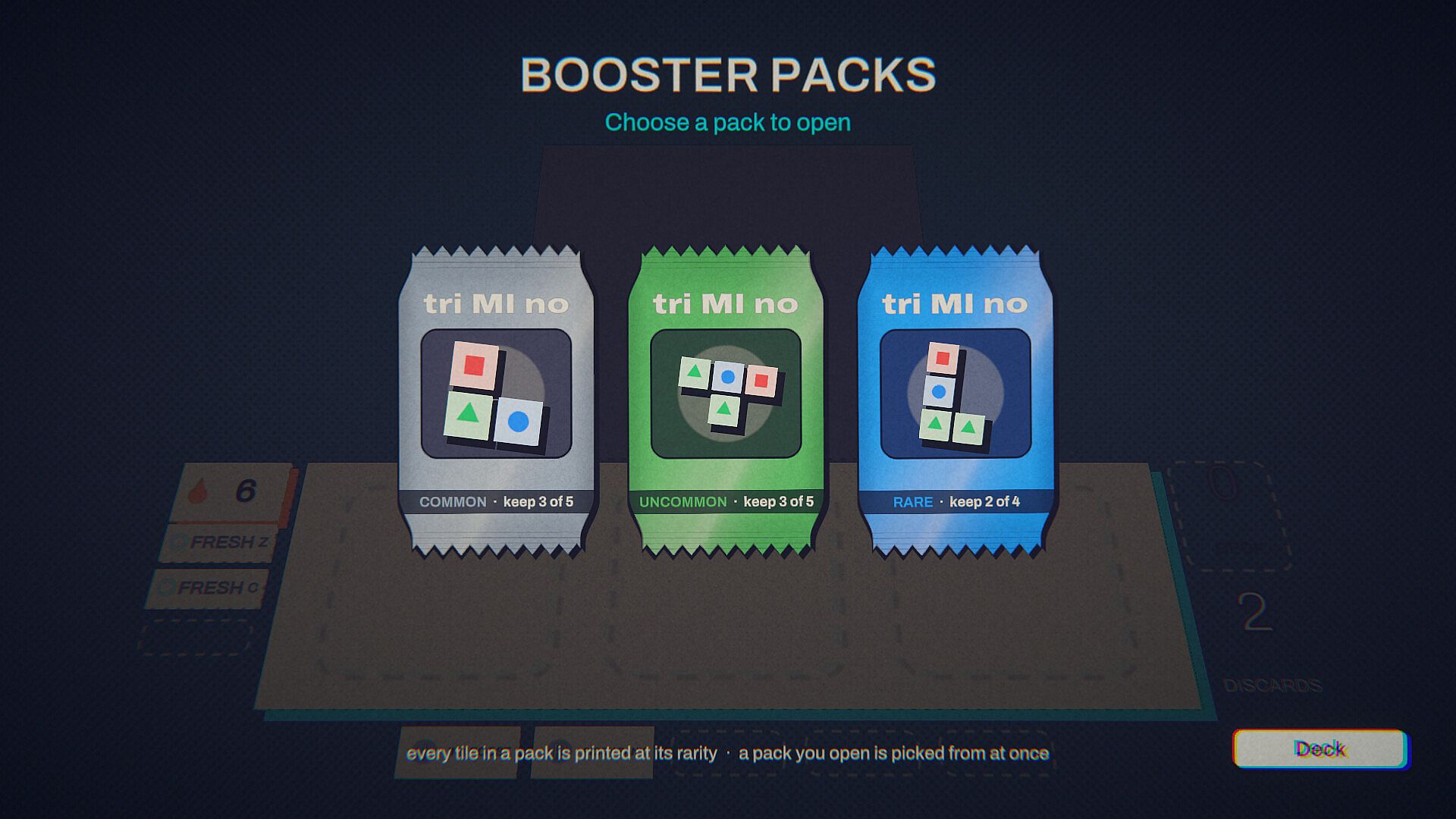
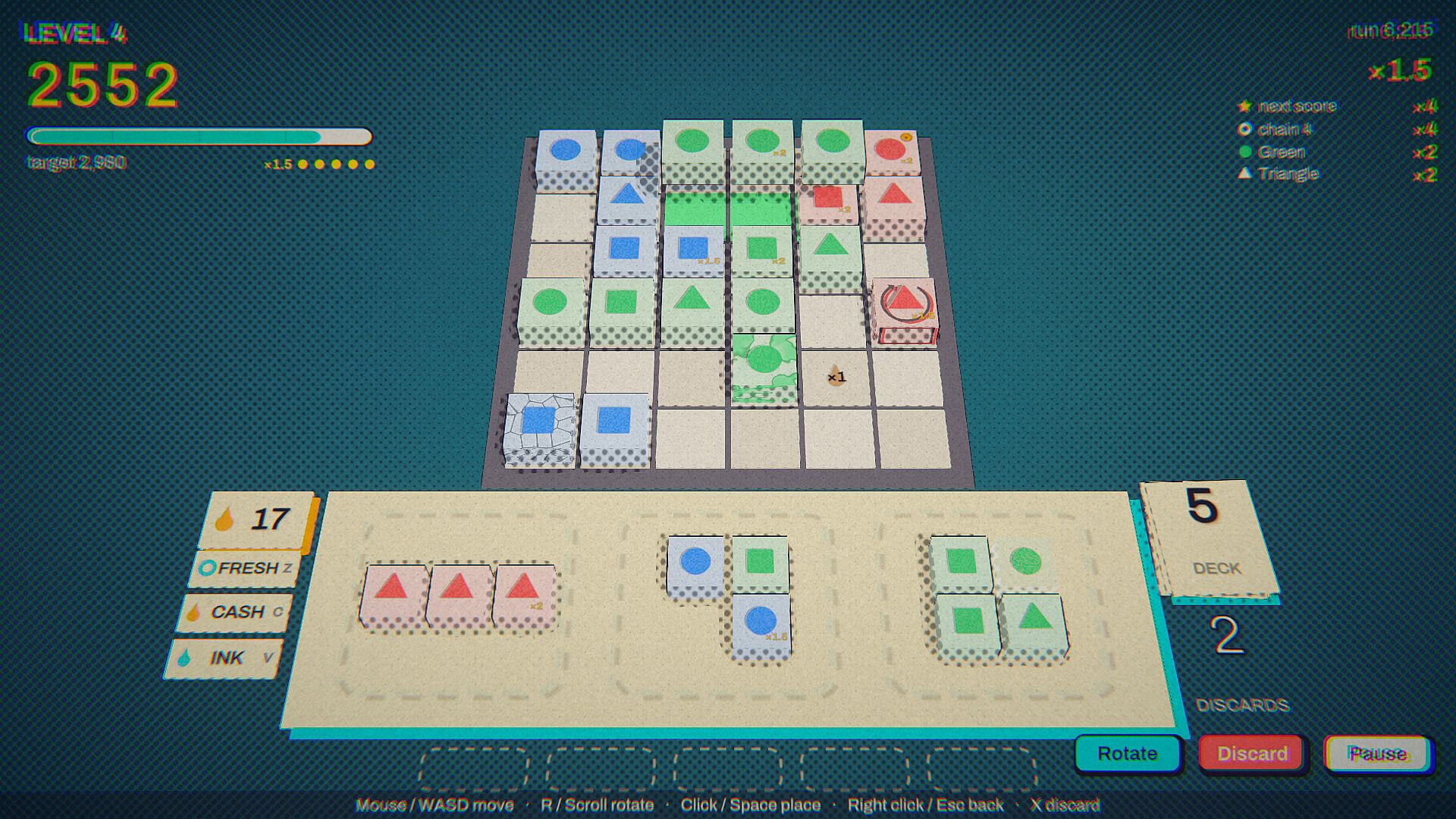
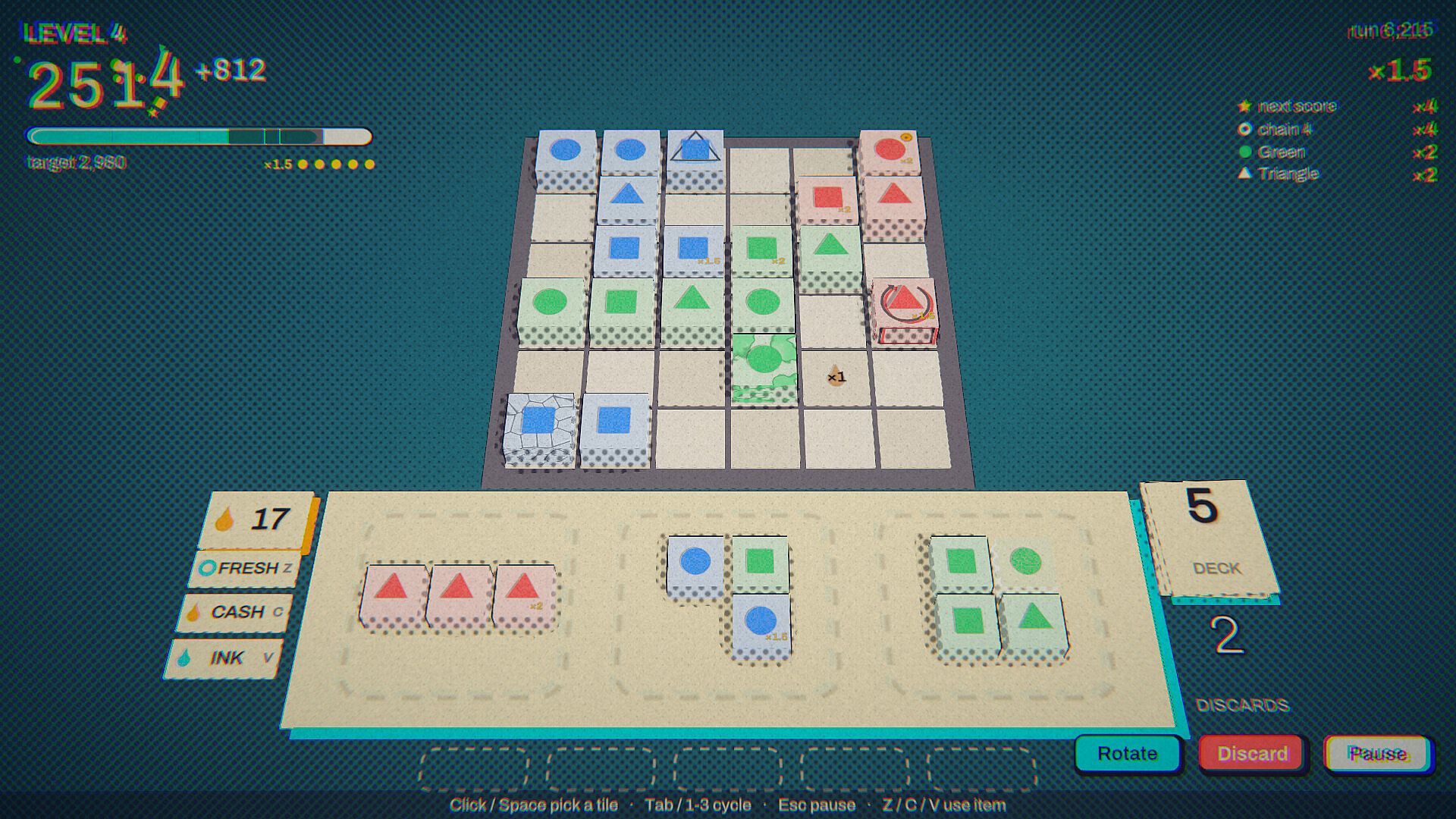
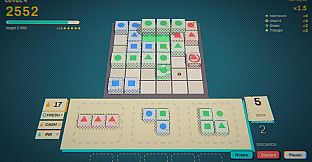
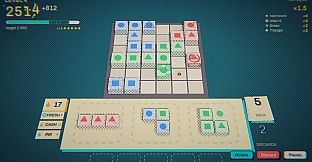
The core loop revolves around a single table and one tile at a time. Players open sealed booster packs to acquire tiles, then arrange them on a paper grid. Individual tiles hold no value on their own. Instead, placement creates chains by connecting colors and shapes, with scores calculated from chain length, contacts made, badges on blocks, and current streak multipliers. Strategic positioning turns modest placements into thousands of points.
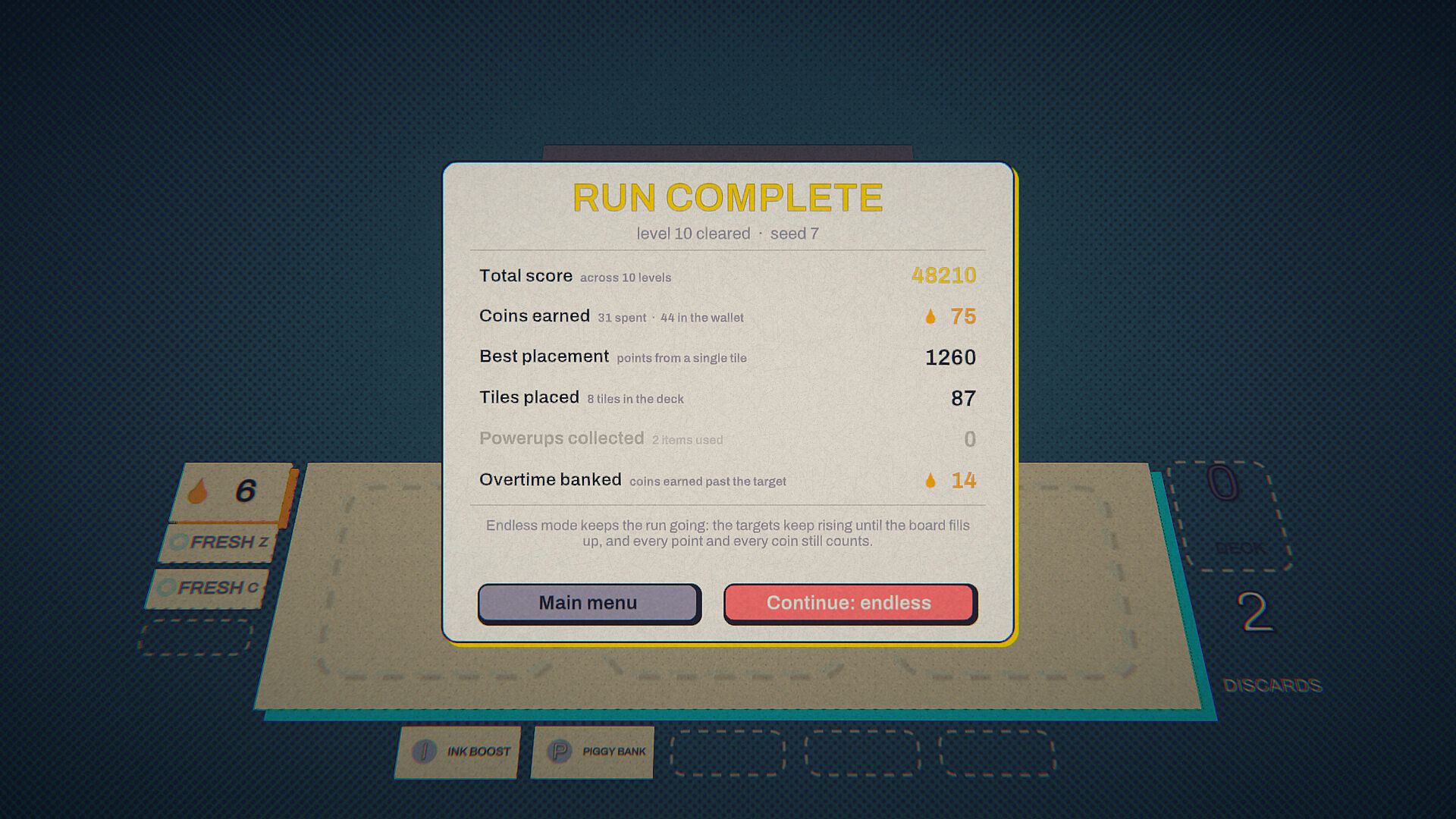
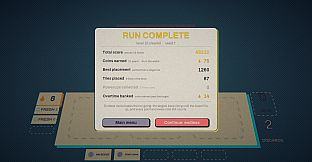
Reaching the target score does not conclude the level. It triggers overtime, where additional placements convert scores into coins while the bank remains capped. Ink drops on the table diminish with each move, and the bonus for stopping early decreases progressively. Decisions focus on how long to continue milking a strong board before ending the level.
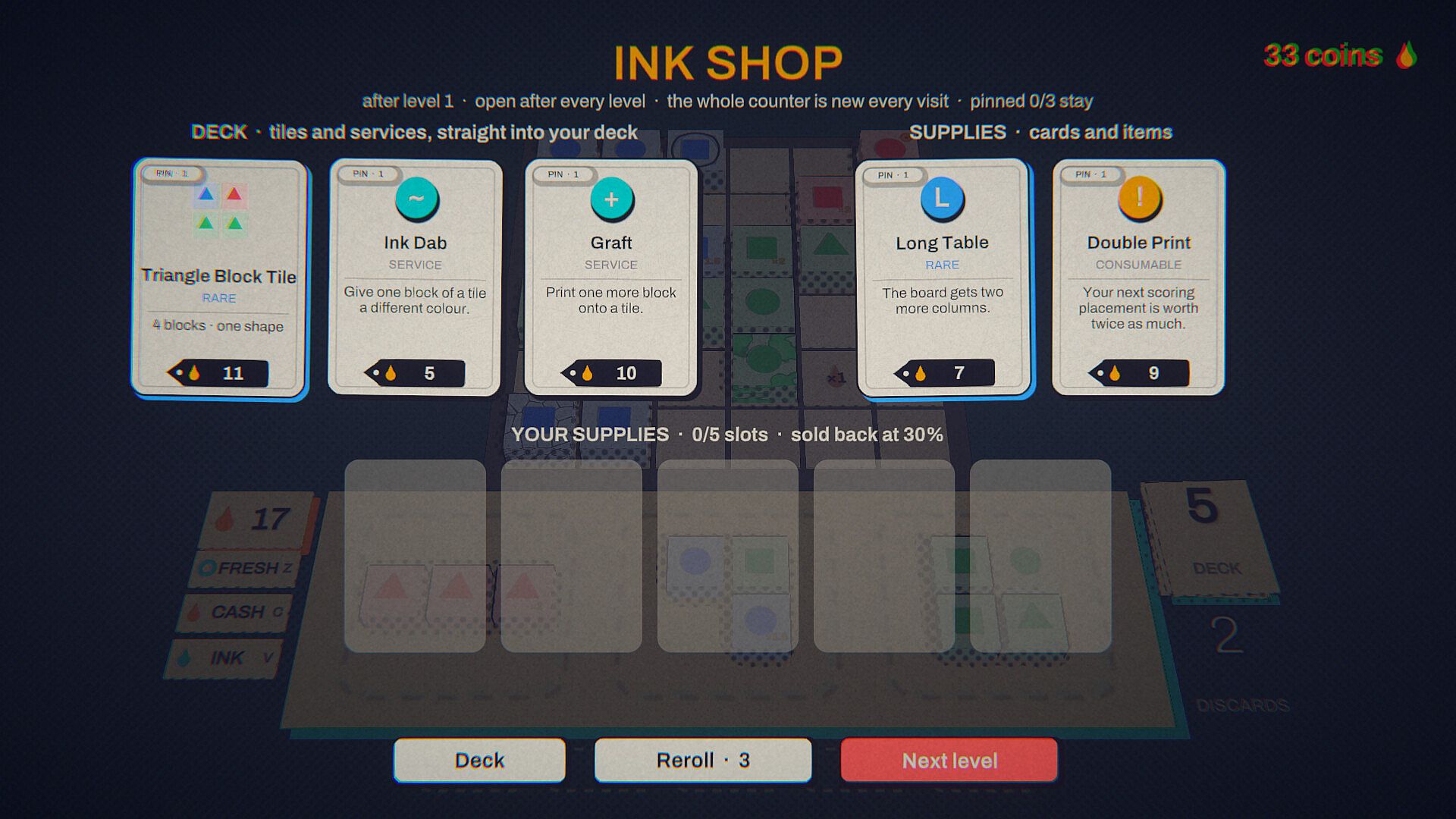
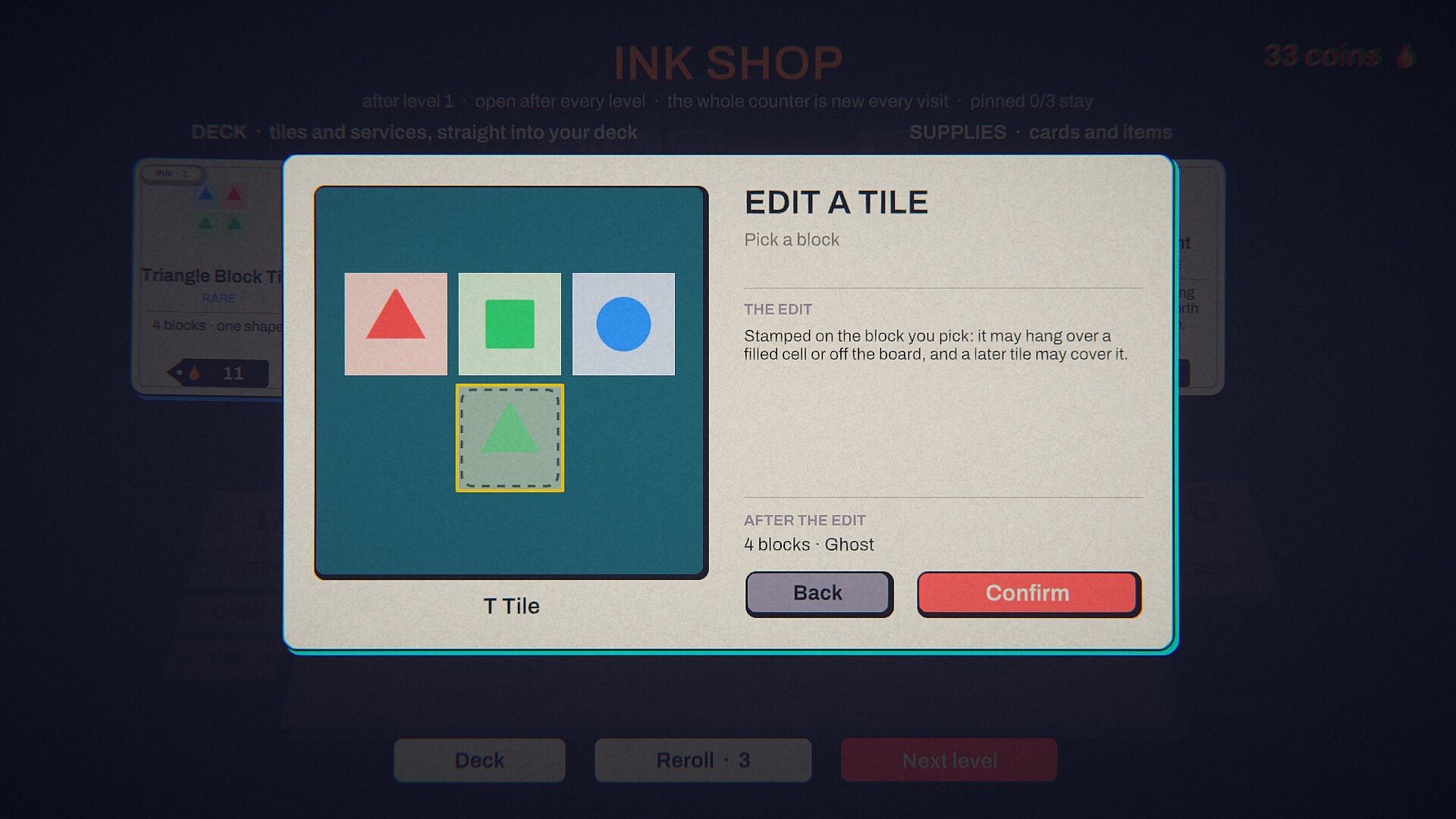
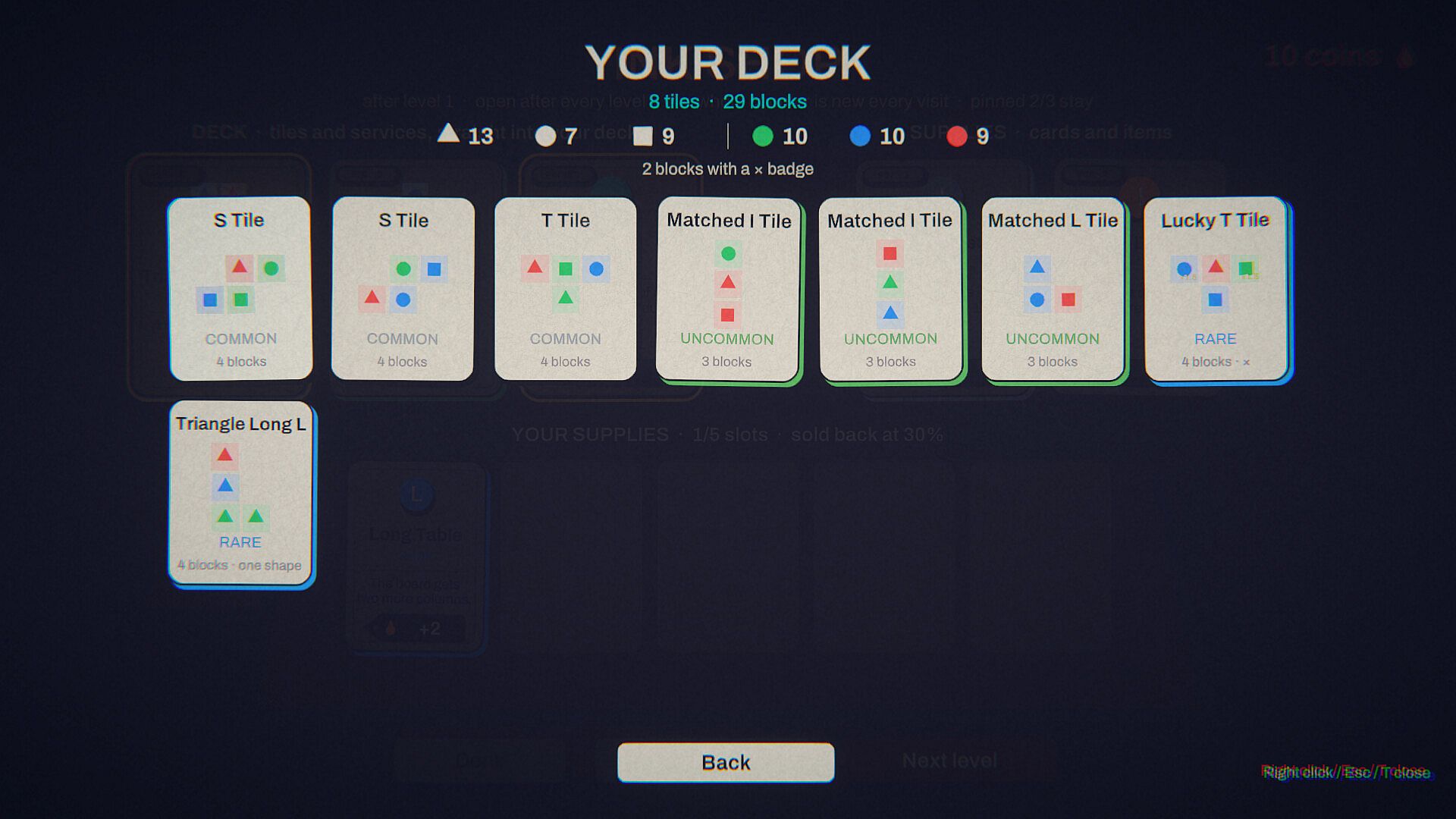
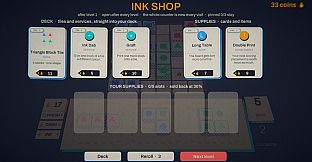
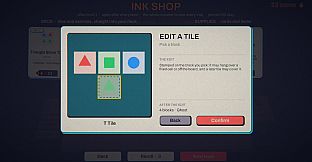
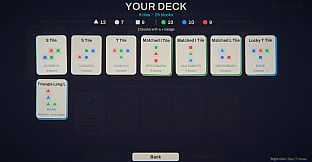
Powerups and supplies come from the ink shop, which restocks after every level. Options include larger tables, wider hands, colors that score double or half, direct tile purchases into the deck, and one-shot multipliers that stack and activate on placement. Players can pin desired items to preserve them across restocks. Deck editing services allow recutting symbols, changing colors, trimming blocks, or grafting new ones onto existing tiles. These edits introduce traits such as inks that dye neighbors on landing, plates that fire chains a second time, or tracing paper that extends off the board edge.
Game Modes
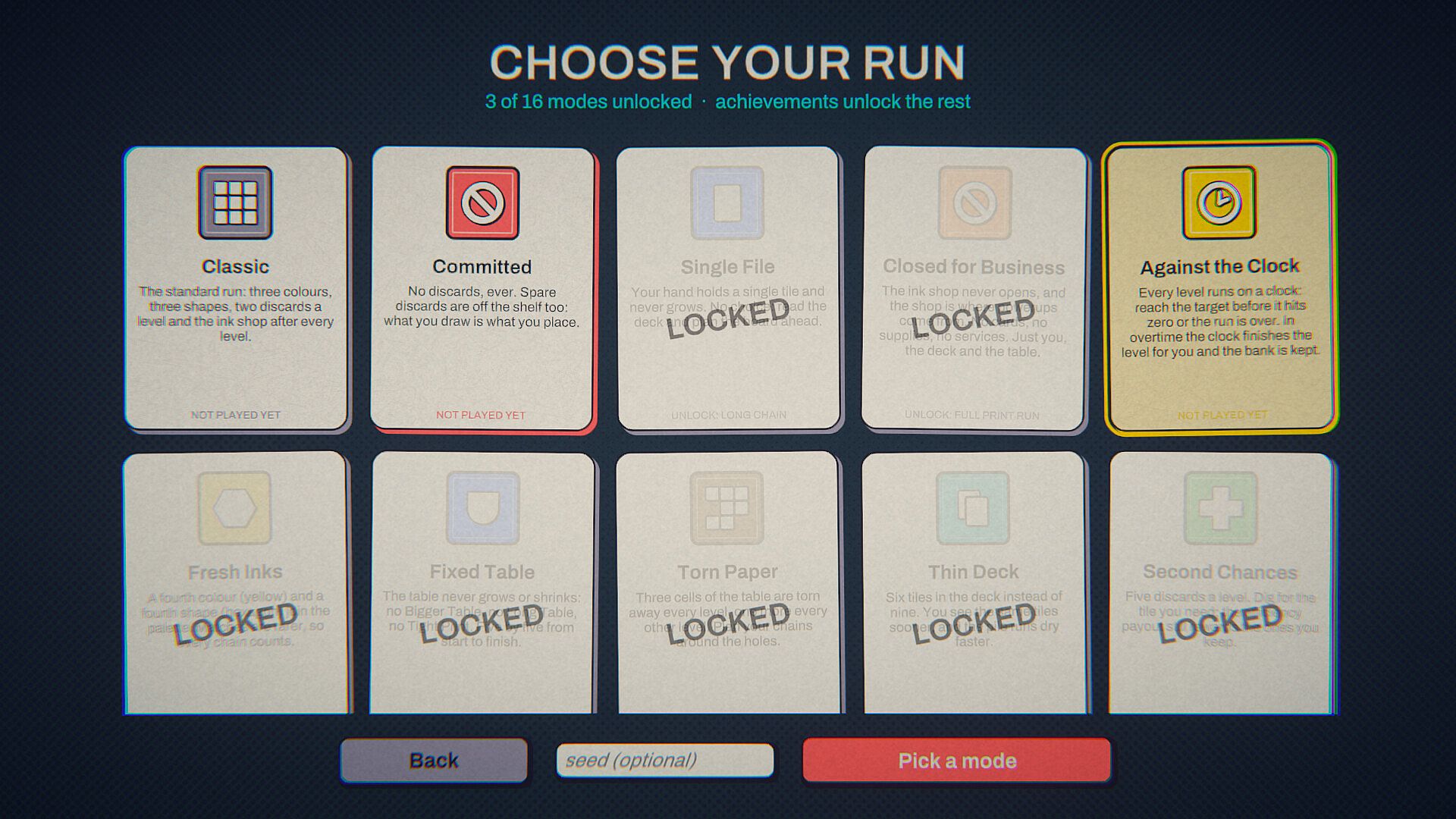
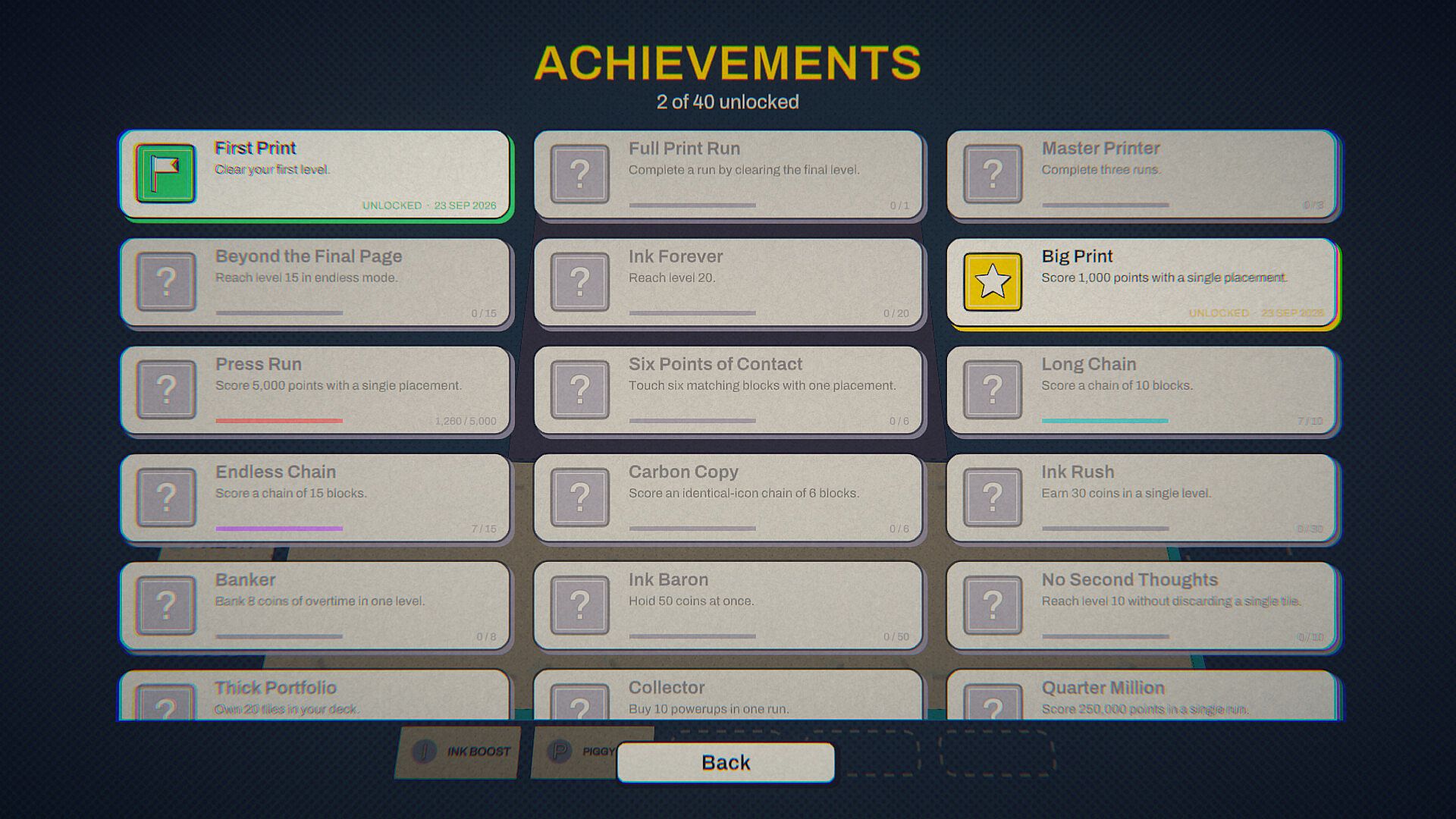
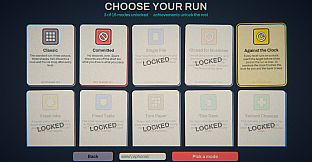
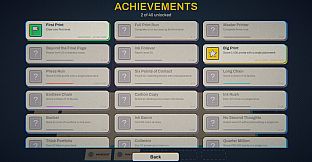
Each run generates fresh packs, shop stock, ink drops, and table layouts through randomization. Achievements unlock variant modes that alter core rules, including runs with no discards, a hand limited to one tile, no shop access throughout, a timer on every level, pages with holes, inks that print without scoring, and boards restricted to four by four. These variants demand different deck constructions and approaches to scoring.
Completing the tenth level opens endless mode, where targets continue rising without limit. Seeded runs allow players to share identical starting conditions with others by entering a code, leaving skill and choices as the only variables. Global leaderboards track highest runs, largest single placements, and daily seeded challenges.
Visual Style and Controls
The presentation mimics a board game printed on inexpensive stock, featuring flat inks, halftone shadows, visible paper grain, and symbols slightly out of register. Traits appear printed directly on blocks rather than through separate labels, enabling quick visual assessment of board state. Controls support mouse, keyboard, or gamepad with full feature parity, and a tutorial integrates without interrupting flow.
Is It Worth Playing?
tri MI no suits players who enjoy roguelike progression combined with precise tile placement puzzles and deck-building decisions. Runs last around twenty minutes, with shops and powerups providing variety between levels. The emphasis on chain scoring, overtime management, and post-run deck edits creates repeated playthroughs that feel distinct due to randomization and mode variants. Those drawn to casual indie experiences focused on strategic placement and incremental customization will find consistent depth in how one well-placed tile shifts outcomes from modest scores to thousands of points. The seeded run option adds a layer for shared challenges without requiring multiplayer infrastructure.