













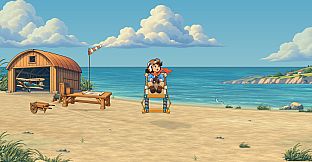
Tinker to the Moon is an indie casual simulation game on PC that centers on building and flying small machines in a relaxed coastal setting. Players begin with a basic spring-powered device and gradually expand it through trial and error to pursue a distant goal on the Moon. The experience emphasizes personal discovery and incremental progress rather than competition or high-stakes challenges.
Gameplay
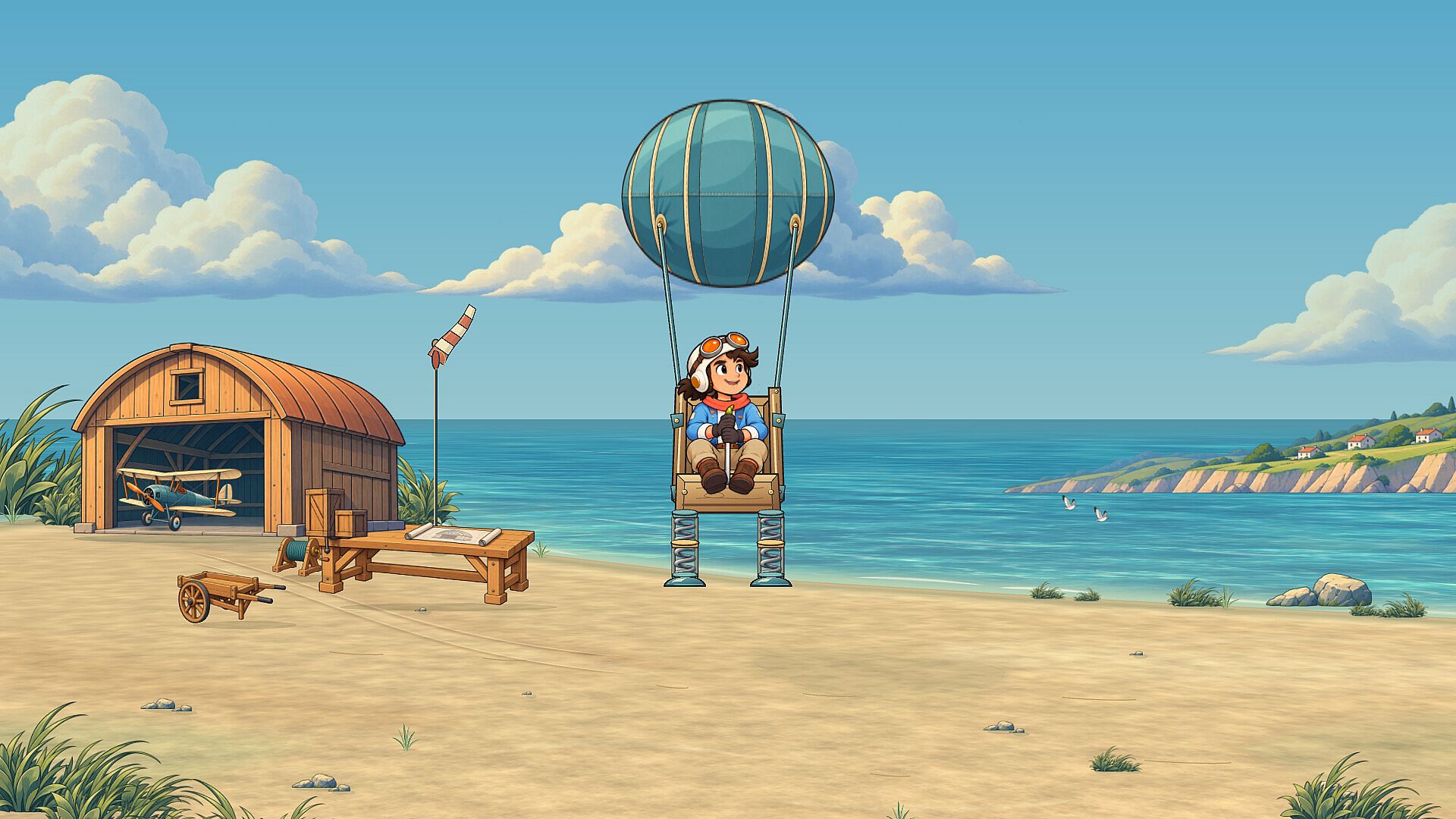
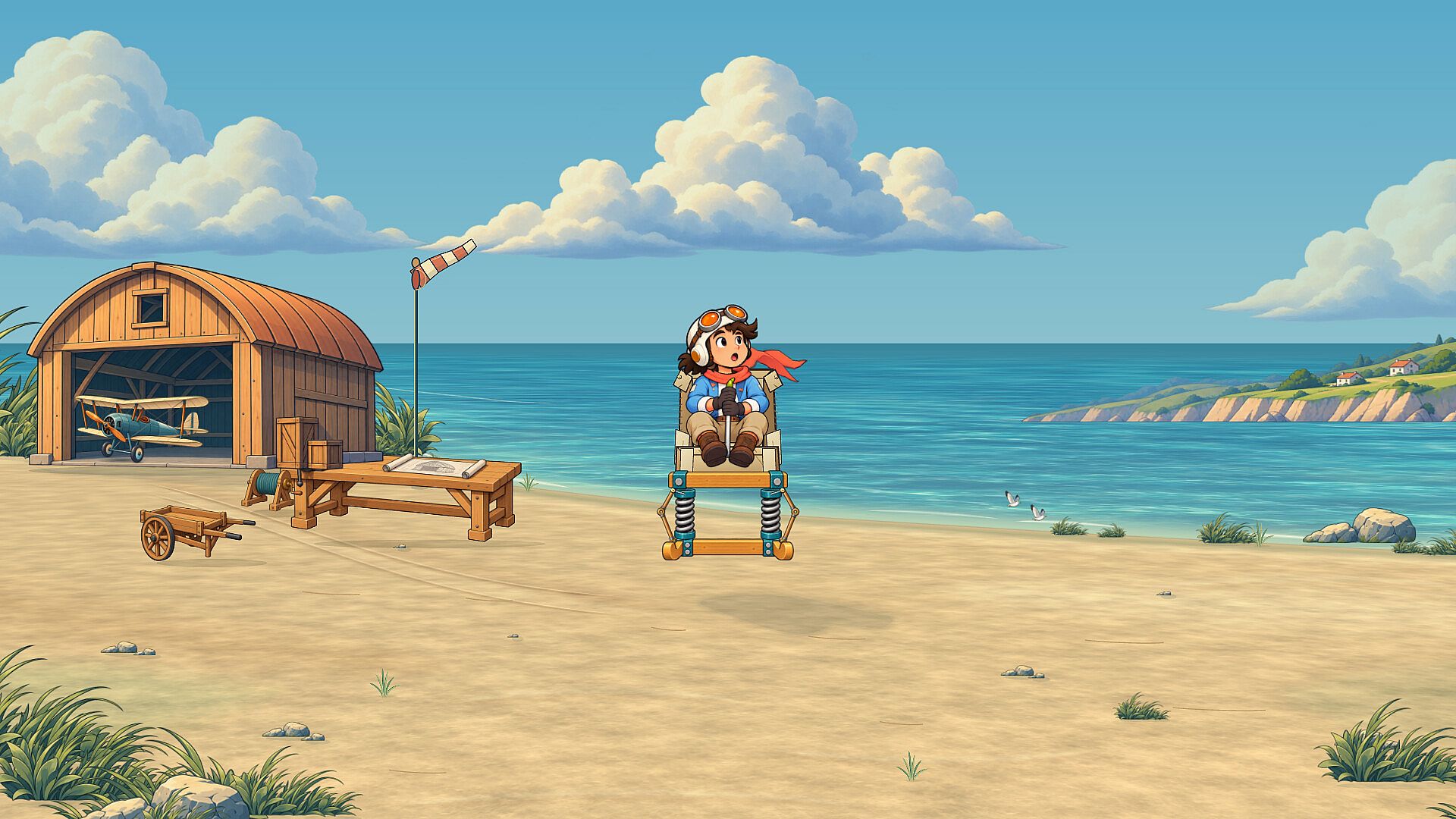
The core loop involves designing a machine, launching it into the air, observing its performance, and returning to the workshop to refine the design. Early attempts focus on simple hops powered by a spring mechanism near the sea. Success comes from adjusting balance, adding components such as wings or a balloon, and learning how each change affects flight behavior. The machine carries forward earned parts and prior discoveries, allowing steady growth alongside the player. Curiosity drives the process, with each flight revealing new insights into stability, wind interaction, or lift that inform the next iteration.
Progress feels personal because every adjustment stems from direct observation of what worked or failed in the previous attempt. The simulation rewards patience and experimentation over precise planning, creating moments where a small tweak produces surprising results. The world shifts gradually beneath the machine as altitude increases, turning the journey into a visual record of advancement from ground level toward the clouds and beyond.
Game Modes
Three distinct ways to engage with the building and flying systems exist. The main campaign follows a gentle coastal start and encourages players to follow their own pace toward the Moon through successive flights and refinements. Expeditions introduce a fresh challenge by taking the current machine into new environments for additional testing and discovery. Sandbox mode removes external goals entirely, letting players freely combine parts and test ideas simply to observe outcomes and explore possibilities without pressure to advance a story.
These modes support different moods. The campaign provides structure through its overarching ambition, while expeditions add variety through new conditions. Sandbox serves as an open space for pure tinkering and unexpected combinations that might not fit the directed paths.
Building and Progression
Machine growth happens through earned parts collected during flights. Players keep successful components and reuse them across attempts, reshaping the invention whenever a new idea emerges. The starting spring-powered base expands with additions that address specific flight needs, such as increased lift or better control. This system keeps the focus on the machine itself rather than external systems or resources, making each session a direct continuation of previous experiments.
The progression stays tied to the player's own curiosity. Returning from a flight with a new observation often leads to immediate workshop changes, and the retained parts ensure that earlier work contributes to later success. The result is a machine that evolves organically rather than through a fixed upgrade tree.
Is It Worth Playing?
Tinker to the Moon suits players who enjoy slow-paced building simulations and the satisfaction of watching a personal creation improve through repeated testing. Its single-player focus and emphasis on small, self-directed steps make it accessible for casual sessions where the goal is relaxation and incremental achievement rather than mastery of complex systems. The combination of campaign structure, expedition variety, and open sandbox options provides flexibility for different play styles within the same core loop of design, flight, and refinement. Those drawn to cozy indie experiences centered on invention and gentle exploration will find consistent appeal in its straightforward yet rewarding mechanics.