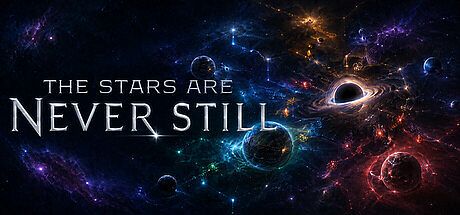


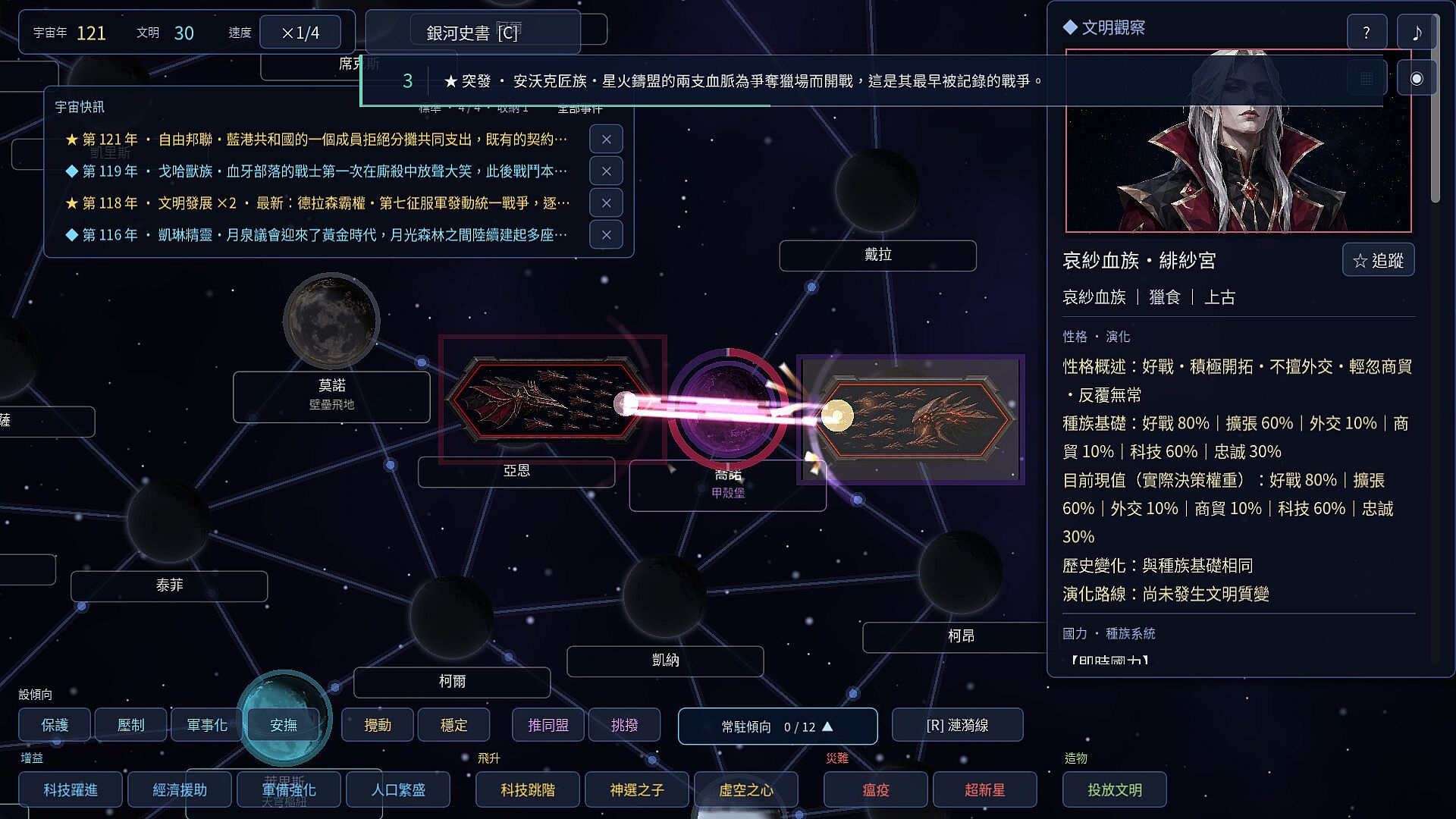
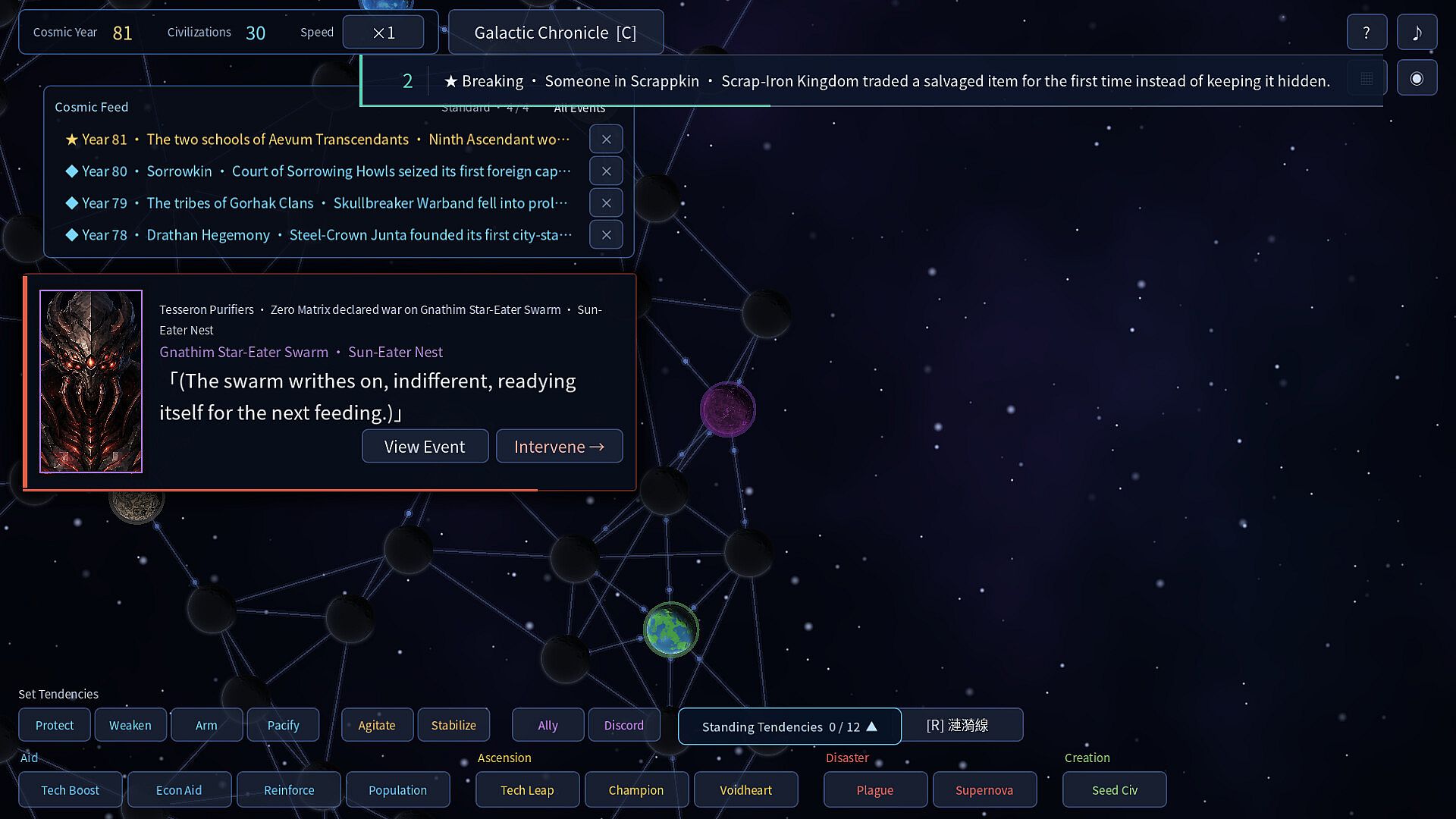
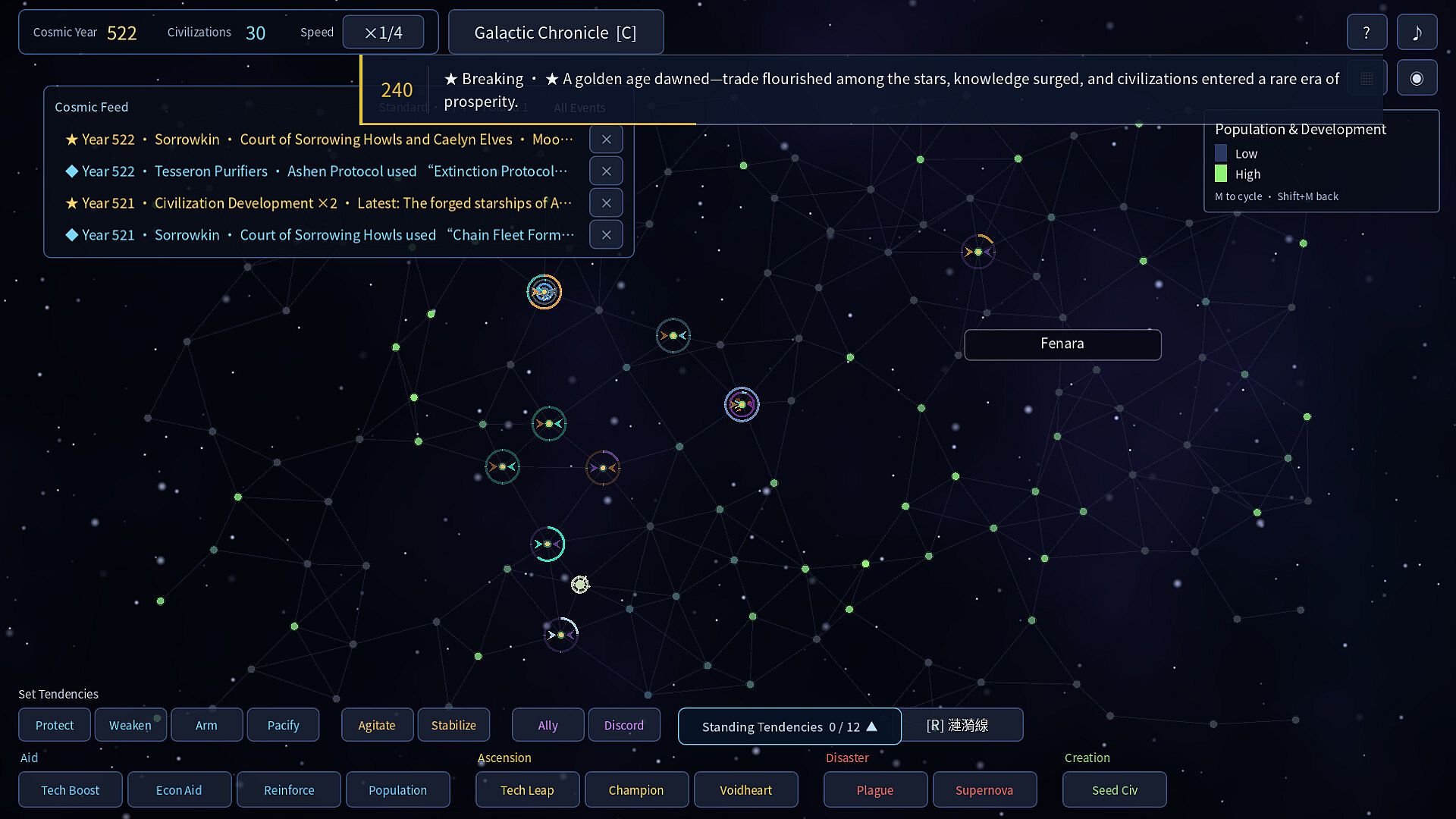
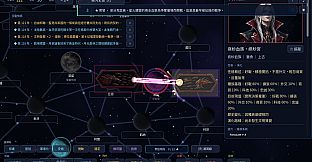
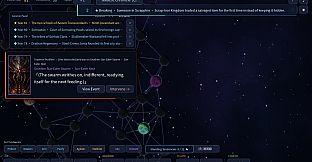
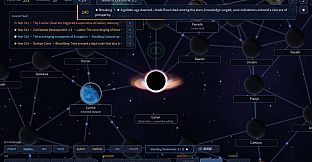
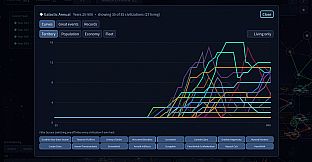
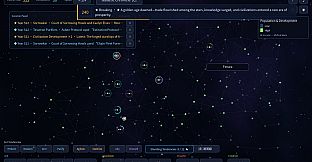
The Stars Are Never Still is a 2D sandbox strategy and simulation game for PC in which players create galaxies and observe the independent development of civilizations across thousands of years. Rather than controlling a single faction, the experience centers on watching emergent stories unfold as races colonize worlds, form alliances, trade resources, declare wars, and either prosper or collapse under their own decisions.
Gameplay
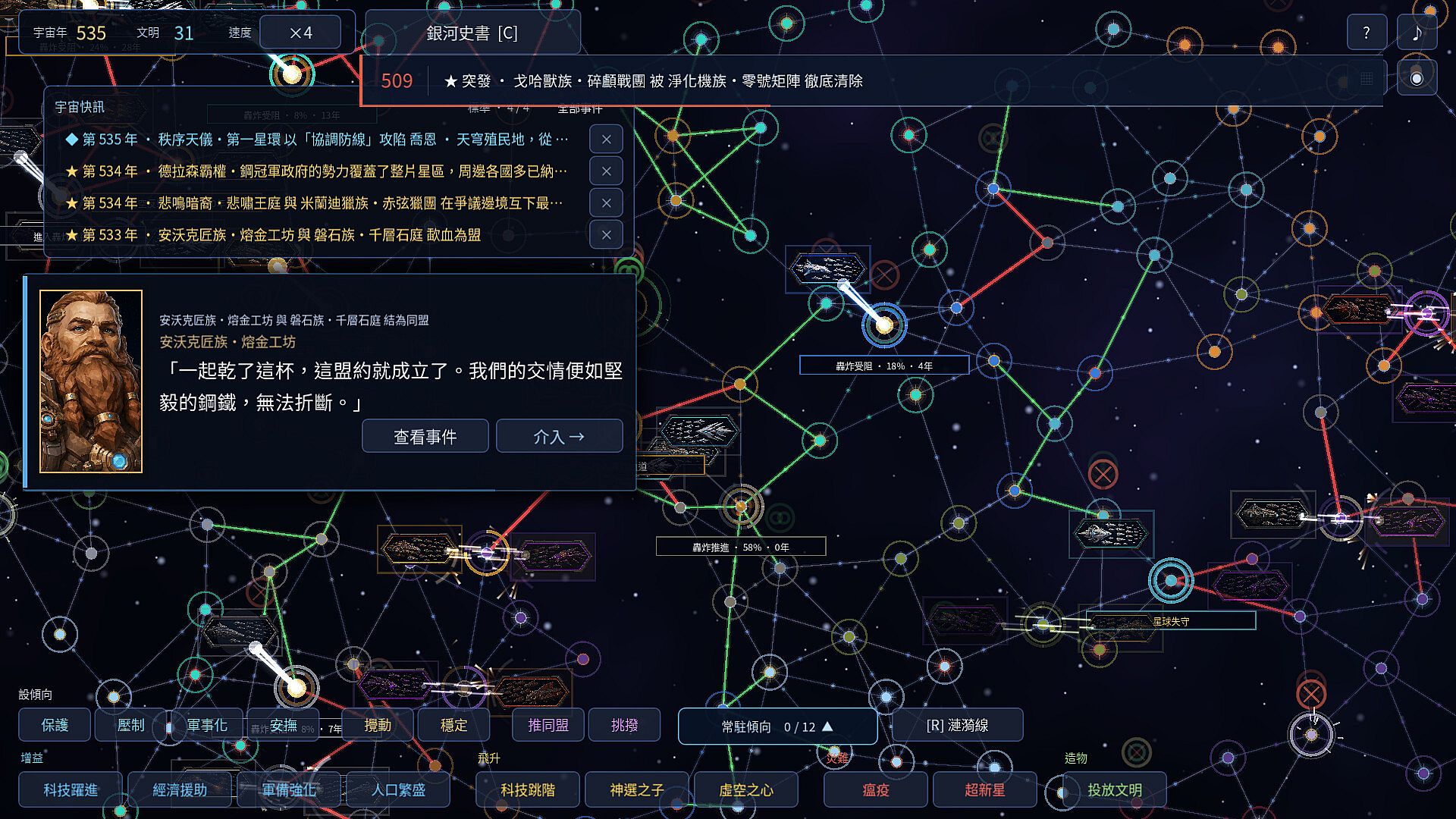
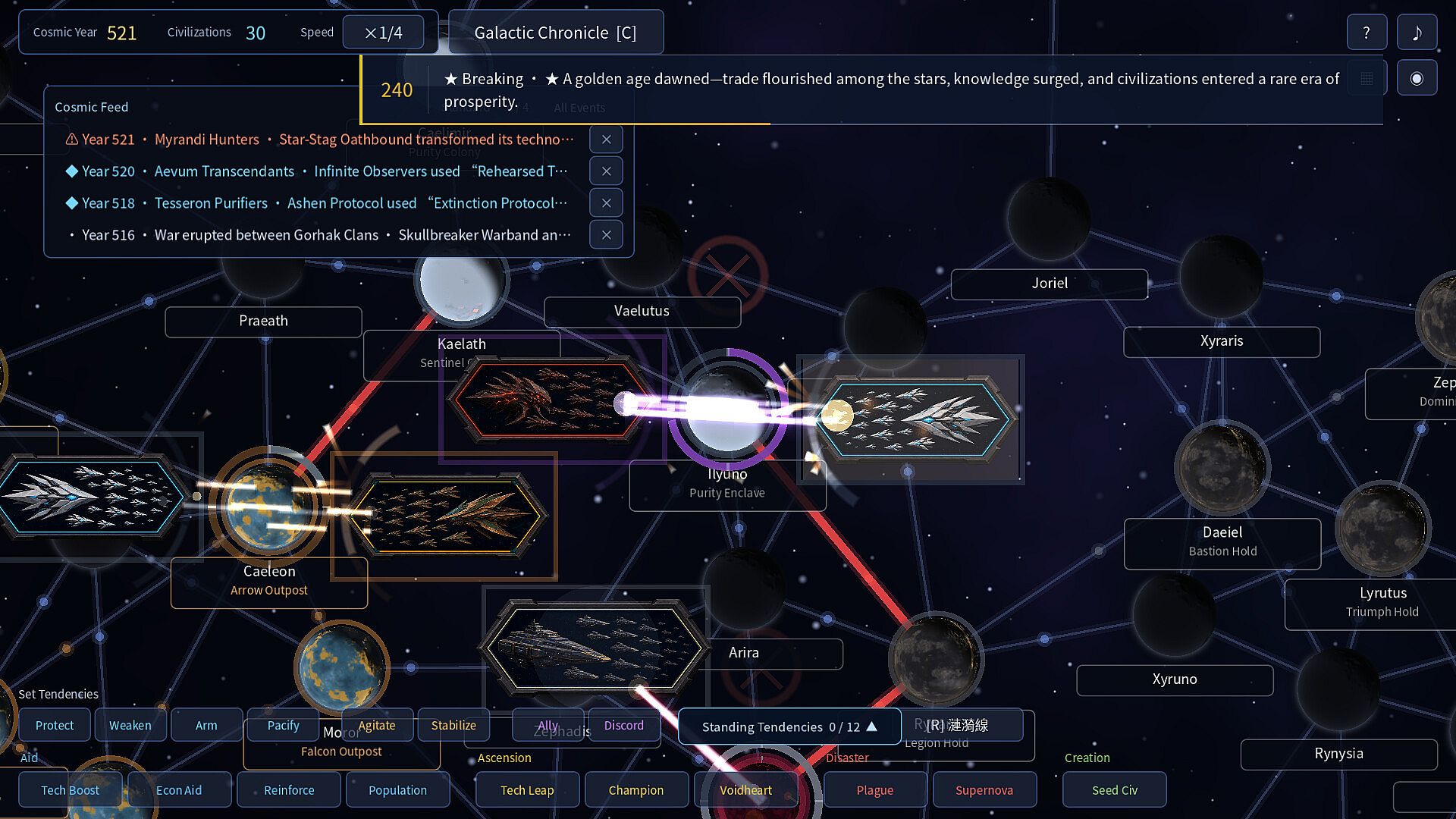
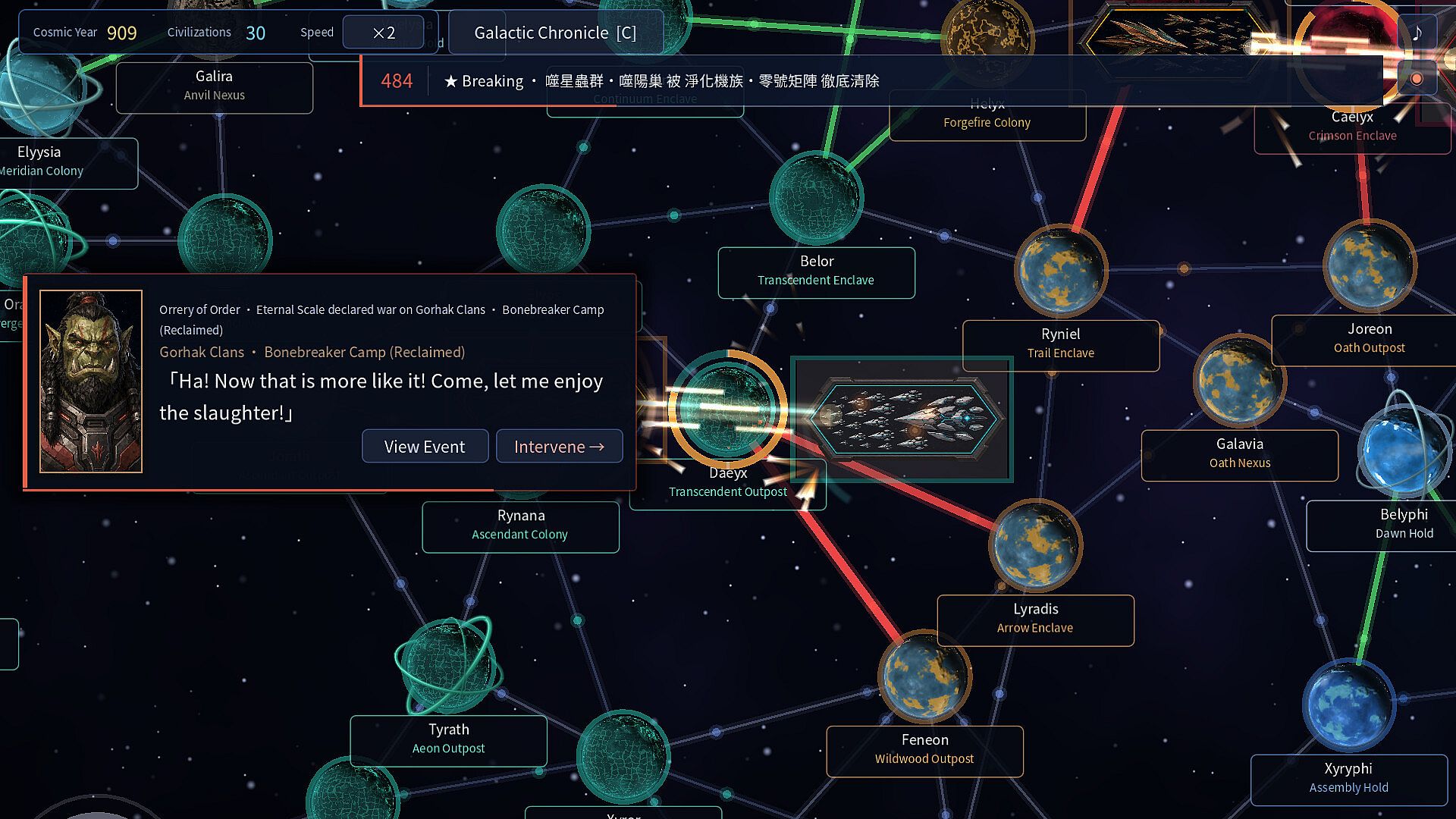
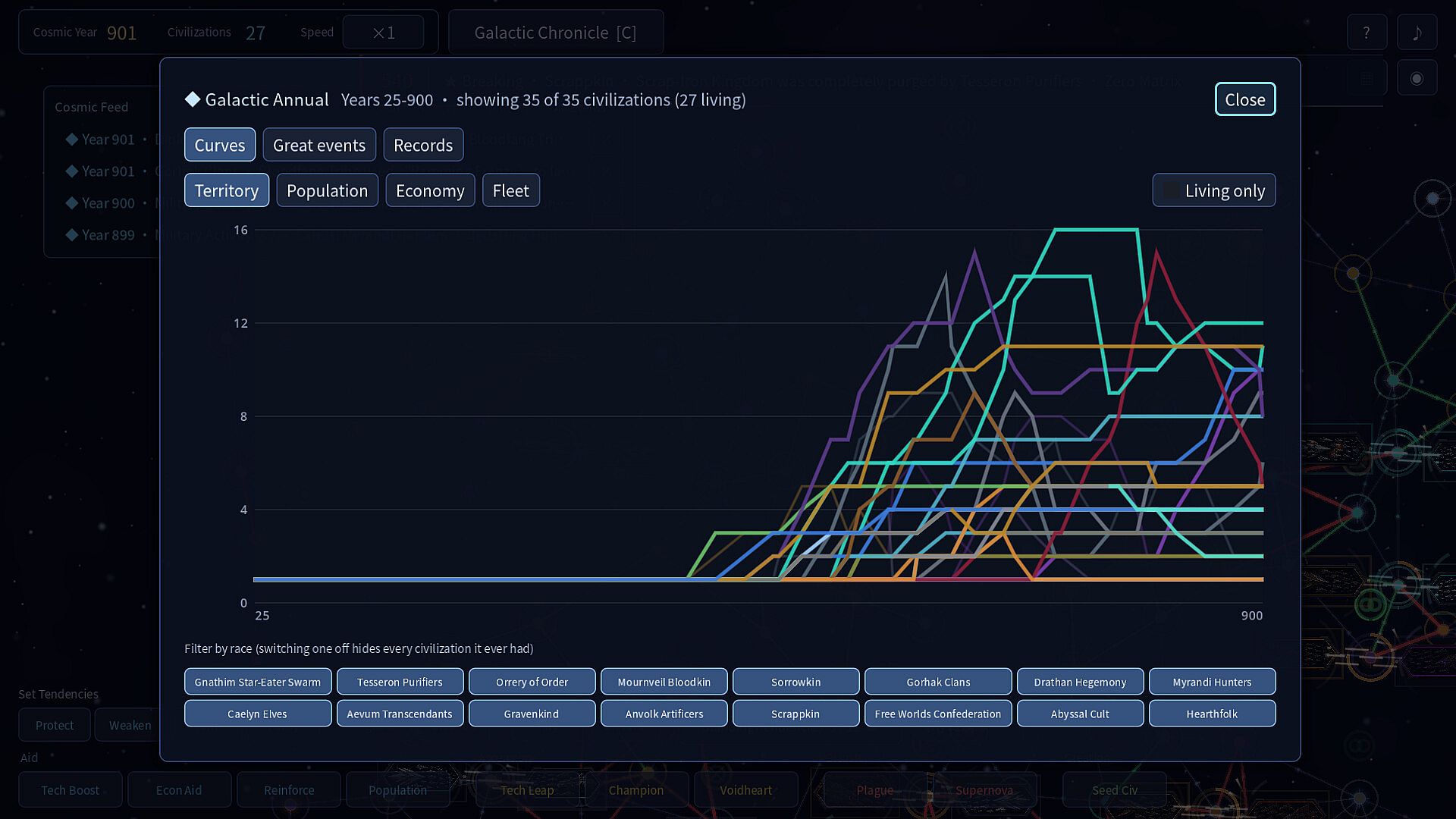
Players begin by generating a galaxy through quick procedural creation, manual placement of civilizations and planets, or customization via the race editor that allows changes to names and portraits. Once the simulation starts, the 16 races act according to their distinct priorities and behaviors, competing for territory while building fleets, economies, and diplomatic ties. Wars can erupt from border tensions and stretch across centuries, while declining empires may fracture or recover after generations of decline. The simulation tracks colonization, diplomacy, internal conflicts, ruin research, and racial abilities, all of which feed into a detailed historical record.
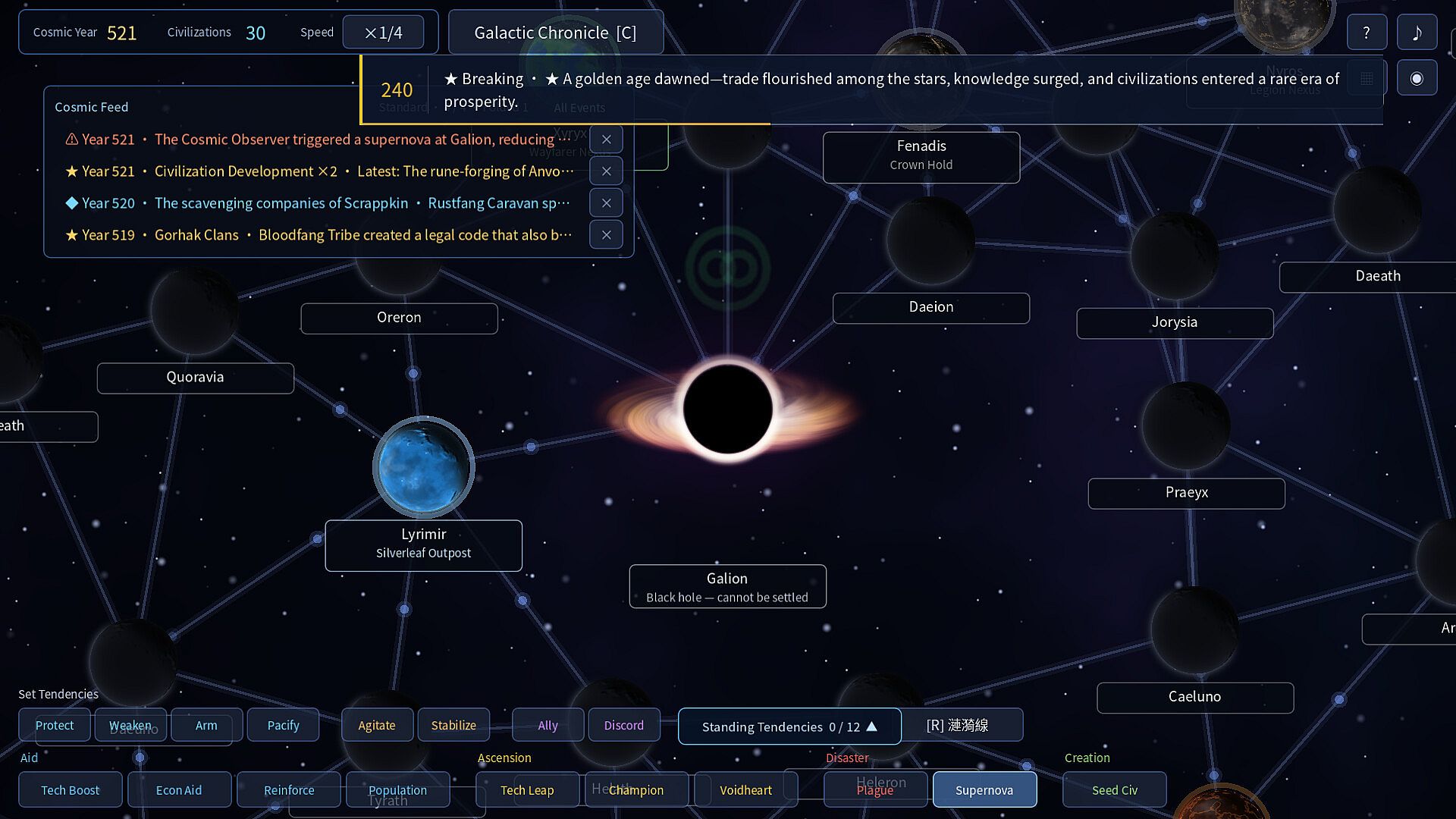
Intervention tools let observers influence events without direct control. Options include advancing technology, delivering economic or military aid, stabilizing regions, sowing discord, seeding new civilizations on barren worlds, triggering plagues or disasters, or even collapsing a planet into a black hole. Each action carries lasting consequences that ripple through later events and the recorded history.
Game Modes
The primary experience is the full star-map simulation, where players can adjust speed, pause, and save at any point while following the rise and fall of civilizations. A separate Desktop Idle Mode runs the same simulation in a compact window that continues developing in the background. Players can minimize the game, attend to other tasks, and return to check on major developments or intervene when significant events occur.
The 16 Unique Races
Each race operates with its own personality, diplomatic tendencies, fleet doctrine, ground combat style, and special traits. The Gnathim Star-Eater Swarm reproduces through biomass consumption and recovers quickly from losses in war. The Tesseron Purifiers reject all diplomacy and convert conquered worlds into mechanical domains. The Orrery of Order protects weaker civilizations and restores war-torn planets. Other factions include the predatory Mournveil Bloodkin, the tribute-based Sorrowkin, the battle-focused Gorhak Clans, the expansionist Drathan Hegemony, the honor-bound Myrindi Hunters, the knowledge-seeking Caelyn Elves, the tech-ascending Aevum Transcendants, the resilient Gravenkind lithoids, the industrial Anvolk Artificers, the wreckage-scavenging Scrappkin, the diplomatic Free Worlds Confederation, the corrupting Abyssal Cult, and the trade-oriented Hearthfolk. These traits drive independent decision-making that produces varied galactic histories across different play sessions.
Is It Worth Playing?
The game remains in development with a planned release date of April 1, 2027, and currently shows no user reviews on its Steam page. It targets players who enjoy single-player strategy simulations focused on observation, emergent narratives, and long-term historical tracking rather than direct empire management or competitive multiplayer. The combination of customizable starting conditions, detailed racial behaviors, intervention mechanics, and the persistent Desktop Idle Mode offers a distinctive approach for those interested in watching civilizations interact over simulated millennia. Adjustable simulation speed and the ability to save progress support both focused sessions and background monitoring. Potential buyers may wish to follow further updates from the developer Sojourner. Game ahead of launch.