


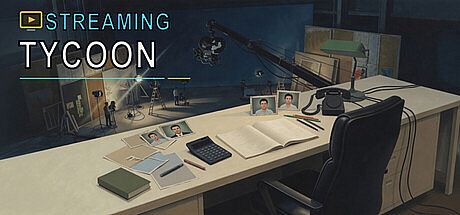


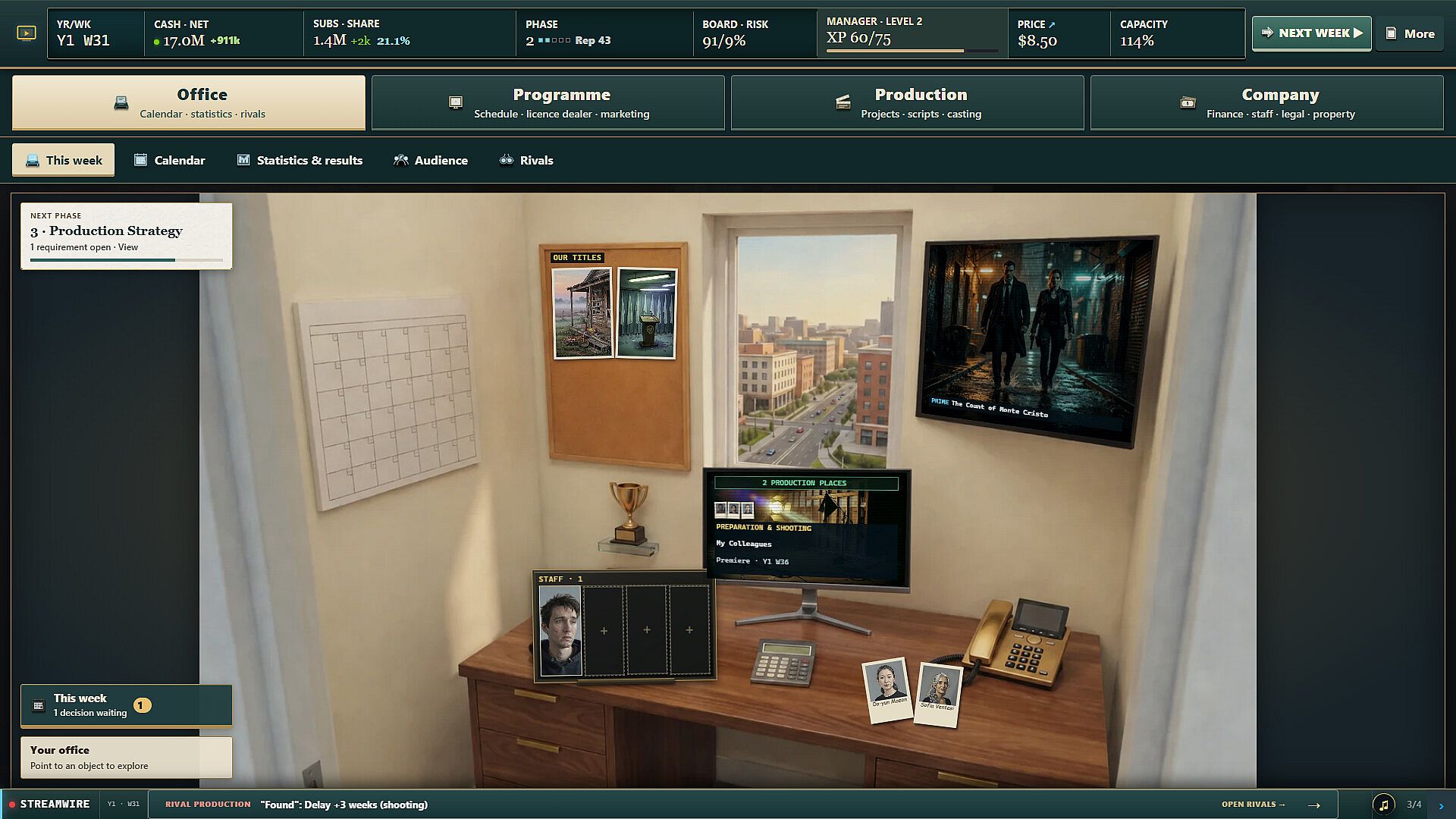





Streaming Tycoon is a strategy, indie, and simulation game for PC in which players take control of their own streaming service. The experience centers on weekly decisions that shape content production, subscriber growth, and company direction from the ground up.
Gameplay
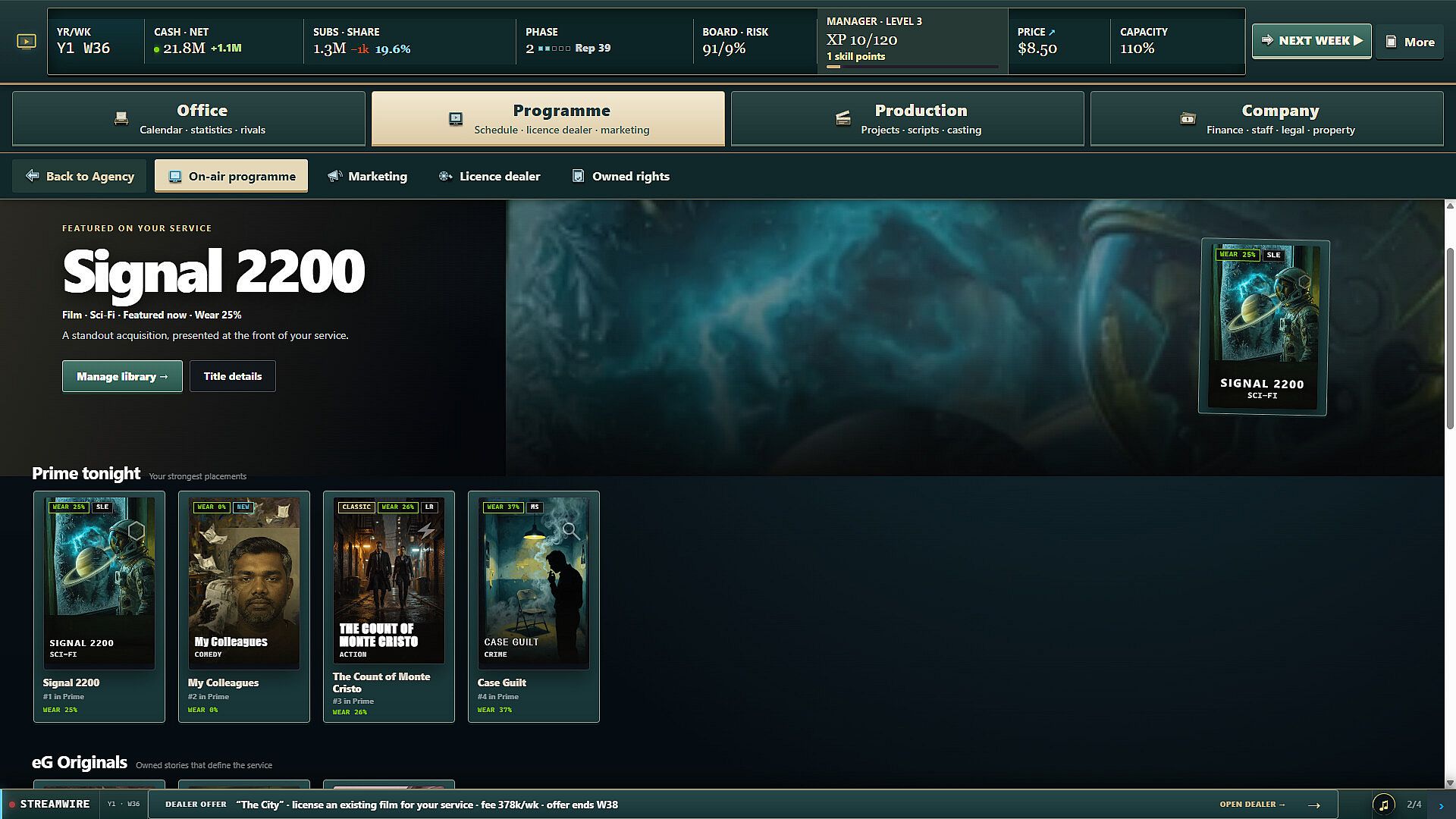
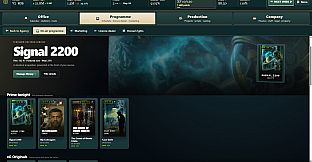
The core loop revolves around building and refining a content catalogue that keeps viewers engaged over time. Programmes lose appeal as audiences tire of them, so managers must rotate titles between active rotation, the archive, and new releases while balancing subscription pricing, marketing spend, and streaming capacity.
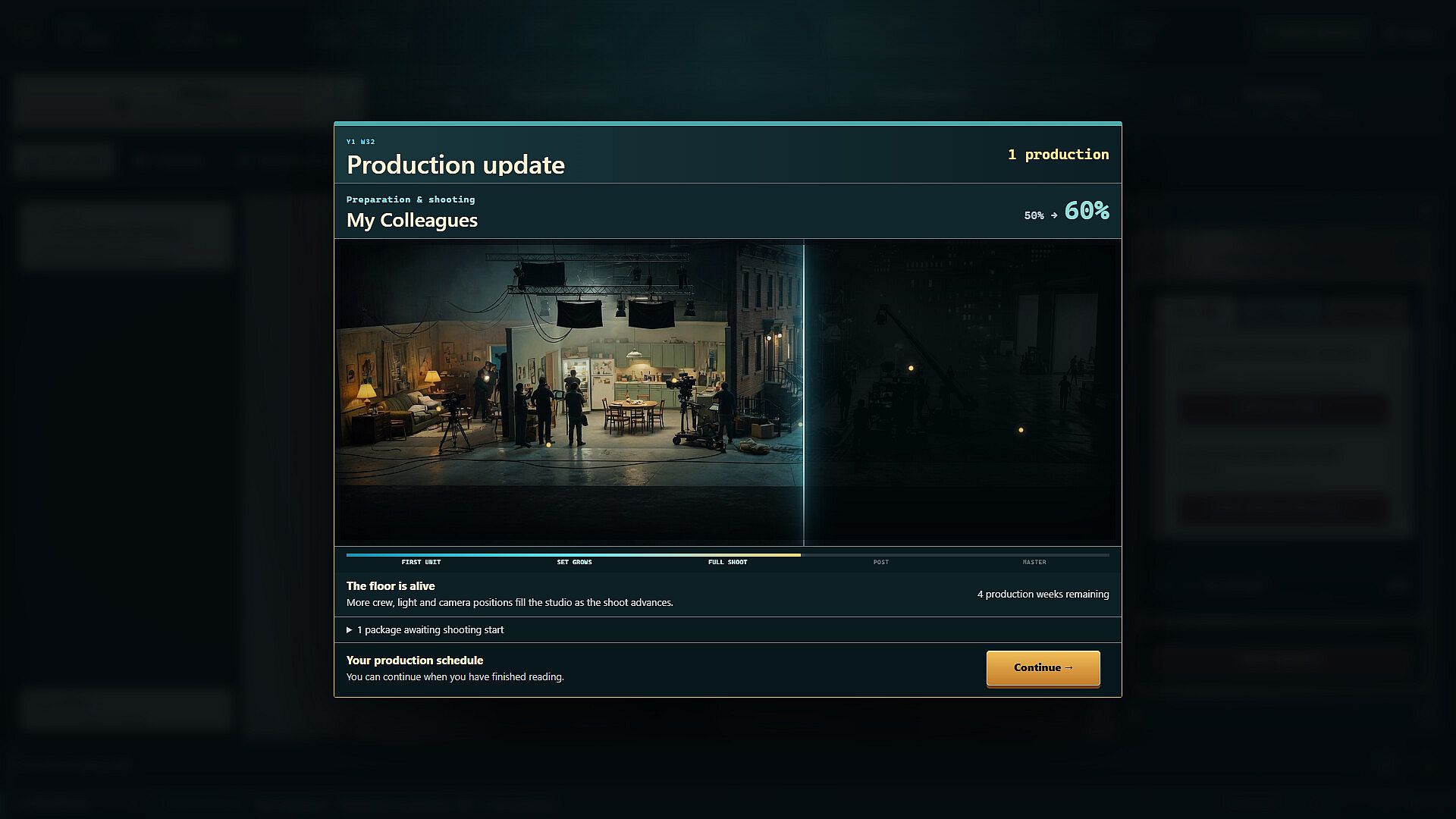
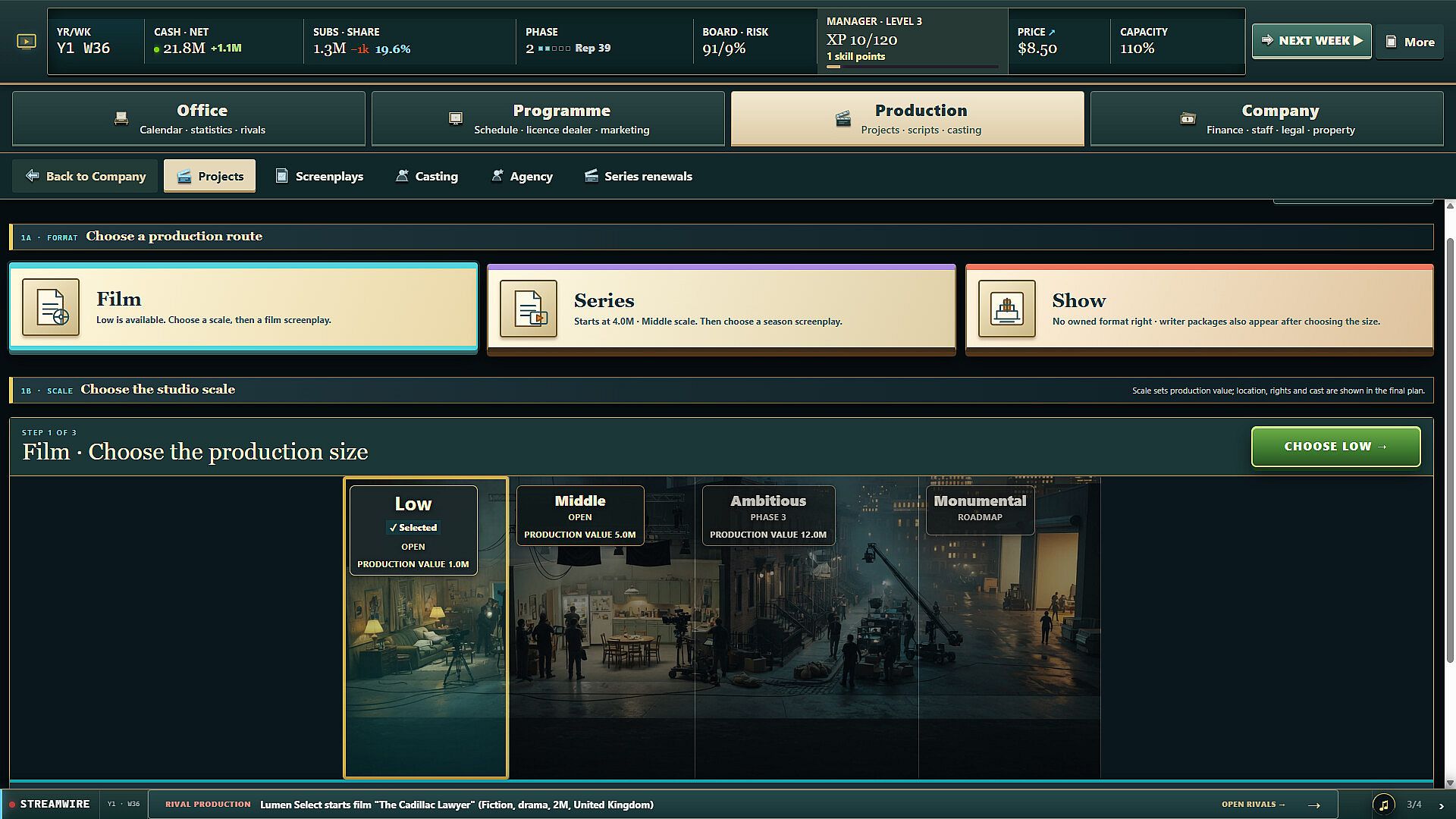
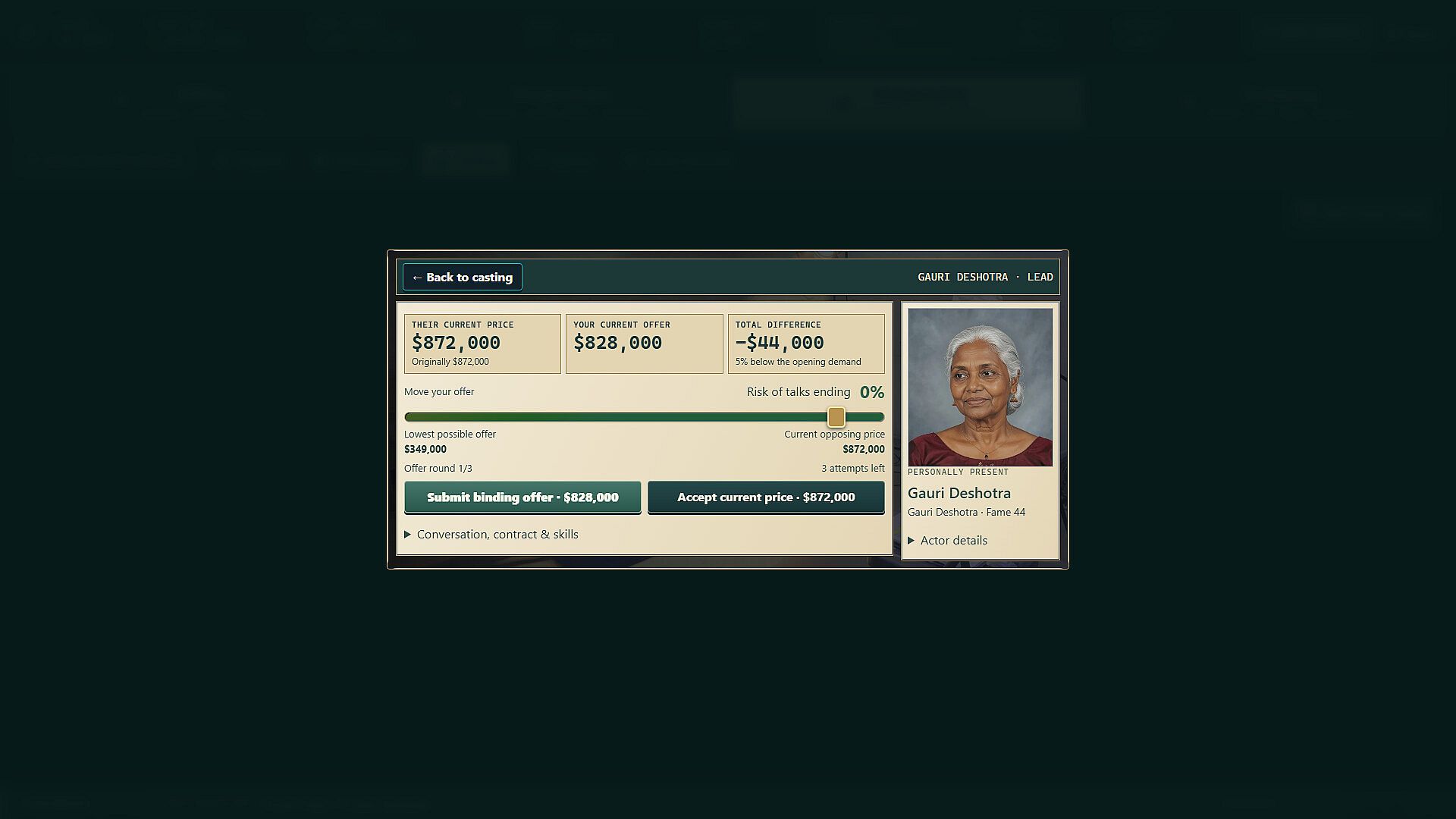
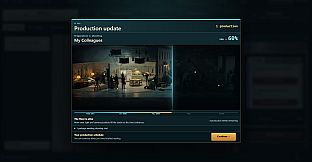
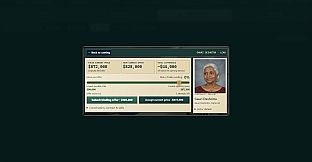
Production begins with hiring writers and commissioning scripts. Players select production scale and studio facilities, cast roles, and negotiate contracts with talent. A single failed negotiation can remove a preferred performer from consideration, while oversized fees reduce resources available for supporting elements. Studios can be purchased and upgraded with equipment, and filming setbacks require on-the-spot responses. At premiere, critical and audience reactions determine success and inform follow-up seasons for promising series.
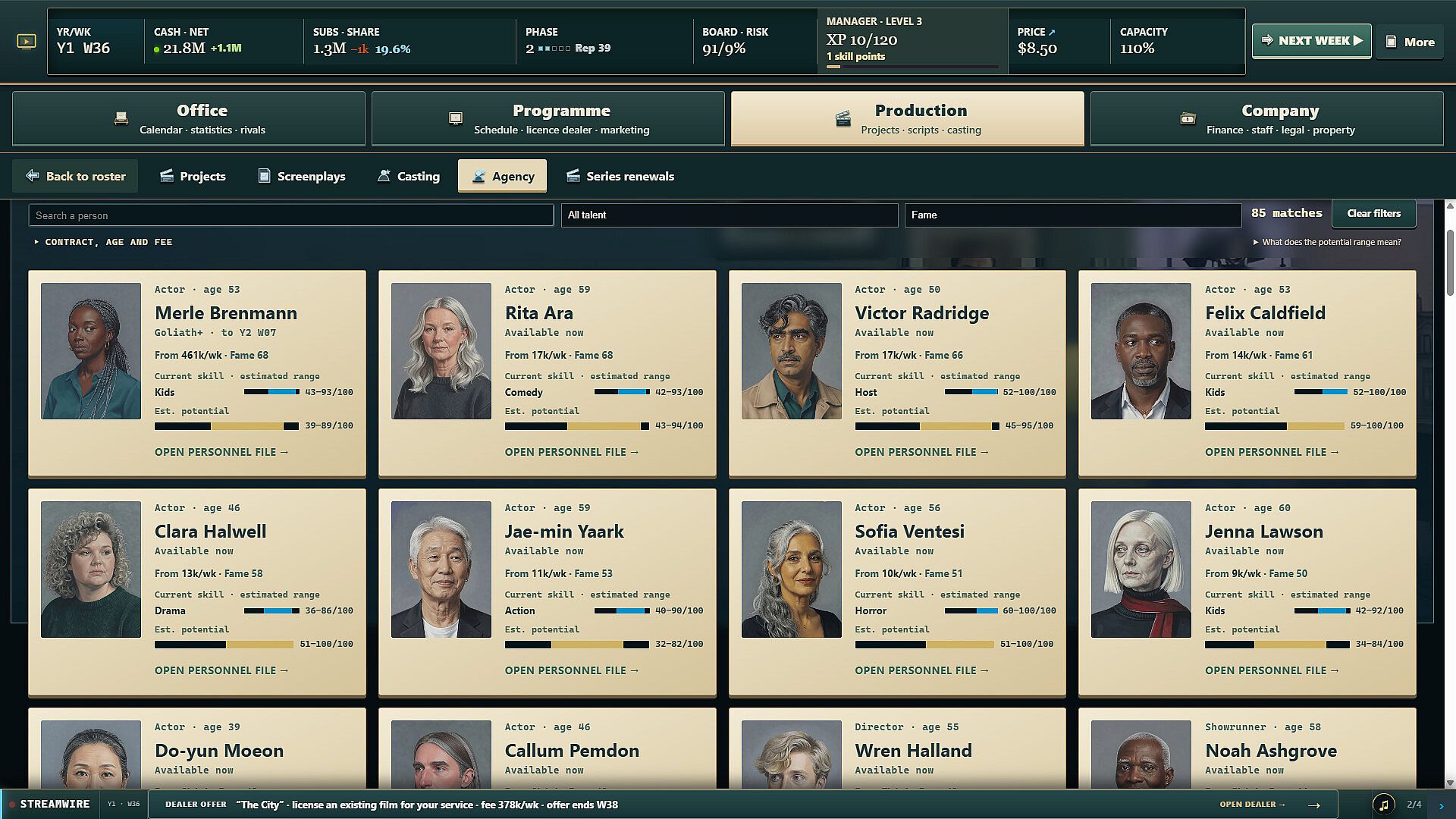
A separate talent agency layer lets players sign actors and directors long-term. Their skills, fame, age, and contract status must be tracked. External bookings generate commission income but remove performers from internal projects during filming periods. This creates ongoing trade-offs between immediate revenue and securing key cast for upcoming releases.
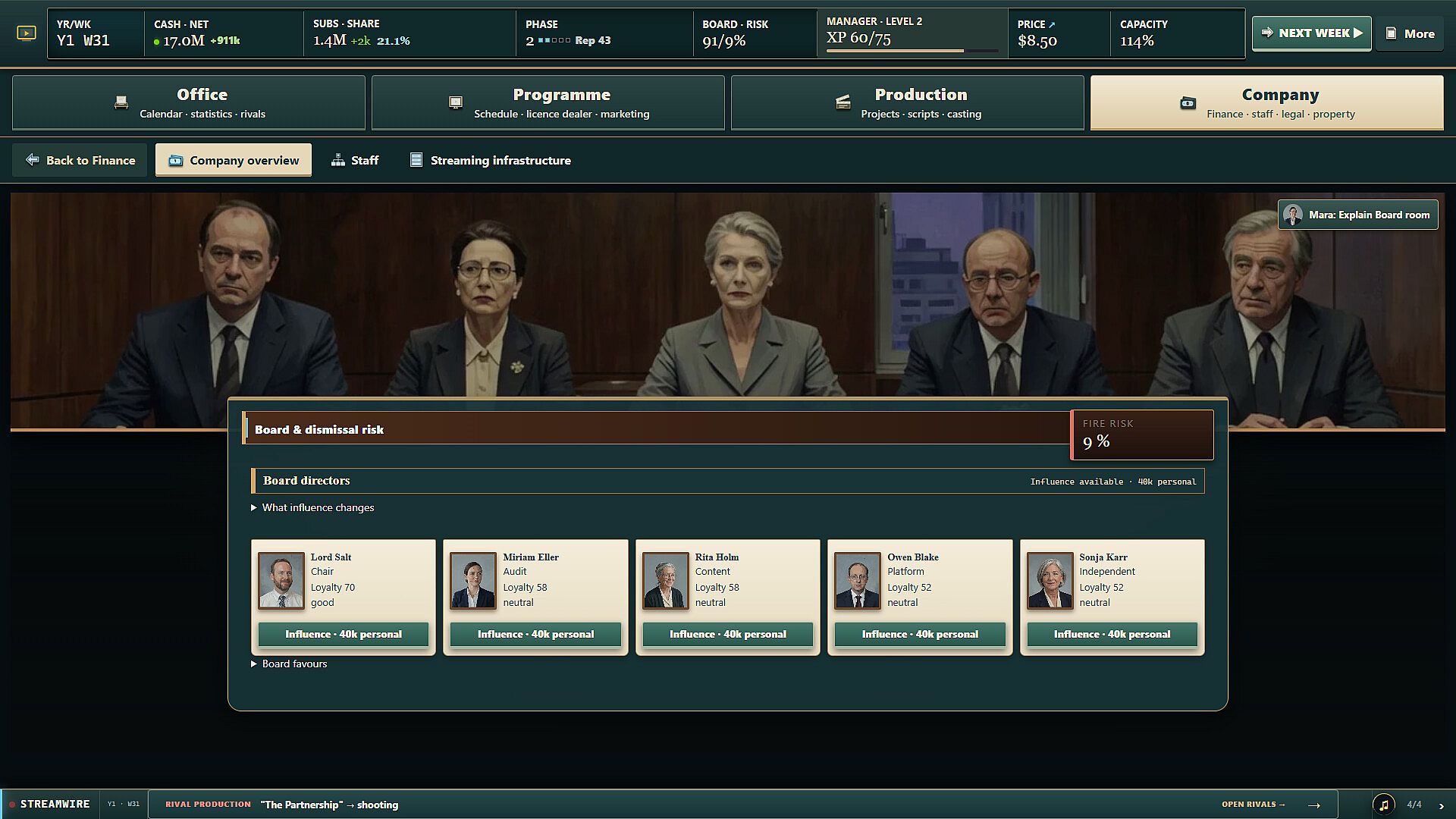
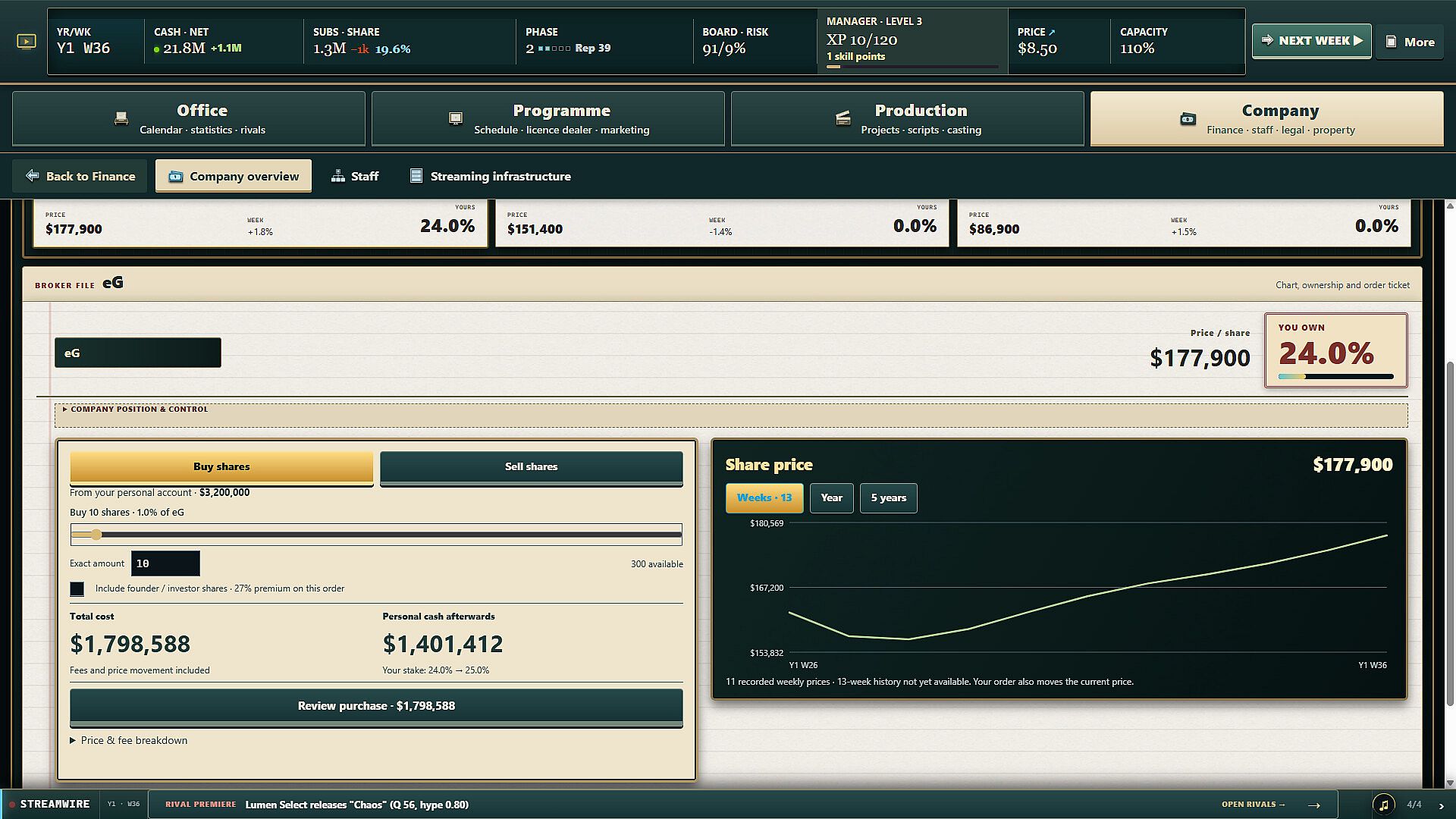
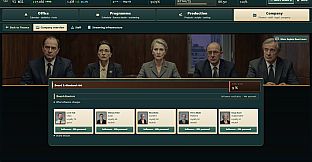
Company management extends to hiring staff, handling finances and investments, negotiating personal salary, and acquiring shares. Rival services compete for the same viewers, rights, and talent. Board oversight adds pressure through performance evaluations. A tutorial character named Mara introduces early choices in English or German, while a player handbook serves as an ongoing reference.
Game Modes
Streaming Tycoon operates as a single-player management simulation that advances week by week. There are no separate multiplayer or competitive modes described. All progression occurs within one continuous campaign where every decision influences catalogue strength, subscriber numbers, and long-term company control.
The simulation integrates programming schedules, pricing strategies, marketing campaigns, and infrastructure limits into a unified weekly cycle. Players respond to external events such as rival moves or board demands while developing original productions and acquiring licences. Talent careers evolve across multiple projects, and financial choices affect both short-term stability and ownership stakes.
Building a Sustainable Catalogue
Success depends on maintaining viewer interest through careful rotation of content. Older programmes move to the archive to make room for fresh releases, while evergreen titles may receive extended runs. Original productions developed in-house can differentiate the service from competitors that rely solely on licensed material. Marketing and capacity planning must align with the chosen mix of blockbusters and niche programming to grow and retain subscribers.
Studios and equipment upgrades directly influence production quality and the ability to handle larger projects. Setbacks during filming test resource allocation, and premiere feedback shapes future investment in similar genres or talent. Seasons of successful series provide recurring revenue opportunities once initial audience fatigue is managed.
Talent and Company Dynamics
The talent agency system adds depth by treating performers as long-term assets with evolving attributes. Age limits and contract negotiations require forward planning, as experienced stars eventually retire or demand higher fees. Commission from outside work supplements income but creates scheduling conflicts that must be weighed against internal needs.
Broader company control involves staff hiring, investment decisions, and share purchases that alter ownership structure. Board evaluations reward consistent results while punishing costly failures. These elements combine to create a management layer where personal compensation and equity stakes become additional variables alongside content and subscriber metrics.
Is It Worth Playing?
Streaming Tycoon suits players who enjoy detailed business simulations focused on content strategy, talent management, and incremental company growth. The week-by-week pace encourages deliberate planning rather than rapid action, with interconnected systems that reward attention to catalogue rotation, contract negotiations, and financial balance. Because the game remains in development with no released version or player reviews available, any assessment rests on the described mechanics alone. Those drawn to single-player management experiences centered on media production and corporate oversight will find the outlined systems align with that preference. Wishlisting provides notification once the title becomes available.












