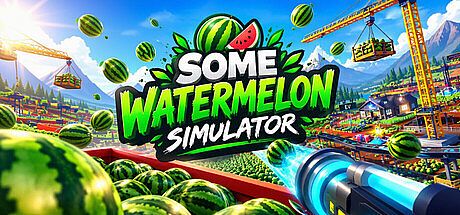


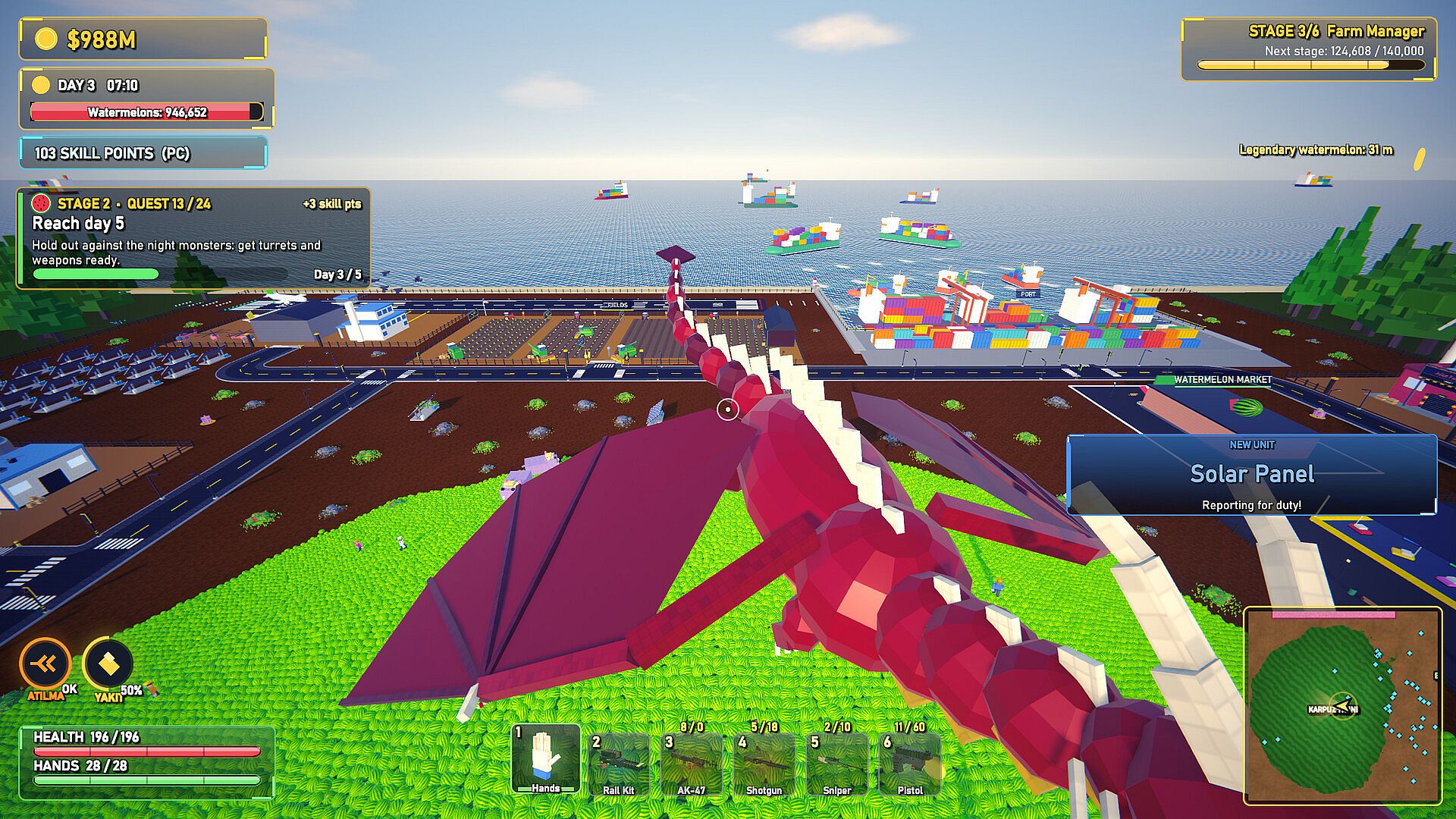
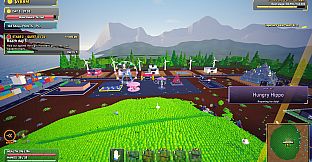
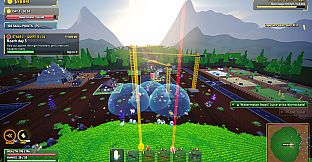
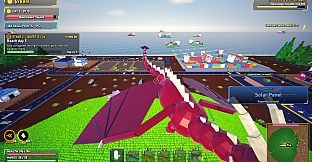

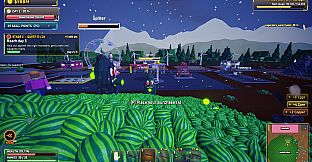


Some Watermelon Simulator is a single-player indie casual simulation game set on a farm where the central task involves processing a massive pile of one million watermelons. Players begin with basic manual actions such as grabbing and crushing melons by hand before expanding into automated systems and larger operations. The experience blends resource management, construction, and light combat elements within a day and night cycle that influences daily activities and progression.
Gameplay
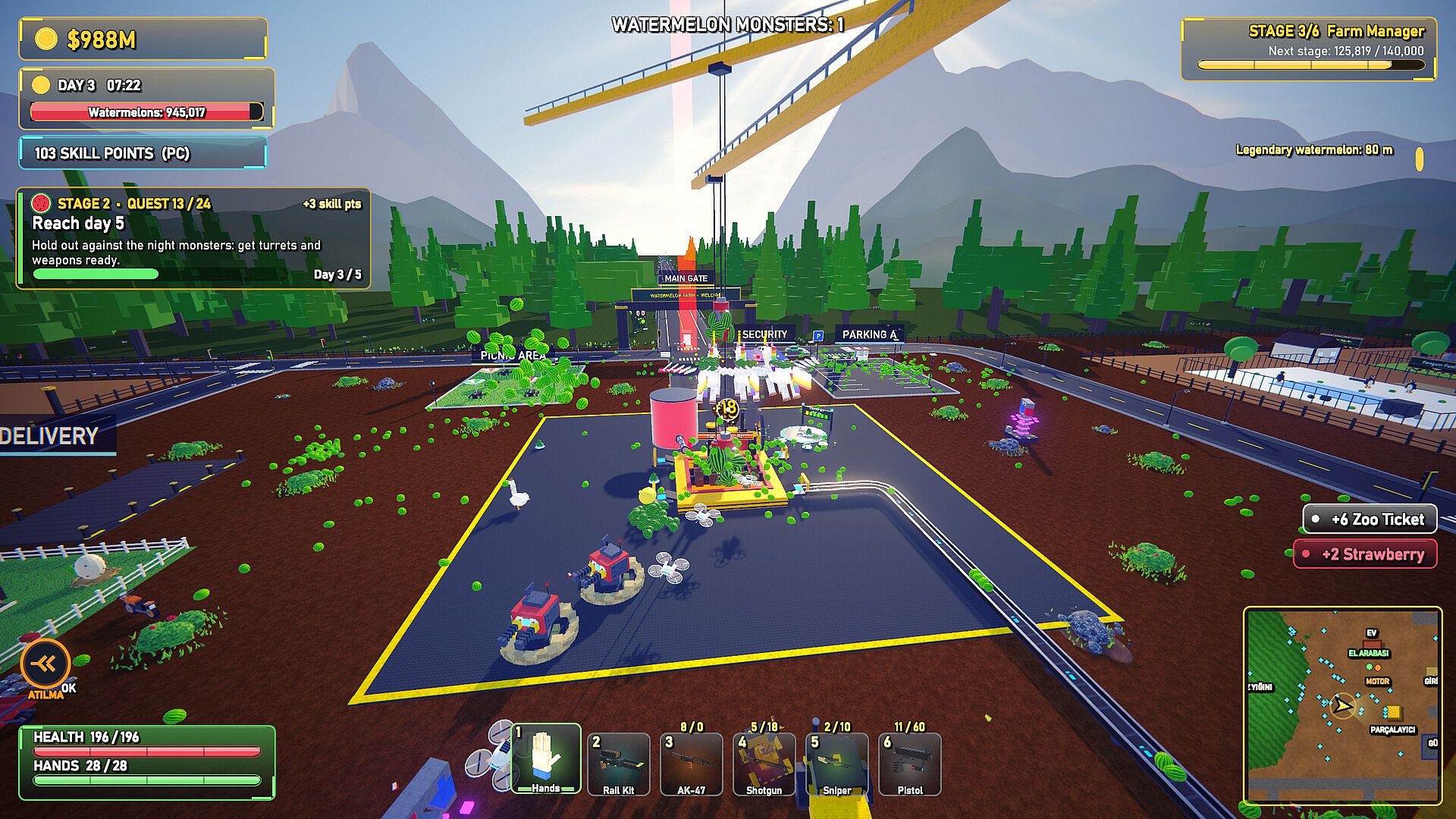
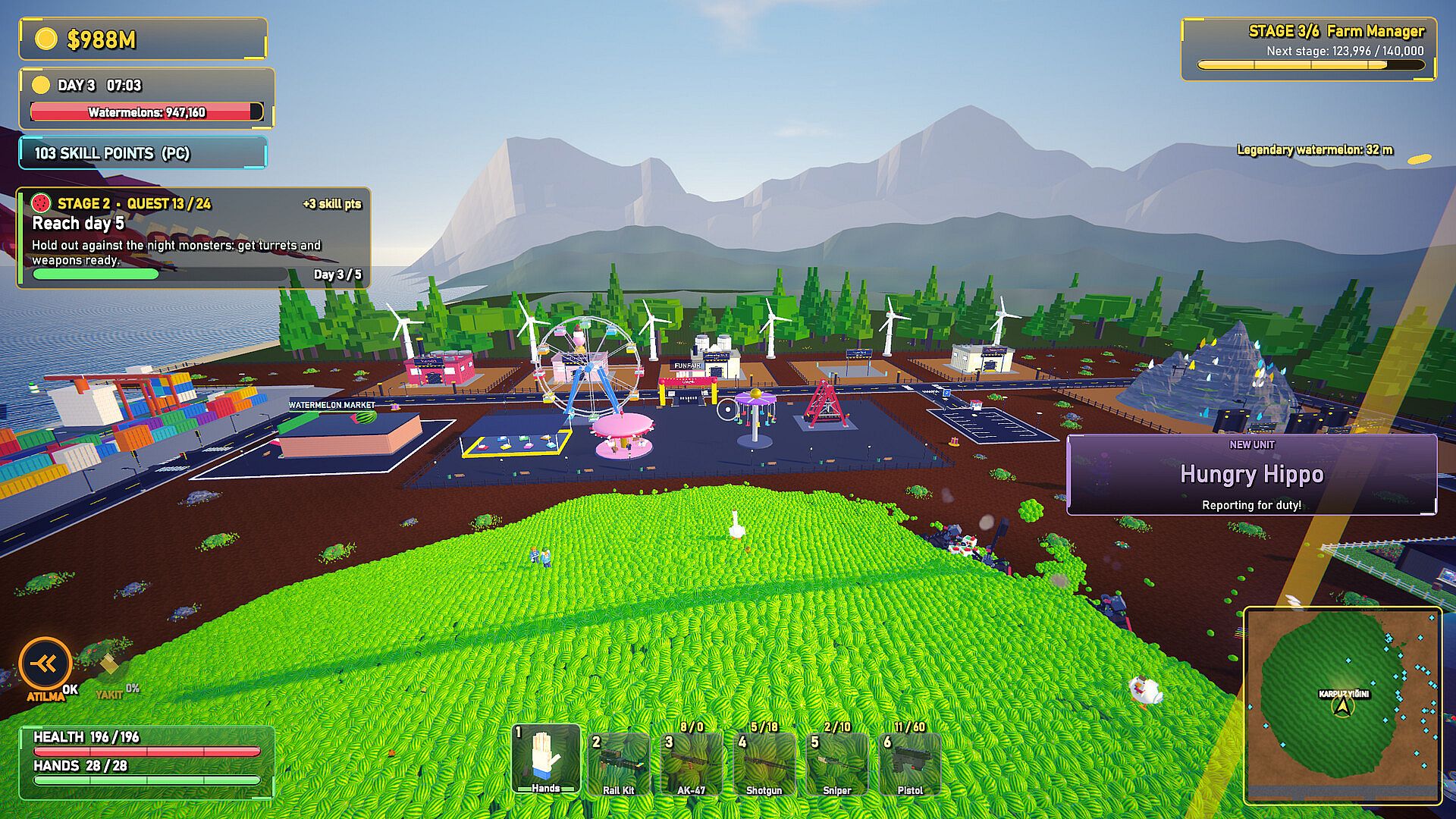
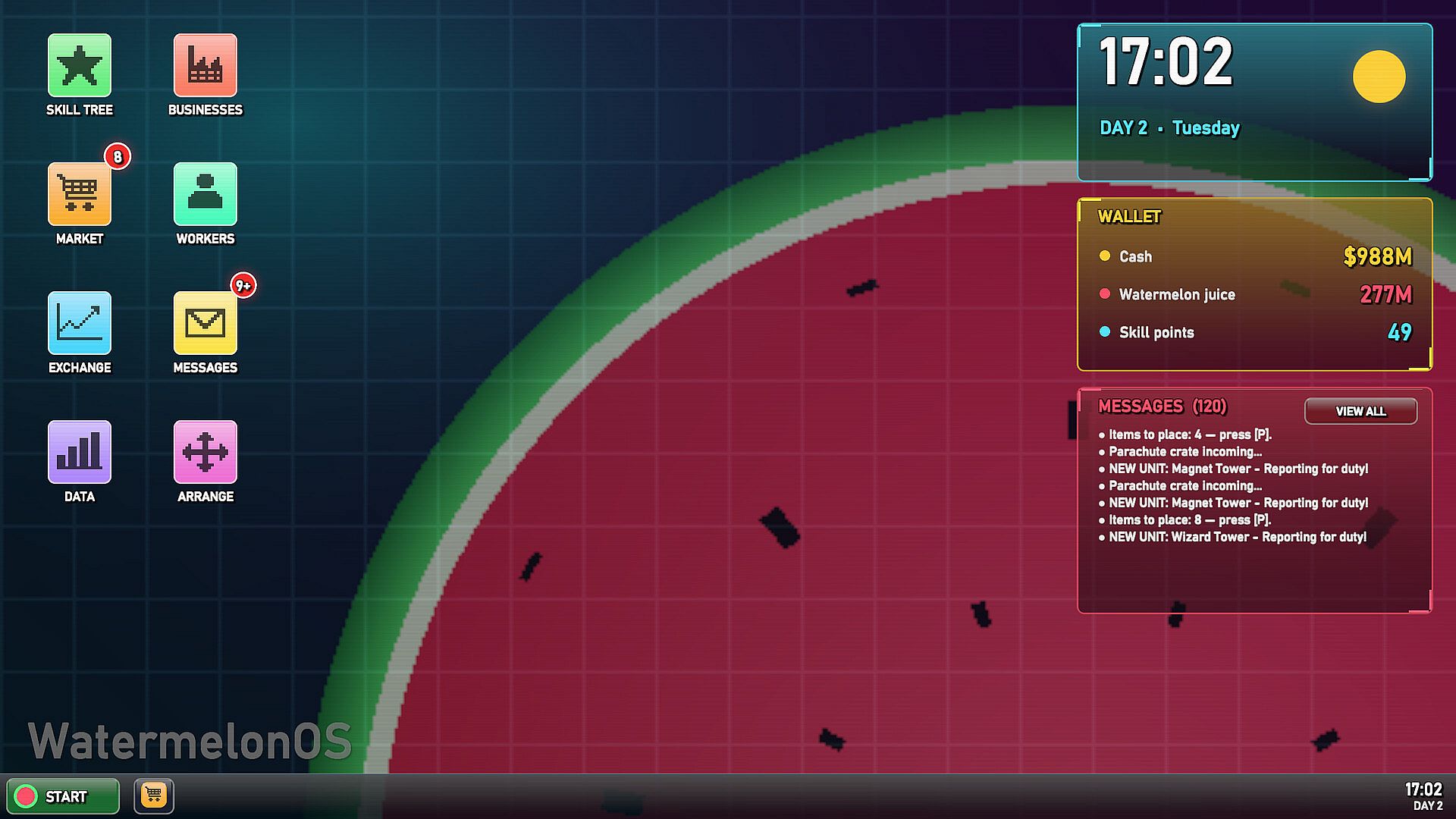
The core loop centers on clearing watermelons through crushing, juicing, and selling while monitoring market prices for optimal timing. Early efforts rely on direct player input with tools like hands and wheelbarrows, supported by a skill tree offering hundreds of upgrades that improve speed, capacity, and efficiency. Automation expands quickly through devices including cargo drones, robot vacuums, giant claw cranes, wheel loaders, catapults, harvest bots, magnet towers, rails, and mechanical rail arms. Additional helpers such as a hungry hippo, rainbow unicorn, and golden goose that produces goslings for transport add variety to collection tasks.
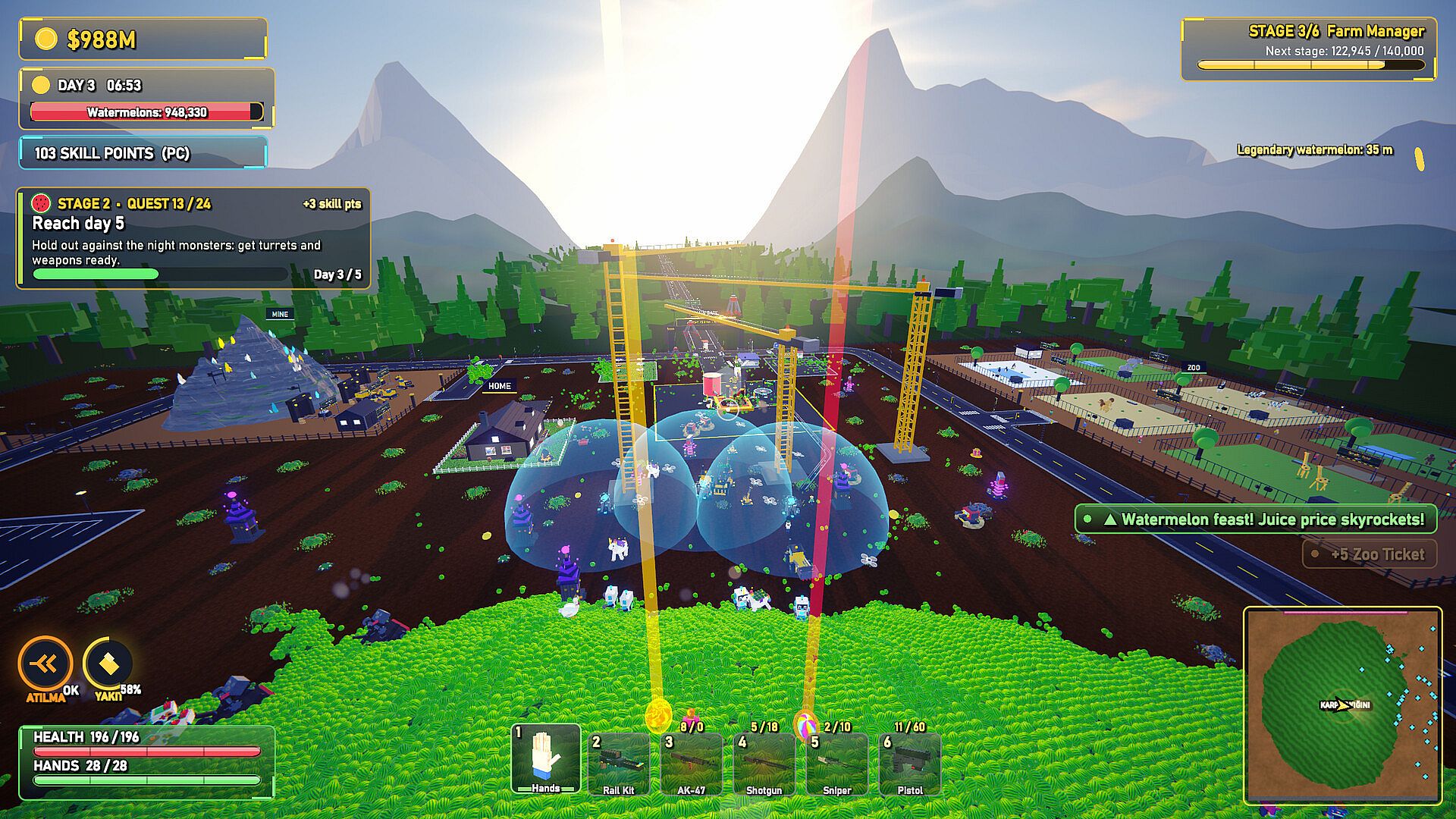
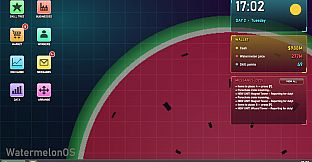
Construction grows beyond the initial farm into a full town. Factories produce juice, ice cream, and melon sugar, while a power plant incorporates wind turbines and solar panels. Supporting elements include farm animals, crop fields, a mine, a zoo, an airport, a sea port with cargo ships, a supermarket, and a funfair. Players hire workers to handle jobs and attract visitors who arrive by car, park, and contribute revenue. A day and night cycle allows sleeping to convert experience into skill points, and 24 quests provide structured guidance through the progression from initial melons to completion goals. Twenty legendary melons grant permanent bonuses, and the game supports three save slots along with full key rebinding and support for 30 languages.
Game Modes
The game operates entirely in a single-player format focused on progressive farm development and resource processing. Daytime emphasizes production, automation, and expansion, while nighttime introduces defensive requirements against emerging threats. Progression ties together manual tasks, automation scaling, town building, and combat preparation without separate selectable modes or multiplayer components. A global leaderboard tracks the fastest times to process one million melons, and twenty Steam achievements recognize specific milestones.
Defense and Combat Systems
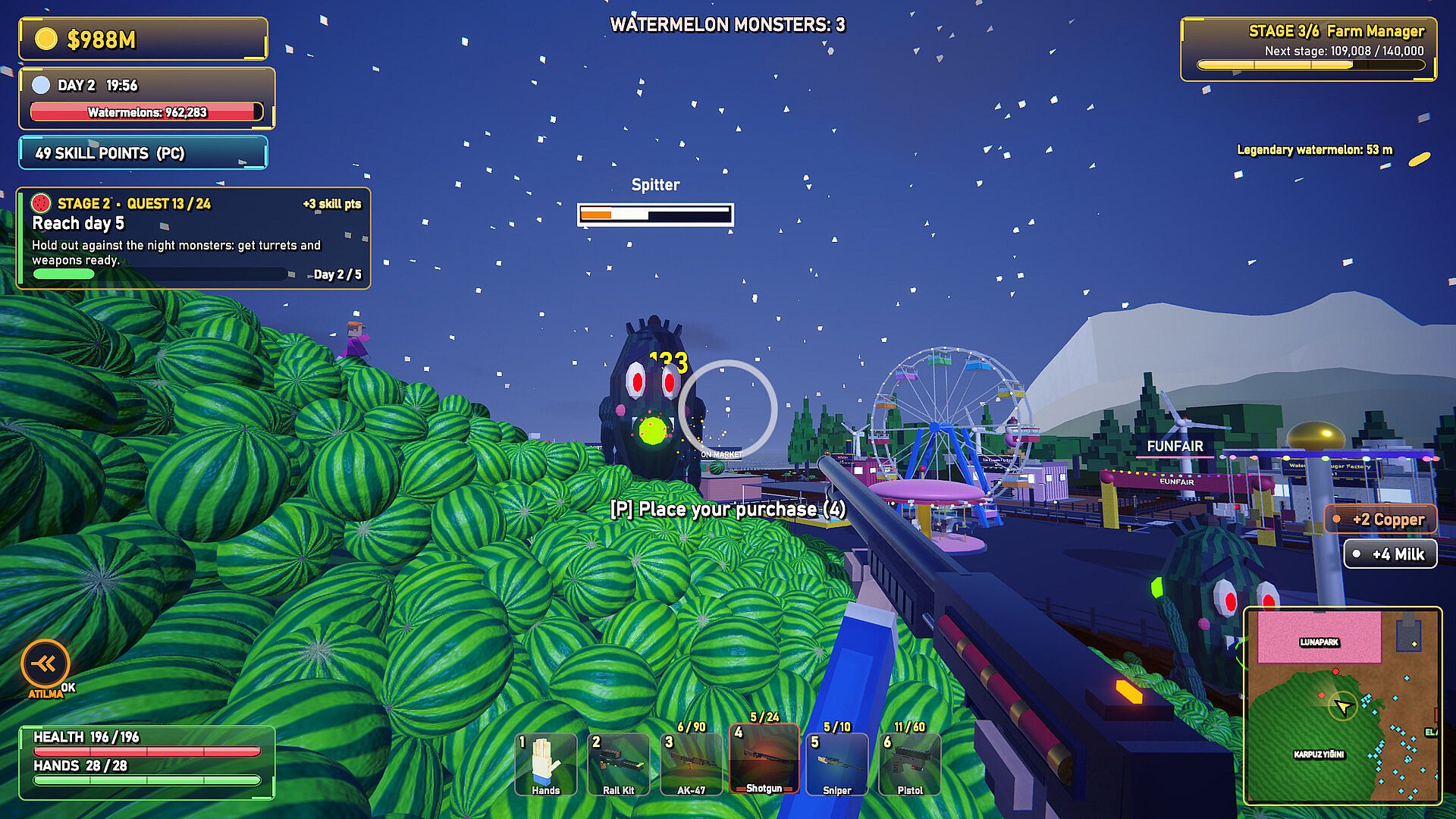
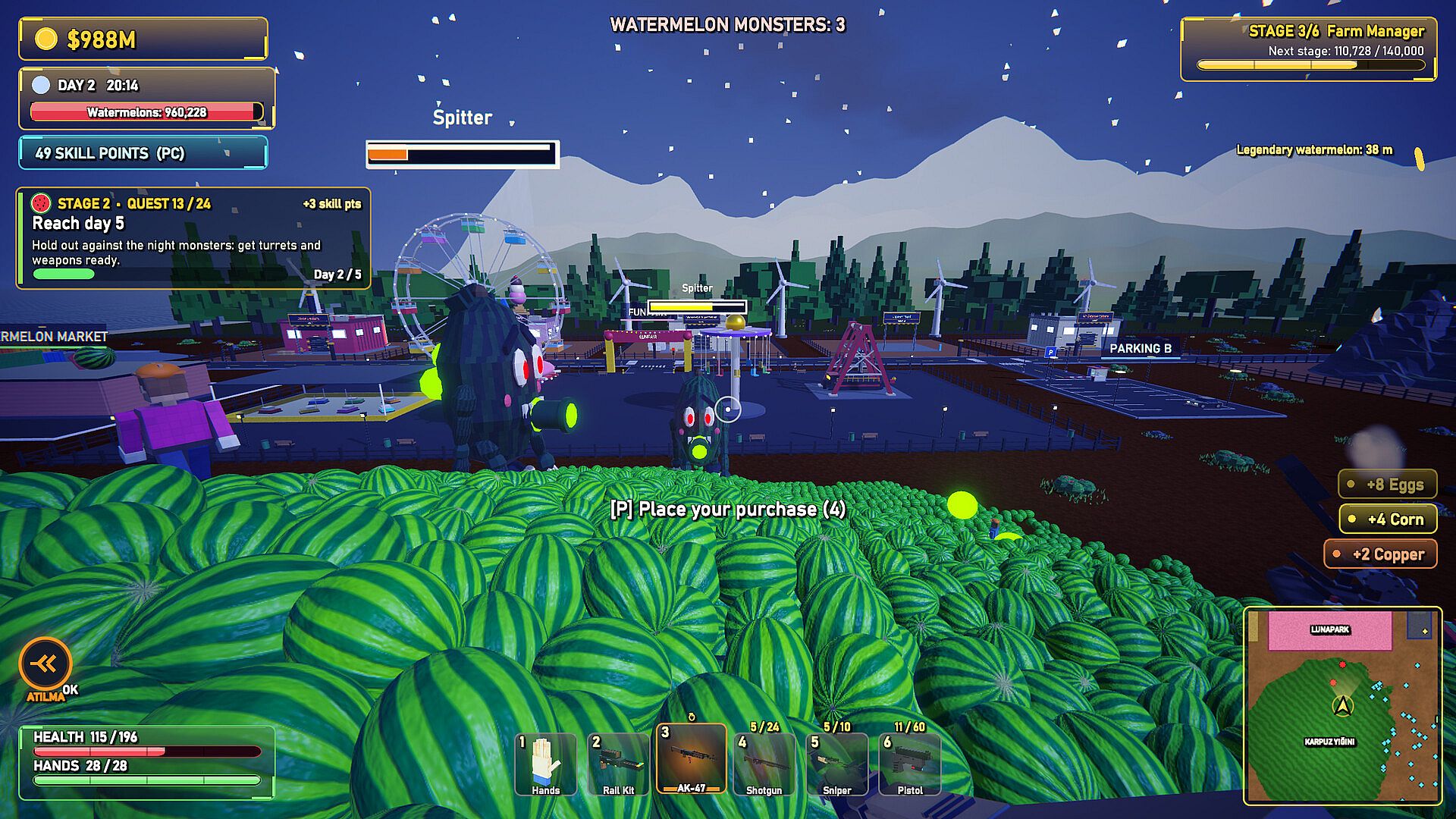
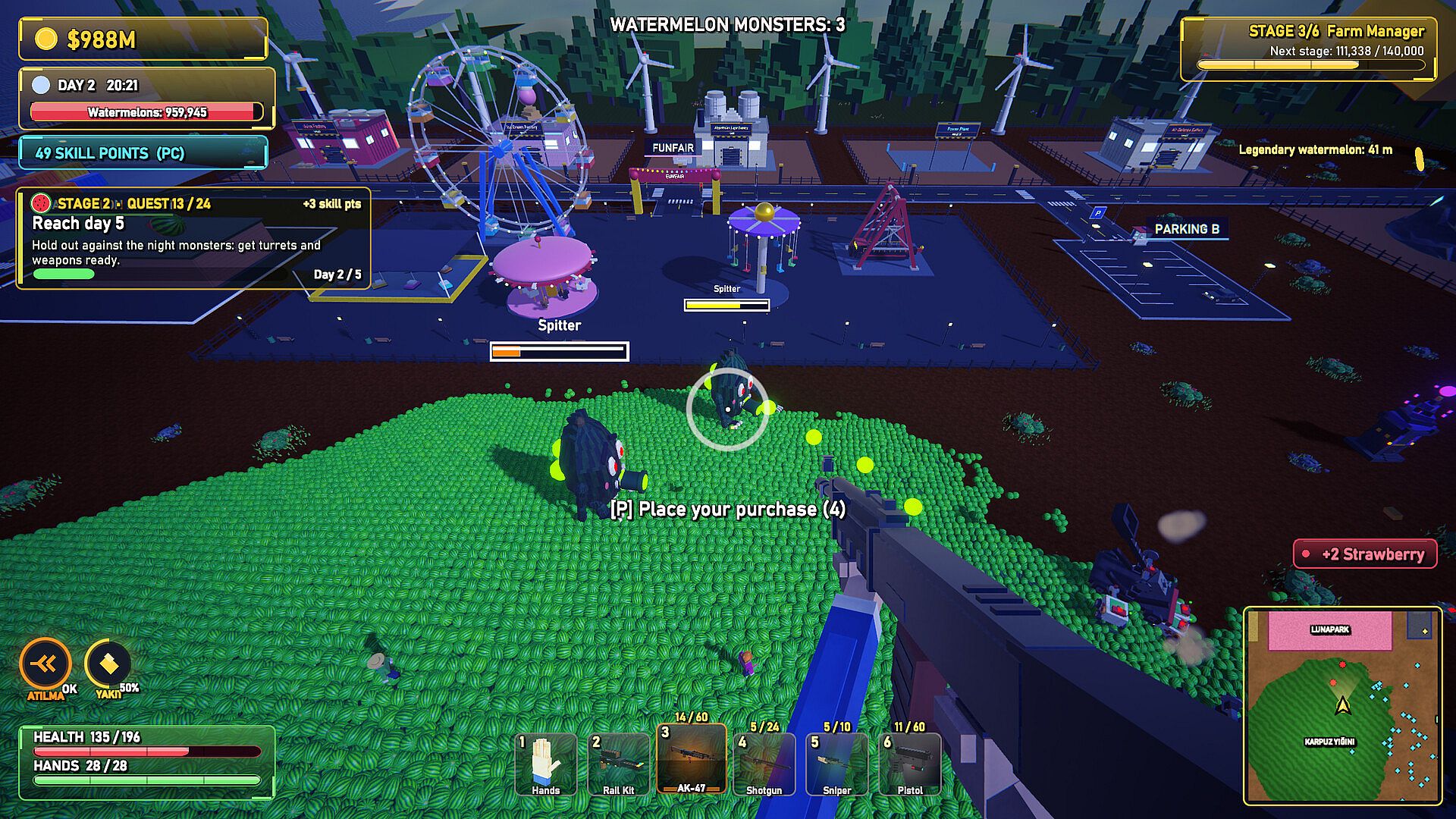
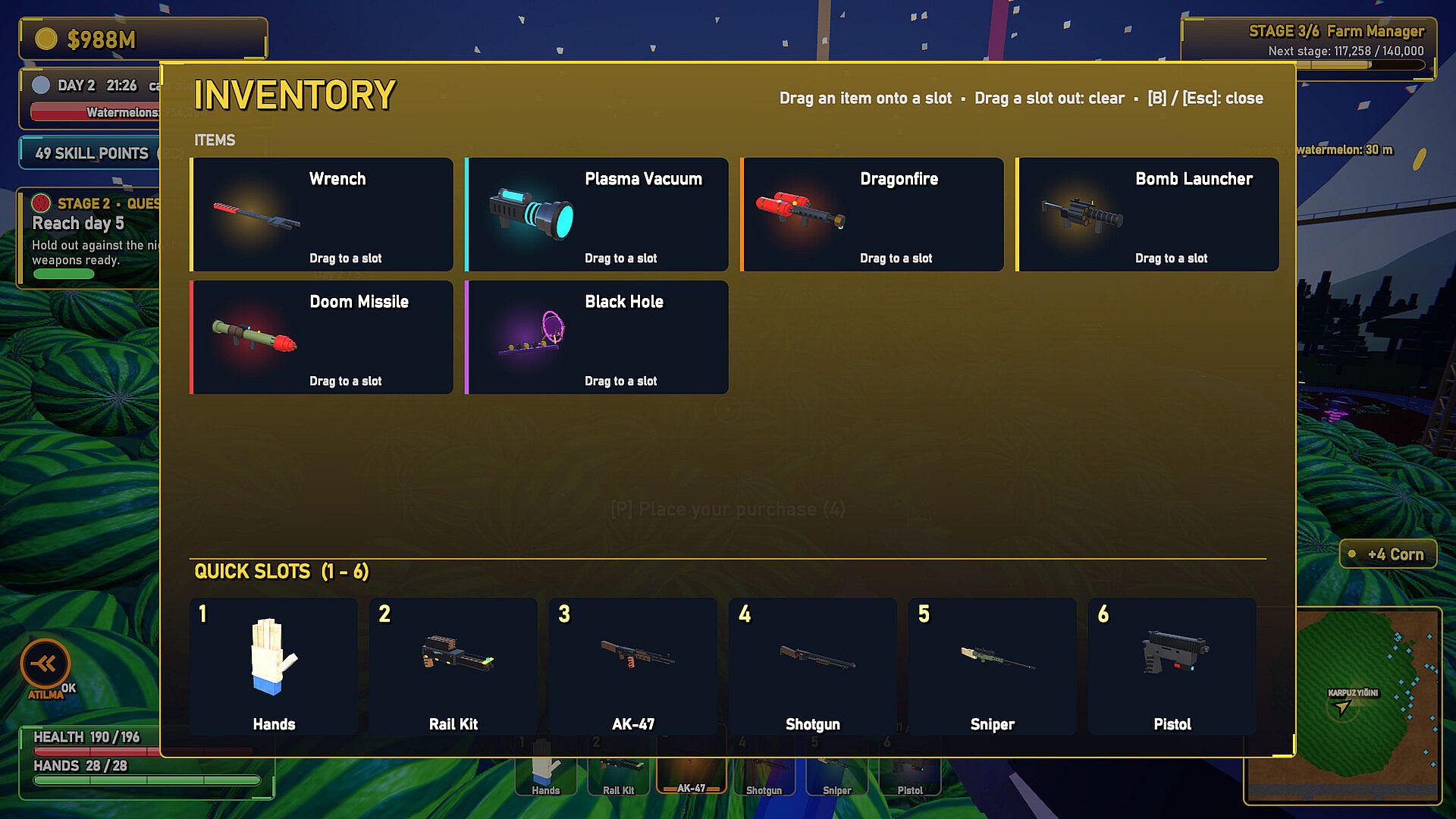
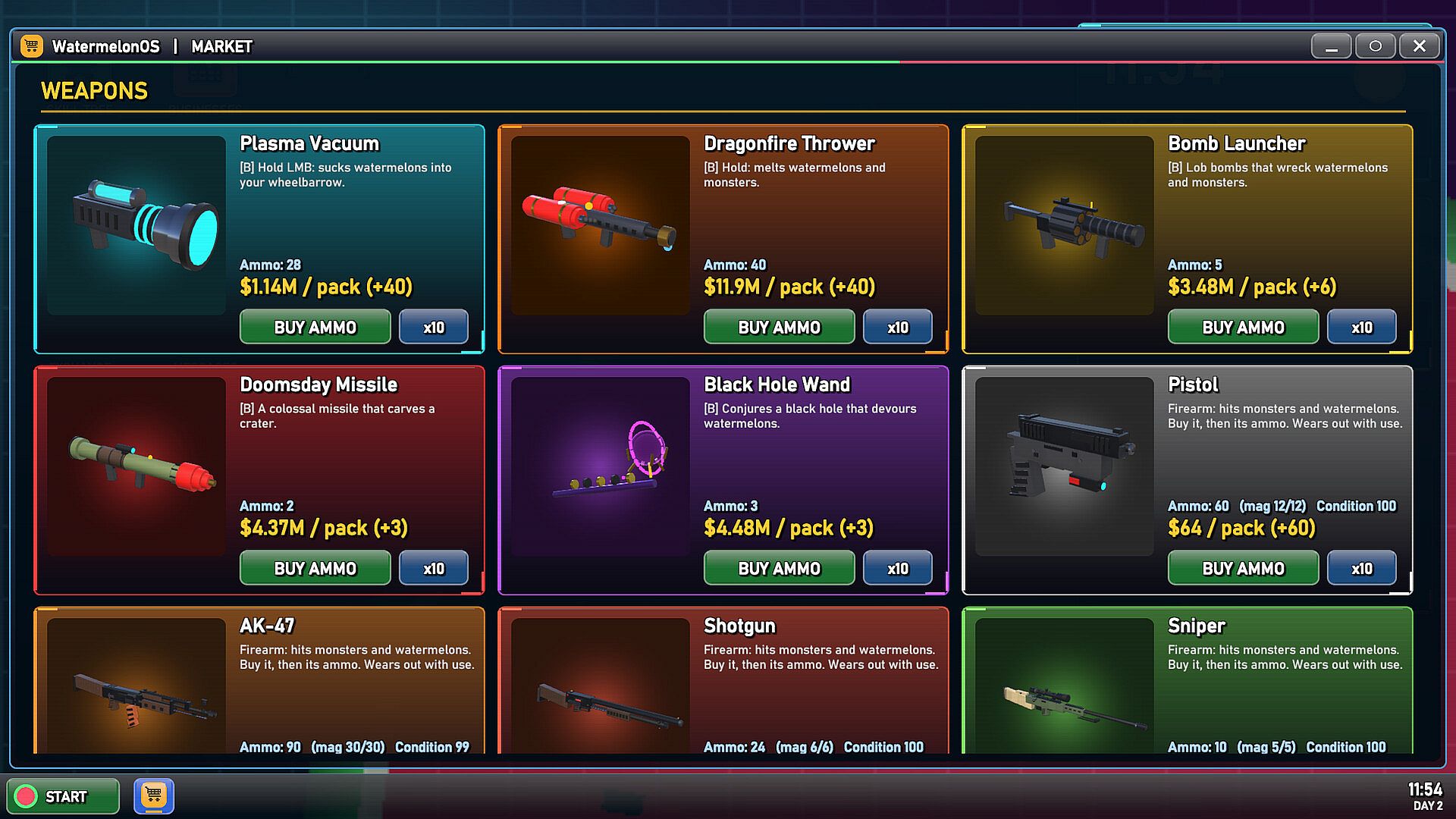
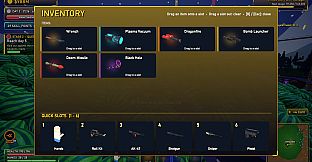
At night, melon monsters emerge from the pile in forms such as small runners, acid spitters, flying melons, giants, and large bosses, each featuring distinct attacks. Players counter these with built defenses including turrets, wizard towers, shields, mines, and an air defense battery. Direct combat options consist of a pistol, rifle, shotgun, and sniper. Additional weapons and abilities extend the options to plasma vacuum, dragonfire thrower, bomb launcher, doomsday missile, and black hole wand, alongside abilities to summon meteor showers or raise a pet dragon. Mobility tools such as a motorbike, jetpack, and rocket boots enable faster movement and positioning, with the option to launch characters skyward for additional interaction.
Is It Worth Playing?
Some Watermelon Simulator appeals to players who enjoy incremental automation games combined with base-building and occasional defensive sequences. The mix of manual starting actions, extensive upgrade paths, town expansion, and nighttime monster defense creates a steady sense of growth without requiring constant attention once systems are in place. With the game still listed as coming soon and no user reviews available yet, interest depends on preference for casual simulation titles that incorporate light tower defense and quirky helpers. Those drawn to long-term progression, resource selling mechanics, and varied tools for movement and combat may find the described systems engaging once released.