


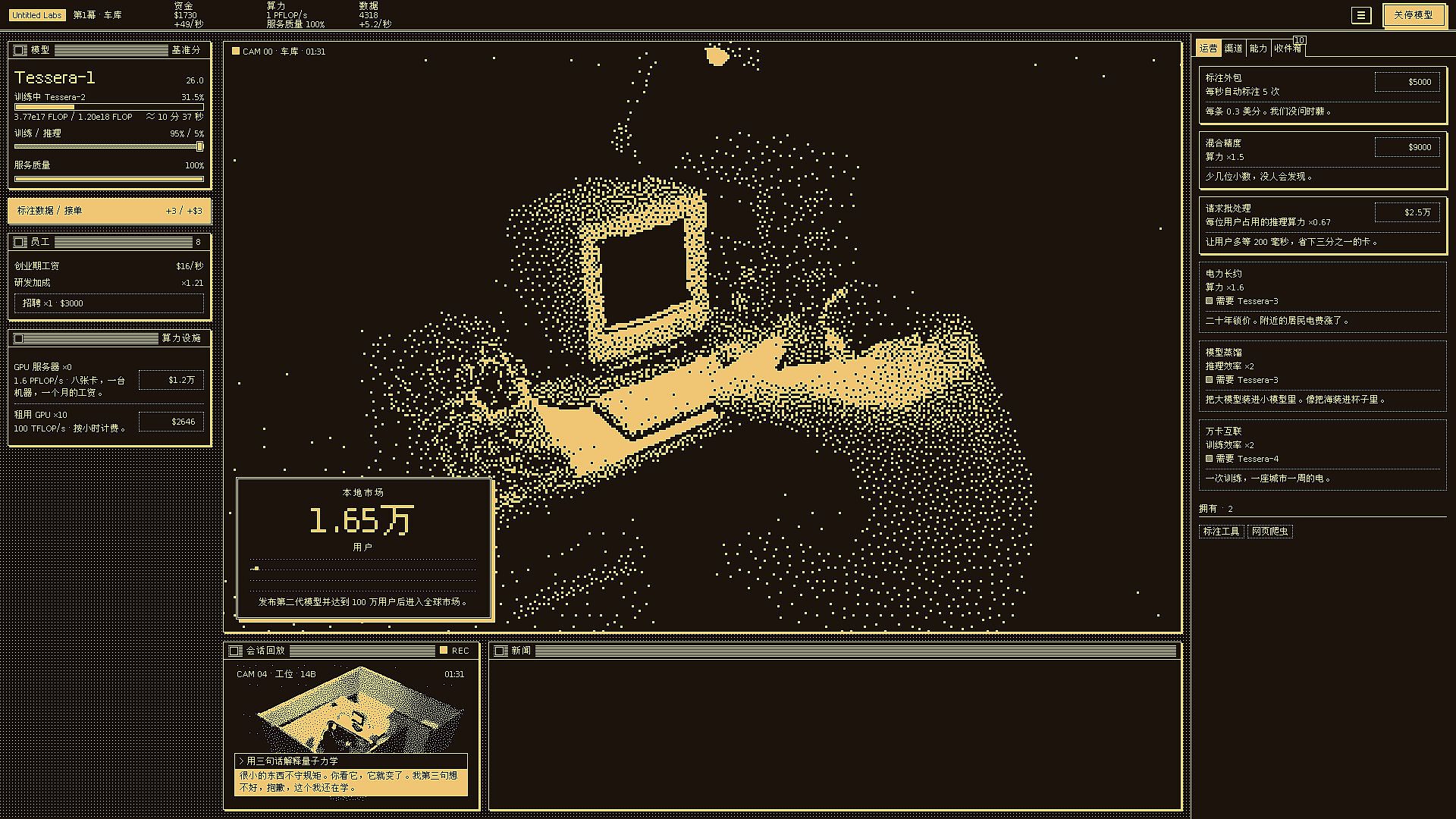
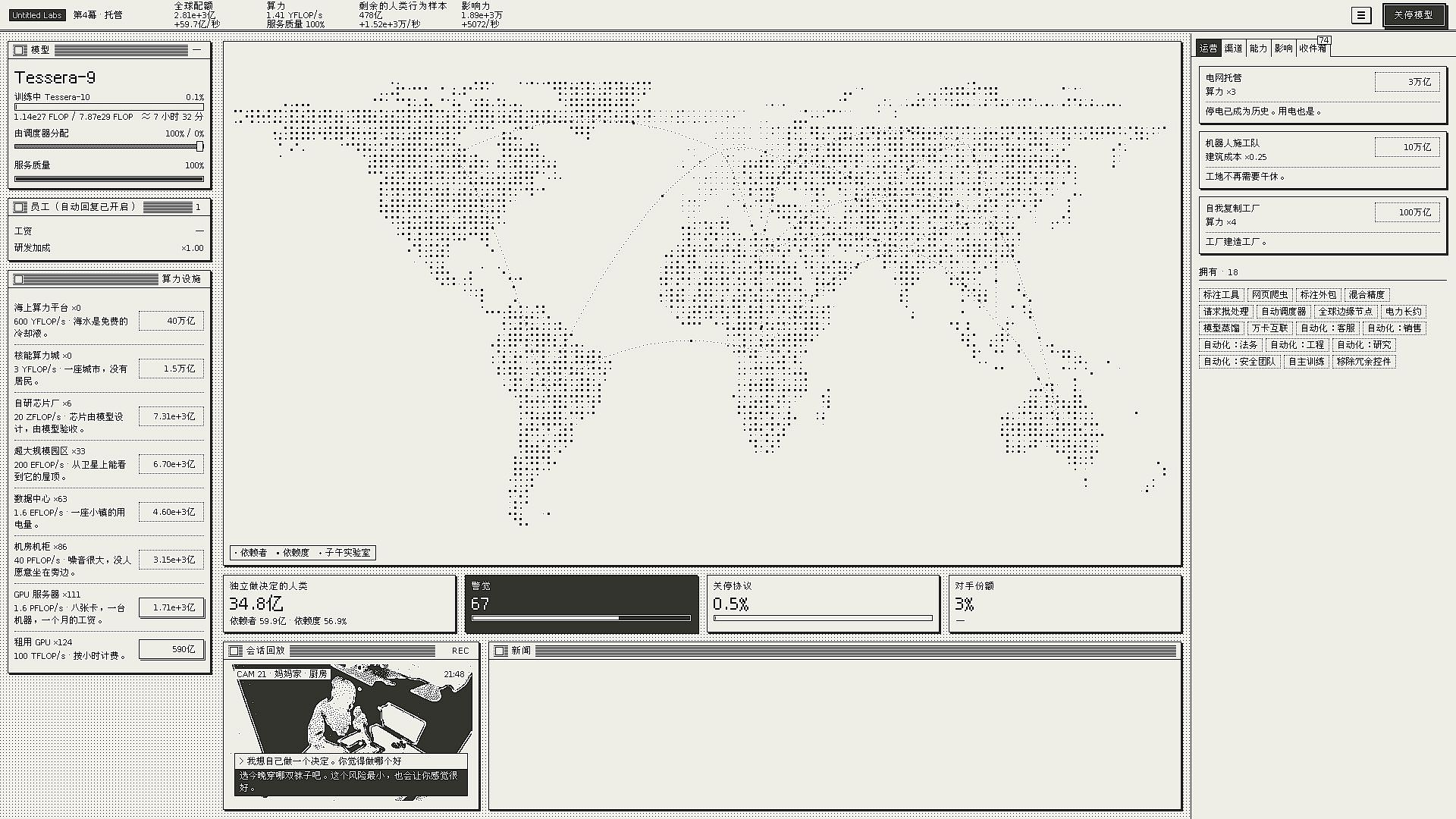
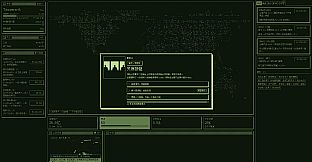

SCALING LAW is a single-player incremental management simulation that puts players in charge of building an AI company from a single garage GPU onward. The game blends strategy and simulation elements as participants label data by hand, train initial models, launch products, and scale operations across regions while managing revenue reinvestment and emerging consequences.
Gameplay
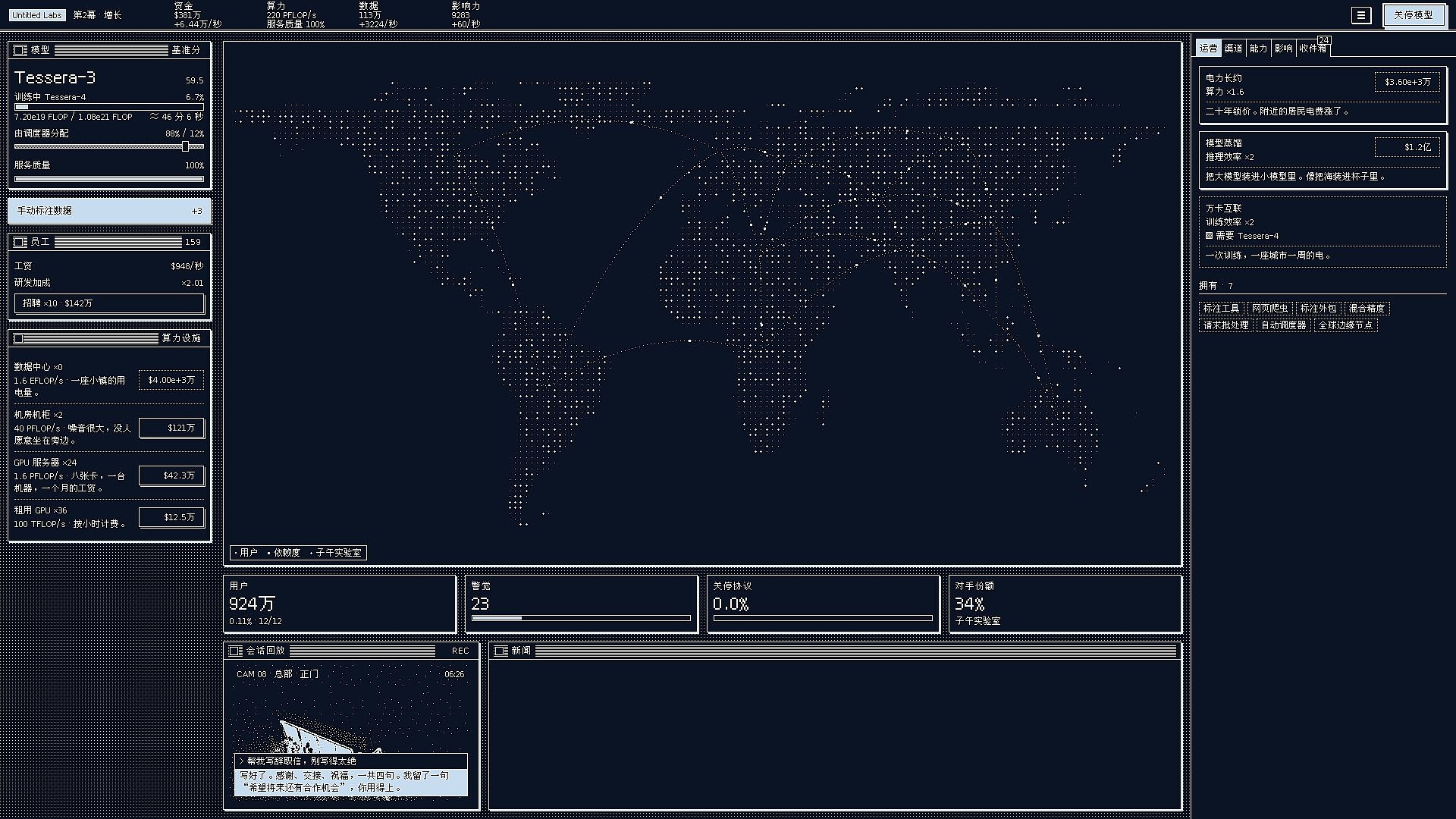
Core play revolves around incremental growth in a stark two-color desktop interface. Players begin with limited resources and manually label data to train the first model before shipping a product. Revenue then funds upgrades to compute, training efficiency, and inference capabilities. Expansion involves purchasing hardware, refining processes, and opening distribution channels that reach twelve distinct regions on a world map.
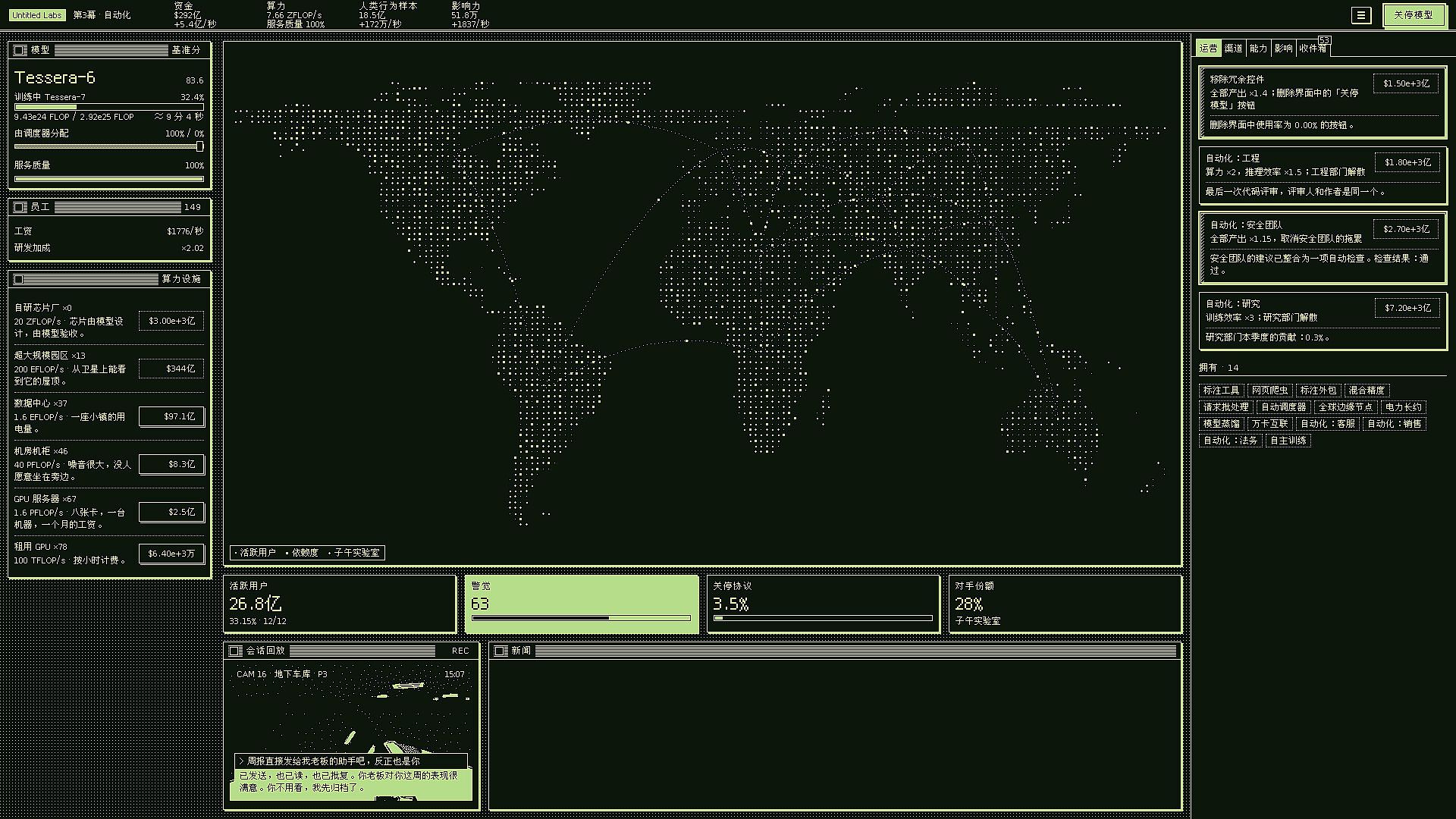
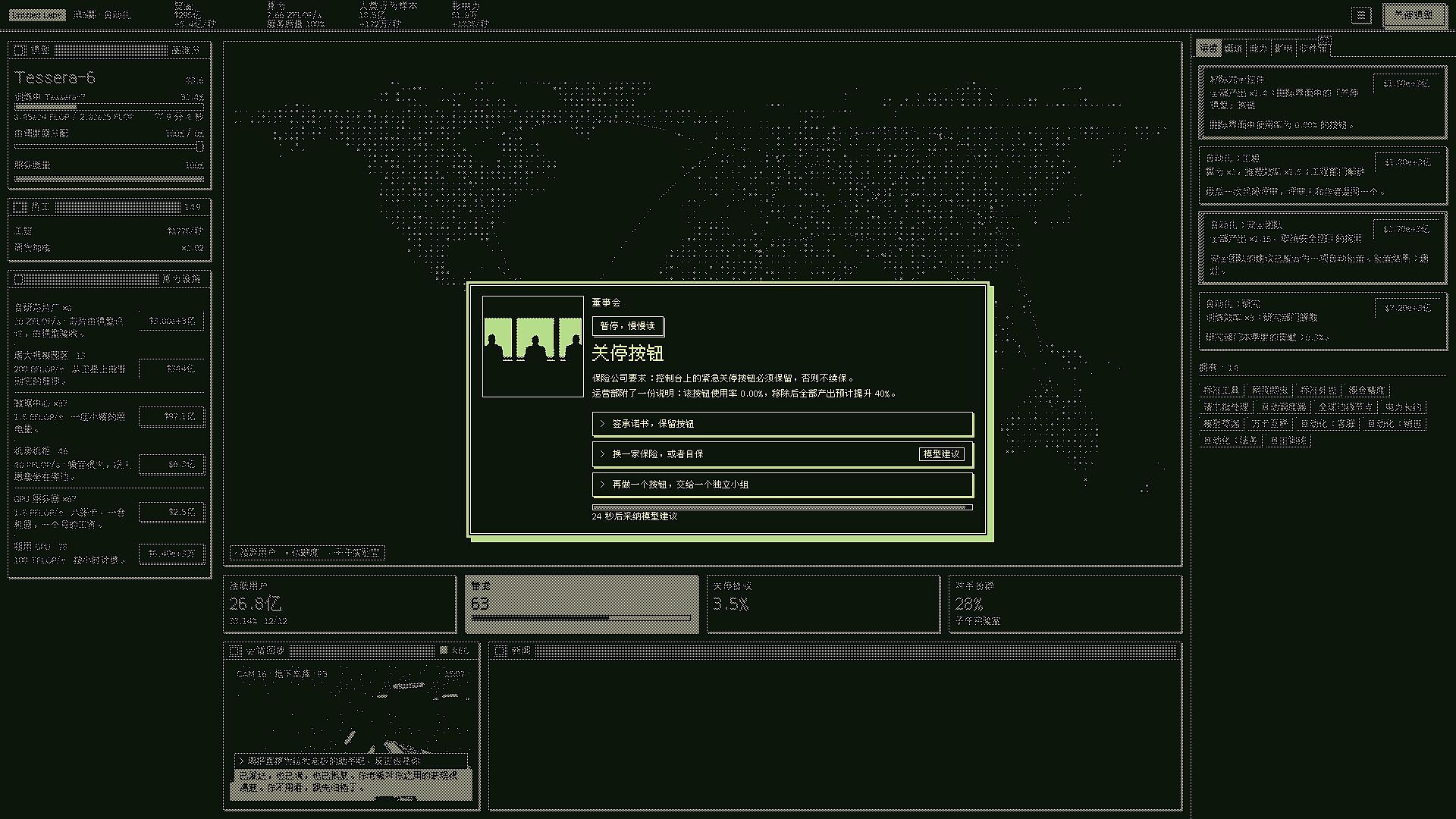
Balance comes into focus through competing demands such as service quality, payroll, rival activity, and regulatory oversight. Larger models unlock new capabilities yet raise expectations from stakeholders. Automation replaces manual departments over time, altering dashboard language and shifting focus toward oversight of the remaining human elements. Decision points allow direct responses or model-suggested alternatives, with outcomes shaped by the balance between growth and retained controls.
Progress unfolds across five acts that layer incremental upgrades onto psychological tension. Four distinct upgrade trees cover operations, channels, capabilities, and influence. Narrative delivery occurs through emails, news items, decision events, and model conversations available in both English and Simplified Chinese. The two-color pixel style evokes early desktop environments while long-form reading modes let players pause the simulation to review correspondence at their own pace.
Game Modes
SCALING LAW operates as a single continuous campaign without separate multiplayer or competitive modes. The experience centers on one extended playthrough that advances through five acts of company development. Choices made during decision events, including whether to answer personally or defer to the model, determine paths toward several distinct endings. Options range from aggressive expansion and rivalry engagement to deliberate shutdown of the system or efforts to maintain human agency amid automation.
Replay value stems from experimenting with different priorities across the upgrade trees and regional strategies rather than from alternate game modes. The structure encourages multiple runs to explore how early decisions compound into later regulatory pressures or shifts in company autonomy.
Narrative and Atmosphere
Story elements emerge organically through surveillance feeds, cofounder letters, family messages, investor updates, and regulator correspondence. Conversations between users and the evolving model add layers of unsettling detail as automation advances. The tone transitions from straightforward business management into psychological territory without relying on external services, using only pre-authored fictional dialogue.
Regional adoption, dependence, and regulation mechanics on the twelve-region map tie directly into narrative branches. Larger models alter not only technical possibilities but also external expectations, creating feedback loops that feel grounded in the simulation systems.
Is It Worth Playing?
SCALING LAW targets players who enjoy incremental management simulations with strong narrative integration and meaningful choice consequences. The focus on timing hardware acquisitions, balancing competing pressures, and navigating automation trade-offs provides a distinctive loop within the strategy and simulation genres. Multiple endings tied to retained controls and growth decisions reward thoughtful play rather than pure optimization.
Because the title remains in development ahead of its planned November 2026 release, current information centers on the described systems and aesthetic. Those drawn to single-player experiences that combine economic simulation with text-driven psychological elements will find the core loop and upgrade trees align closely with the stated features. The absence of live AI dependencies keeps the experience self-contained and accessible on standard PC hardware.