

Roll for AGI 掷骰到AGI is a strategy indie casual game on PC that puts players in charge of a fledgling startup racing toward artificial general intelligence. The experience blends dice rolling, board movement, and incremental building in a compact package that emphasizes careful resource allocation and adaptation to shifting rules.
Gameplay
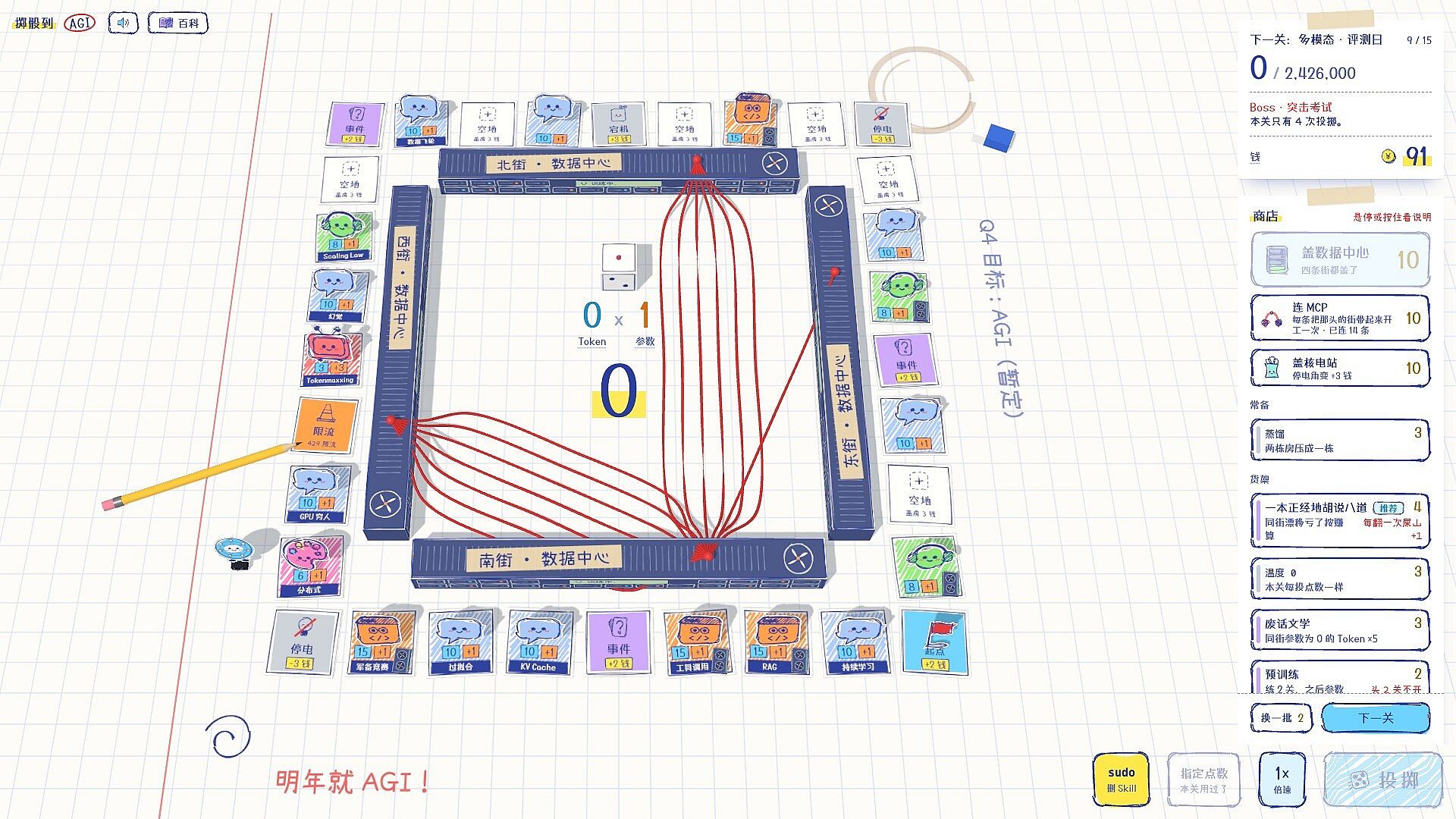
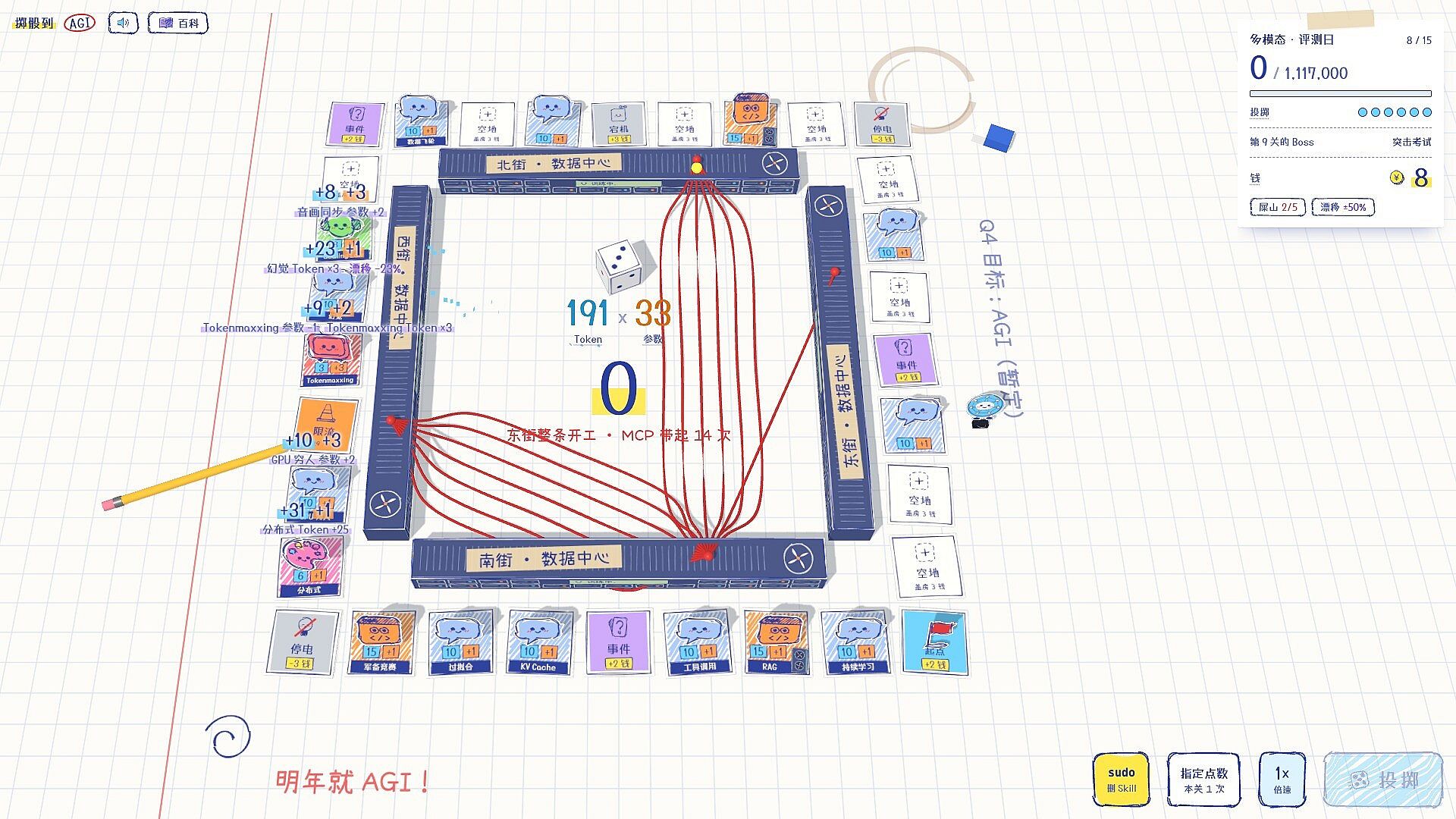
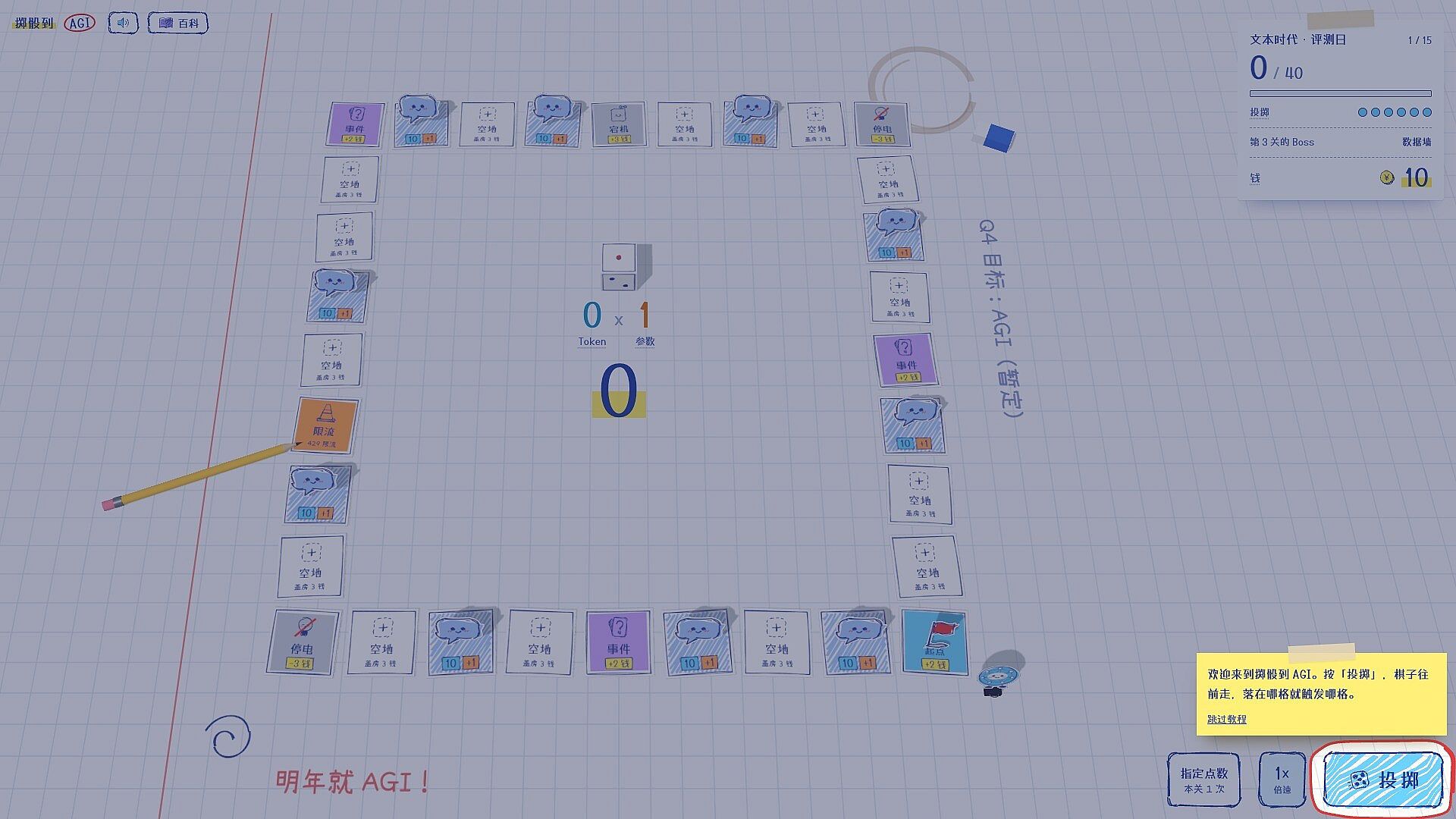
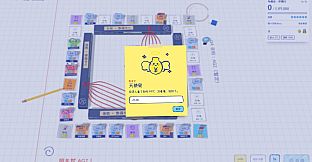
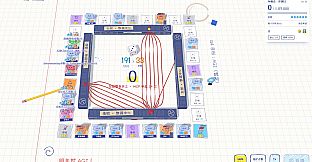
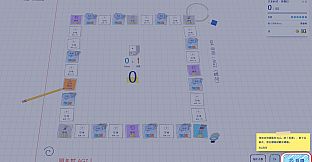
Players begin each run as a startup with minimal assets: a sheet of graph paper, a ballpoint pen, and one small model. Dice rolls determine movement around the board, where empty lots become sites for construction. Five types of houses produce tokens in text, code, image, video, or audio categories. Token output multiplied by model parameters determines the score on each roll. Data centers placed on streets activate entire blocks for additional work, while MCP links drawn as red yarn between centers chain those activations without limit. GPUs attached to houses deliver payouts on every activation.
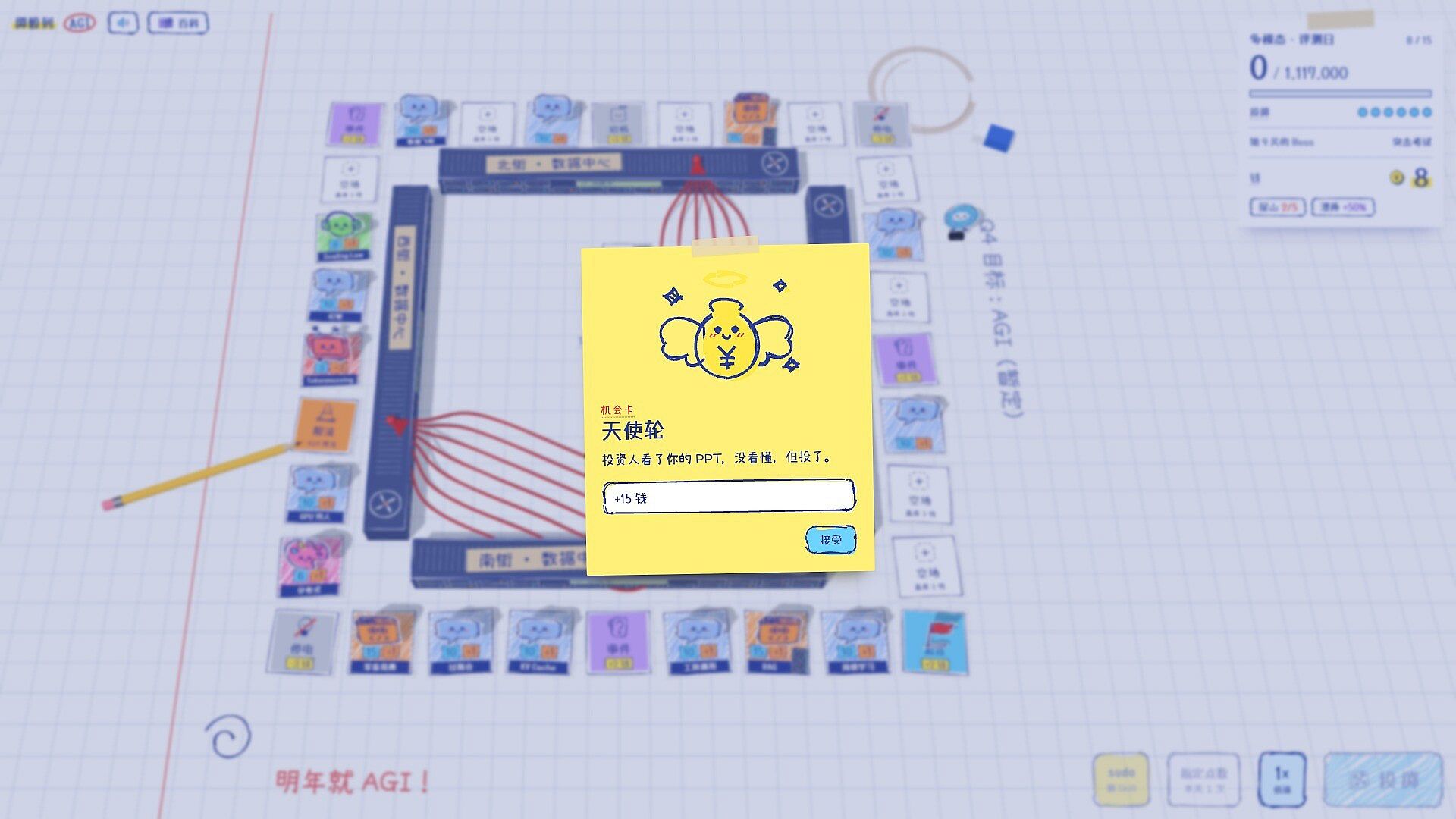
Sixty-nine upgrades attach to houses or dice faces or trigger as one-time commands, with the option to remove unwanted ones. Chance cards introduce random events that players accept as they appear. The core loop repeats across fifteen levels that form a single model. Falling short on an evaluation day causes the company to fold, sending the player back to the start of that model with lessons carried forward through retained cash and distilled elements.
Game Modes
The game operates as a singleplayer progression system divided into five eras that introduce new mechanics and alter existing rules. Text gives way to Code, then Multimodal, Agent, and finally AGI. Every third level functions as a boss evaluation where rivals apply targeted disruptions such as capping house output, limiting rolls, disabling certain house types, or imposing direct challenges. These encounters feature distinct moves from opponents that can sever link chains, seize houses temporarily, replicate strong rolls, or temporarily remove skills until the rival is defeated again.
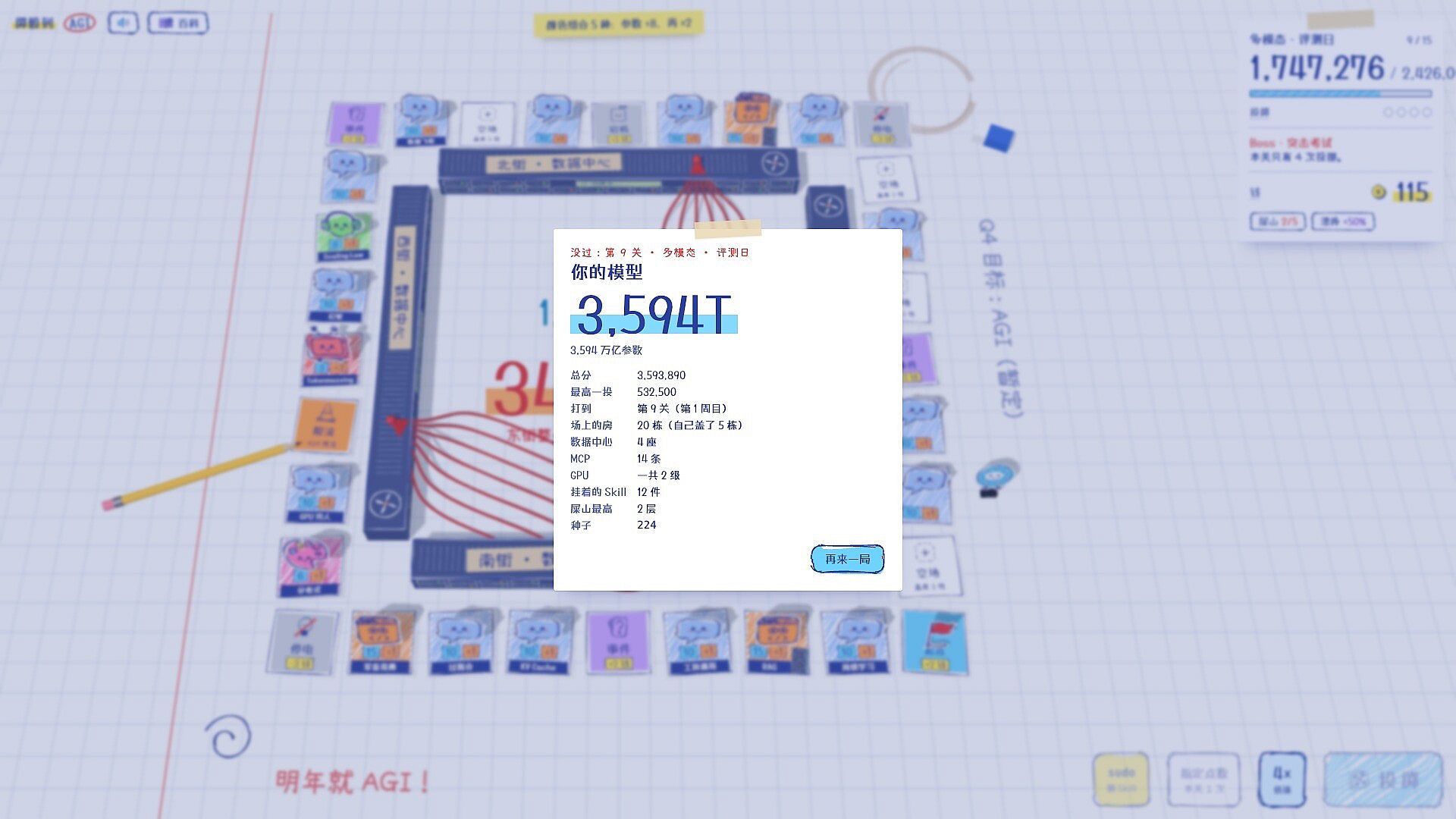
After clearing the final evaluation, players name the completed model, select up to three houses to carry forward through distillation, and retain remaining cash before the board resets to the text era for the next version. Parameter counts determine leaderboard placement across models rather than individual runs, encouraging repeated attempts with escalating targets.
Progression and Strategy
Each model builds on the previous through retained resources and distilled houses, creating a long-term arc across multiple versions. The absence of a score cap means later models face steadily rising benchmarks. Upgrades and link networks reward experimentation with chaining effects and efficient GPU placement, while the limited number of rolls per evaluation forces prioritization of high-impact moves. The sketchbook presentation reinforces the startup theme with paper cutouts for houses, marker-colored server racks, and marginal notes that capture the founder's mindset.
Is It Worth Playing?
This title suits players who enjoy dice-driven resource management and roguelike restarts within a focused indie framework. The combination of house building, link chaining, and era-specific rule changes delivers consistent variety across runs. Internal testing with an automated player across two thousand attempts showed that eleven percent reached a second model and one point seven percent advanced past level thirty, illustrating the challenge level and replay depth available. Those drawn to incremental strategy with clear short-term goals and longer-term model progression will find the systems rewarding without unnecessary complexity.