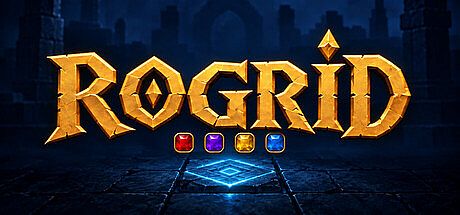


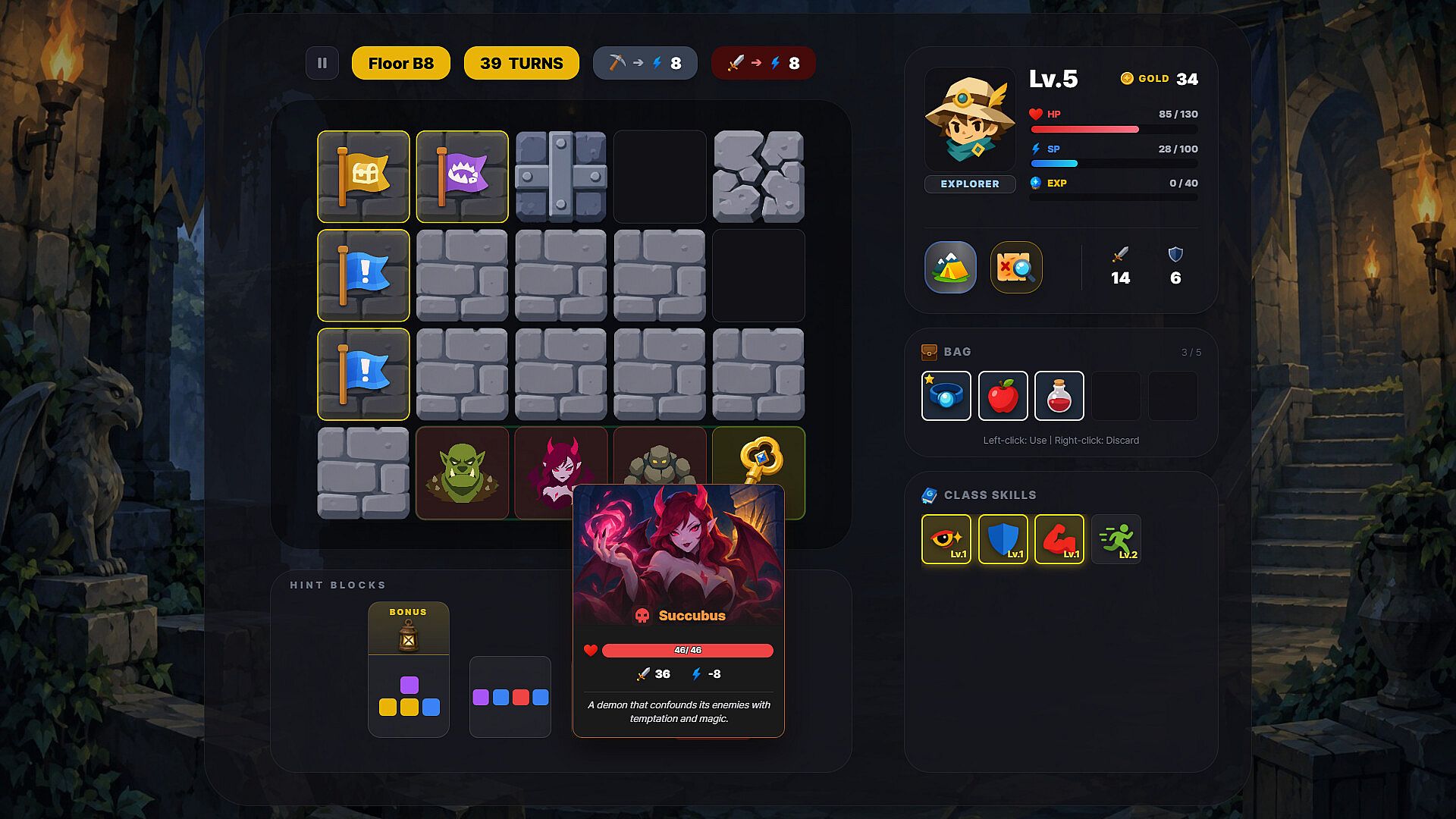

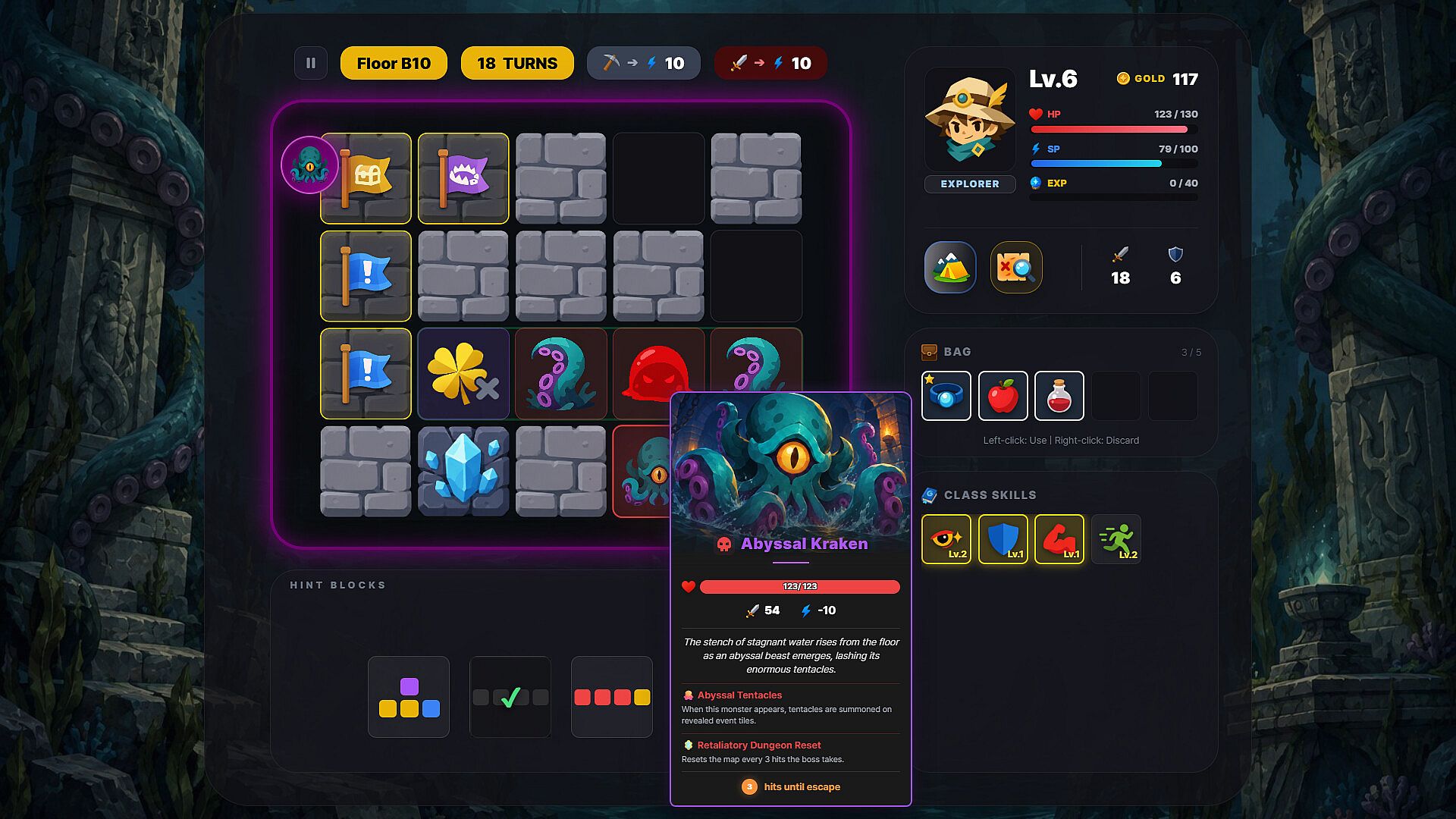
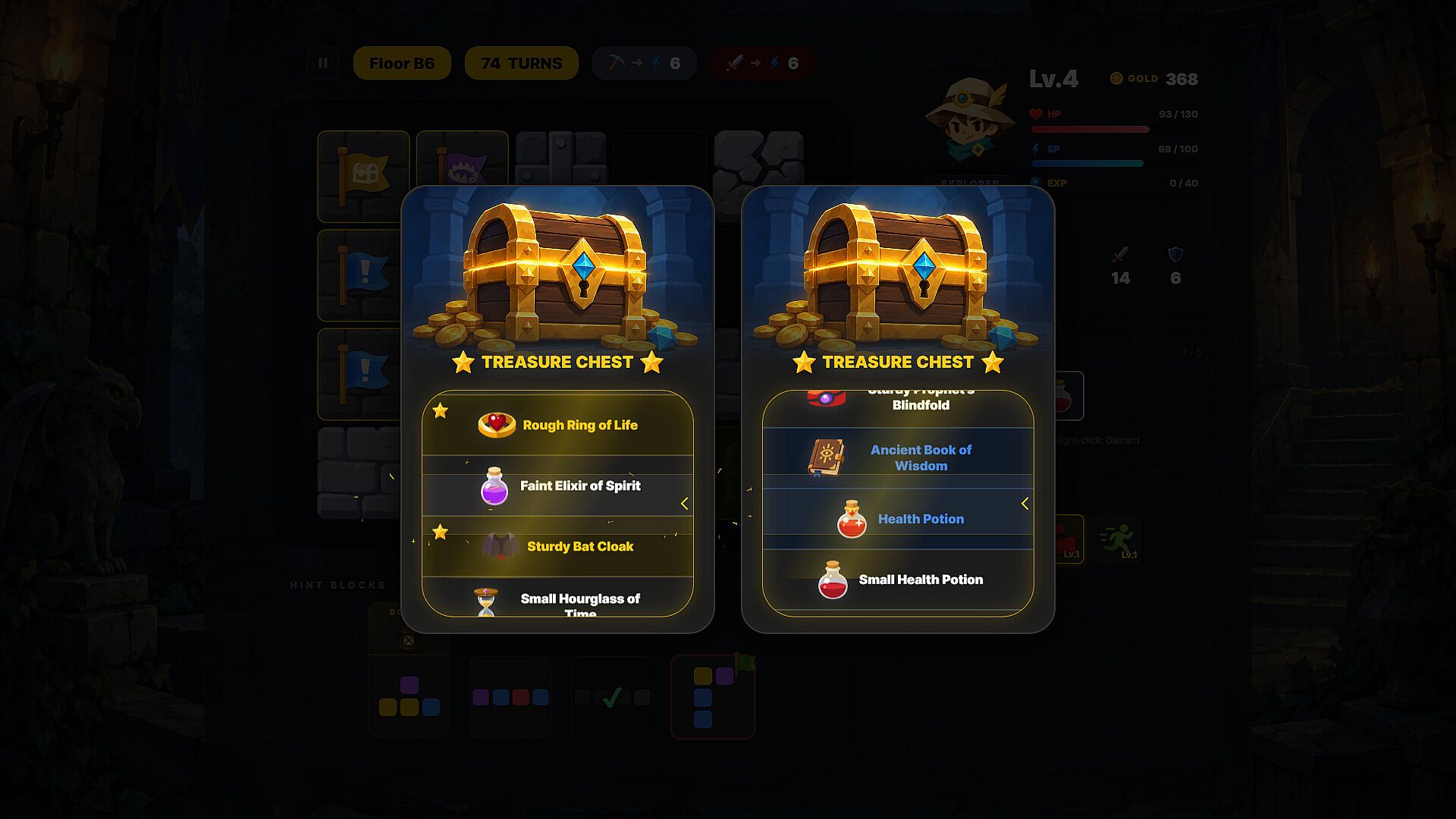
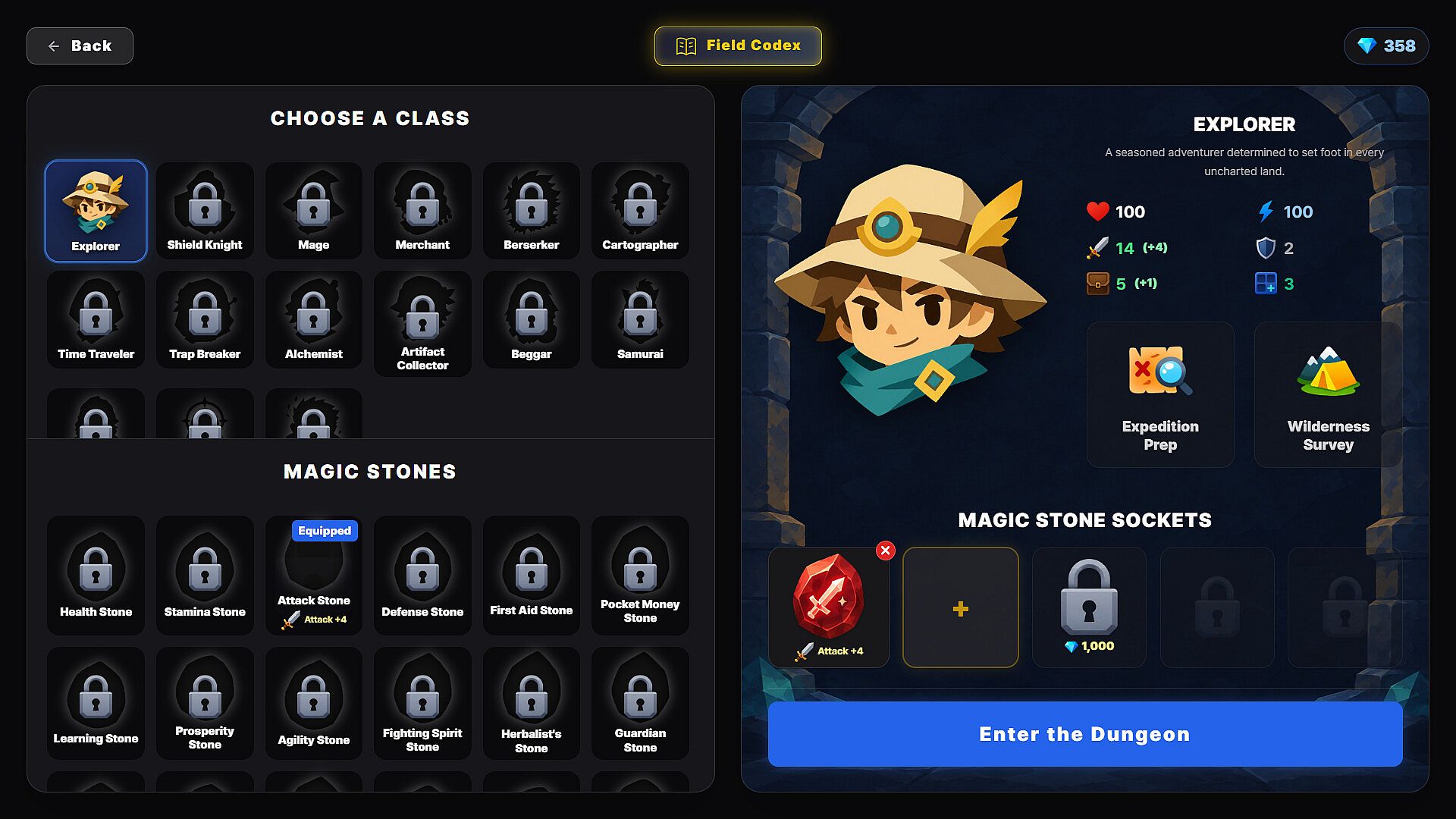
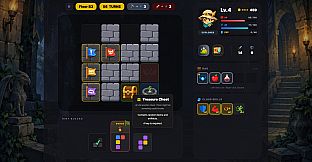
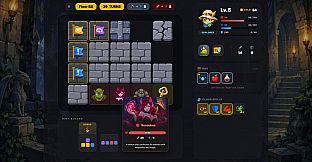
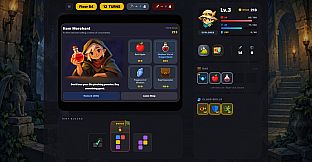

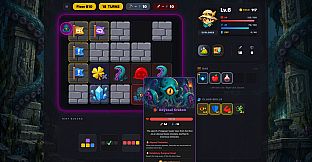
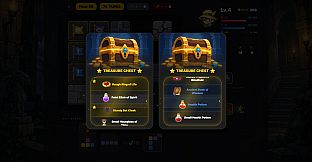
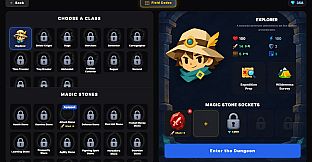
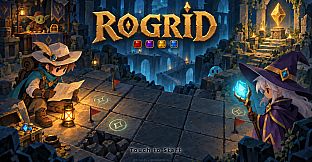
ROGRID is a single-player dungeon crawler that blends strategy, indie sensibilities, and RPG progression. Players navigate procedurally generated floors by uncovering tiles one at a time, using deduction mechanics reminiscent of Minesweeper to identify safe paths amid hidden monsters, traps, treasure, and events.
Gameplay
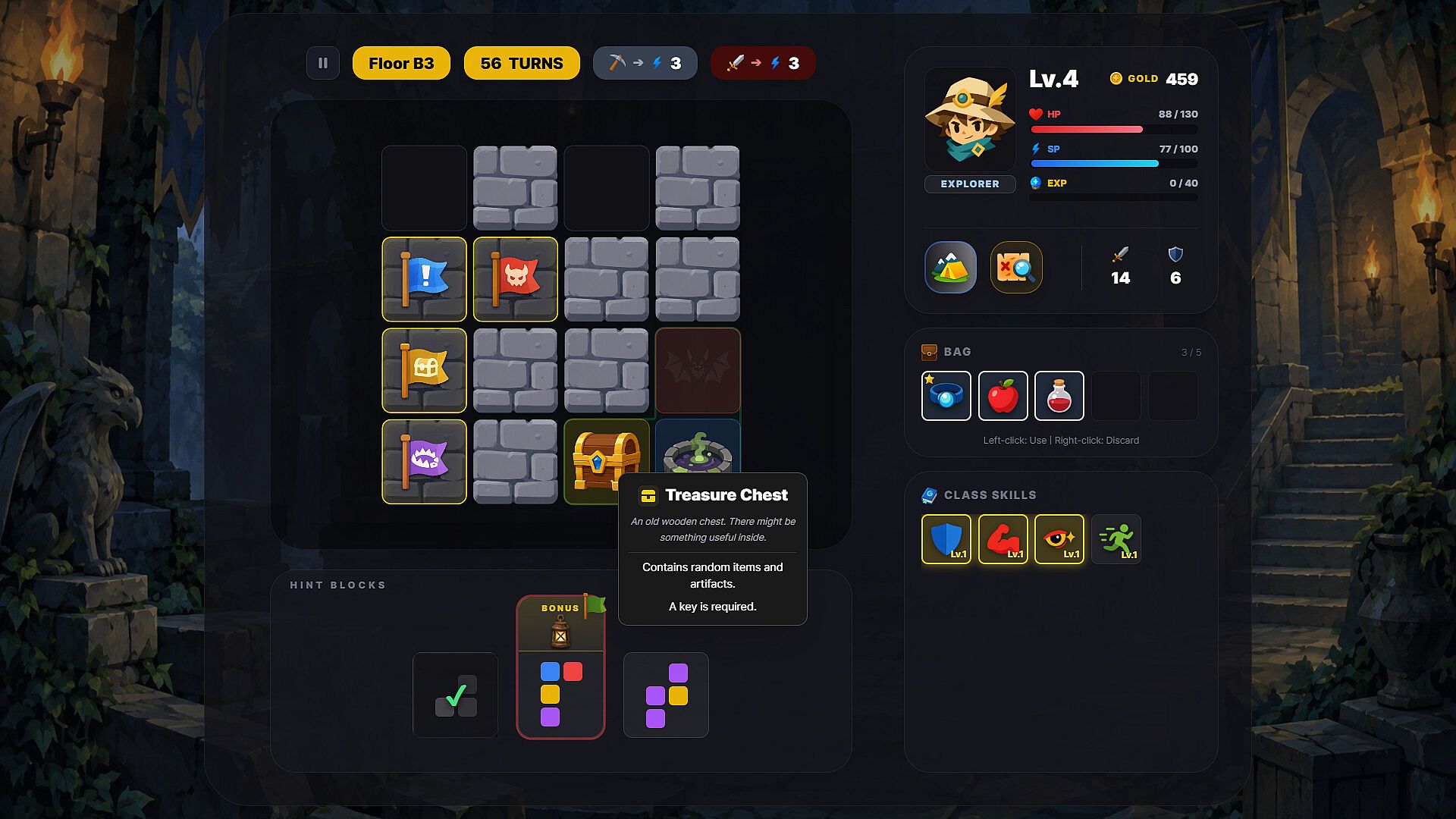
The core loop centers on careful tile selection informed by colored clue blocks. These clues reveal patterns that help players deduce the locations of dangers and rewards based on previously revealed tiles. Each choice carries weight because opening a tile consumes action points, and combat with monsters or triggering traps can drain health.
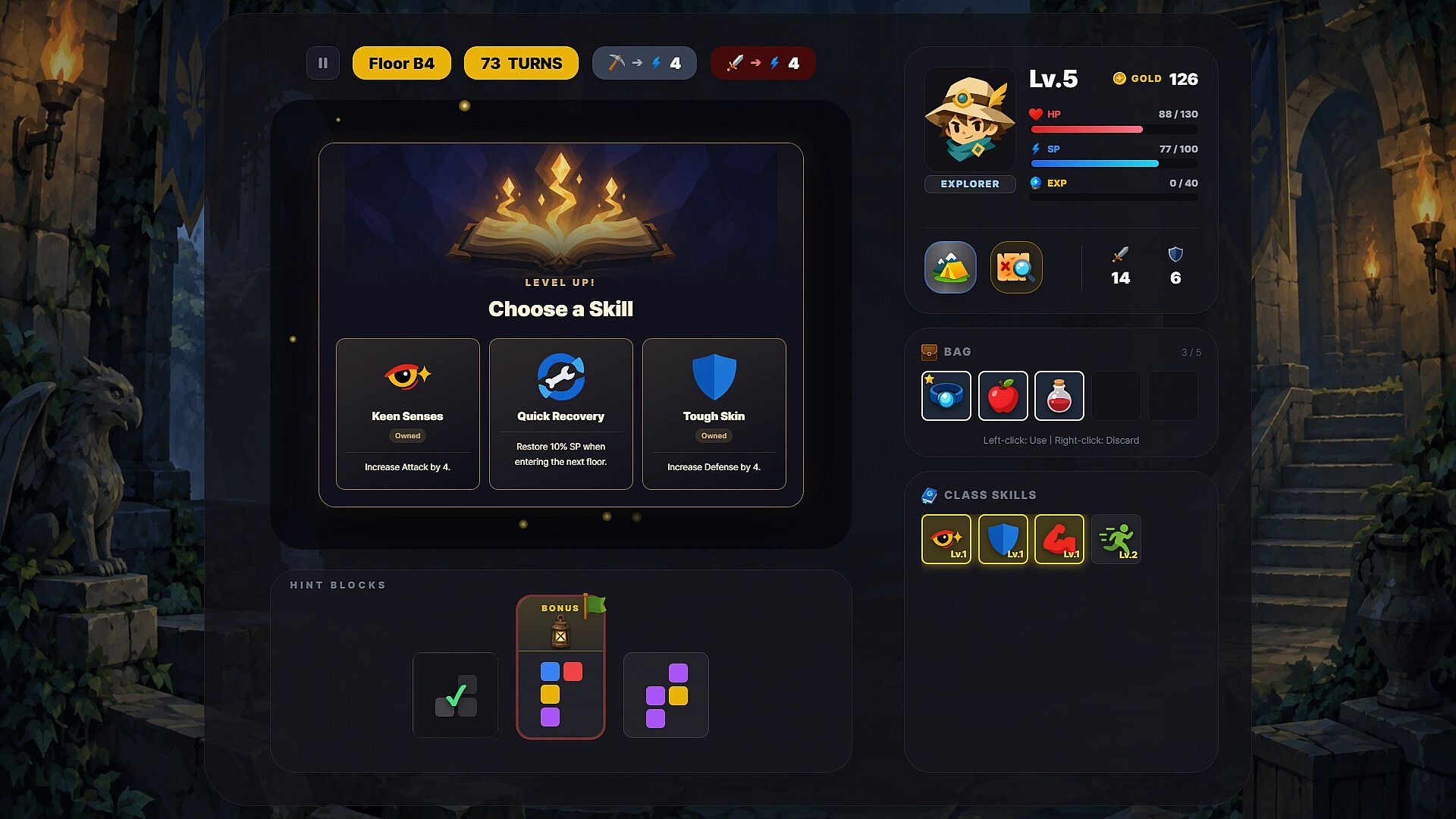
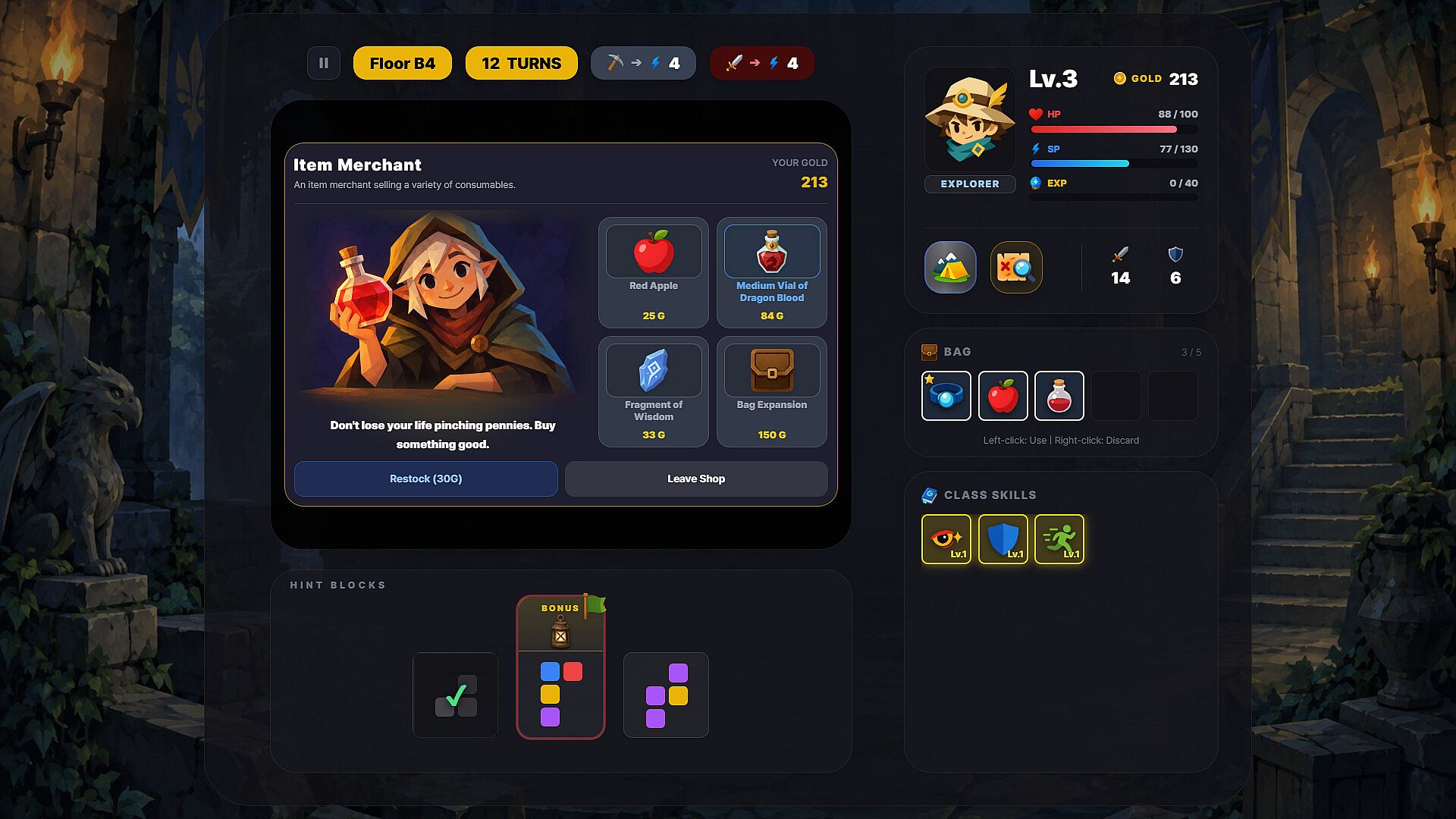
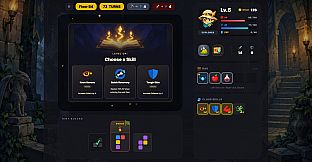
Progression comes through roguelike elements. Players select a class at the start and unlock new skills while leveling up. Artifacts collected during runs provide additional strategic options. Limited active skill slots and bag space force meaningful decisions about what to equip and carry forward. Recovery items and camping opportunities help manage resources across multiple floors.
Reaching the stairs presents a key choice: continue exploring the current floor for more treasure or descend to face greater challenges below. The system rewards players who balance immediate gains against long-term survival, as every tile opened represents a calculated risk.
Game Modes
ROGRID operates entirely as a single-player experience. There are no multiplayer or co-op options listed. The gameplay revolves around repeated runs through dungeon floors where procedural generation and player choices shape each attempt. The focus remains on personal strategy development rather than competitive or shared sessions.
Progression and Strategy
Class abilities form the foundation of combat and exploration. As players advance, skill selection and artifact synergy become central to building effective loadouts. Action point management adds another layer, requiring players to weigh the cost of opening tiles against attacking threats or using recovery options.
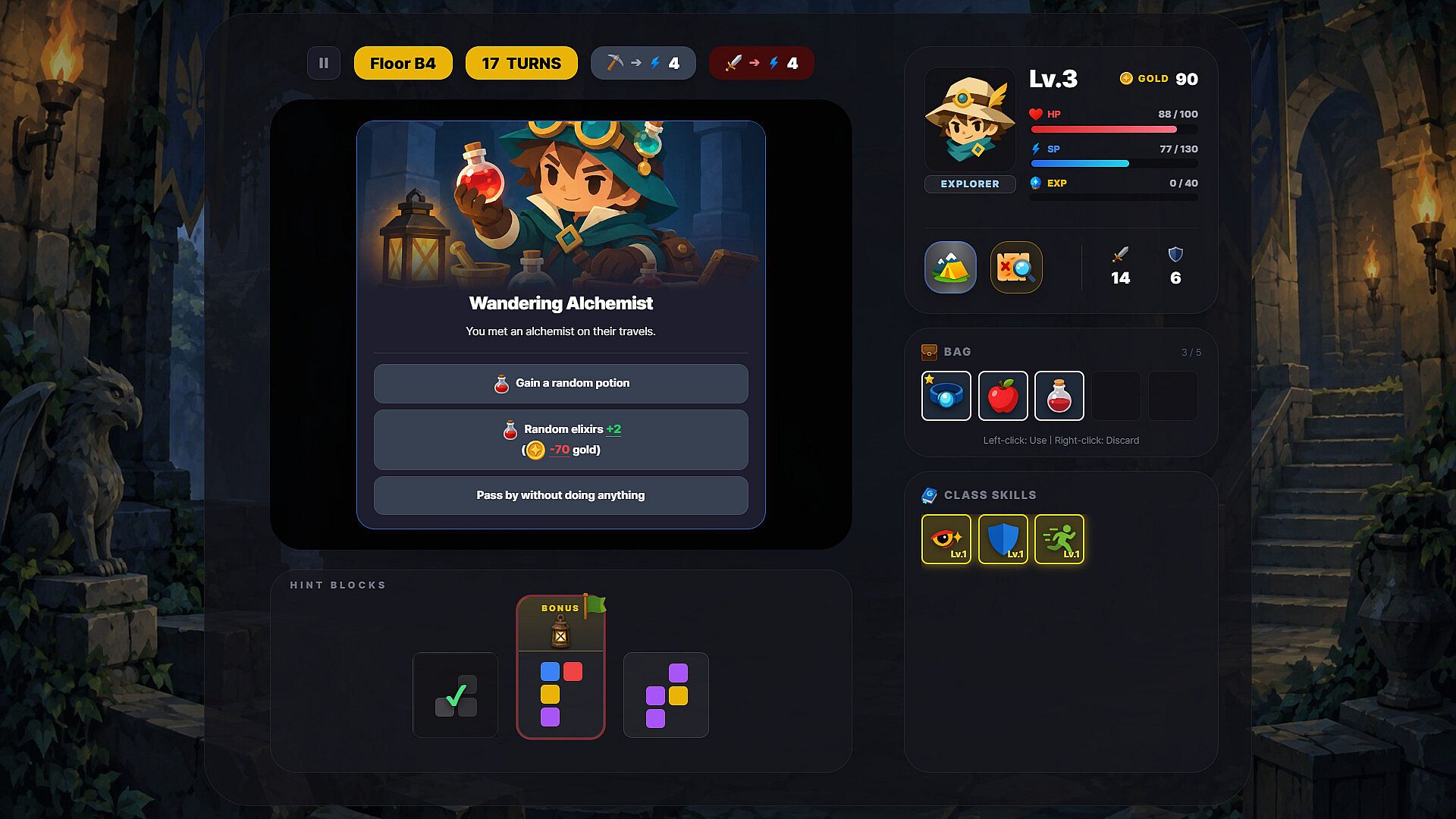
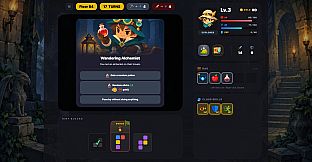
Events encountered behind tiles offer branching choices that can alter the run's direction. Treasure collection supports this growth by providing resources for further development. The combination of deduction, resource management, and incremental power gains creates a loop where each floor tests and refines the player's approach.
Is It Worth Playing?
ROGRID targets players who appreciate deliberate, puzzle-like decision making combined with roguelike replayability. The Minesweeper-inspired deduction paired with class building and floor-by-floor choices suits those who enjoy strategic depth over fast-paced action. With its planned release on October 9, 2026, and emphasis on thoughtful resource balancing, the game appears well-suited for fans of indie strategy titles that reward careful planning and adaptation. Those seeking high-stakes single-player dungeon crawling with strong mechanical integration will find the described systems align closely with that preference.