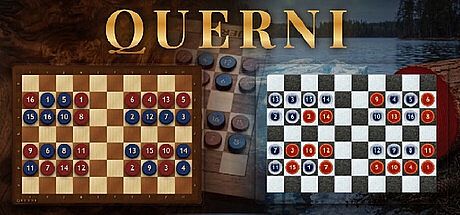


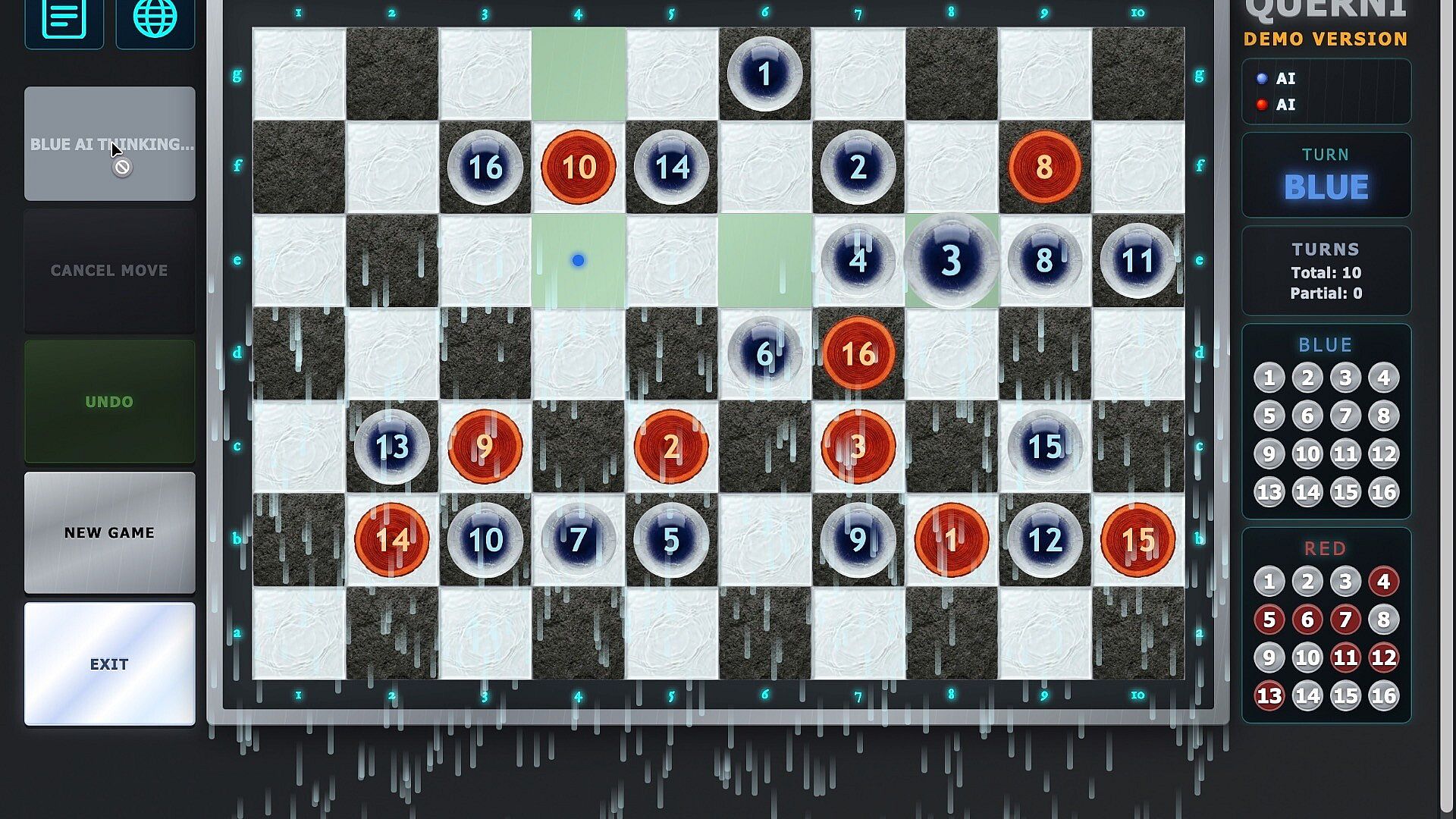
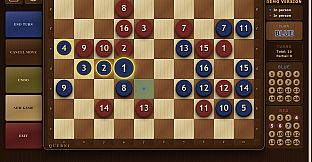
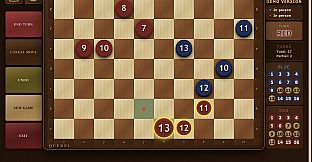
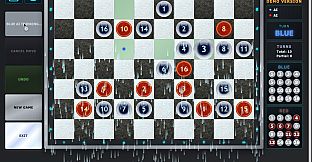
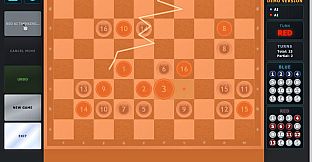
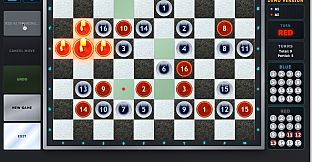
Querni stands out as an abstract strategy game for two players on PC. It blends straightforward rules with layers of tactical depth, challenging participants to outmaneuver an opponent through careful positioning and chain formation on a shared board.
Gameplay
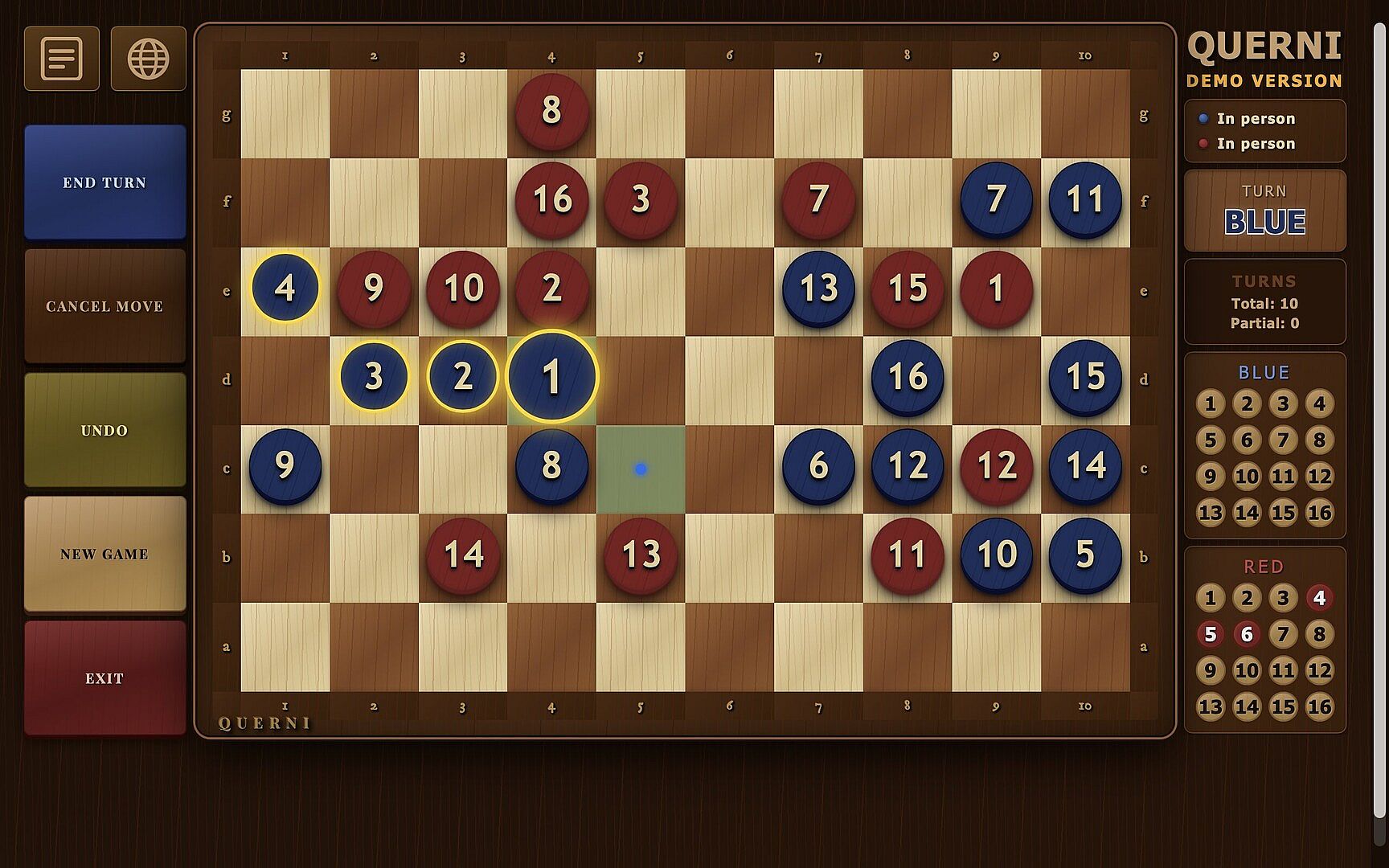
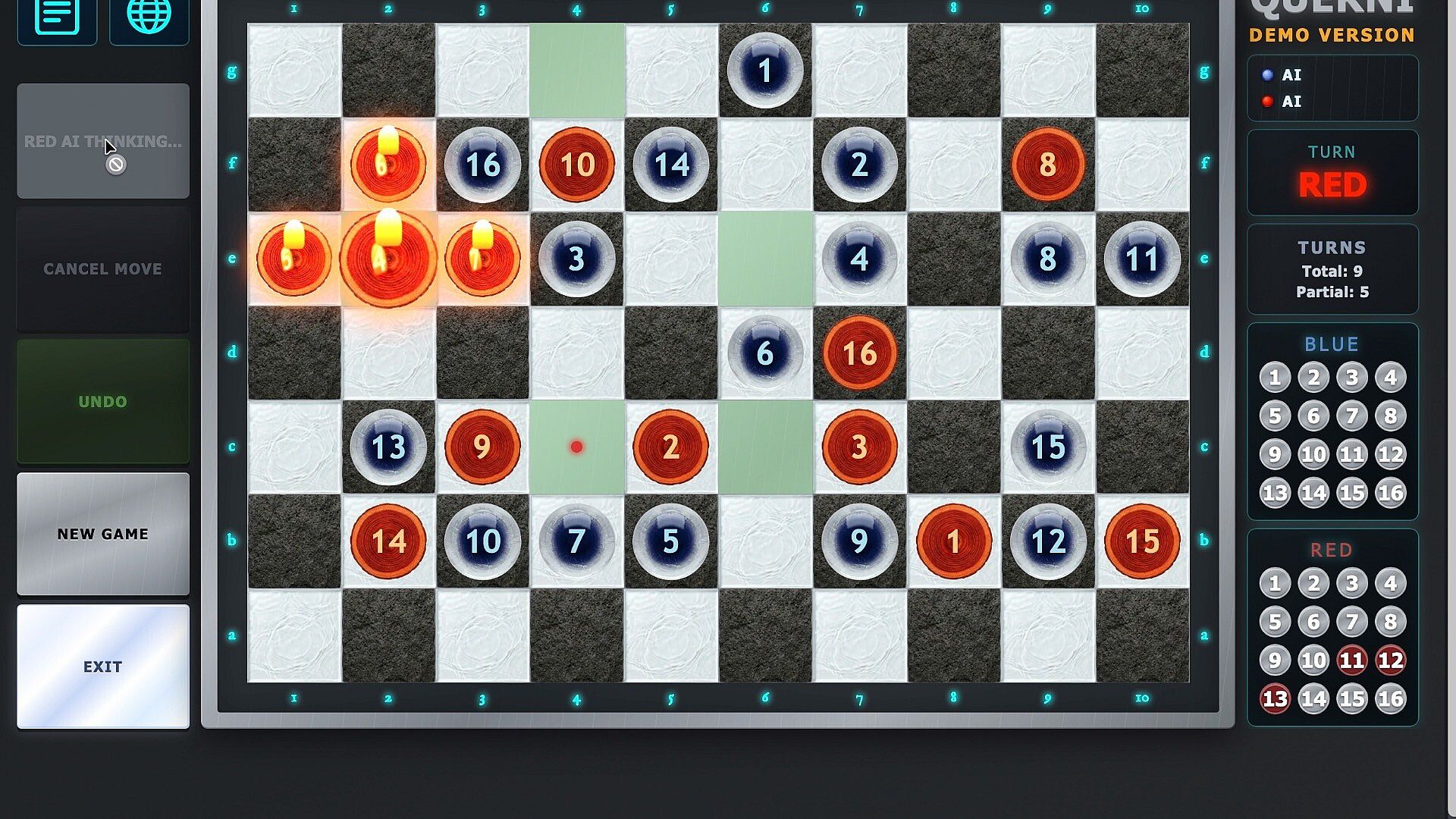
Each participant controls 16 numbered tiles ranging from 1 to 16, placed across a 7x10 grid. The central objective requires removing every tile of one color before the opponent achieves the same. Success depends on forming chains of at least three consecutive numbers positioned on adjacent squares, which may share sides or corners.
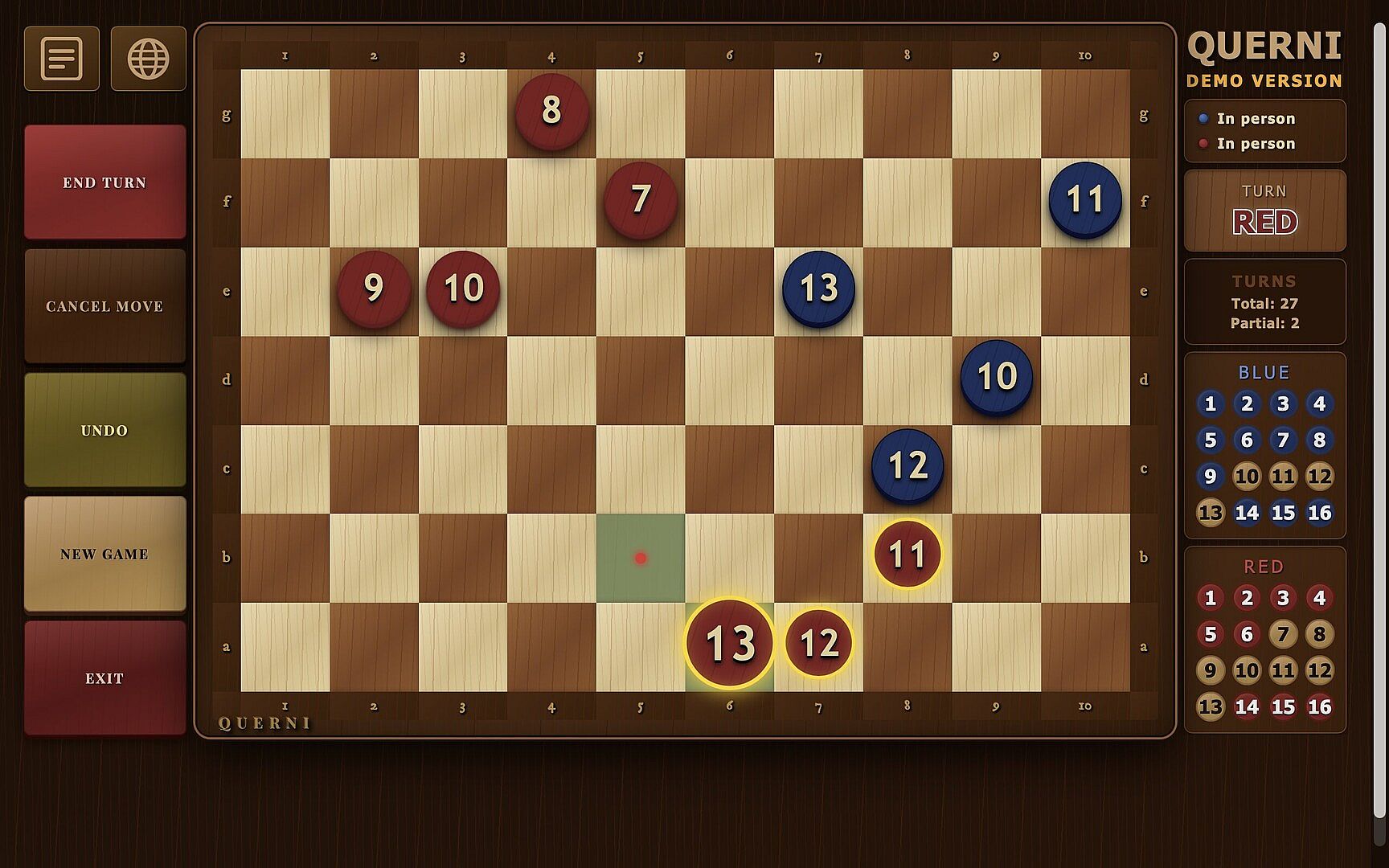
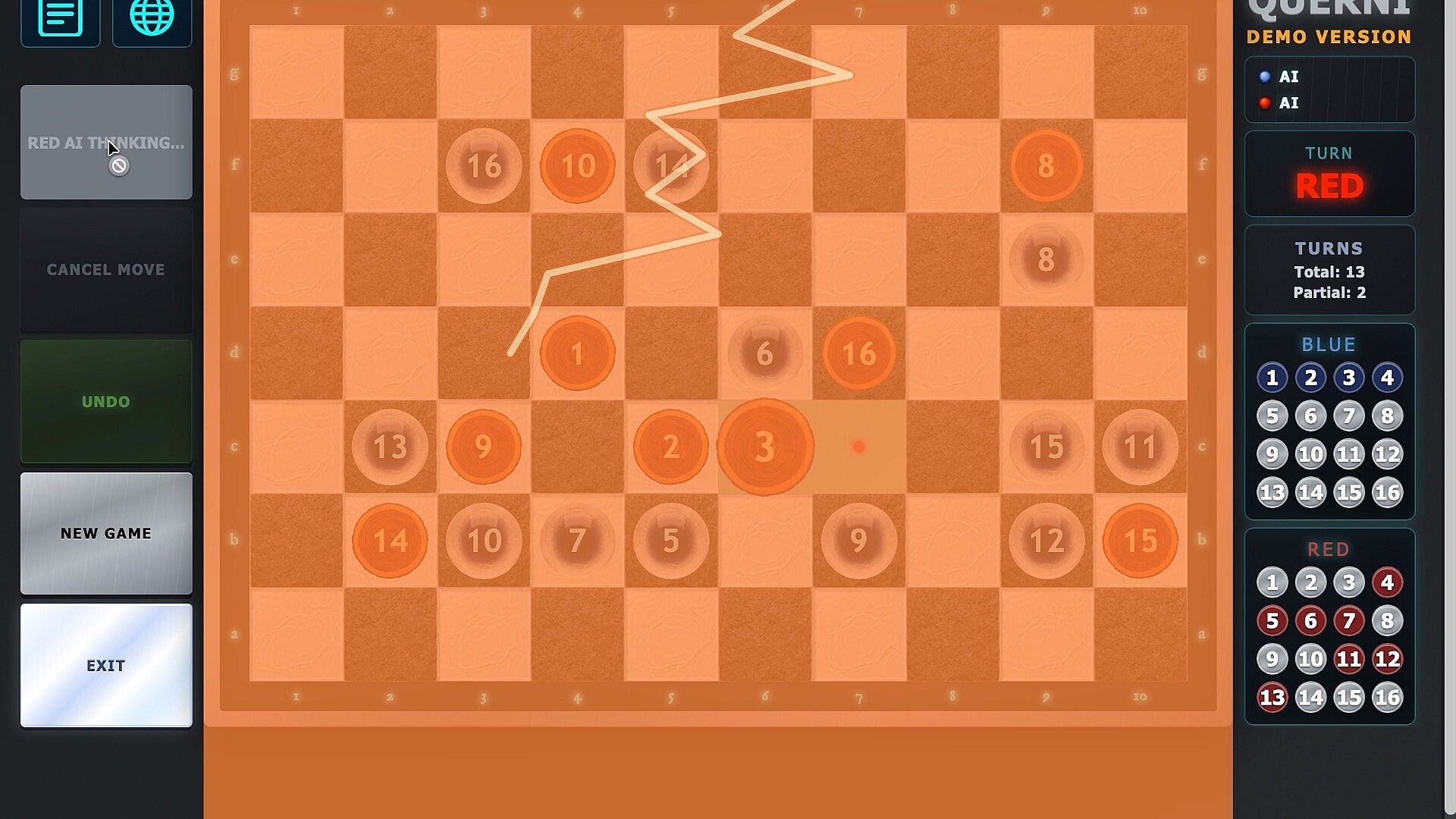
Turns allow several options. A player may move one tile to an adjacent empty square or perform chained jumps over other tiles, either friendly or opposing, to reposition quickly across the board. After moving, or instead of it, a valid chain can be removed in a single action. Passing the turn remains possible when no productive options exist. Isolated tiles that cannot connect into future chains create risks, as leaving such pieces behind leads to defeat under the rules.
Matches emphasize foresight. Numerical sequences must align precisely, and jumps introduce mobility that can shift control of key areas rapidly. The fixed starting layout varies per game, ensuring fresh configurations each time.
Game Modes
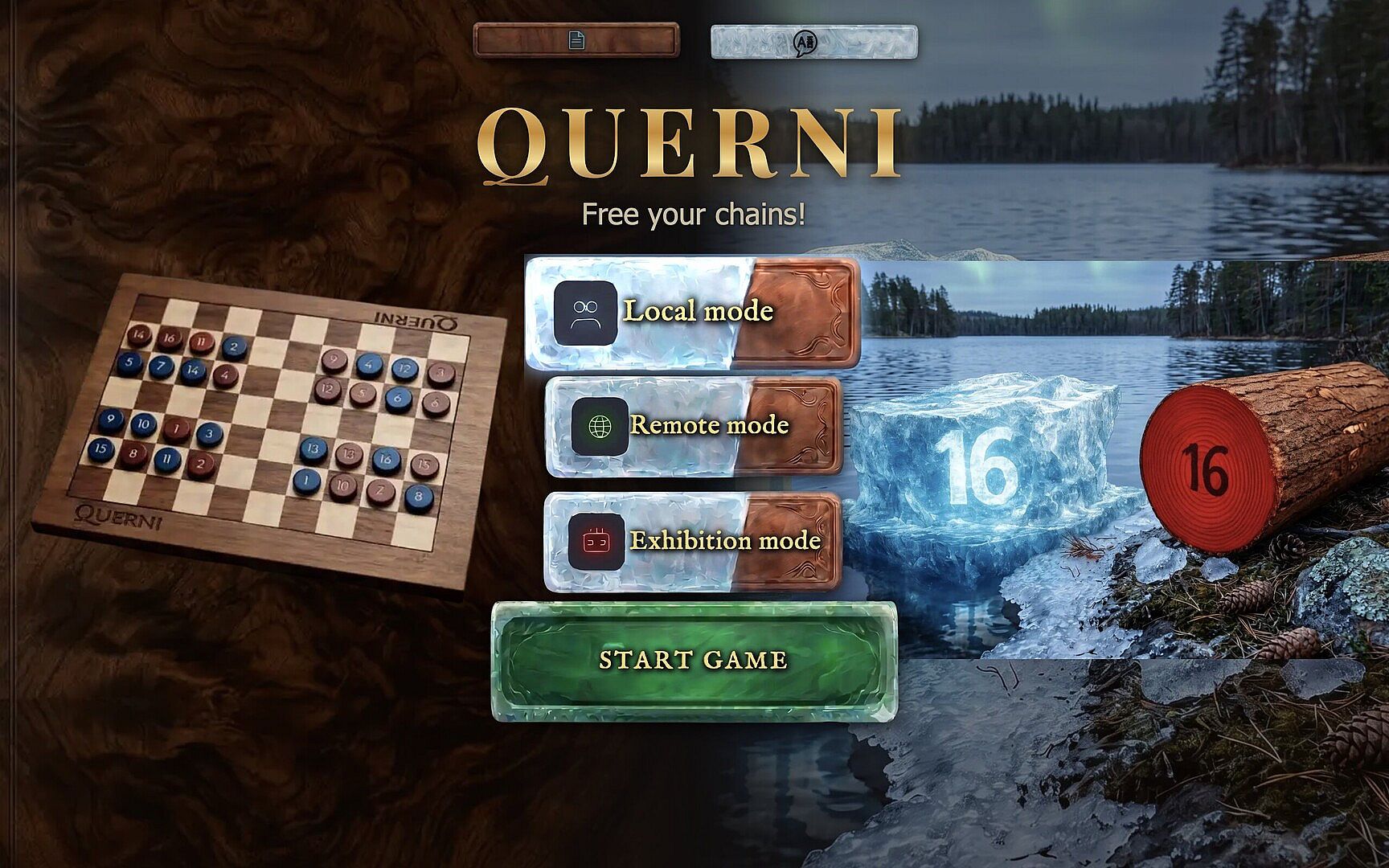
Querni supports local multiplayer for face-to-face matches on one device. Remote sessions function through integrated tools that connect players across distances without additional setup. A solo option pits one player against artificial intelligence opponents, available once the full version unlocks this feature.
These options cover competitive play between two people and practice sessions for refining tactics alone. No additional modes appear in the design beyond these core formats.
Core Mechanics and Strategy
Movement combines simple adjacency steps with extended jump sequences that reward planning multiple leaps in advance. Chain removal serves as the primary scoring action, yet it must occur only after a move or as the sole action on a turn. The 30-turn limit without removals forces draws when progress stalls, adding pressure to maintain momentum.
Players balance offense and defense by positioning tiles for their own chains while disrupting potential sequences for the opponent. Numerical order creates natural dependencies, where lower or higher values anchor longer runs. Effective play involves calculating several moves ahead to secure removal opportunities without stranding tiles.
Is It Worth Playing?
Querni appeals to enthusiasts of abstract strategy titles who value calculation over chance. Its rules require minimal explanation yet reward repeated sessions with improved pattern recognition and foresight. The clean presentation keeps attention on board state and opponent responses.
Those seeking quick yet thoughtful matches will find consistent engagement through varied starting positions and the interplay of movement with chain formation. The availability of both shared-device and remote options broadens access for pairs, while the AI component supports solo skill development. Overall, the game suits players comfortable with deliberate pacing and positional puzzles in a compact package.