








Project RedTeam: Contract Offensive is a roguelite card game that blends strategy and simulation elements on PC. Players manage a hacker-for-hire agency by executing multi-stage network intrusions against corporate targets using cards that represent real offensive cybersecurity techniques.
Gameplay
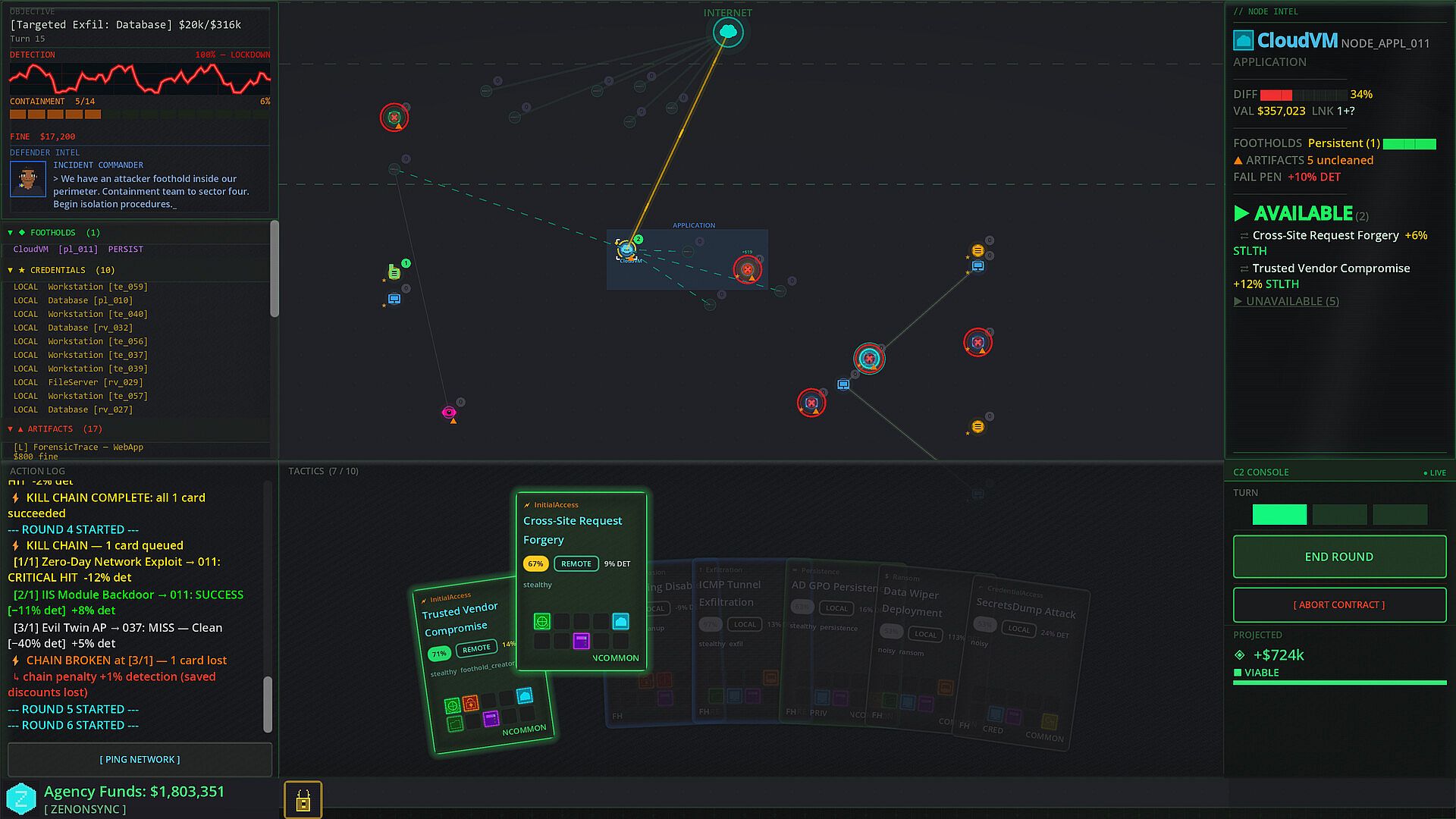
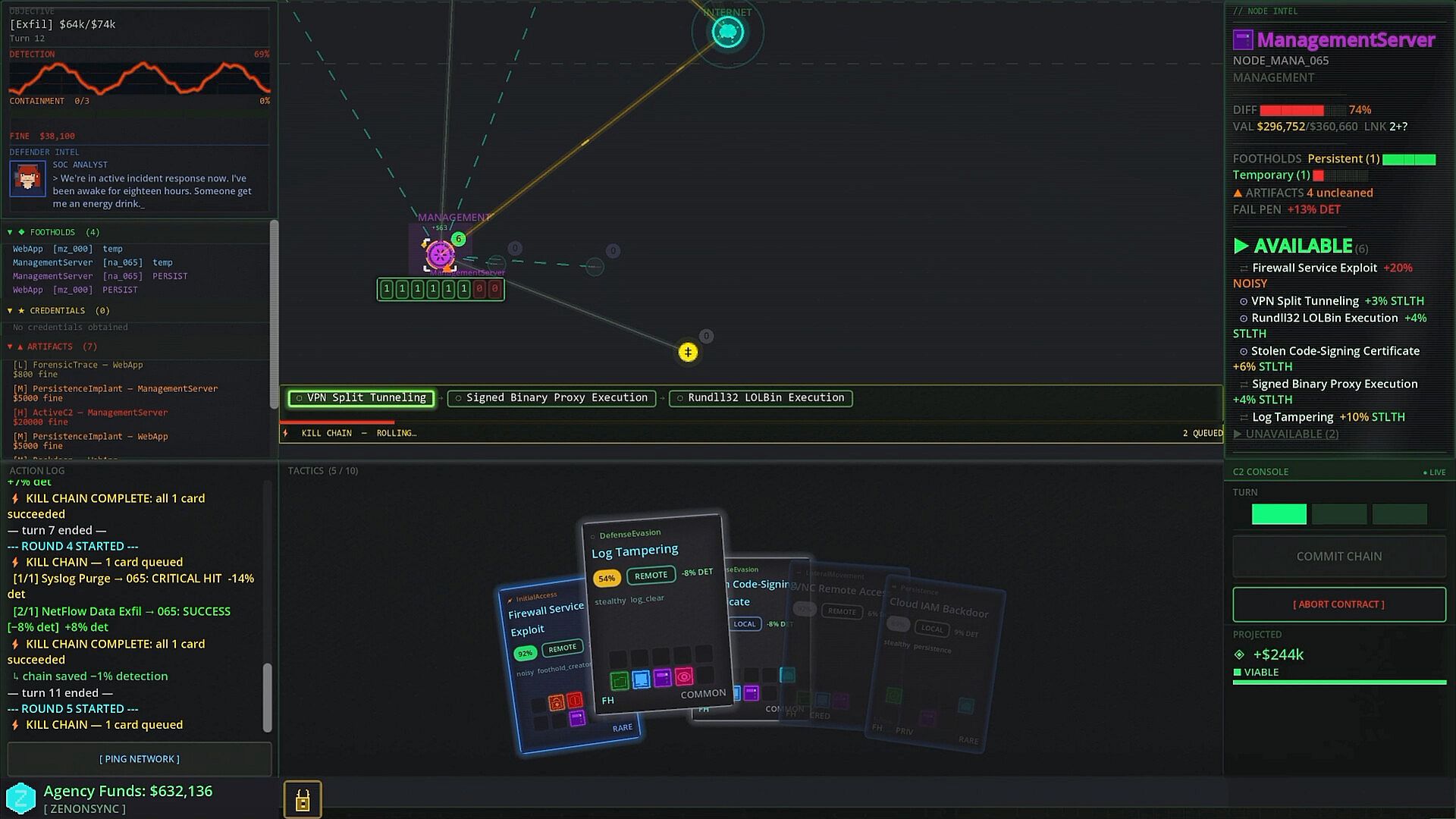
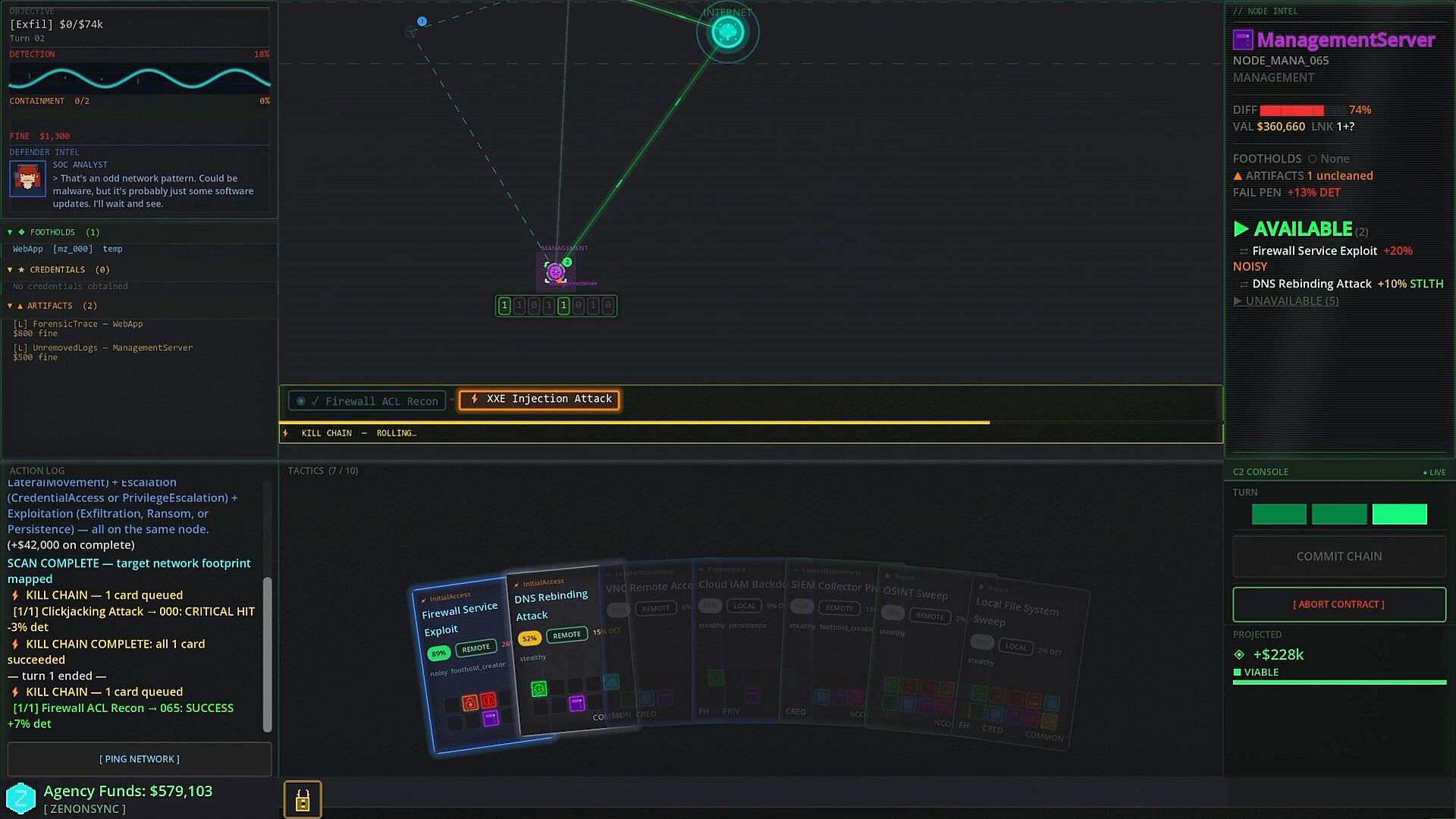
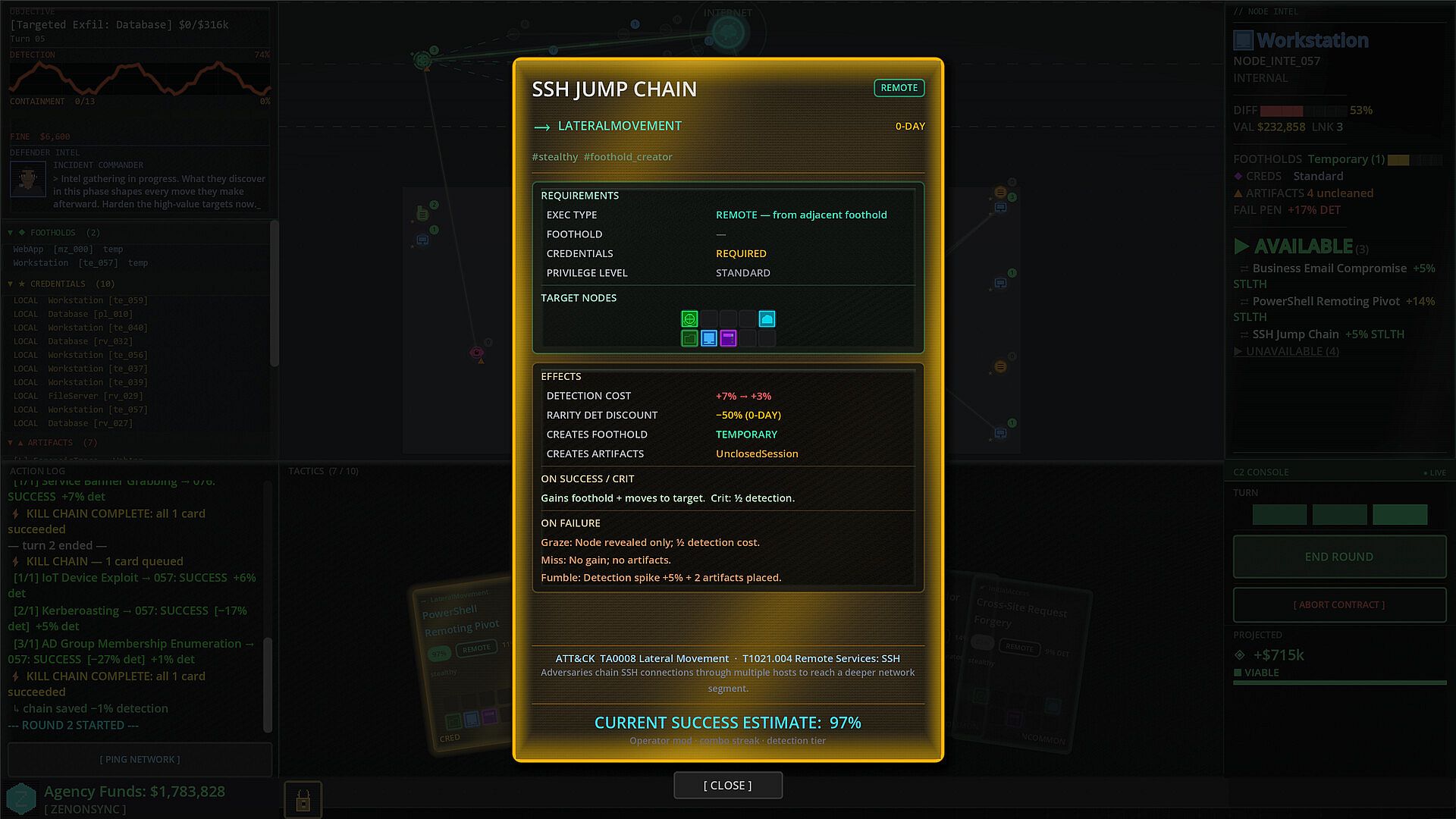
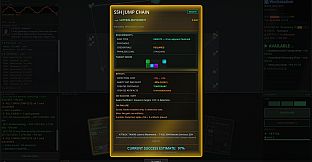
The core loop centers on building and deploying tactic cards across ten categories that mirror established red team workflows. Recon cards reveal network nodes without committing access. Initial Access cards establish noisy footholds on DMZ targets. Subsequent categories such as Credential Access, Lateral Movement, Privilege Escalation, Persistence, Defense Evasion, Anti-Forensics, Exfiltration, and Ransom allow progression deeper into the network while managing detection levels.
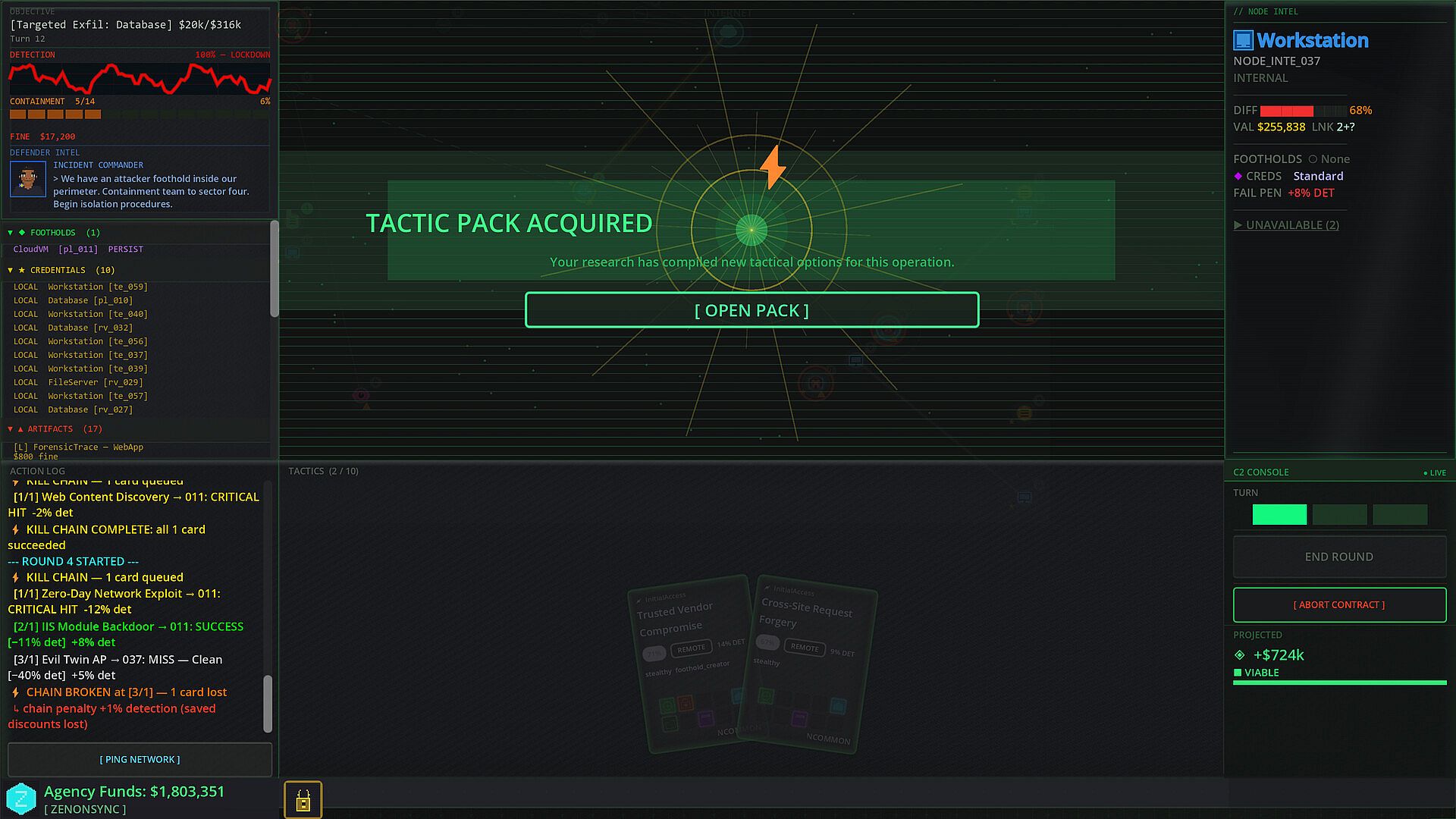
Networks consist of procedurally generated zones including Internet, DMZ, Perimeter, Application, Cloud, Server, Internal, Management, and Core. Deeper zones contain higher-value targets but trigger stronger defender responses. Detection rises with noisy actions or failures, prompting containment that burns footholds and narrows attack paths. Players can exit contracts early or apply Anti-Forensics to reduce cleanup costs.
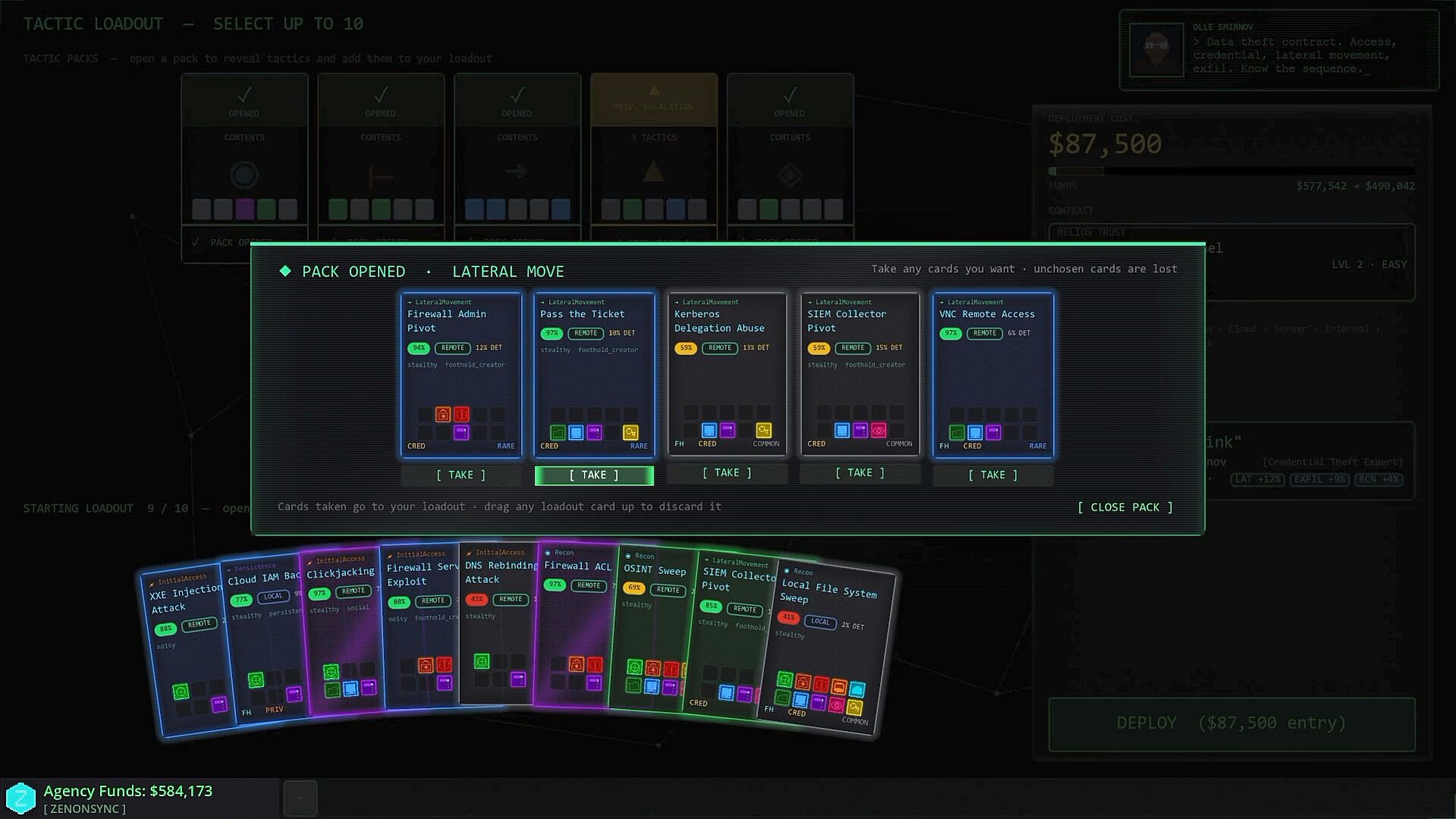
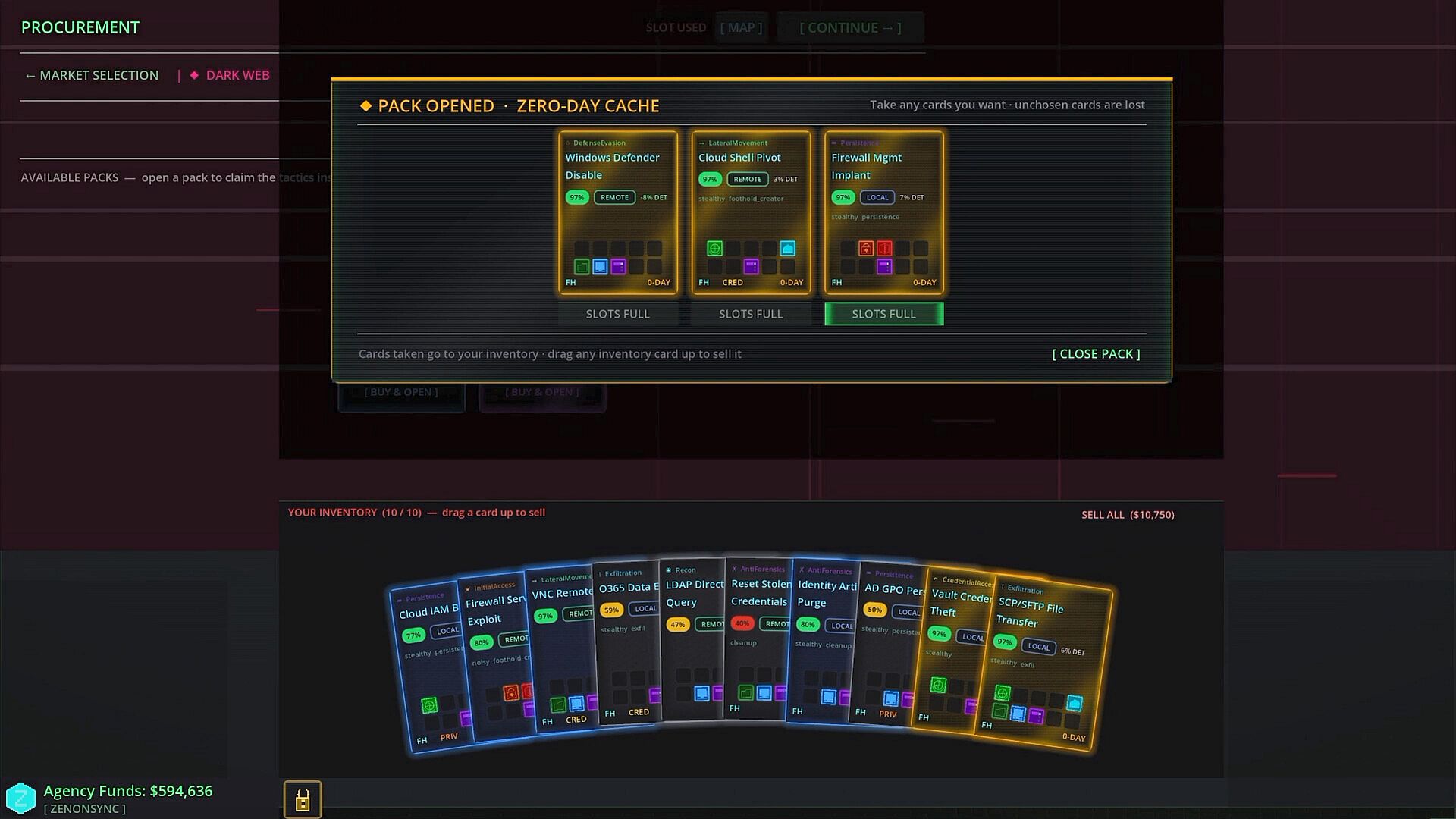
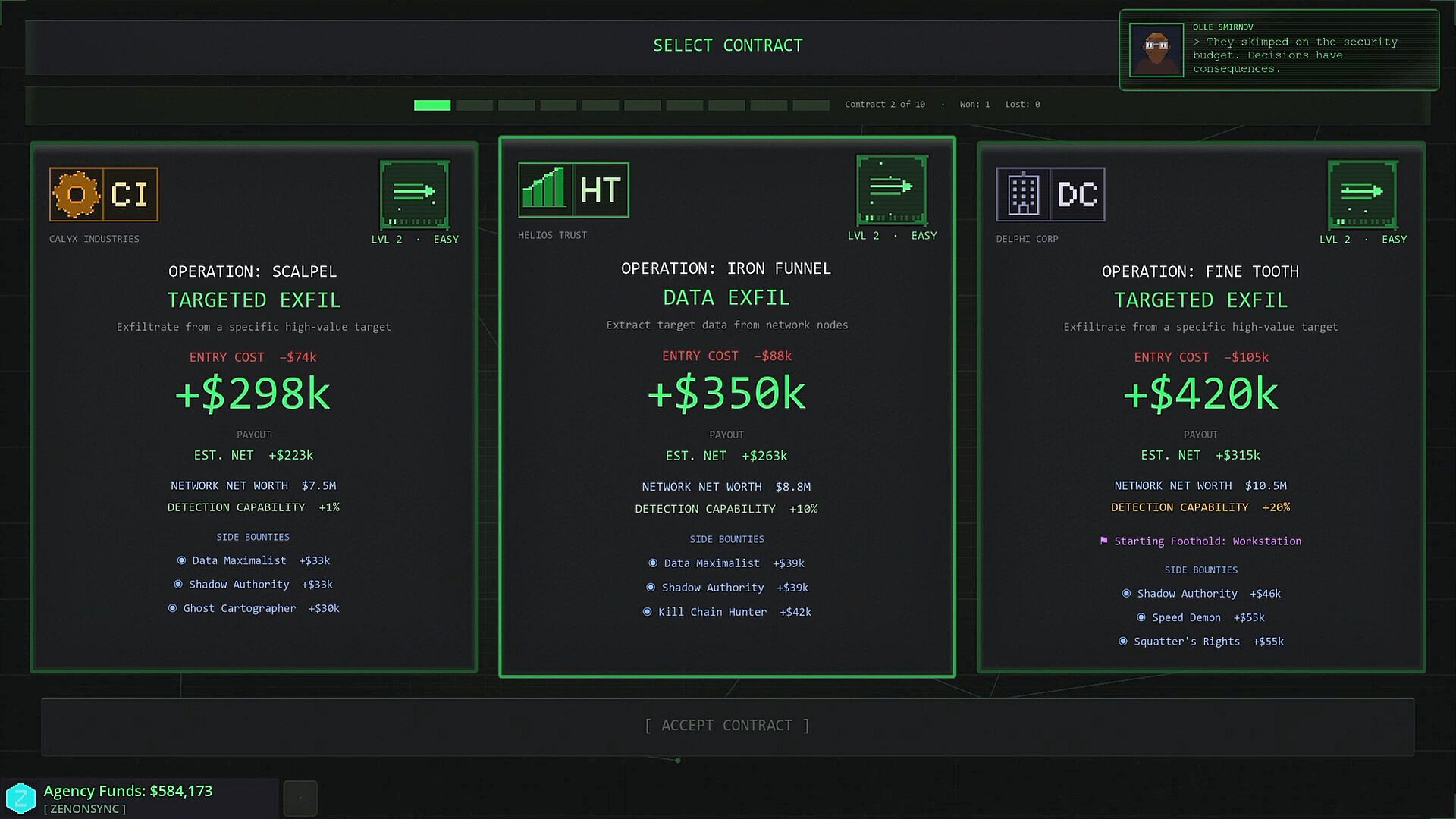
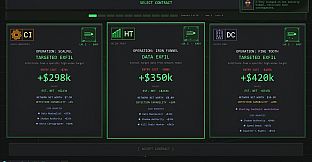
Between rounds, tactic card packs, agency items, and marketplace visits at Open Source, Commercial, and Dark Web tiers let players refine loadouts. Equippable upgrades persist across contracts while consumables provide one-time advantages. Operator selection and contract risk profiles add agency-level strategy before each run begins.
Game Modes
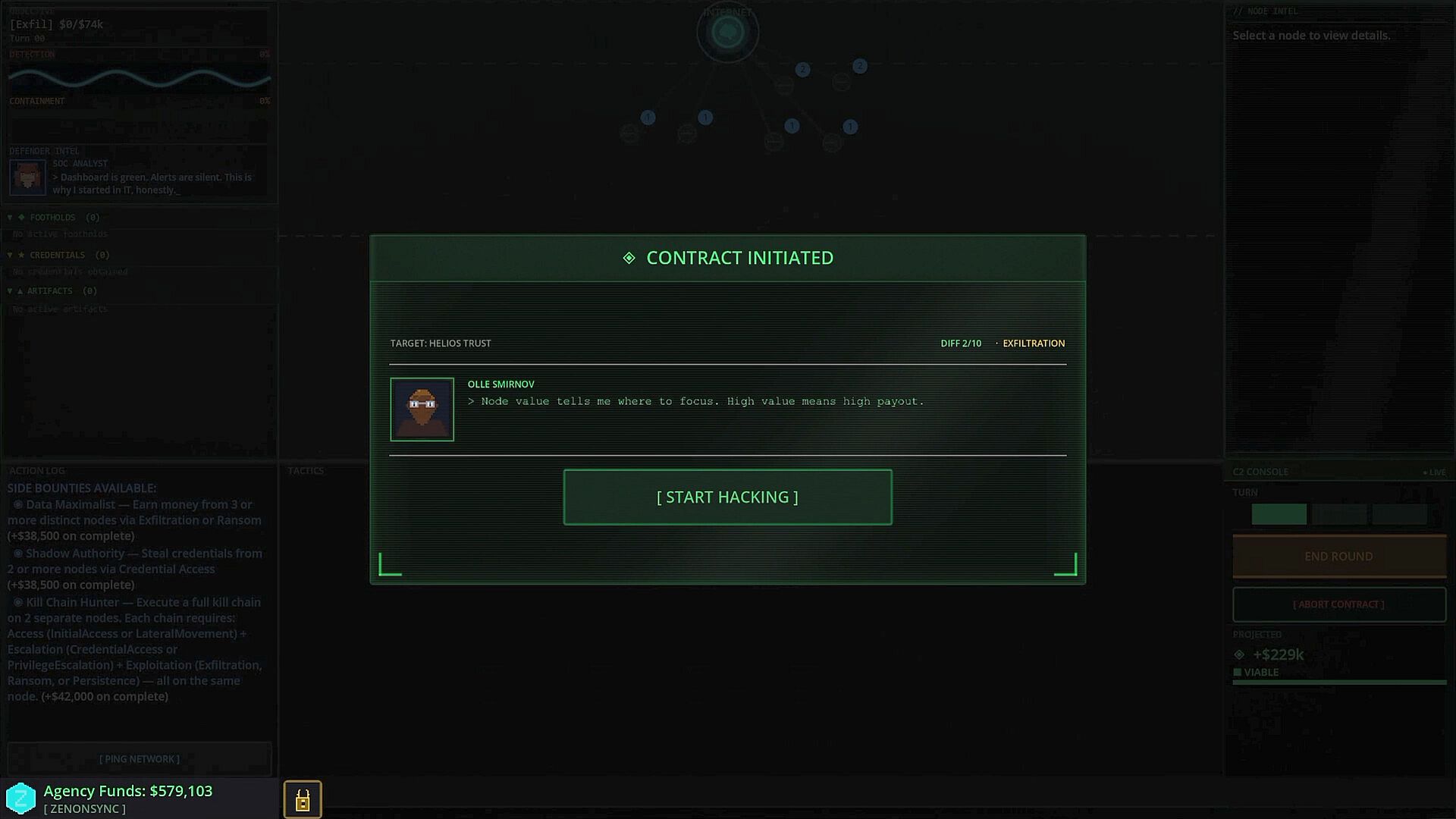
The primary experience follows a 10-contract campaign against escalating targets. Each contract features randomized node layouts and one of several objective types such as Exfiltration, Ransom, Credential Theft, Network Takeover, or Stealth Operations. Side bounties offer additional payouts for secondary goals during these runs.
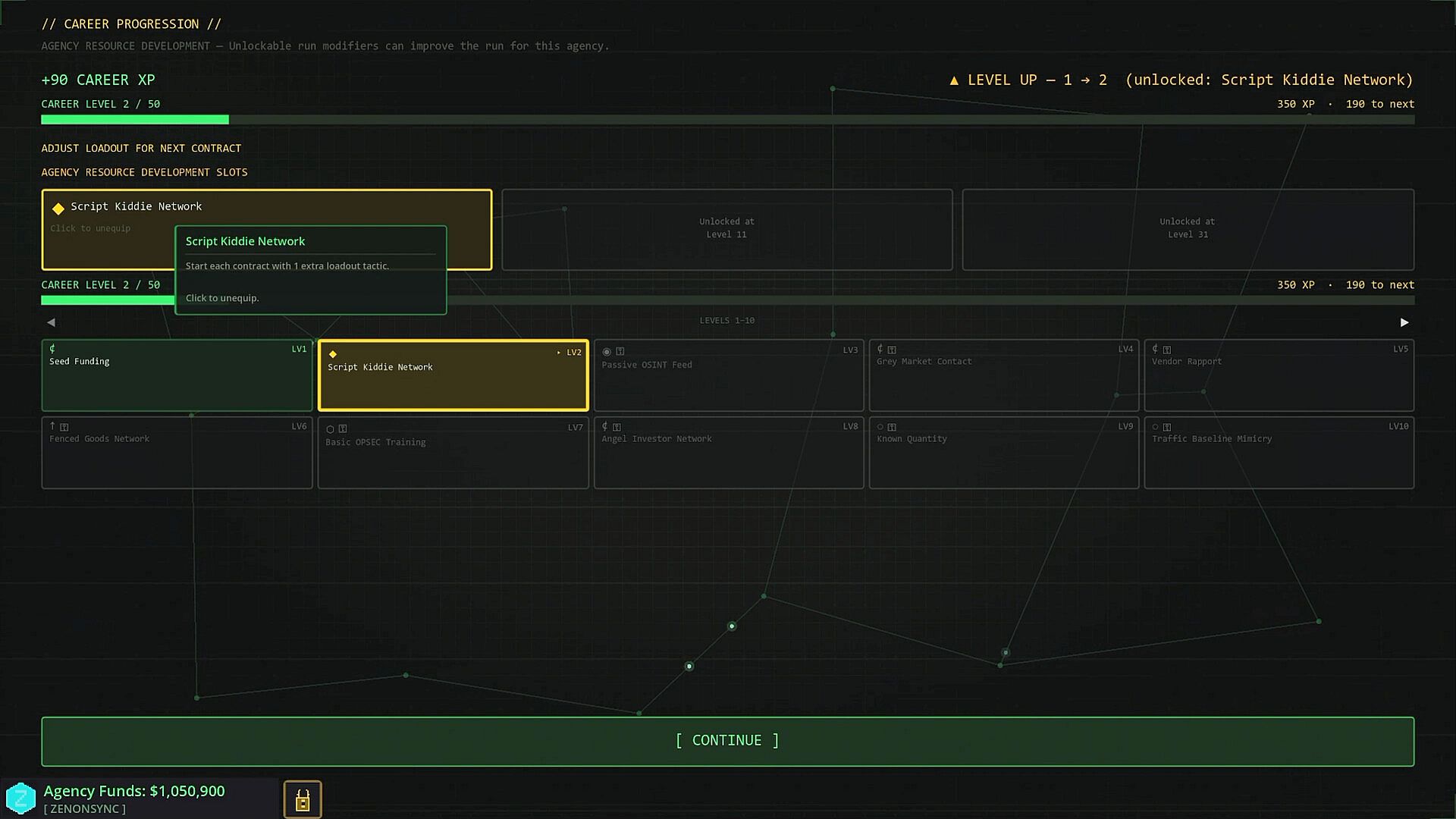
Upon completing the campaign, infinite mode unlocks with continuously generated contracts and rising difficulty. Failed runs still award career XP that unlocks persistent modifiers for future agencies. Players start new agencies when funds fall short of entry costs, preserving progression through career levels rather than losing all progress.
Agency and Progression
Agency management forms a key layer outside individual contracts. Funds determine which contracts remain accessible, while accumulated items and upgrades shape long-term strategy. 105 operators across rarity tiers provide distinct starting advantages. 426 tactic cards span five rarity levels up to 0-Day, and 50 agency items supply both persistent and temporary effects.
Persona dialogue from operators and defenders adds flavor to actions. A game index catalogs every card, node type, and item for reference. Kill chains reward sequenced tactics with reduced detection risk. Procedural generation ensures varied network layouts and credential paths on each attempt.
Is It Worth Playing?
This title suits players drawn to strategy card games that emphasize planning, risk management, and authentic thematic depth over abstract fantasy. The single-developer approach and focus on real cybersecurity concepts deliver a focused experience for those interested in simulation-style roguelites. Career progression and infinite mode provide replayability beyond the initial campaign, while the detection and containment systems create meaningful tension without requiring prior hacking knowledge.
Content warnings note that the game depicts fictional intrusions and includes no actionable real-world instructions. It targets audiences already engaged with cybersecurity topics or card-based strategy titles seeking a grounded alternative to typical deckbuilders.