


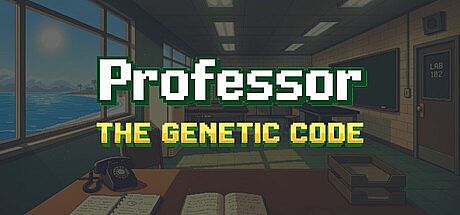





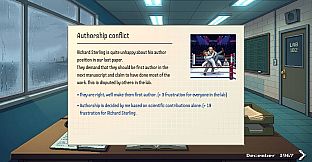
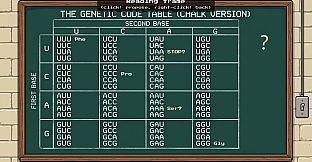



Professor - The Genetic Code is a strategy, indie, and simulation game set on PC that places players in charge of a research lab racing to decipher the genetic code in the early 1960s. The experience centers on managing experiments, personnel, and resources while navigating the realities of scientific discovery during that era. Players begin in 1961 with limited knowledge of how genes translate into proteins and work through a series of historically grounded experiments to map all sixty-four codons.
Gameplay
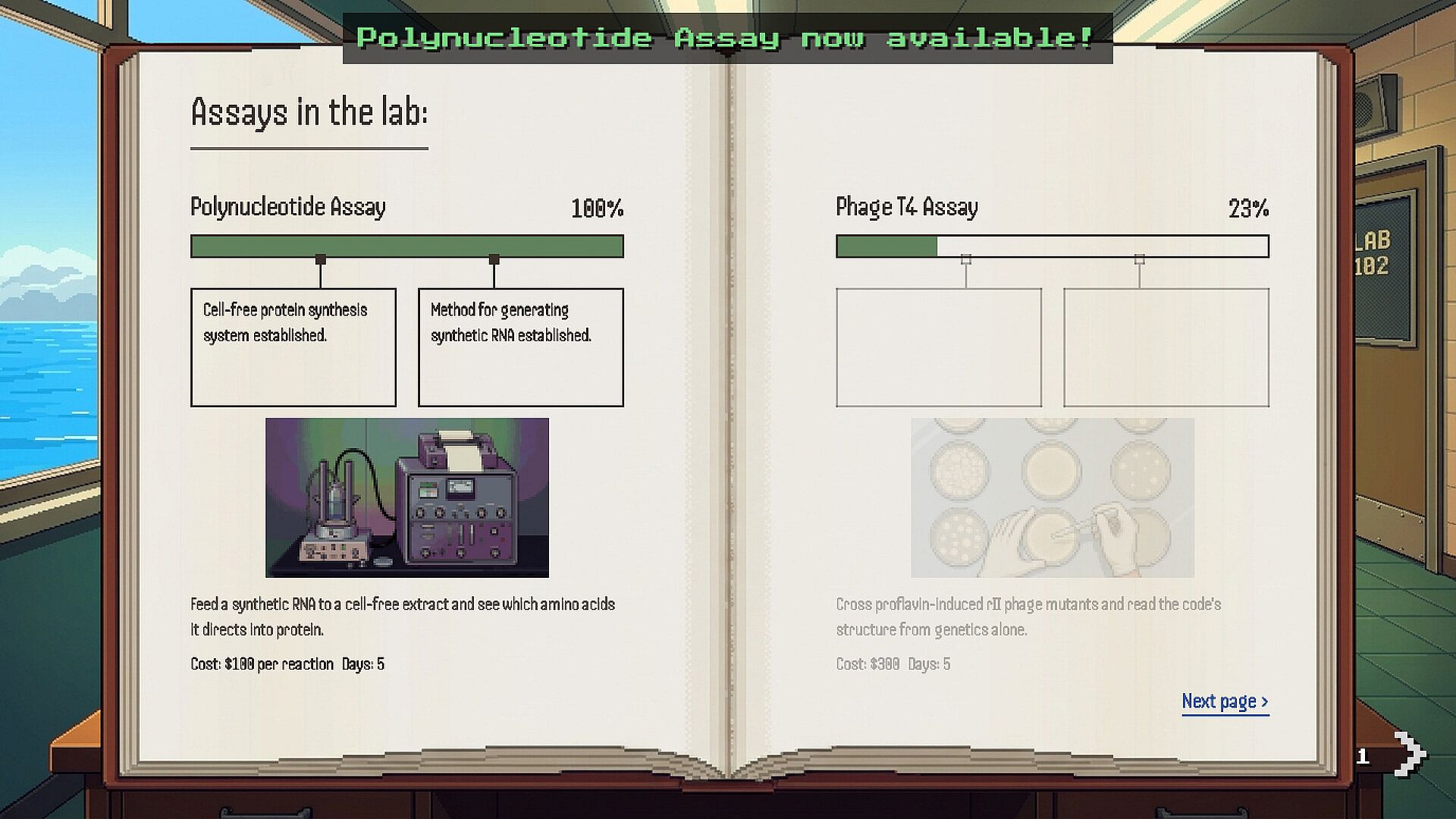
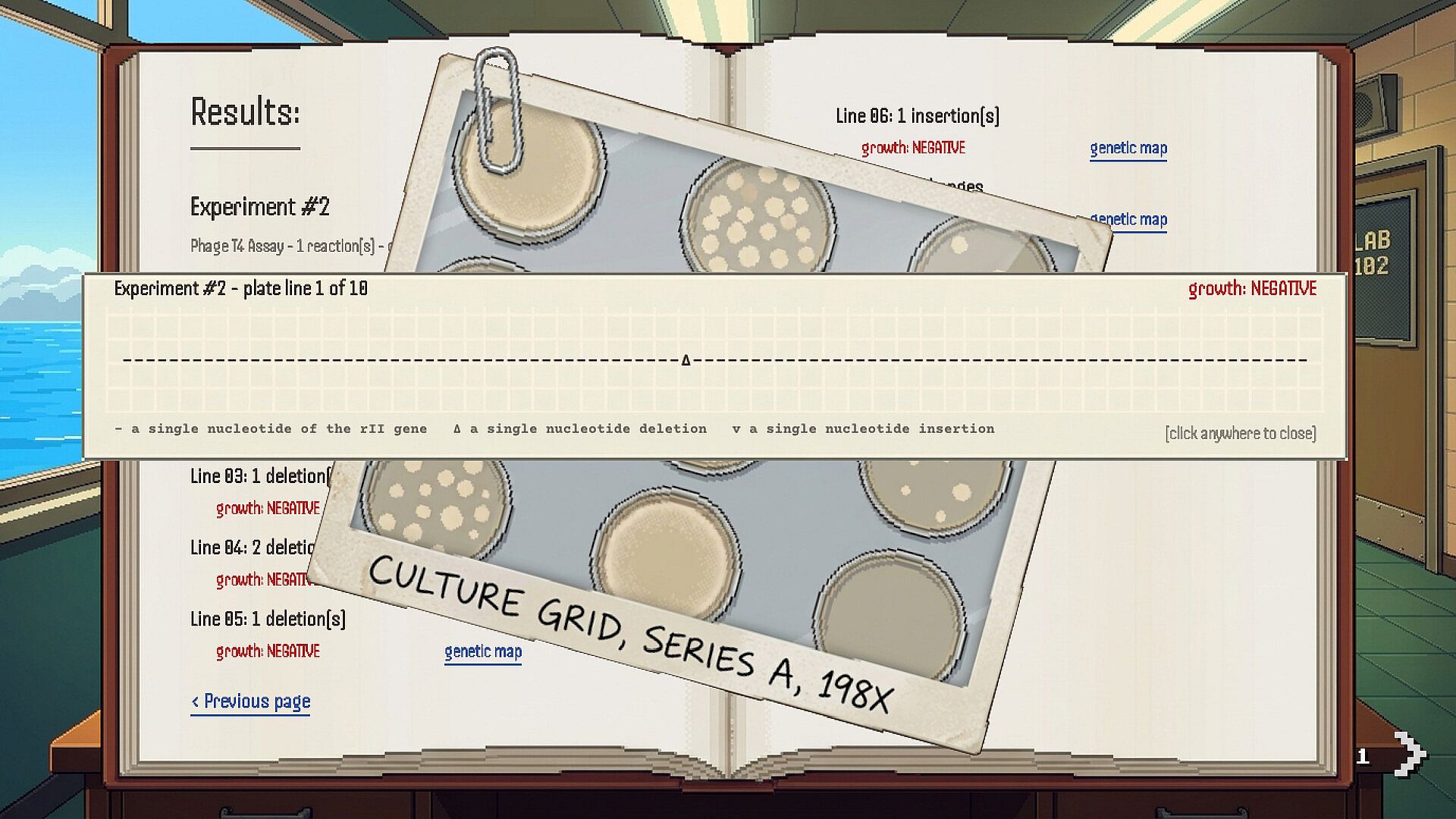
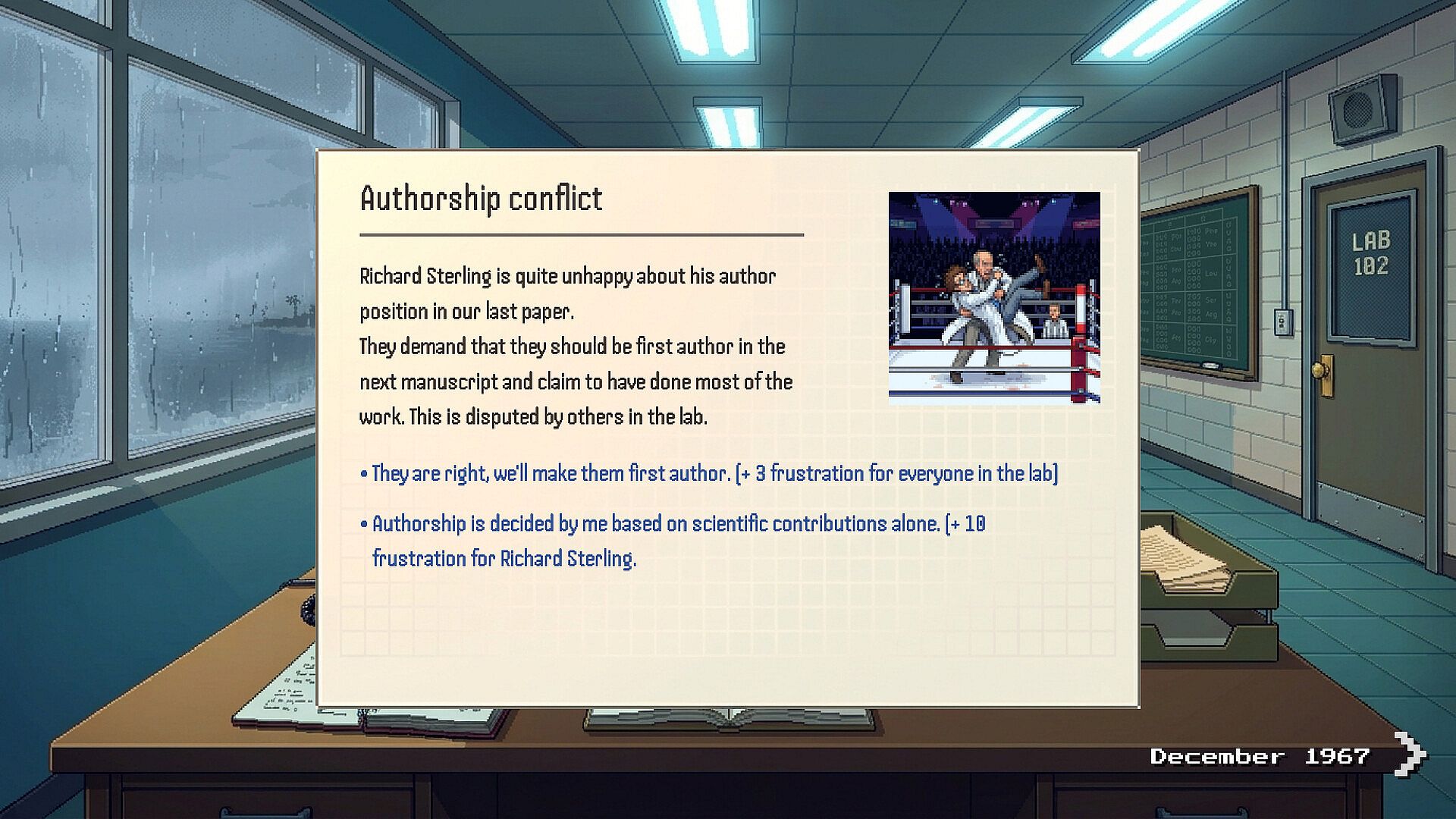
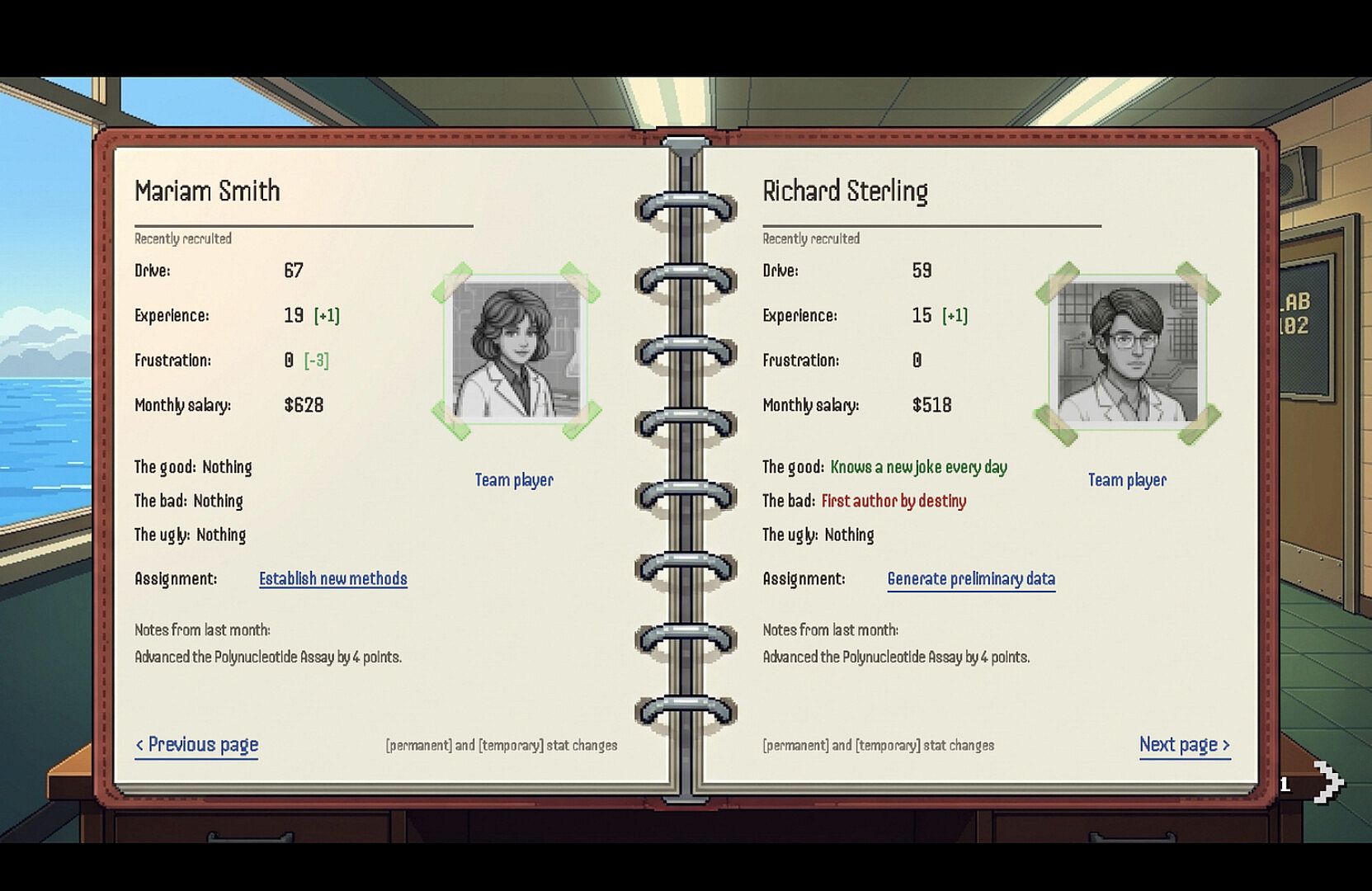
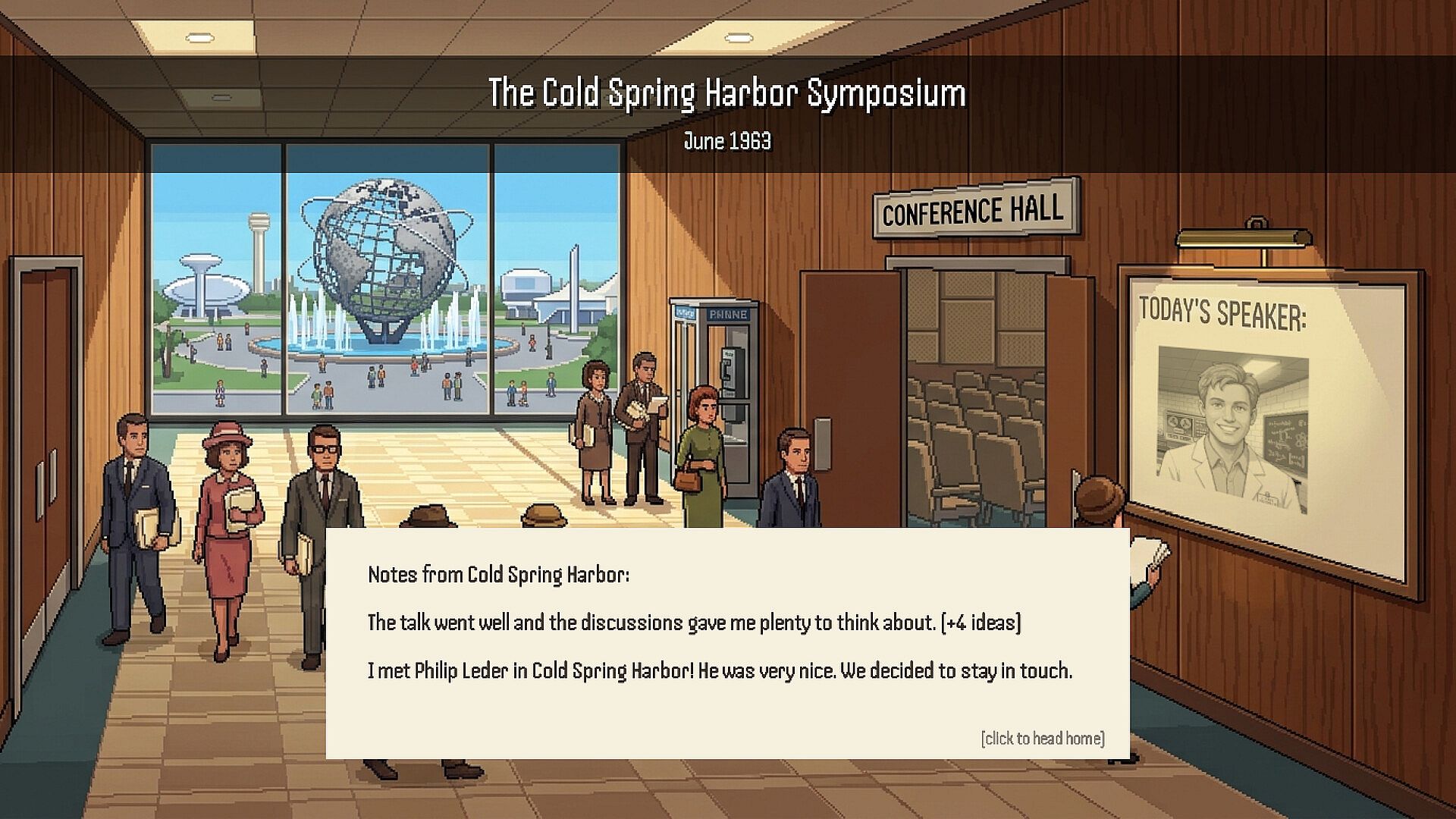
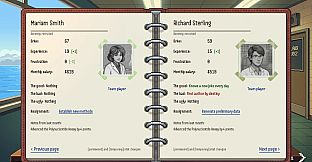
The core loop revolves around turn-based lab management where each turn represents one month. Players hire and assign researchers who bring individual strengths and challenges to tasks such as assay development, experiment execution, and grant writing. Resources must be balanced carefully, including reagents for experiments and funding secured through applications and conferences. Experiments form the heart of progress, with mechanics that mirror the actual methods used between 1961 and 1967, such as testing synthetic RNAs against labeled amino acids and interpreting results to form hypotheses.
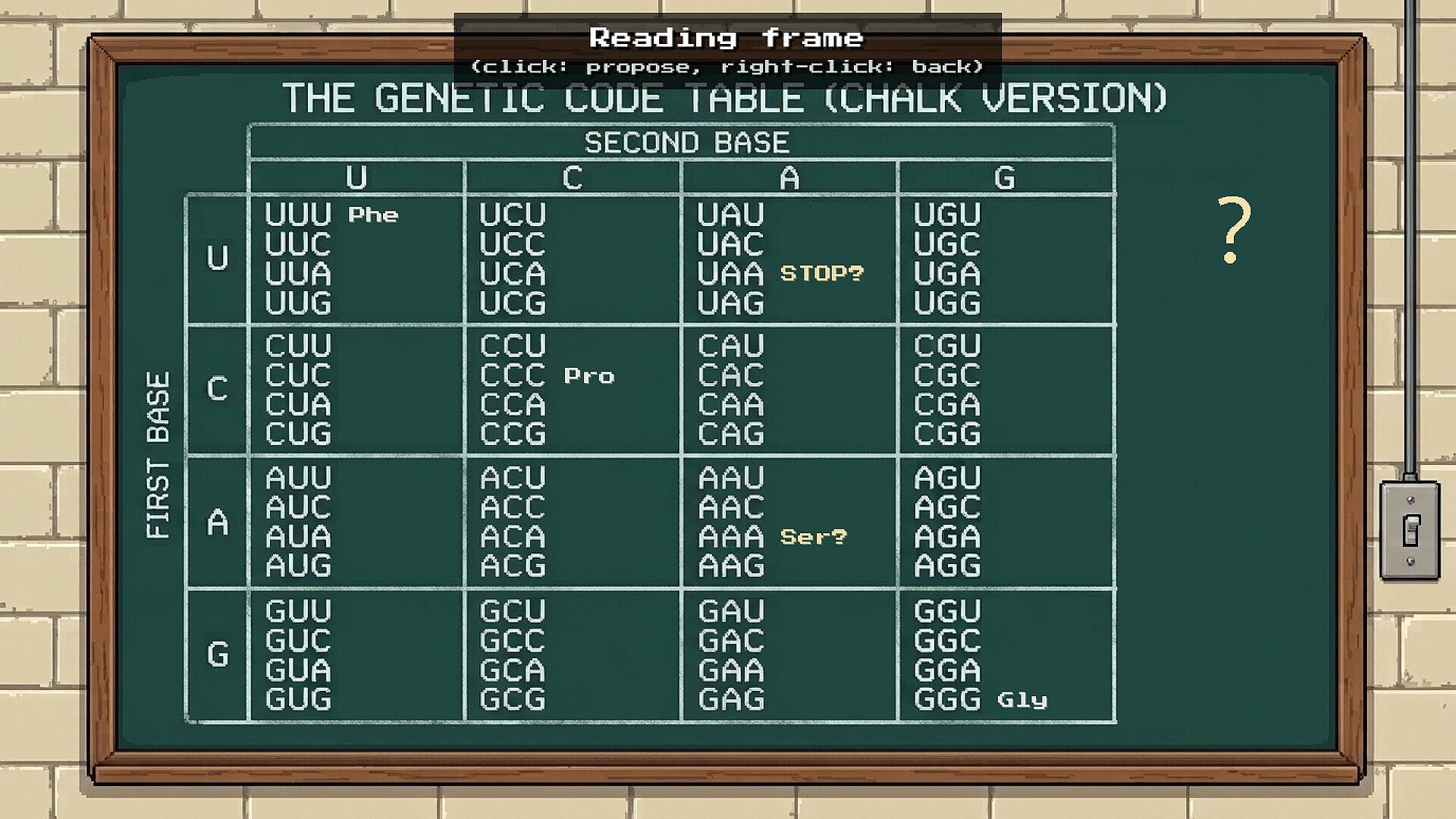
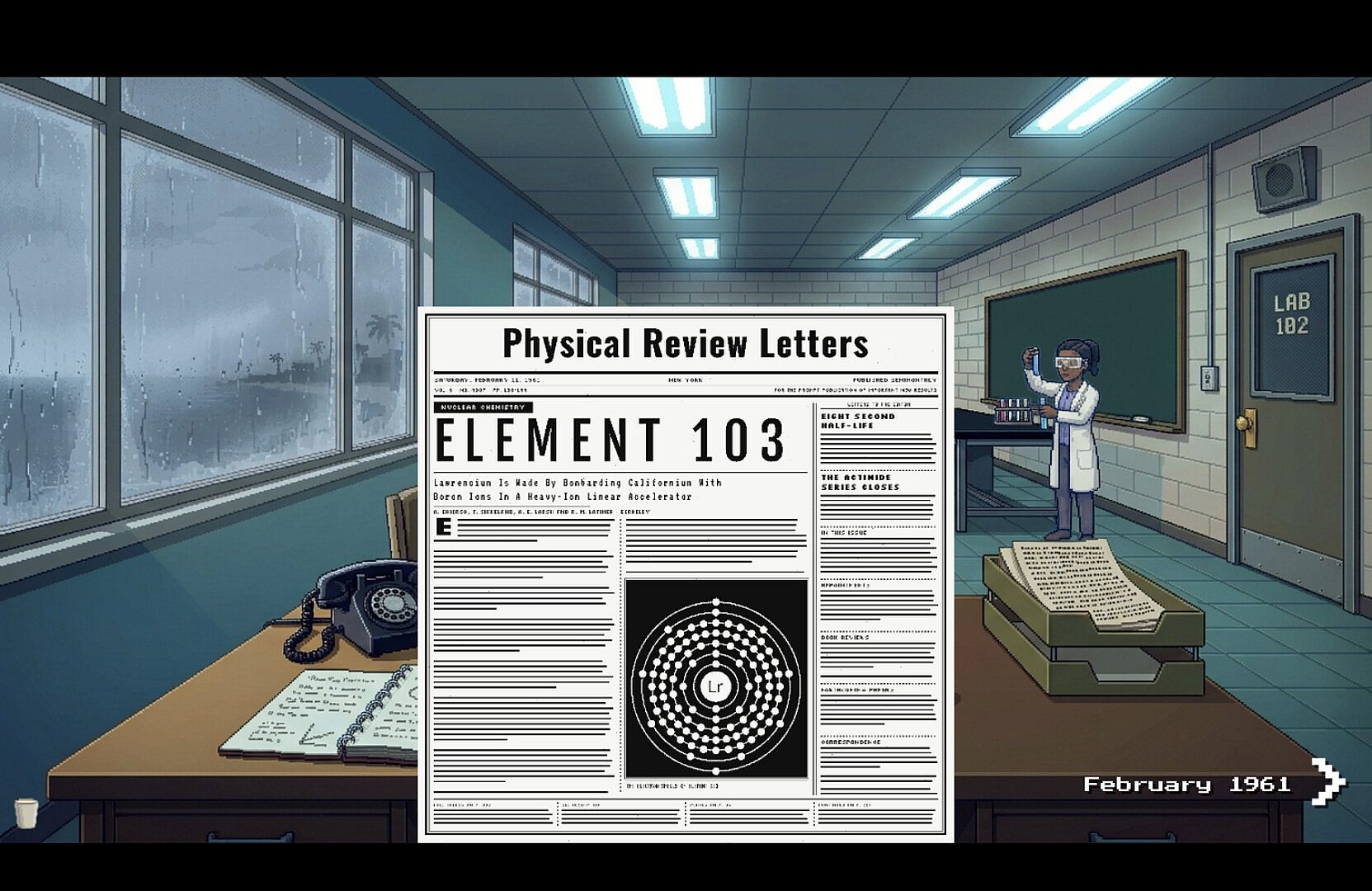
After running reactions and controls, players record findings on a blackboard, refine ideas, and prepare papers for review. Publication success brings reputation and money, while failures or competition from other labs can set progress back. Reputation also opens doors to visiting professors who provide temporary advantages drawn from real historical figures. The hidden genetic code varies with each playthrough, and three difficulty levels alter its structure, ranging from the standard human version to more unpredictable variants. A surf minigame offers optional breaks with unlockable abilities that tie into lab performance.
Game Modes
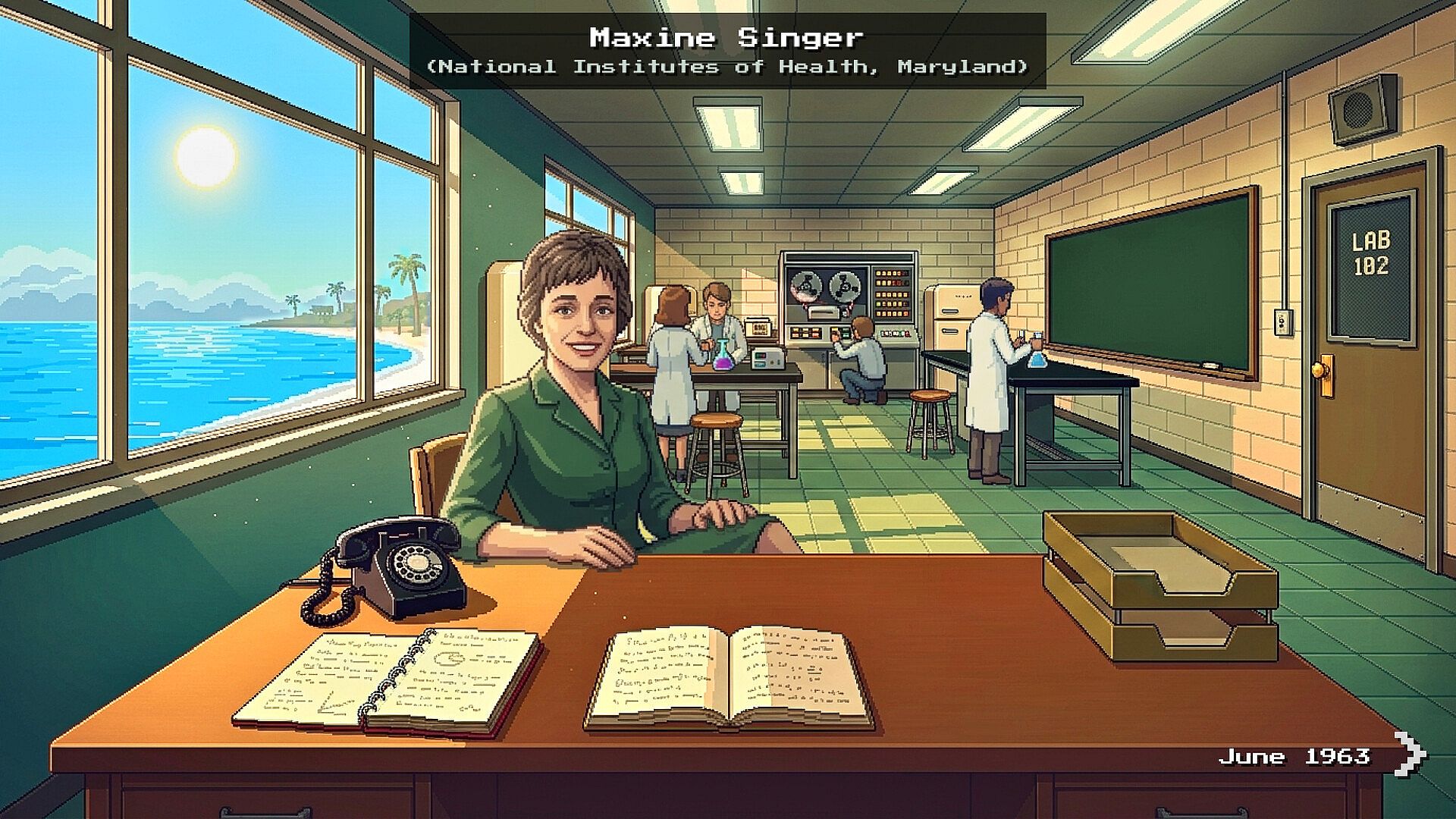
The game operates primarily as a single-player campaign that spans from 1961 to 1967. Progression continues until the full genetic code is deciphered or external pressures end the run. Difficulty settings serve as distinct modes by changing the underlying code itself, encouraging repeated attempts with different strategic demands. Four playable professors each carry unique backstories that influence starting conditions and personal goals. No separate multiplayer or versus options appear in the design, keeping focus on the solitary challenge of lab leadership and scientific reasoning.
Scientific Foundation and Learning
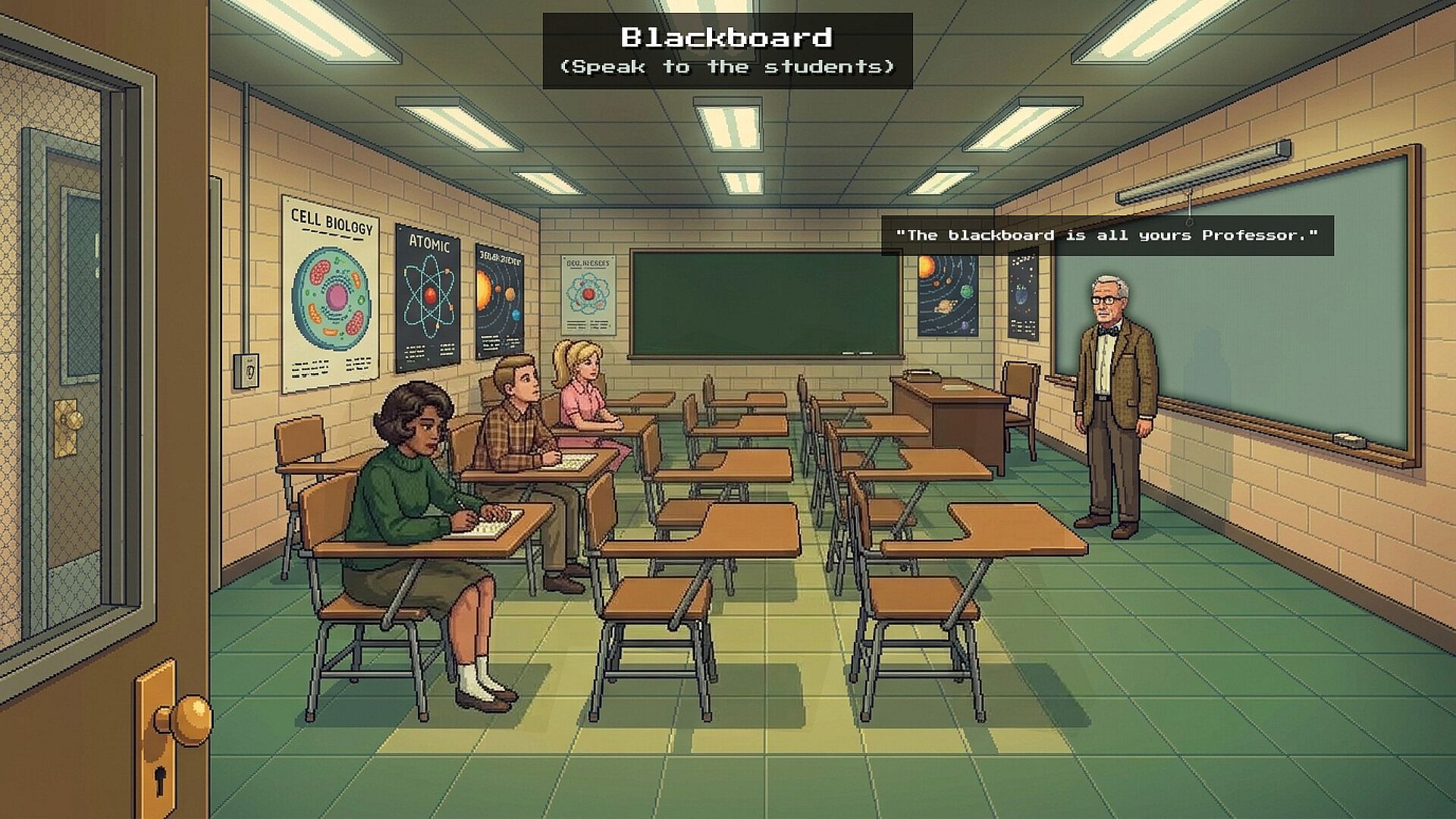
Every major experiment in the game draws directly from the four key studies that cracked the code in real life. Mechanics for polymer synthesis, triplet binding, and reading-frame confirmation replicate the original logic without simplification into abstract puzzles. Players who start without biology knowledge receive guidance through an in-game classroom that covers fundamentals step by step. Those with prior expertise still face the full weight of resource management and competition. The setting incorporates period-specific pressures such as funding tied to public expectations, committee obligations, and political influences that affect daily operations.
Is It Worth Playing?
This title suits players who enjoy deliberate, thoughtful strategy games built around authentic systems rather than fast action or broad empire building. The emphasis on real experimental logic and lab economics creates a distinctive niche within the indie simulation space. Those interested in the history of molecular biology will find the accurate recreation of methods and the inclusion of visiting scientists particularly engaging. The varying difficulties and hidden codes support multiple playthroughs, while the relaxed pace removes any need for quick reflexes. Availability remains limited to the described single-player experience on PC, with no confirmed post-launch updates or additional content at this time. Players seeking a cerebral management challenge centered on one of science's landmark achievements will find the core loop rewarding, provided they appreciate the slow, methodical rhythm of research simulation.












