






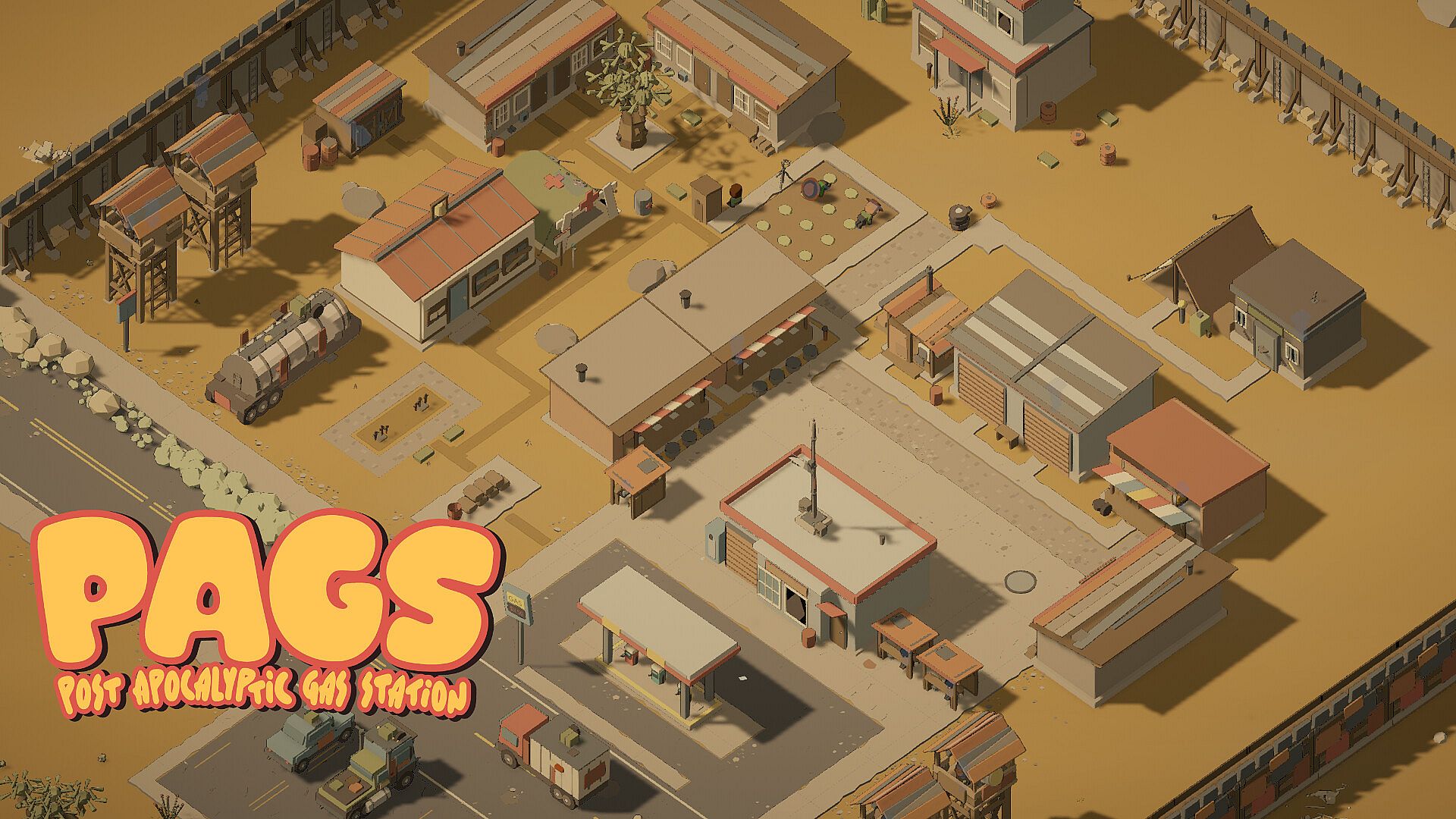
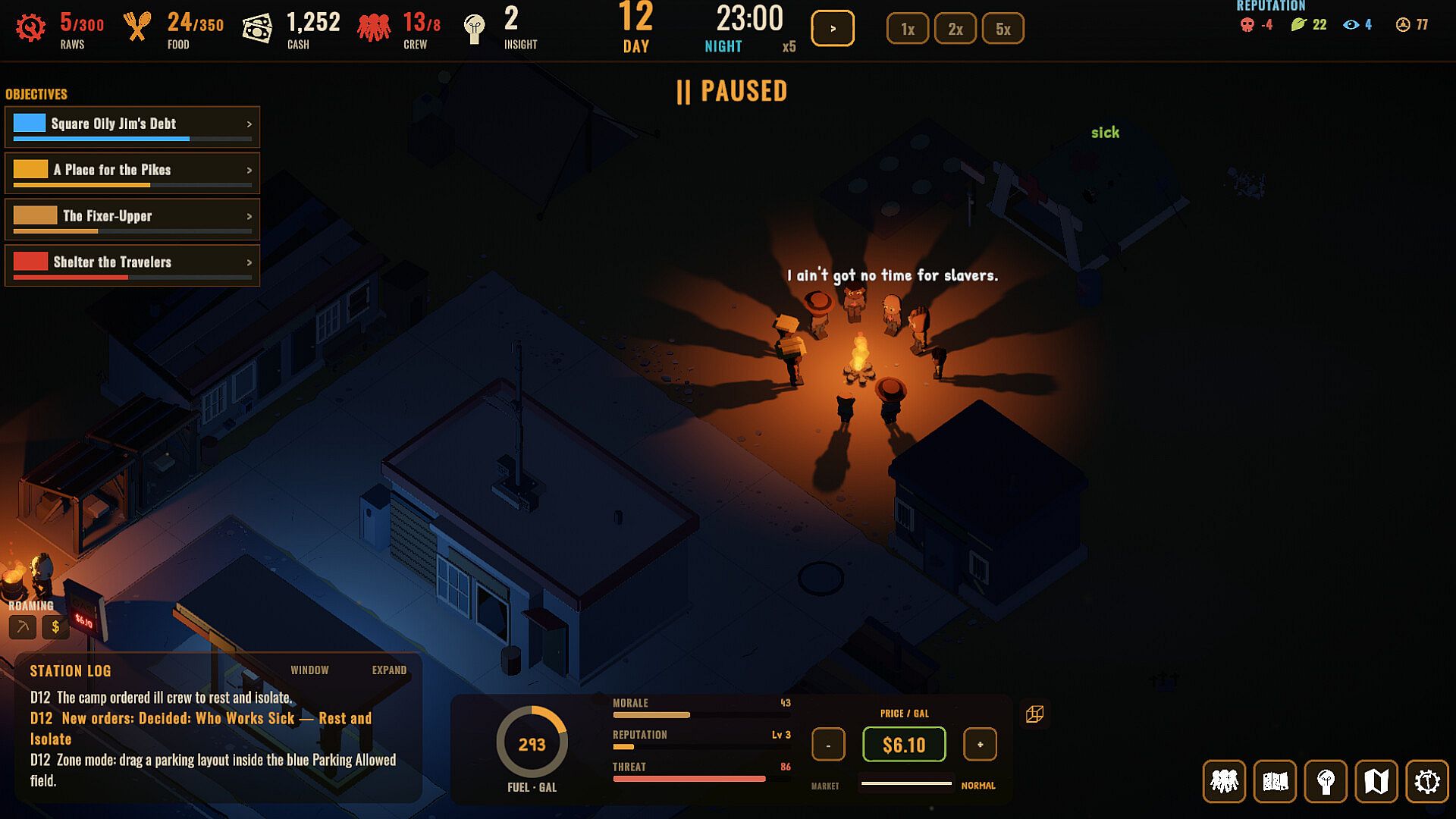
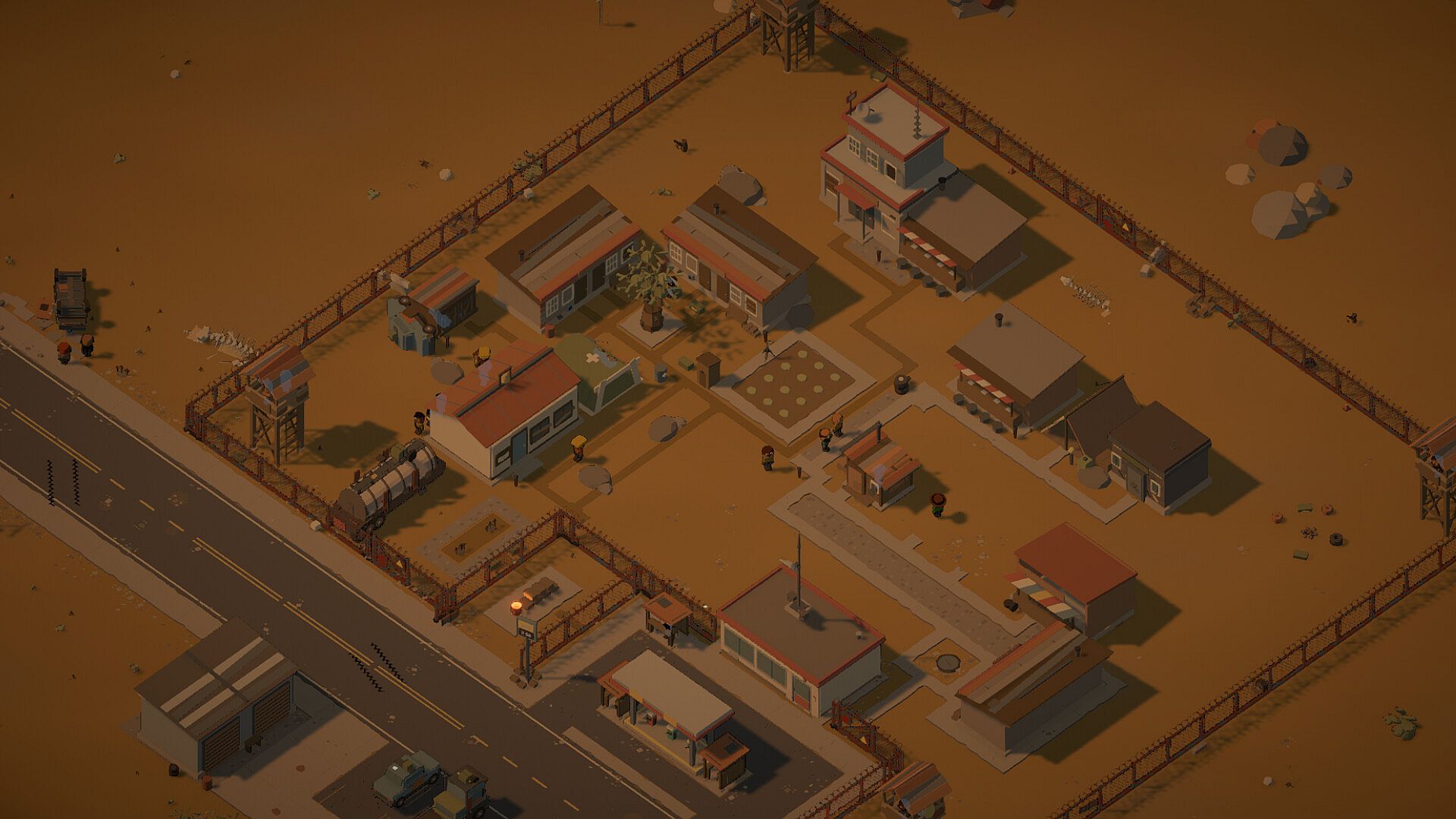
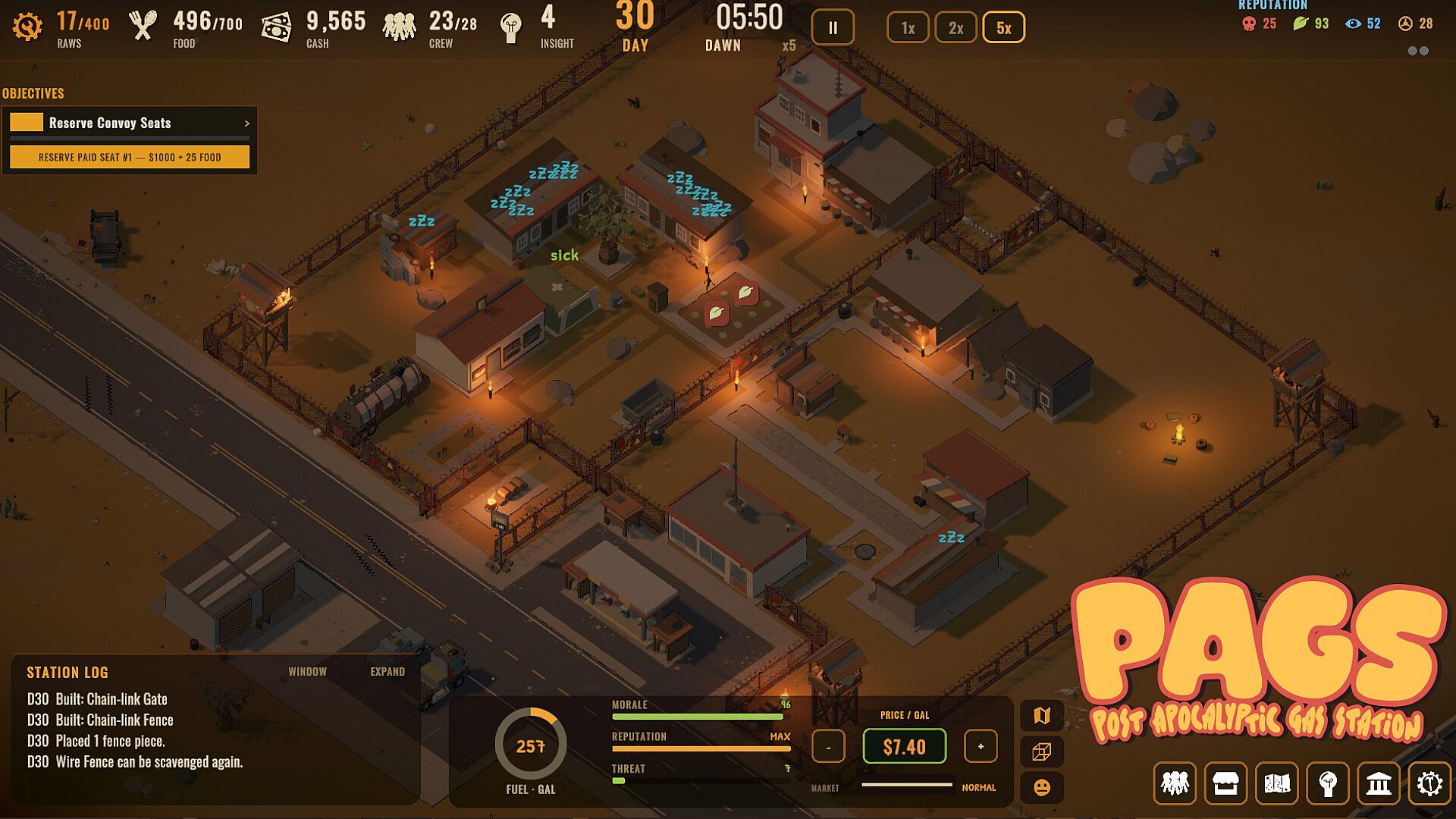
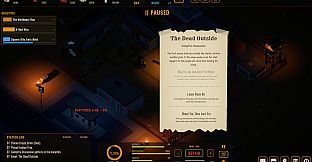
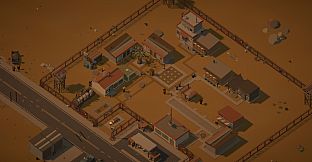
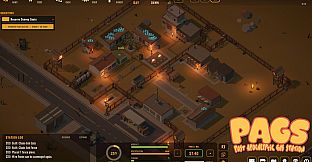
Post Apocalyptic Gas Station, known as PAGS, is a strategy, indie, and simulation game set in a post-apocalyptic American Southwest. Players manage the last operational fuel stop amid scarce resources and competing interests. The core loop centers on pricing fuel, expanding a fortified station, and directing a crew through daily operations and nighttime threats.
Gameplay
The experience blends colony simulation with base-building elements. Players begin with basic pumps and open ground, then construct housing, storage, workshops, medical facilities, food production areas, parking, and defenses. Upgrades to these structures improve efficiency, while tech research unlocks better tools and processes. Zoning and layout matter, as poor planning can lead to accidents like vehicles crossing living areas.
Crew management forms another key layer. Named staff receive job assignments, gear, food, rest, and medical care when injured. Roles include mechanics for repairs, guards for security, and scavengers for expeditions. Morale, sickness, and poison effects require attention through dedicated facilities and staff. Patrols and salvage runs outside the station carry risks, with outcomes influenced by random elements and prior choices.
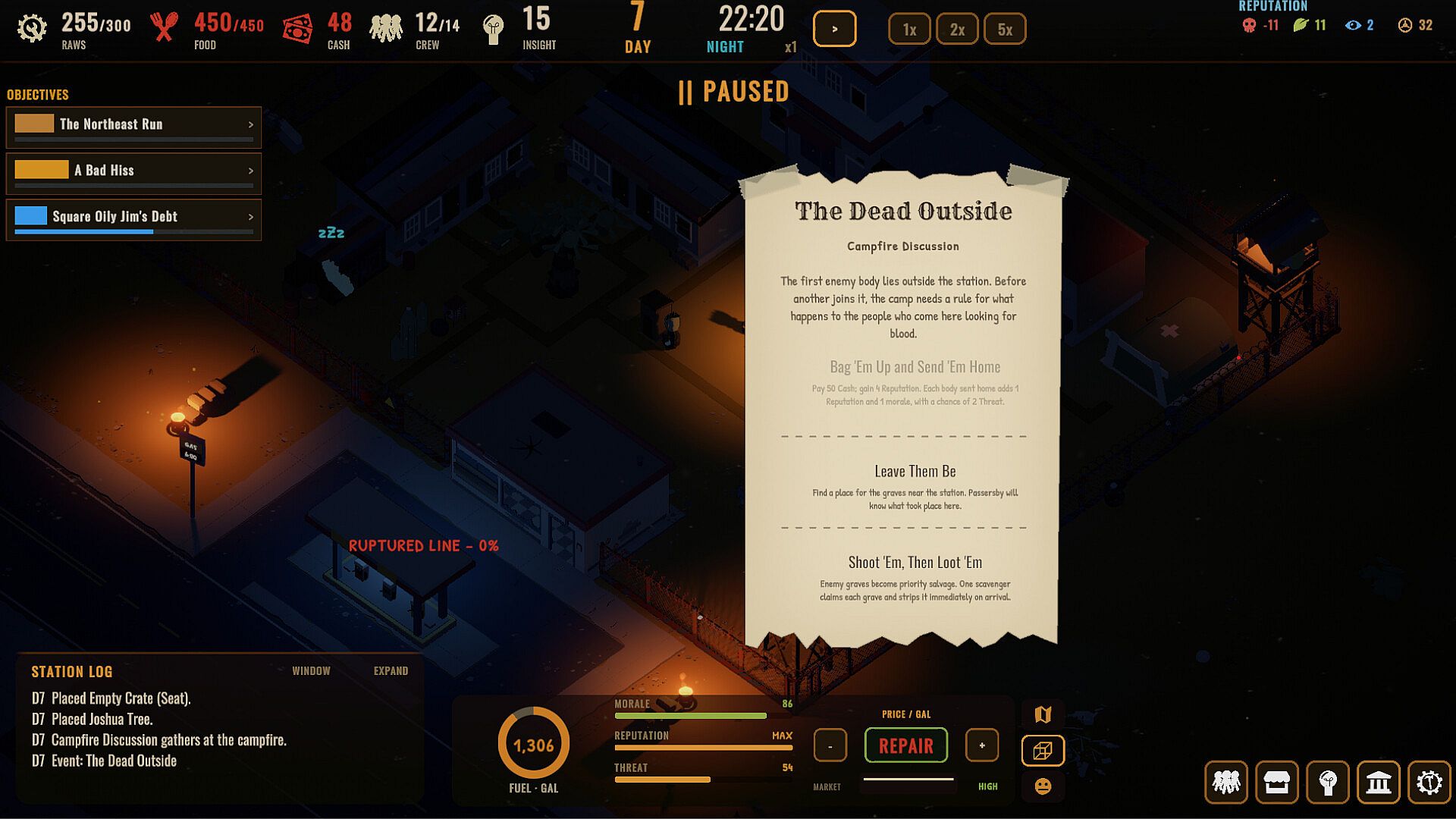
Fuel pricing directly affects reputation and cash flow. High prices during shortages may yield profits but risk alienating drivers or drawing hostile responses. Four factions-the Rust Devils, Greenborn, Technocratique, and Nomads-bring distinct needs and hold grudges, so serving one group can strain relations with others. Branching events arrive via foot traffic, radio, or vehicles, with resolutions shaped by available crew, buildings, and standing.
After sunset, raids, equipment failures, weather events, and injuries test preparations. Persistent damage carries over, forcing ongoing maintenance. First-person station inspection allows direct oversight of the layout and operations.
Game Modes
PAGS operates as a single-player title with no multiplayer components. The structure emphasizes management and decision-making across multiple play sessions. A demo lasting roughly three hours supports repeated runs with different approaches to pricing, expansion, and crew deployment. Three difficulty levels adjust challenge, while pause, speed controls, manual saves, and autosaves aid experimentation.
Core systems remain consistent across runs: fuel economy tied to scarcity and faction relations, base expansion with resource trade-offs, and reactive events. Variations arise from crew composition, building priorities, and choices that influence long-term outcomes without a traditional morality system.
Key Mechanics and Systems
Resource allocation requires constant balancing. Profits fund food, medicine, repairs, equipment, or additional personnel, yet every upgrade competes with immediate survival needs. Salvage, crafting, and expeditions extend station capabilities but expose the crew to hazards. Sickness and poison add medical layers handled through specialized buildings and medics.
Faction interactions create ongoing consequences. Each group arrives with specific demands, and repeated dealings build or erode standing. Events respond to station development and history, producing varied sequences without fixed story paths.
Nighttime phases introduce direct threats that test defenses and preparations. Weather and equipment issues compound these pressures, rewarding proactive investment in security and redundancy.
Is It Worth Playing?
PAGS targets players who enjoy detailed colony simulators and base builders with management depth and consequence-driven choices. The isometric view supports clear oversight of operations, while first-person checks add immersion for layout decisions. The demo provides substantial hands-on time to evaluate the fuel pricing loop, crew routines, and event branching before full release.
With no user reviews available yet and a release date still to be announced, interest depends on preference for single-player strategy experiences focused on scarcity, reputation, and persistent world state. Those drawn to indie titles blending simulation, light survival elements, and moral trade-offs without overt meters will find the systems align closely with that style. The three difficulty options and replay-friendly demo structure support varied playstyles centered on different expansion paths or faction priorities.












