






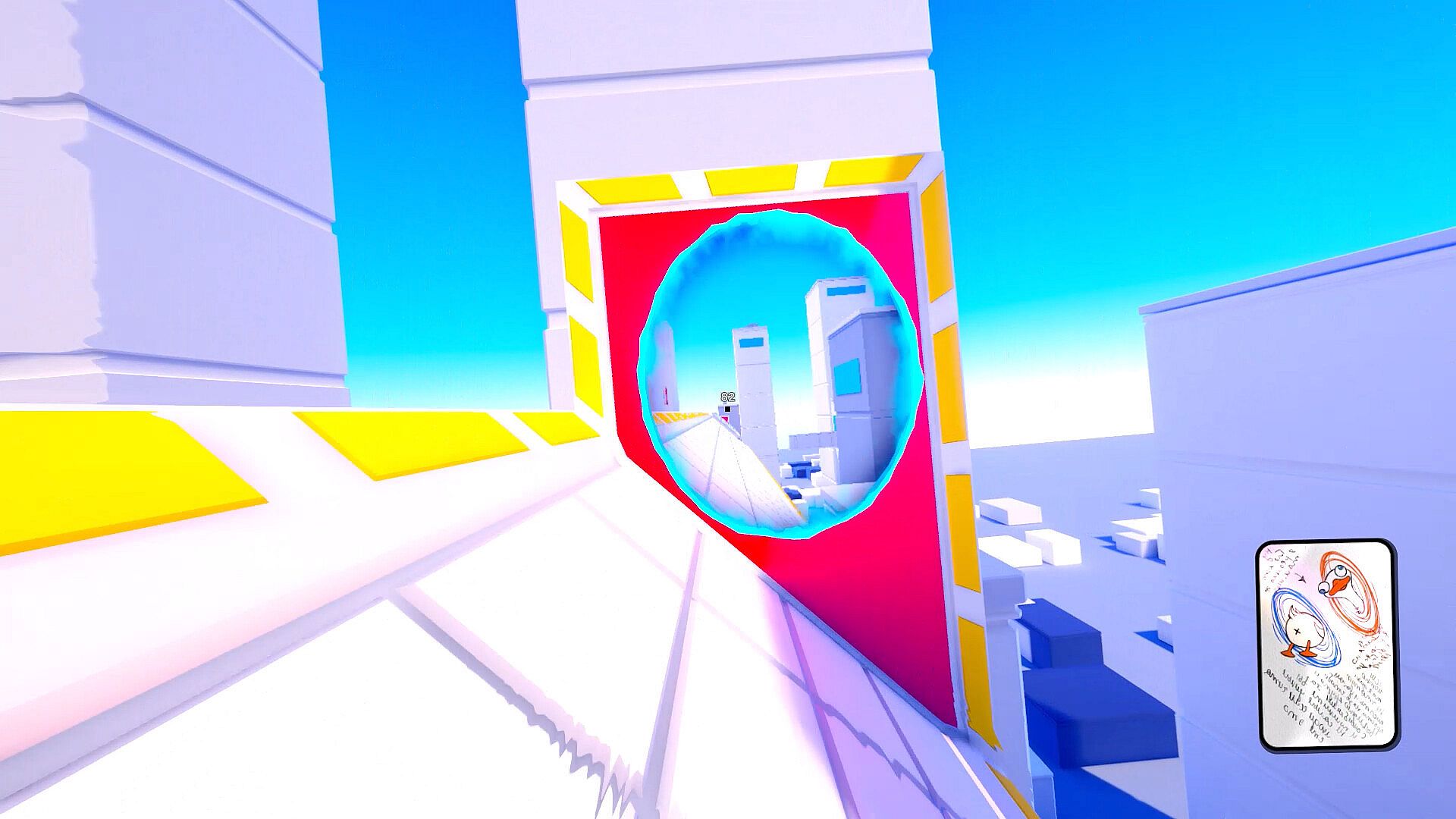
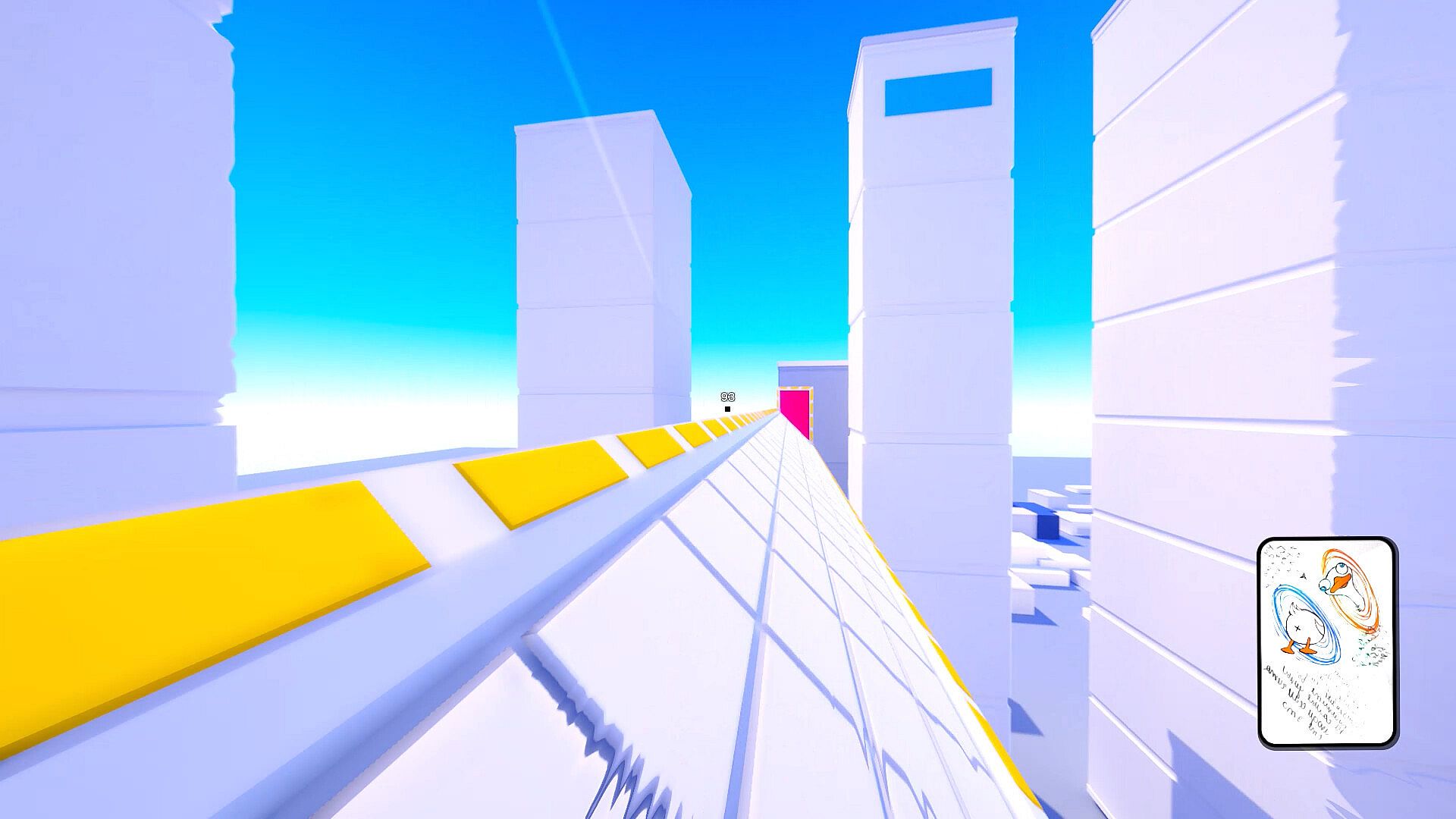
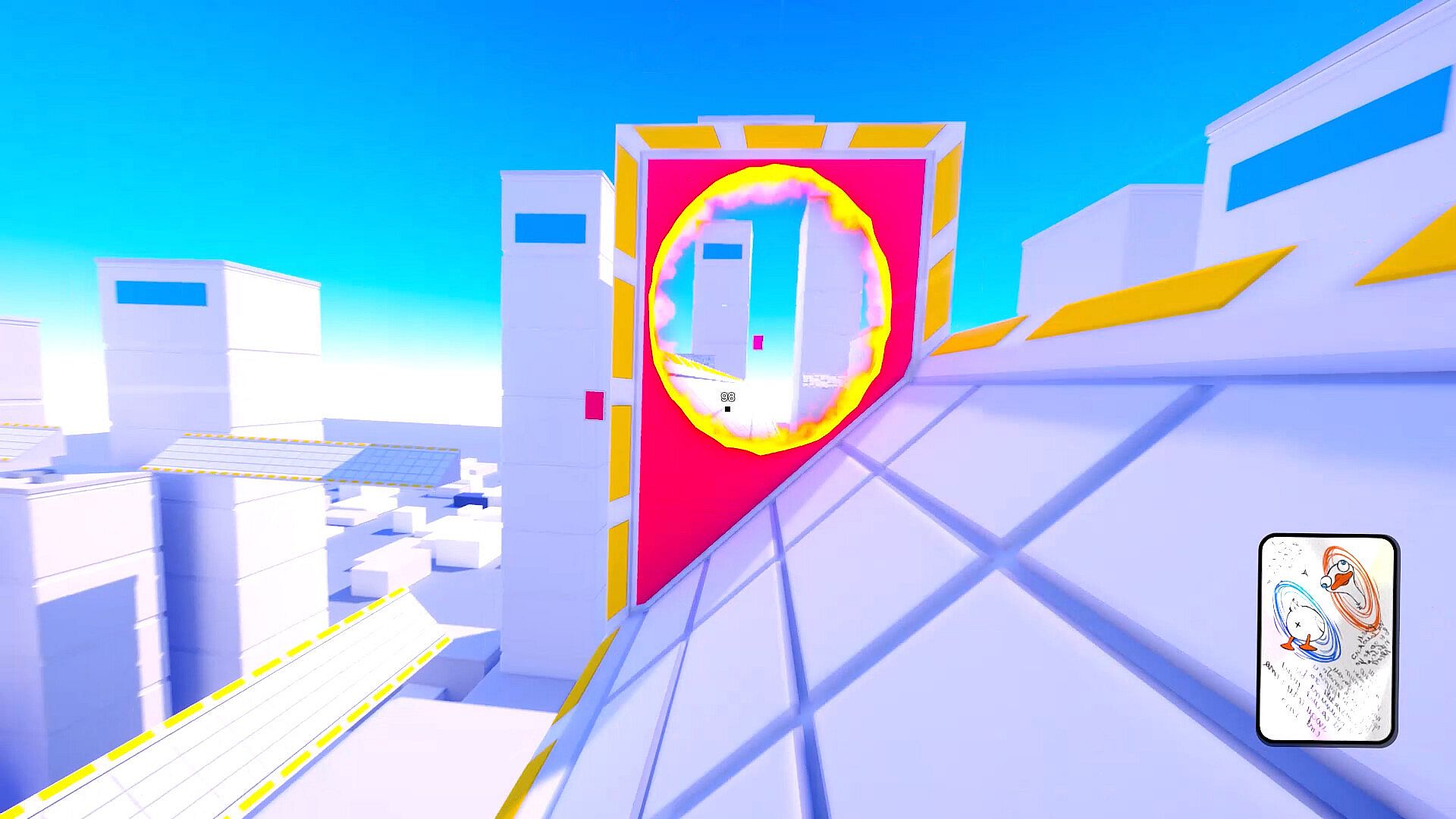
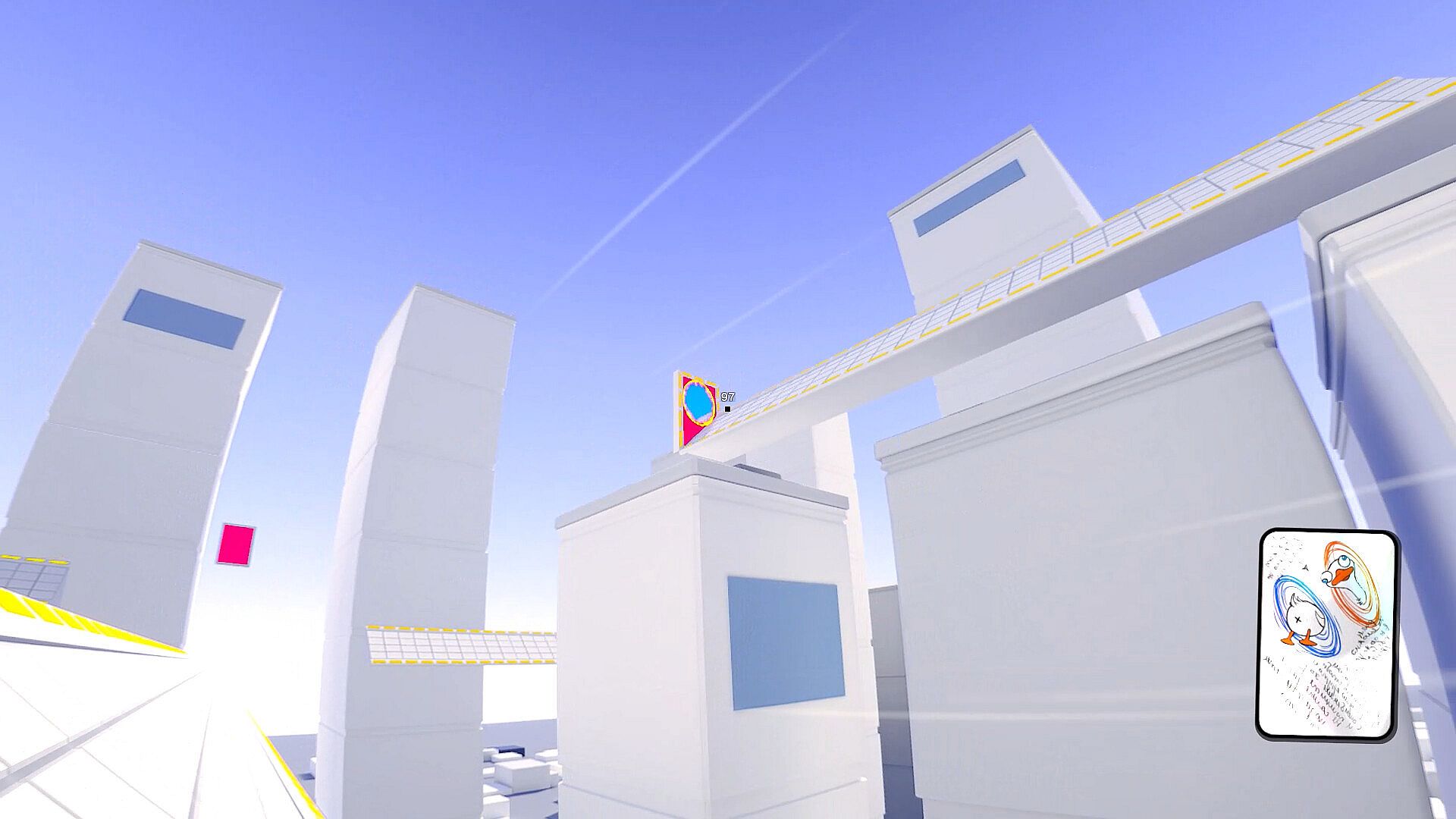
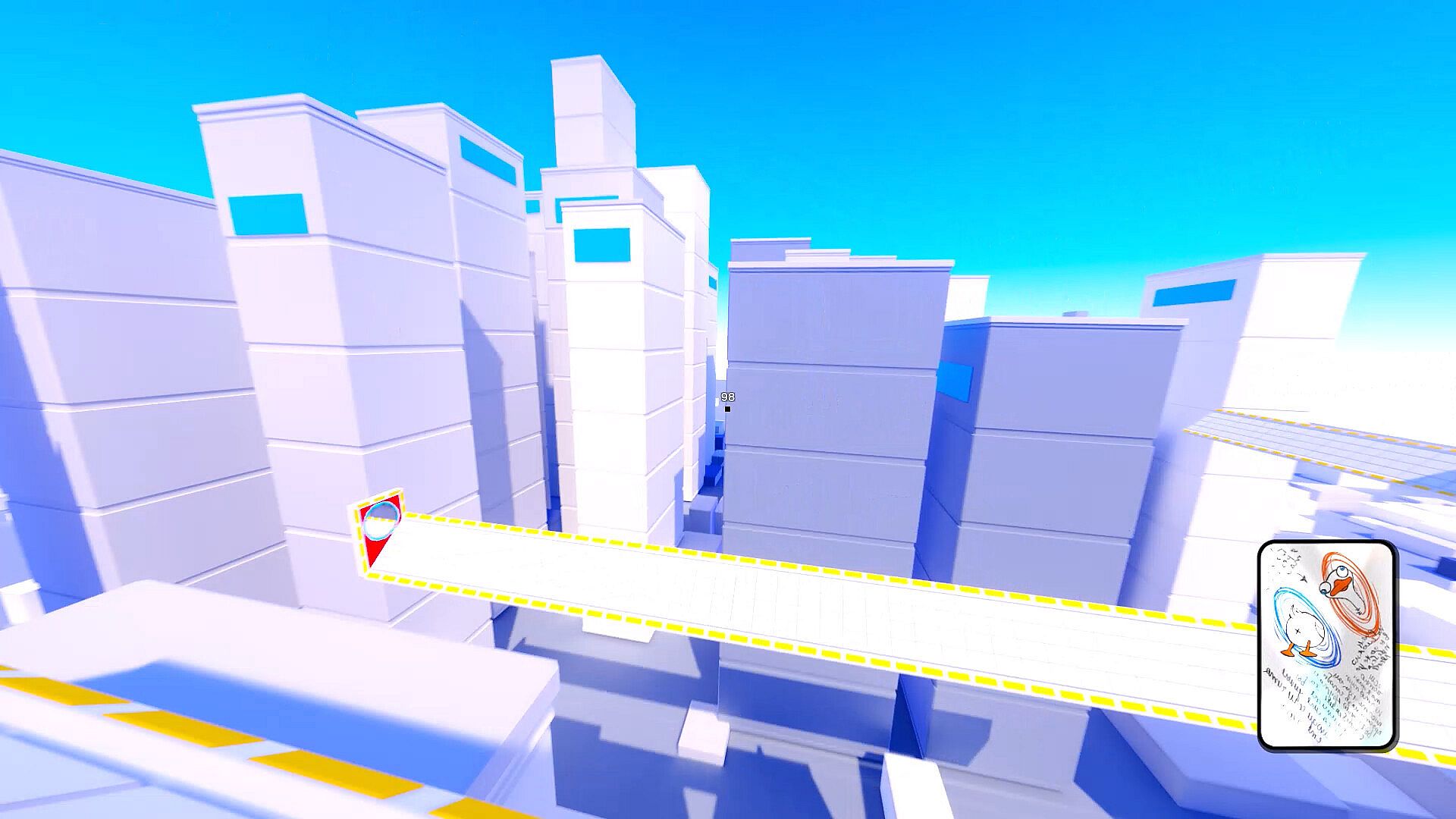
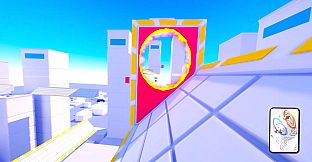
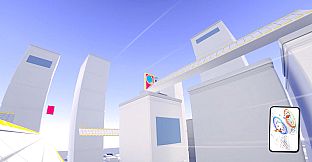
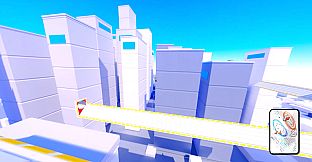
Portals and Ducks is a first-person action game built around momentum and creative traversal on PC. Players surf down ramps to build speed, fire portals that carry that velocity forward, and layer effects from cards to create unexpected paths through compact environments.
Gameplay
The core loop centers on sliding down slopes where contact alone initiates movement without complex inputs or timing requirements. Steering left and right guides the path while gravity and ramps convert downward motion into forward velocity that persists across the level. Portals serve as the primary tool for extending runs, allowing players to maintain speed through walls or around obstacles that would otherwise break momentum.
Each portal receives an effect from equipped cards, such as added speed or jump height. Firing one portal with a speed boost and another with a jump effect combines both benefits in a single traversal. Effects remain attached to the portal itself, enabling repeated passes to stack charges and open new routing options. The emphasis falls on discovery rather than preset sequences, as combinations often produce results the level layout did not anticipate.
Levels are designed to be completed in under a minute with immediate restarts available after any failure. This structure encourages repeated attempts to locate faster lines through the same space, turning each room into a test of route optimization rather than endurance.
Game Modes
The game operates entirely in a single-player format focused on individual level attempts. Short, self-contained stages form the main experience, with no separate multiplayer components or additional modes listed in available details. Progression revolves around mastering the same compact spaces through successive refinements of speed and portal usage.
Core Mechanics and Systems
Surfing requires no advanced technique beyond basic directional control once a slope is engaged. Momentum carries forward naturally, reducing the skill floor for entry while shifting depth toward portal placement and effect application. Cards function as modular attachments that define portal behavior, supporting experimentation across multiple runs of the same area.
Portal persistence allows strategic reuse within a single attempt. A player can open a portal, gain an effect on the first pass, then return for a second charge of the same benefit. This system rewards observation of level geometry and timing of returns rather than one-time setups.
Is It Worth Playing?
Portals and Ducks targets players who enjoy fast movement and iterative route finding in short sessions. The forgiving surf mechanics lower barriers for newcomers while the portal card system provides ongoing depth for those seeking optimization challenges. With levels built for quick attempts and instant resets, the game suits focused play periods where the goal is shaving seconds off personal bests through creative combinations.
Because the title remains unreleased with no player data available, any recommendation rests on how well the described systems align with interest in momentum-driven first-person action. Those drawn to games emphasizing traversal creativity over combat or narrative will find the core loop a direct match for that preference.











