




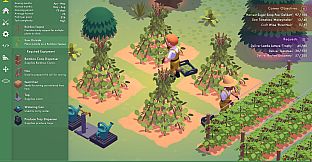

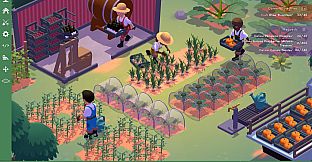
Plantlife: Market Garden Simulator is a strategy and simulation game centered on building and managing a market garden operation. Players begin with a basic plot and a limited selection of crops, then expand through careful planning of plantings, processing, and sales. The experience emphasizes realistic seasonal cycles and individual plant needs across roughly 100 varieties, rewarding those who balance growth, labor, and value-added production.
Gameplay
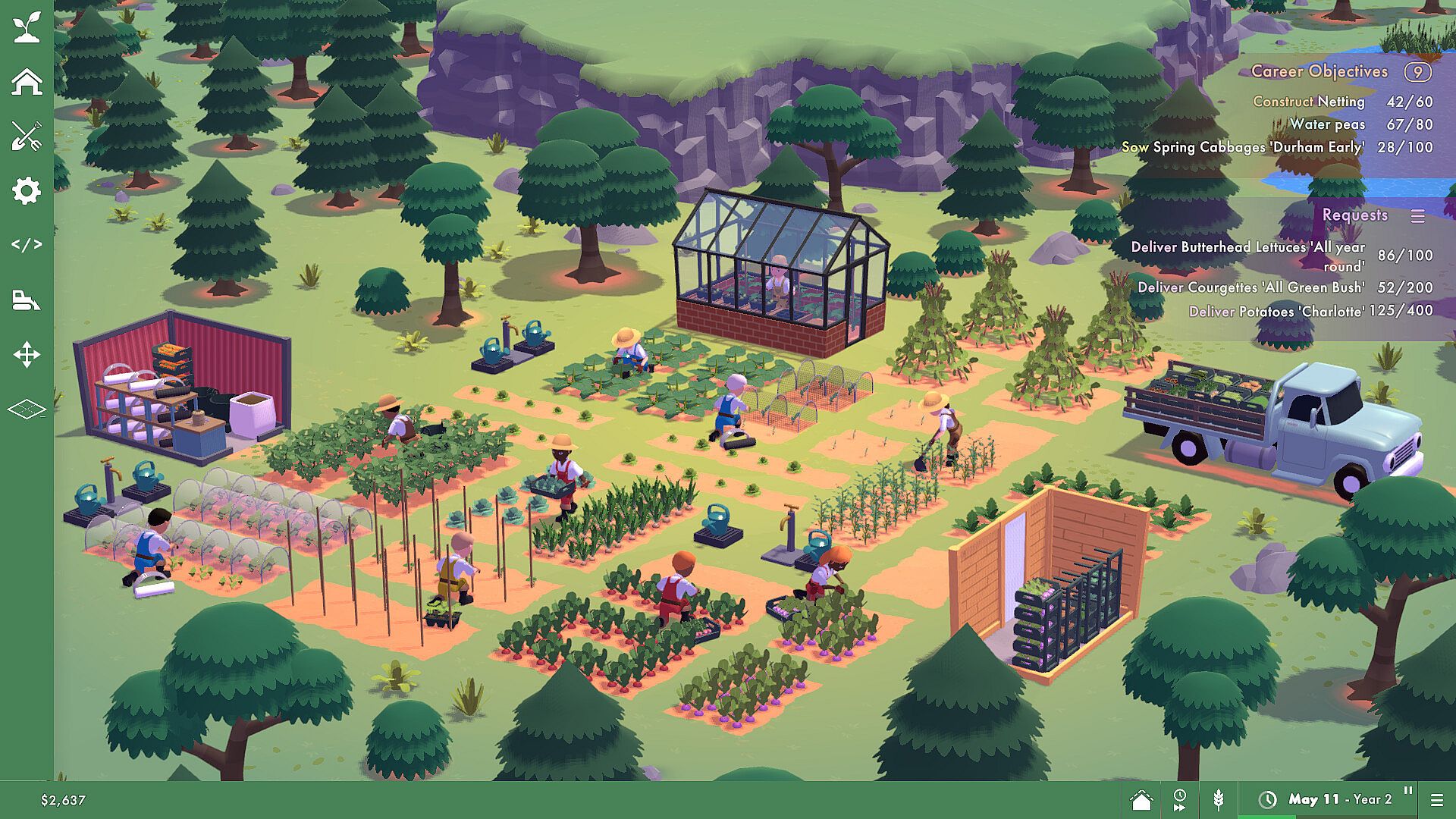
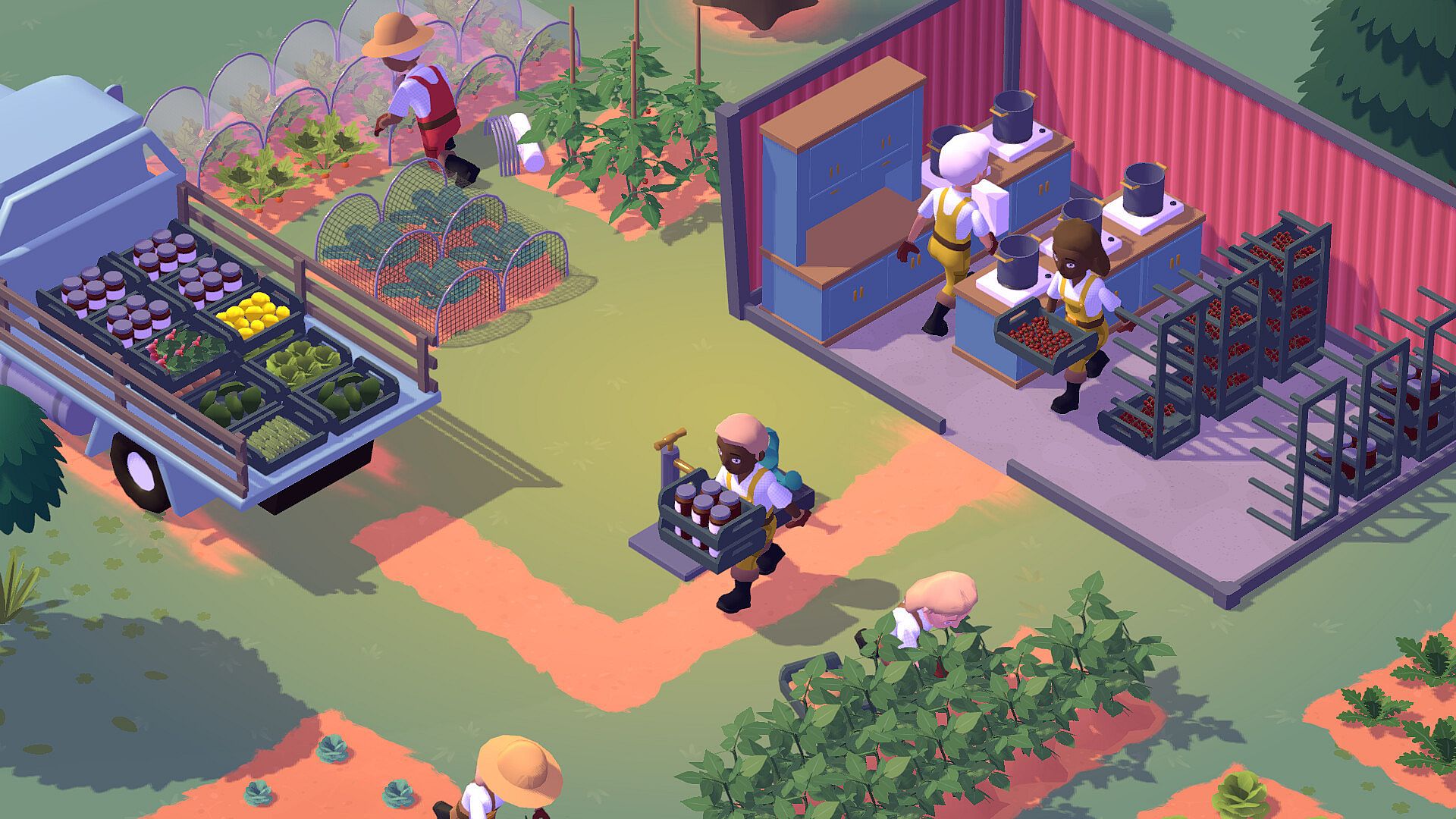
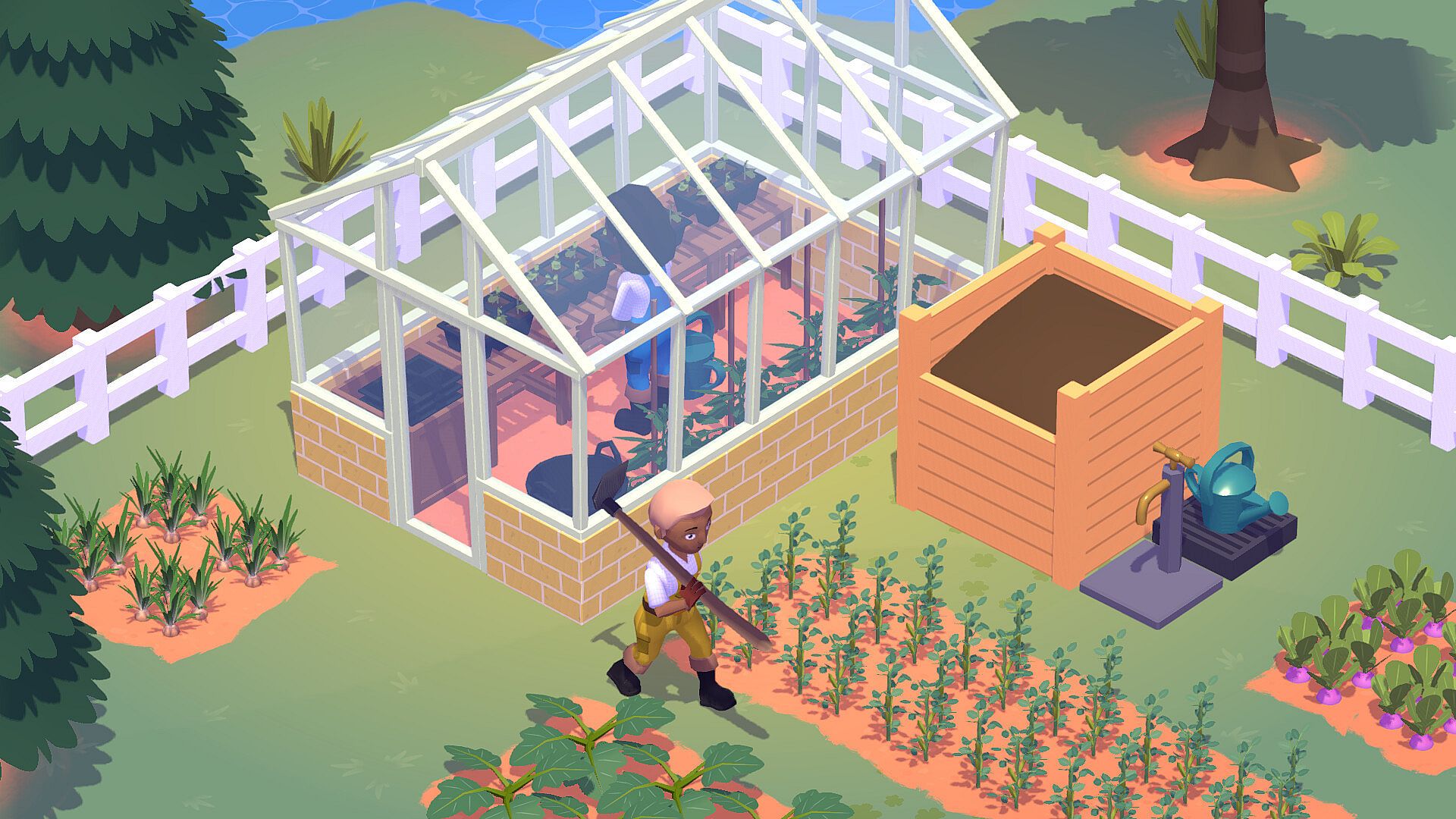
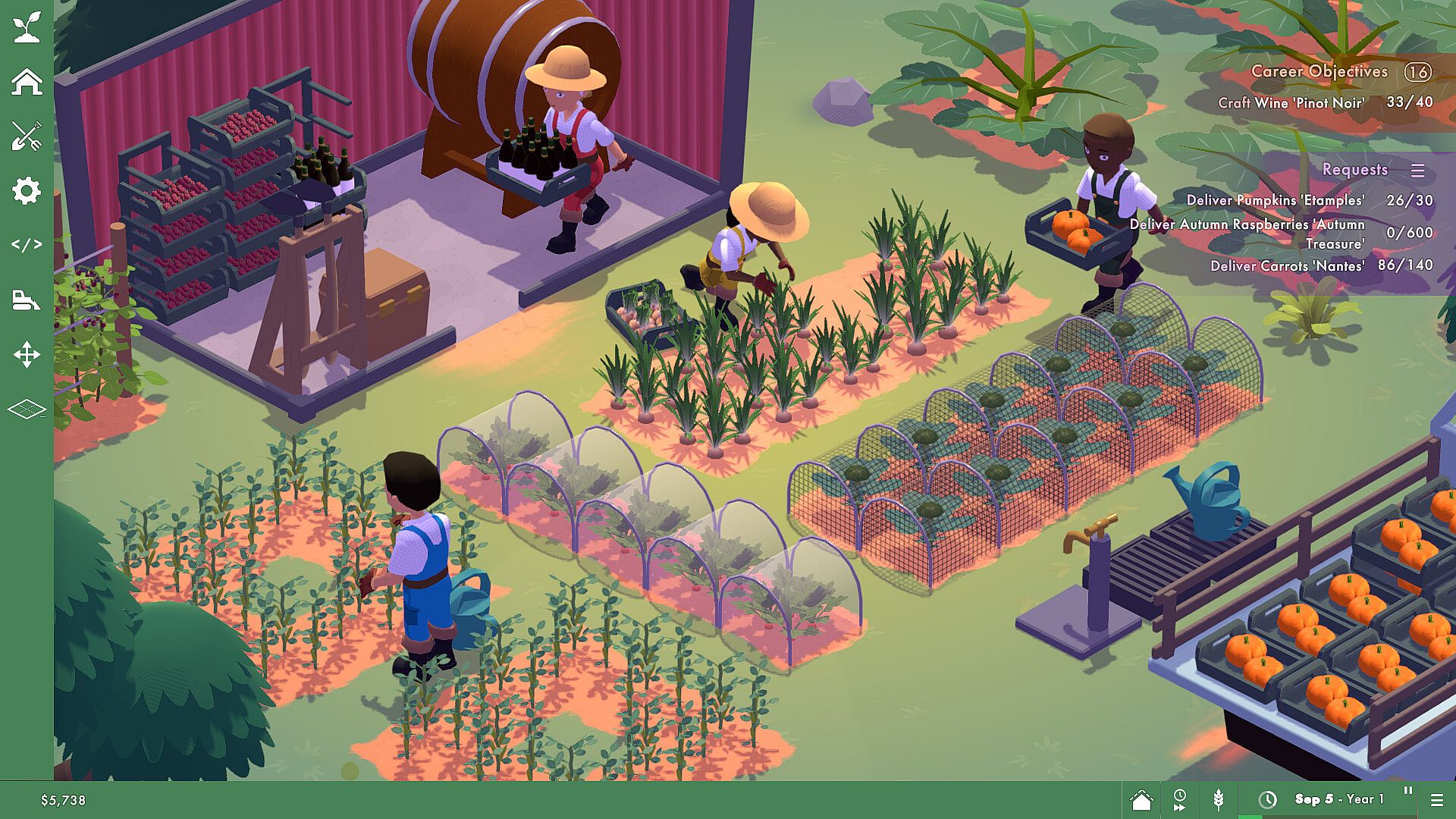
Core play revolves around matching each crop to its specific requirements. Potatoes demand earthing up at the right stage, brassicas benefit from protective mesh, and heat-loving plants thrive only inside greenhouses. Meeting these conditions produces higher-quality harvests that fetch better prices when sold raw or after processing into items such as jams, pickles, and oils. Processing draws workers away from field tasks, so players must decide how many staff to allocate to each activity.
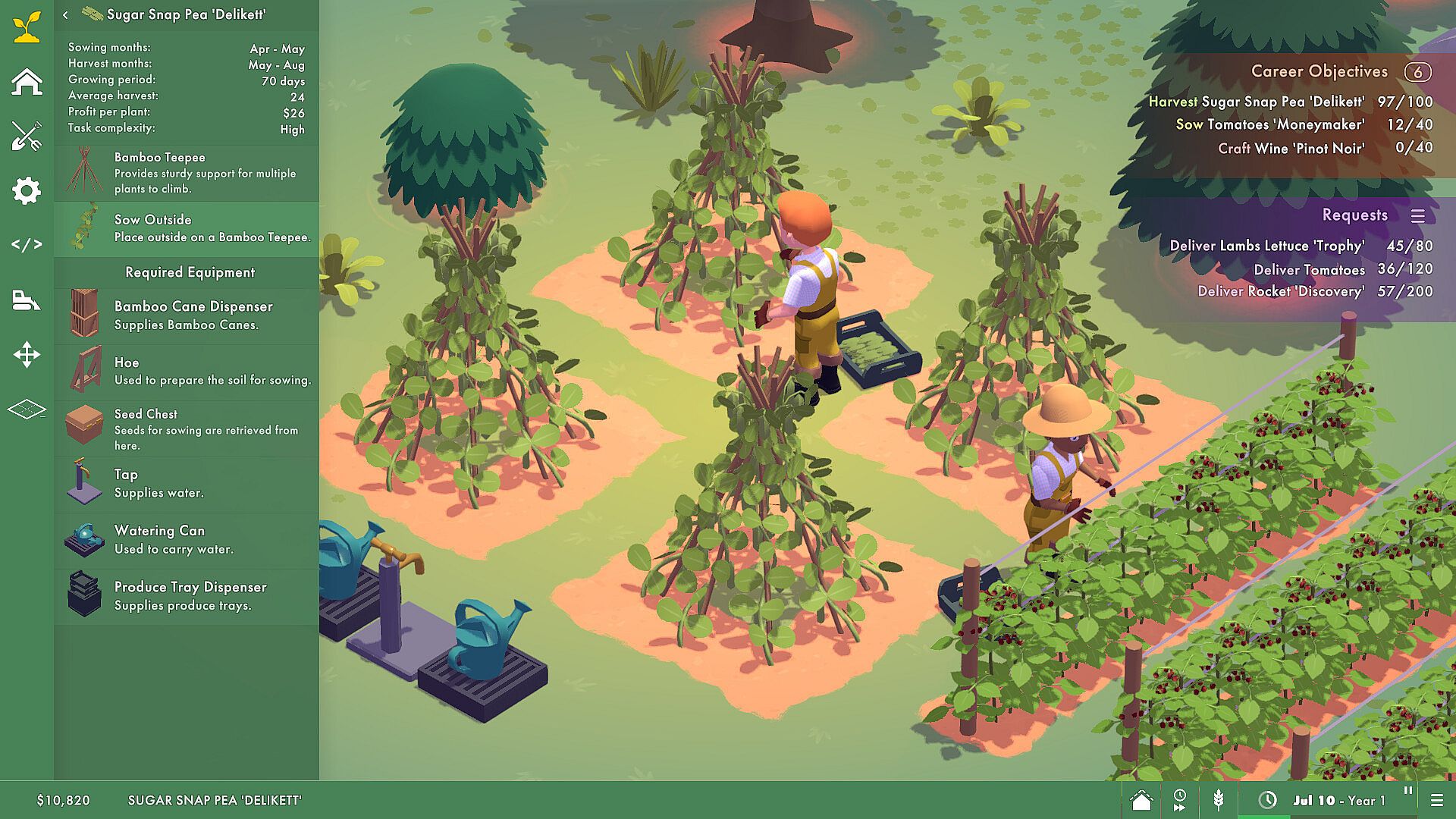
Seasons dictate sowing windows and workload distribution. Careful seed selection spreads labor evenly across the year, while focusing on summer abundance leaves winter free for turning surplus into higher-value goods. Perennial vegetables and fruit trees offer a slower but steadier income stream compared with annual crops that must be replanted each cycle. Regional differences further shape decisions, as local demand can include specific requests like purple carrots or wine shipments that grant cash and experience when fulfilled.
Workers operate with adjustable priorities, allowing players to minimize time spent on micro-management. Layout tweaks reduce walking distances and improve overall efficiency, turning the farm into an optimization puzzle. Scale ranges from a small specialty operation where every step from seed to sale receives direct attention to a larger enterprise employing dozens of staff and relying on data summaries for decisions. Pacing remains flexible, with no timers forcing rushed play yet efficient choices accelerating unlocks and complexity.
Game Modes
The game centers on a single-player career structure without separate named modes. Progression begins on a starter plot equipped with basic tools and a handful of seed options. Career Challenges serve as milestones that permanently unlock additional crops and equipment for use across future farms. These challenges encourage experimentation with different regions and crop mixes while providing steady advancement.
Within the career framework, players choose their own emphasis. Some focus on micro-scale precision, tracking every worker movement and product journey. Others expand into larger operations that leverage automated worker decisions and aggregated performance data. The absence of time pressure lets individuals explore systems at their preferred speed, while strong planning leads to quicker unlocks and more intricate farm layouts.
Career Progression and Farm Management
Advancement ties directly to demonstrated expertise. Completing challenges grants new seeds and tools that carry over to subsequent farms, encouraging repeated starts with different strategies. Regional requests add variety by offering targeted contracts that deliver immediate financial boosts and experience gains when completed on schedule.
Worker management forms another key layer. Time-card analysis reveals inefficiencies, prompting layout adjustments that shorten travel routes and raise output. Priority tuning lets players align staff behavior with personal goals, whether that means prioritizing greenhouse maintenance or maximizing processing throughput. The result is a management loop that rewards observation and incremental refinement rather than constant direct control.
Is It Worth Playing?
Plantlife suits players who enjoy methodical simulation games that reward planning and system understanding over fast action. Its focus on crop-specific care, seasonal timing, and labor balancing creates a steady loop of observation, adjustment, and incremental growth. Those drawn to optimization challenges will appreciate the tools for analyzing worker efficiency and tweaking farm layouts, while the flexible pacing accommodates both relaxed exploration and more directed progression.
Because the title is newly announced and not yet released, concrete player feedback remains unavailable. The described systems align with established preferences in the casual and indie simulation space for detailed yet approachable farm management. Individuals who value long-term investment in perennials alongside short-cycle crops, or who like turning raw produce into processed goods, will likely find the depth engaging. Those seeking immediate combat or narrative-driven experiences may prefer other genres.











