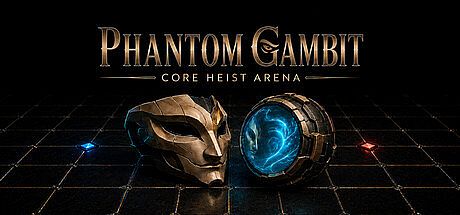


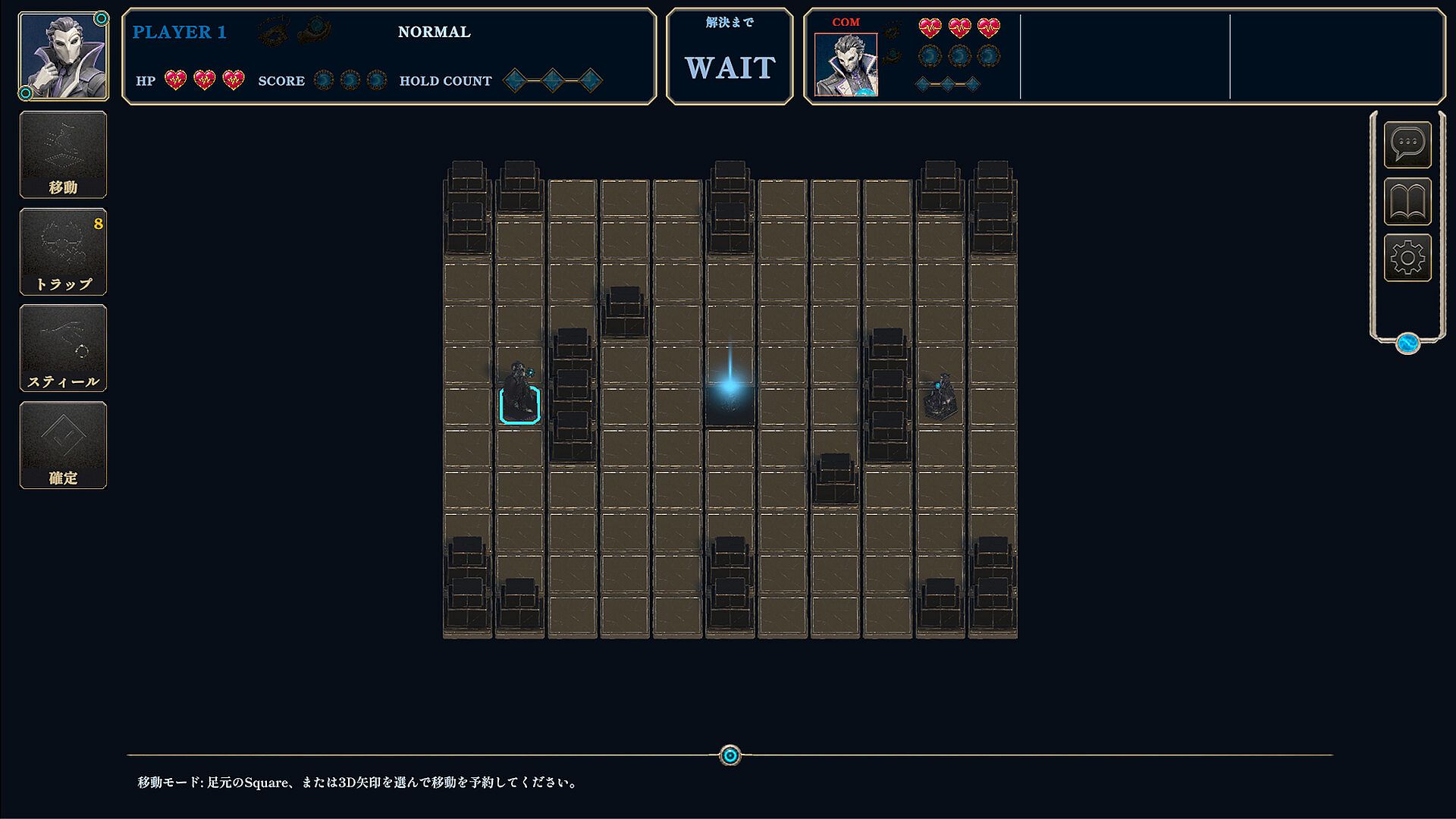
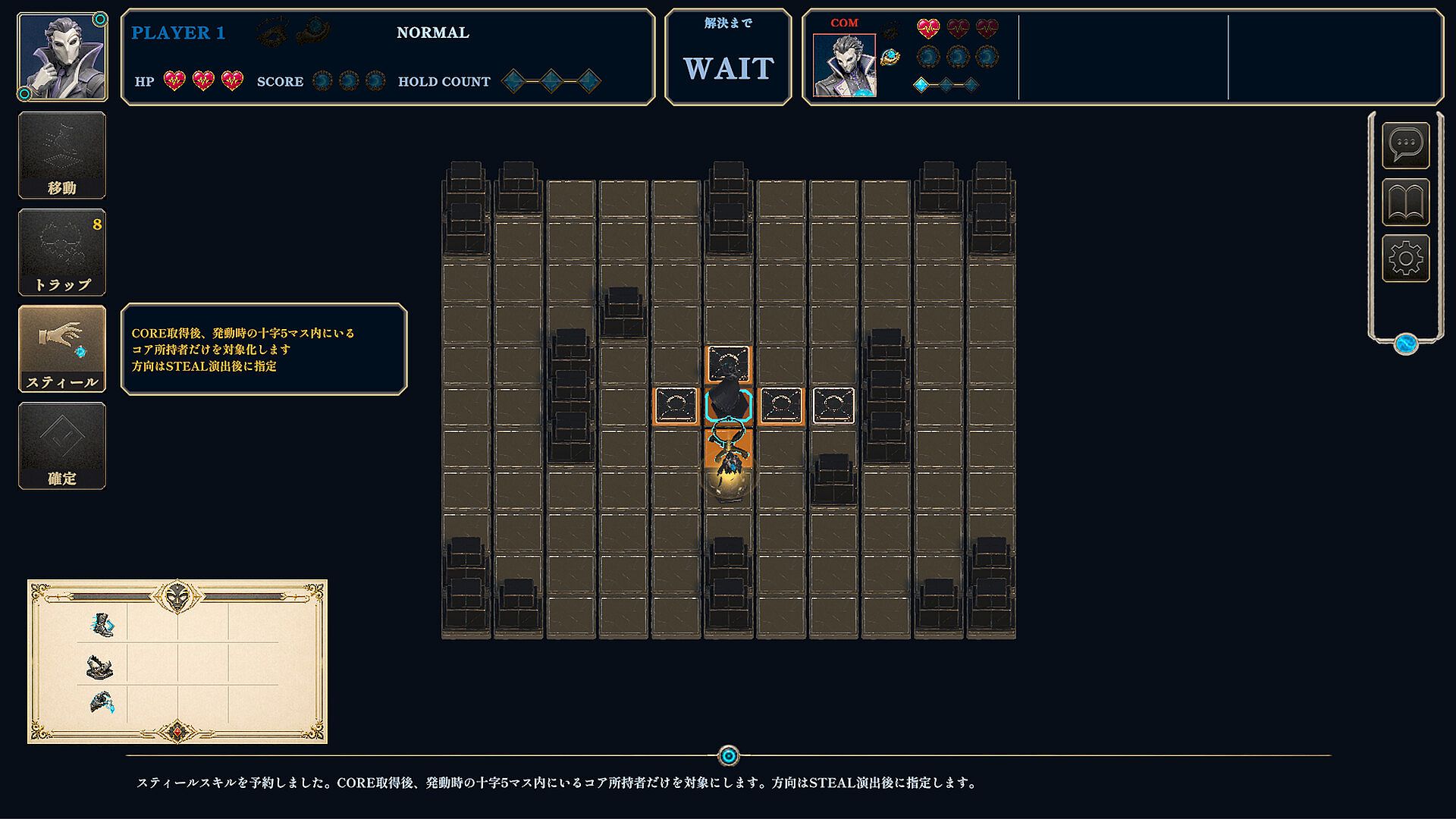
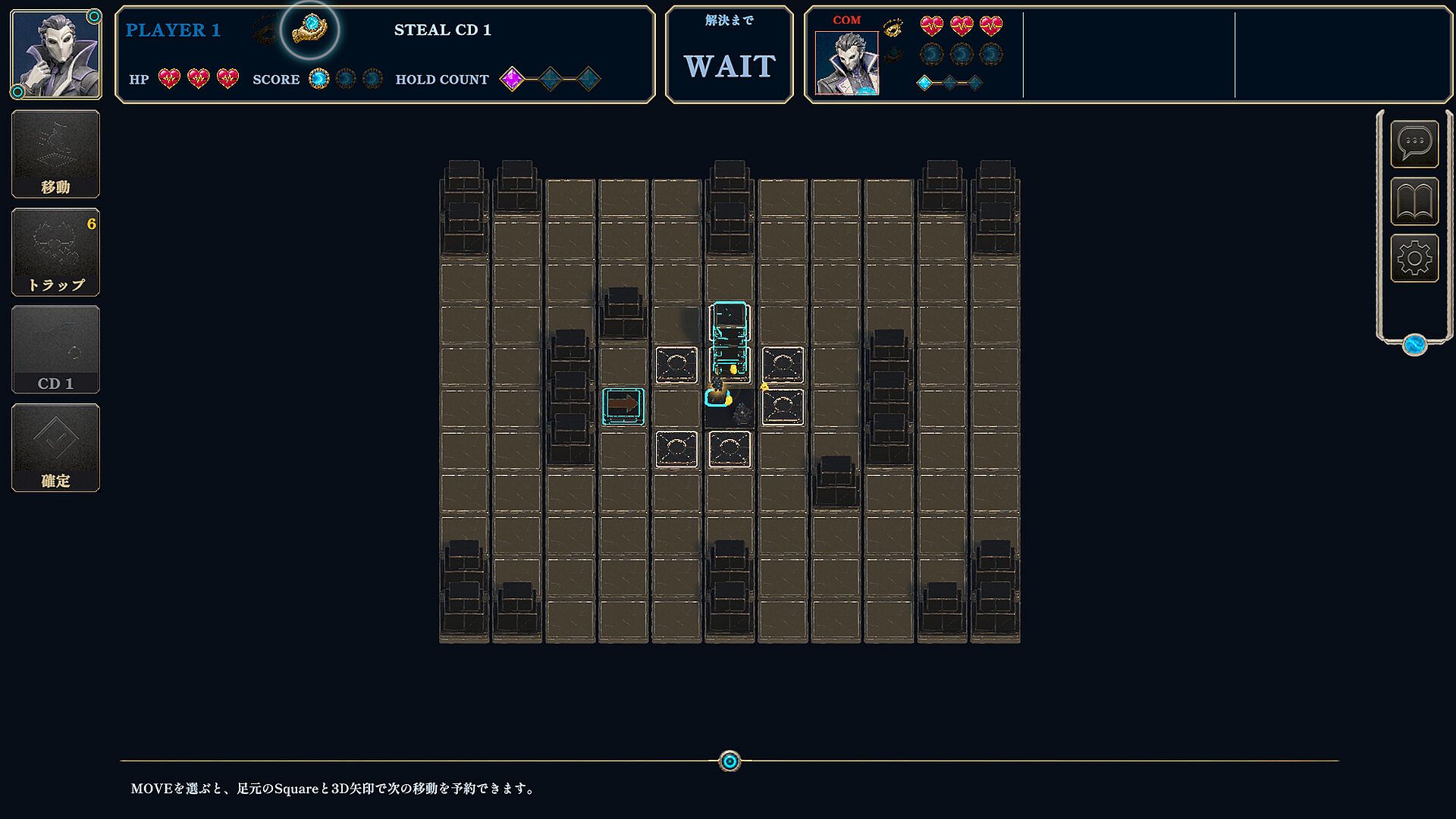
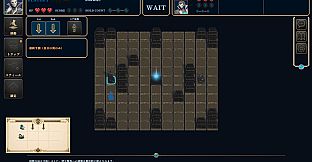
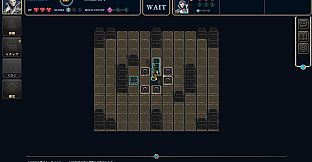
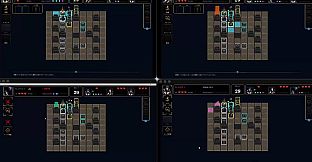
PHANTOM GAMBIT CORE HEIST ARENA is a strategy game built around simultaneous planning and opponent prediction in online matches on PC. Players compete for control of an Energy Core on a shared board, using hidden traps and a special STEAL action to outmaneuver rivals without seeing their choices in advance.
Gameplay
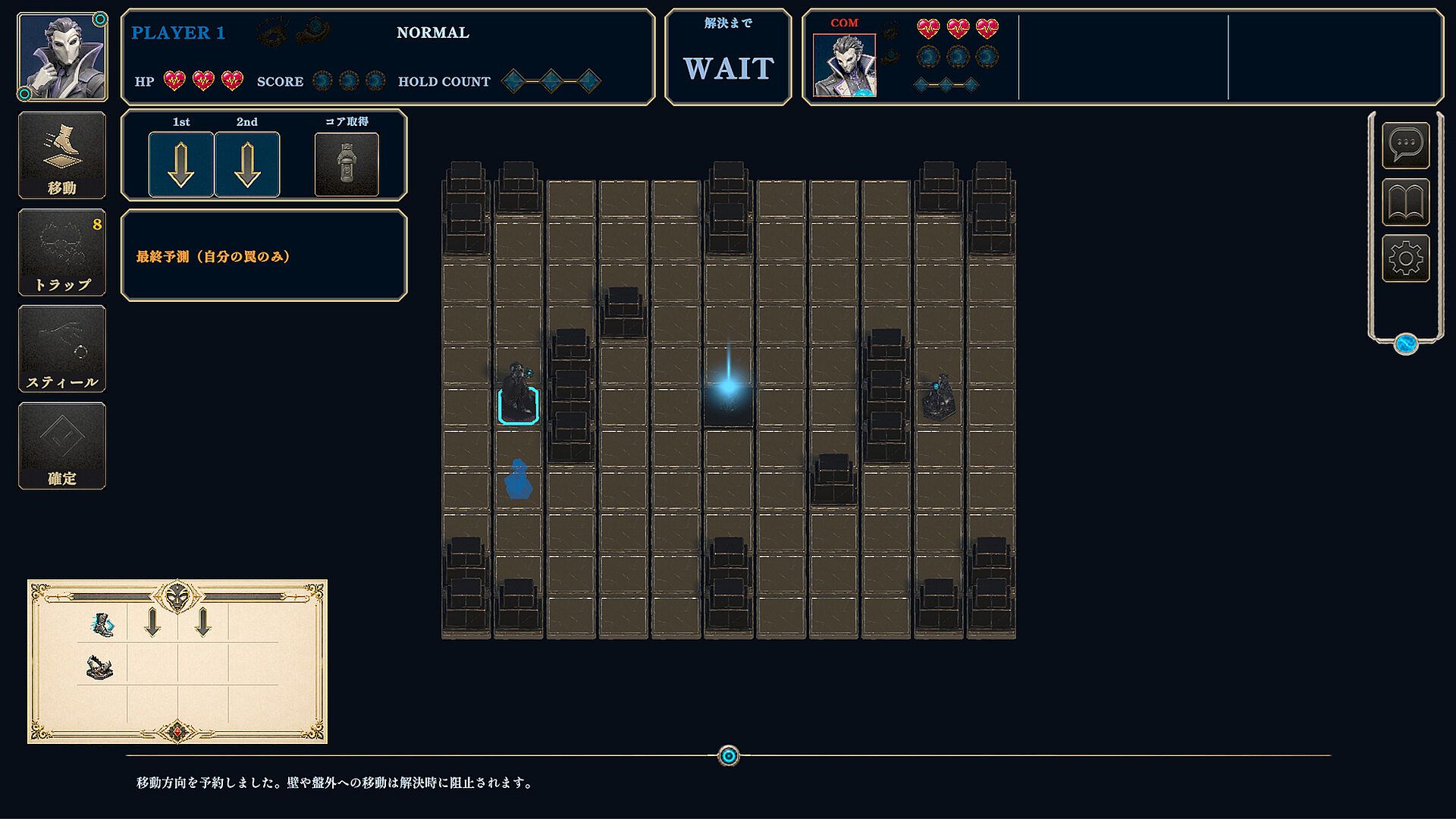
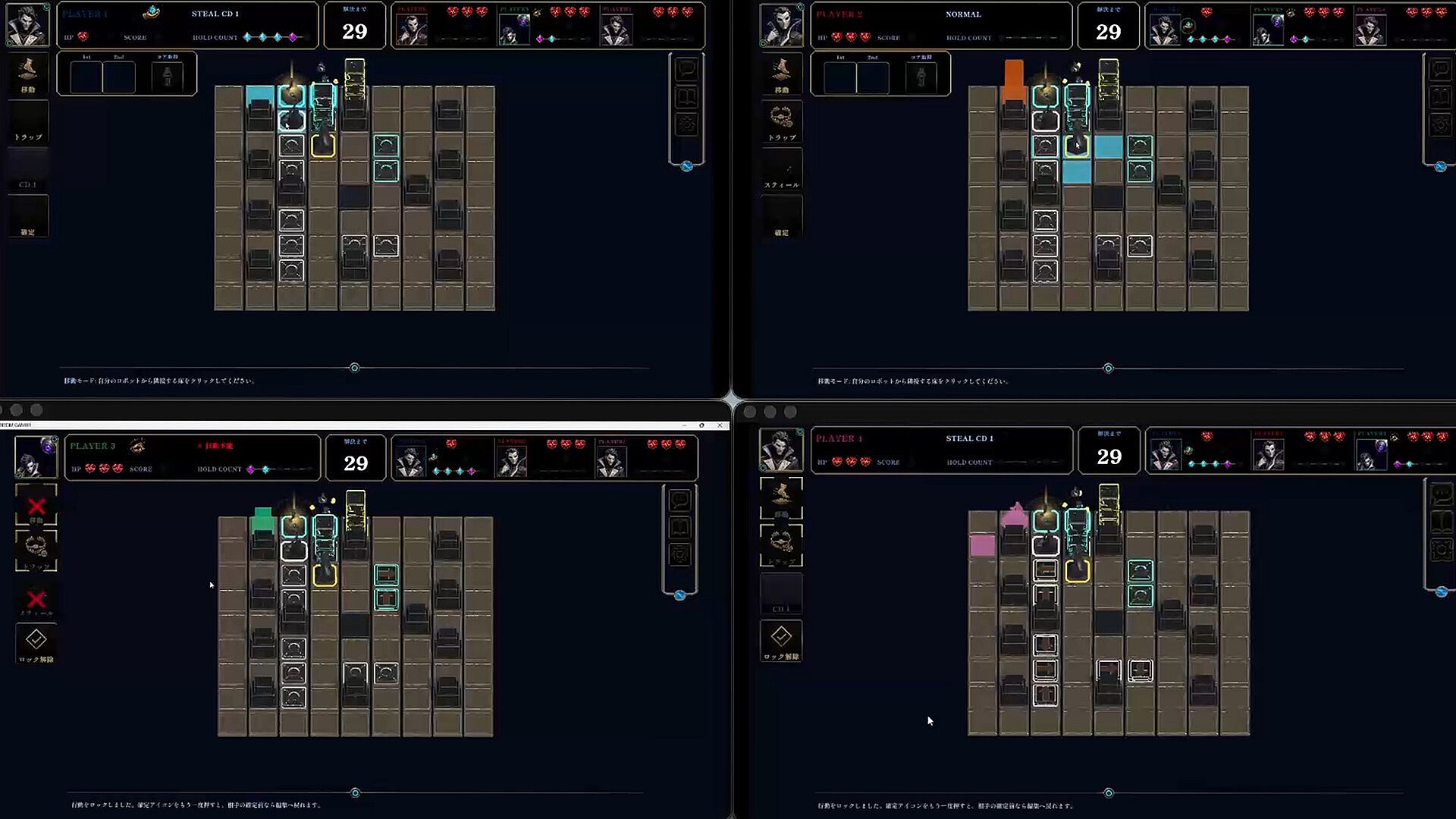
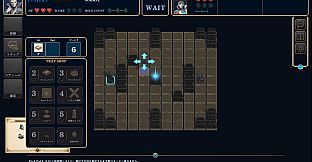
Each turn begins with every participant selecting moves privately. Options include advancing across the board, placing a trap, or committing to STEAL. After all selections lock in, the game resolves every action at once. This structure forces constant anticipation of where opponents will position themselves and how the board state will shift.
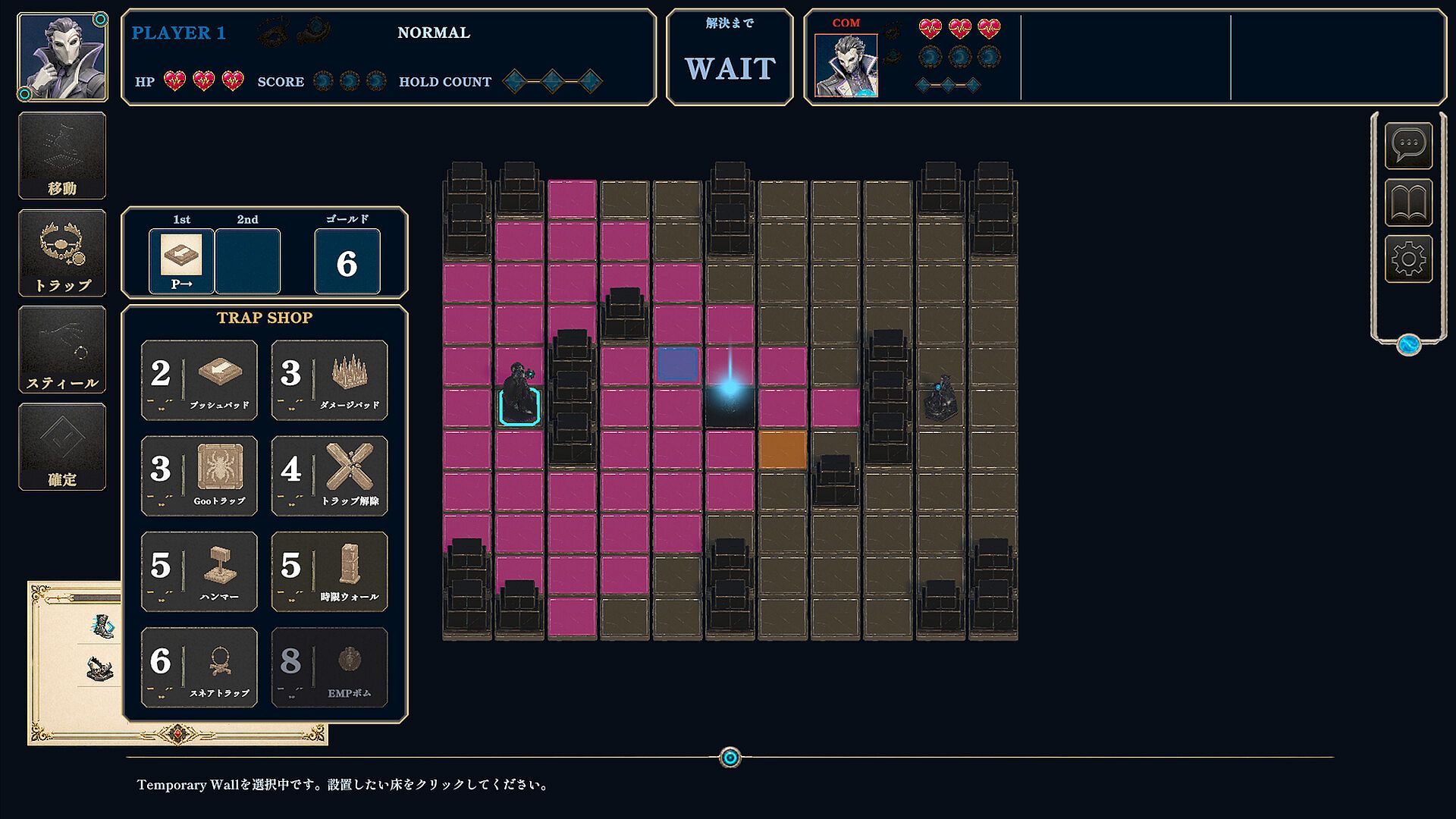
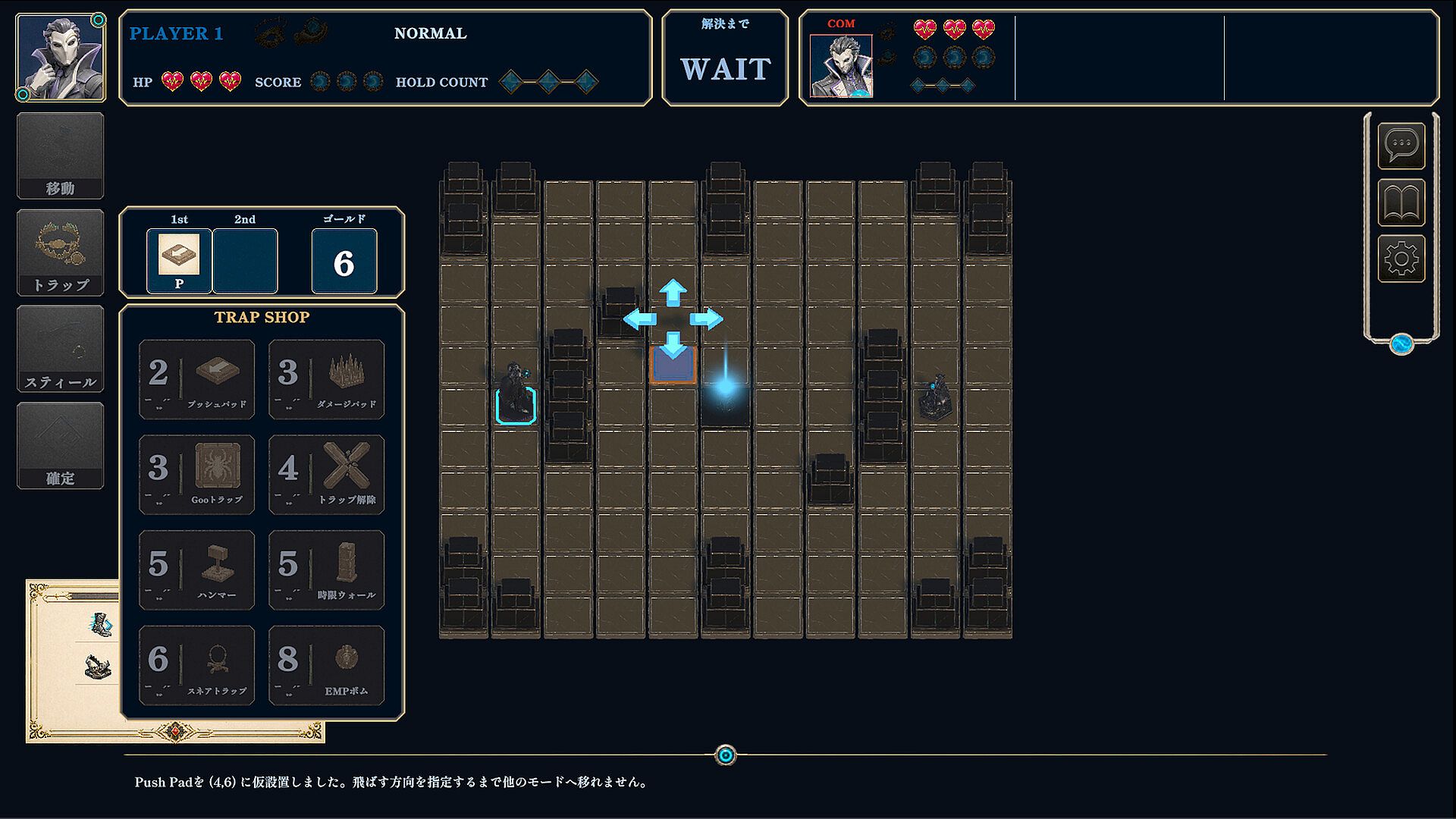
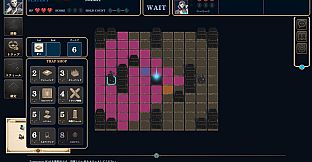
Trap placement adds layers of deception. A trap reveals its location and which player set it, yet the exact effect and direction stay concealed until triggered. Successful setups can chain reactions, sending one player into additional traps placed by either side. Limited Gold restricts how many traps any player can deploy, so choices about timing and positioning matter heavily.
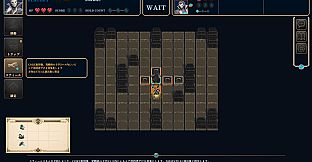
The STEAL action lets a player attempt to seize the Energy Core from its current holder after movement and trap resolutions finish. Success requires the holder to remain in range once everything else resolves. Multiple successful STEAL attempts on the same target cancel each other out. After any STEAL attempt, the player cannot use the action again the following turn, creating a cooldown that rewards careful timing.
Victory requires holding the Core for three consecutive turns without losing it to STEAL. The first player to reach three points wins. Success hinges on reading patterns, predicting routes, and preparing responses several turns ahead rather than reacting to the current position alone.
Game Modes
The core experience centers on competitive online matches where participants plan actions simultaneously and resolve them together. Matches emphasize prediction, trap placement, and the STEAL mechanic within a single consistent ruleset. No separate single-player campaign or additional named modes appear in available information.
Play occurs exclusively through online connections, with support for multiple participants on the same board. The format rewards players who excel at anticipating opponent decisions across repeated turns until one reaches the required point total.
Core Mechanics and Strategy
Gold management influences trap decisions, as each placement carries a cost that limits total options over a match. Players must weigh immediate defensive needs against long-term setups that might activate later. The hidden nature of trap types encourages misdirection, since opponents see only the location and owner.
Positioning the Core holder becomes a shared puzzle. Defenders try to keep the holder out of STEAL range while attackers predict final positions after trap effects resolve. Chain reactions from multiple traps can alter paths dramatically, turning a single well-placed trap into a decisive sequence several turns later.
The simultaneous resolution removes the advantage of reacting in real time. Every participant commits without knowledge of others' choices, shifting focus to pattern recognition and second-guessing across the entire match.
Is It Worth Playing?
The game remains listed as coming soon with no user reviews available at this stage. Its appeal lies in the simultaneous-planning format that demands strong reading of opponents and careful resource use within a compact ruleset. Players who enjoy board-game-style deduction and trap-based counterplay in an online competitive setting may find the mechanics engaging once released.
Availability is limited to PC through online multiplayer only. The absence of confirmed updates or additional content at present means the experience rests entirely on the core loop of prediction, trap chains, and timely STEAL attempts. Those drawn to strategy titles centered on hidden information and multi-turn planning can evaluate the match after launch based on how well the systems hold up in practice.