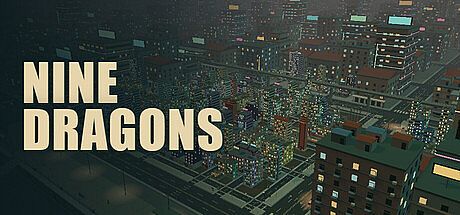


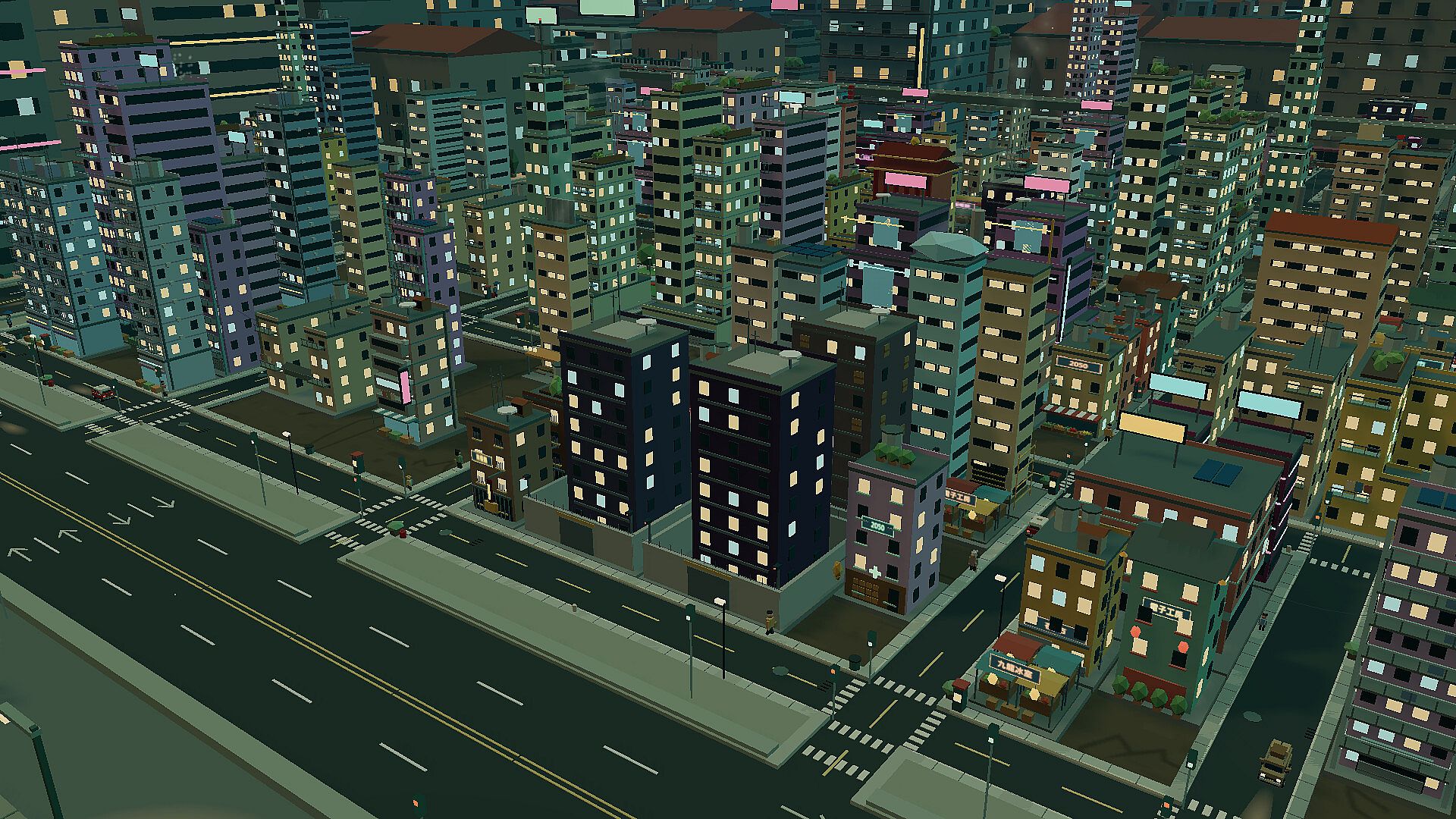
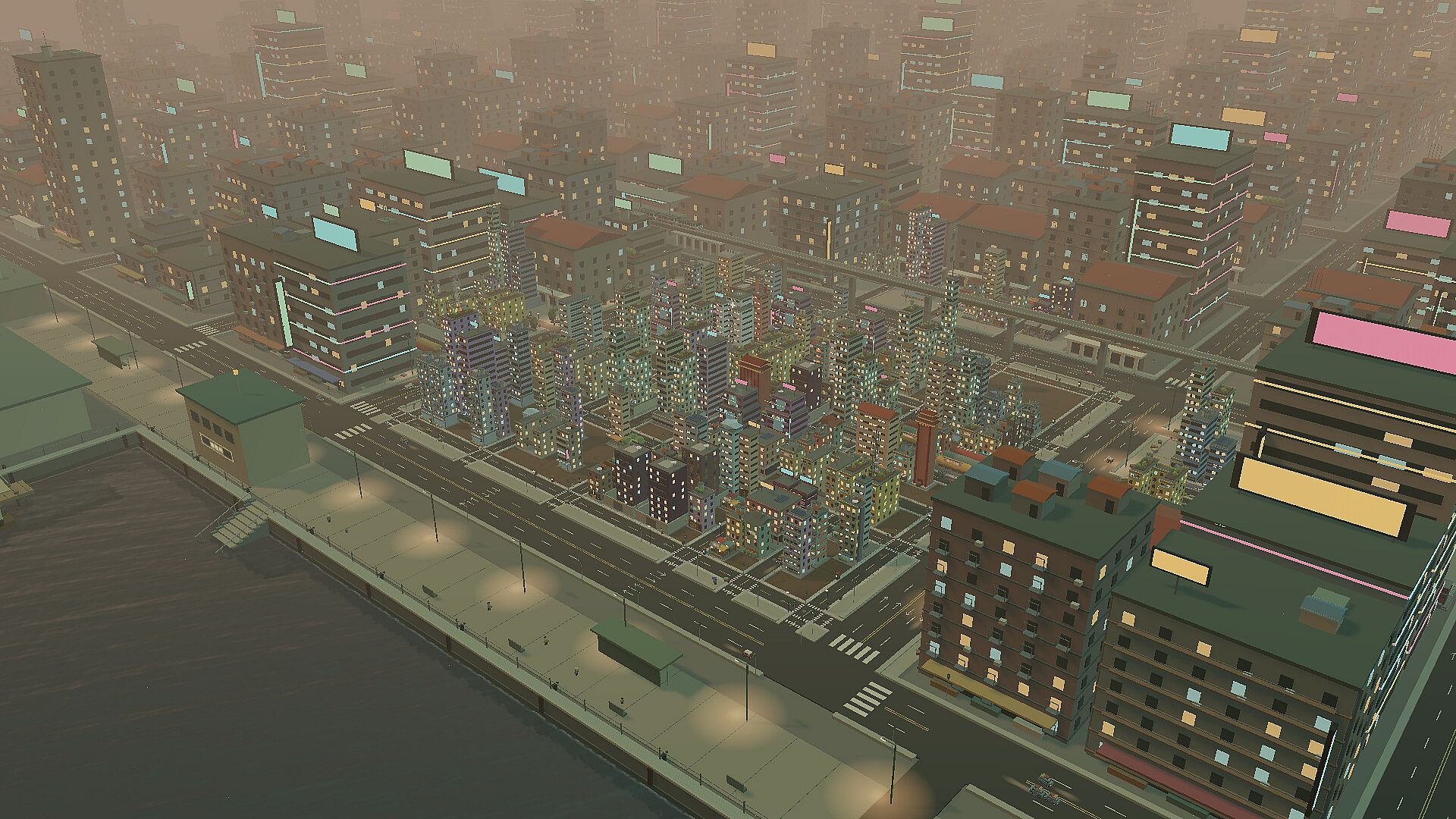
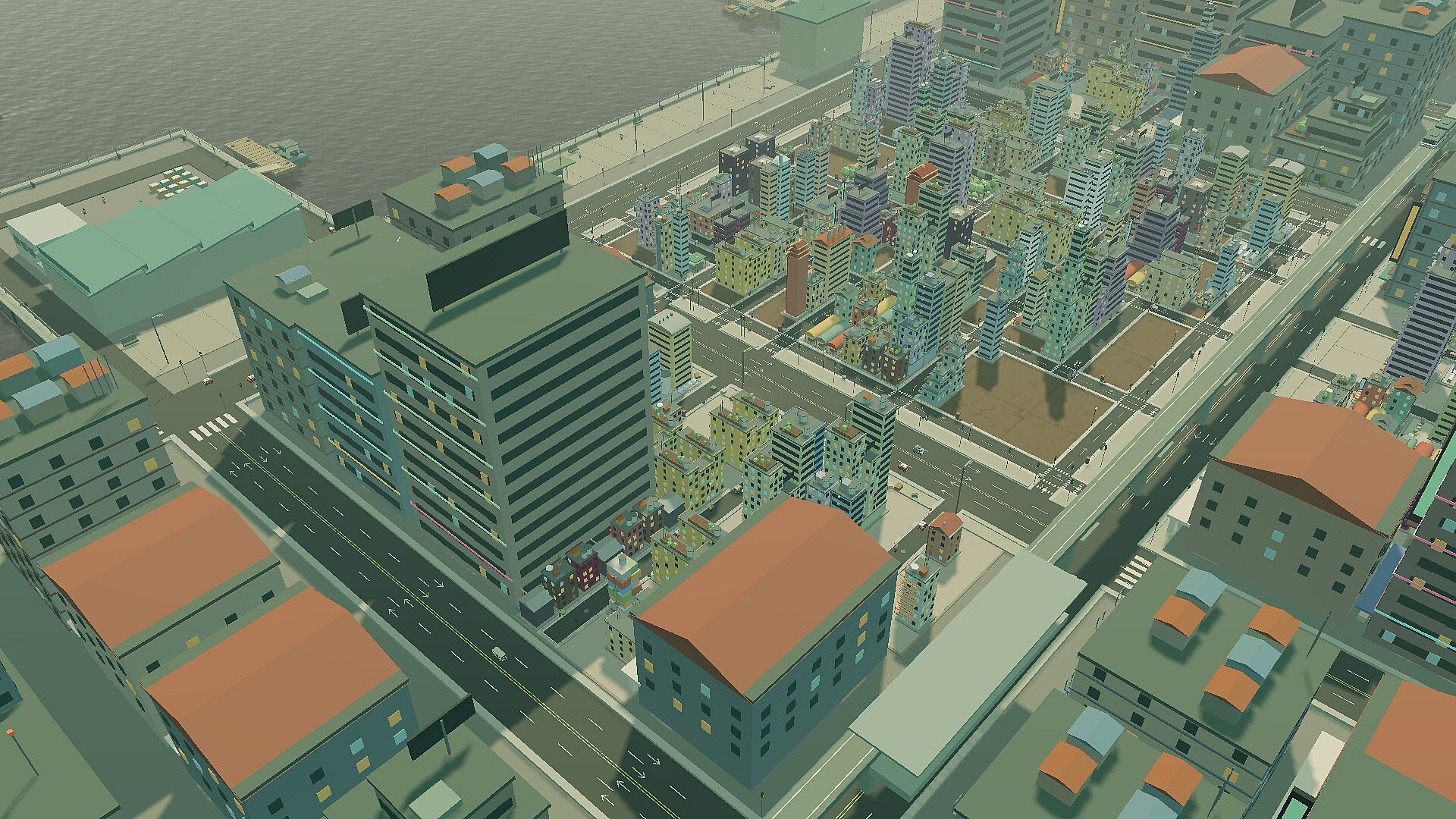
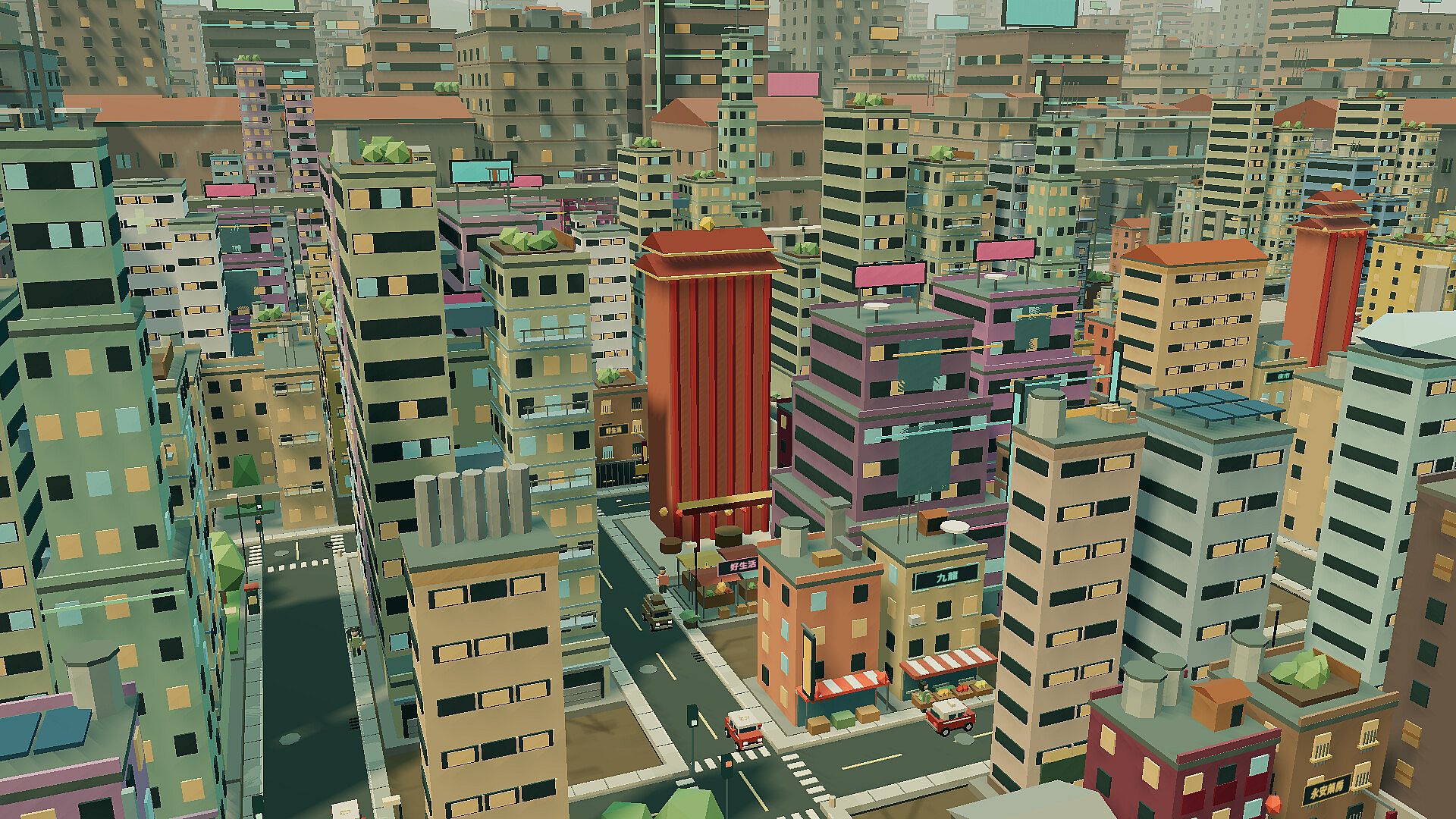
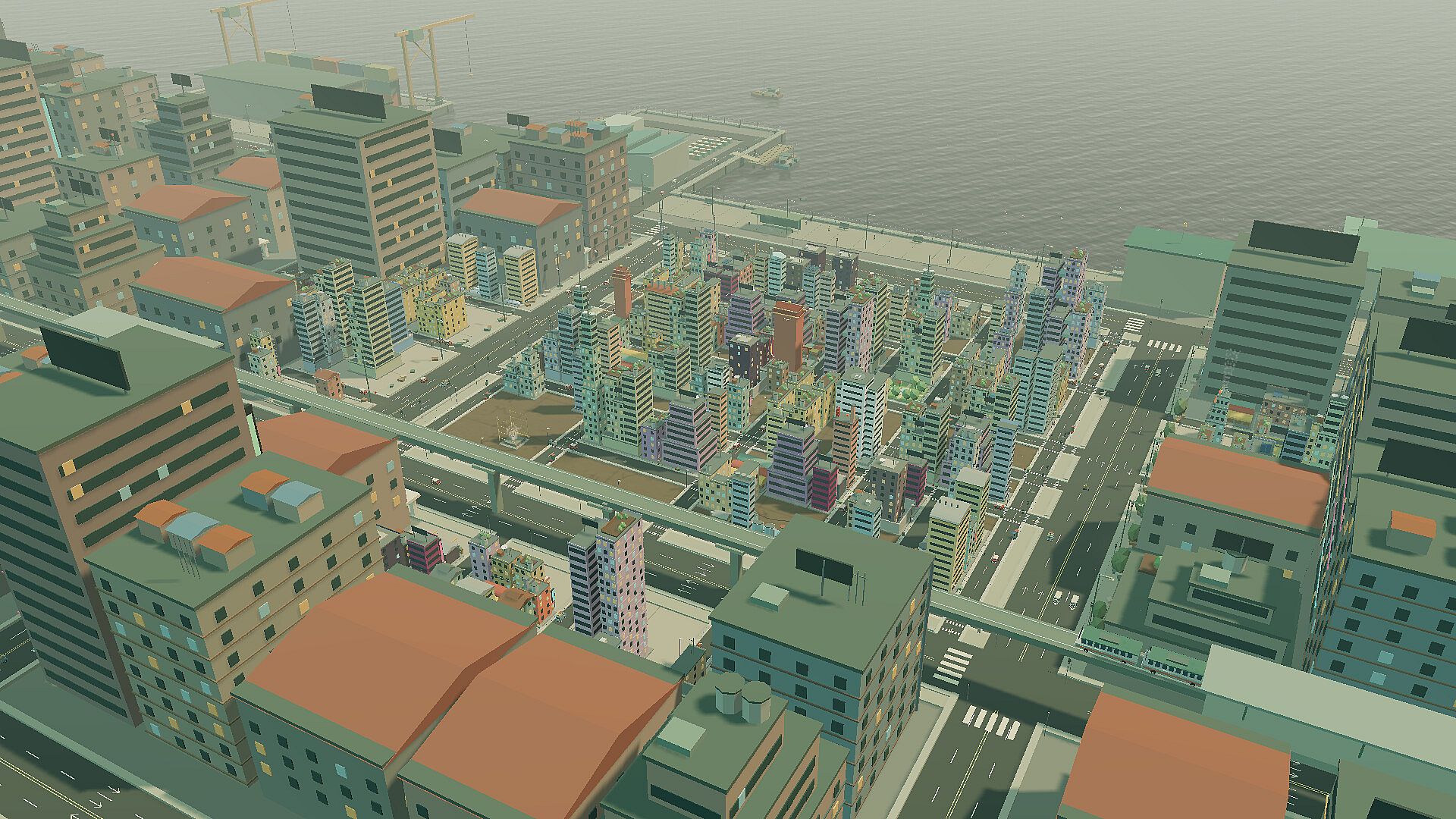
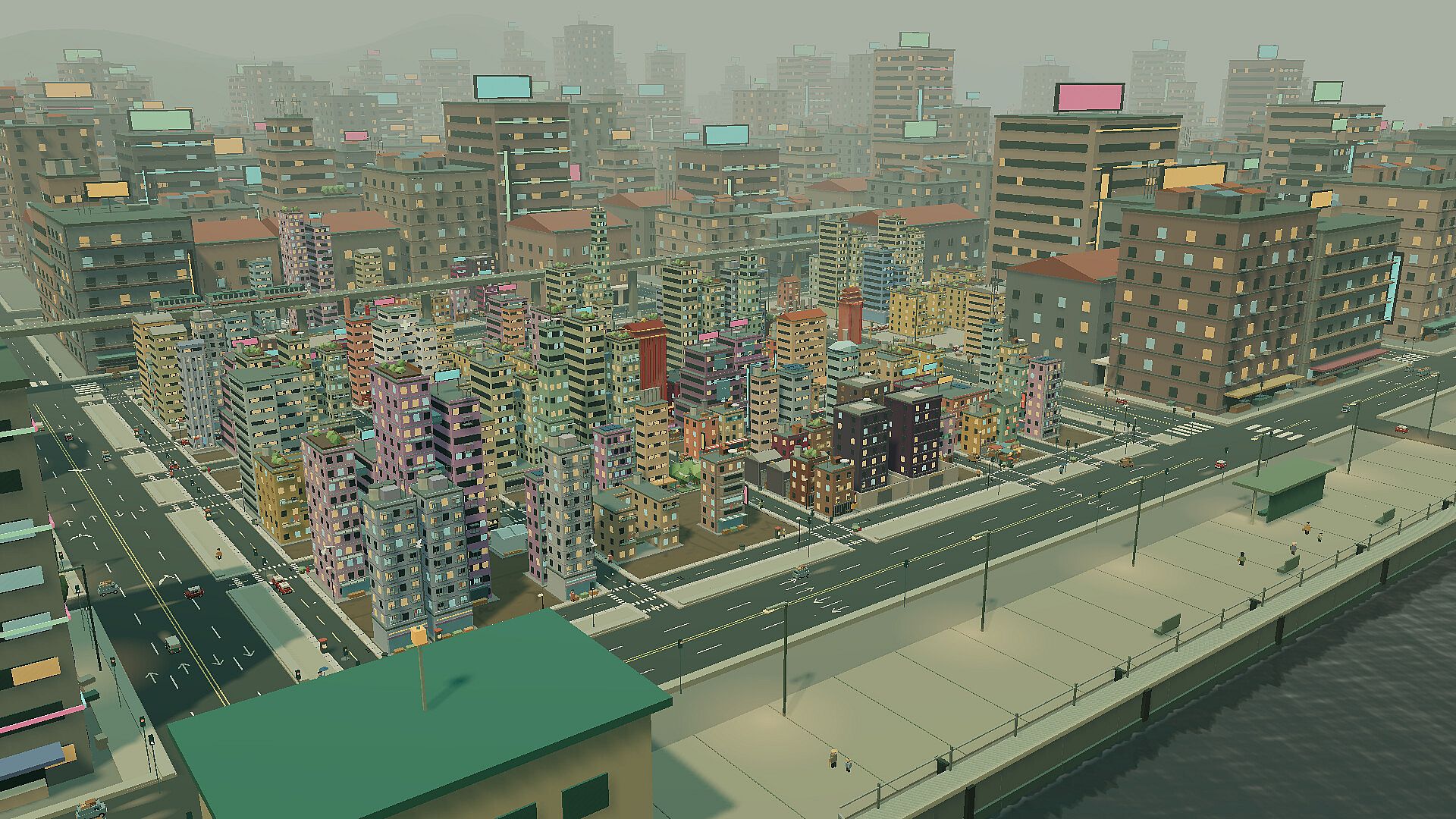
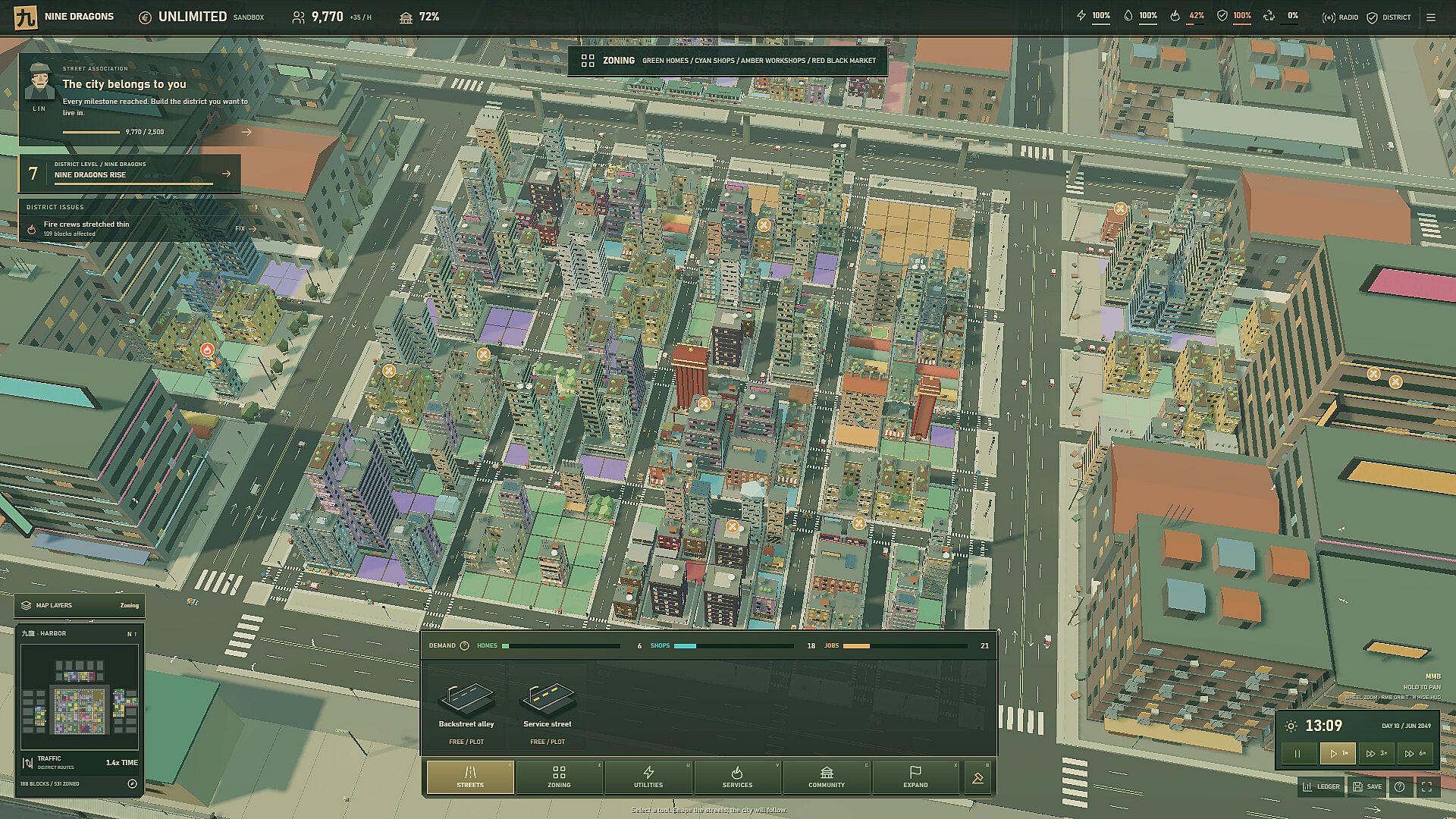
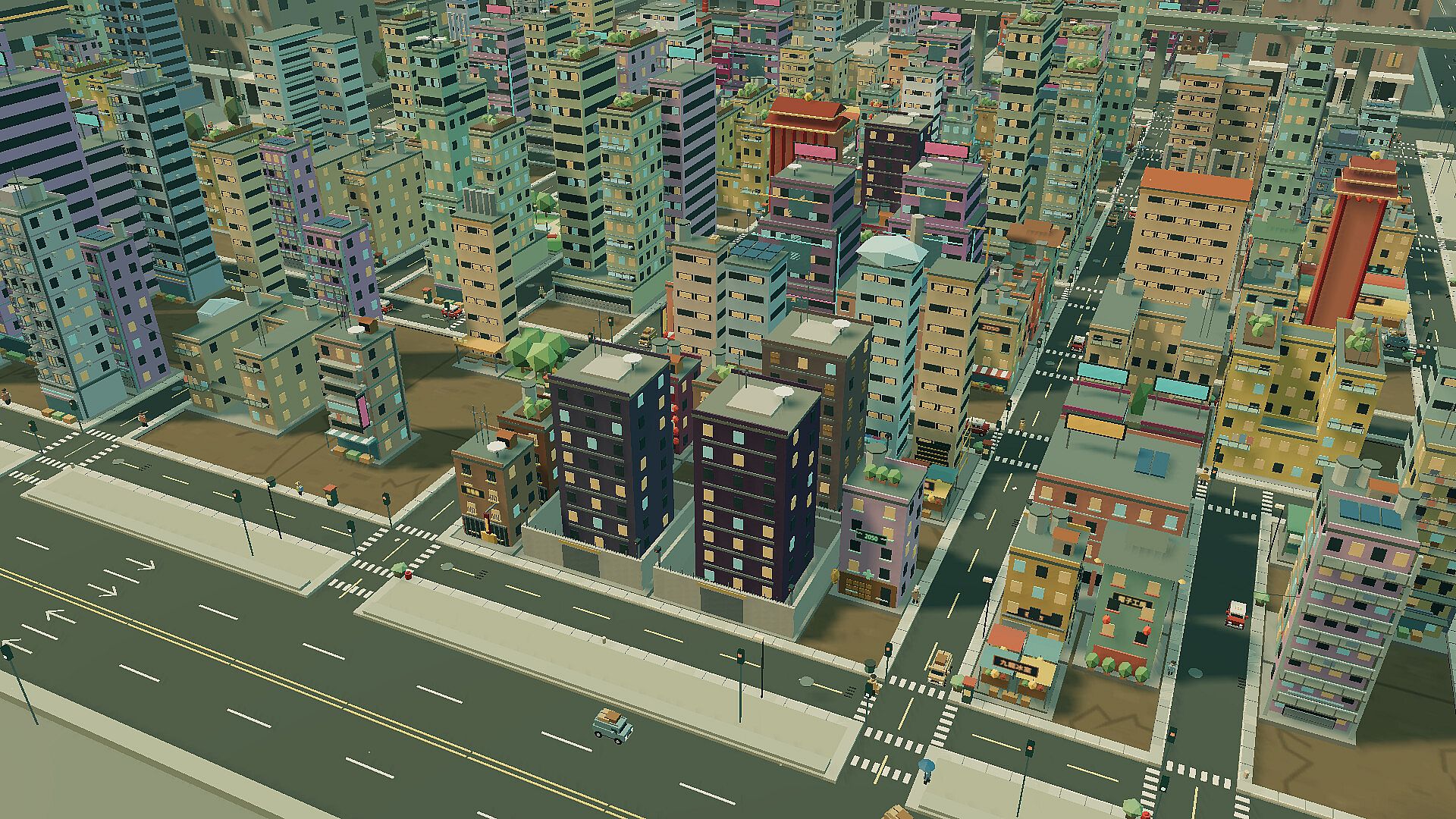
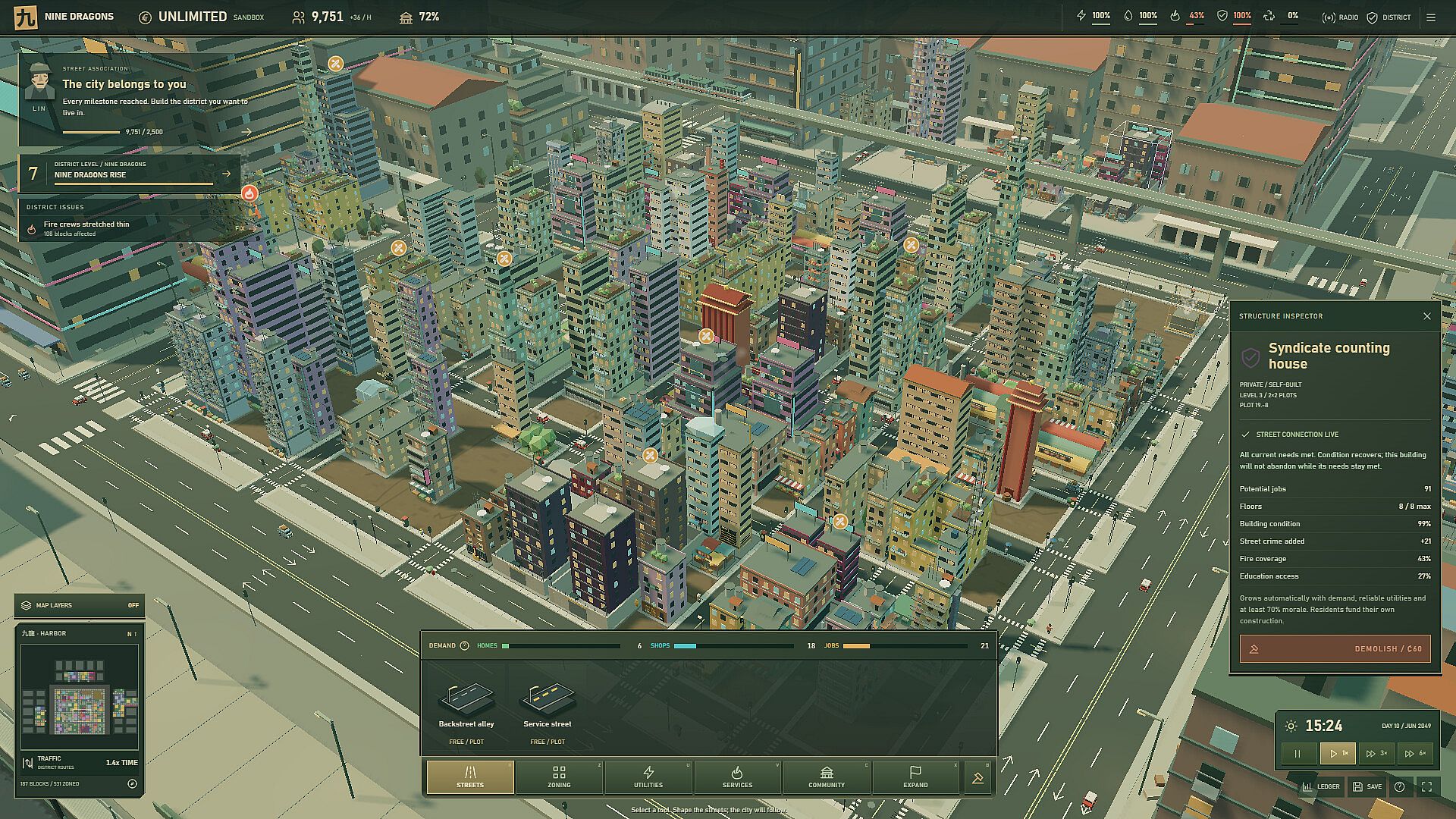
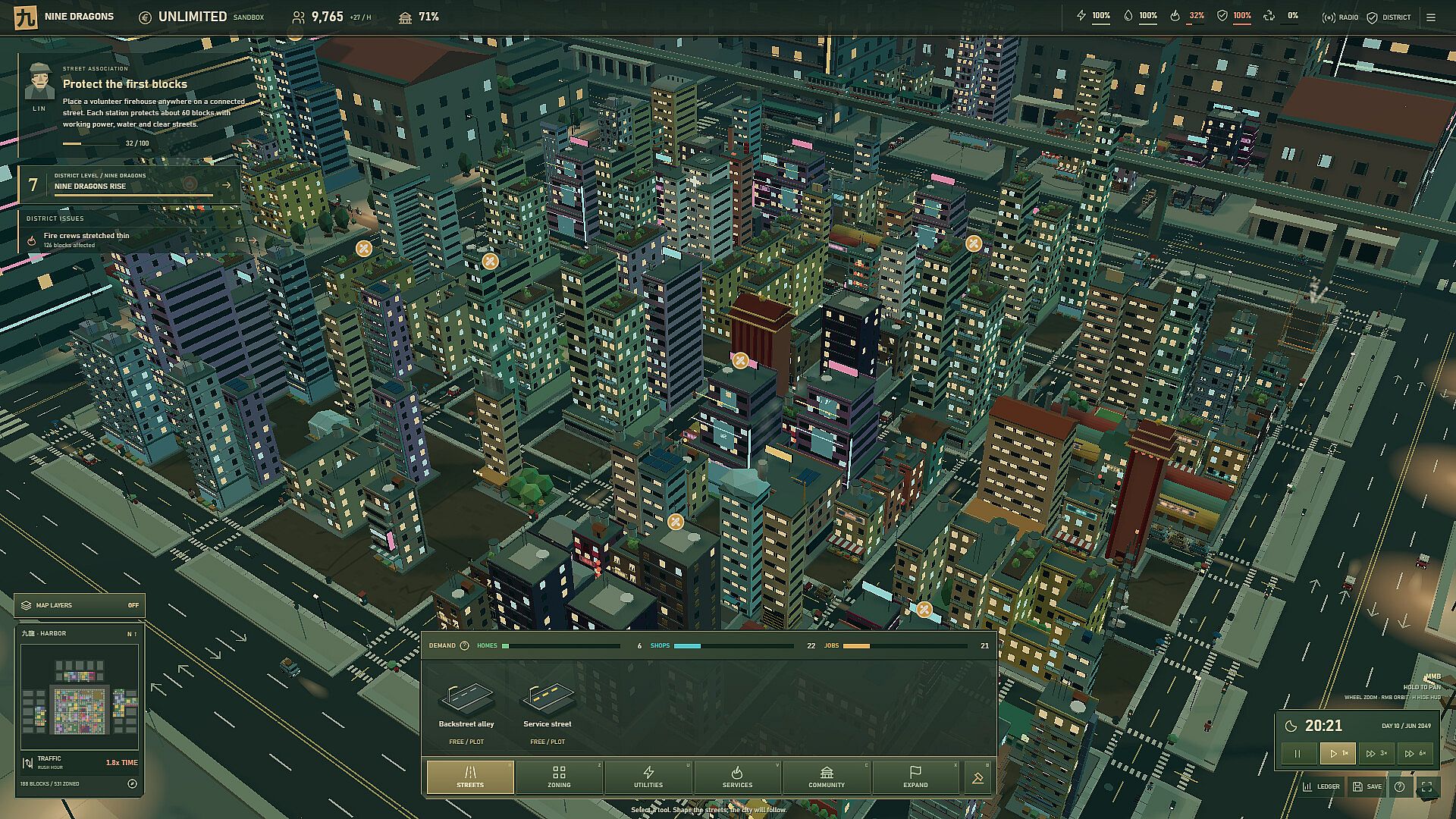
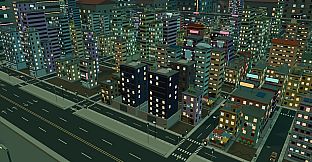
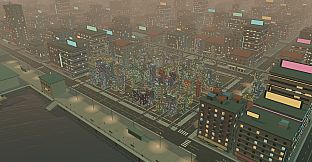
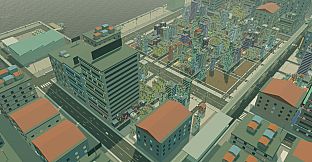
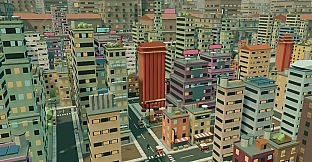
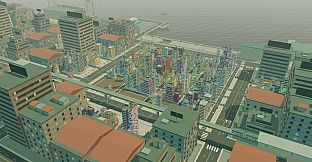
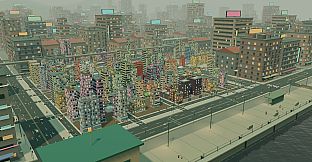
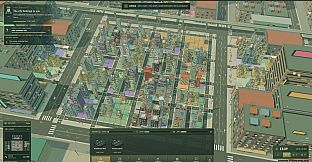
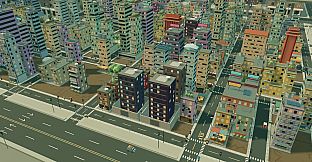
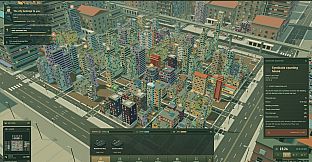
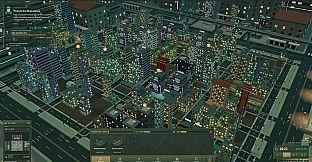
Nine Dragons is a strategy city builder set on PC in a futuristic version of Kowloon harbor. Players start with an empty stretch of concrete and shape an improvised, self-built district through street layout, zoning, and infrastructure management. The game emphasizes organic growth where residents construct their own structures in response to available resources and demand.
Gameplay
The core loop centers on drawing streets and alleys that connect to surrounding areas, then zoning blocks for housing, night markets, industry, vertical settlements, or black markets. Builders arrive once power, water, and demand align, resulting in 38 varieties of self-built buildings with distinct appearances, variants, and height limits. Clear lots encourage larger forms like courtyards, megablocks, or skybridge towers.
Utilities and services come from 32 public facilities spanning microgrids, water reclaimers, fuel-cell plants, desalination works, infirmaries, school campuses, and community halls. Each facility covers the district up to its capacity and can be upgraded across four tiers with specialization choices. A district issues list tracks shortages, affected blocks, and required fixes.
Neglect leads to slum formation where residents remain but crime and fire risks increase. Fires spread between structures, after which families return to damaged floors. Environmental and social events such as heatwaves, monsoons, transformer failures, fever outbreaks, protection blockades, and lantern festivals require responses that carry either costs or tradeoffs.
Black market operations through mahjong dens, pawn shops, smugglers' godowns, karaoke lounges, and syndicate counting houses generate higher revenue but elevate street crime, fires, and syndicate influence. Players can deploy neighborhood watch forces or negotiate deals. District policies on rooftop building, night trade, mutual aid, and protection payments introduce meaningful choices with consequences.
Expansion occurs by purchasing and clearing surrounding tenement blocks to add new lots. Growth progresses through seven district levels toward a populated city. The real-time 3D environment features day-night cycles, monsoon rain, neon signage, and a reflective harbor. Traffic follows actual street networks, where congestion affects trade, supplies, and emergency response. Additional details include pedestrians, ferries, gulls, and an elevated railway, plus a photo mode for interface-free captures.
Game Modes
Three difficulty levels provide structured challenges with varying demands on resource management and event responses. A free-build sandbox mode removes constraints for unrestricted experimentation on an empty site. All districts begin without prior development, allowing players to establish their own street grids and zoning patterns from the outset.
Key Mechanics and Systems
Street networks form the foundation, with every connection influencing traffic flow and accessibility across the district. Zoning decisions directly determine what types of self-built structures emerge and how quickly the area densifies. Facility upgrades and specializations affect capacity and efficiency while events test ongoing maintenance.
Black market elements integrate with policy choices, creating tension between profit and stability. Expansion through neighboring blocks adds layers of strategic acquisition and redevelopment. The combination of real-time simulation, traffic simulation, and event responses keeps the district dynamic without requiring constant direct intervention.
Is It Worth Playing?
Nine Dragons targets players who enjoy city builders focused on organic, bottom-up development rather than rigid planning. The emphasis on self-built structures, tradeoffs in black market activity, and persistent resident behavior offers a distinct approach compared to traditional titles in the genre. Three difficulty options and a sandbox mode accommodate different preferences for challenge or creative freedom.
As an upcoming single-player experience on PC, the game appeals to those interested in detailed infrastructure management, event handling, and gradual district expansion in a dense urban setting. Its systems around slums, fires, syndicates, and policy consequences provide ongoing decision points that reward attentive play. Fans of strategy city builders seeking unconventional growth mechanics and visual variety in a harbor environment will find the described features align closely with that interest.