


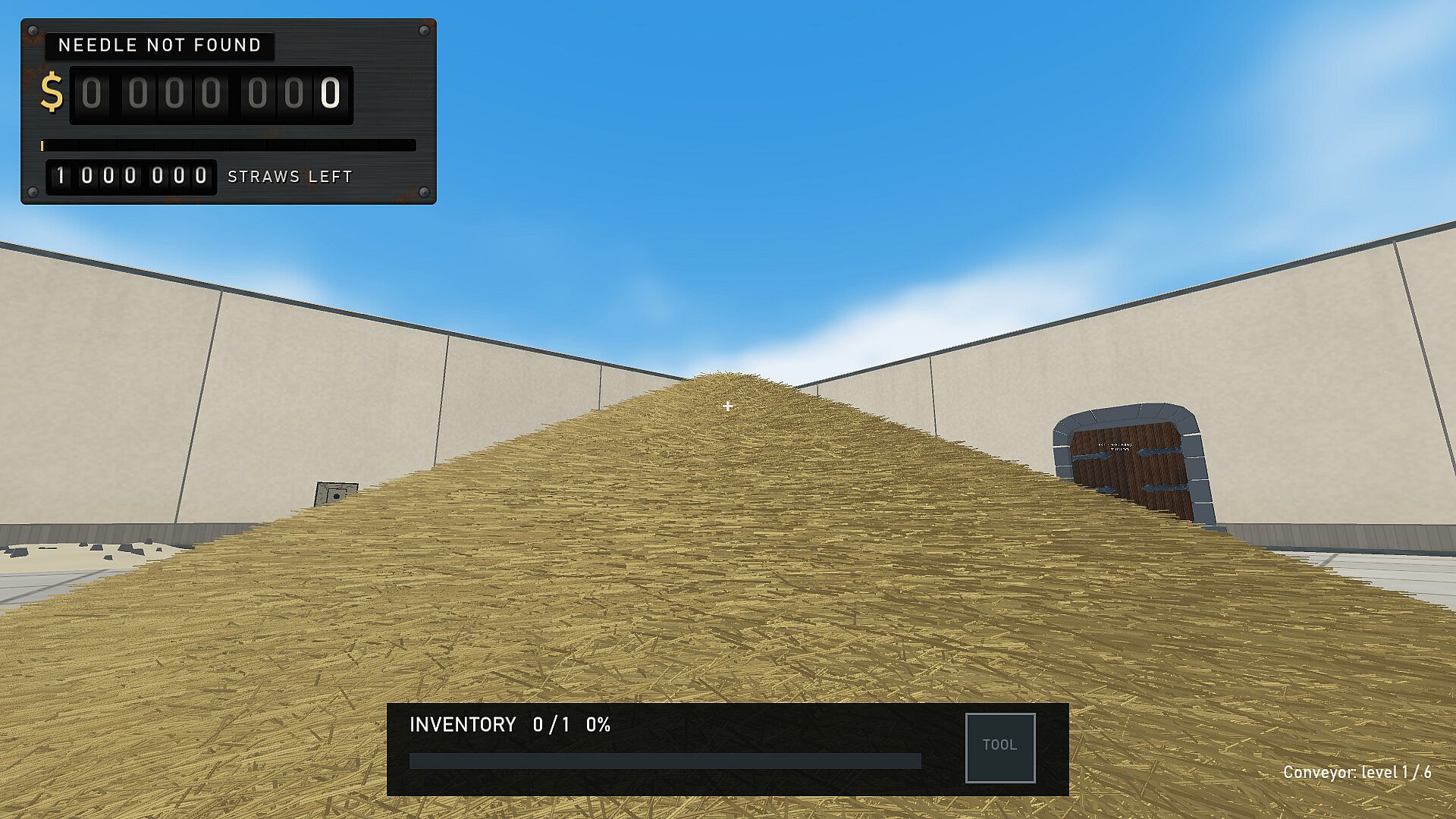
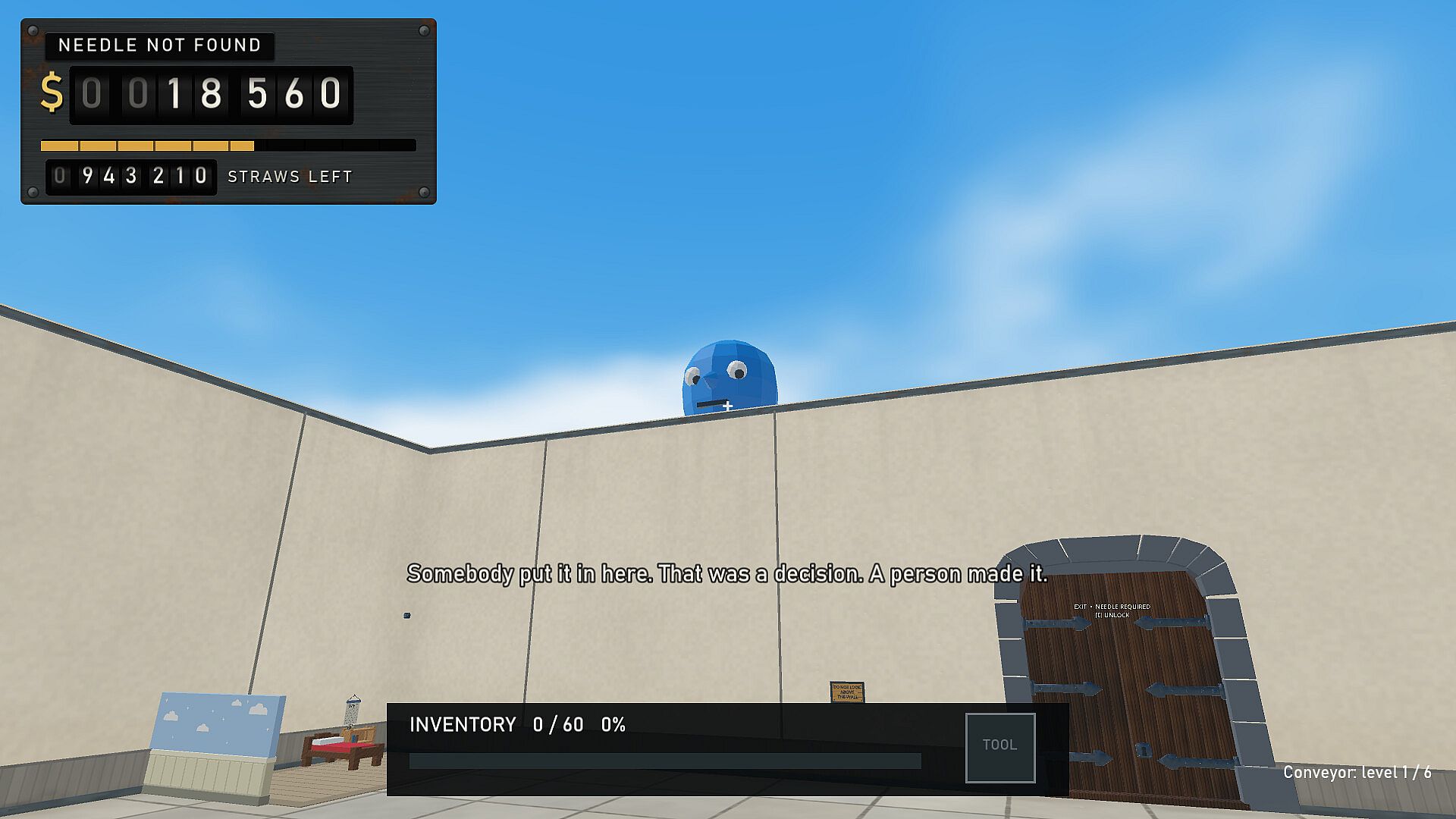
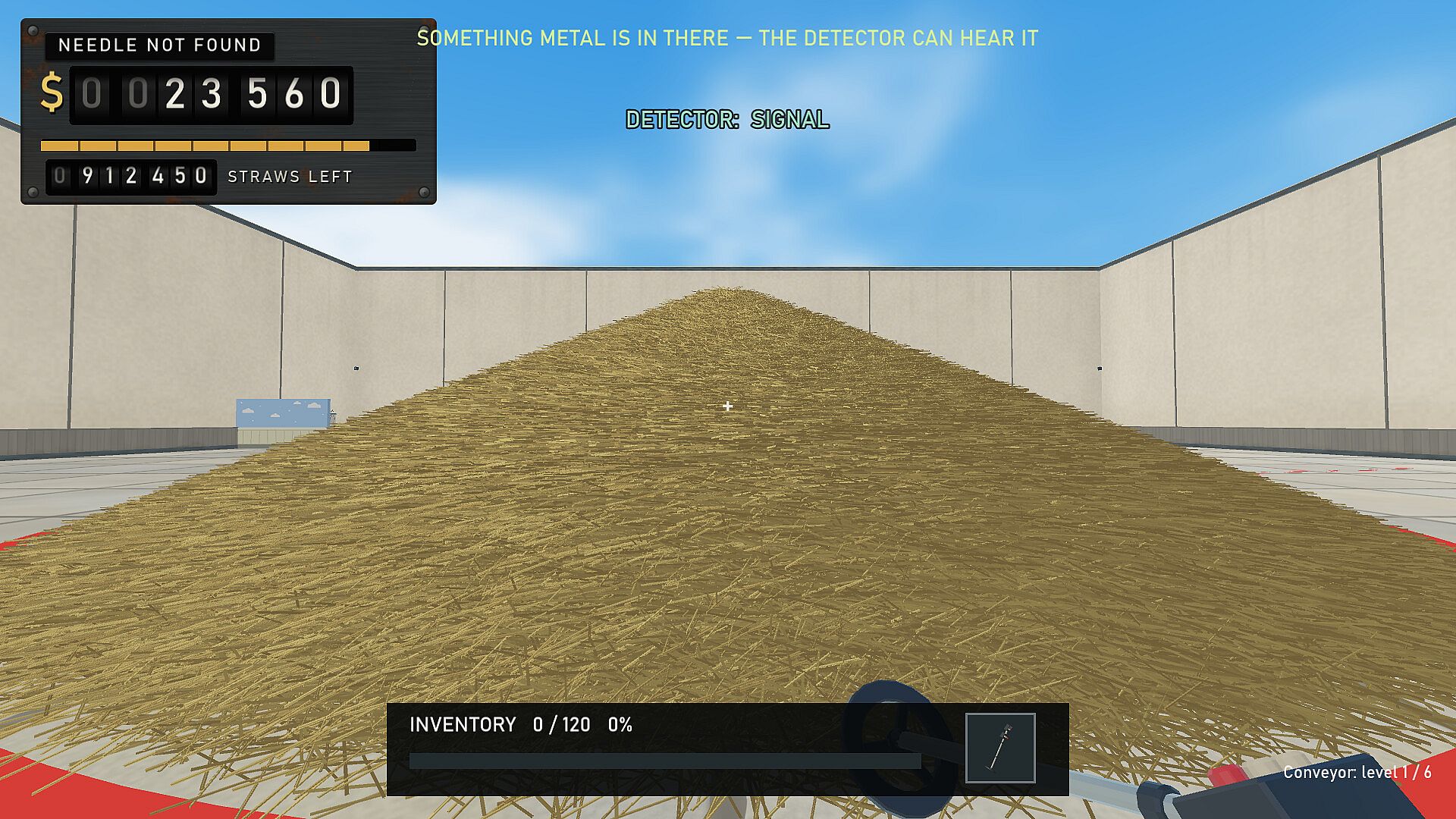
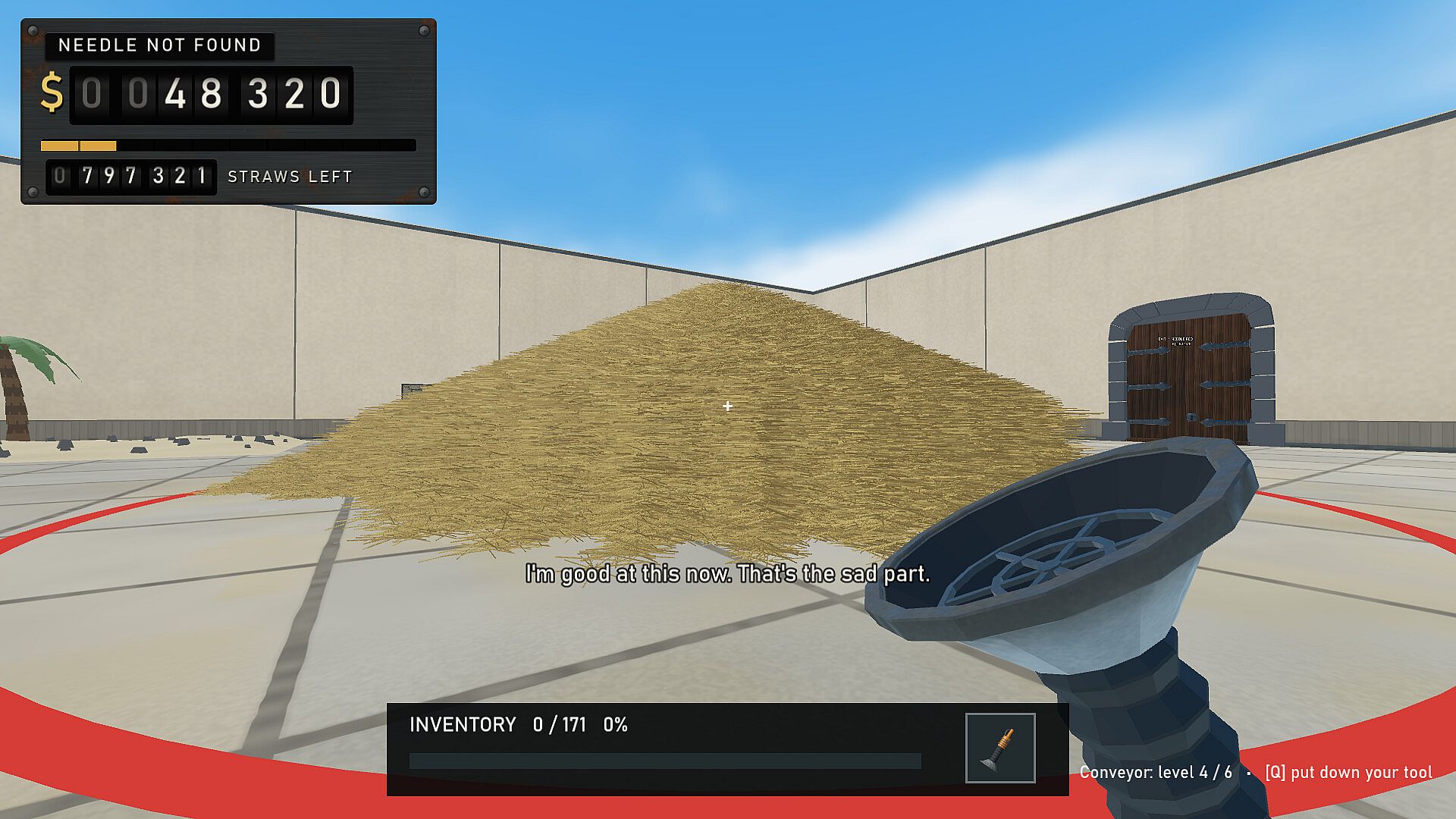
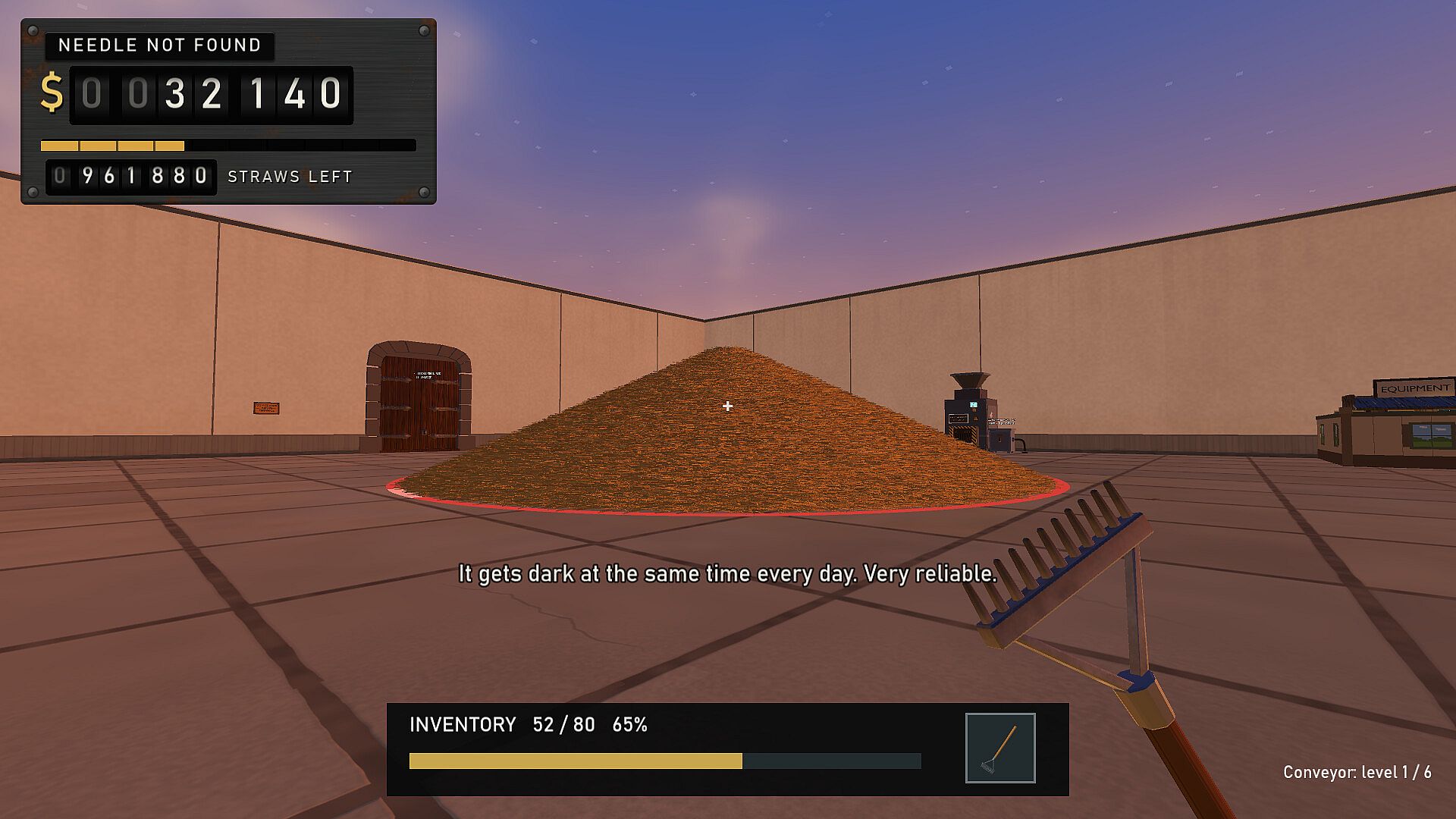
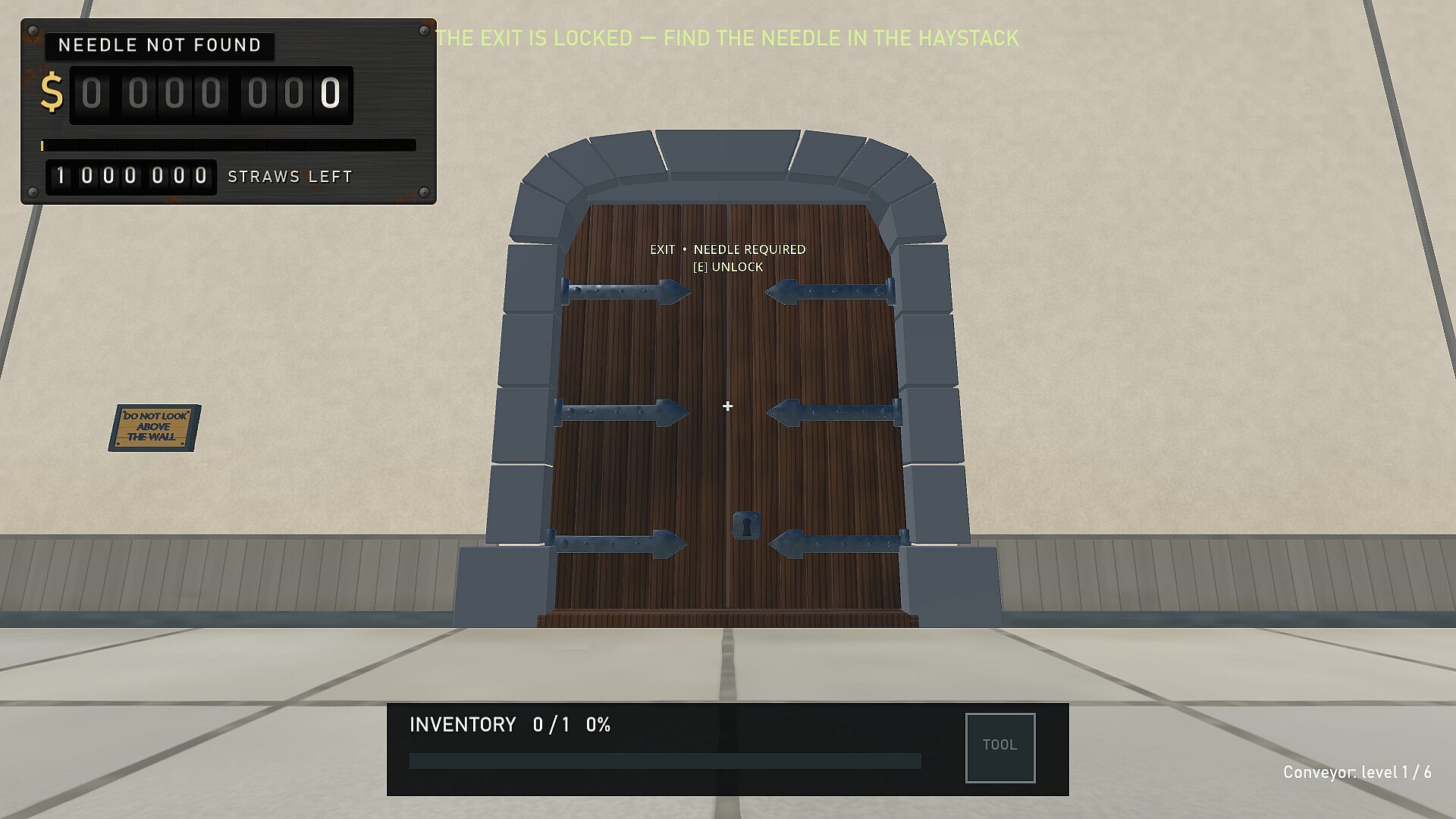
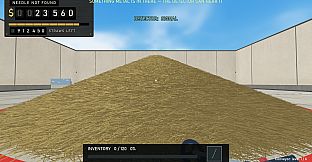
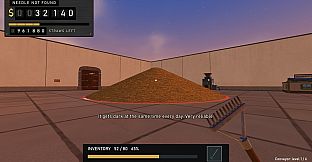
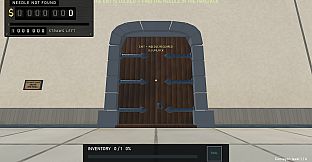
Needle: The 1% Challenge is an indie casual simulation game for PC that turns the classic phrase about finding a needle in a haystack into a literal, methodical task. Players find themselves locked in a walled yard facing a haystack the size of a building, with only one exit: a door that requires the needle to open. The experience centers on persistence as handful after handful of hay is cleared in search of that single needle, with 99 percent of attempts expected to end in frustration.
Gameplay
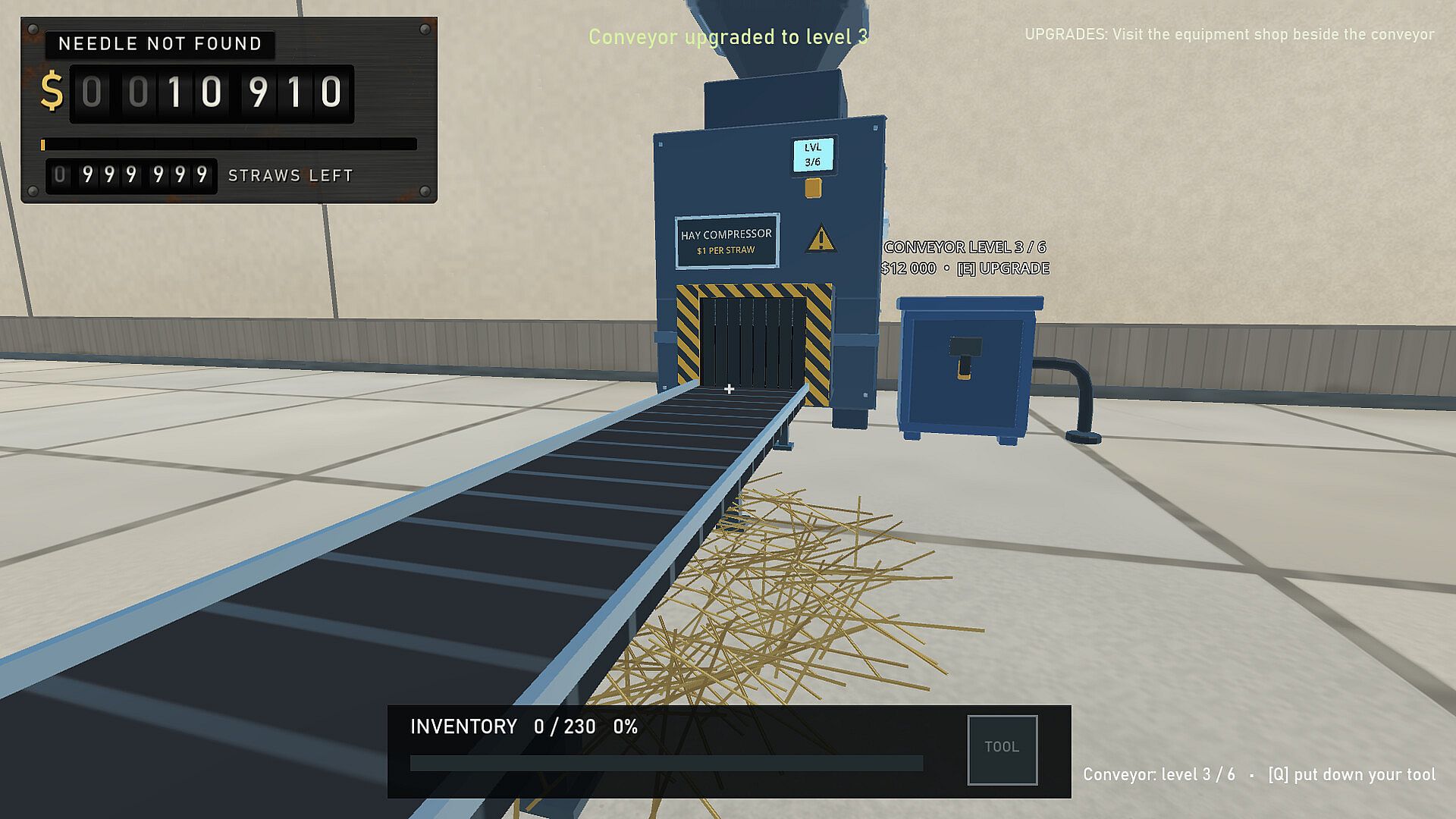
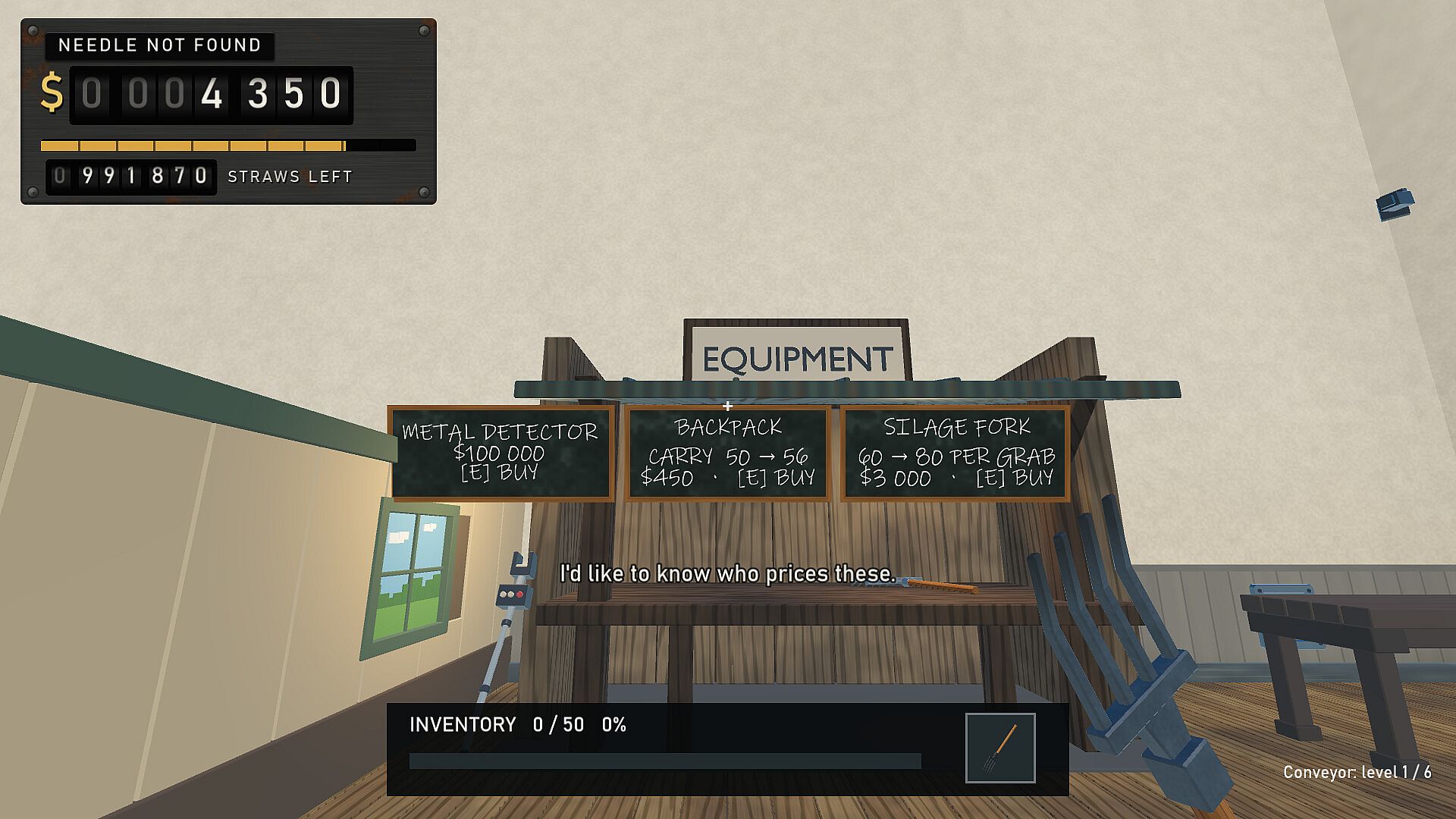
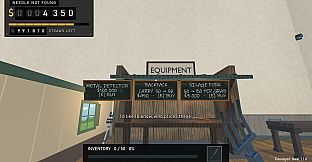
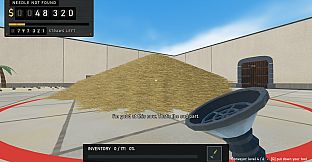
The core loop begins with bare hands, requiring players to scoop individual strands of hay and carry them to a conveyor belt that feeds a machine. The machine processes the hay and provides payment, which is then spent at an equipment shop that operates without any visible attendant. Early purchases focus on basic tools such as tongs, followed by larger backpacks for increased carrying capacity and upgrades to the conveyor system itself. Further progression introduces specialized items like a metal detector that indicates direction without pinpointing the exact location of the needle.
Every action stays grounded in manual effort. No automated systems dig or search on their own, forcing players to manage the physical workload step by step. The hay pile gradually shrinks as progress is made, but the scale ensures that meaningful advancement requires sustained attention over extended sessions. Upgrades improve efficiency without removing the hands-on nature of the task, creating a steady rhythm of collection, transport, sale, and reinvestment.
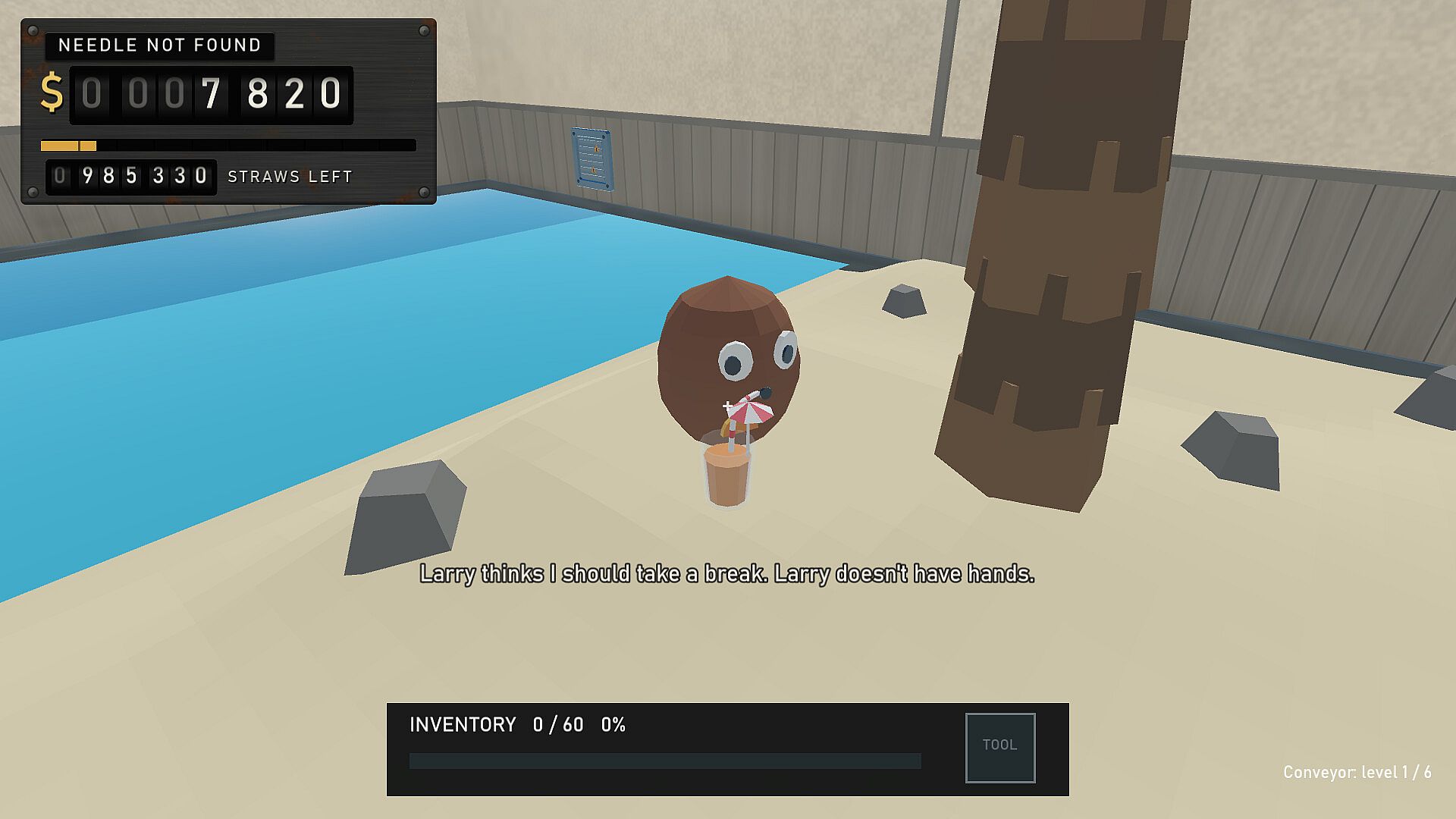
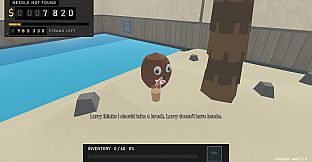
A companion character shares the space and provides ongoing commentary directed at himself, the machinery, and a coconut named Larry. The dialogue grows increasingly disjointed as days pass and the pile diminishes. An unseen presence observes from beyond the wall, adding an atmospheric layer that remains consistent throughout the experience.
Game Modes
The game operates as a single continuous challenge without separate named modes or branching paths. All activity revolves around the central objective of locating the needle through incremental clearing of the haystack. Progression occurs naturally as equipment improves and the pile reduces in size, with no additional scenarios or competitive formats introduced.
Players remain in the same enclosed yard setting from start to finish. The focus stays fixed on the simulation elements of resource management and tool upgrades rather than variety in objectives or environments. This structure emphasizes endurance and methodical play over repeated or varied sessions.
Progression and Upgrades
Equipment advancement follows a clear sequence from the most basic manual methods to more advanced options. Starting with direct handling of hay, players move toward tools that increase volume per trip and systems that speed up processing at the conveyor. The metal detector represents a later-stage acquisition that assists with location without automating discovery.
Each purchase requires accumulated funds from hay sales, creating a direct link between effort expended and capability gained. The shop layout remains static, with no staff interaction, reinforcing the solitary nature of the task. Upgrades scale in cost and impact, encouraging careful planning of spending to avoid stalling progress on larger sections of the pile.
Is It Worth Playing?
This title suits players who enjoy deliberate, repetitive simulation mechanics and the satisfaction of incremental improvement in a confined setting. The absence of shortcuts or external assistance means success depends entirely on consistent manual input and strategic reinvestment of earnings. Those drawn to quirky narrative touches, such as the companion's conversations with Larry the coconut, will find additional flavor in the otherwise straightforward task.
The experience rewards patience with visible reduction in the haystack and eventual access to better tools, though the scale ensures it remains a test of endurance. Availability is limited to PC, and the singleplayer focus keeps attention on personal persistence rather than social or competitive elements. For individuals seeking a literal interpretation of an impossible task turned into a simulation loop, the game delivers a focused alternative to faster-paced titles.