












Motion De Censure is a strategy card game for PC that turns the mechanics of French parliamentary debate into tense, tactical matches. Players take on the role of political candidates who deploy cards representing candidates, alliances, media influence, and institutional power to sway majorities across multiple rounds.
Gameplay
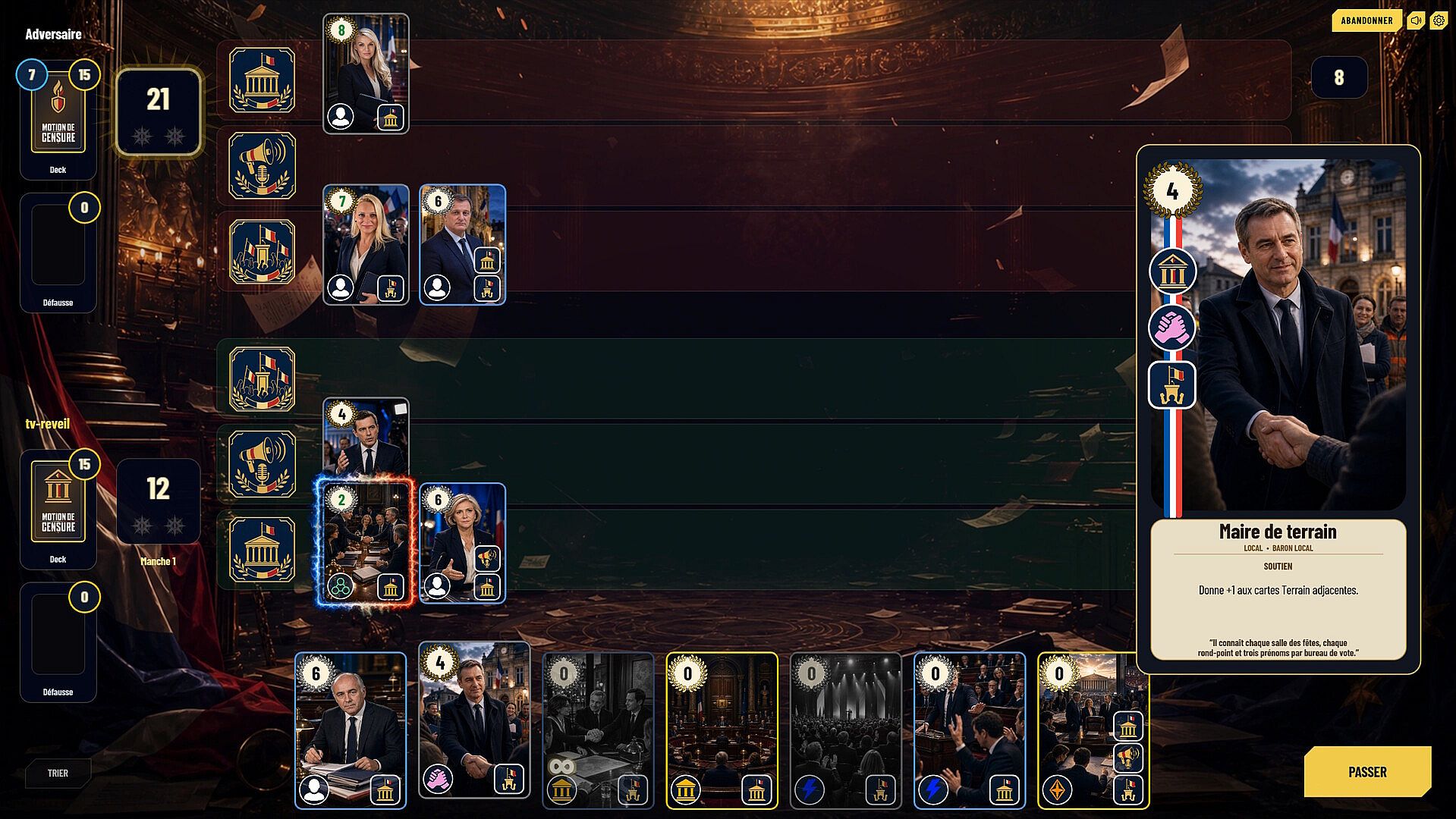
Each match unfolds as a best-of-three series of debates. On a turn, a player either plays a card or passes for the rest of the current round. Cards are placed into one of three influence rows labeled Field, Media, and Institutions. These rows allow actions such as strengthening candidates, weakening opponents, moving pieces between rows, protecting supporters, or activating special effects that can flip control of a majority.
Once both sides pass, the candidate with the higher total influence in the rows claims the round. The overall winner must secure two rounds, but conserving powerful cards for later confrontations often proves more important than winning every early exchange. The system rewards careful resource management and reading an opponent's emerging strategy rather than simple aggression.
Cards draw directly from elements of French political life, with effects that reflect real-world tools such as media pressure, institutional maneuvering, and grassroots mobilization. Different parties emphasize distinct approaches, including resilience, disruption, or delayed payoffs, forcing players to adapt their tactics to the specific deck and the rows under pressure.
Game Modes
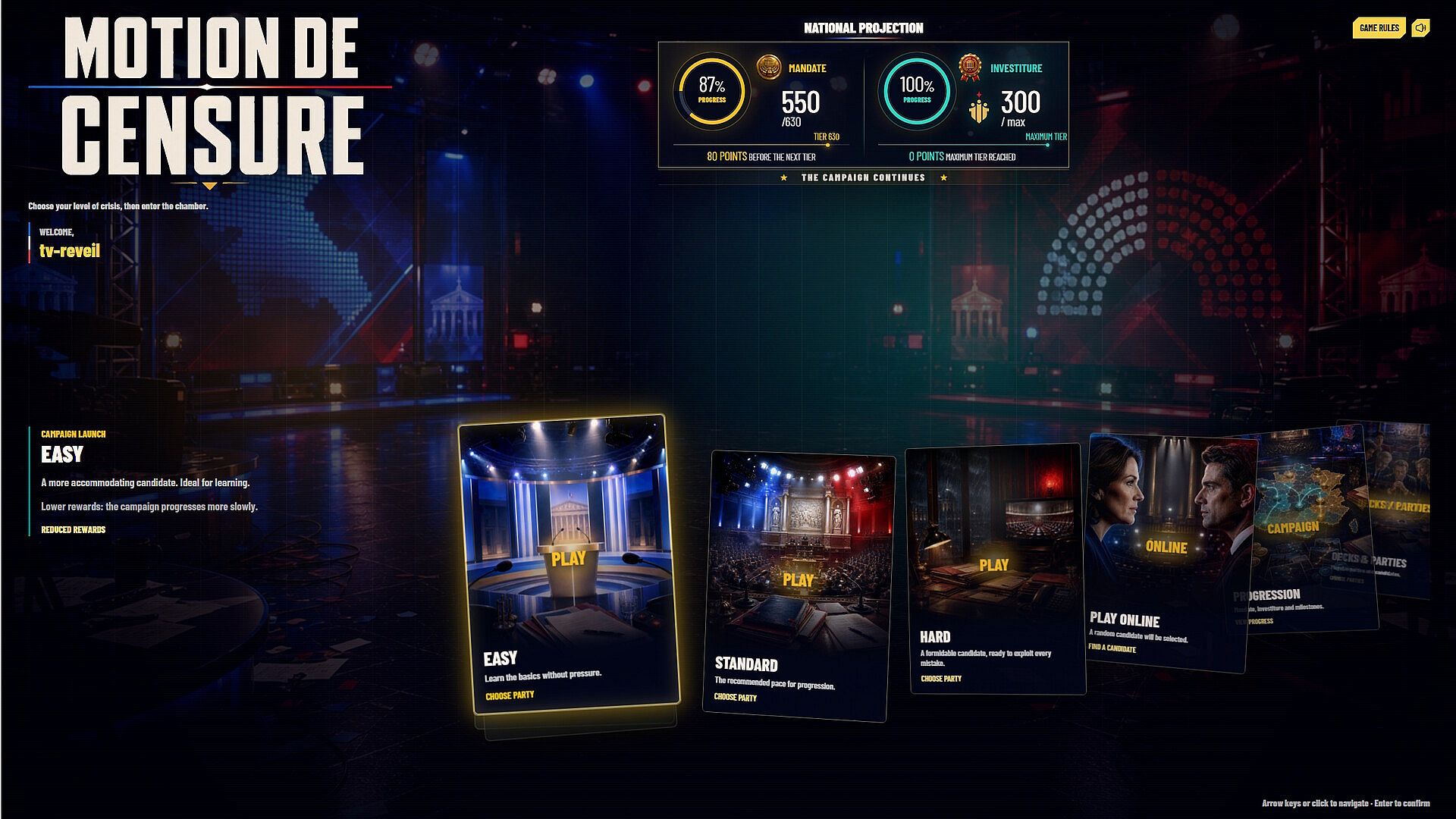
Single-player matches pit the player against an AI opponent that offers multiple difficulty settings. Progress carries forward through a campaign system where completed debates, whether won or lost, advance the player's national Mandate. Victories speed up unlocks, while the Mandate itself gradually opens new political parties and higher difficulty tiers.
Each party maintains its own Nomination progression. As players advance a party, they gain access to advanced and signature cards that integrate automatically into its deck. This structure encourages developing several parties over time to explore varied strategic options.
Online multiplayer allows direct competition against other players in the same best-of-three format. These matches also contribute to campaign progress and party development, letting participants test strategies against human opponents while continuing to unlock content.
Parties and Strategies
Eight distinct parties each bring unique strengths to the table. One might focus on media pressure to erode an opponent's position quickly, while another emphasizes institutional control or grassroots mobilization. Additional approaches include building resilience against attacks, introducing disruption effects, or relying on delayed triggers that pay off in later rounds.
Success depends on matching the available cards to the current board state and anticipating the opponent's next move. A strong lead can evaporate if a player expends key resources too early, making timing and adaptation central to long-term performance.
Is It Worth Playing?
Motion De Censure suits players who enjoy strategic card games that emphasize positioning, timing, and reading an opponent over fast-paced action. The best-of-three structure and three-row influence system create repeated opportunities for comebacks and tactical adjustments within a single match.
The campaign layer adds progression through party unlocks and difficulty increases, giving solo players a clear path forward even after losses. Those interested in political themes rendered through card mechanics will find the setting integrated directly into the gameplay rather than serving as mere flavor.
Multiplayer debates extend the experience for those seeking competition against other candidates, with the same campaign benefits. The game rewards repeated play as players learn the eight parties and refine when to conserve strength versus when to commit cards. Fans of deliberate, influence-based strategy titles will likely appreciate the depth available once the core rules are mastered.