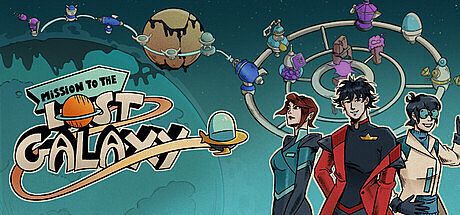


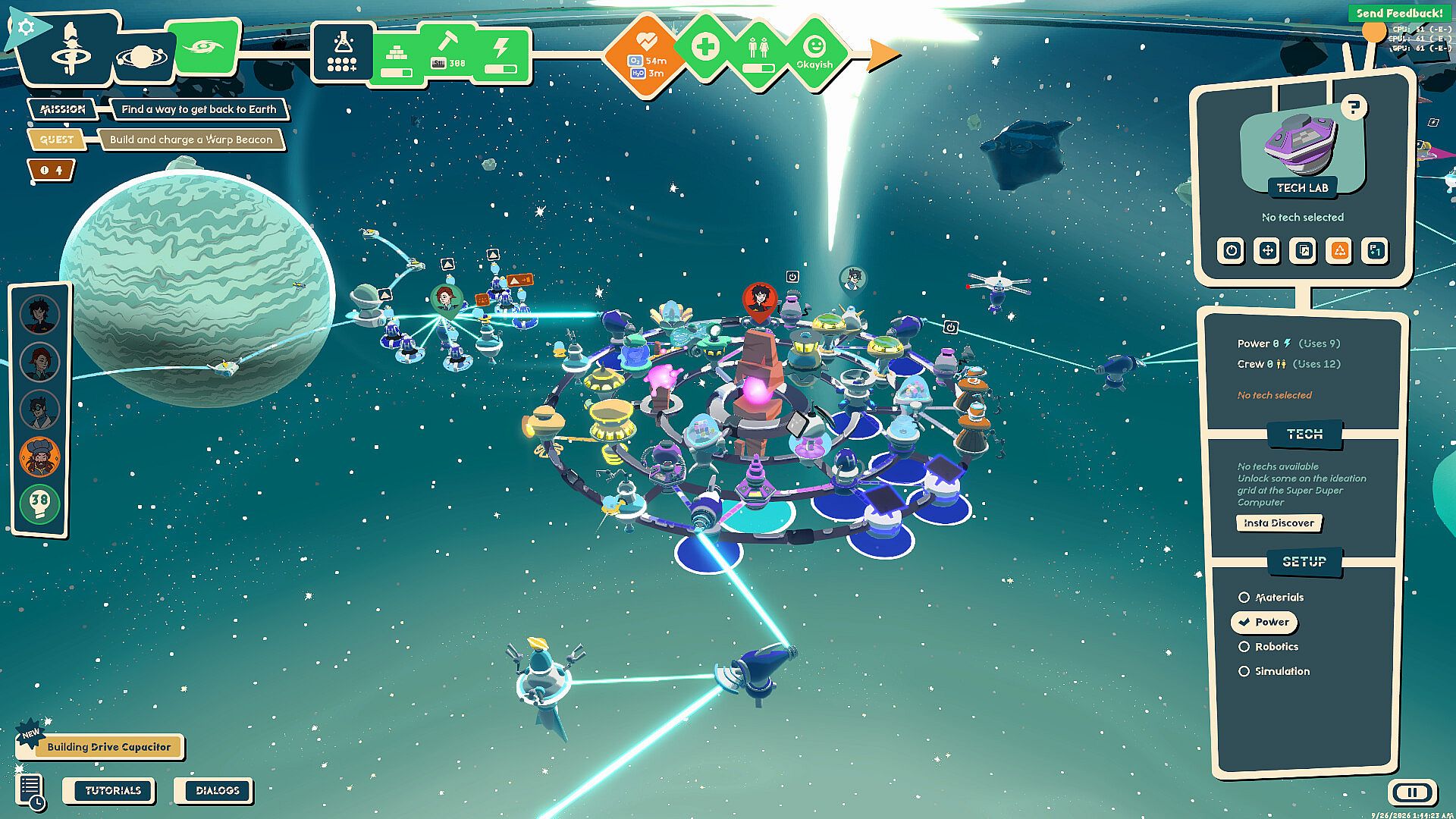
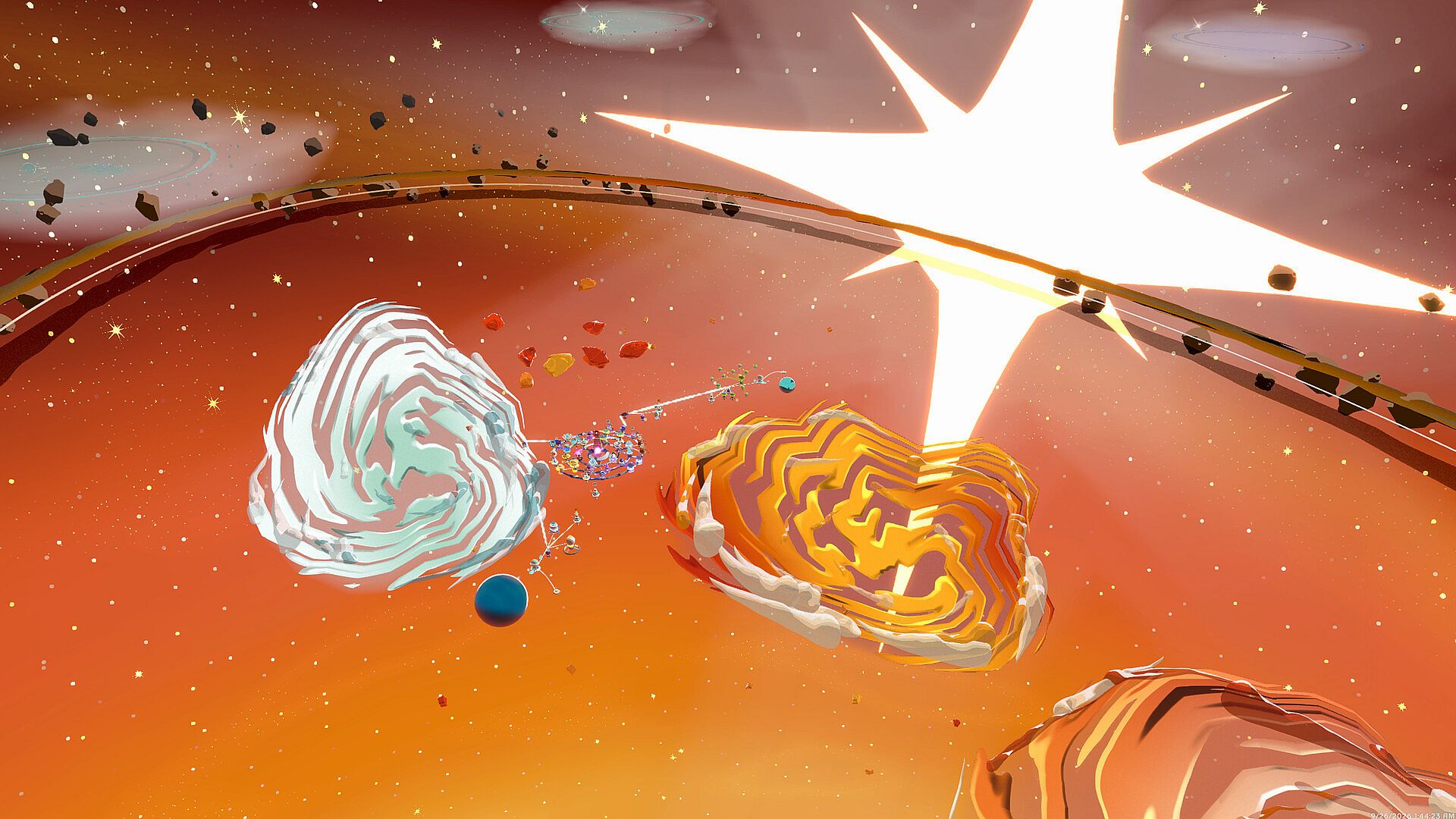
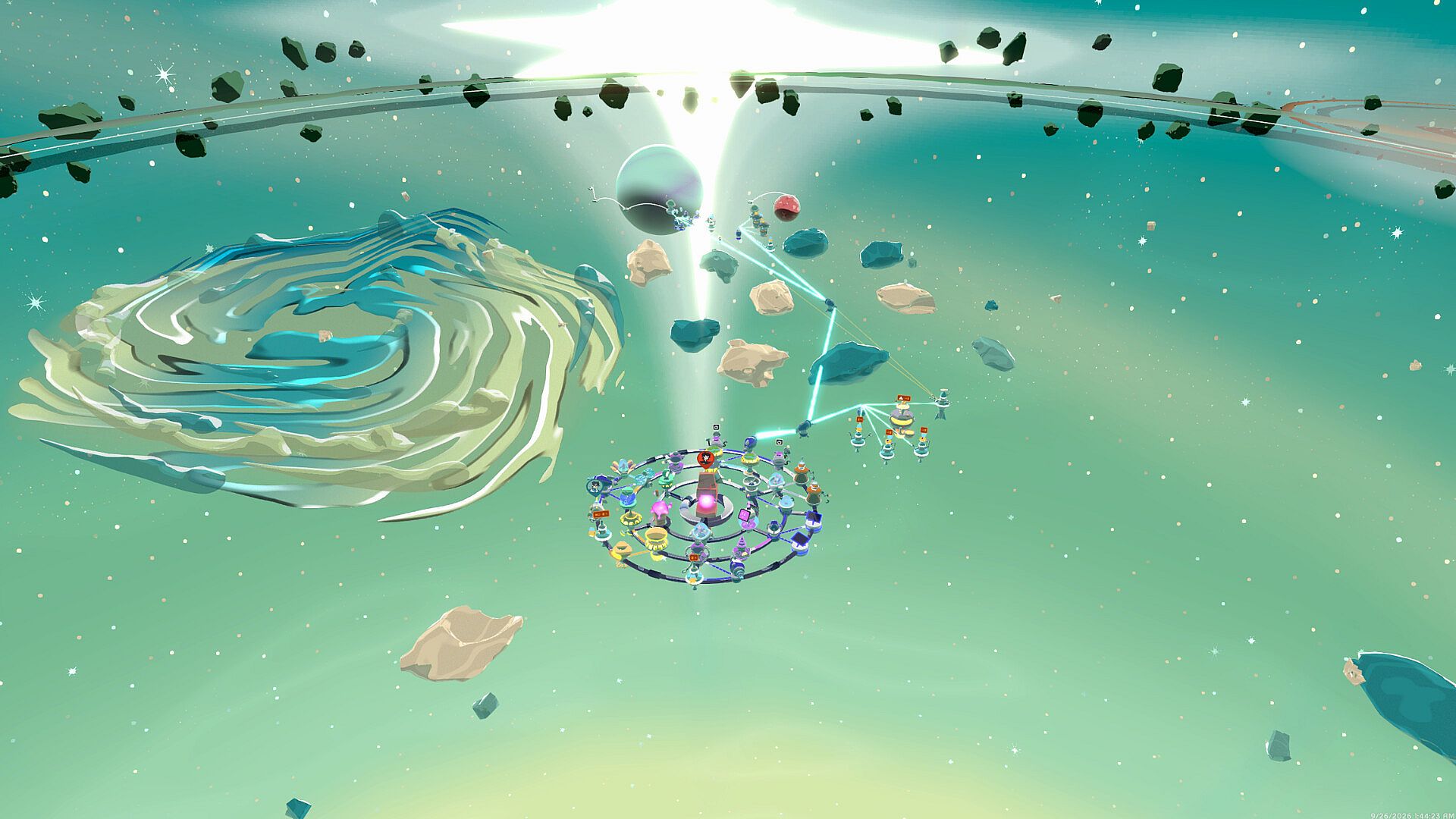




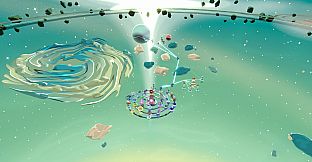
Mission to the Lost Galaxy is a strategy, indie, and simulation game centered on building and managing a traveling space station in a retro 1960s sci-fi setting. Players construct and optimize their station as it moves through dozens of star systems, balancing crew needs with resource constraints while expanding across the galaxy. The core loop involves gathering materials from planets and asteroids, developing technologies, and creating efficient networks for production and power distribution.
Gameplay
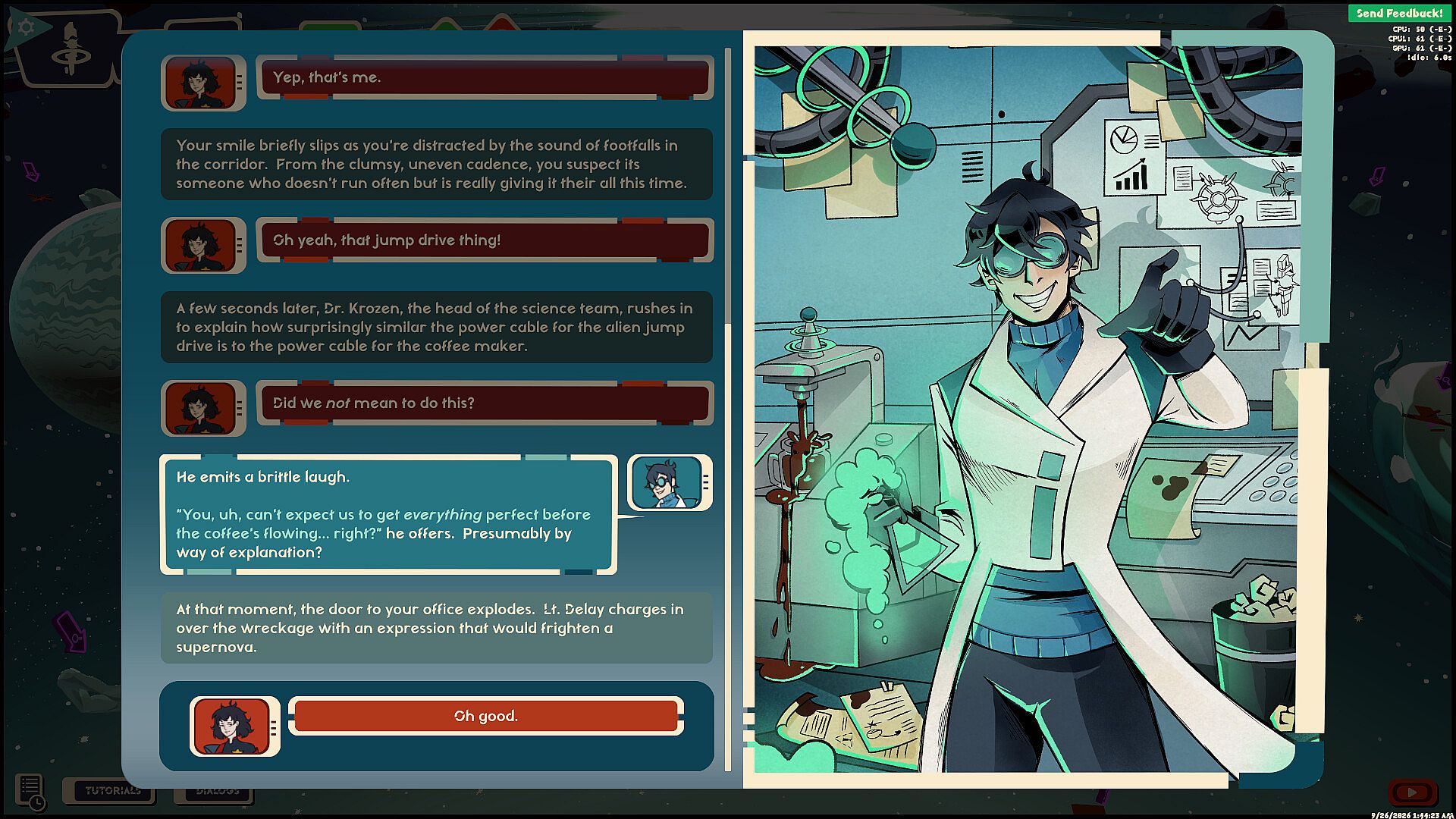
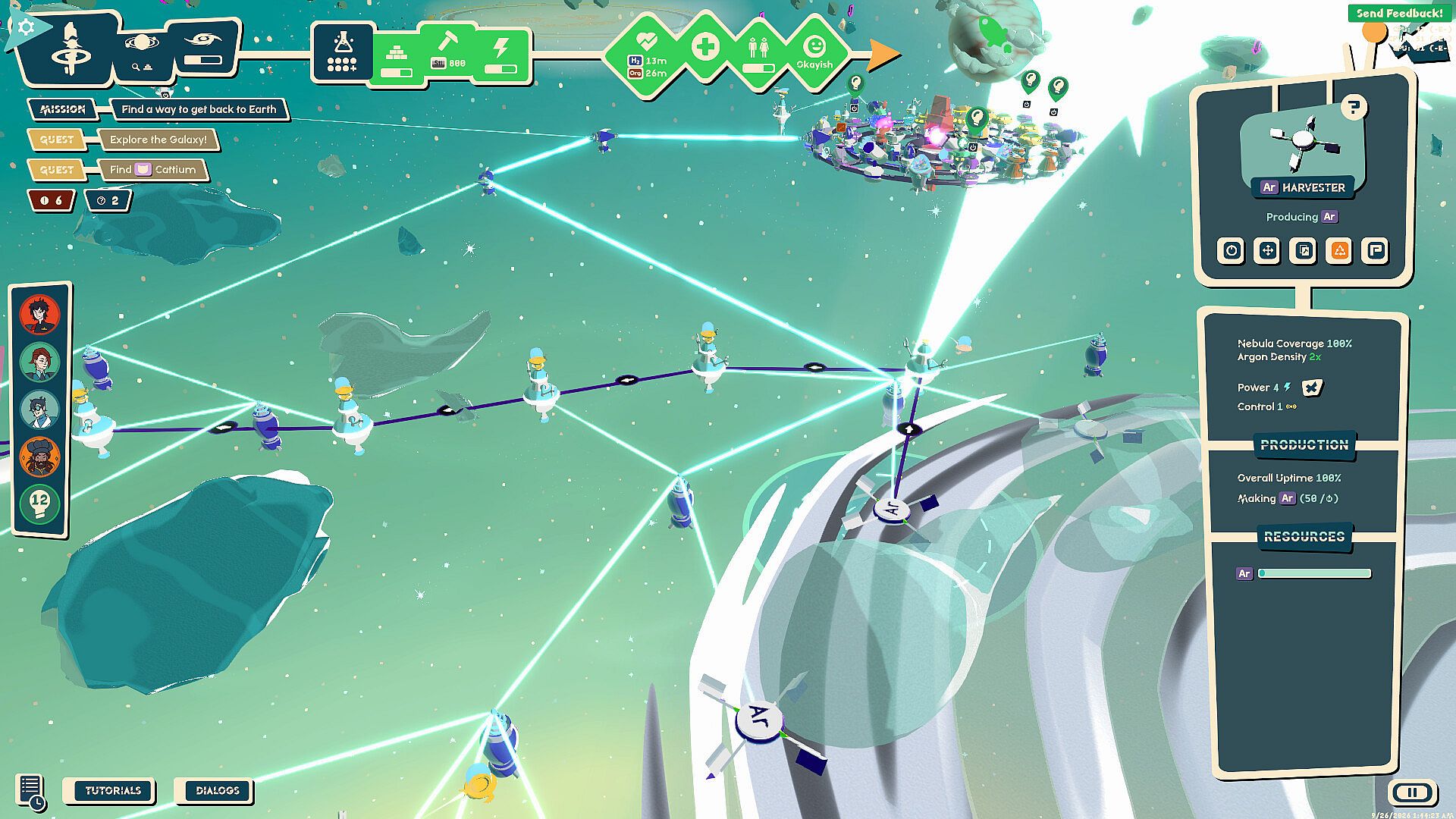
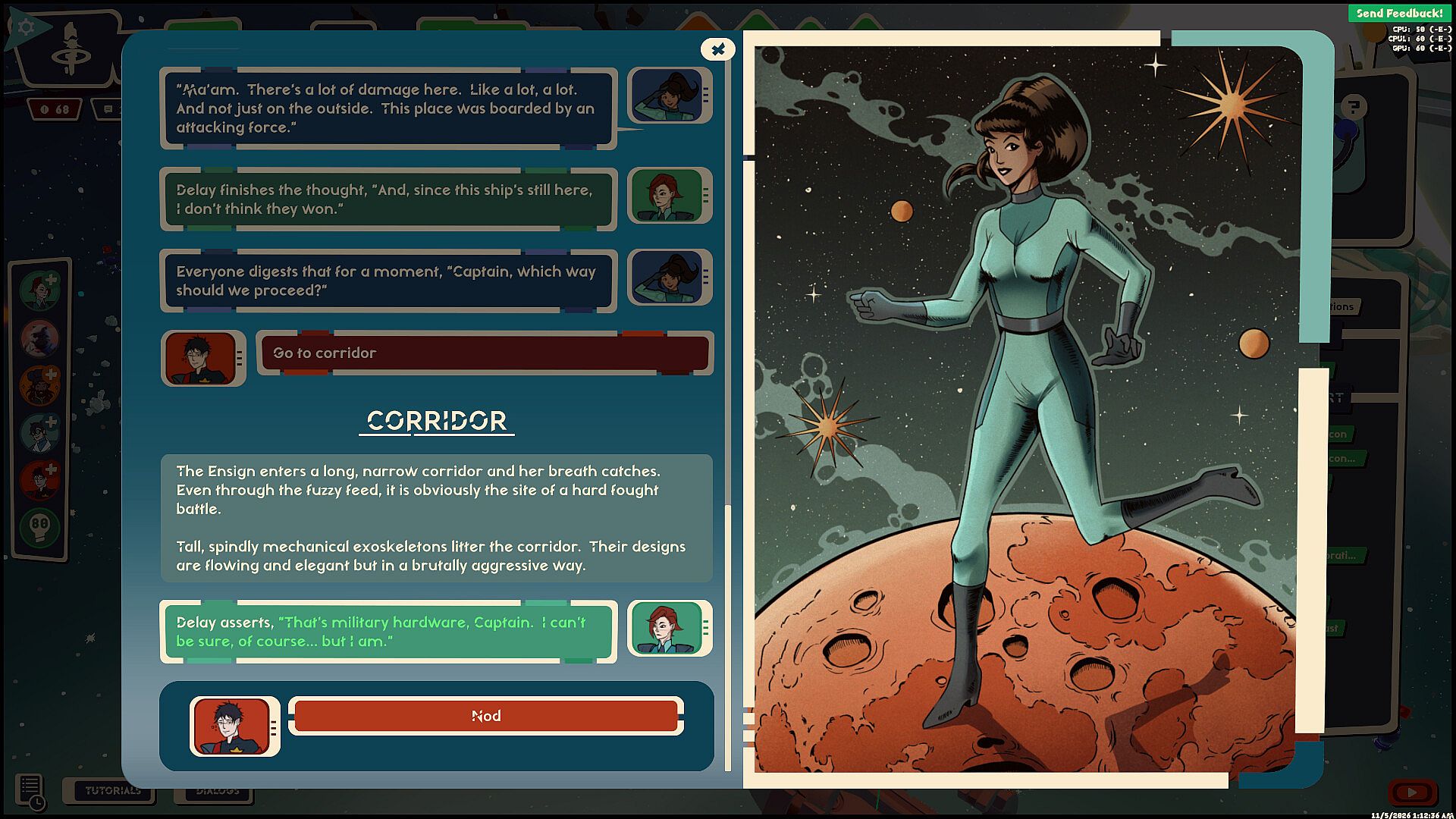
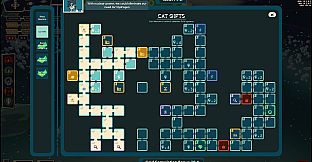
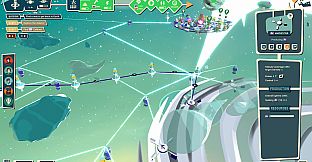
The station serves as both home and mobile base. Construction focuses on placing buildings that support crew health and morale while fitting into limited space. Every upgrade and layout choice carries forward as the station journeys onward, encouraging careful planning over repeated visits to systems. Resource gathering requires surveying celestial bodies, then routing materials through supply lines that connect multiple locations. Power management and material refinement feed into automated production chains that span star systems, allowing remote oversight of distant facilities. Players return to earlier sites to repurpose infrastructure or adjust operations from afar. Narrative elements emerge through encounters with alien species facing individual challenges, where earning trust reveals personal stories alongside larger mysteries tied to an ancient civilization whose actions once reshaped the galaxy at great cost.
Game Modes
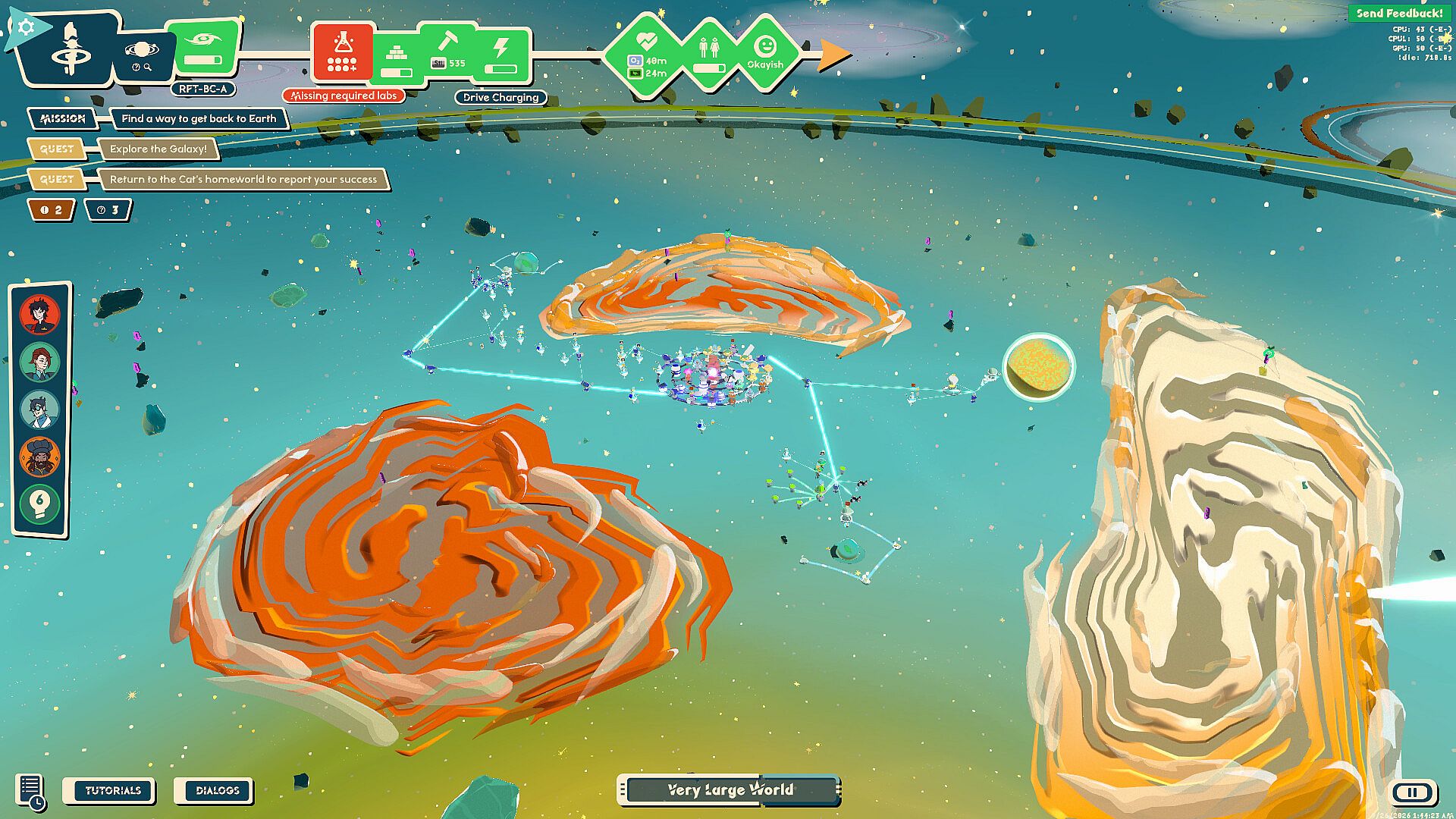
The experience centers on a single-player campaign of open-ended exploration and station development. There are no separate competitive or cooperative modes confirmed at this stage. Instead, progression unfolds through free building across more than fifty unique star systems, where choices about which planets to survey, which aliens to assist, and which technologies to pursue shape the path forward. The structure supports both methodical optimization of production networks and more exploratory play that prioritizes uncovering lore and helping stranded species.
Exploration and Progression
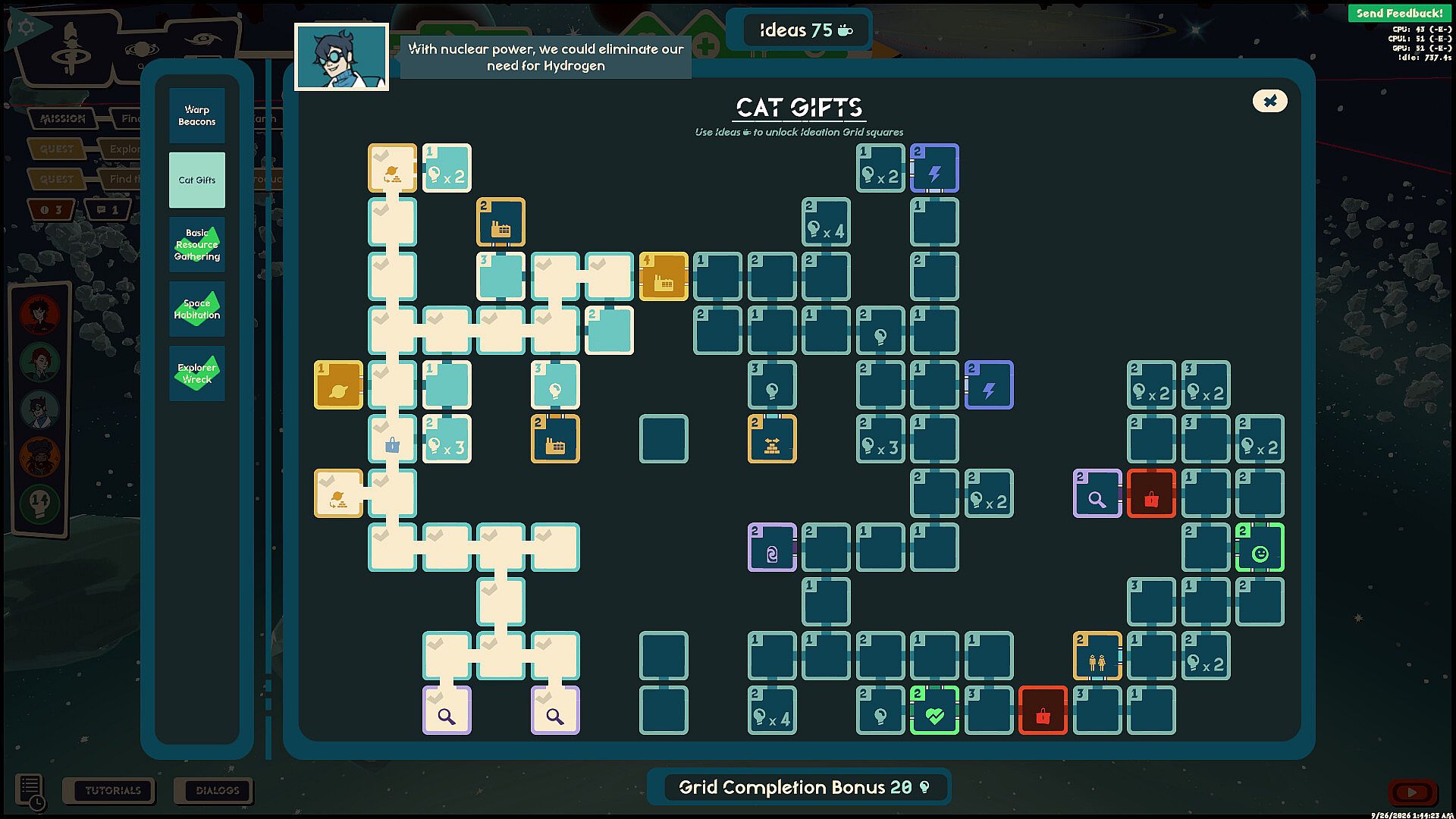
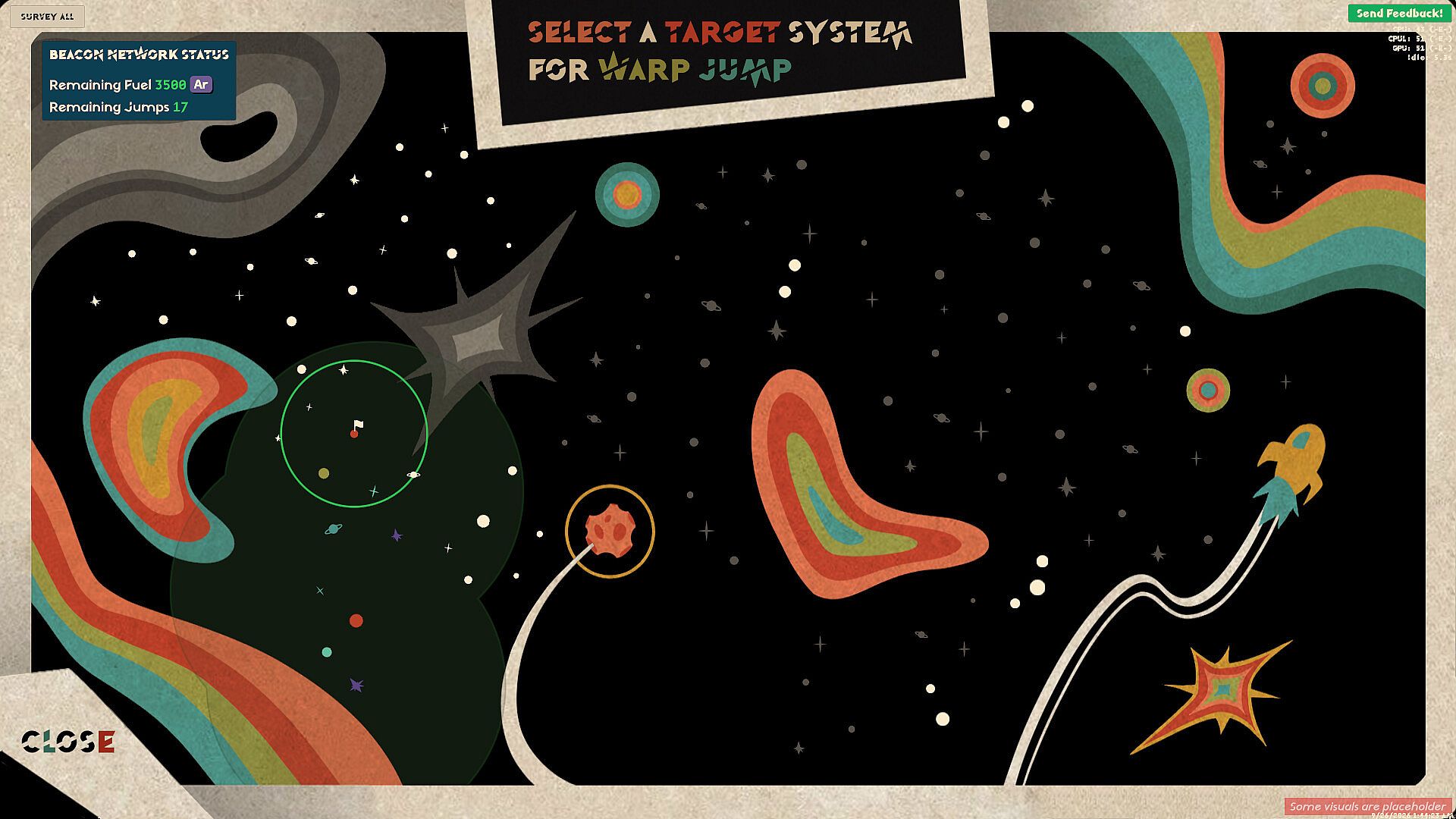
Progression ties directly to galactic travel. Each new system presents fresh opportunities for resource extraction and expansion, but the persistent station means earlier decisions influence later challenges. Automation features let players scale operations without constant micromanagement, while the need to maintain crew satisfaction adds ongoing management layers. The 1960s aesthetic influences visual design and tone, blending retro futurism with humorous alien interactions. Ancient ruins and artifacts provide deeper context for the galaxy's history, rewarding thorough investigation rather than speed.
Is It Worth Playing?
Mission to the Lost Galaxy suits players who enjoy detailed city-building mechanics combined with space exploration and light narrative elements. The persistent station and cross-system automation create a satisfying sense of long-term growth, while alien encounters add personality without overwhelming the simulation focus. As the game remains in active playtest, interested players can access it through official channels to provide feedback and shape development. Those drawn to indie strategy titles that emphasize efficient resource networks and gradual galactic expansion will find the systems align closely with that preference. The current build highlights core building and travel loops, making it a solid option for fans of the genre seeking something distinct from traditional fixed-base builders.