


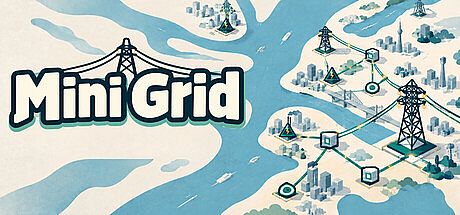


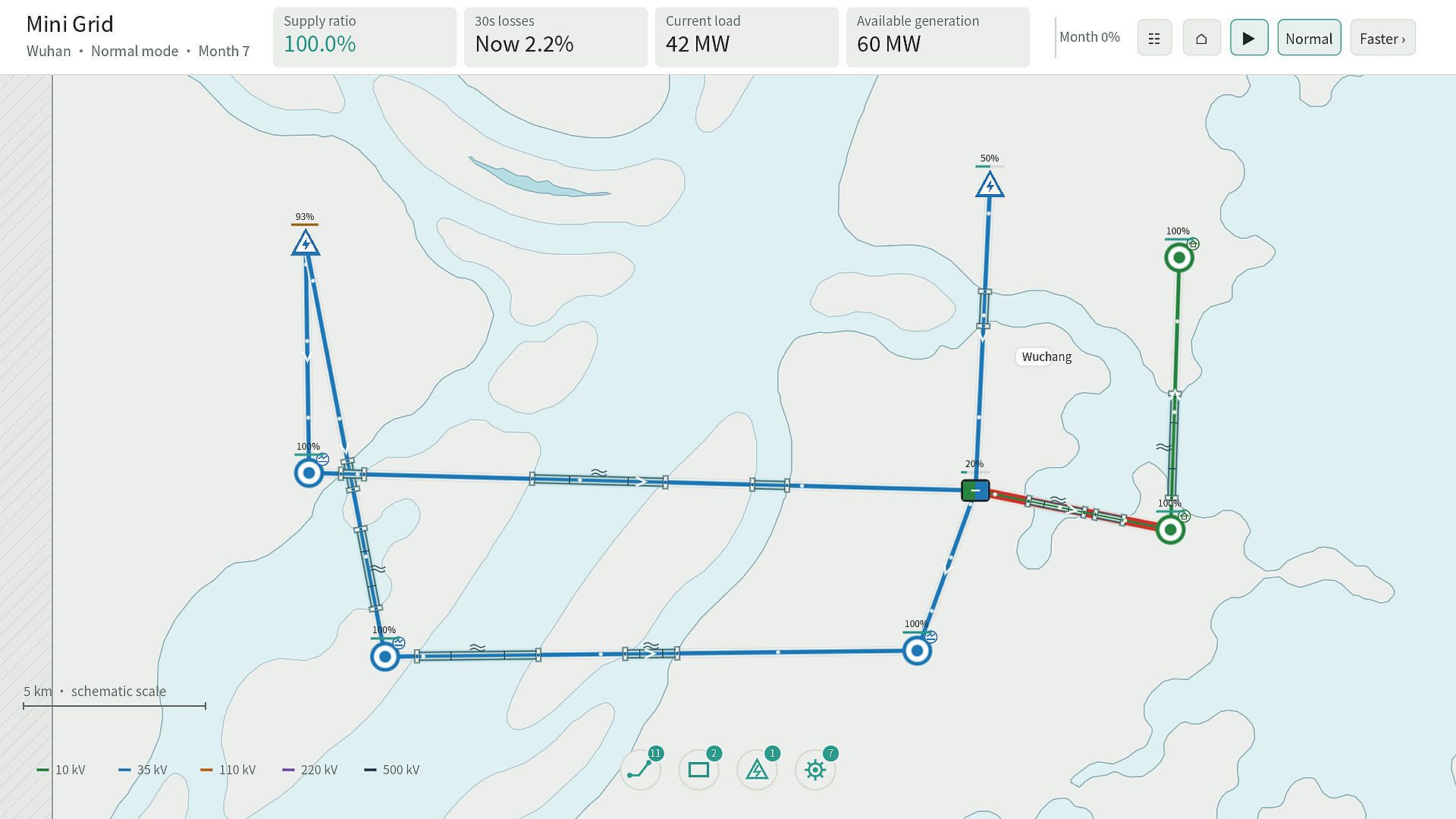
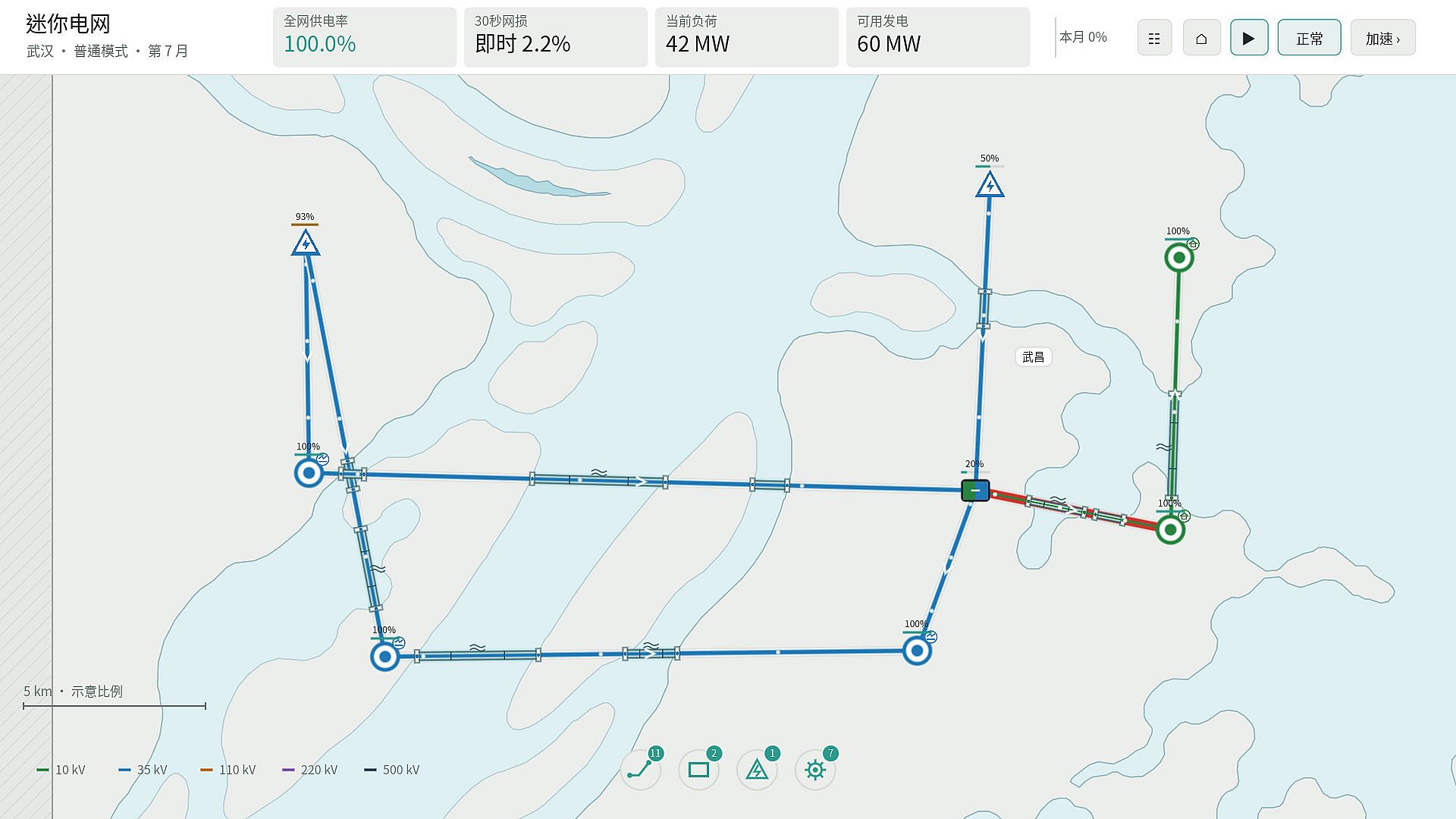
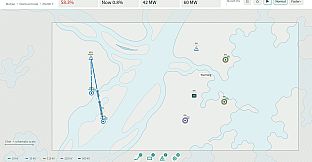
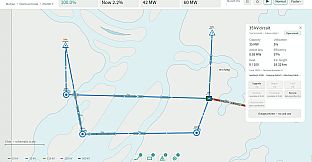
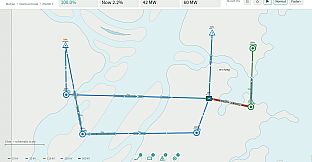
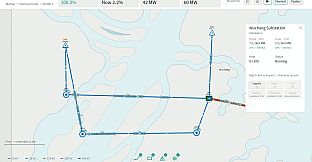
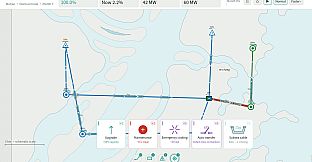
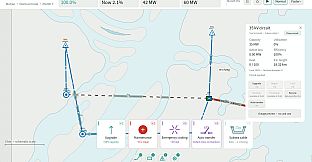
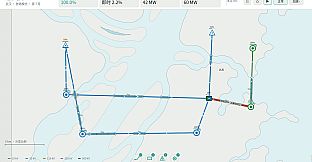
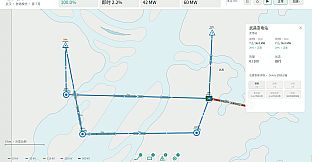
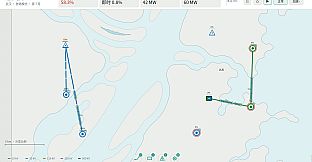
Mini Grid is a single-player strategy and simulation game focused on power grid planning and management. Players build and maintain electrical networks in a minimalist style, starting from basic demand points and expanding across detailed urban terrain.
Gameplay
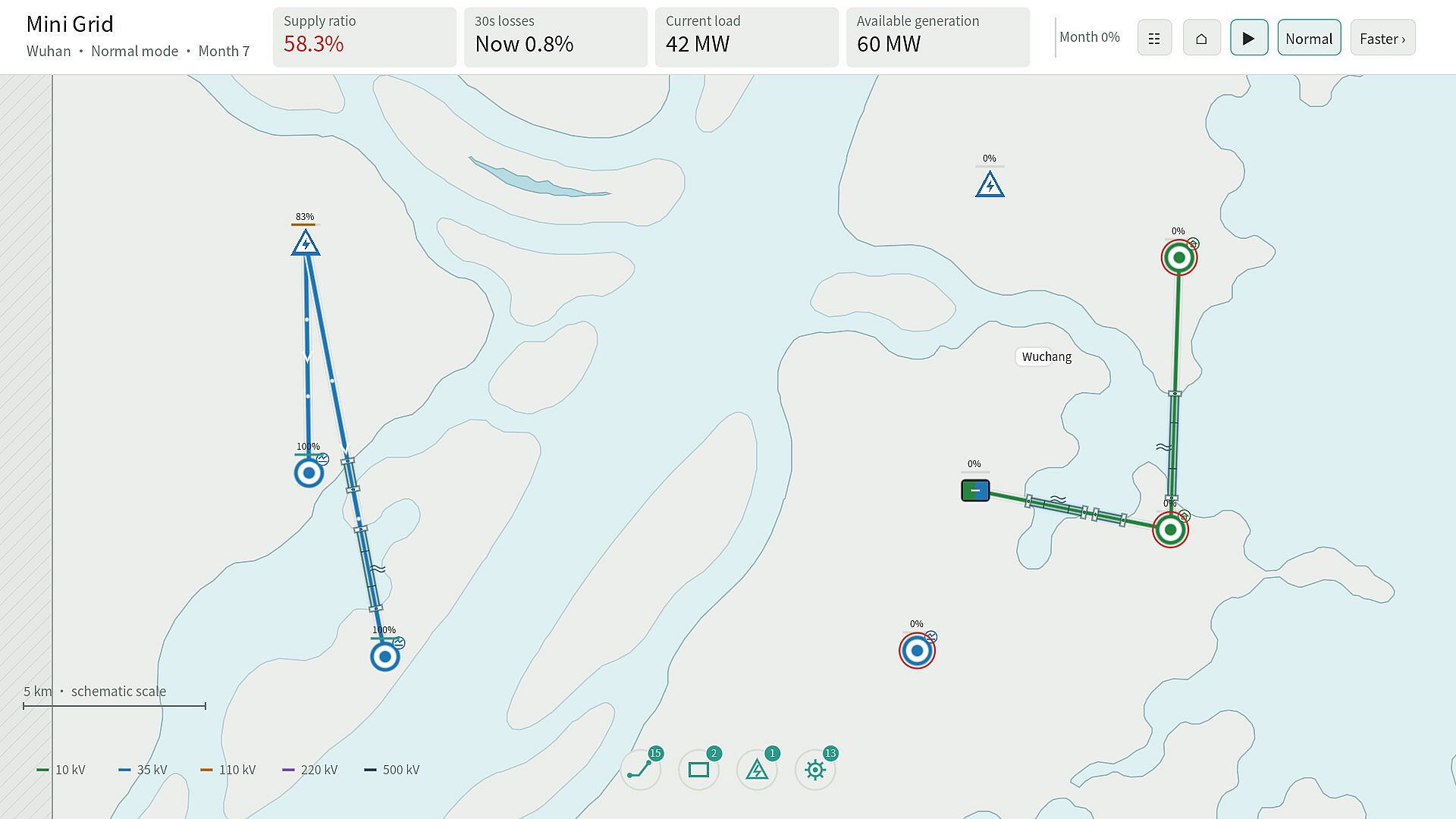
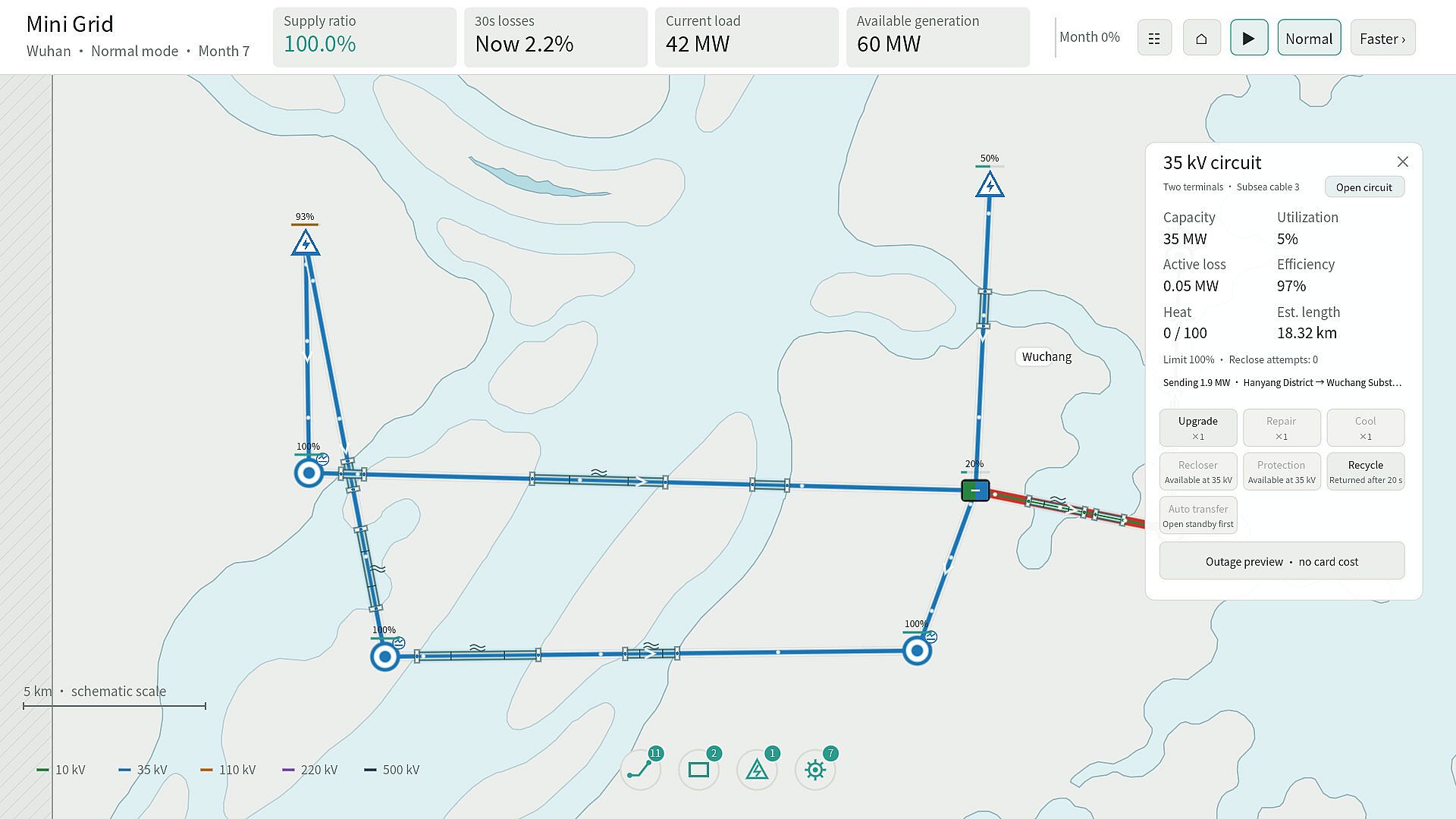
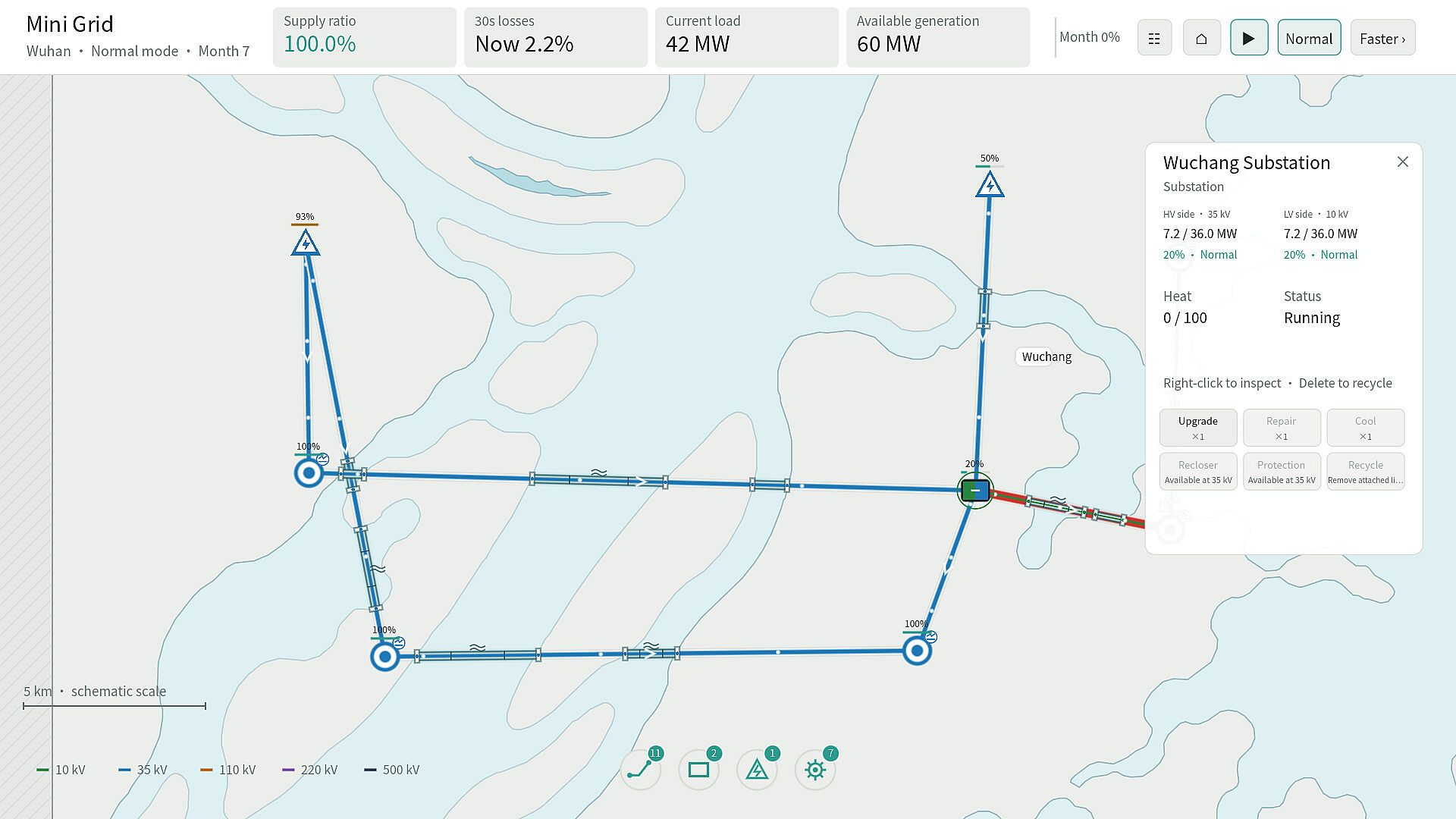
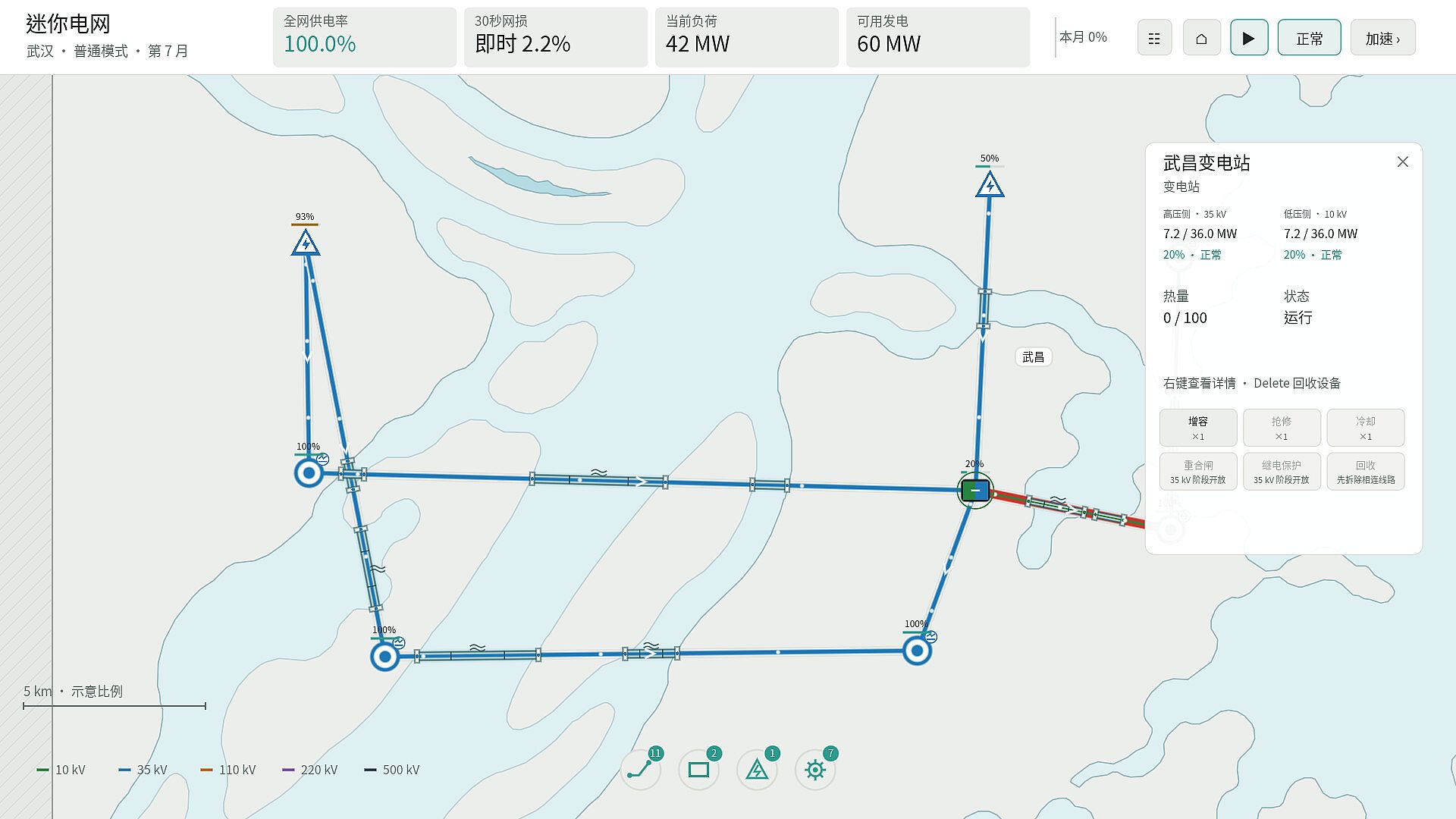
The core loop centers on constructing a reliable power network from limited resources. Players begin with a single demand point and add power plants, substations, and transmission lines to meet growing city needs. Every connection requires careful voltage matching between lines and terminals, with substations handling transitions between voltage levels. Underwater cables allow crossings over rivers, while monitoring tools display real-time power flows, equipment loading, and supply ratios.
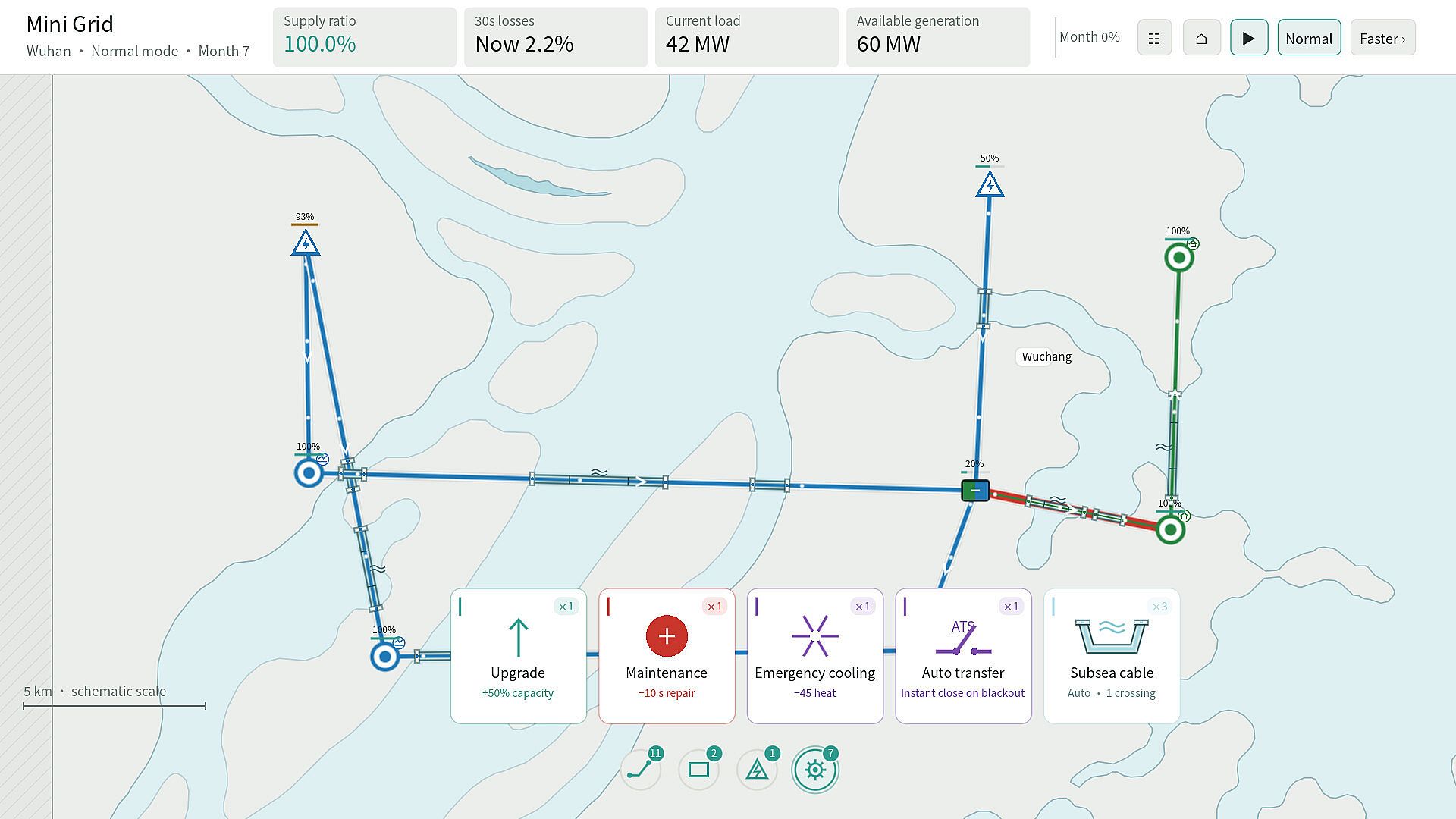
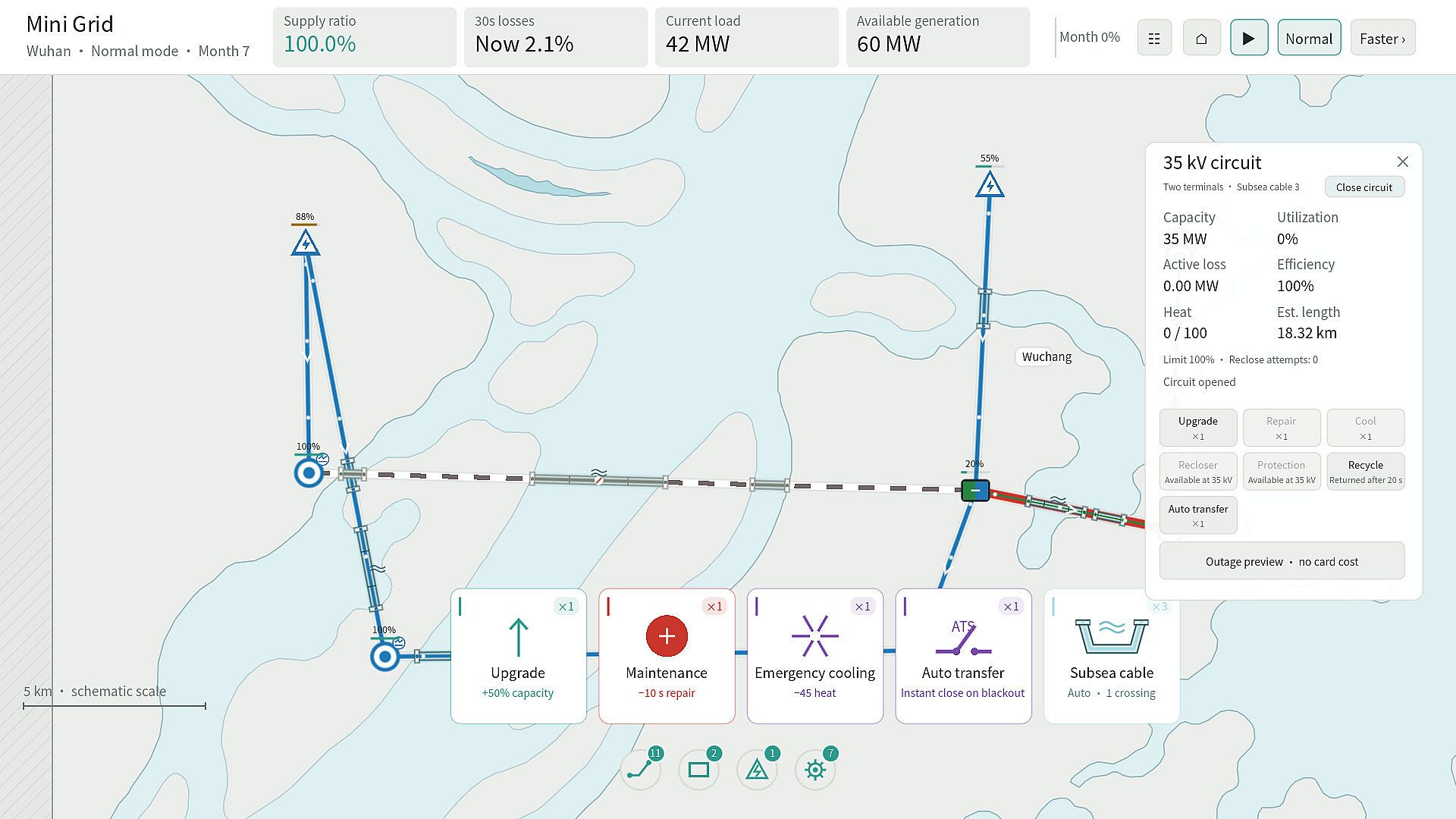
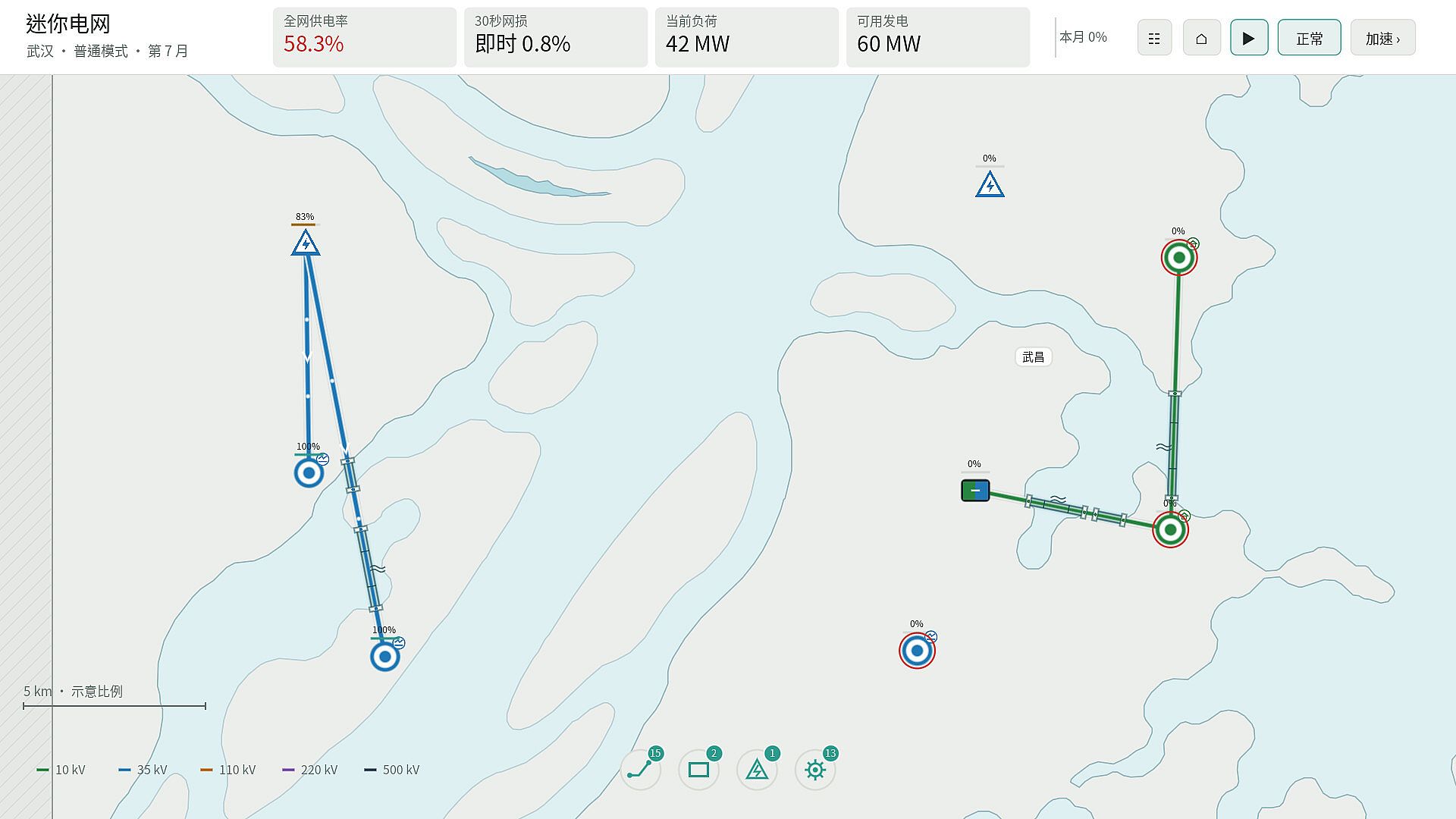
Expansion involves trade-offs. Demand increases steadily, construction takes time, and monthly engineering supplies remain limited. Players must decide whether to address immediate shortages or invest in larger future capacity. Overloads, overheating trips, scheduled maintenance, and sudden policy shifts can disrupt service, forcing quick adjustments such as opening circuits while preserving physical lines, rerouting flows, upgrading components, or establishing standby paths. Automatic transfer systems activate backup routes when a load loses supply.
Controls rely on keyboard and mouse for precise placement and inspection. A standalone tutorial and in-game guide explain the interface and mechanics without overwhelming new players.
Game Modes
Three distinct modes shape the experience. Normal mode pauses the simulation for deliberate planning, building, and network inspection as the city expands. Hardcore mode runs in real time, requiring immediate responses to faults on lines, transformers, busbars, generating units, and switchyards. Pausing remains available for review, but construction and dispatch actions advance only while the simulation continues.
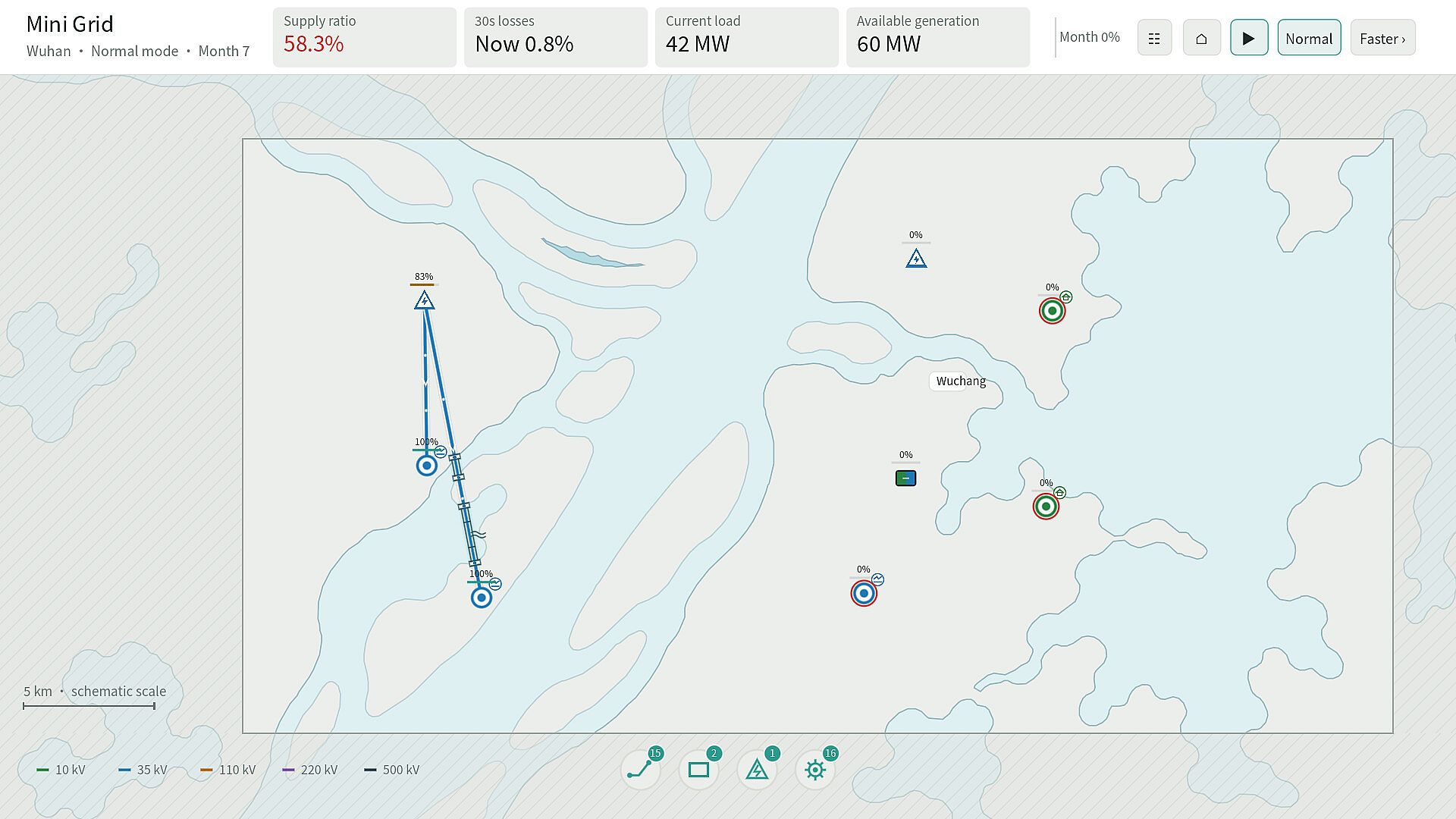
Sandbox mode offers extensive customization. Players adjust the five voltage levels, equipment capacities, demand patterns, fault frequency, and policy settings. The map studio supports drawing land and water features to create custom layouts, with options to save and reload personal maps. Sandbox settings and the map studio interface currently operate in Simplified Chinese.
Network Management Challenges
Recovery mechanics add depth to long-term planning. Players keep multiple local save files and can enable optional autosaving to test different approaches. The built-in map represents Wuhan, with its distinctive river layout shaping cable placement and substation positioning. Shanghai and Chongqing maps are not available.
Policy changes and equipment failures test resilience. Successful networks maintain supply ratios under stress through redundant paths and timely upgrades. Limited supplies encourage efficient routing rather than overbuilding, rewarding observation of flow patterns and loading data before committing resources.
Is It Worth Playing?
Mini Grid suits players who enjoy deliberate infrastructure simulation and strategic resource balancing in a single-player setting. The focus on voltage management, fault recovery, and timed expansion provides consistent decision-making without multiplayer elements or external progression systems. Those drawn to detailed planning tools and realistic constraint management will find the three modes support varied play styles, from paused experimentation to real-time response. The game runs on PC with straightforward keyboard and mouse controls, and its minimalist presentation keeps attention on the network itself. Availability of multiple saves and a clear tutorial supports repeated sessions for refining strategies.












