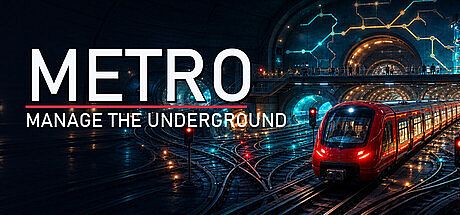




Metro. Manage the Underground is a single-player strategy and simulation game focused on building and operating an urban metro network. Players start with basic trains and service routes, then expand the system while handling daily operations, passenger flow, and unexpected events across a growing city map.
Gameplay
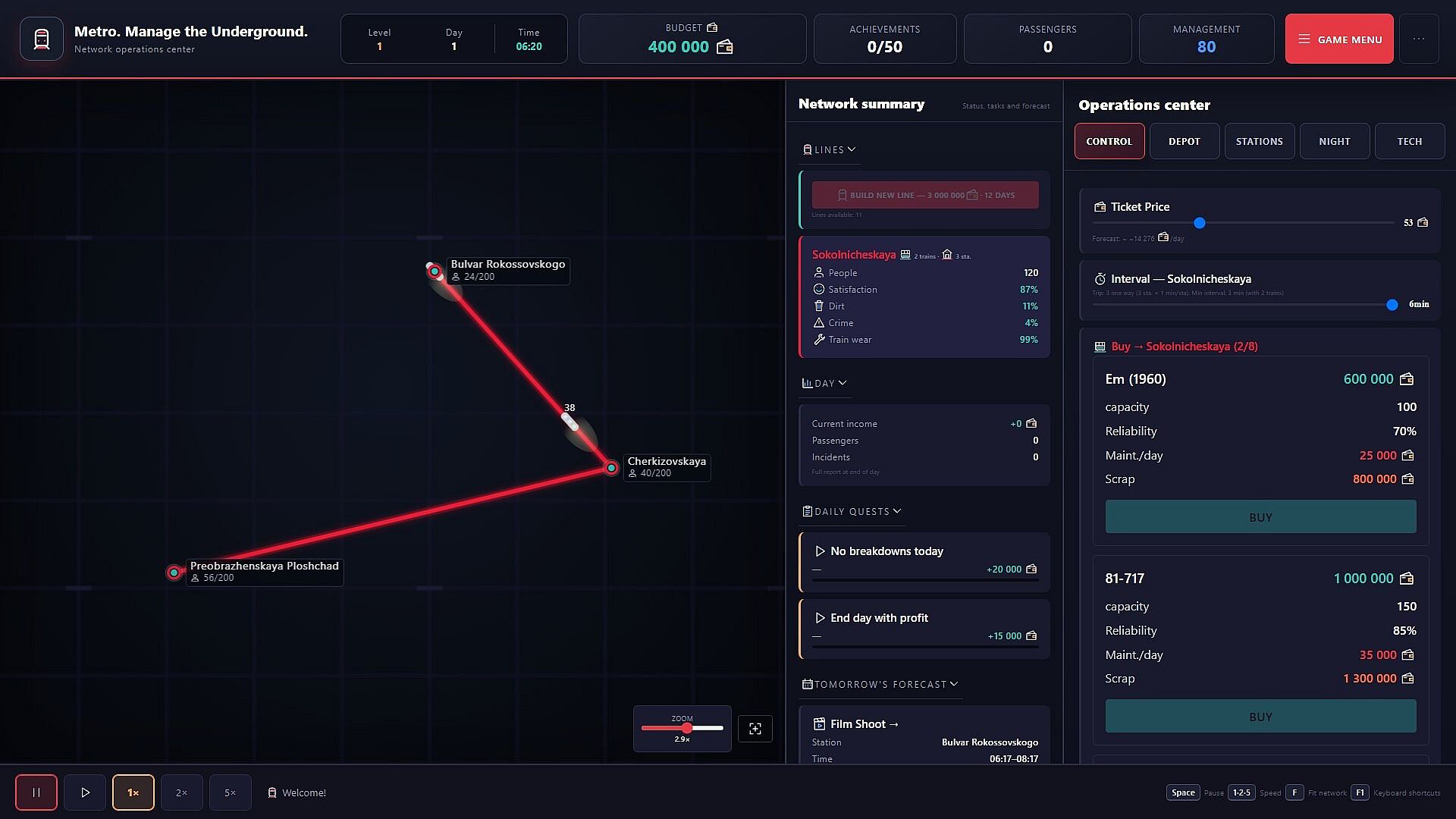
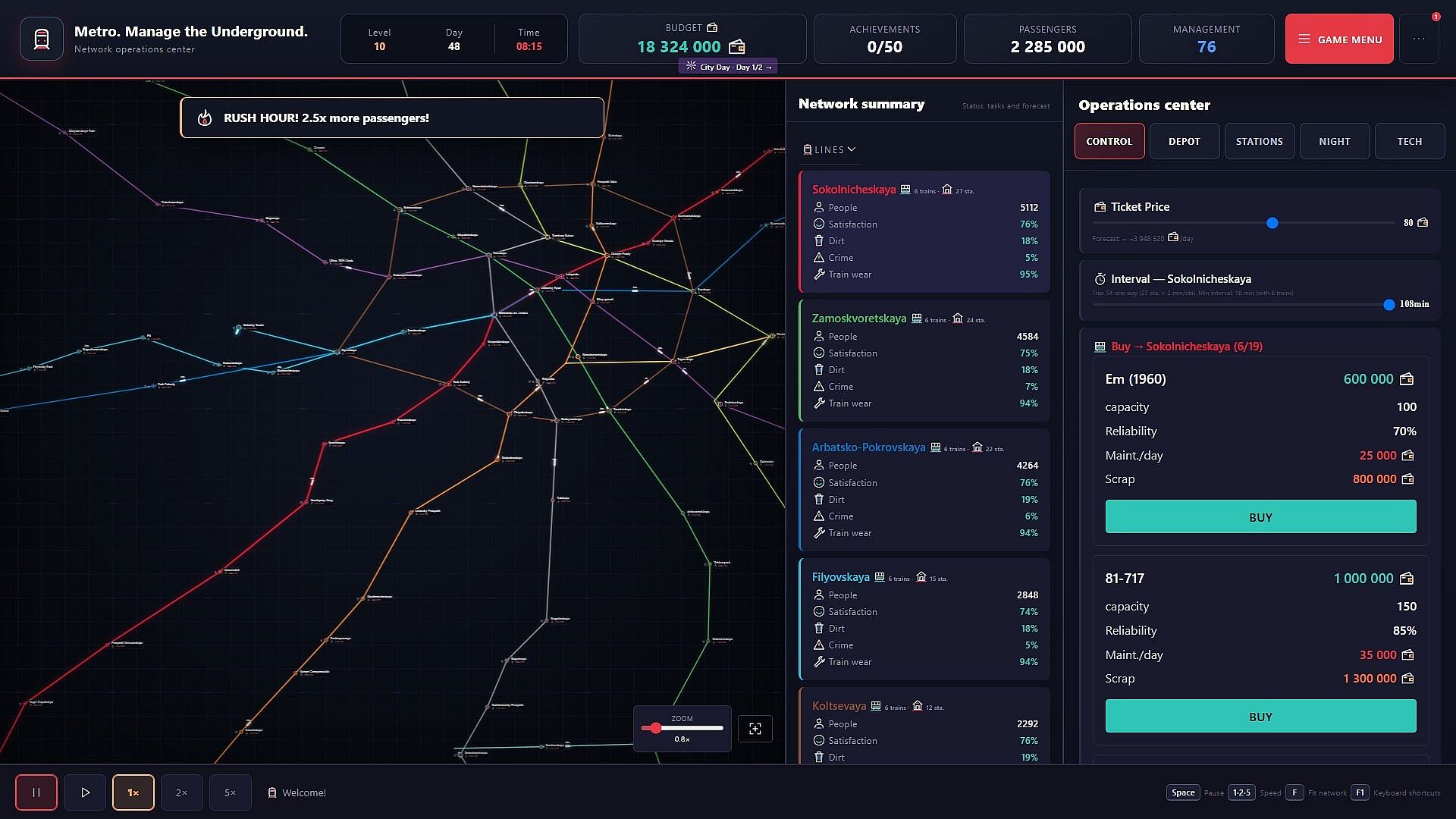
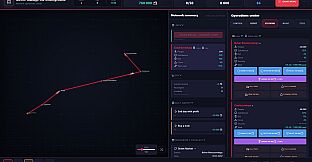
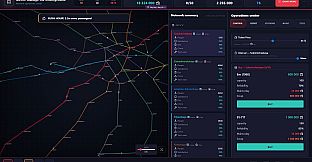
The core loop centers on balancing revenue, costs, and satisfaction in a top-down management view. Players purchase trains, set service intervals, and adjust ticket prices to match demand during peak periods. Budget tracking requires careful allocation between operations and growth, as rush hour tests decisions on capacity and pricing.
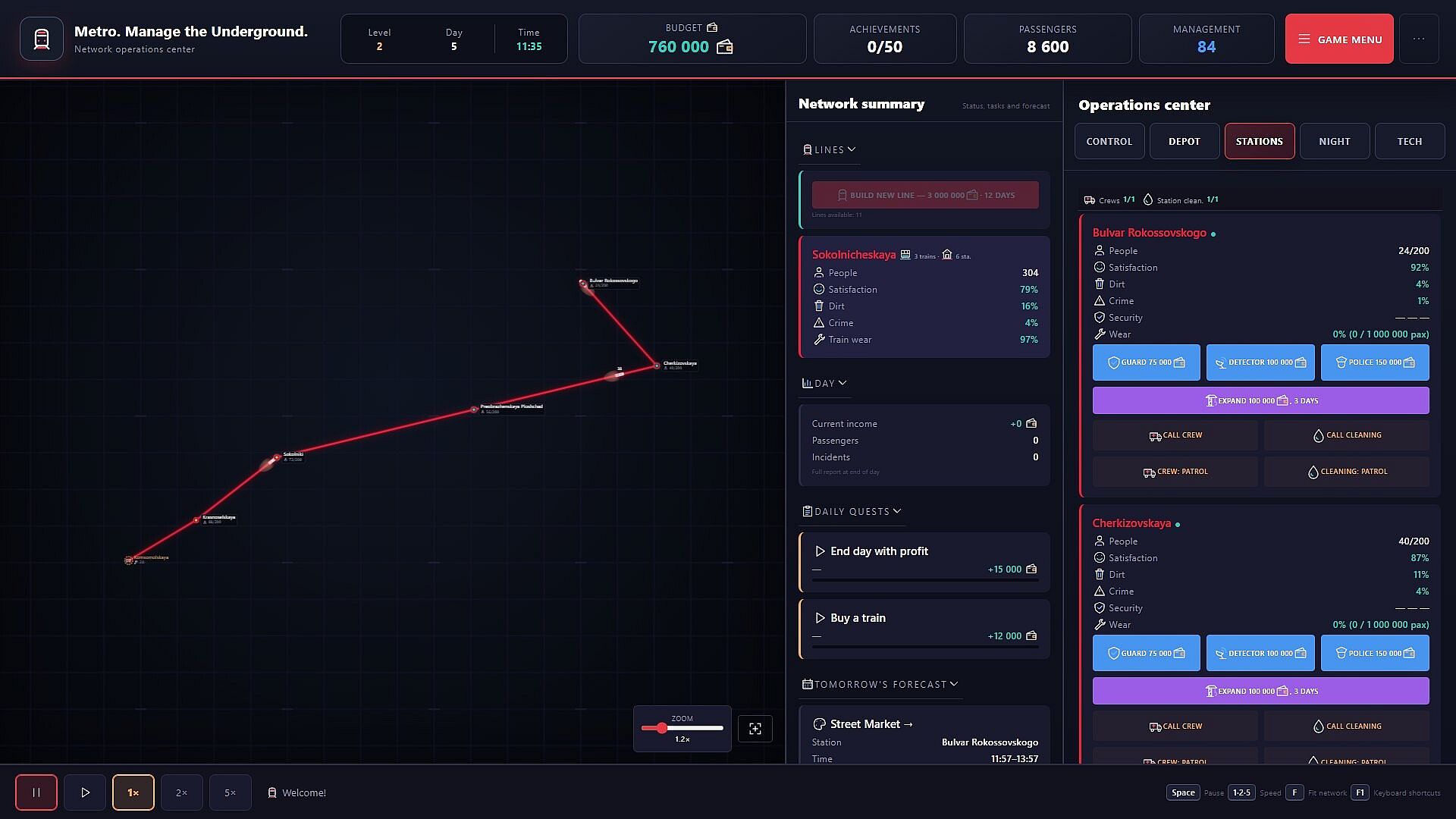
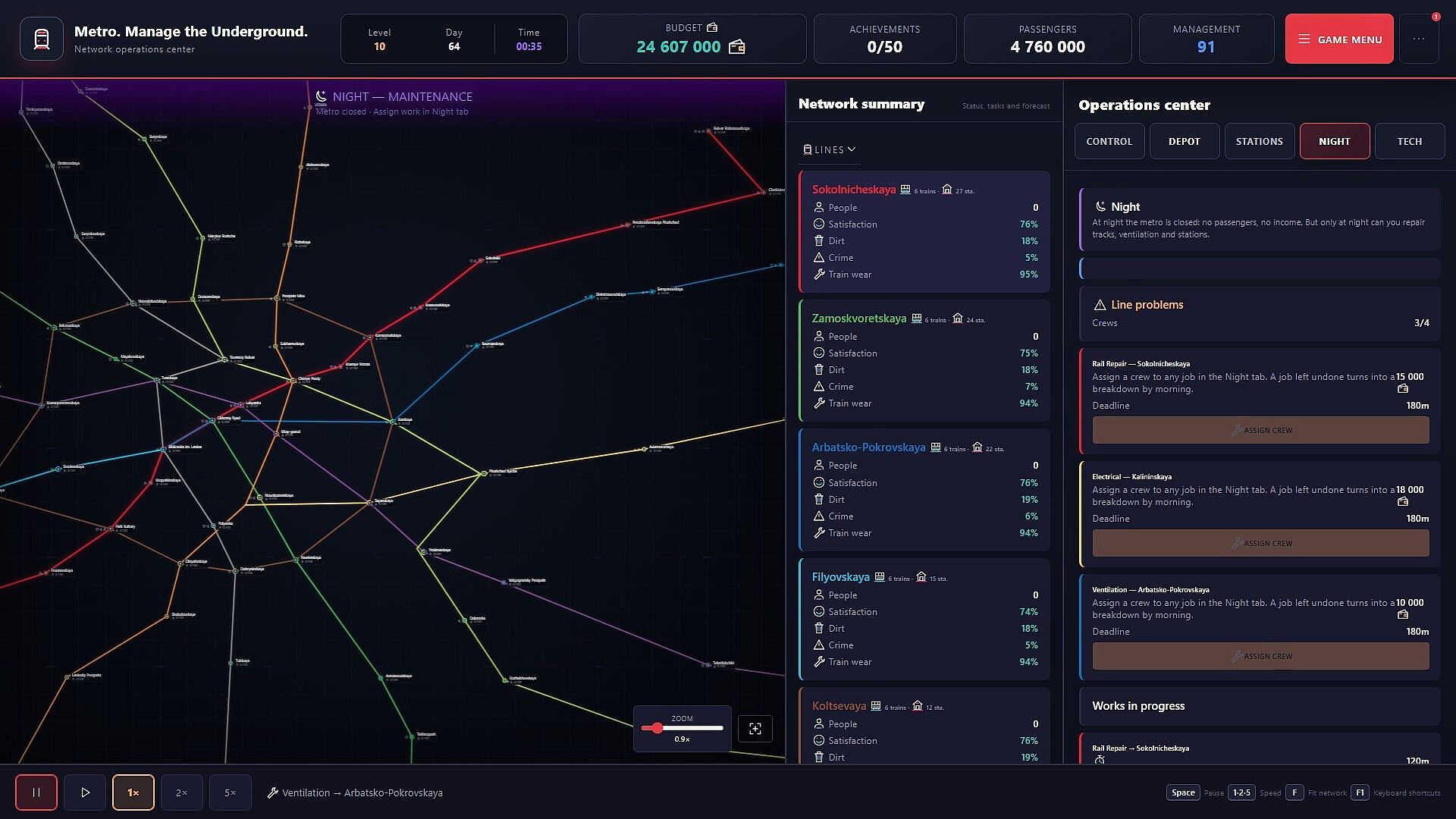
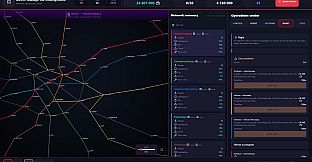
Station management involves monitoring cleanliness, security, and passenger comfort. Incidents such as fights, vandalism, or suspicious packages require dispatching crews, while security measures like guards or detectors help maintain order. At night, the focus shifts to maintenance tasks including track repairs, cleaning, and ventilation upgrades to prepare for the next day.
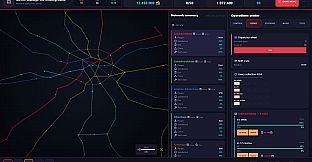
Expansion comes through network growth and technology unlocks. These advancements automate routine tasks like scheduling or basic repairs, allowing players to handle larger passenger volumes without constant manual intervention. Time controls let users pause for detailed planning or accelerate simulation speed to observe outcomes quickly.
Key mechanics include resource allocation across economy systems, incident response teams, and progressive automation. Station parameters such as dirt levels, crime rates, and wear influence overall performance, while events like concerts or sports matches can spike ridership and create additional challenges.
Game Modes
The main experience follows a continuous campaign where players develop one network from initial lines to a full interconnected system. This mode emphasizes long-term planning, incremental upgrades, and adapting to rising demand over multiple shifts.
Separate scenarios provide focused challenges with specific goals or constraints. These standalone sessions test particular skills, such as managing high-traffic periods or recovering from major incidents, without carrying over progress from the main game.
Both modes support the same core systems for train operations, crew assignments, and network expansion. Players can switch between them to practice different aspects of metro management or pursue varied objectives at their own pace.
Key Systems and Progression
Technology research branches into areas like infrastructure improvements, commercial optimizations, and safety enhancements. Unlocking these options reduces manual workload and improves efficiency as the network scales.
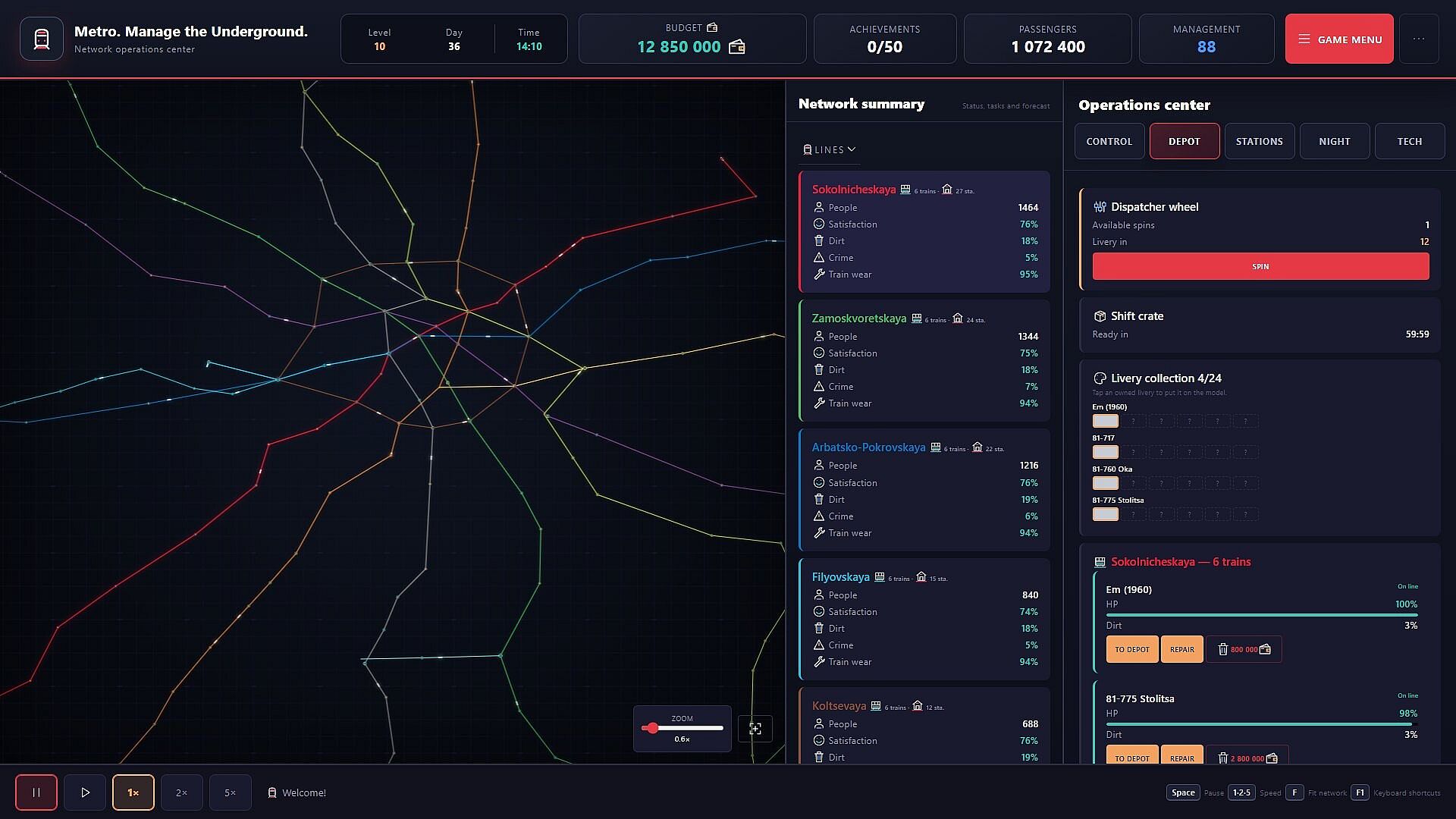
Crew management covers multiple roles for rapid response and upkeep. Players assign teams to handle emergencies during operating hours and schedule maintenance crews for overnight work. Real train models become available through purchases, each with distinct performance characteristics suited to different route demands.
Daily objectives and achievement tracking add structure to sessions. Completing these provides incremental rewards that support further expansion while encouraging consistent attention to all aspects of the operation.
Is It Worth Playing?
This management simulation appeals to players who enjoy detailed transport and economy games with hands-on control over operations and growth. The combination of real-time decision making during rush periods and strategic planning during quieter phases creates a satisfying loop for those interested in city infrastructure themes.
Since the title remains in development ahead of its October 2026 release, player reception data is not yet available. Early descriptions highlight strong emphasis on realistic metro elements, including specific train models and station parameters, which should resonate with fans of similar indie simulation titles.
Those who prefer single-player experiences with pause functionality, time scaling, and progressive unlocks will find the systems accessible yet layered. The game suits users looking for a focused transport management challenge rather than action or multiplayer elements.
- Strong fit for strategy simulation enthusiasts seeking metro-specific mechanics.
- Time controls support both deliberate planning and accelerated observation.
- Scenario options allow targeted practice without committing to the full campaign.