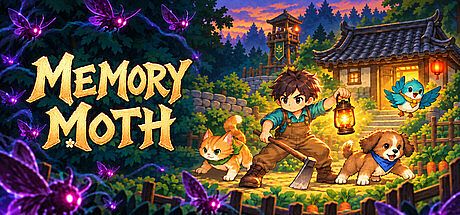



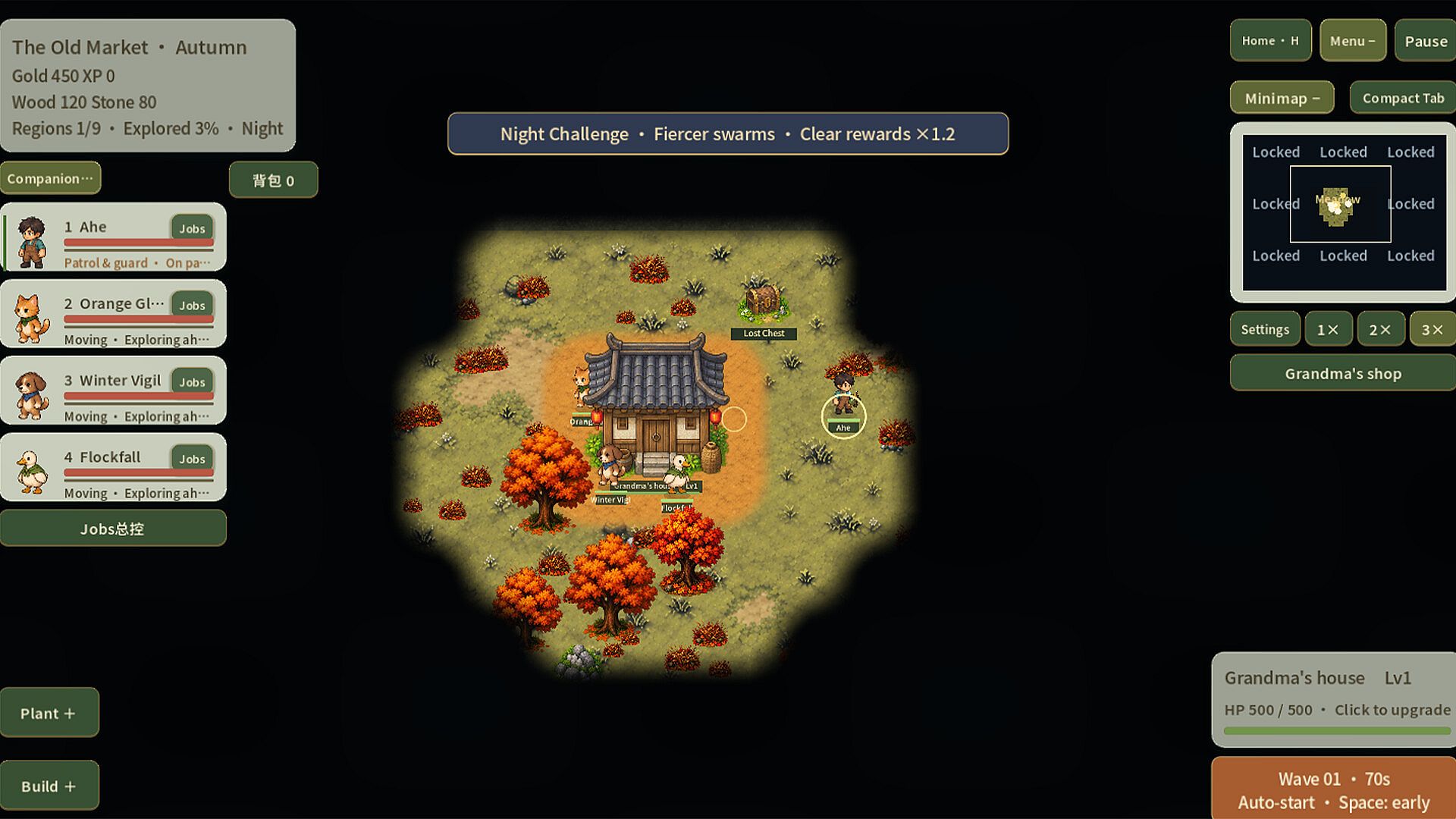
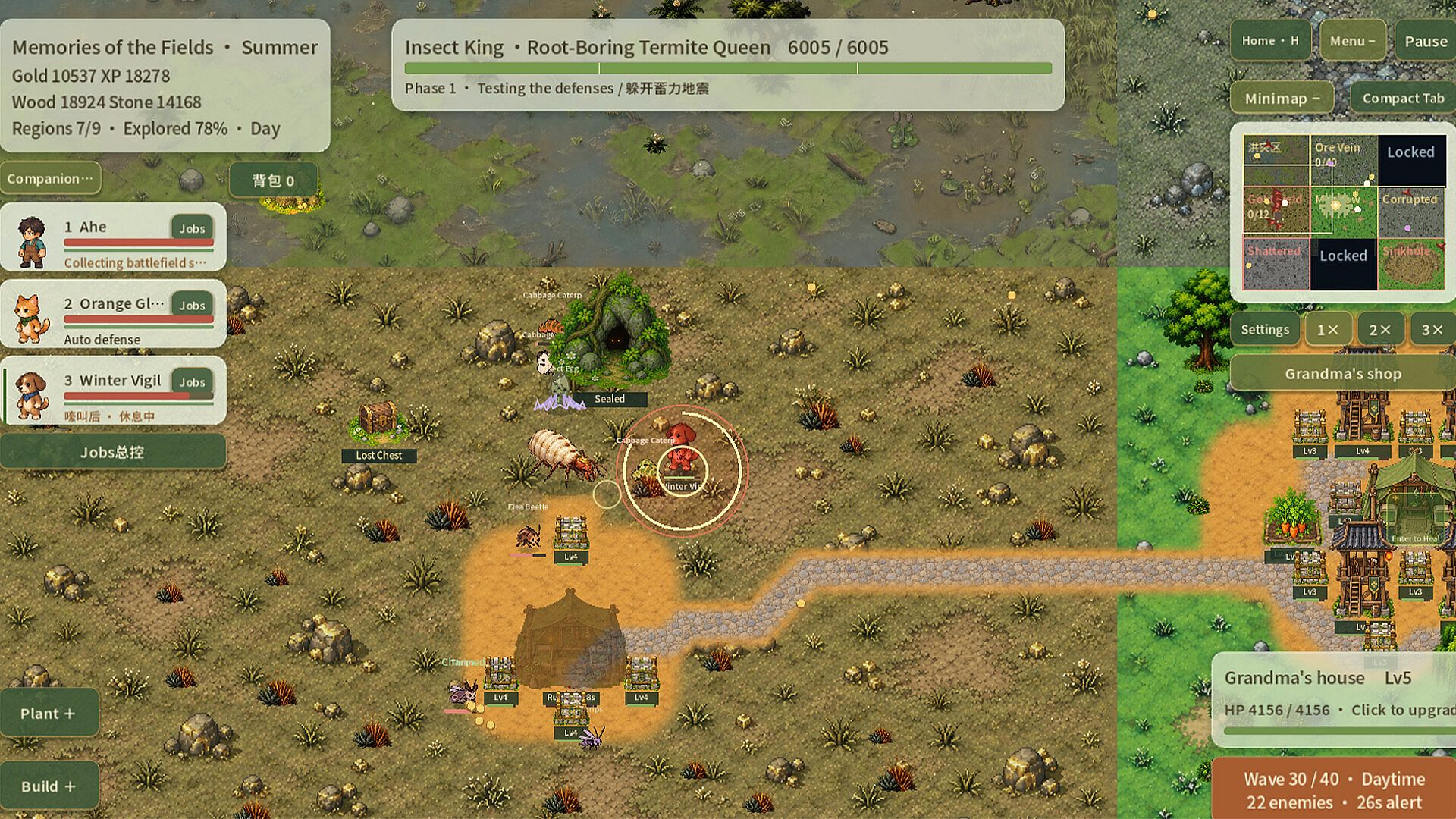
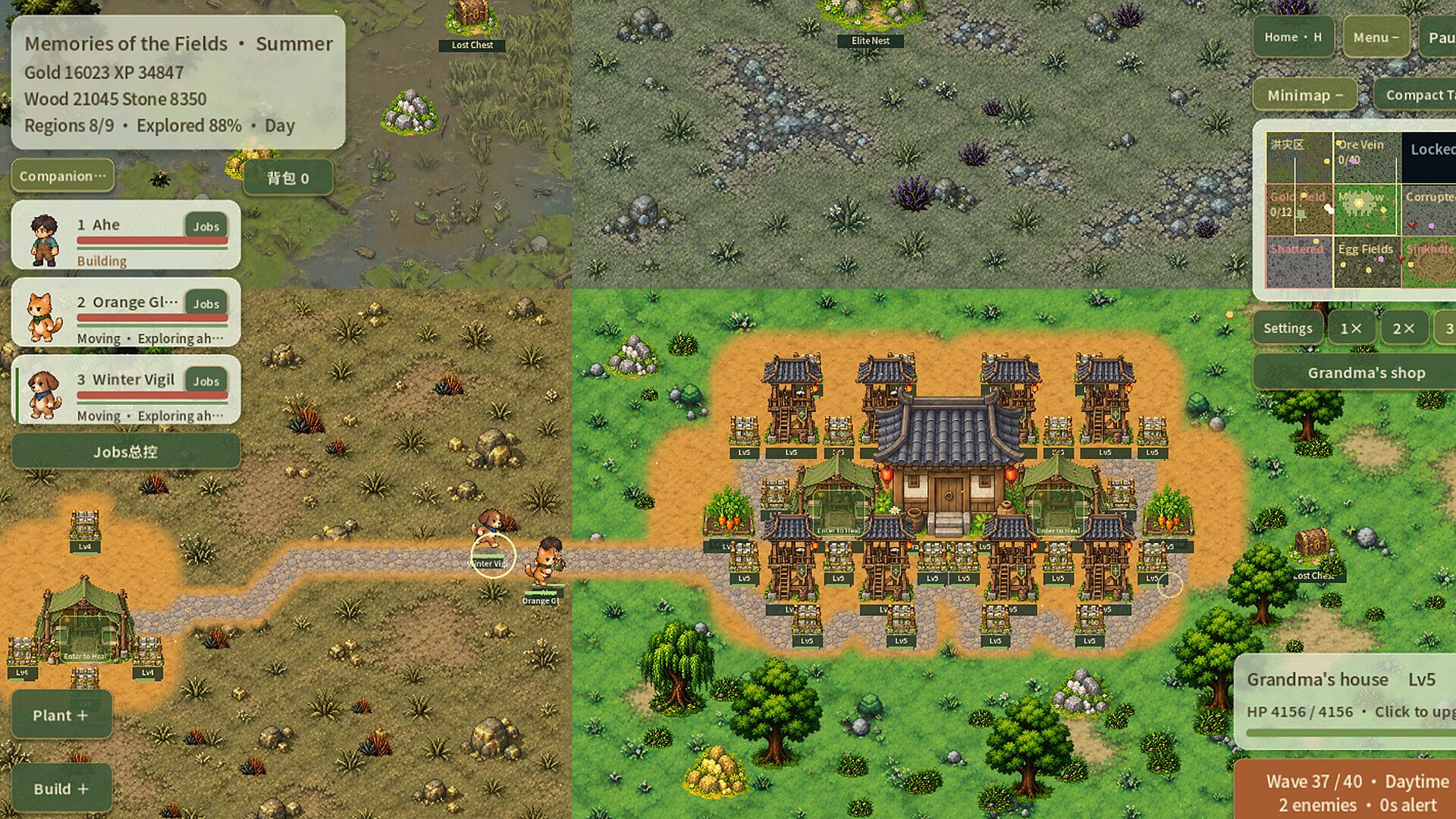
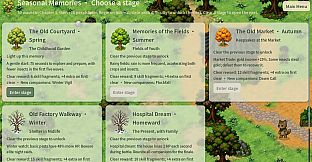
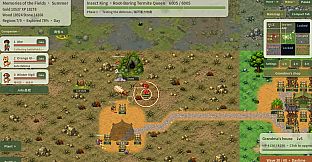
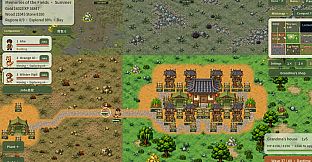
Memory Moth is a free to play indie strategy game on PC that combines roguelike elements with tower defense, farming, resource management, and companion progression. Players protect a garden woven from memories against invading pests that represent forgetting and decay. The core experience centers on growing crops that carry memories, constructing defenses, and directing animal companions in battles that unfold across multiple waves.
Gameplay
The gameplay loop revolves around preparing the garden between waves and then defending it during active assaults. Limited farmland requires careful decisions about which crops to plant, as mature vegetables like carrots, spinach, tomatoes, corn, pumpkins, broccoli, and peas grant specific bonuses such as health recovery, faster attack speed, reduced skill cooldowns, shields, extended range, or the ability to reveal hidden enemies. Higher level seeds can overwrite lower level ones of the same type to strengthen them further over time.
Resource gathering plays a central role. Players collect wood and stone to build and upgrade facilities, while coins allow purchases from merchants. Unusual items such as cat fur and colored eggs add variety to the economy. Between waves, attention shifts to balancing growth, survival needs, and offensive capabilities as pest types increase in variety and form mixed groups supported by elite enemies.
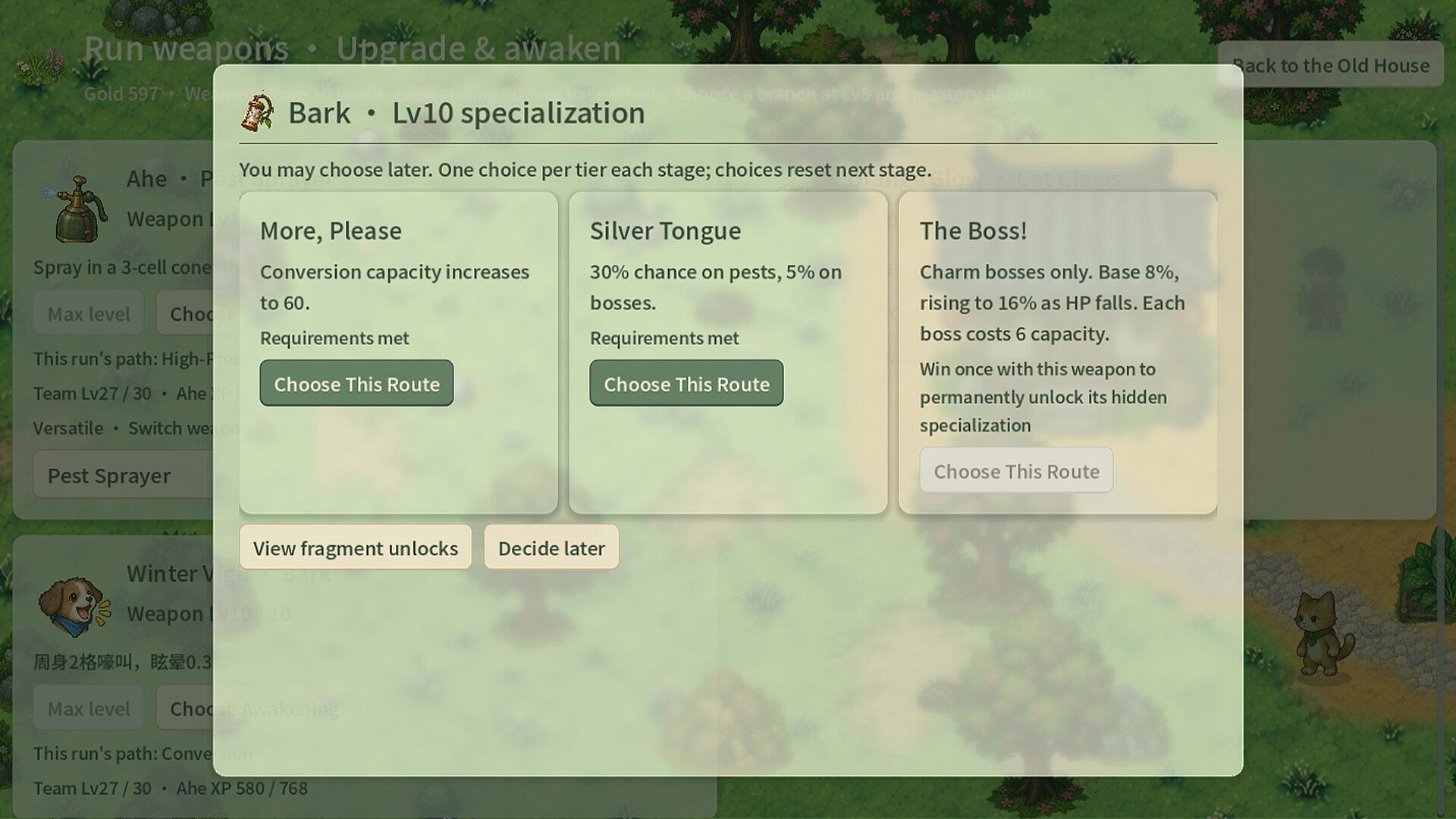
Companions provide distinct combat roles that shape defensive strategies. The cat delivers close range claw attacks through pounces. The dog knocks enemies back with thrown bones and stuns them via barks at close range. The duck heals nearby allies with wing flaps. The chicken deploys explosive eggs. The goose collects scattered coins across the battlefield. The bird locates new nest sites and summons additional birds to bolster the team. The son adapts by switching between different tools and weapons as the situation demands.
Pest behaviors demand adaptation rather than simple damage stacking. Aphids, flea beetles, cabbage worms, and cabbage white butterflies exhibit unique patterns, including swarming multiplication, high speed rushes, invisibility, egg laying that spawns more threats, and underground attacks targeting crop roots. Success depends on studying these patterns and positioning defenses accordingly.
Game Modes
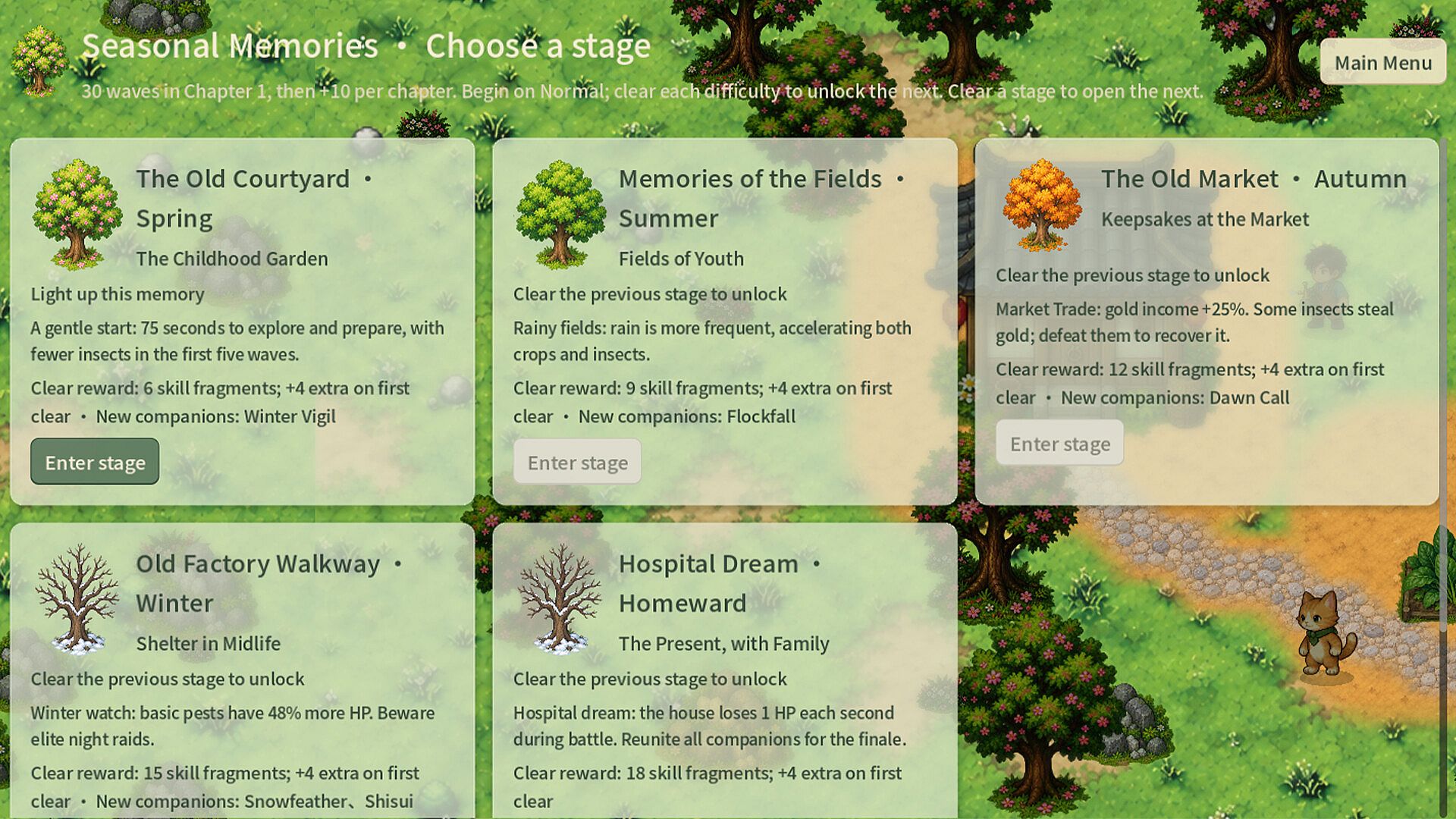
Memory Moth centers on a single player roguelike structure built around repeated journeys through the garden. Each run involves planting crops, managing resources, and surviving escalating waves of pests. Progression across runs unlocks additional companions, locations, and story fragments that reveal more about the memory based world. The limited farmland and wave based combat create a focused loop where choices about builds and companion combinations carry forward in meaningful ways without carrying permanent power across attempts.
Defensive setups evolve naturally as players experiment with different crop combinations and companion synergies. Underground threats and hidden enemies require specific counters, encouraging varied approaches rather than a single optimal strategy. The economy between waves adds layers of decision making around construction, trading, and prioritization of growth versus immediate survival.
Story and Themes
Beyond the tactical battles, the game explores themes of memory and loss. Crops embody personal memories, while the swarms symbolize gradual forgetting and decay. Successful defenses push back against this erosion. Over multiple journeys, fragments of the past resurface through new companions and environments, even as some elements remain faded or forgotten. The narrative emphasizes companionship and persistence as anchors against oblivion.
Is It Worth Playing?
Memory Moth suits players who enjoy thoughtful strategy games that reward observation and adaptation over raw power. The blend of farming, tower defense, and roguelike runs creates a self contained experience where each attempt builds familiarity with pest patterns and companion abilities. As a free to play title, it offers accessible entry with depth in its resource and build systems. Those drawn to casual yet strategic gameplay with a reflective undercurrent will find the mechanics and companion interactions engaging across repeated runs. The focus on countering specific enemy behaviors and managing limited space keeps sessions purposeful without unnecessary complexity.