








Masterstroke is a strategy indie casual game for PC that blends deckbuilding with grid-based placement and tense negotiation mechanics. Players take on the role of a painter facing eviction, using canvas fragments and card synergies to create valuable artworks before haggling with buyers to cover rent.
Gameplay
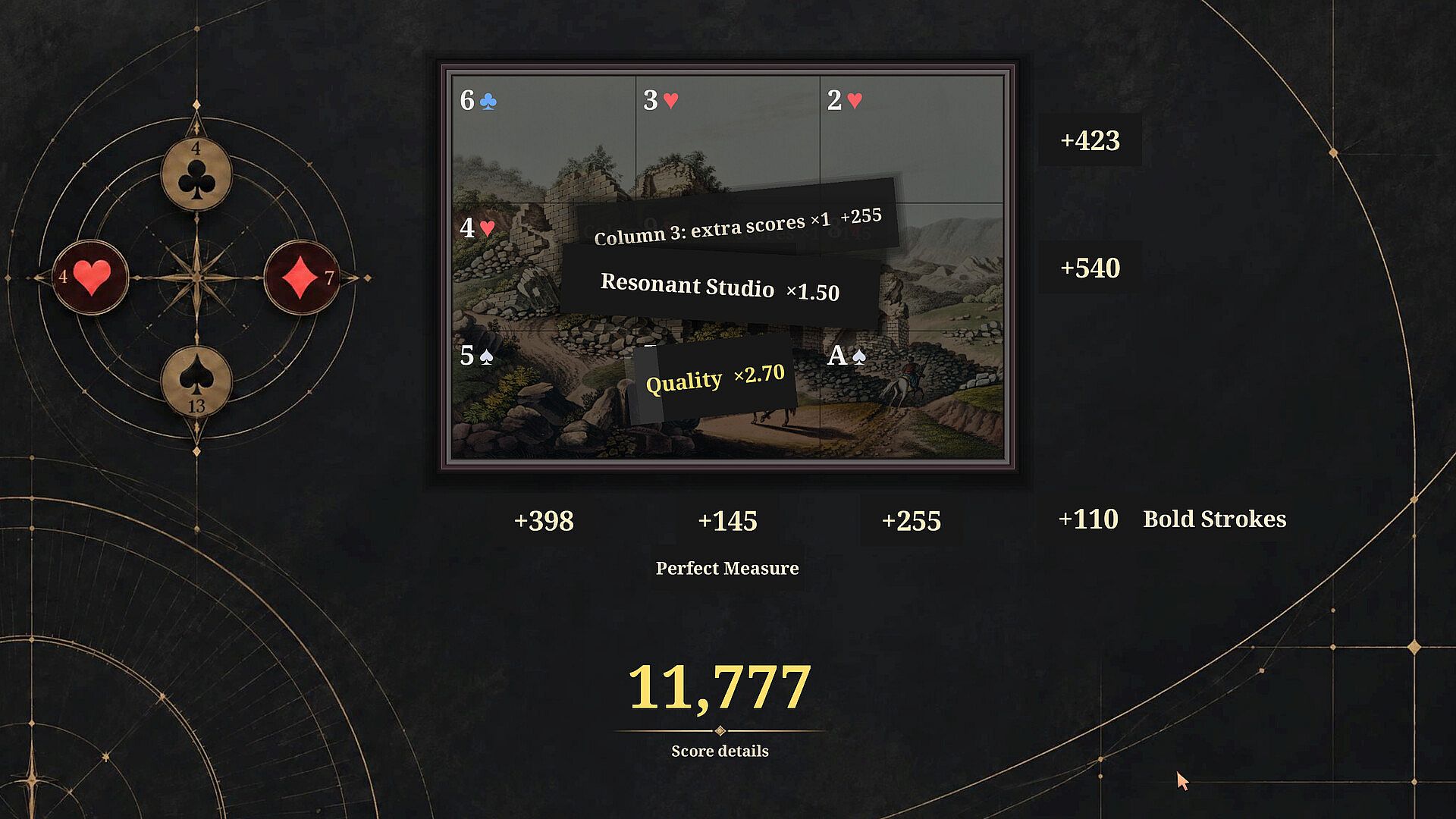
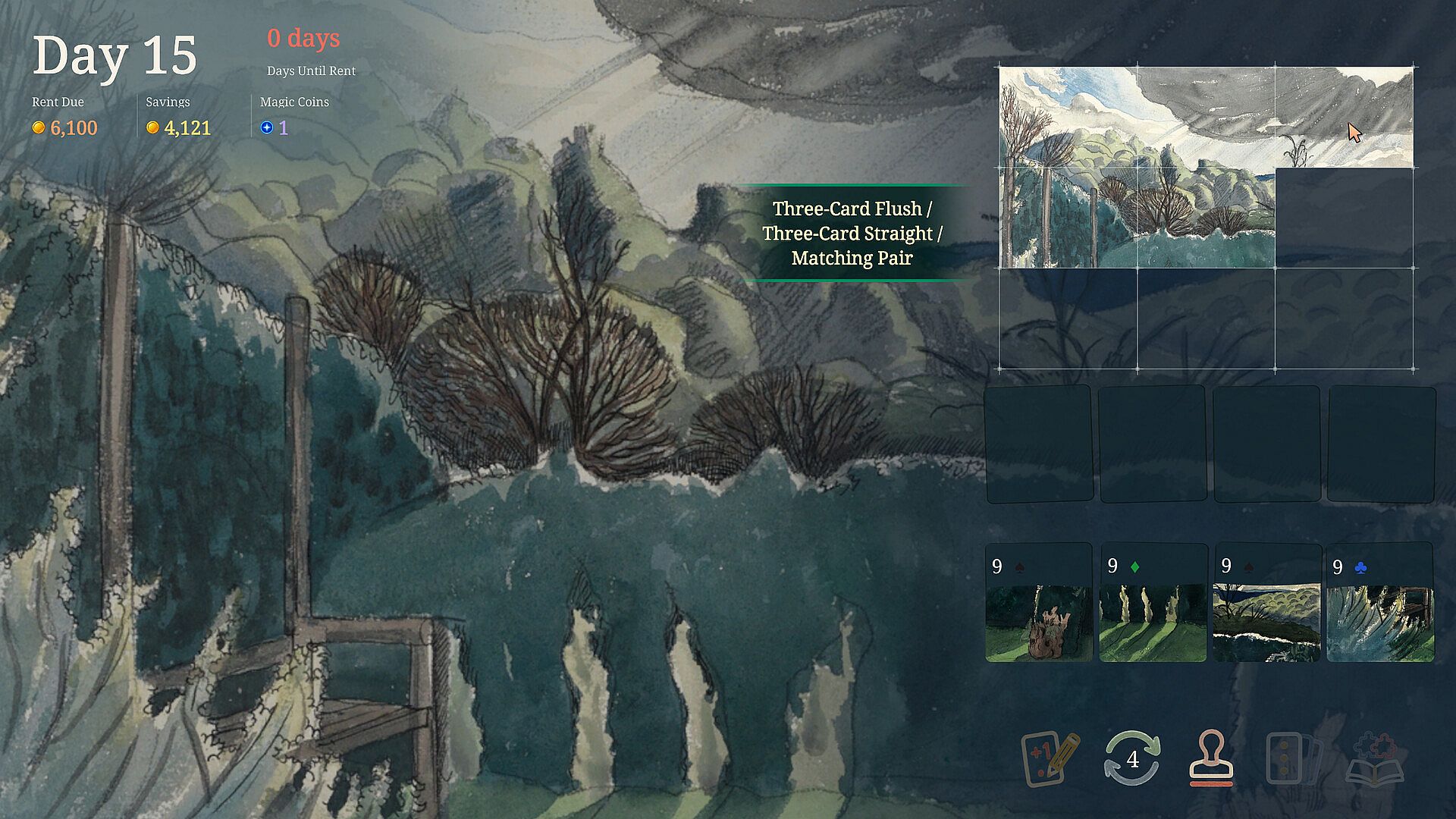
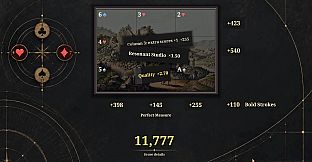
The core loop centers on assembling artworks through a 3x3 grid system. Players drop canvas card fragments into the grid to build combinations that trigger cascading effects. Matching ranks in hand cause all similar cards to evolve together, raising the overall quality and prestige of the piece. Quality multipliers grow without limit as resonances stack, pushing creations from basic sketches toward higher tiers. Exceeding numerical limits on the grid activates overflow bursts that deliver large point and gold bonuses.
Scoring draws from slot-style mechanics across eight axes at once. The three rows, three columns, and two diagonals each evaluate independently for valid combinations such as blackjacks totaling twenty-one, flushes, straights, or royal courts. Multiple qualifying hands can score on the same line when synergies align, rewarding careful deck construction and placement choices. Setup perks allow adjustments to winning thresholds while harvest multipliers amplify final tallies during the scoring phase.
Deckbuilding focuses on synergies that compound across turns. Cards interact through resonance rules that evolve matching ranks in hand upon play, creating engines that accelerate point generation and gold earnings. The grid placement adds spatial strategy, as positioning influences which lines activate and how overflow events unfold.
Game Modes
Masterstroke structures play around two distinct stages that form a single continuous run. The first stage involves grid assembly and deck synergies to generate high-value artworks. Players experiment with card placements and resonance chains to maximize prestige and resources before the second stage begins.
The second stage shifts to negotiation with arriving patrons. Each buyer presents offers that players can accept, counter, or escalate through further price hikes. Risk escalates with bolder demands, as buyer patience has limits and failed negotiations reduce potential profits. Decisions here directly affect whether accumulated gold covers the looming rent payment or leaves the studio at risk.
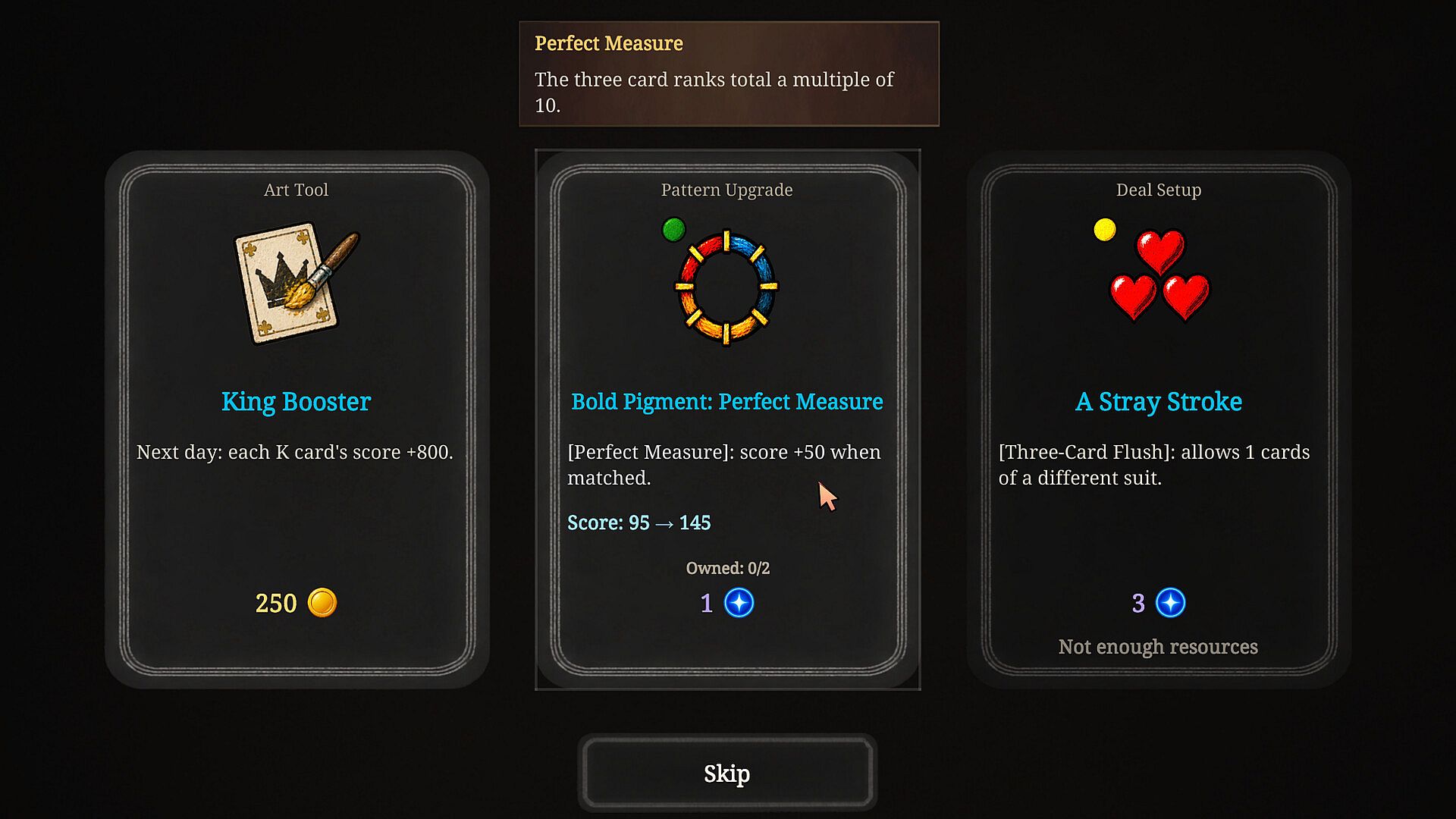
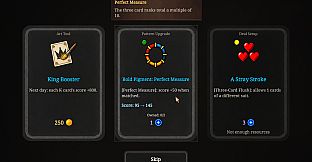
Perk selection between stages shapes long-term strategy. Setup options modify thresholds for successful lines while harvest choices emphasize raw score multipliers. This two-stage flow repeats across runs, with each cycle testing different combinations of grid builds and bargaining tactics.
Core Mechanics and Progression
Progression ties directly to profit management and survival pressure. Gold earned from sales funds continued operations while the eviction timer creates urgency across multiple cycles. Players refine their approach by testing new card synergies and grid configurations to produce stronger artworks that withstand tougher negotiations.
The haggling system adds layers of risk versus reward. Anchoring a high initial price invites larger counters but increases the chance of a deal collapsing. Choosing conservative offers guarantees smaller but reliable gains, while aggressive plays can yield substantial returns if the buyer remains engaged through multiple rounds.
Is It Worth Playing?
Masterstroke suits players who enjoy strategic deckbuilding combined with spatial puzzle elements and negotiation tension. The grid assembly rewards experimentation with synergies and overflow effects, while the bargaining phase introduces meaningful choices that affect run outcomes. Those drawn to casual strategy experiences with clear progression through repeated cycles will find consistent depth in optimizing builds and managing risk. The game remains available on PC with its full set of mechanics intact for those seeking this specific blend of creation and commerce.