

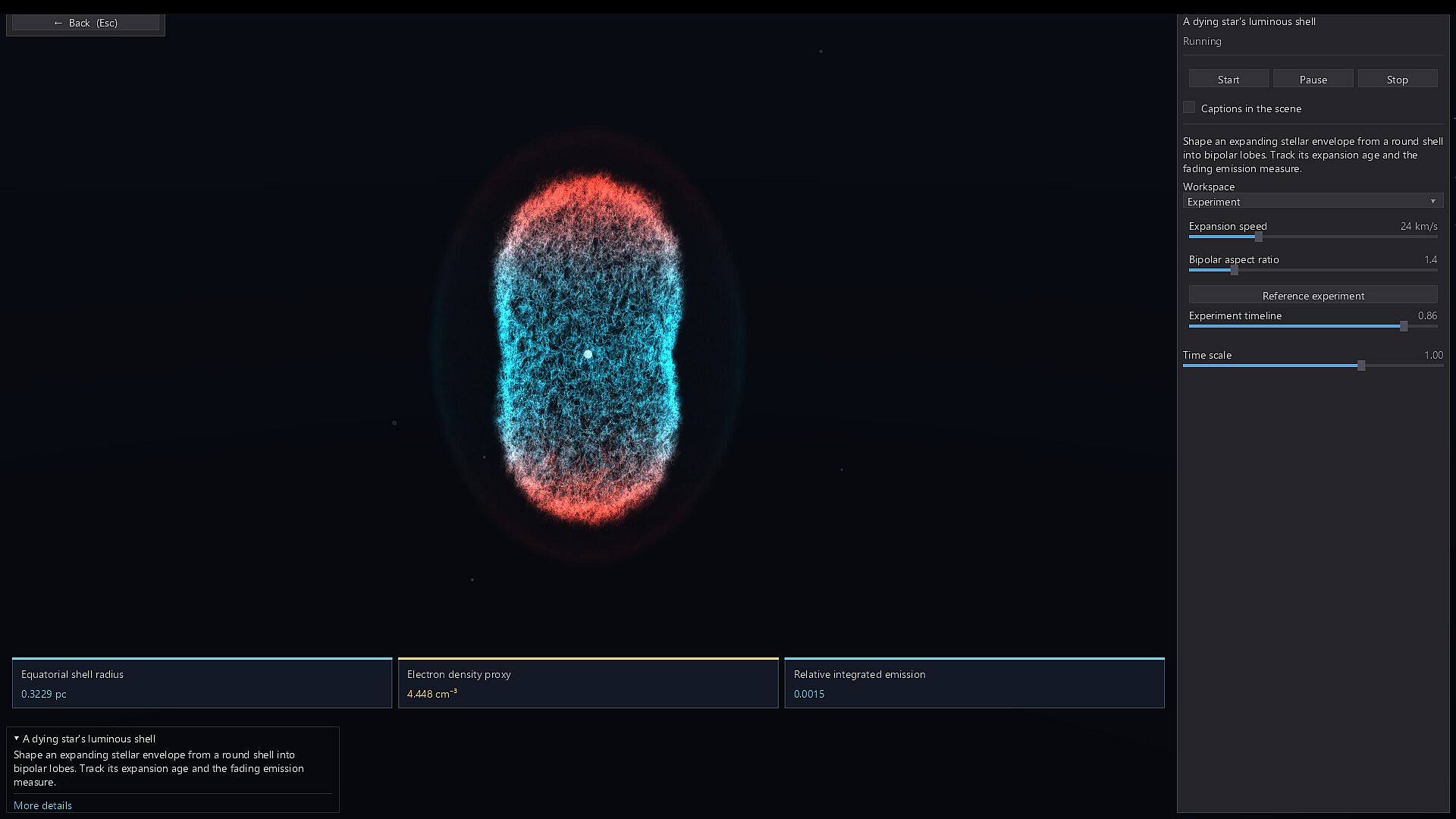
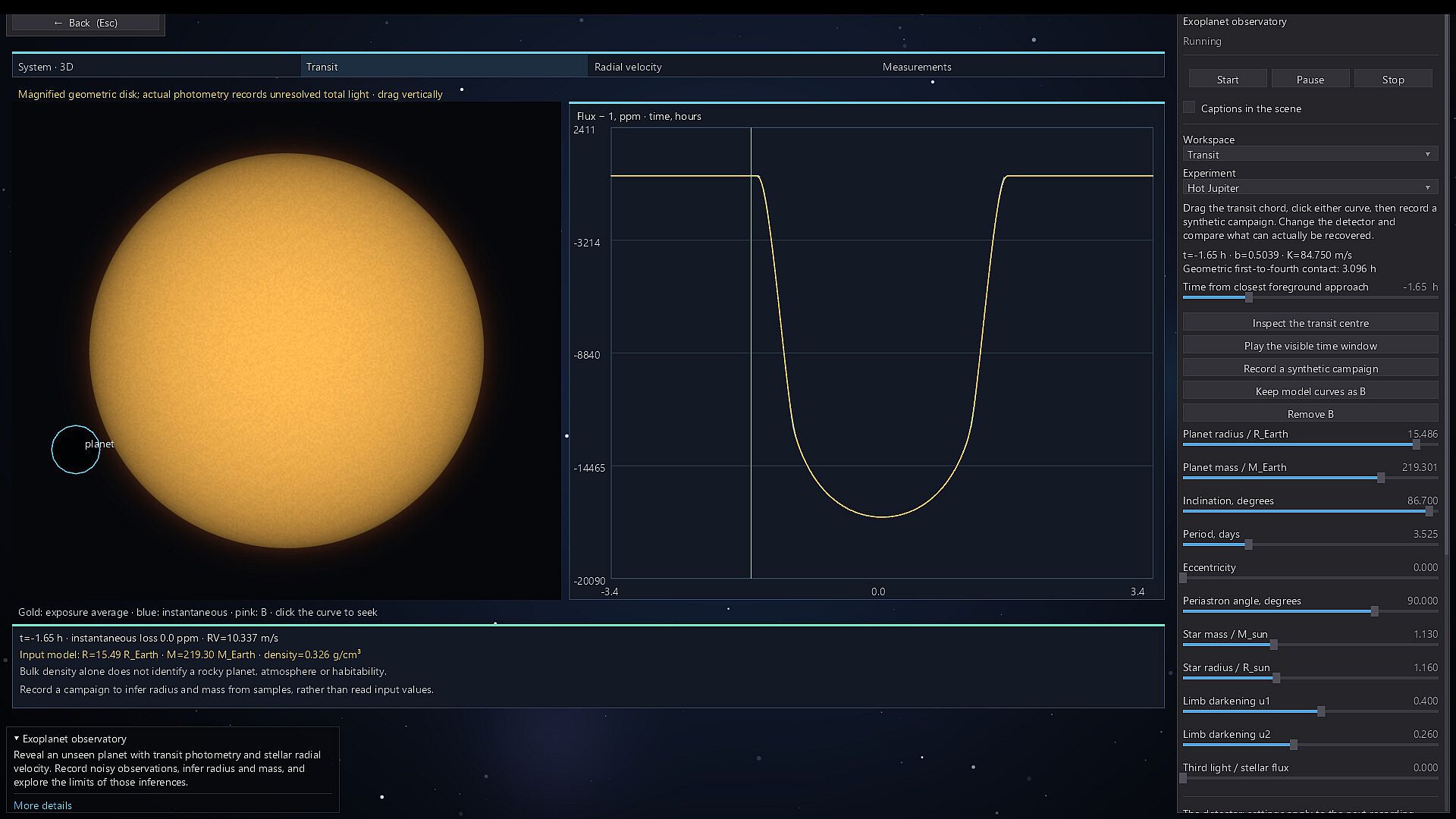
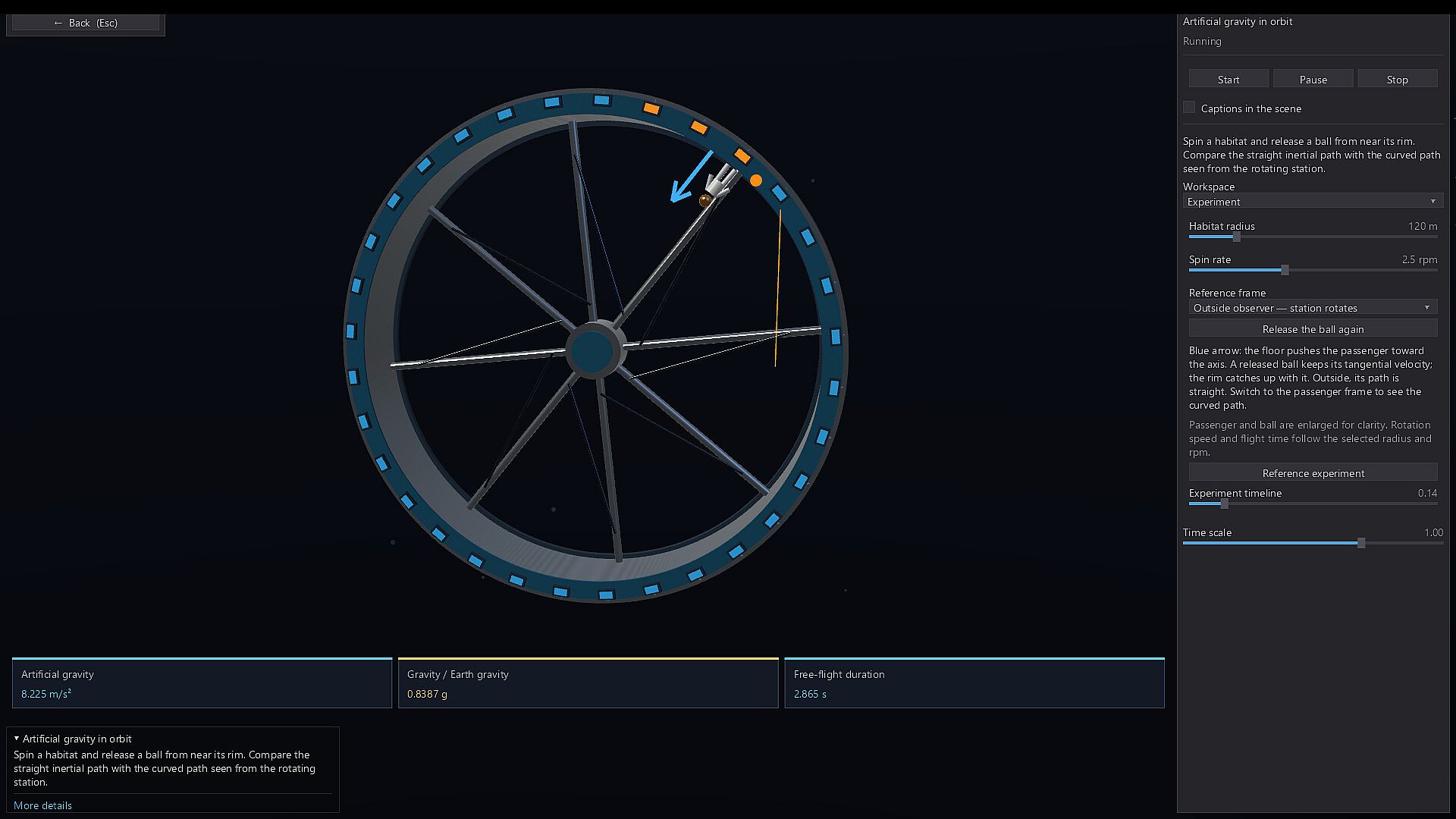
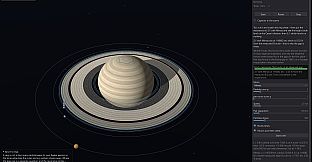
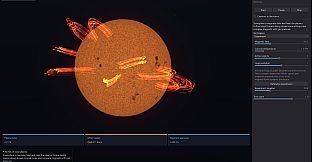
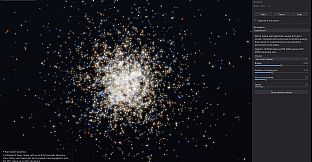
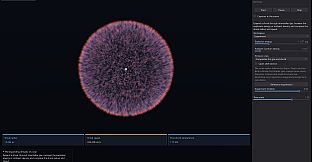
Makarov Astronomy Suite is an indie casual simulation game for Windows PC that delivers 120 interactive astronomy modules. Players adjust parameters in focused 3D scenes, advance time, and observe how physical principles shape planetary rings, stellar evolution, orbital paths, and galactic structures. The experience emphasizes direct manipulation of educational models rather than scripted animations or narrative campaigns.
Gameplay
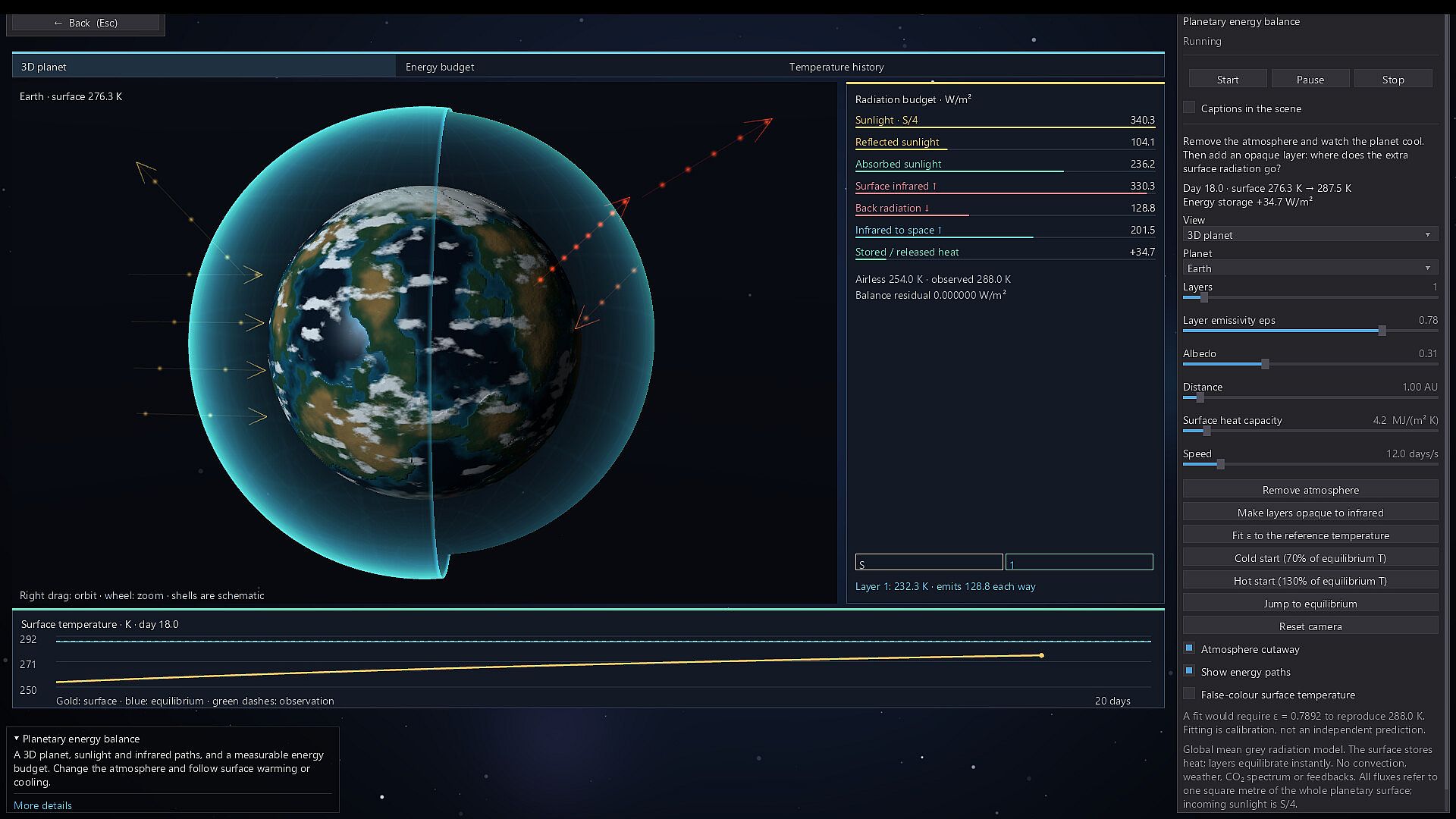
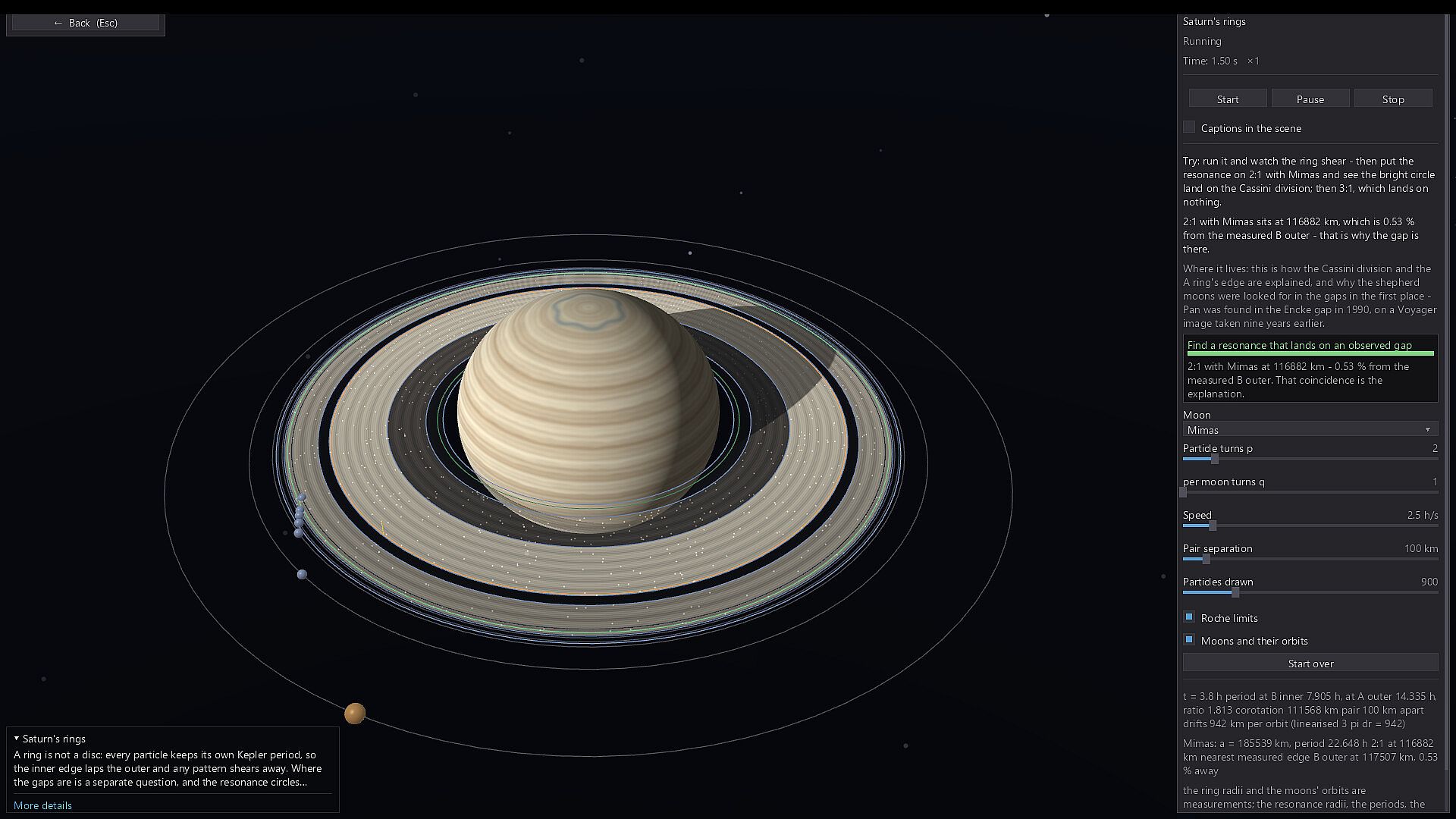
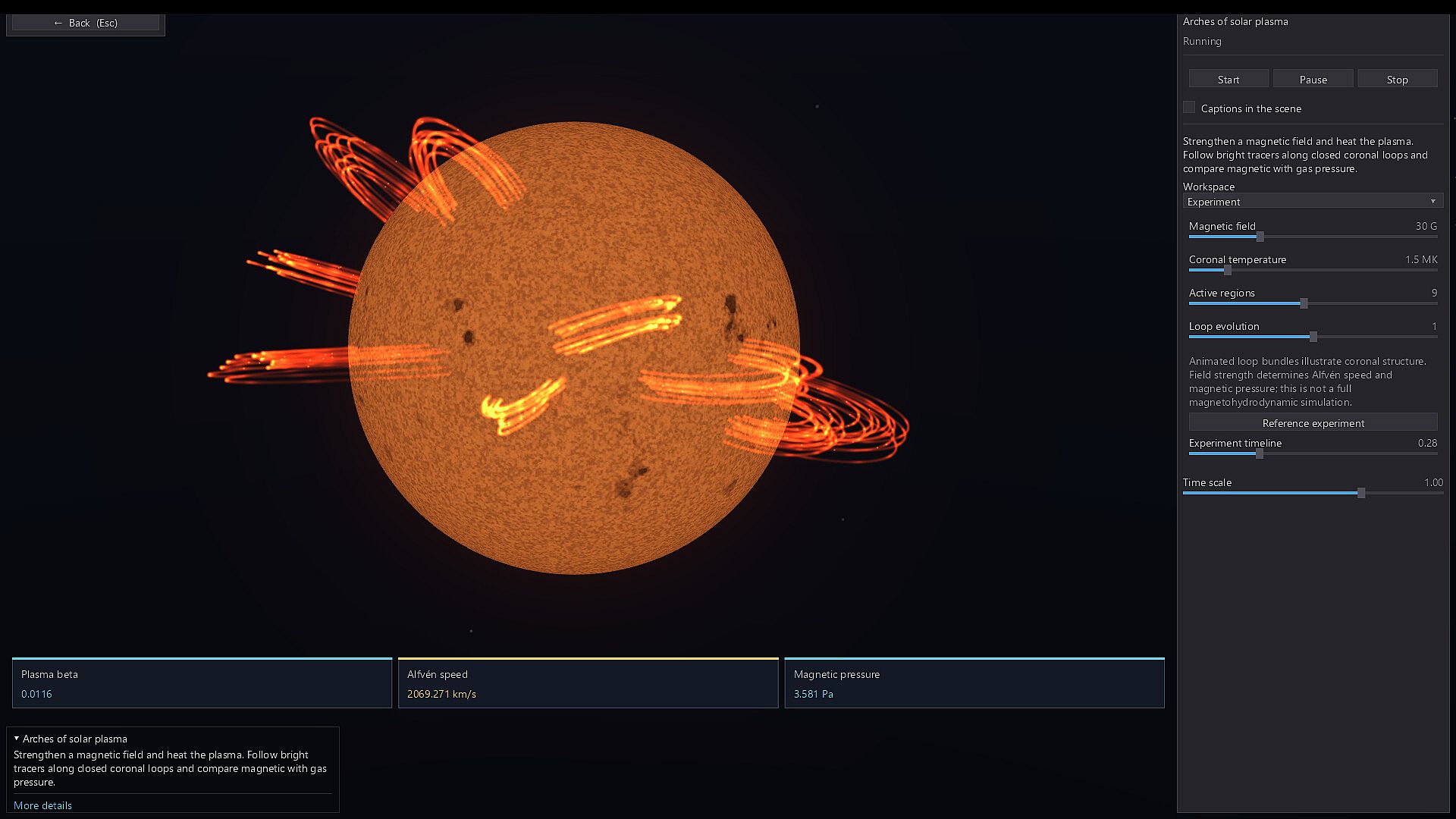
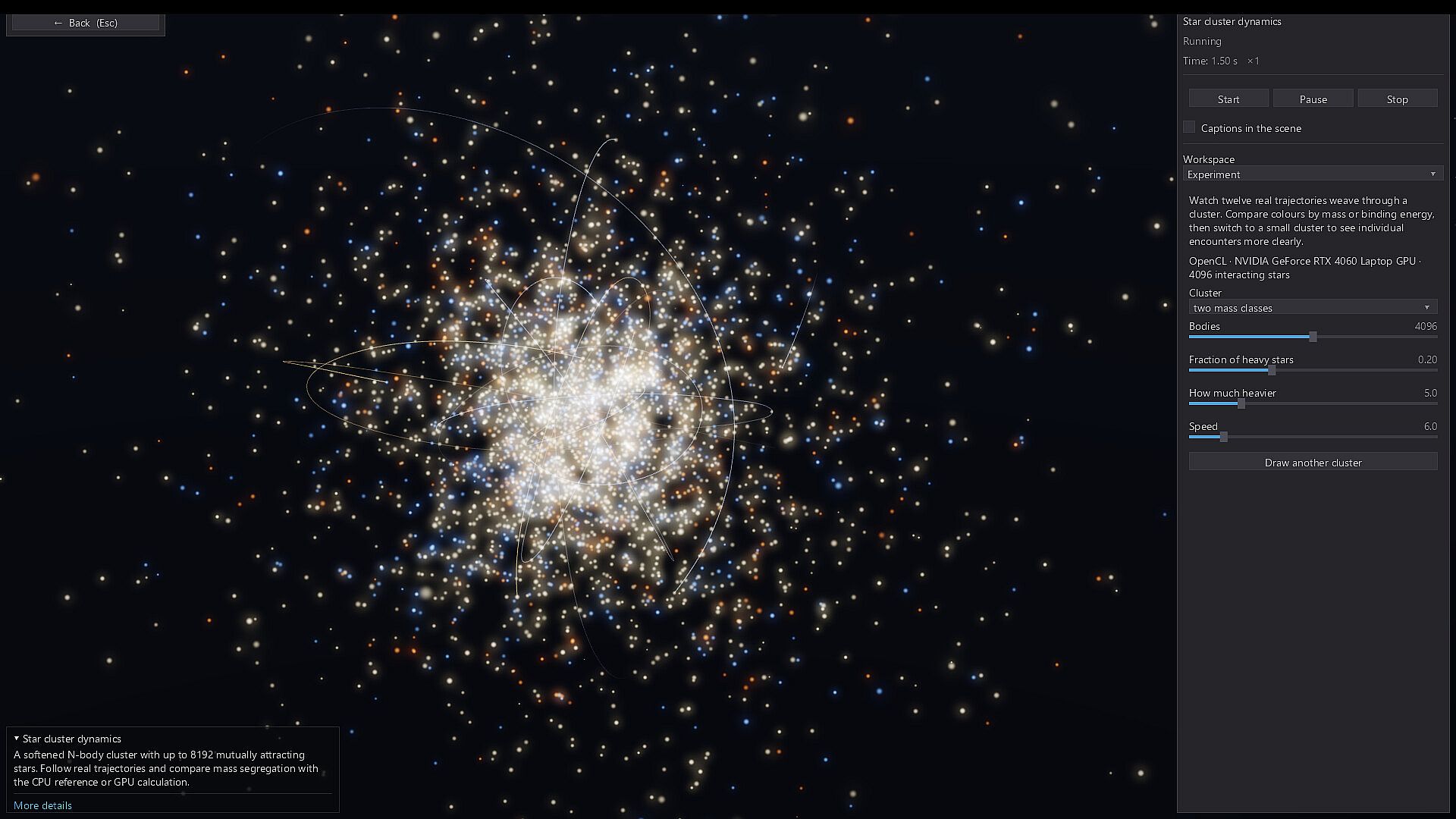
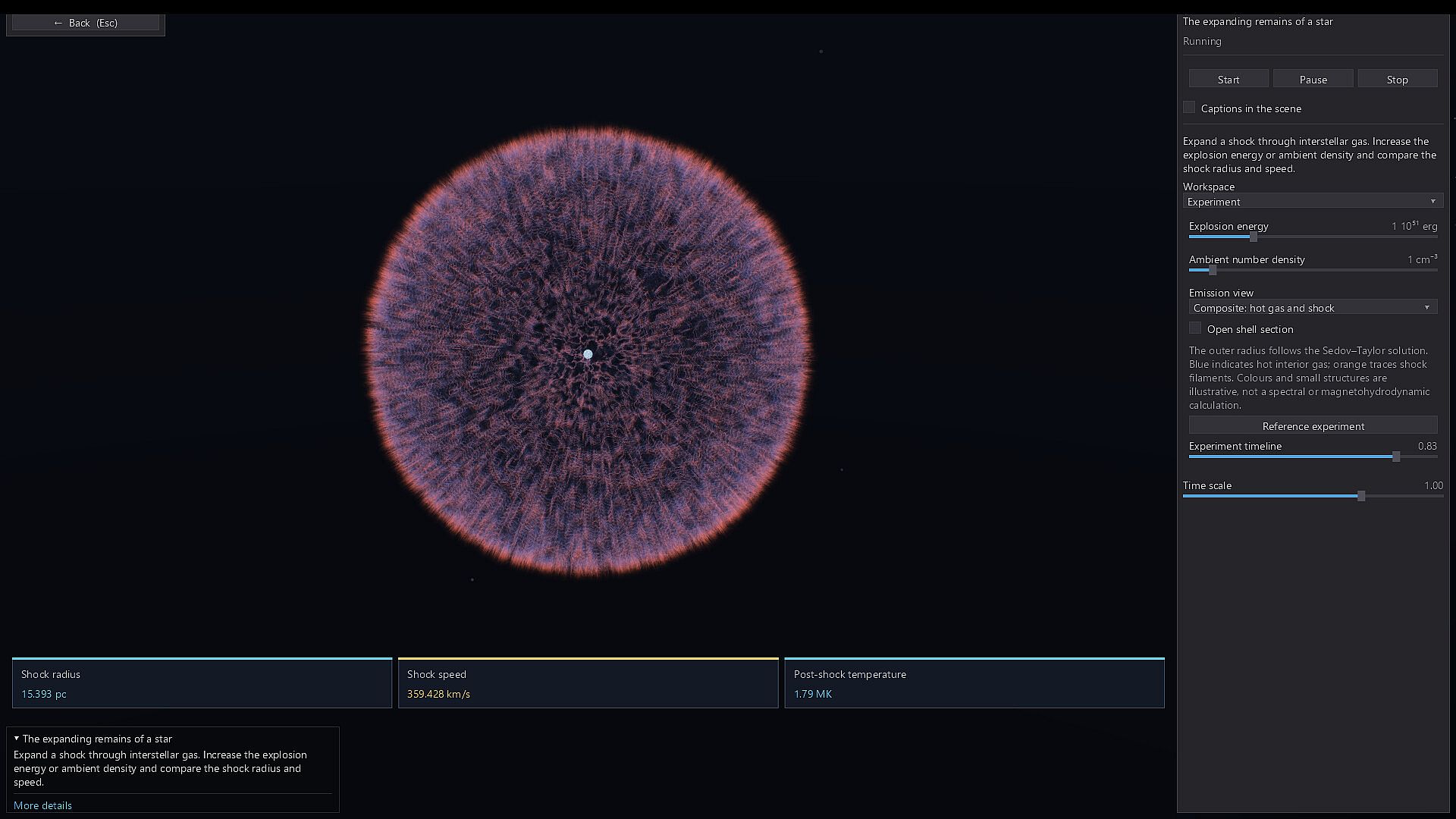
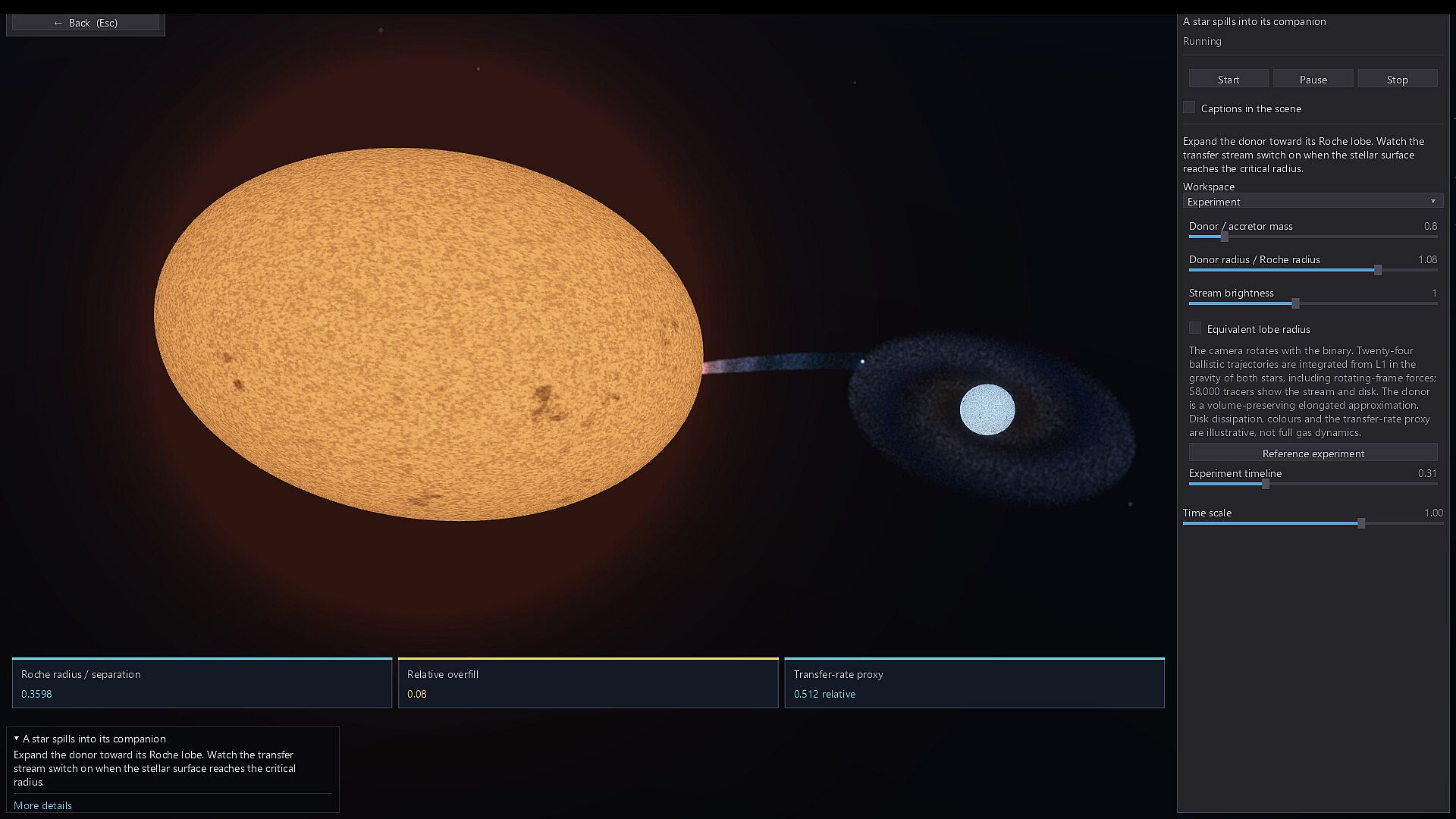
Each module functions as a self-contained laboratory where users modify variables such as mass, velocity, distance, or viewing angle and immediately see the resulting changes in visuals, measurements, and plots. Scenes support free movement in three dimensions, allowing inspection from multiple perspectives while live data panels display quantities like orbital periods, energy balances, or spectral lines. Time controls let observers accelerate processes such as planetary orbits or stellar lifecycles to study cause-and-effect relationships at different scales. All computations run locally on the user's machine, enabling full offline use without network requirements.
Navigation begins with a searchable grid or a carousel-style browser organized into six rings of twenty modules each. Categories group content logically around planets and skies, orbits and flight, stars and observation, and galaxies and cosmology. Controls remain consistent across modules, though translation depth varies and some detailed explanations stay in English. The interface supports twenty-three languages at the menu level to broaden accessibility for classroom or individual study.
Game Modes
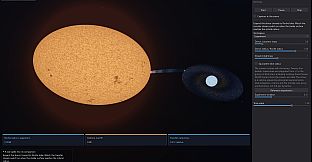
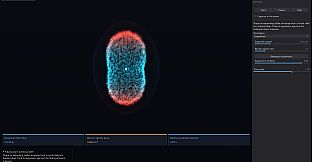
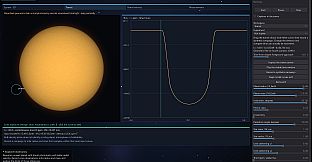
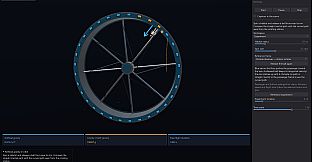
The primary engagement method involves selecting and exploring individual modules from the ring structure or grid. Users can focus on planets and skies to examine Saturn's rings, lunar phases, eclipses, planetary atmospheres, and exoplanet detection through brightness variations. Orbits and flight modules cover gravity assists, orbital transfers, tidal forces, rotating habitats, and interactions within gravitational clusters. Stars and observation sections address stellar evolution, solar plasma features, supernova remnants, mass transfer in binary systems, spectra, and telescope image formation. Galaxies and cosmology modules include galaxy collisions, gravitational light bending, black hole examination, and comparisons of expanding universe models.
Exploration remains single-player and self-directed, with no competitive or cooperative multiplayer elements. Each module operates independently, letting users progress at their own pace through parameter tweaks and repeated observations rather than following linear levels or objectives.
Target Audience and Educational Value
The suite suits students, educators, and astronomy enthusiasts seeking hands-on reinforcement of concepts. Modules incorporate varying levels of approximation suited to different learning stages, from introductory visualizations to more detailed physical calculations. Classroom demonstrations benefit from the ability to pause, adjust, and compare results side-by-side with plotted data. Self-study users gain from the offline accessibility and the breadth of topics spanning solar system phenomena to cosmological scales.
Is It Worth Playing?
Makarov Astronomy Suite appeals most to those interested in interactive science education on PC. Its strength lies in the direct connection between visual changes and quantitative outputs, which supports repeated experimentation without external resources. The modular design allows selective focus on specific topics such as orbital mechanics or stellar spectra. Because the software runs entirely locally and includes broad language support, it functions reliably in varied settings including schools or personal study environments. Individuals seeking a traditional game with progression systems or multiplayer will find limited appeal, while those prioritizing accurate, adjustable astronomy models will discover substantial value in the 120 modules currently available.