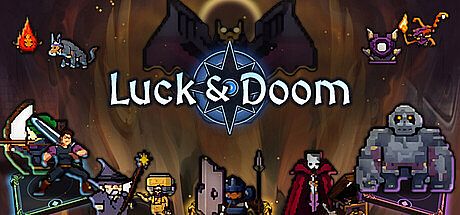


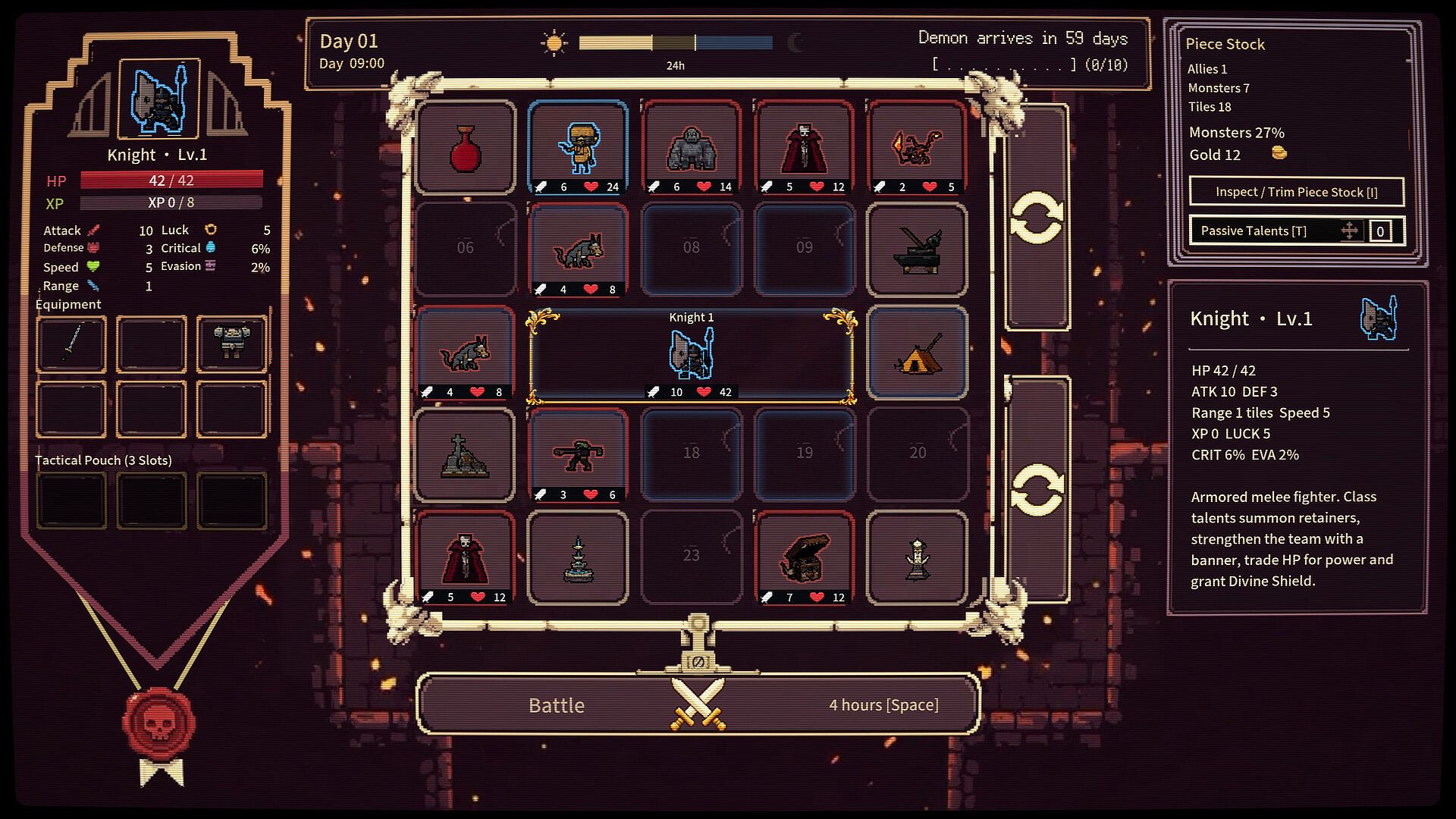
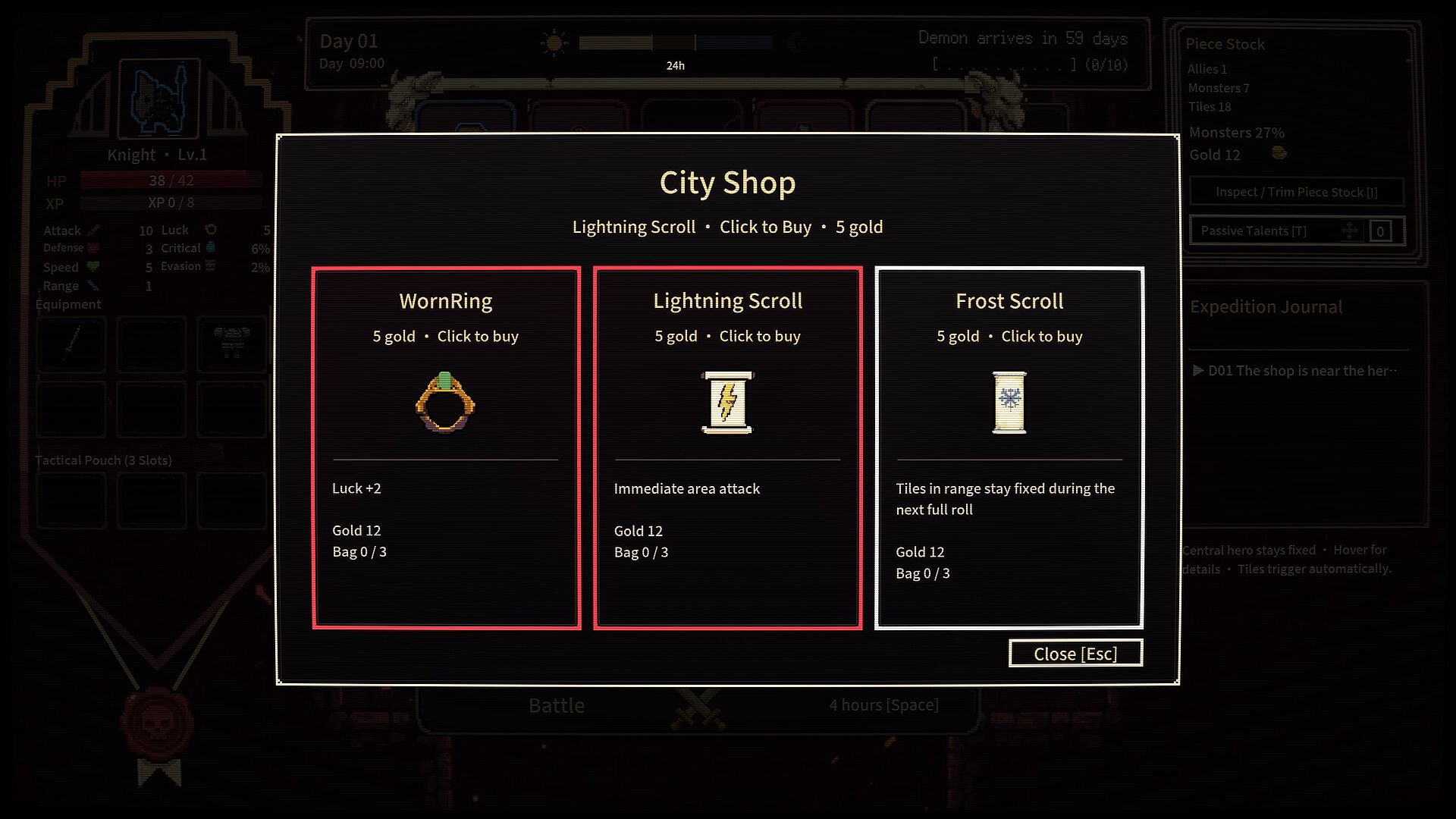
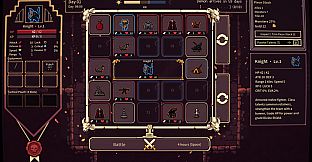
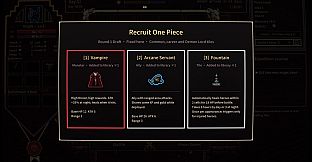
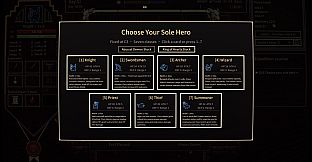
Luck & Doom is a strategy indie casual game for PC that places a single hero at the center of a shifting world. Players rearrange tiles to influence encounters, manage a growing pool of pieces, and balance combat decisions against a strict time limit that ends with the demon lord's arrival on day 60.
Gameplay
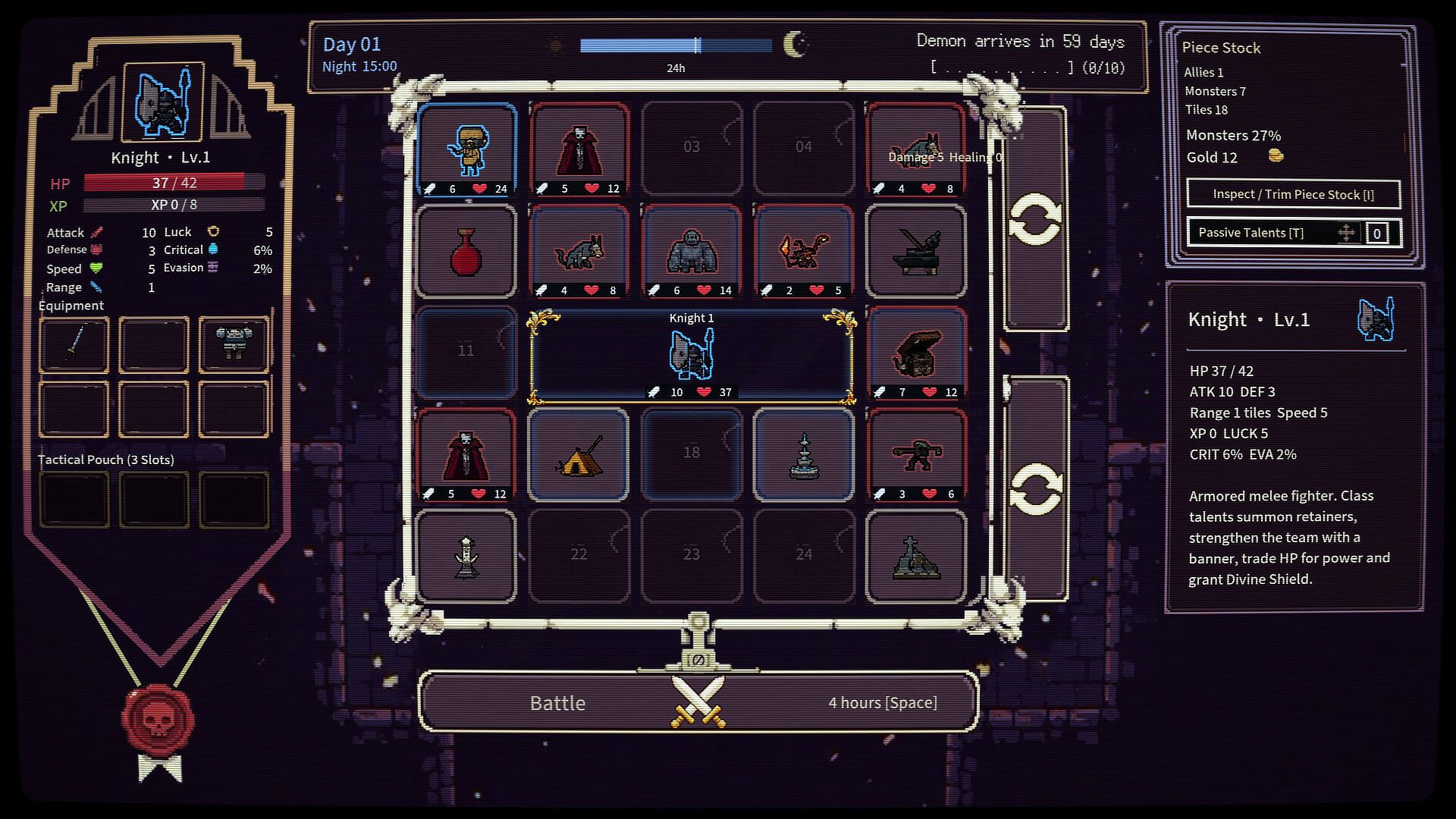
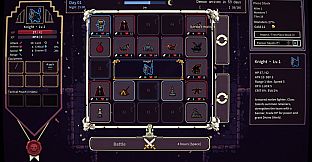
The core loop centers on positioning and resource management. The hero remains fixed while the surrounding tiles rotate and shift with each action. Local turns alter tile positions, creating opportunities to engage monsters or access rewards while risking unwanted disturbances. Every rotation or fight advances the clock, moving the world from day into night and steadily reducing the days available before the deadline.
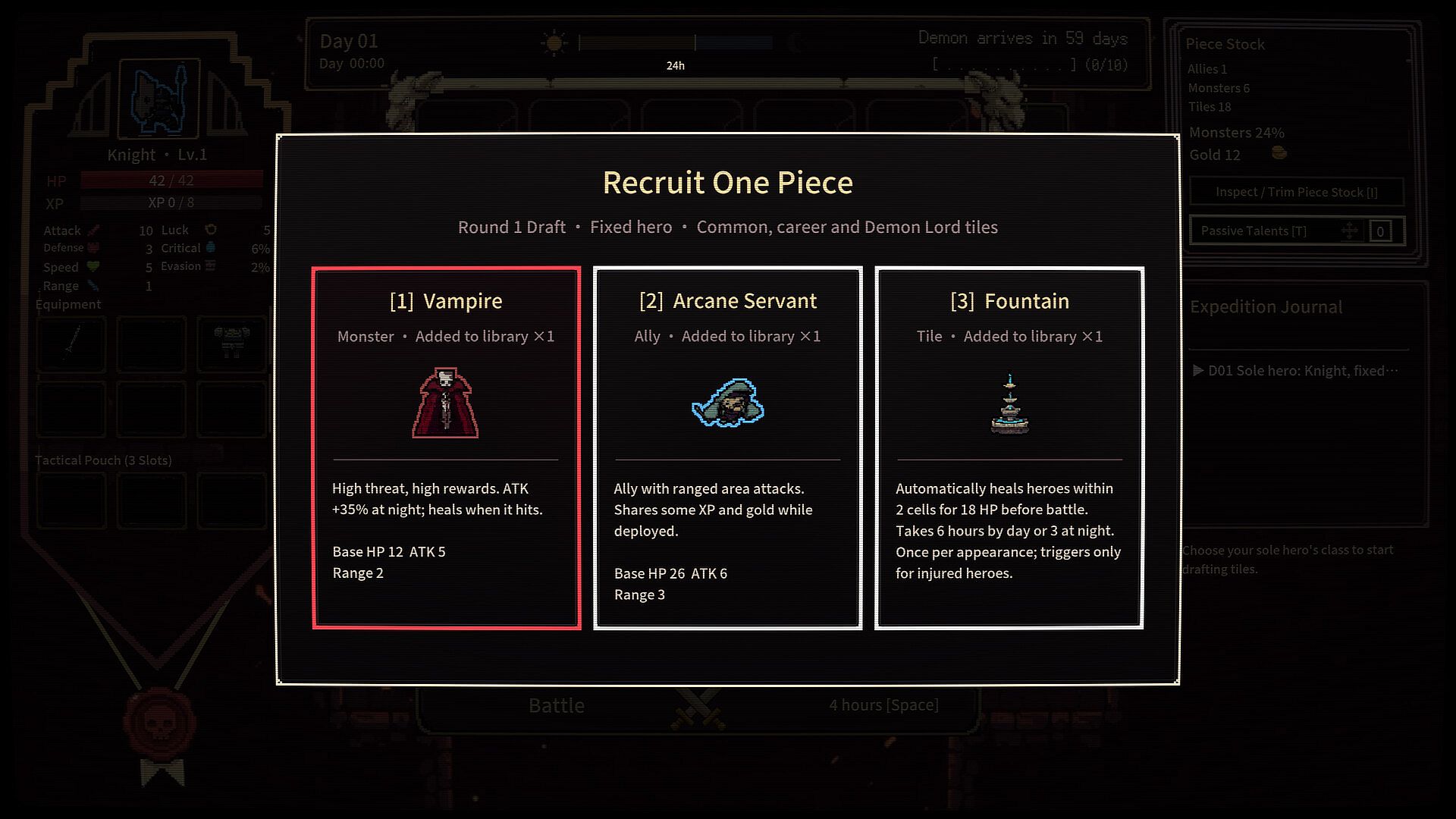
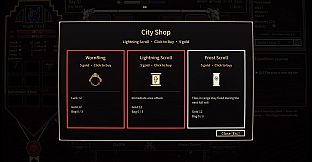
Players build a piece pool by selecting from three options each turn, which can include monsters, allies, or buildings. Allies provide combat support but claim a portion of any rewards earned. Gear collection and hero development occur through these choices, allowing equipment and passive talents to shape long-term growth. Different hero classes start with distinct equipment and talents that steer each attempt toward unique playstyles.
Time functions as a hard constraint rather than a loose suggestion. Actions carry costs that accumulate across the run, forcing constant evaluation of whether an immediate battle is worth the days lost. The approach encourages careful planning around the fixed arrival of the demon lord while still leaving room for adaptation when tiles and pieces create unexpected situations.
Game Modes
The game focuses on individual runs that begin with hero class selection and progress through tile-based exploration and combat until the day-60 deadline. Each attempt builds on the same foundational systems of piece-pool management and world rotation, with outcomes determined by how effectively the player balances immediate threats against the remaining time.
Progression within a run comes from expanding the piece pool, rearranging the board to optimize fights, and collecting gear that alters the hero's capabilities. The structure rewards repeated attempts as players learn to weigh risks more accurately and develop stronger combinations before the final confrontation.
Hero Classes and Progression
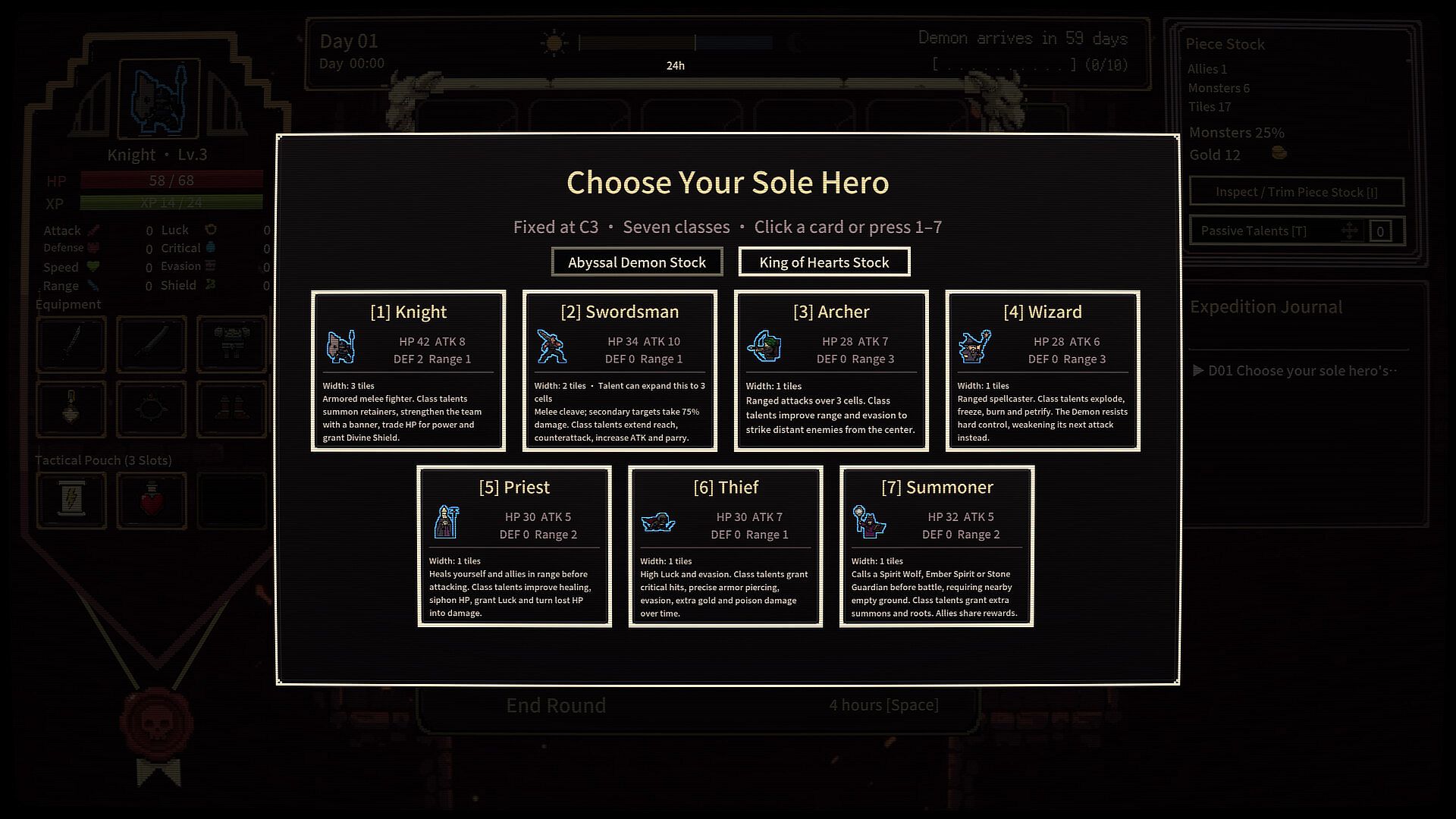
Seven classes are available at the start of each run: Knight, Swordsman, Archer, Wizard, Priest, Thief, and Summoner. Each brings its own starting equipment and passive talents that influence how the piece pool and combat unfold. Equipment gathered during play further customizes these foundations, creating varied paths even within the same class across multiple attempts.
Development happens organically through the choices made when expanding the piece pool and the gear obtained from successful encounters. Passive talents tied to the chosen class provide consistent direction while still allowing flexibility based on what monsters, allies, and buildings enter the pool.
Is It Worth Playing?
Luck & Doom suits players who enjoy turn-based strategy games with strong time-management elements and roguelike structure. The fixed deadline creates tension that distinguishes each decision, while the ability to rotate tiles and curate a piece pool offers meaningful control over outcomes despite the random elements.
The game appeals most to those comfortable with short-to-medium length runs that emphasize planning and adaptation over pure luck. Its indie scale keeps the focus tight on core mechanics rather than expansive content, making it a solid choice for sessions where players want to experiment with different class builds and piece combinations.
Reception centers on the unique combination of board manipulation and resource timing, with many appreciating how the day-night cycle and demon lord deadline force meaningful trade-offs. For strategy fans seeking something outside standard deck-building or grid tactics, the systems here provide a fresh loop worth exploring through multiple runs.