






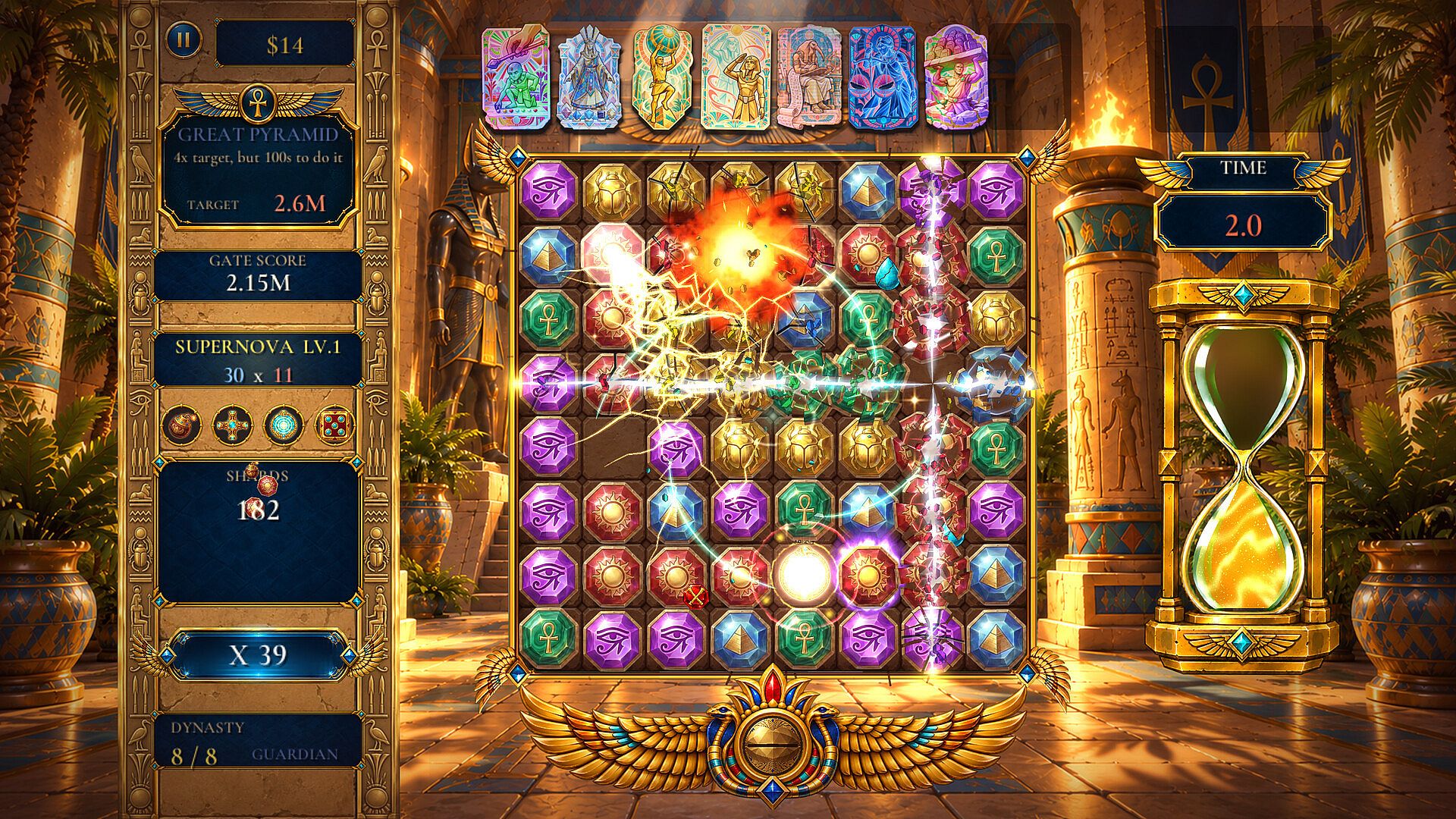
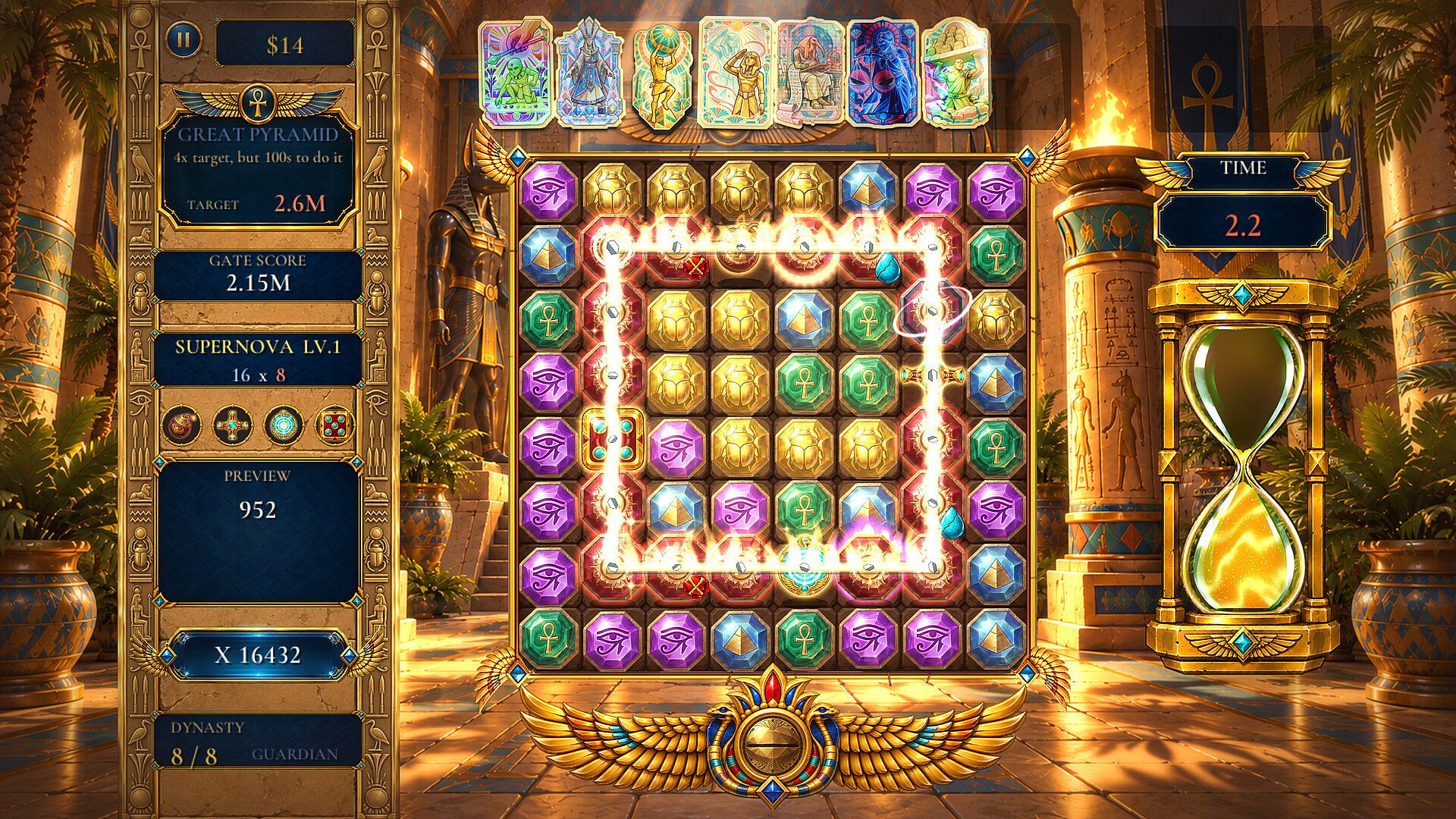
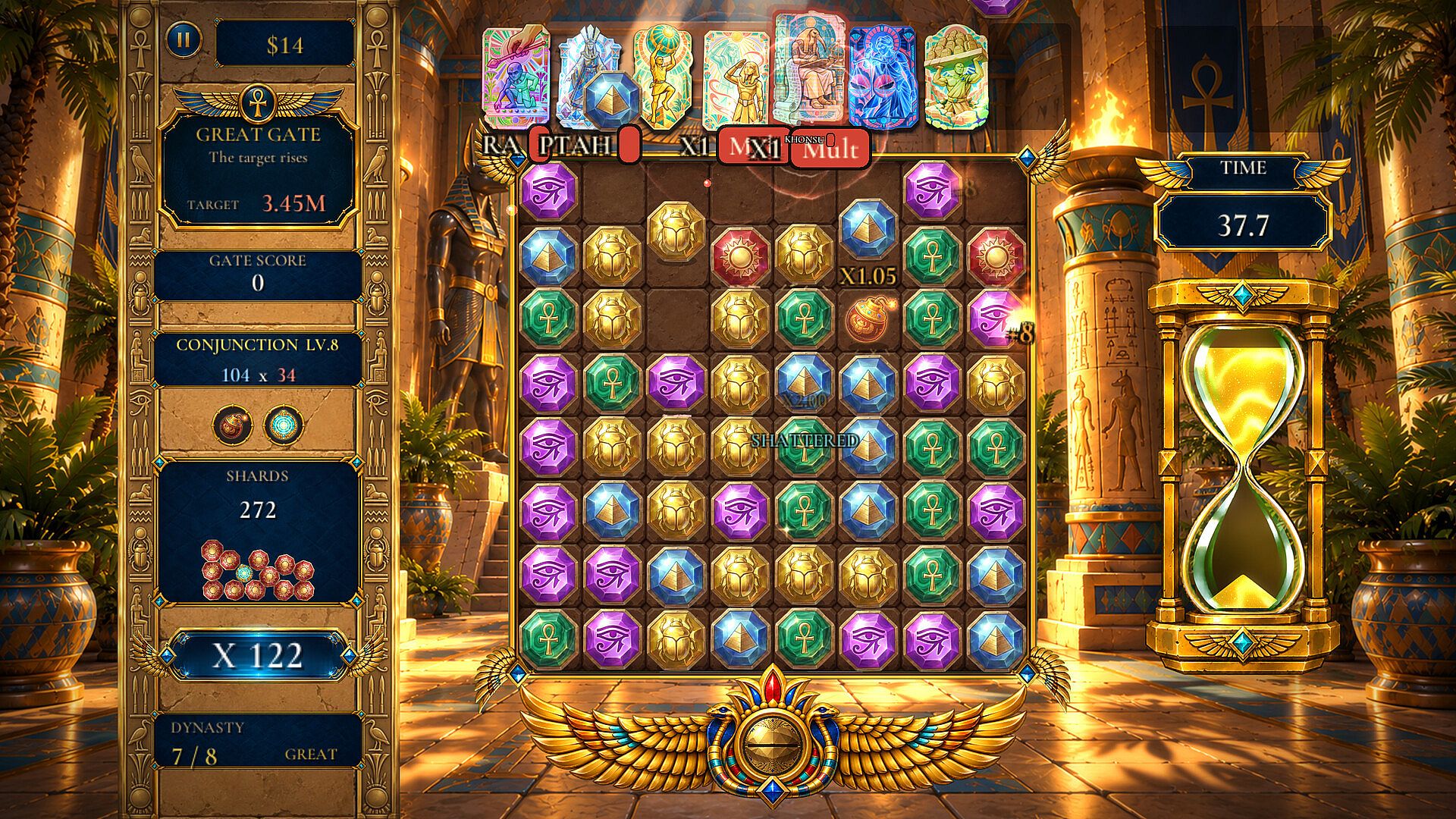
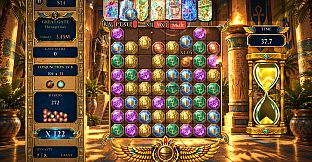
LOTH is a single-player strategy indie casual game for PC that blends gem-matching puzzle mechanics with roguelike run-building elements set in an ancient Egyptian theme. Players manipulate an 8x8 board of colored gems under a ticking hourglass, chaining matches to generate shards and multipliers while recruiting servants and facing escalating challenges from divine opponents.
Gameplay
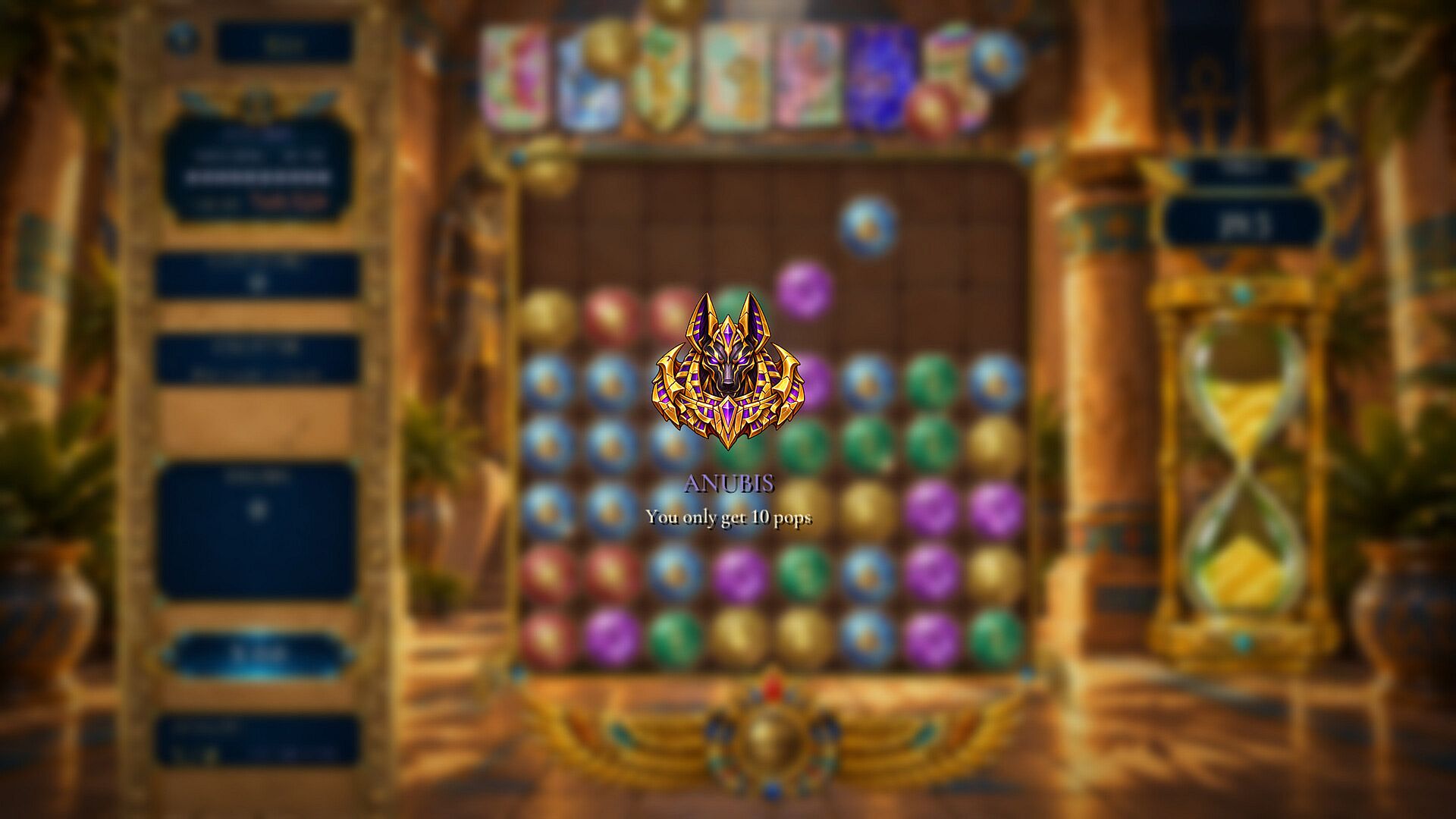
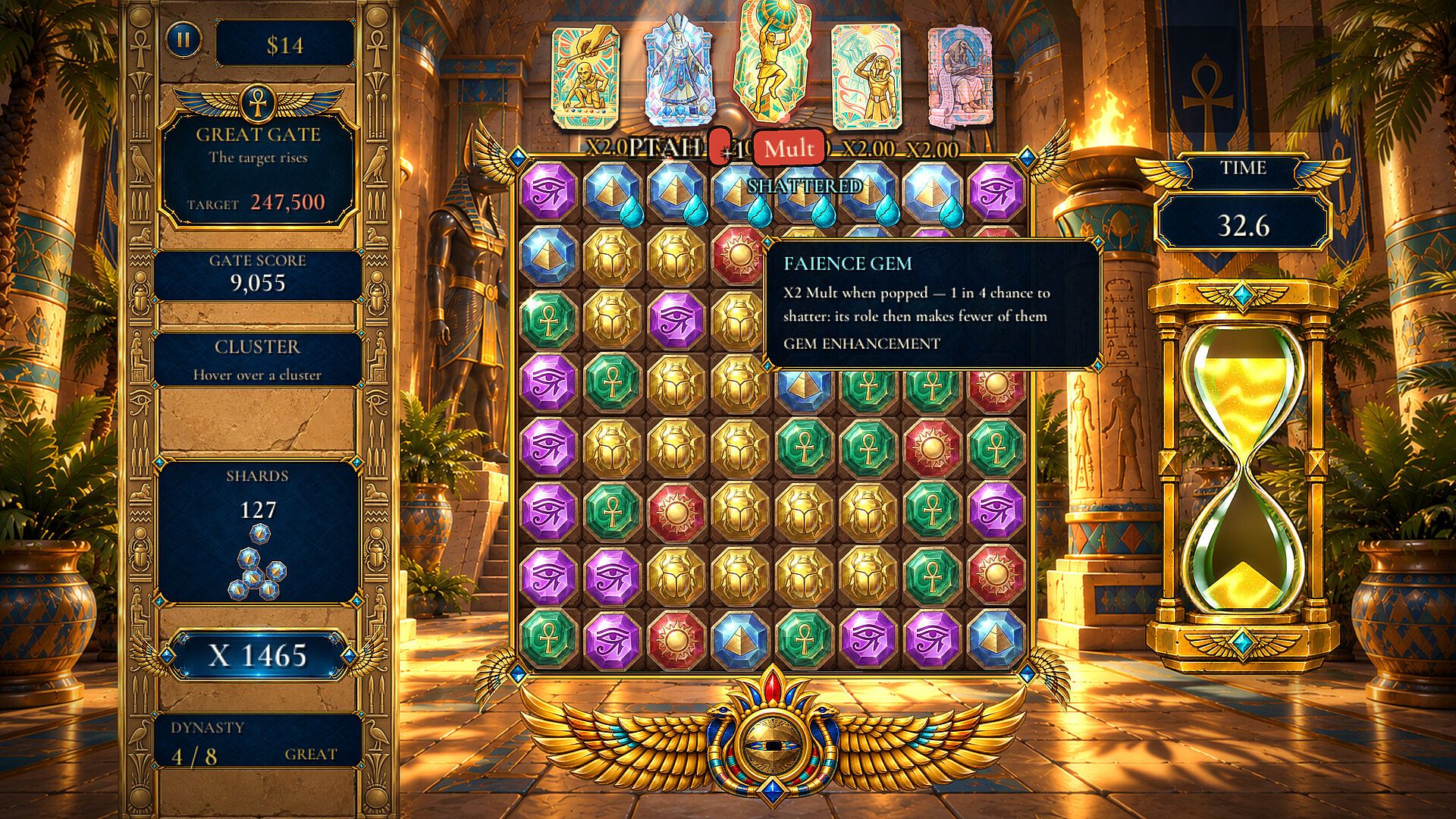
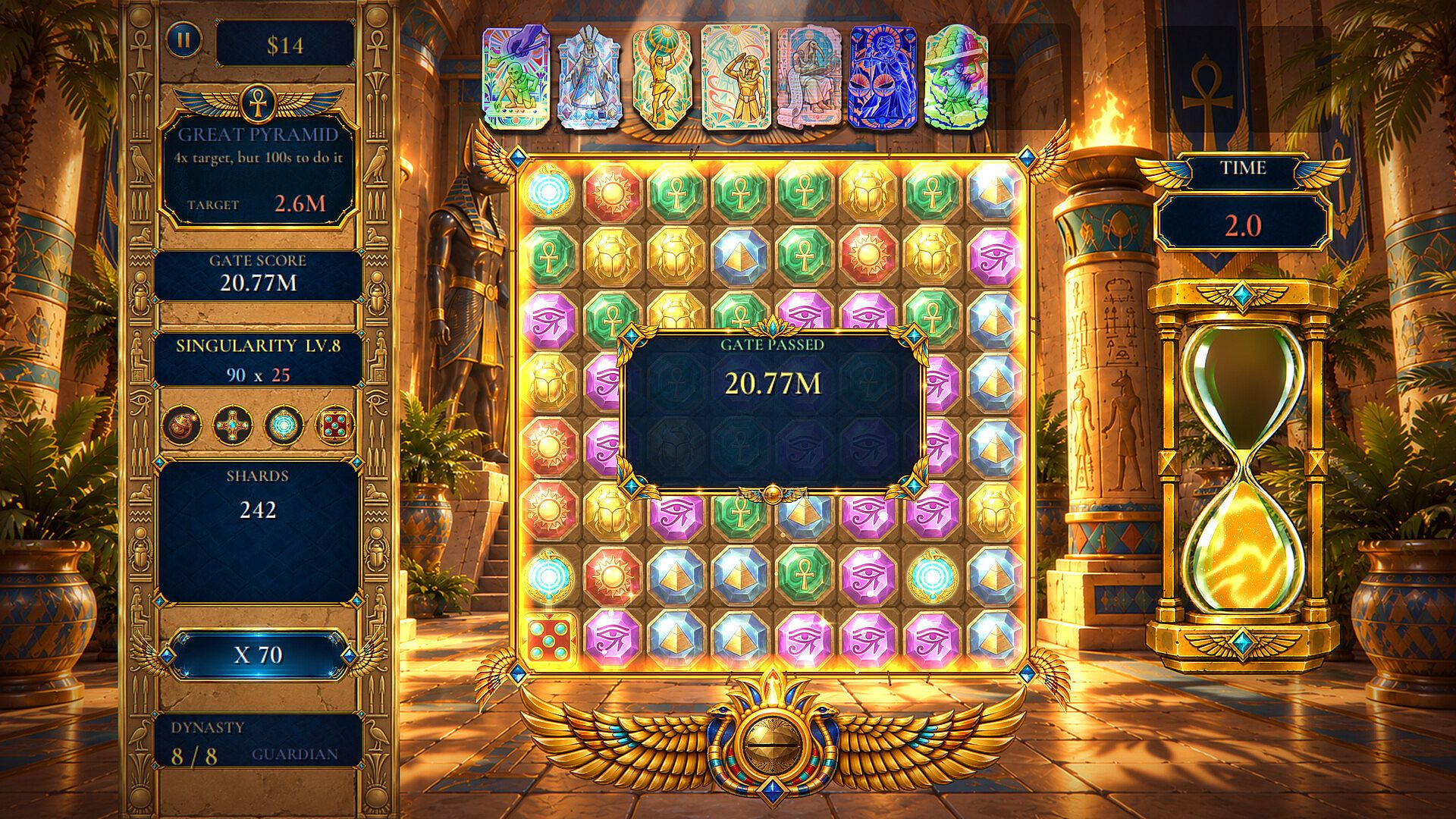
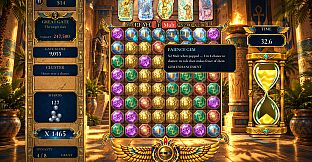
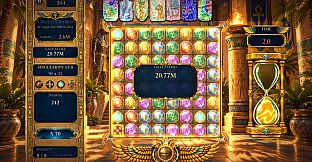
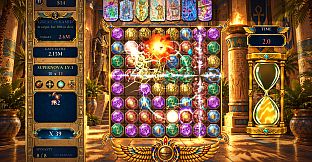
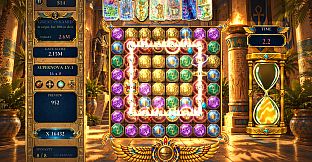
The core loop centers on dragging across three or more adjacent gems of the same color, with diagonals counting toward valid chains. Releasing the chain pops the gems for shards multiplied by the current multiplier. Closing a loop by returning to the starting gem causes every gem inside the enclosed area to erupt as well, amplifying the score. Relics drop onto the board like regular gems and trigger powerful effects when chained, such as beams across rows and columns or area blasts, with combos possible when multiple relics activate together.
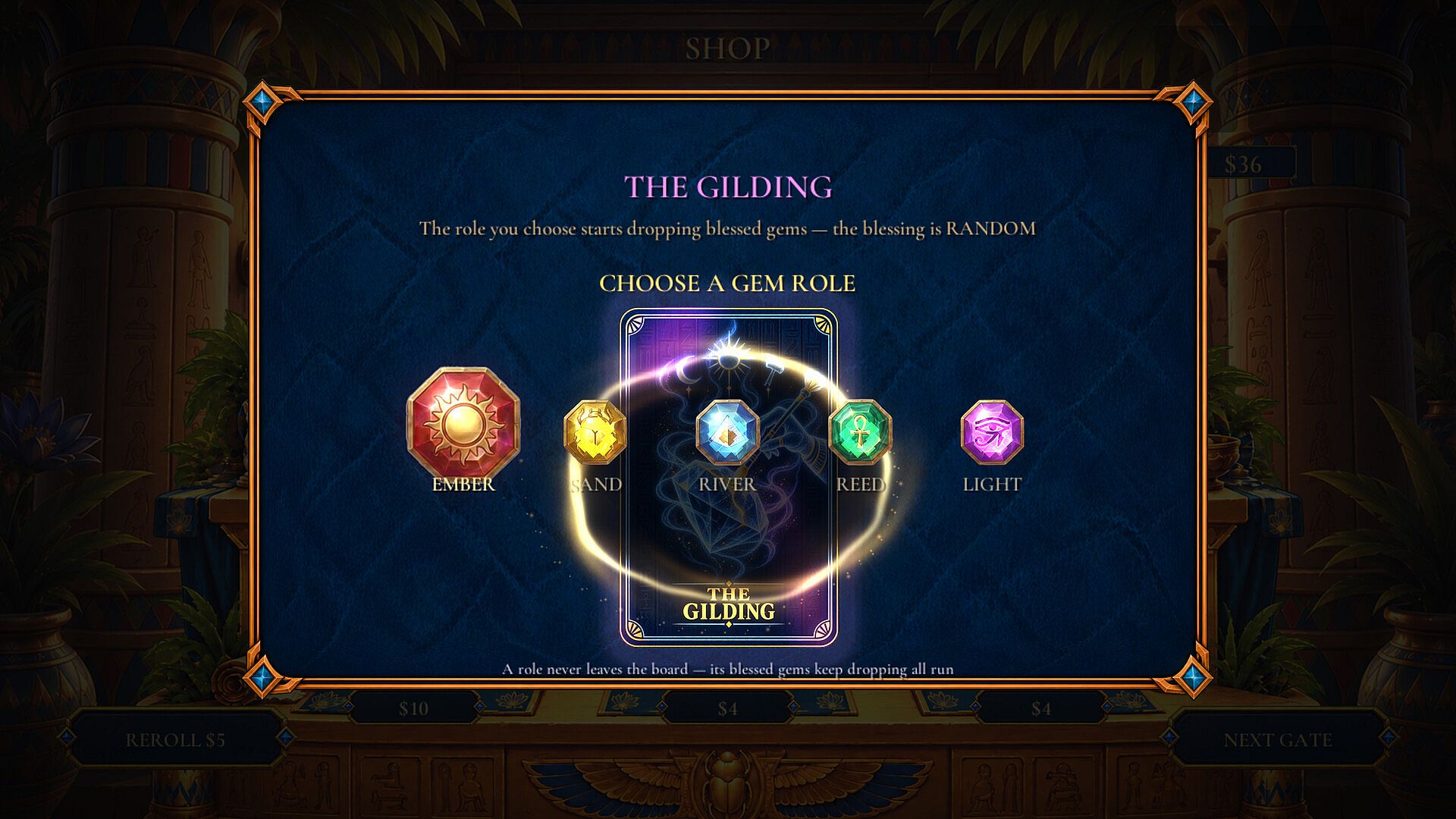
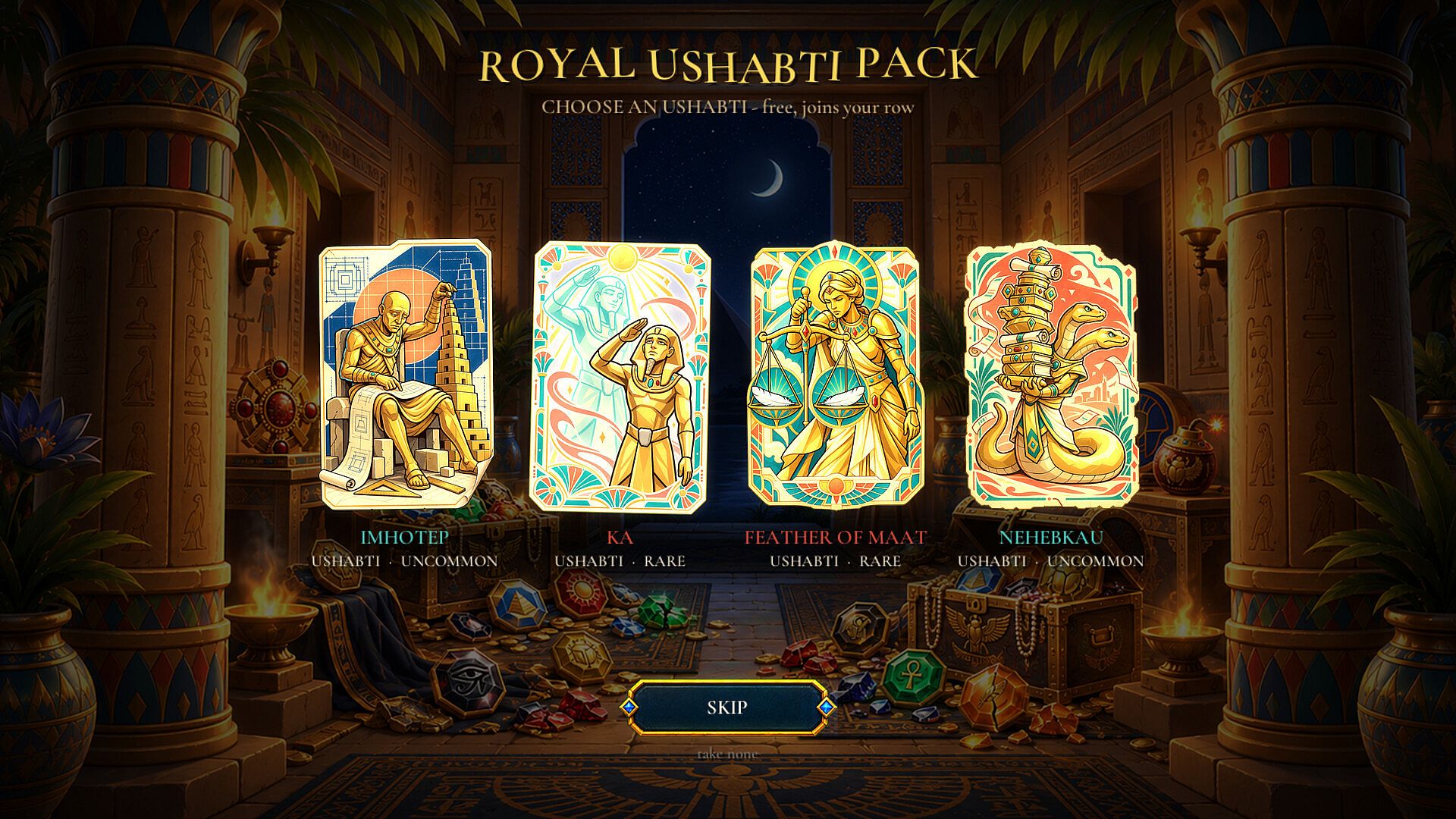
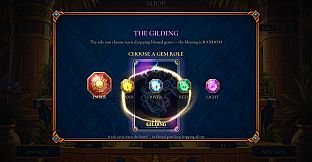
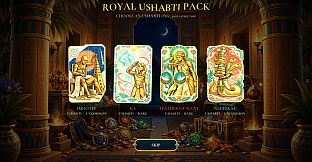
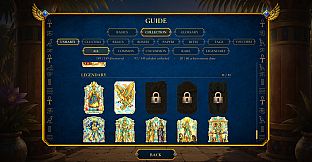
Between gates, a shop phase lets players spend limited coins on ushabti servants that join a row and modify scoring based on chain length, color, loop closure, or swallowed relics. Some servants add flat values, others multiply outputs, and a few scale with repeated pops. Packs opened in the shop provide choices among ushabti, papyri, constellation upgrades, or rites, while legendary servants require special conditions like filling the Eye of Horus or using particular rites. Blessings from gods such as Ptah, Khonsu, Ra, or Nut can attach to any servant and alter its scoring rules, for example by adding shards per gem in a chain or granting multiplier bonuses.
Gem enhancements like Faience, Wild, and Gold further modify board behavior, while papyri and rites rewrite rules on the fly. Clusters can be leveled for additional power, and tags along with vouchers expand options across runs. The system rewards careful ordering of the servant row so effects chain sequentially for massive outputs.
Game Modes
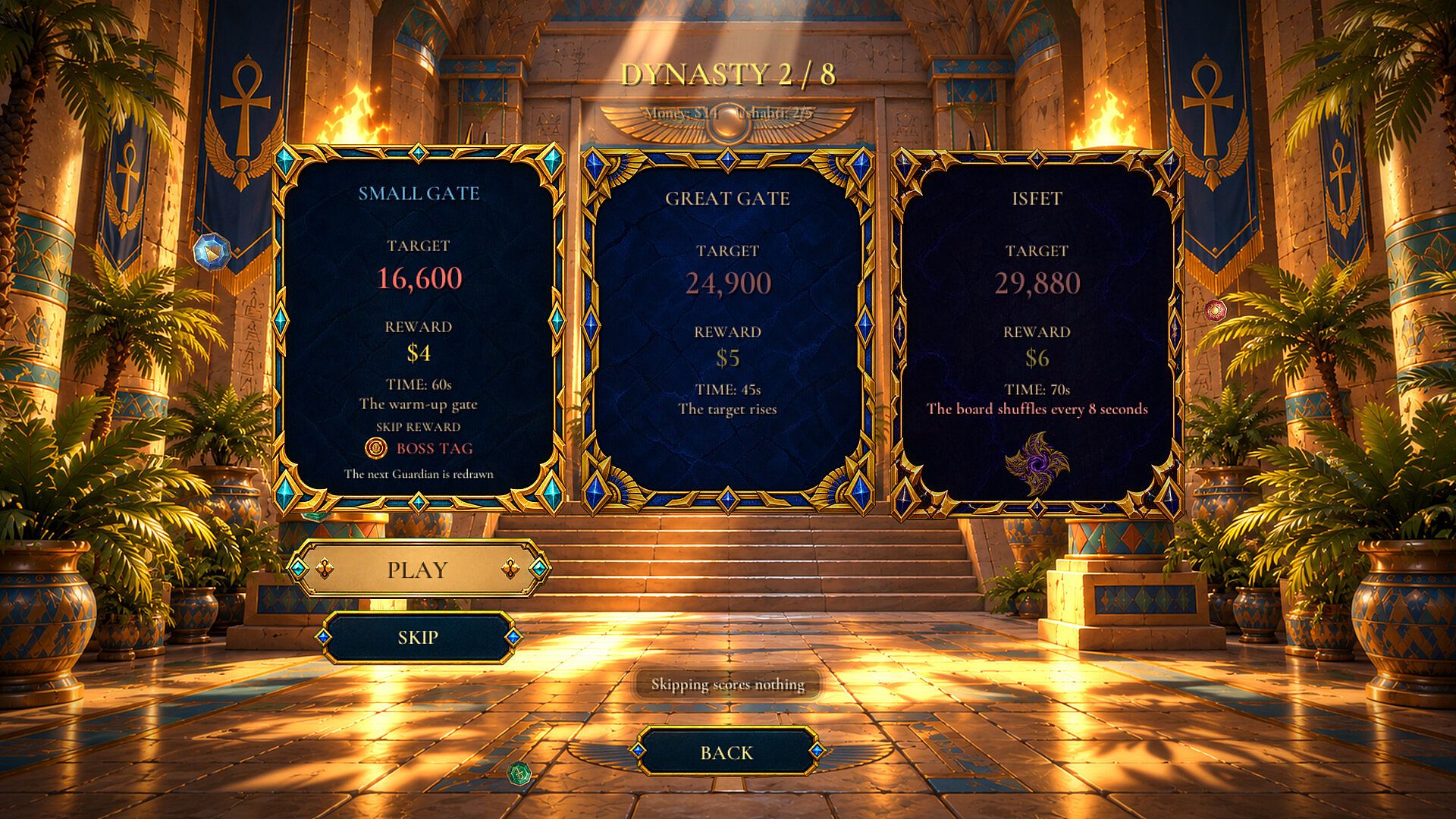
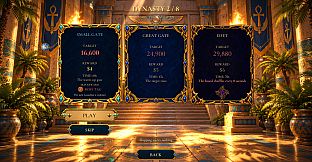
Runs progress through gates within dynasties, each ending with a boss encounter under a specific god's influence that alters board rules, such as poisoning gems or shuffling the layout. Eight stakes scale difficulty from the easiest SAND level up to the harshest DUAT, with higher stakes increasing targets and reducing time. An Endless mode removes the final limit and continues as long as the scoring engine sustains the required pace.
Twenty bosses and five final guardians appear across the dynasties, with the upcoming god visible before each shop phase so players can adapt purchases. The structure emphasizes one continuous run per attempt, where every coin spent and servant placed shapes the path through the tomb.
Key Systems and Progression
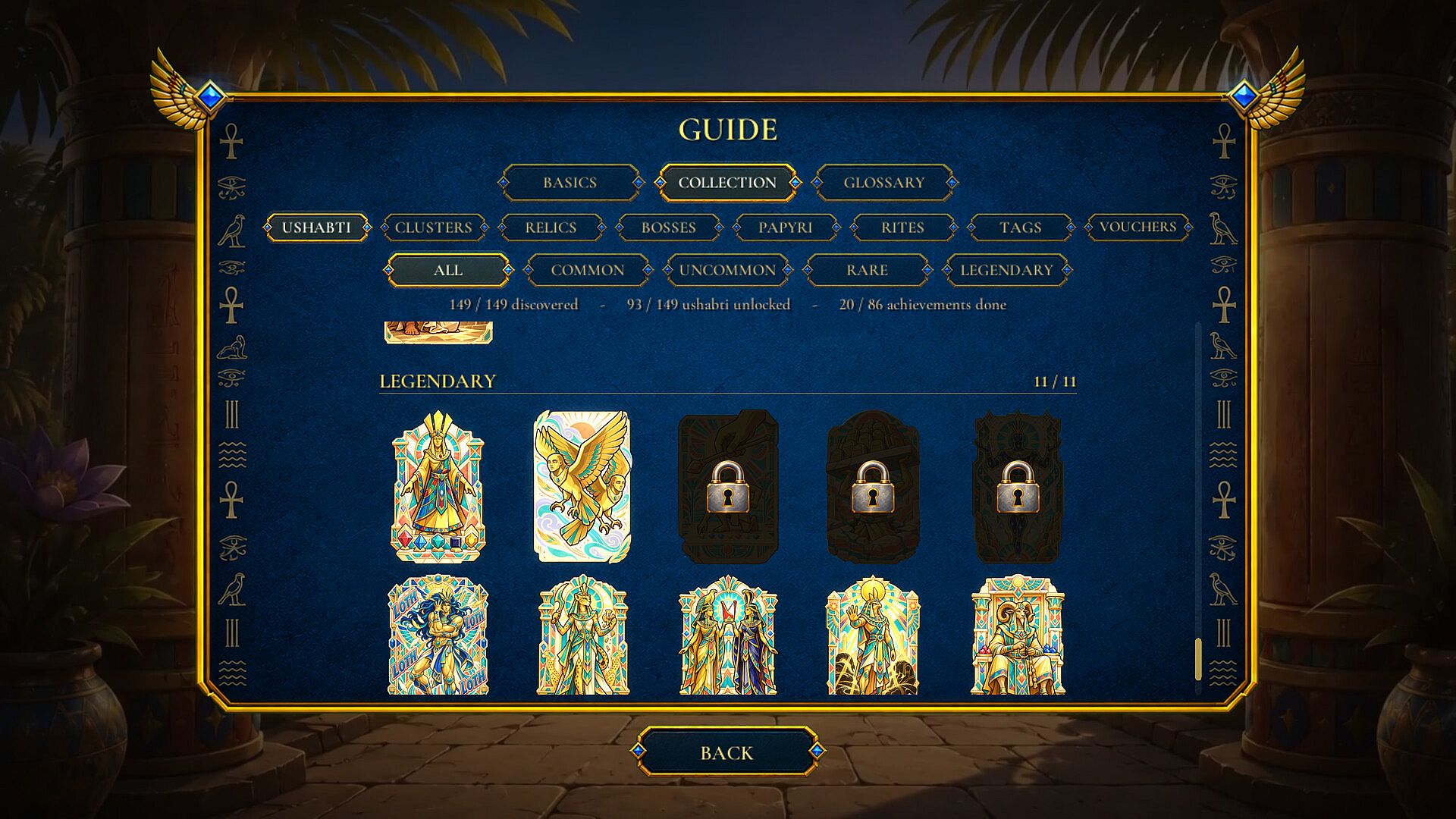
One hundred forty-nine ushabti servants span four rarities, including eleven legendaries that do not appear in standard packs. Twenty-two relics fall into six families and interact directly on the board rather than in an inventory. Twenty-three papyri and twenty-seven rites provide board-altering options, while eleven clusters offer leveling paths, some revealed only through play. Starting pouches, vouchers, and tags add variety to each attempt without requiring external unlocks.
The Egyptian-inspired servants draw from historical ushabti figures but function as modular scoring engines. Their interactions create emergent combinations where a well-ordered row can turn modest gem pops into exponentially larger results before the hourglass empties.
Is It Worth Playing?
LOTH suits players who enjoy precise match-three puzzles combined with strategic resource management and run-to-run decision making. The limited coin economy forces meaningful choices about servant recruitment and upgrades, while the servant row and relic interactions reward experimentation with ordering and synergies. Higher stakes and the Endless mode provide scalable challenges for those seeking longer sessions or repeated attempts to refine engines.
Because the game remains in development with no released version yet, current player feedback is unavailable. Those drawn to indie strategy titles that layer puzzle execution over deck-like building mechanics will find the described systems align closely with that preference. The single-player focus keeps attention on personal optimization rather than competition.











