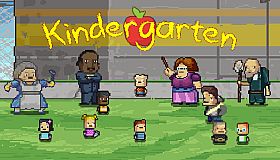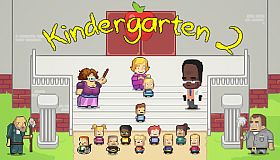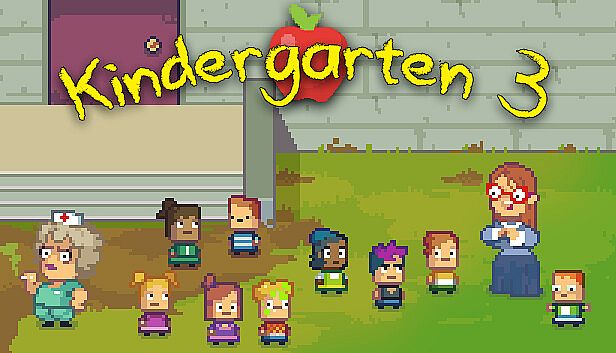



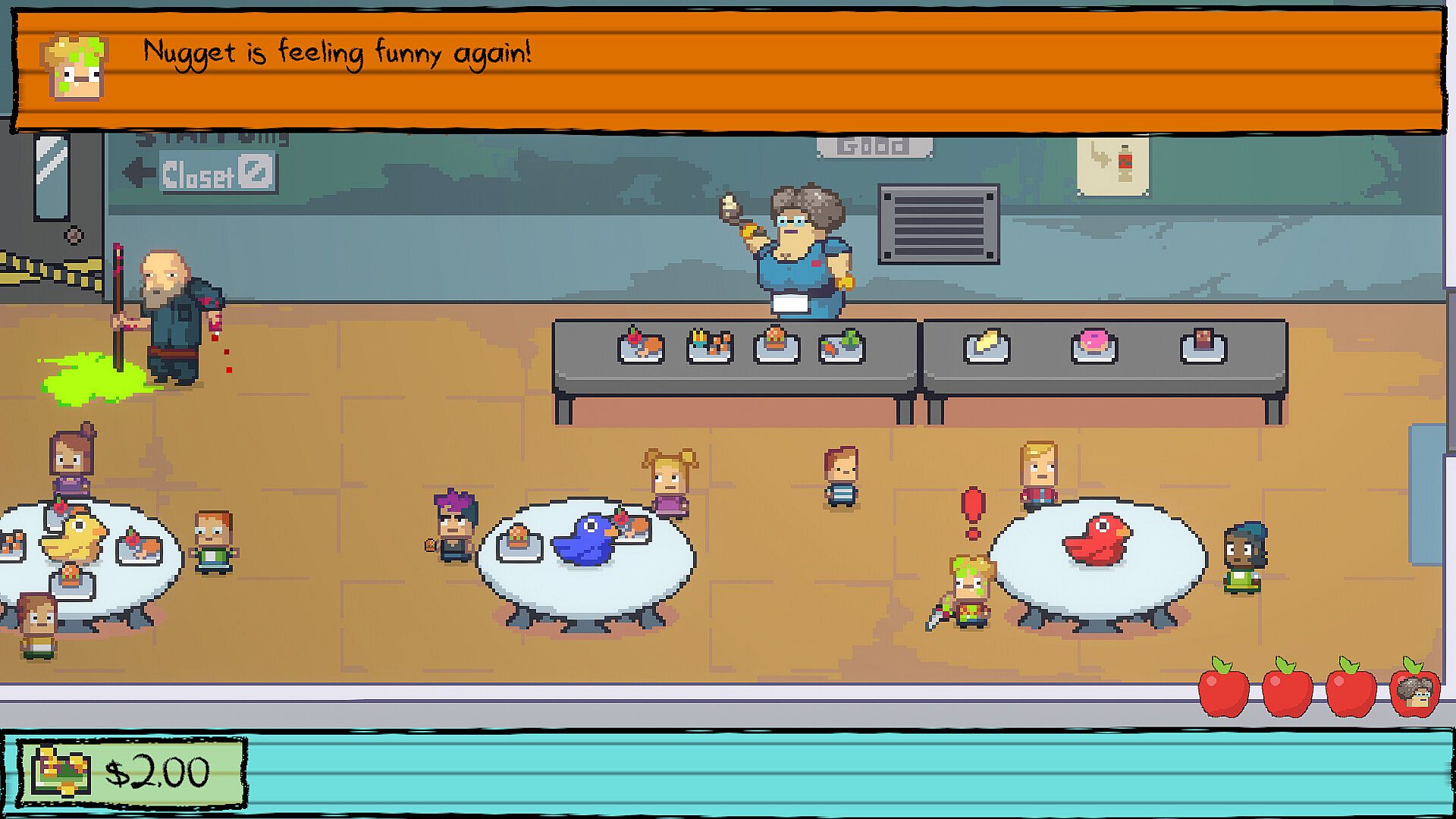
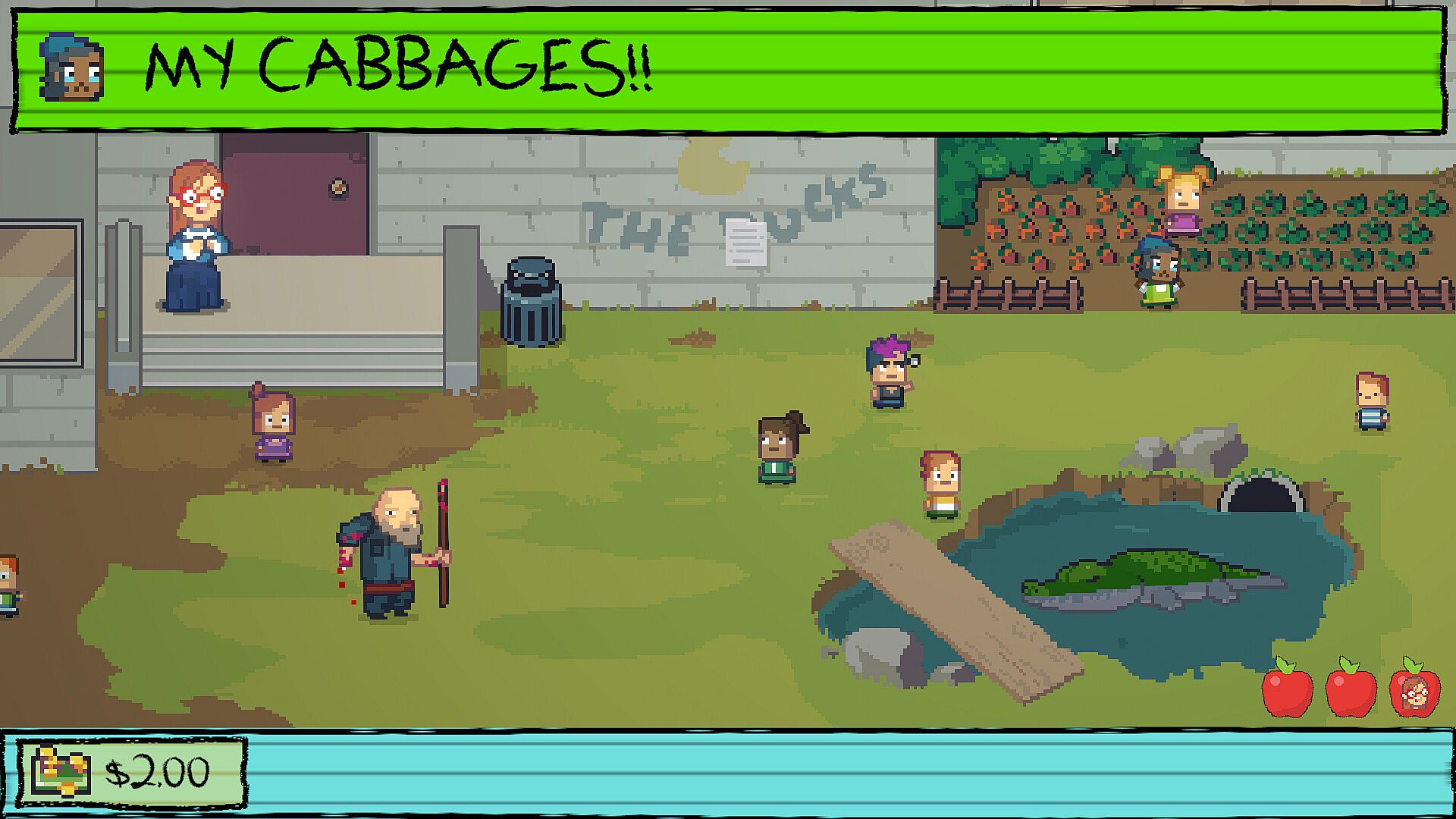
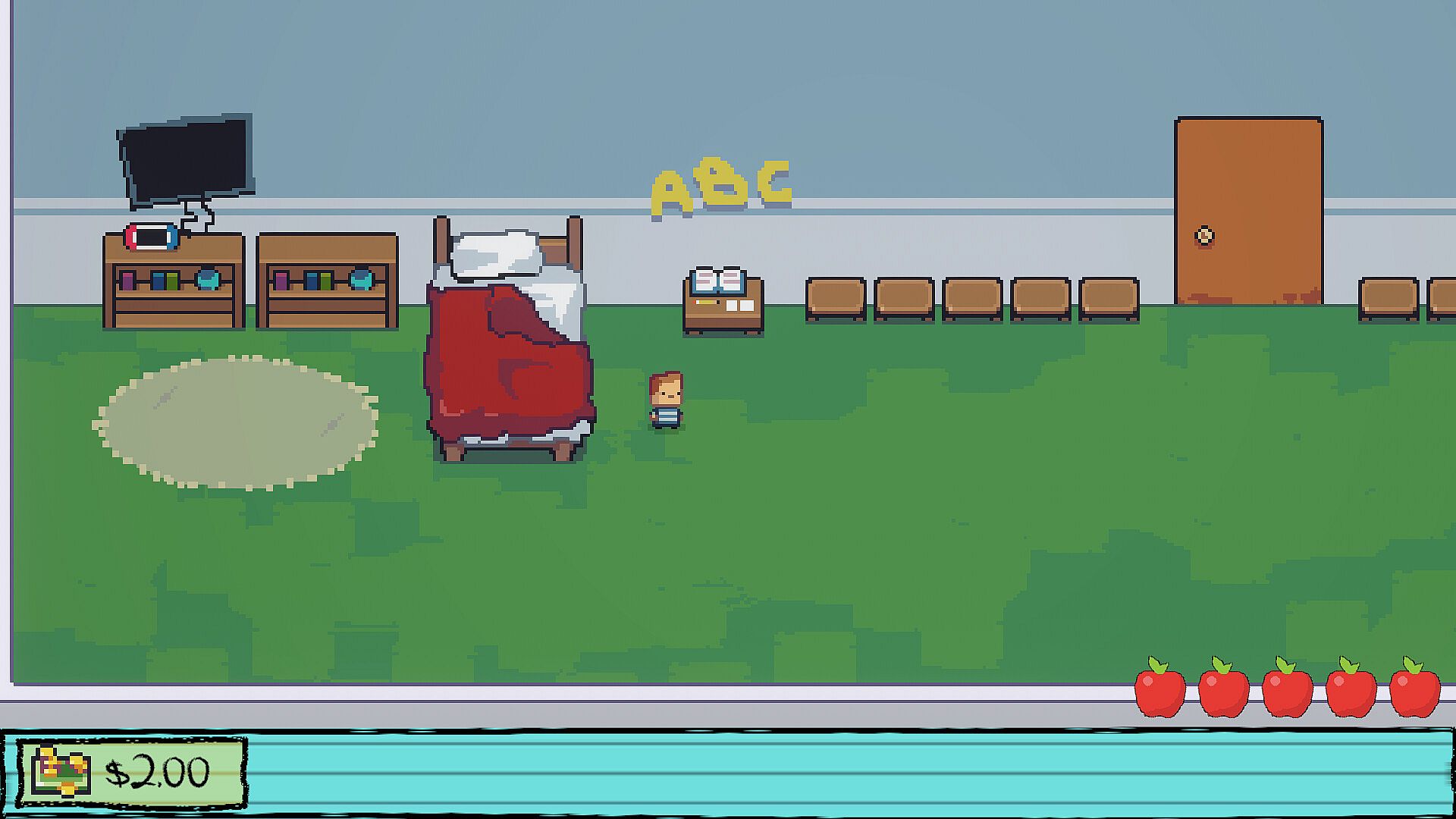
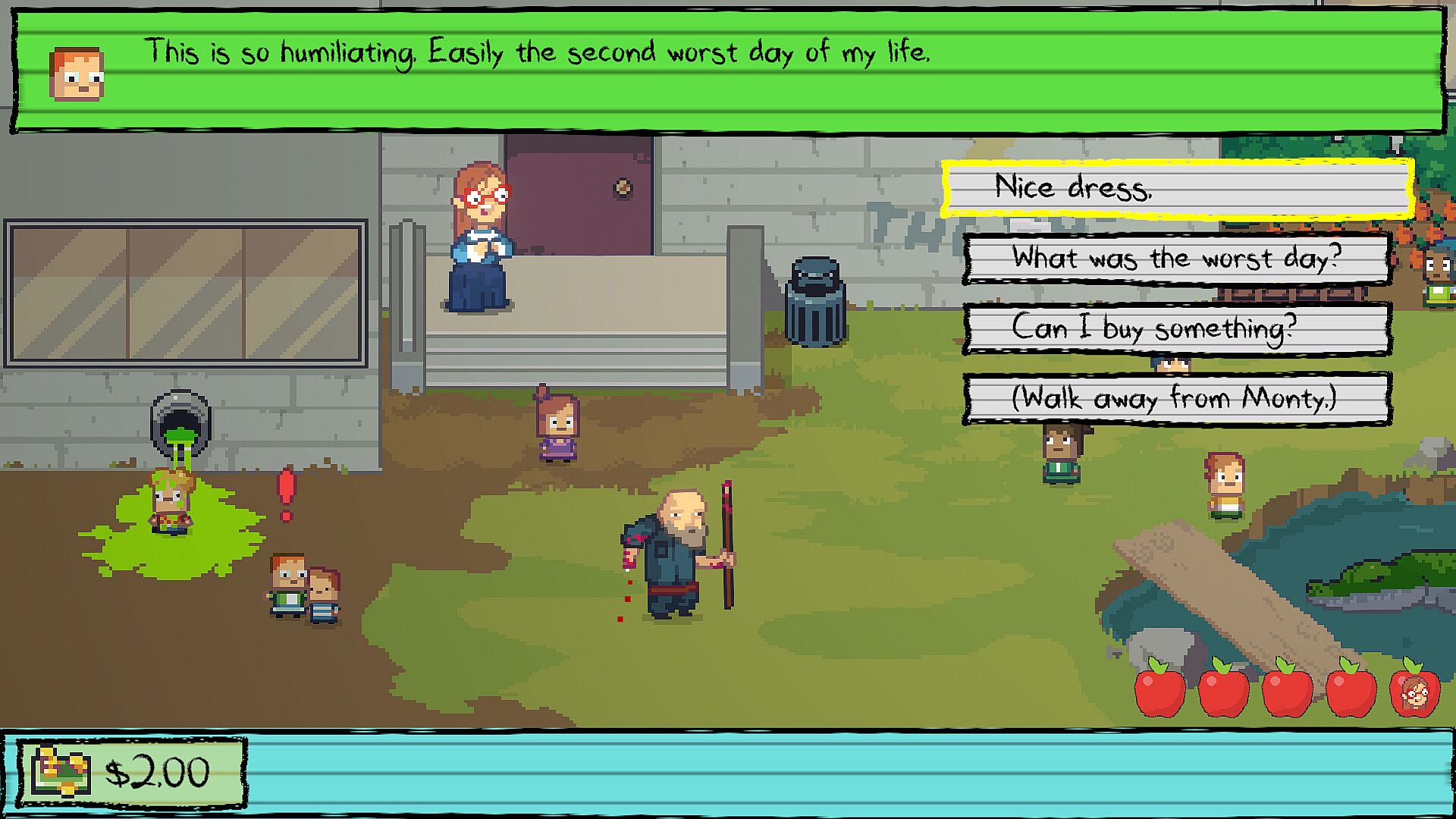
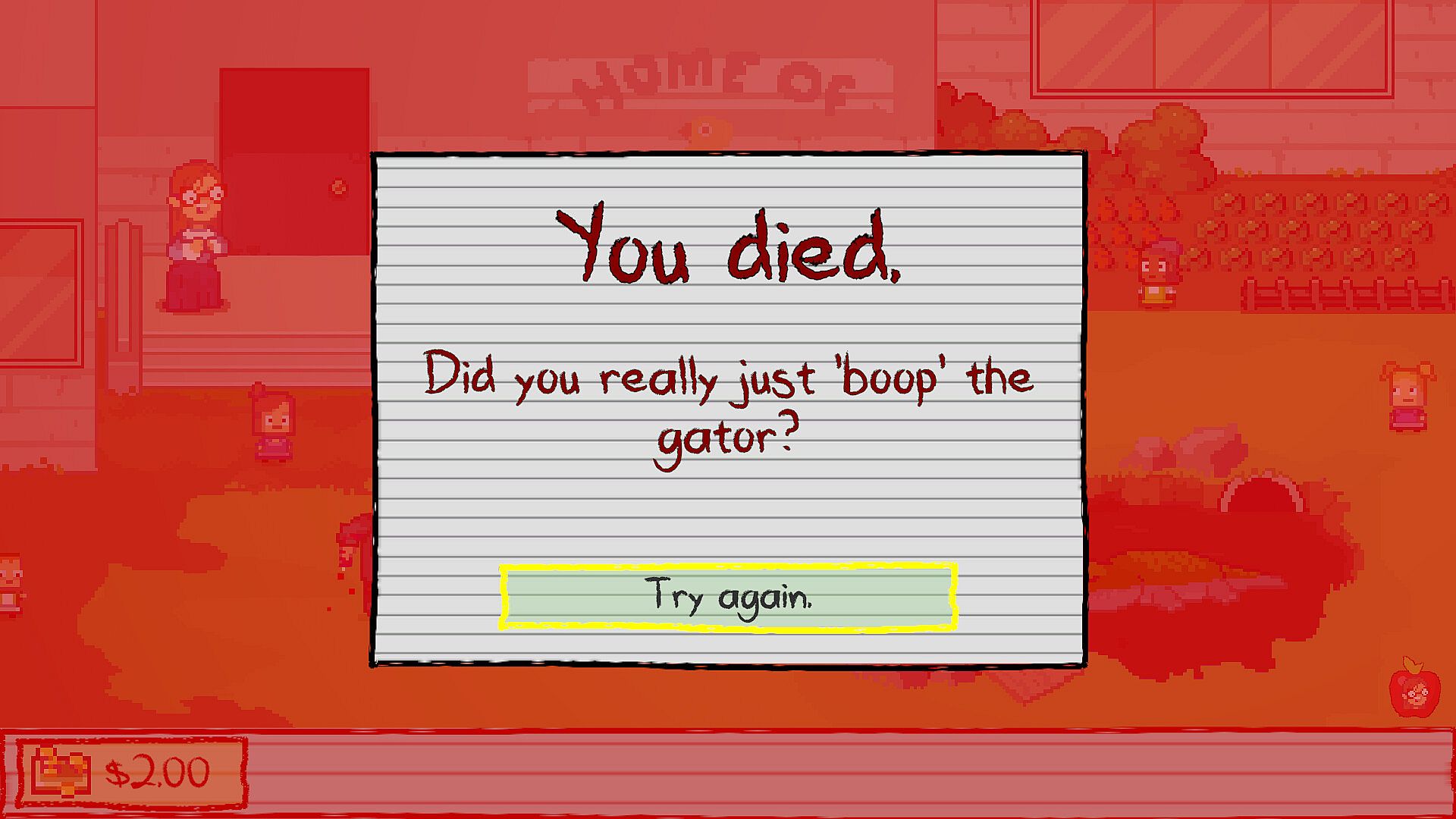
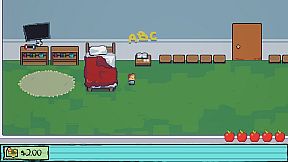
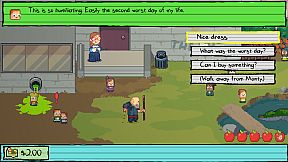
Kindergarten 3 es una aventura indie en la que encarnas a un niño de preescolar que vive un día escolar caótico lleno de misterio, violencia absurda y puzles. La historia arranca un miércoles en un colegio nuevo donde una sustancia verde rezuma de las paredes, el director ha desaparecido junto con varios alumnos y las rutinas habituales se mezclan con peligros como un caimán en el estanque o una profesora que solo se comunica cantando rimas.
Jugabilidad
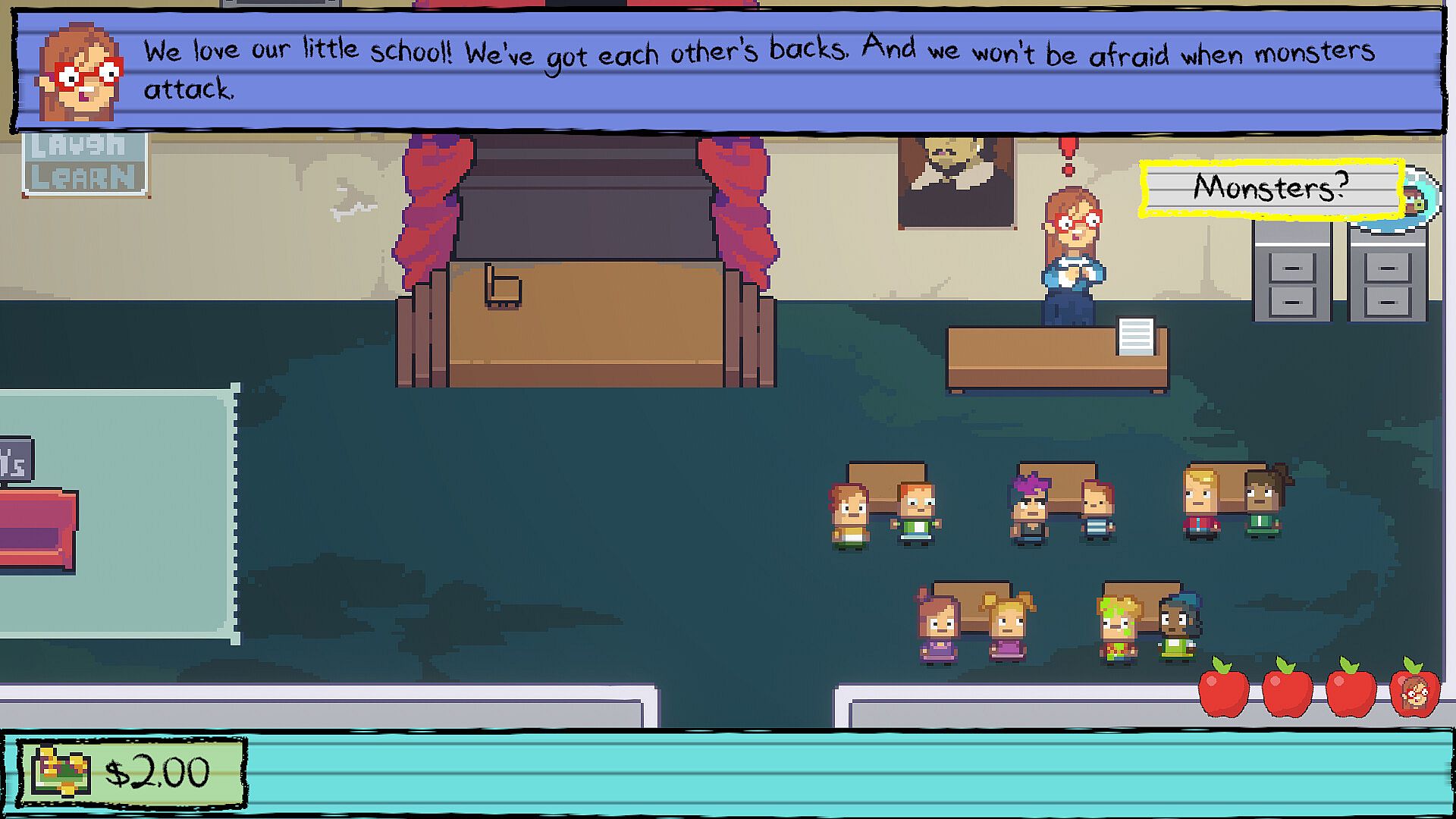
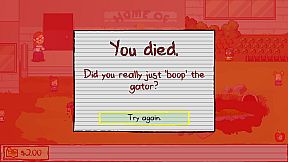
El juego se basa en un bucle temporal que te obliga a repetir el mismo día escolar mientras completas una serie de encargos que requieren explorar, recoger objetos, interactuar con otros personajes y experimentar. Te desplazas entre zonas como el patio, el escenario del aula, la biblioteca, la enfermería y el área de juegos, aprovechando lo que sabes de la ubicación de los objetos y el comportamiento de cada personaje. Muchas acciones acaban en resultados cómicos o letales que te obligan a reiniciar, por lo que tendrás que probar distintas combinaciones de diálogos y usos de objetos en cada intento.
El reparto se amplía con nuevos personajes que aportan personalidades y funciones propias: un alborotador que lanza objetos, una niña que cuida plantas, el hijo del anterior director que se siente atraído por el caimán, una chica con problemas de memoria, una enfermera experimentada que trata los problemas causados por la sustancia verde, una profesora apasionada del teatro y un conserje ascendido a director. Cada uno introduce tareas u obstáculos que se integran en la rutina diaria dividida en llegada, clase, almuerzo y recreo.
El sistema premia la observación y la memoria del entorno. Los objetos que encuentras pueden tener distintos usos según el encargo y, en muchos casos, el éxito depende de combinar información obtenida en intentos anteriores. El horario simplificado respecto a entregas anteriores concentra la acción en cuatro bloques principales, aunque mantiene profundidad gracias a las distintas ramificaciones que surgen en cada misión.
Modos de juego
Kindergarten 3 estructura su contenido en una serie de misiones interconectadas en lugar de ofrecer modos multijugador o campañas separadas. Deberás completar nueve tramas principales que consisten en ayudar a los personajes con objetivos concretos, como montar obras de teatro, moverse por conductos de ventilación, resolver la situación del caimán desde distintos puntos de vista, romper objetos, enfrentarte a otros o participar en actividades grupales. Cada misión admite varias aproximaciones que pueden acabar en éxito, fracaso o desenlaces alternativos que desbloquean más contenido.
Por el colegio aparecen coleccionables en forma de peluches Monstermon que contribuyen al porcentaje de completado junto con los logros. El foco sigue centrado en la experimentación en un solo jugador dentro del bucle diario, donde volver a jugar los mismos tramos revela nuevas interacciones o soluciones sin cambiar el escenario principal.
Key Features and Locations
El juego incorpora varias zonas nuevas que enriquecen los puzles. El patio incluye el estanque con su caimán, el aula cuenta con un escenario para representaciones, la biblioteca alberga a los alumnos de estudio y libros, la enfermería dispone de material médico y el área de juegos ofrece el equipamiento habitual junto con oportunidades ocultas. Otros espacios del colegio aparecen según las necesidades de cada encargo.
Los encargos van desde tareas de ayuda sencillas hasta situaciones más complejas de infiltración o resolución de conflictos. Podrás asistir en representaciones, eliminar o proteger al caimán, romper ventanas, participar en peleas, unirte a grupos de apoyo o simplemente sobrevivir al día mientras descubres el misterio que rodea a las desapariciones y a la sustancia verde.
¿Merece la pena?
Kindergarten 3 ofrece una experiencia de aventura de puzles centrada en el humor negro, las misiones impulsadas por los personajes y los bucles de día que invitan a repetir. En Steam cuenta con reseñas "Muy positivas" y un 94 % de valoraciones positivas de más de 1.600 usuarios, que destacan el enfoque experimental y el nuevo elenco, aunque algunos señalan que el alcance es menor que en entregas anteriores. Está pensado para quienes buscan sesiones cortas y repetibles que recompensan la prueba y el error más que una historia lineal.
Quienes busquen aventuras indie con violencia peculiar, puzles basados en objetos y múltiples caminos de misión encontrarán un buen nivel de implicación a lo largo de las nueve tramas. Está disponible en PC, lo que facilita repetir partidas para completar todos los coleccionables y finales. La recepción general indica que ofrece un valor sólido tanto para fans de la saga como para quienes buscan una experiencia individual compacta e ingeniosa.