


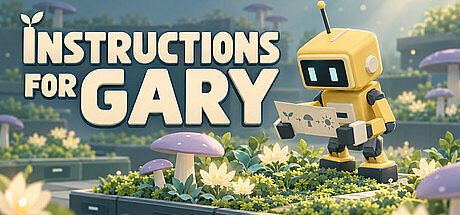


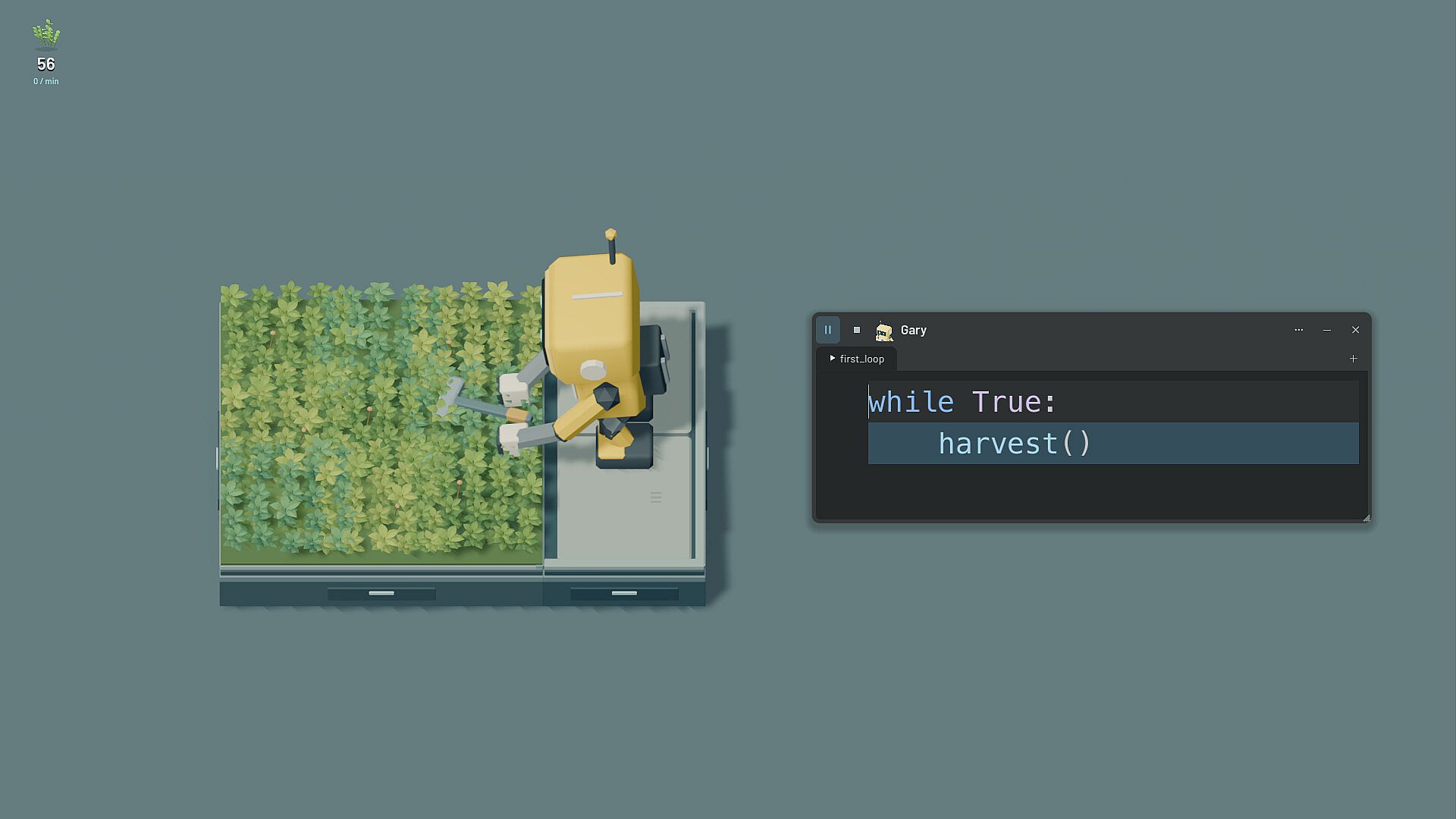
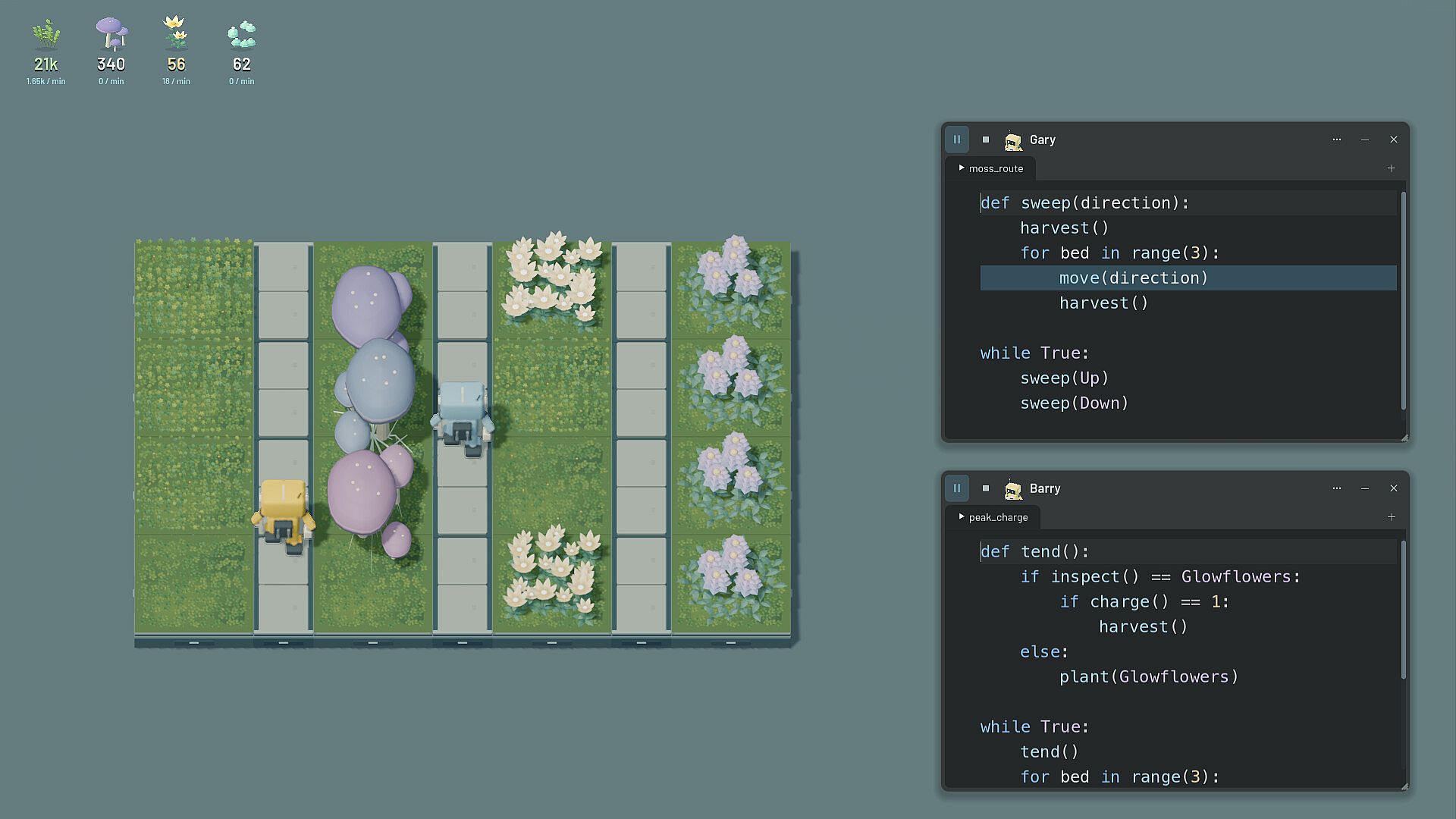
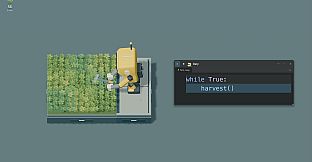
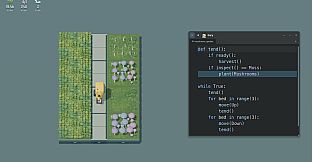
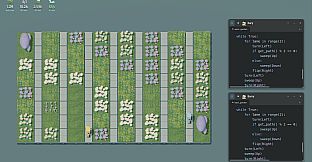
Instructions for Gary is a single-player strategy indie simulation game built around writing code to manage an automated garden. Players direct a robot named Gary through a simple Python-style scripting language, beginning with a single patch of moss and expanding into a self-sustaining operation filled with unusual plants and additional robots.
Gameplay
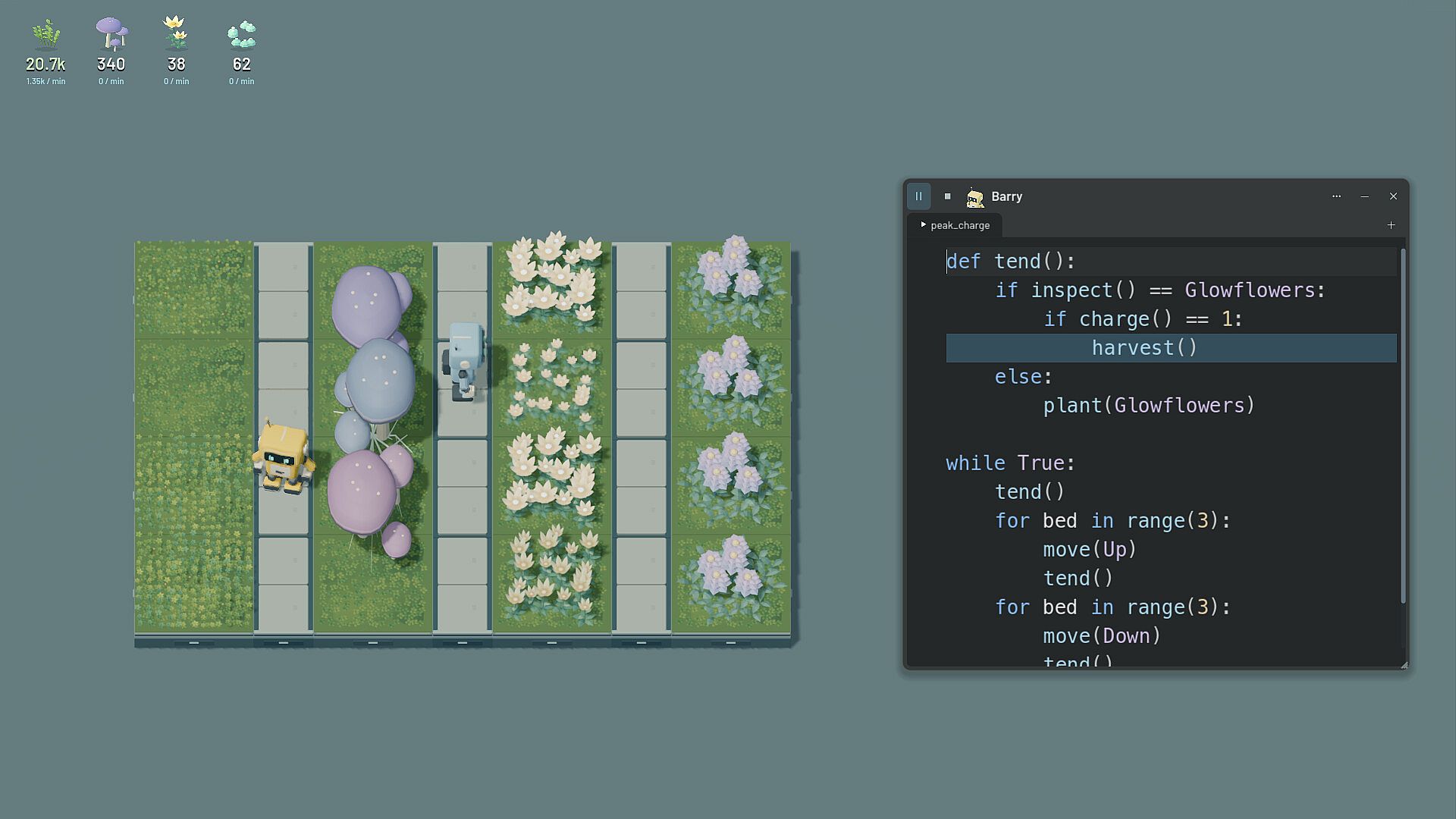
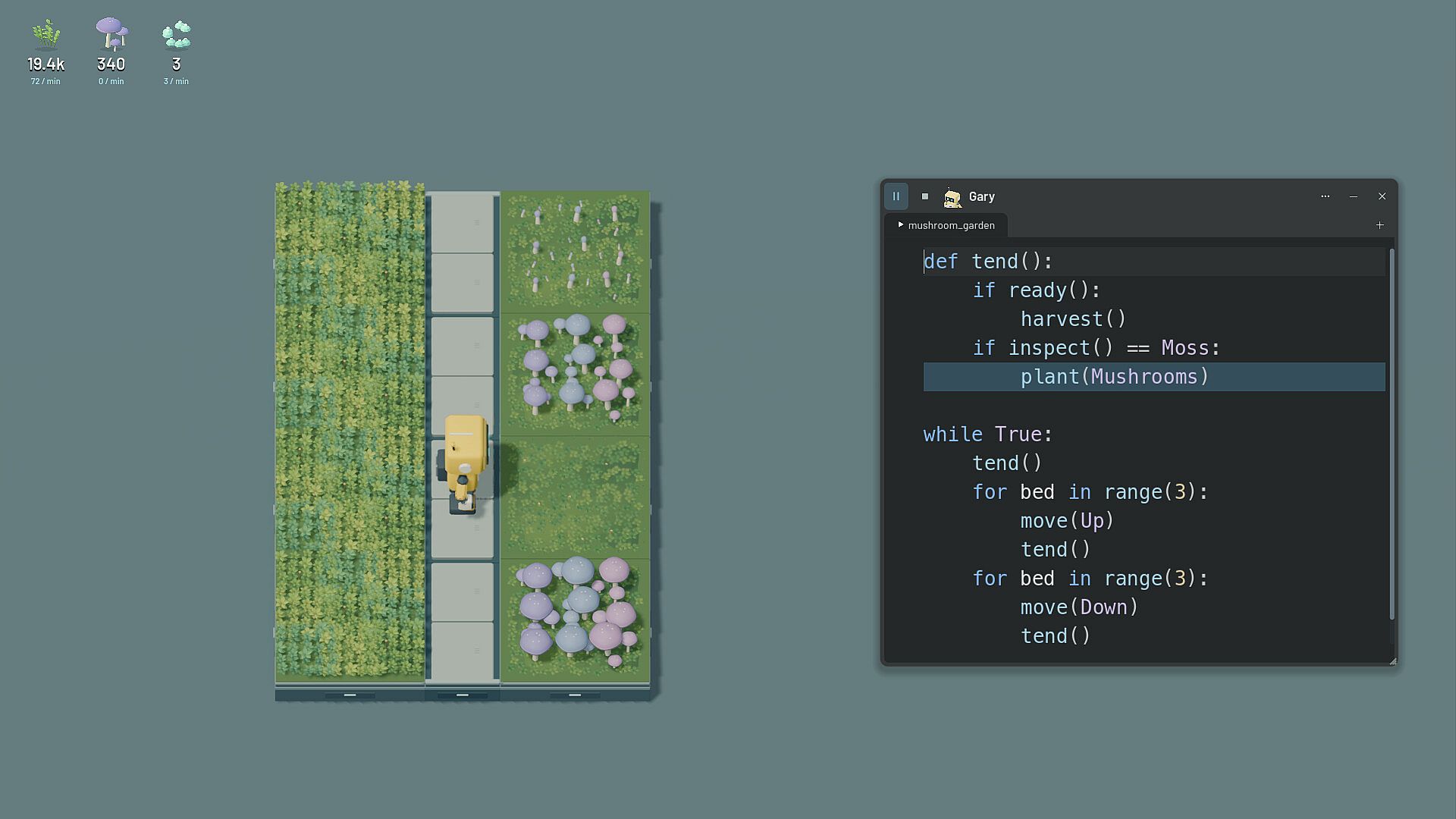
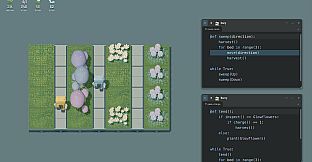
The core loop centers on programming Gary to handle planting, growth cycles, and harvesting tasks. Commands control movement, actions, and conditional logic, with autocomplete and an in-game reference available for newcomers. Each plant type requires tailored instructions, such as expanding mushroom colonies through repeated growth steps or timing glowflower collection at maximum charge levels. Players experiment with bed layouts and robot routes to maximize output from limited space.
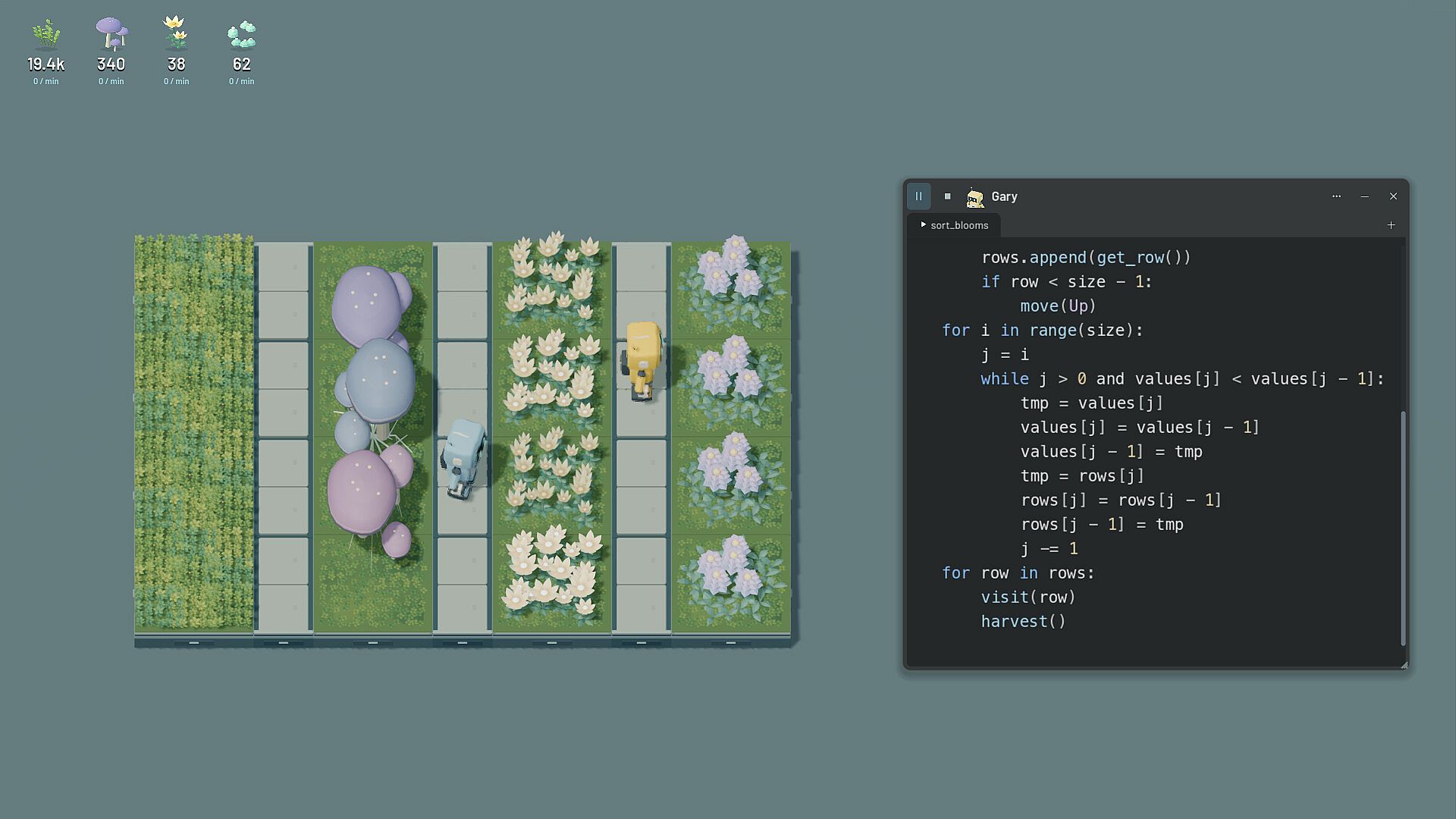
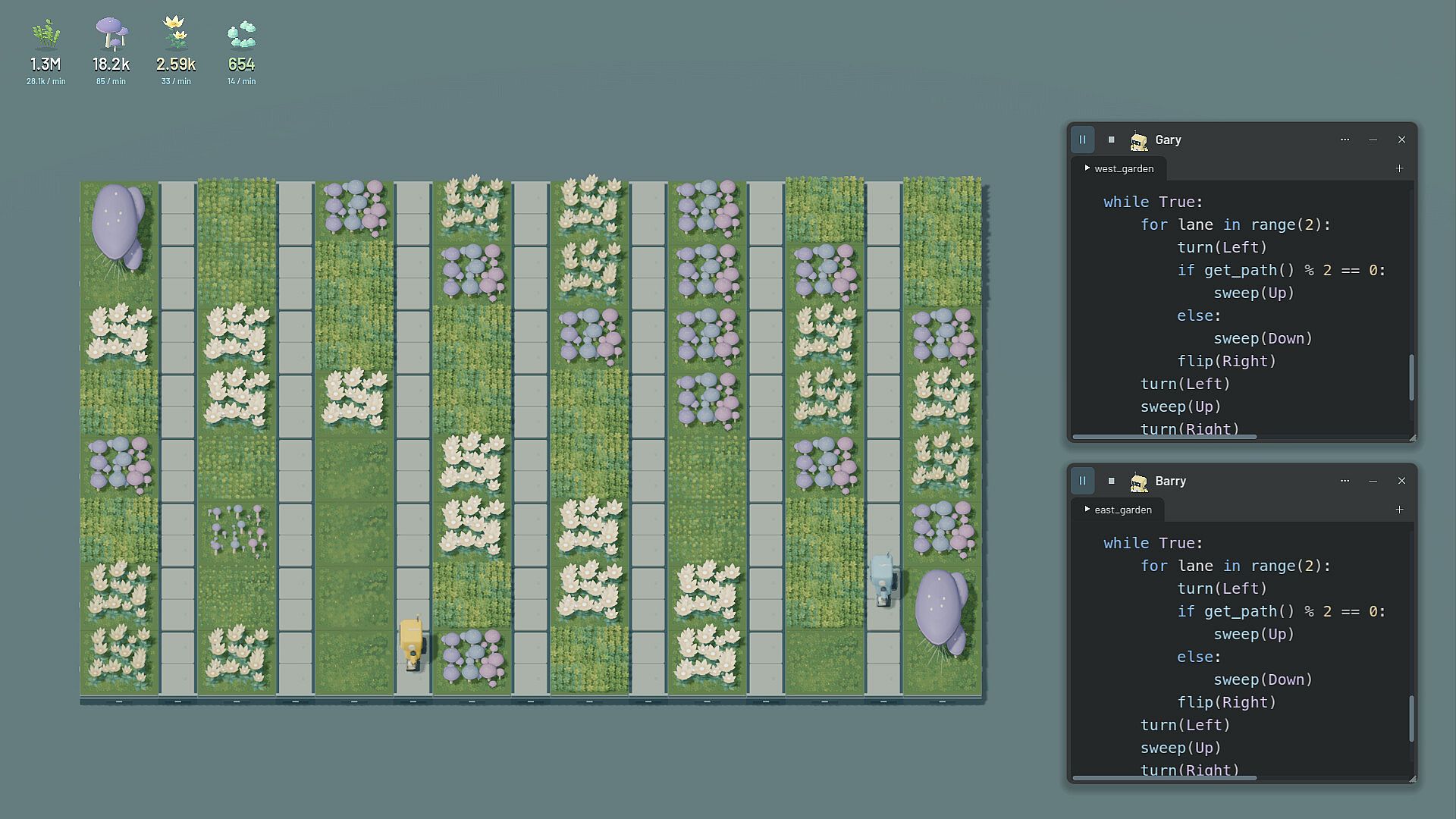
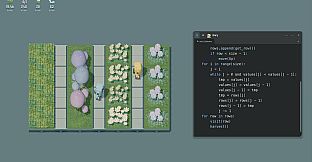
Progression comes from applying harvested resources to unlock additional growing beds, new plant varieties, improved yields, and expanded programming features. Routines evolve from basic sequences into layered systems where multiple robots perform coordinated jobs. Plants introduce their own behavioral rules that demand adjustments to existing code as the garden scales.
Game Modes
The primary experience unfolds in the main garden, where players iteratively refine code to support larger and more complex operations. Optional Challenges provide separate test farms governed by distinct rulesets. Completing these challenges grants permanent upgrades that carry over to the central garden, encouraging repeated code refinement without altering the core single-player structure.
Programming syntax remains consistent across supported languages, allowing focus on logic rather than translation. The design supports incremental learning, with each new plant or tool introducing one concept at a time before combining them into larger automated workflows.
Progression and Systems
Expansion relies on strategic placement of beds and rewriting routines as demands increase. Early loops focus on basic repetition, while later stages involve sorting harvests, managing robot assignments, and adapting to plant-specific constraints. Rewards from challenges integrate directly into the main save, creating a steady path of mechanical depth without external multipliers.
The simulation emphasizes observation and iteration. Watching Gary execute code reveals inefficiencies in real time, prompting targeted edits that improve throughput across the entire operation.
Is It Worth Playing?
Instructions for Gary suits players who enjoy programming puzzles, automation design, and incremental simulation management. The single-player format delivers a self-contained experience centered on building efficient systems from simple commands. Those drawn to titles that blend coding practice with tangible in-game results will find the mechanics align closely with that interest. Because the game remains in development with no released version yet, its final balance and feature set will determine long-term appeal, but the described systems already outline a focused loop for methodical players.












