








Immortal Engine is a simulation game built for worldbuilders and storytellers who want deep control over entire universes. Players generate and manage interconnected fantasy and sci-fi systems that span from the first gods to the final mortals, with every parameter open to adjustment or conversational guidance.
Gameplay
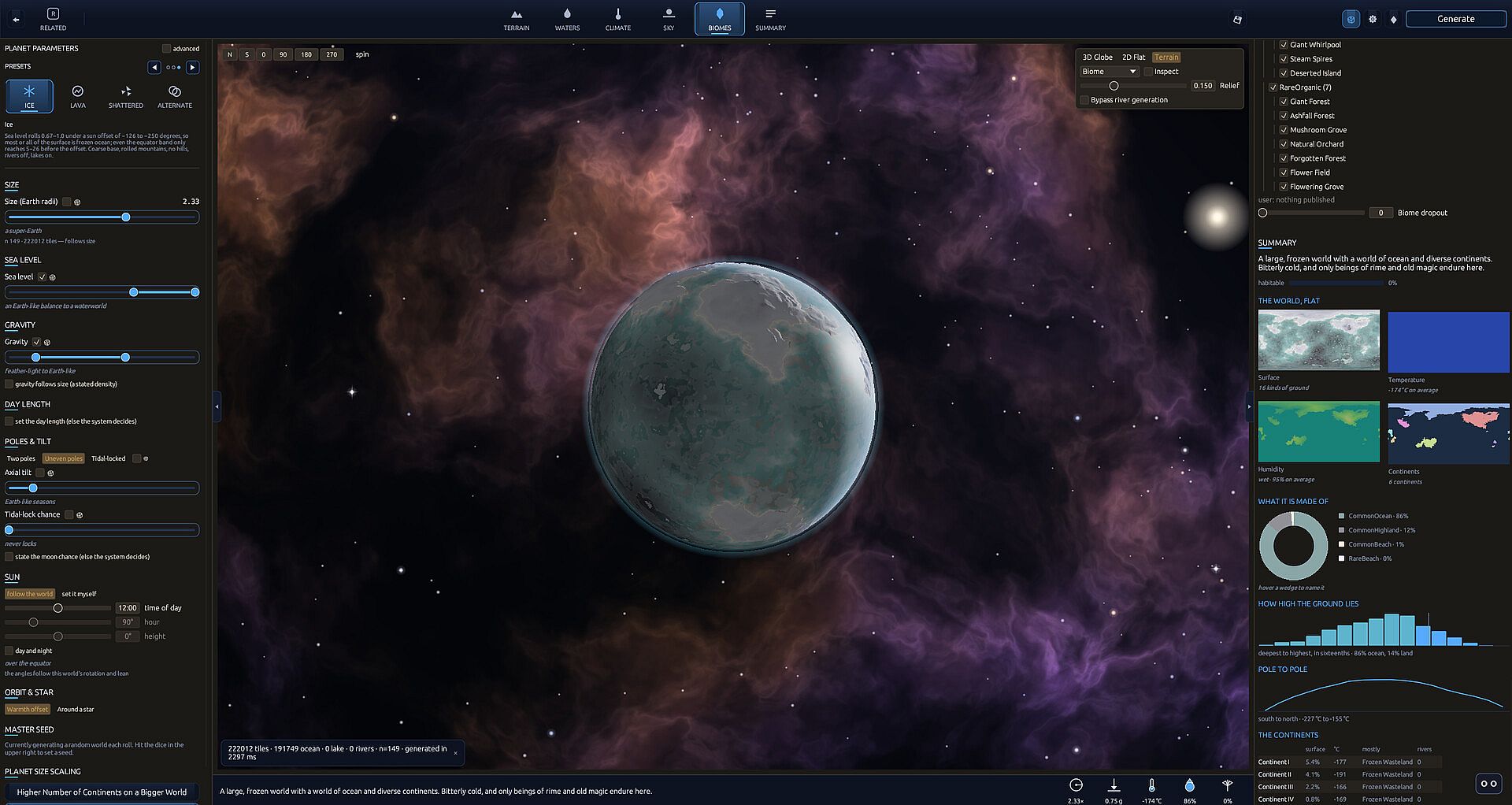
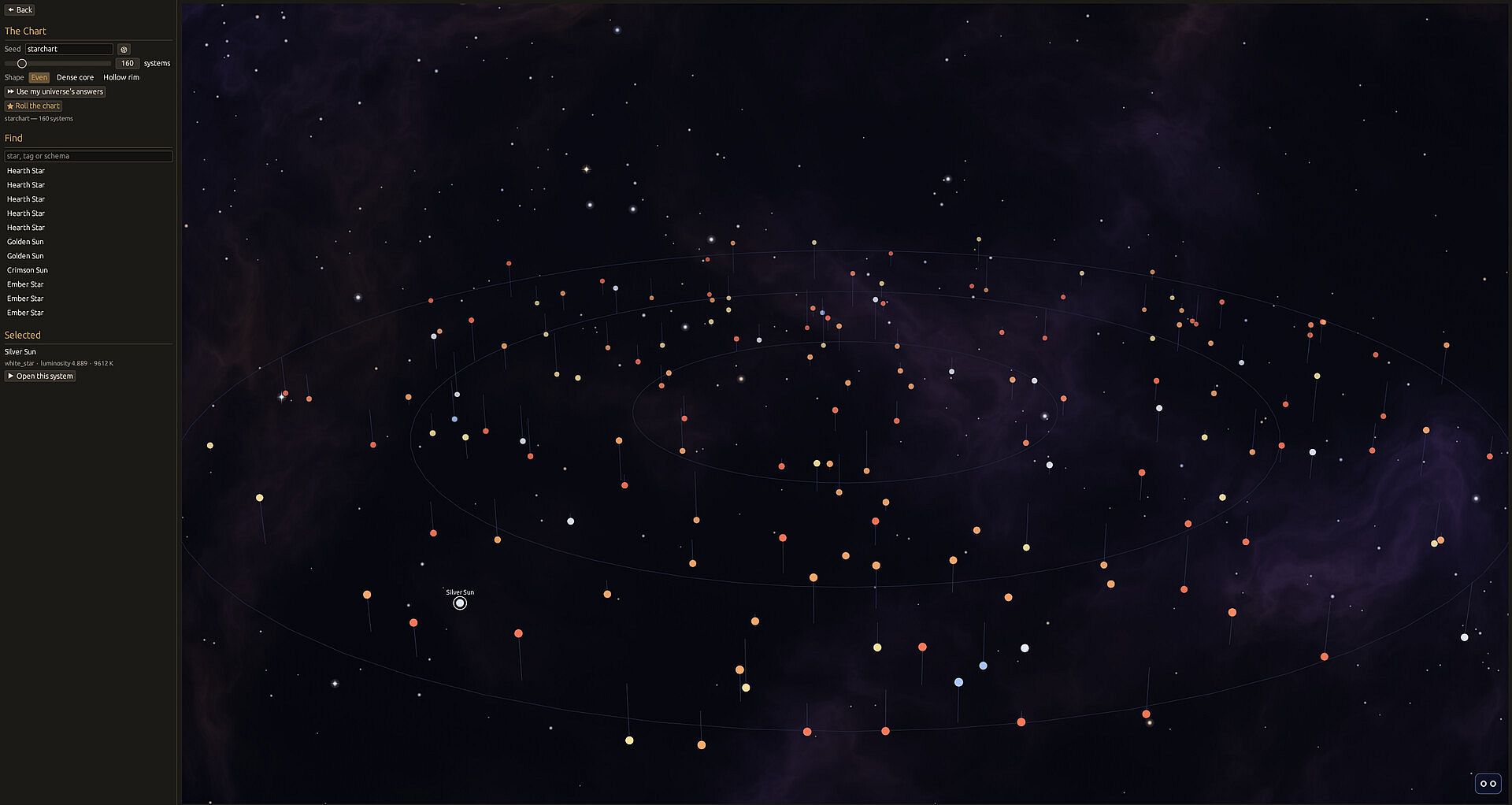
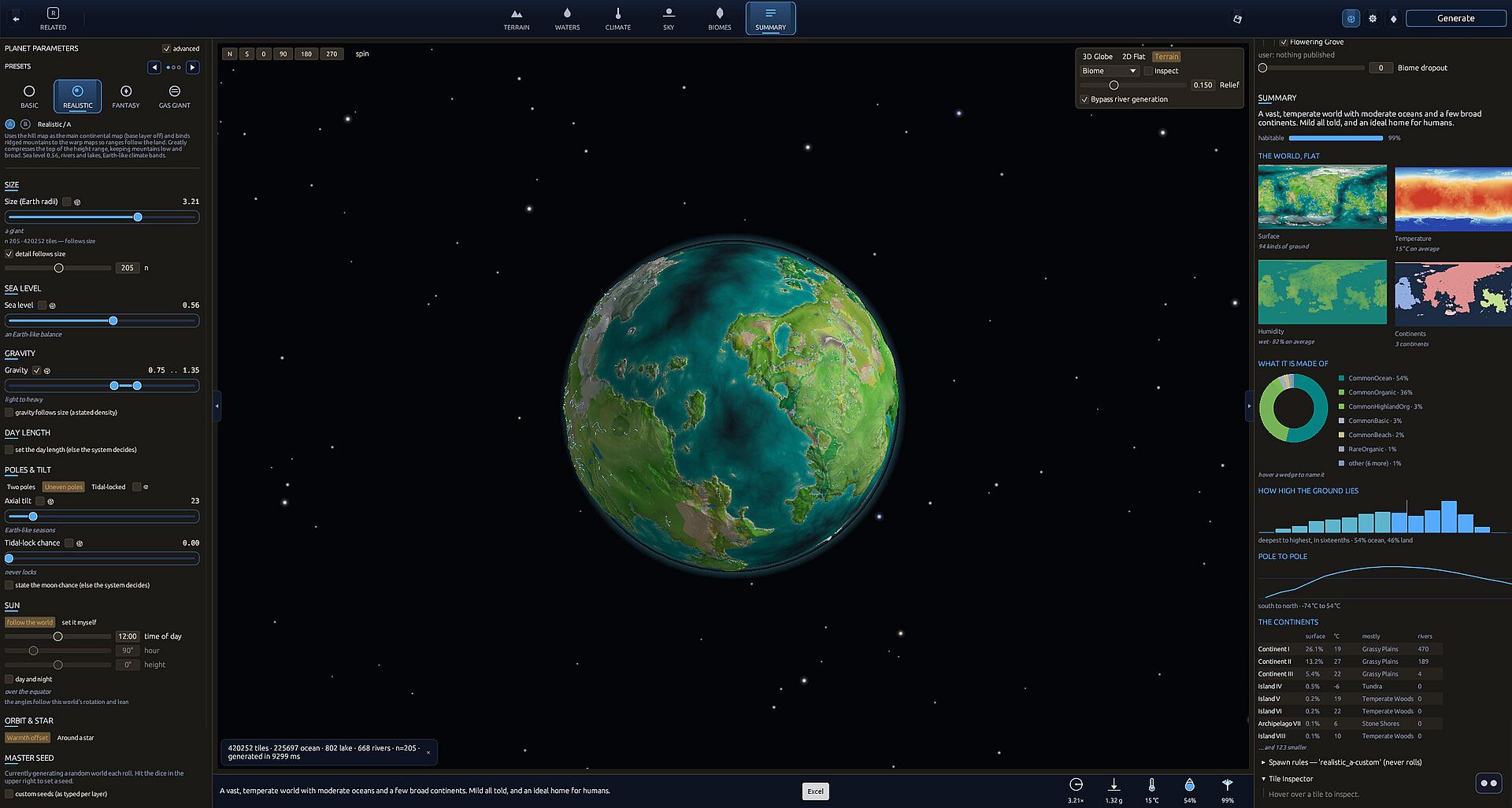
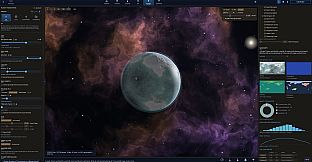
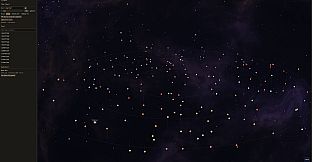
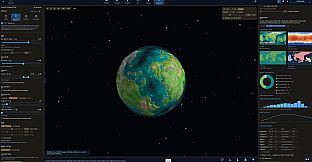
The core loop centers on creating and observing a living universe simulation. Users define planets using 3D hex-sphere tilemaps that incorporate layered noise, hydrology, erosion, rivers, and biomes. These worlds assemble into solar systems where orbital focus and habitable zones follow either real physics or custom magical rules. Star charts then place galaxies, nebulae, divine domains, and black holes, allowing the afterlife itself to exist as a physical location.
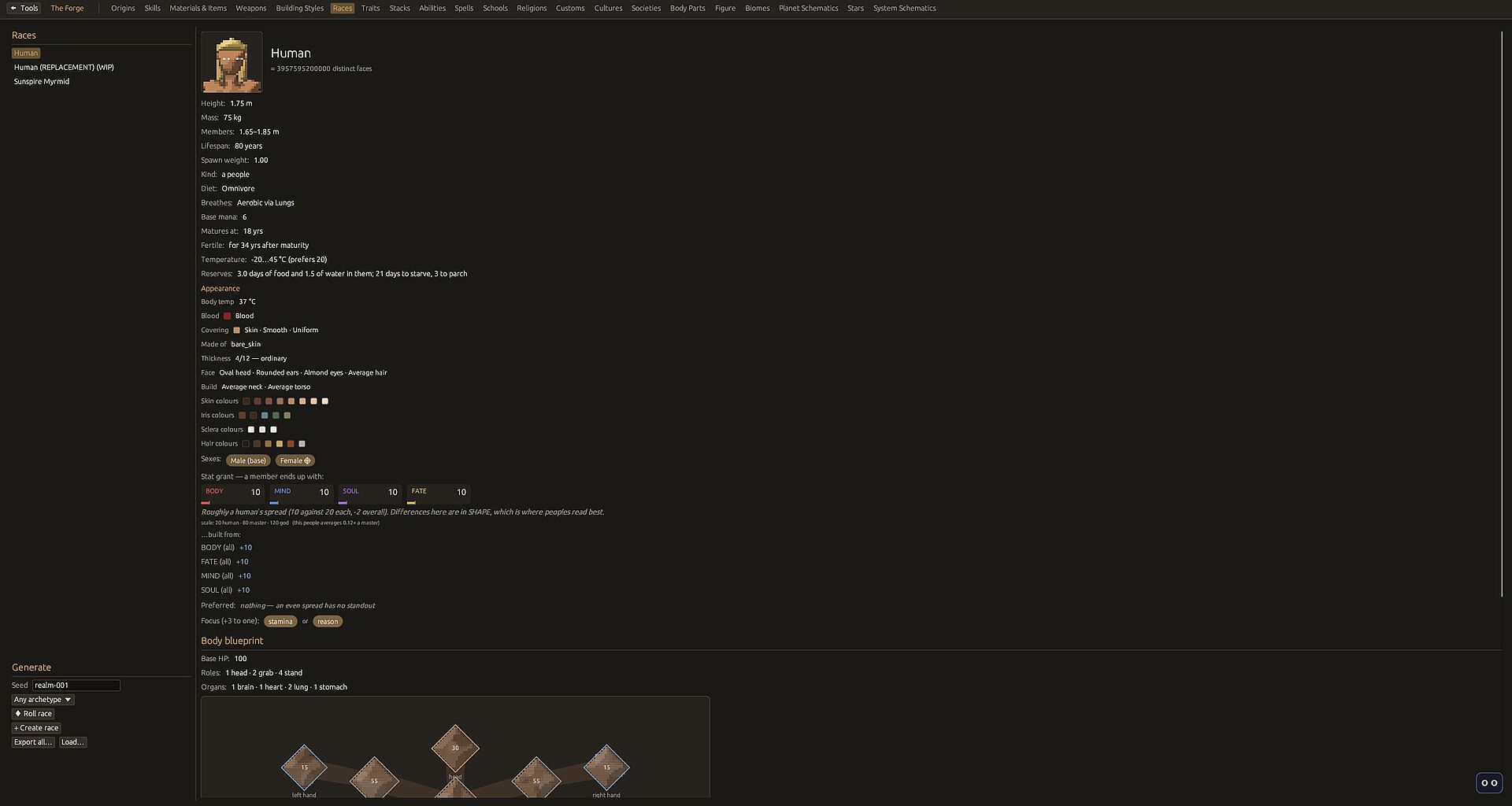
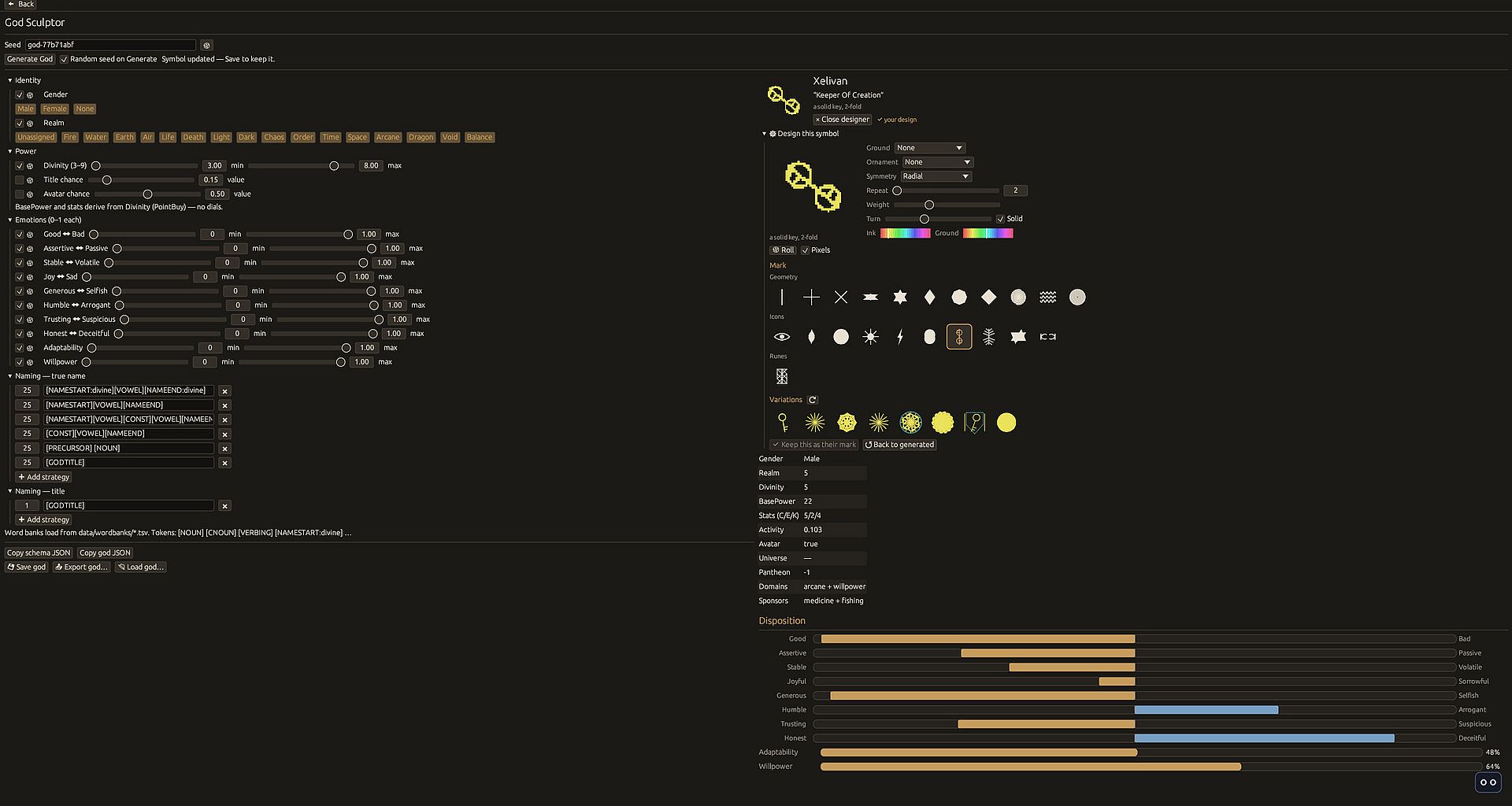
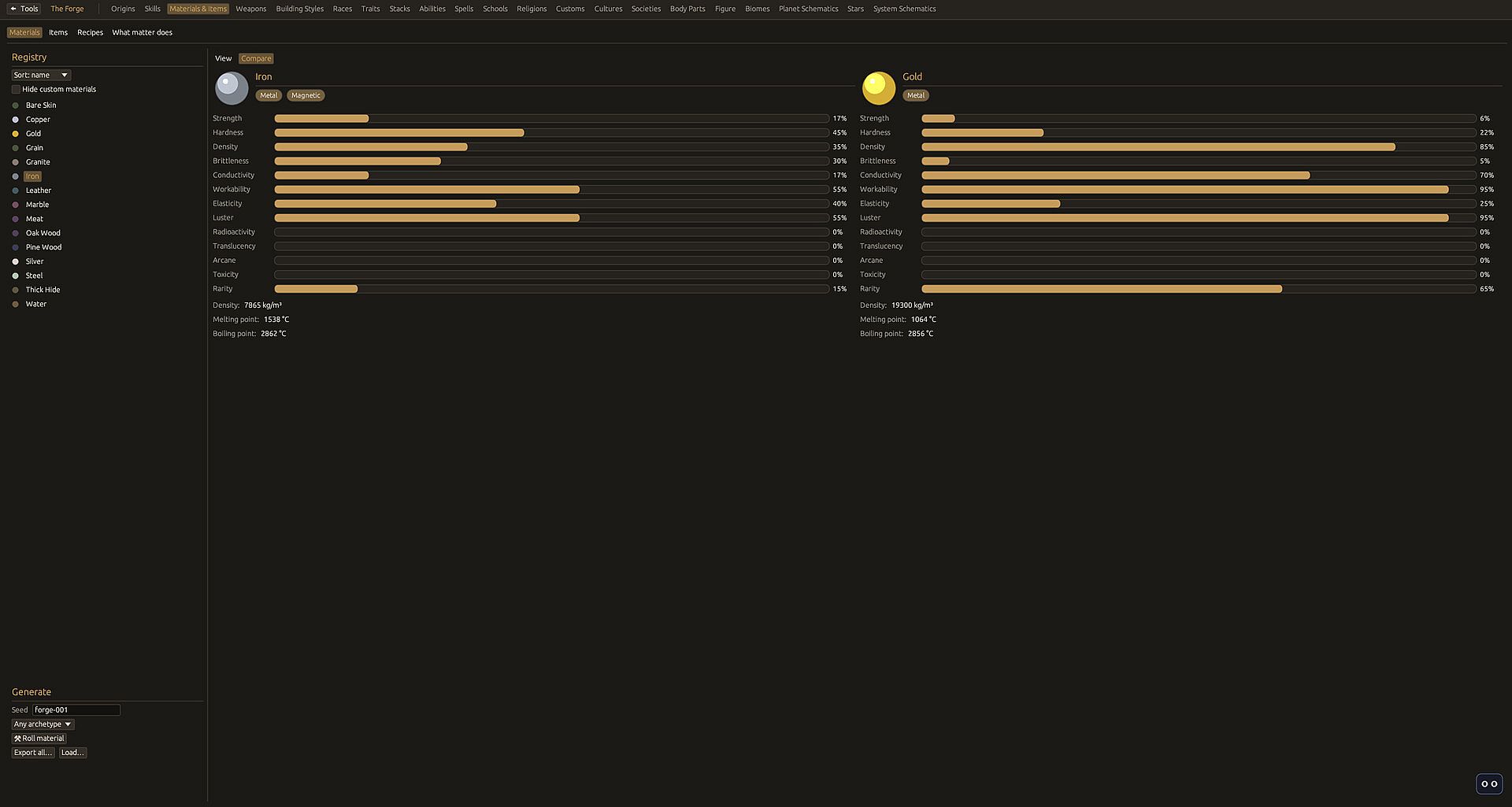
Gods receive domains, powers, personalities, and agendas that drive pantheon interactions, including race creation, artifact forging, relationships, betrayals, and wars. Races emerge with detailed body schematics, appearance controls, traits, and cultural development that leads to civilization building, technology adoption, and conflict. Materials carry full physical and magical properties that civilizations discover and fight over. Languages draw from a hand-crafted dictionary system so mortals produce contextually relevant titles and texts.
The Archivist serves as an in-tool companion. Players ask questions about any interface element or request parameter adjustments through natural conversation, reaching complex results without manual tuning of every slider. Multiple paths exist for the same outcome, ranging from direct parameter ranges to guided dialogue, so creators choose their preferred depth.
Game Modes
Exploration of the simulation itself forms one primary activity, where users observe emergent events across generated worlds. Arena combat lets players wager outcomes in realistic fights that track per-part injuries, force application, and impact pressure. Sports drafting and team management appear among the included systems that demonstrate the engine's capabilities.
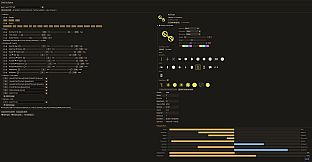
A testing suite supplies charts, combat reports, and batch processing for hundreds of thousands of scenarios at once. Weapon schematic design, magic school rule-setting, and trait or ceremony creation all feed back into the larger simulation, letting players balance races, skills, and systems while watching civilizations respond.
Creation and Data Tools
Every element saves as open, human-readable data that users own outright. Schemas capture not just single results but the parameter ranges that produced them, enabling families of similar worlds or nested generators that build worlds from other worlds. Planets, systems, and charts export for tabletop use, story notes, or integration into other programs.
Race customization covers hair growth rates, skin patterning, blood types, temperature tolerances, eye counts, and stat modifiers. These choices influence how civilizations form, adopt materials, and wage war. The same flexibility extends to skills, ceremonies, traditions, and every connecting system, all interacting dynamically once set in motion.
Is It Worth Playing?
Immortal Engine suits players who enjoy long sessions in character creators or who want simulation depth without dense manuals. Its conversational interface and multiple customization routes lower the barrier for creative work while still supporting fine-grained control. Early Access status means the suite continues to expand, with the listed systems already available for immediate use in world generation and observation.
Those focused on storytelling, tabletop preparation, or building reusable data assets will find the open formats and export options particularly practical. Players seeking quick matches or linear narratives may prefer other experiences, but anyone drawn to procedural universes and emergent stories has a dedicated tool here. The emphasis on user-first design and imagination as the only limit makes it a strong match for dedicated creators.











