



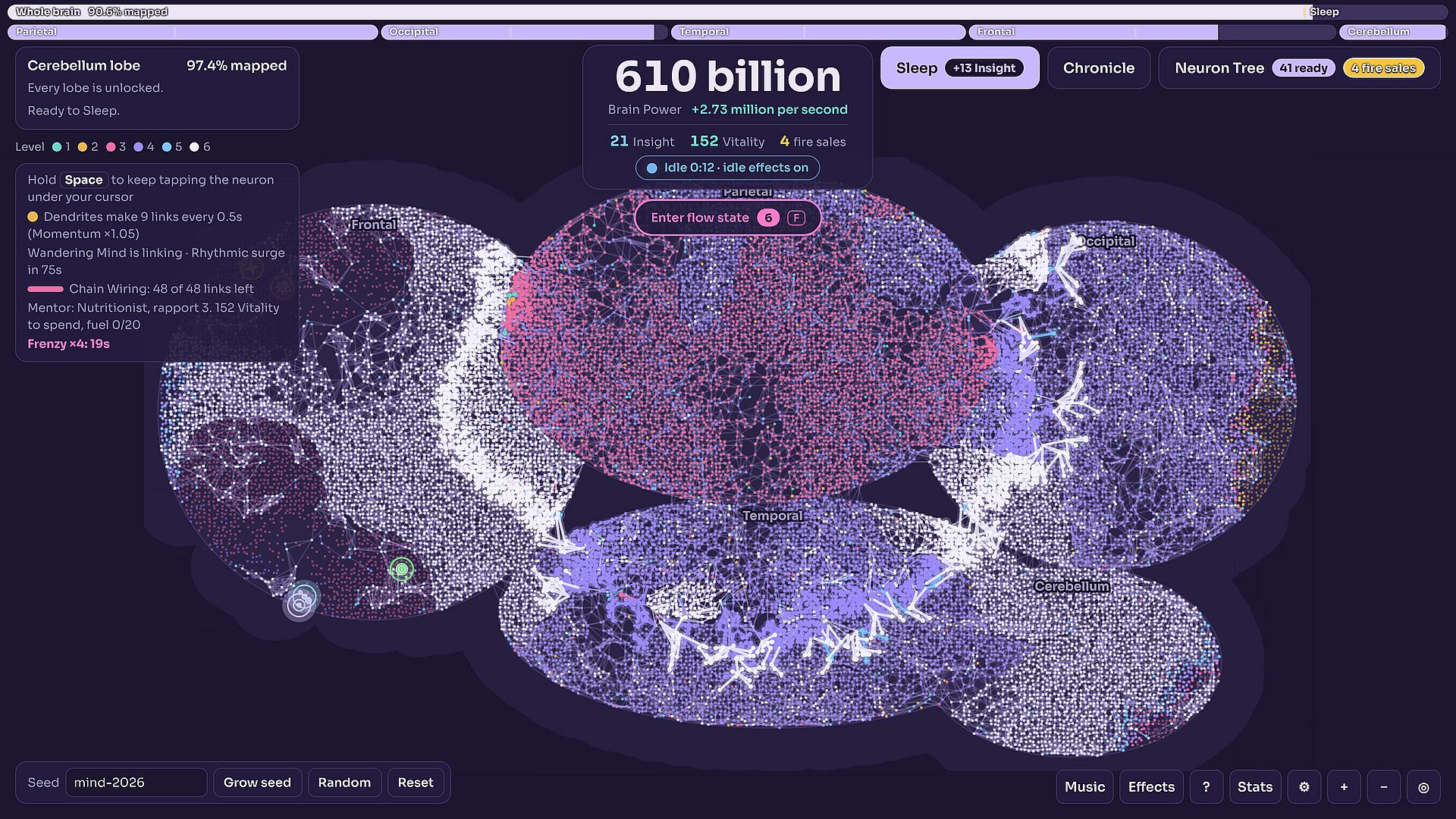

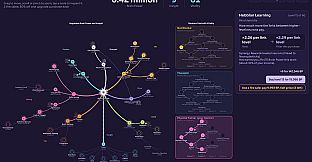





Idle Mind is a casual indie idle game for PC where players grow and connect neurons inside procedurally generated brains. The experience centers on linking neurons to generate Brain Power, upgrading through a skill tree, and progressing via sleep cycles that carry permanent benefits forward. Each brain starts from a seed with a unique layout across five lobes and thousands of neurons, creating fresh layouts on every run.
Gameplay
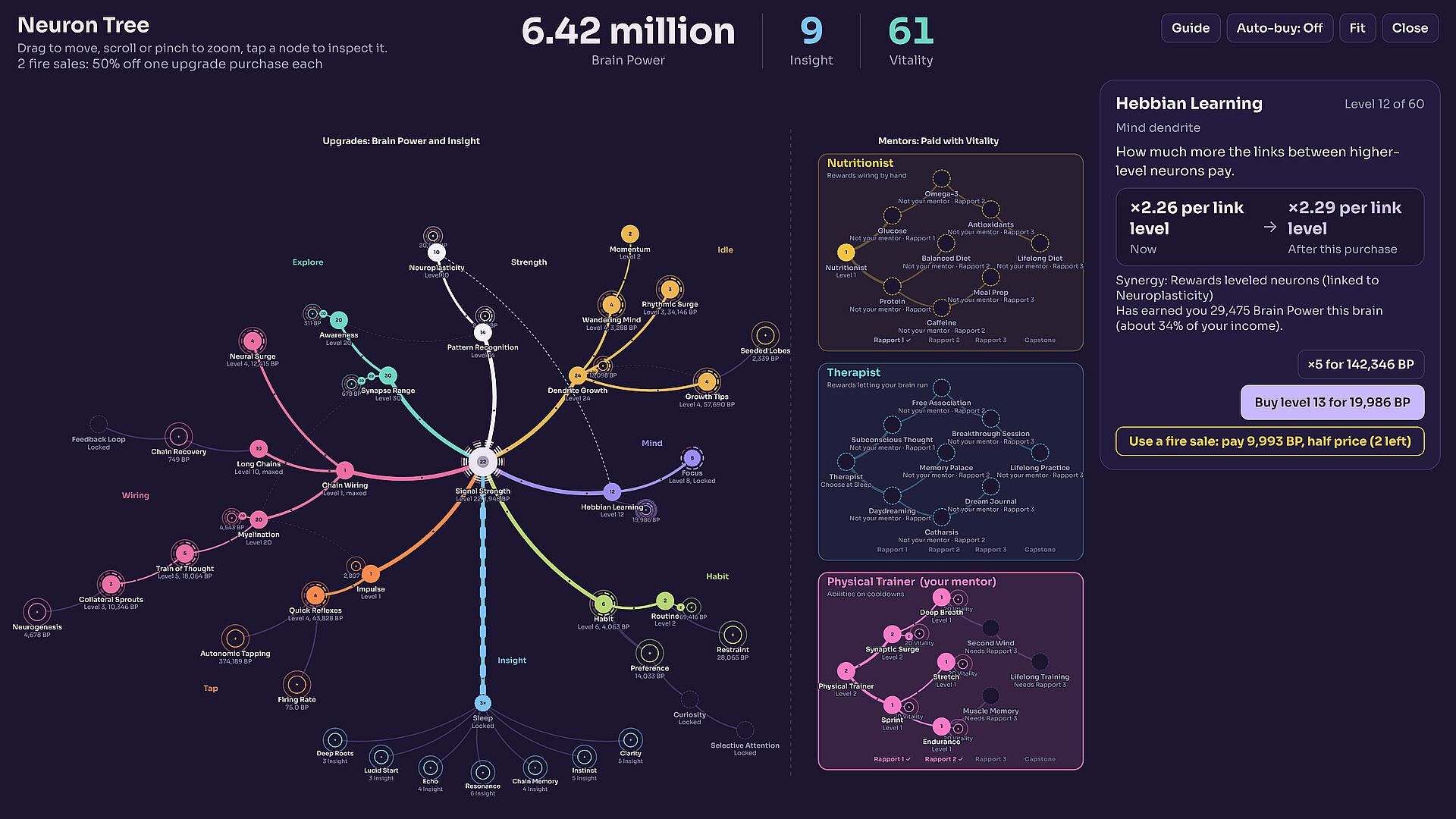
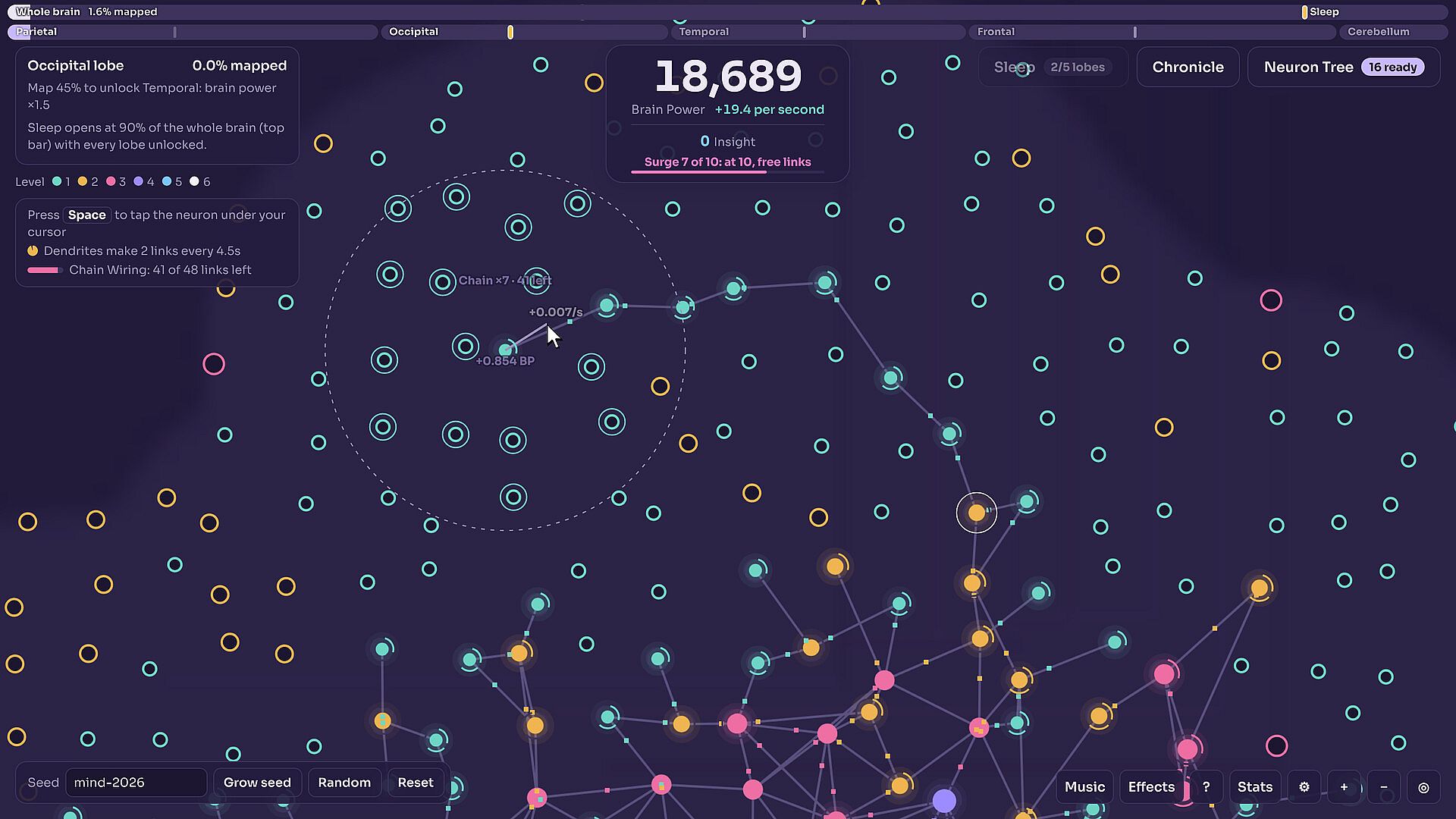
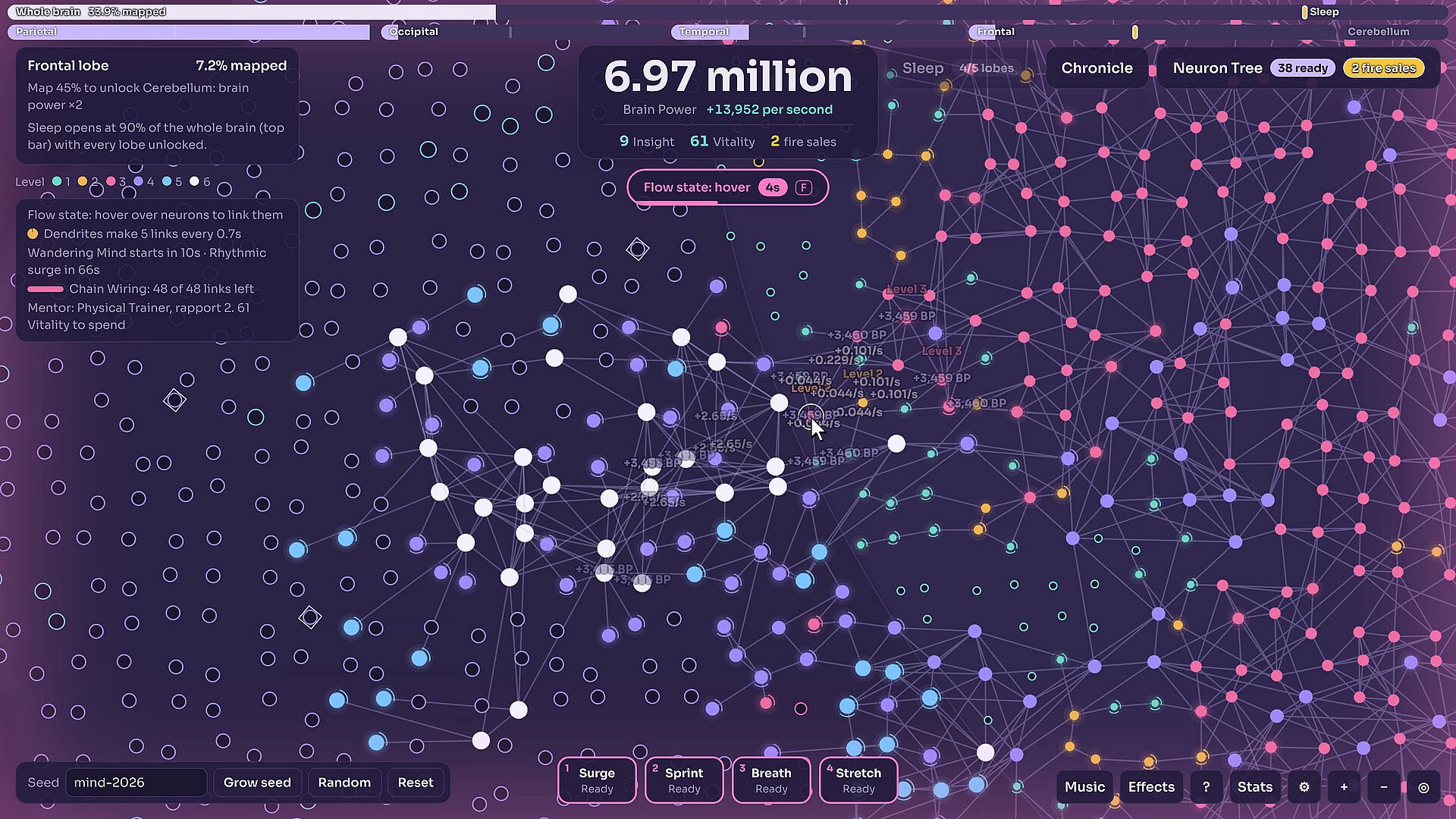
Core play involves dragging from filled neurons to outlined ones of matching color to form links. Longer drags chain through multiple matching neurons automatically. These manual connections build a Train of Thought bonus while charging a Surge meter for bursts of automatic links. Tapping neurons fires them directly, and holding the tap becomes available after unlocking Quick Reflexes. Brain Power earned from activity funds upgrades in the Neuron Tree, a branching system where choices influence one another over time. Rare neurons scattered across the map grant temporary effects such as fire sales, Eurekas, or Flow states that enable rapid sweeping connections.
Progression deepens once Dendrite Growth is unlocked, allowing the brain to form links on its own. Supporting upgrades like Growth Tips, Wandering Mind, and Rhythmic Surges accelerate idle advancement. Autonomic Tapping and automatic purchases in the tree let the brain continue developing without constant input, supporting both active sessions and background growth. The process repeats across multiple brains, with each sleep converting completed progress into Insight for lasting perks in future runs.
Game Modes
The game supports flexible playstyles within its single-player structure. Active sessions focus on manual dragging, chaining, and tapping to maximize immediate Brain Power gains. Idle-focused play emphasizes upgrades that automate linking and tapping, allowing steady advancement even when the player steps away. Mentor selection at each sleep adds another layer: the Nutritionist favors hand-wired connections, the Therapist supports autonomous growth, and the Physical Trainer provides cooldown-based abilities. Repeating the same mentor strengthens rapport and unlocks deeper branches that persist across brains. These options let players shift between hands-on engagement and relaxed progression without separate dedicated modes.
Progression and Story
Reaching full lobe coverage and mapping most of a brain triggers the sleep phase. This resets the current brain but awards Insight that improves all future brains. The Chronicle records narrative entries tied to each brain, following Mira Okafor, a night-shift paramedic whose mind develops unusual connections. The story advances across ten chapters through successive sleeps, expanding from personal experience to broader themes. A live-generated soundtrack accompanies every action, beginning with a warm pad and layering new synthesized elements such as bass, textures, strings, and handpan as lobes open. Player taps and chains influence the music in real time, with sleep sequences building to a choral and bell climax before resetting for the next brain.
Is It Worth Playing?
Idle Mind suits players who enjoy calm incremental gameplay with visual feedback from spreading light and evolving audio. The combination of manual linking, automation unlocks, mentor choices, and persistent Insight creates a loop that rewards both focused sessions and long-term planning. The procedural brain layouts and ten-chapter narrative provide variety across runs without requiring constant attention. Because the title remains in a pre-release state with no player reviews available yet, those interested in relaxing neuron-connection idle experiences may wish to follow its development for the November 2026 launch. The described systems align well with fans of thoughtful, low-pressure progression games on PC.