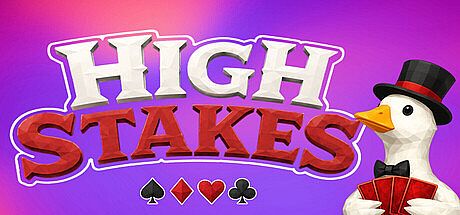



High Stakes is a strategic roguelike card game for PC that centers on predicting card outcomes in a higher or lower framework while managing limited resources across repeated runs. Players decide not only the type of prediction but also the level of risk, combining multiple forecasts on the same card when certainty matters most or conserving predictions for future opportunities. The core loop revolves around value, color, and suit guesses that grow more critical as stages advance, with deck manipulation and timely resource use determining success.
Gameplay
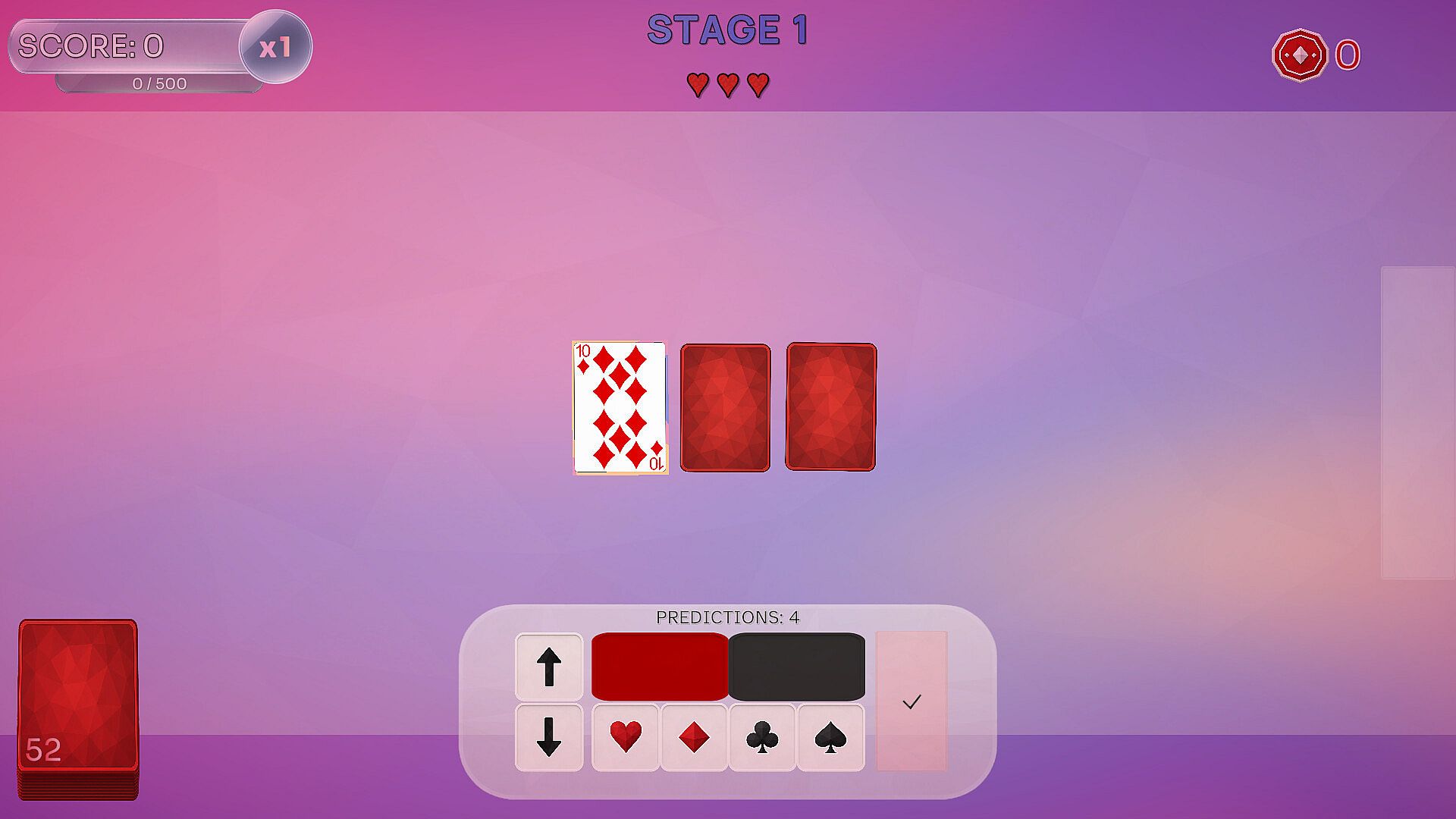
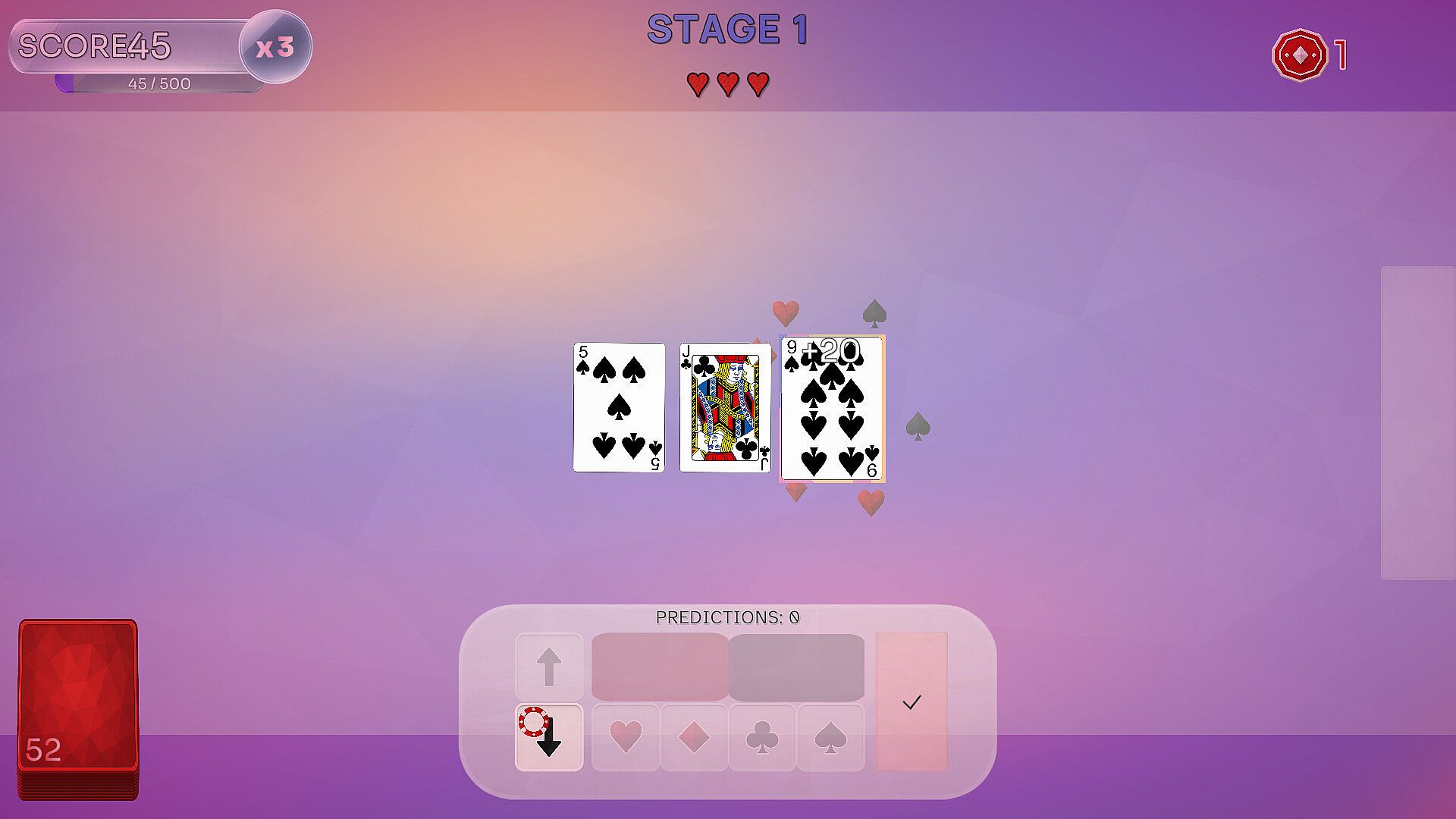
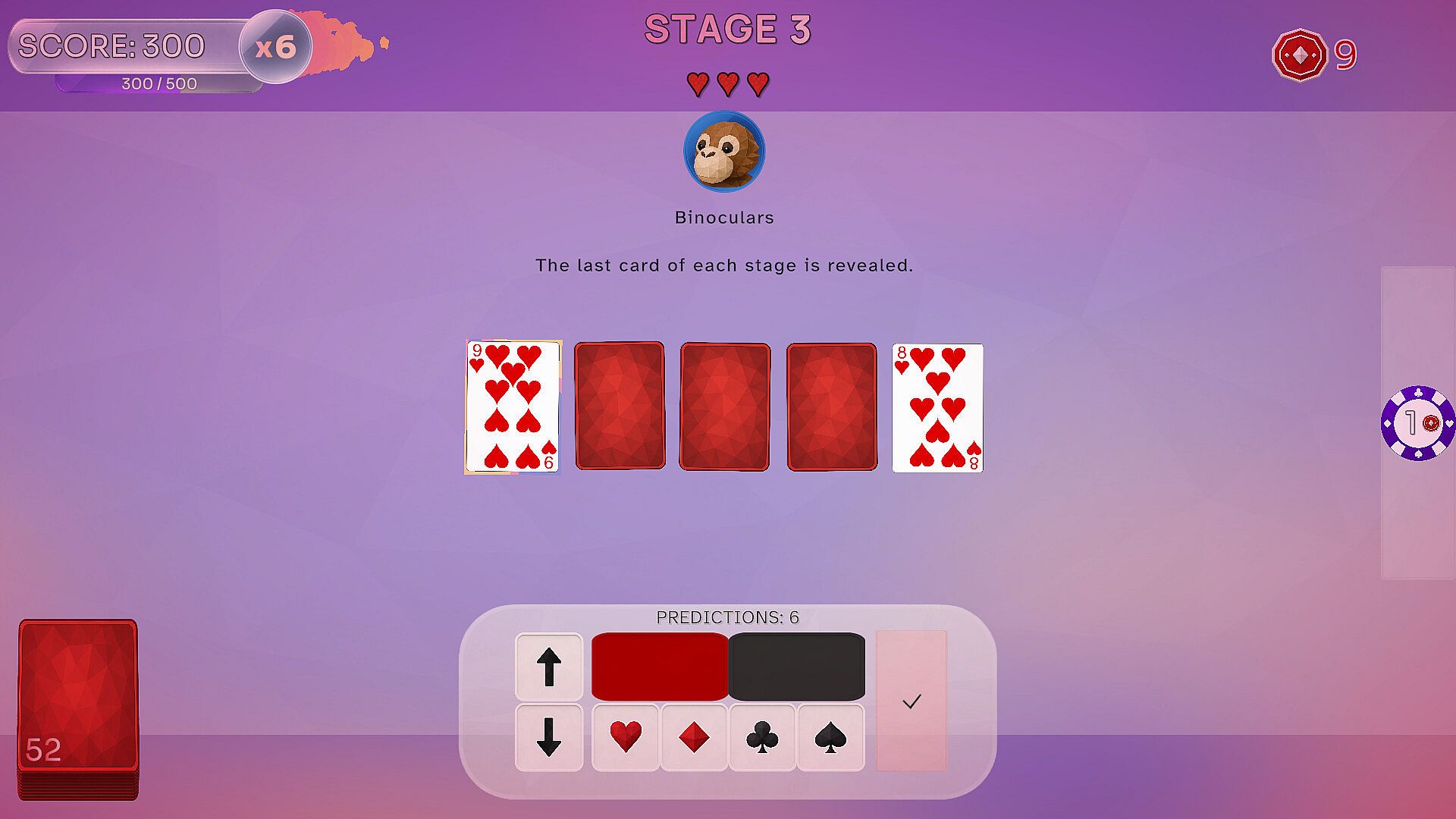
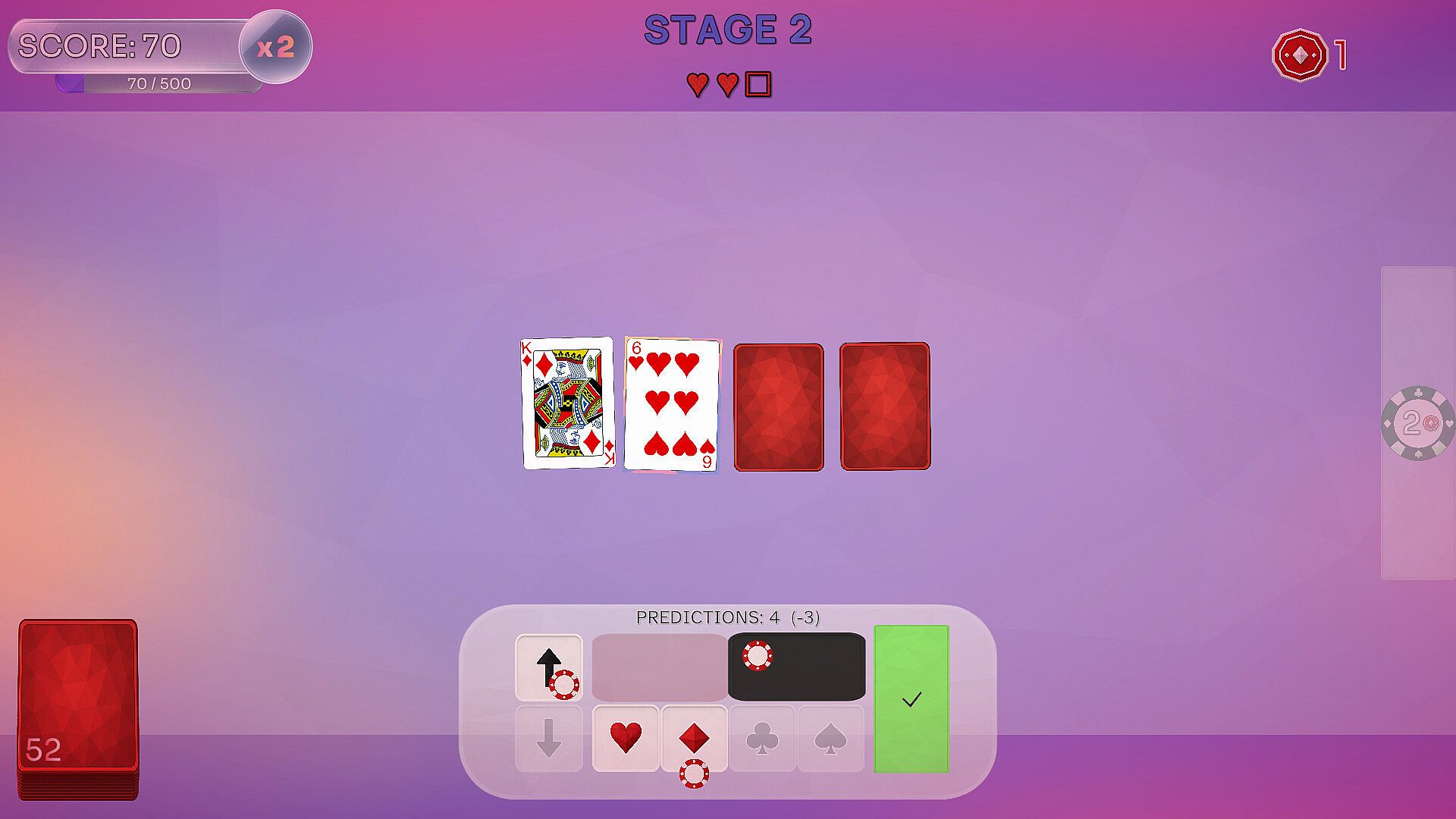
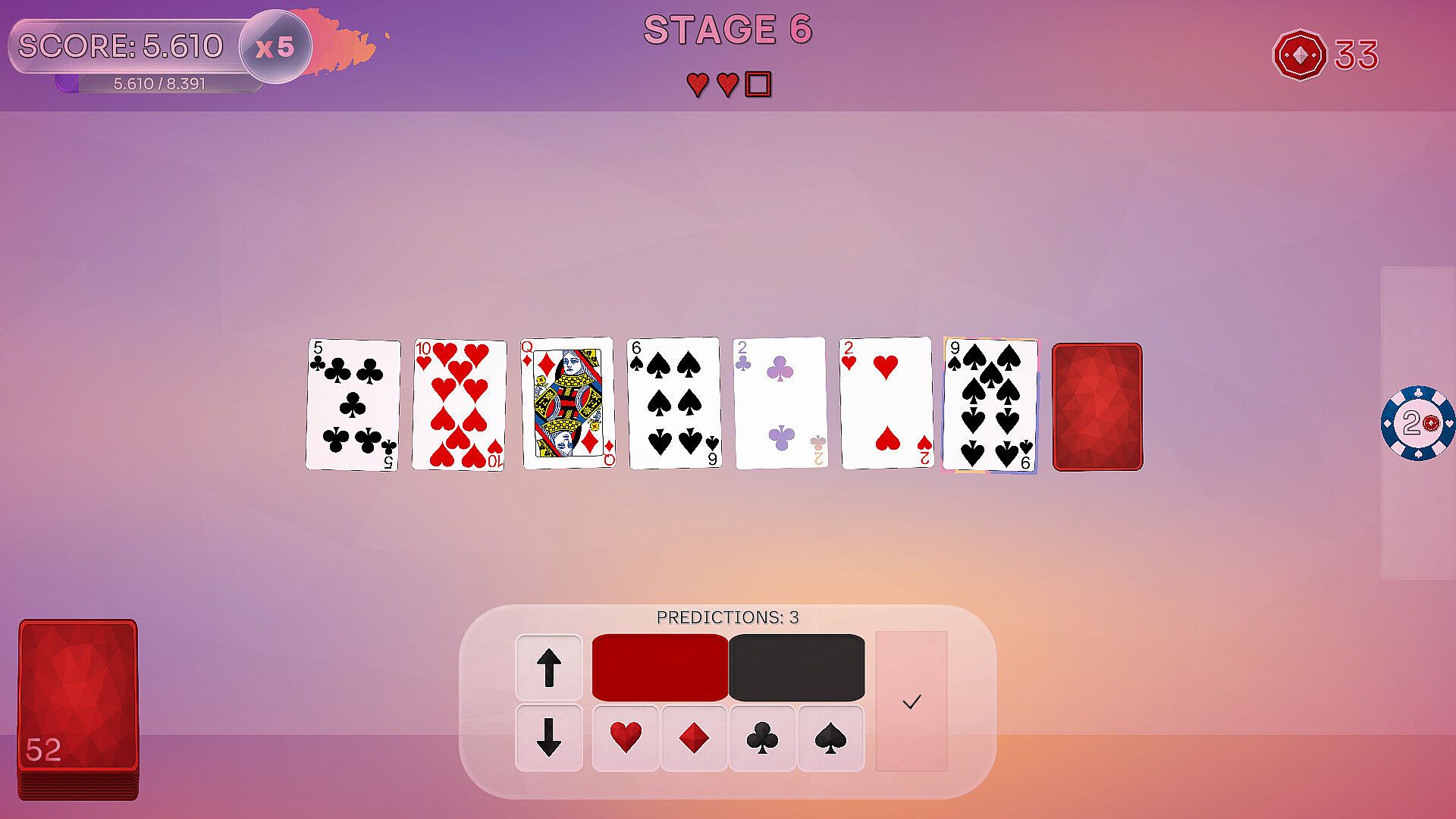
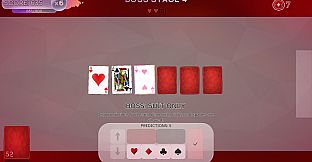
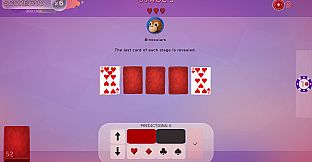
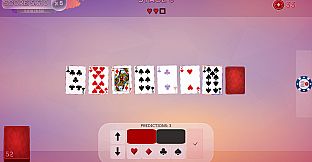
The gameplay loop begins with a standard deck that players expand and refine over time. Each stage presents a sequence of cards, and the central decision involves forecasting whether the next card will be higher or lower than the previous one, its color, or its specific suit. Predictions carry limits, so combining several on a single card raises the chance of success but consumes more of the available pool. Correct predictions build points and raise a multiplier, while incorrect ones end the current streak and force adaptation.
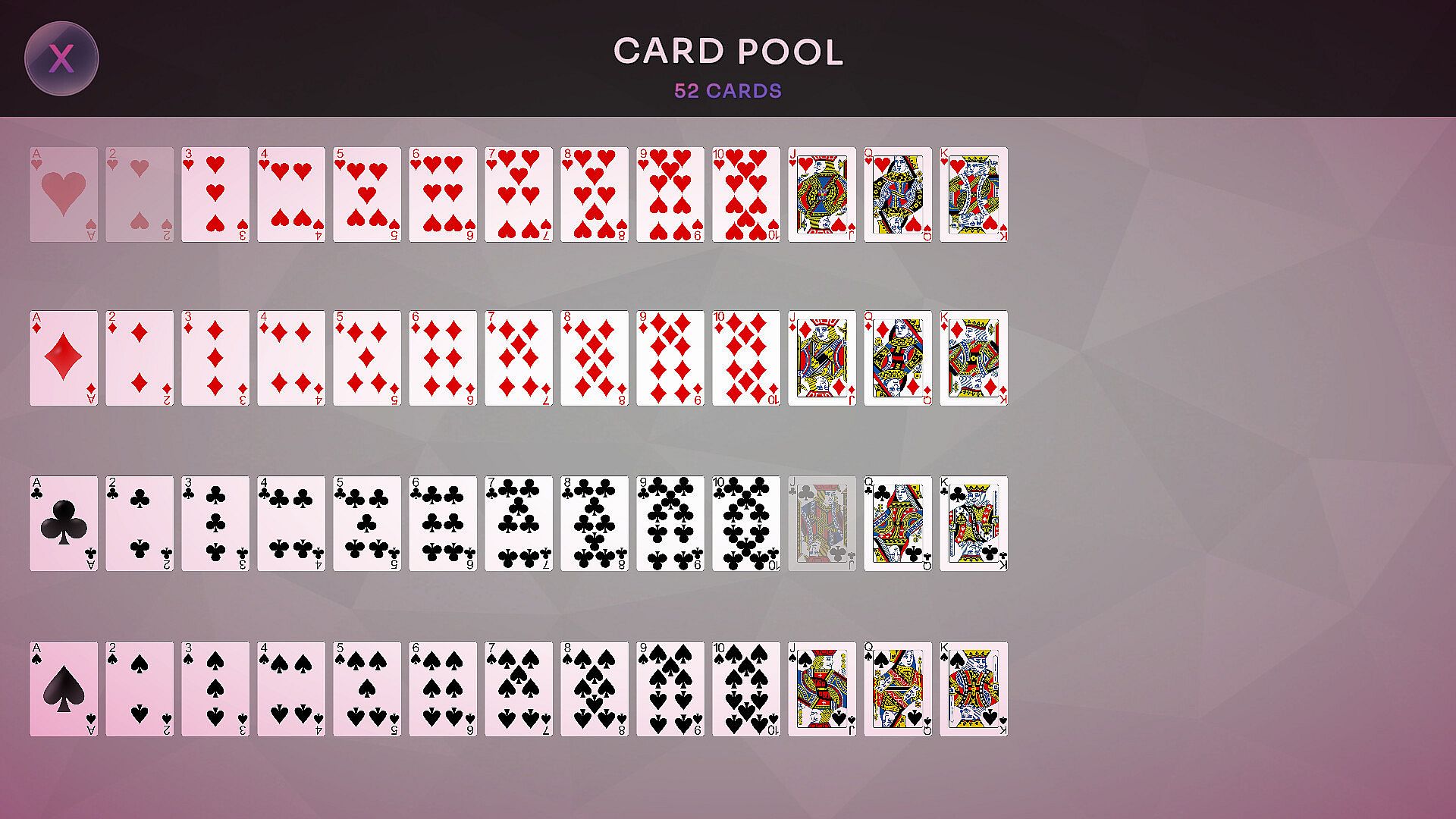
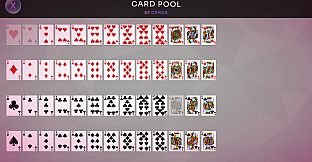
Deck customization forms a key layer. Players add cards in the shop and experiment with synergies that emerge from repeated runs. Holographic cards reward accurate predictions with chips, which serve as a flexible tool for gaining an edge during critical moments. These chips can be deployed precisely when a stage demands it, turning potential setbacks into advantages without relying solely on luck.
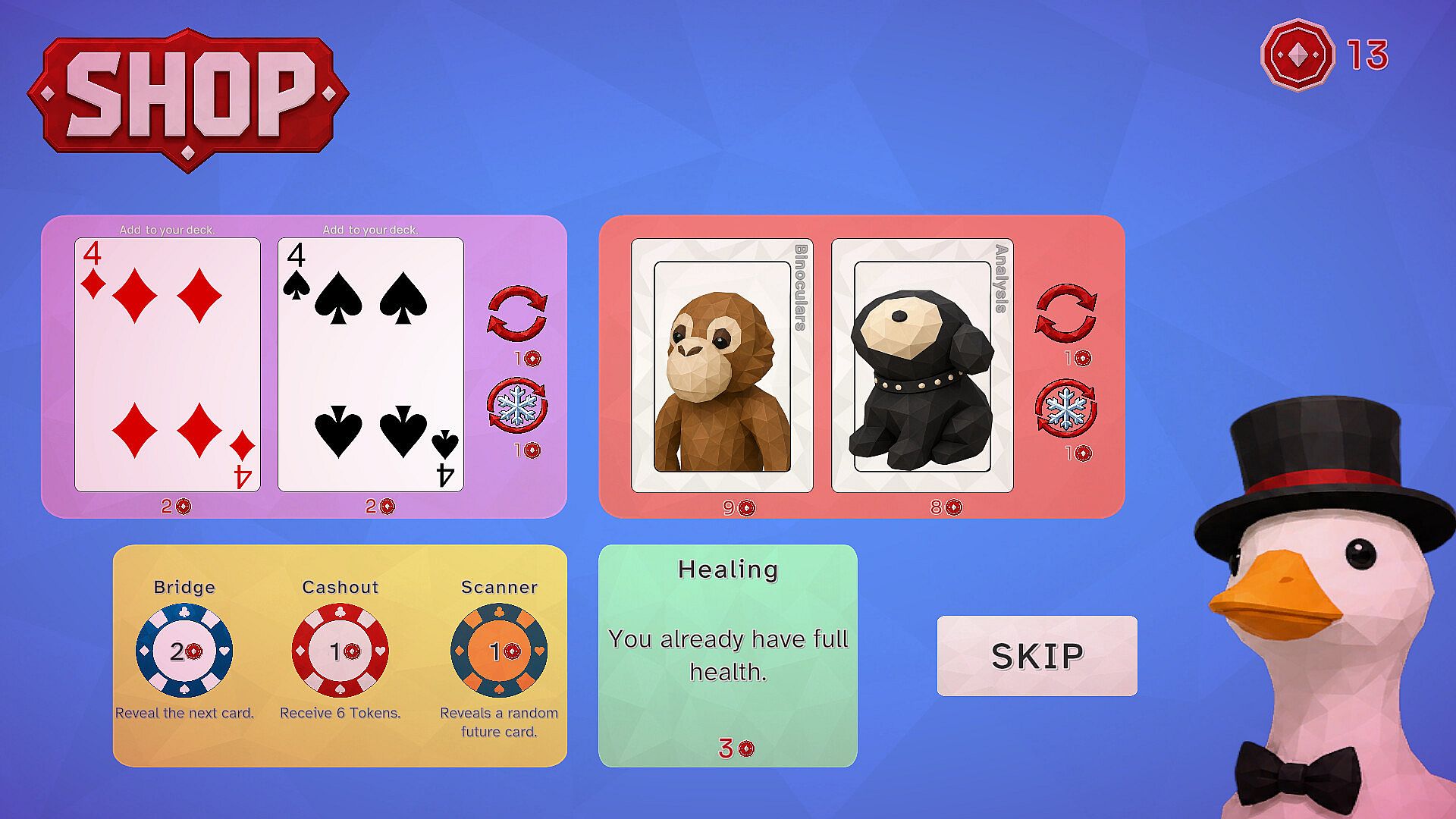
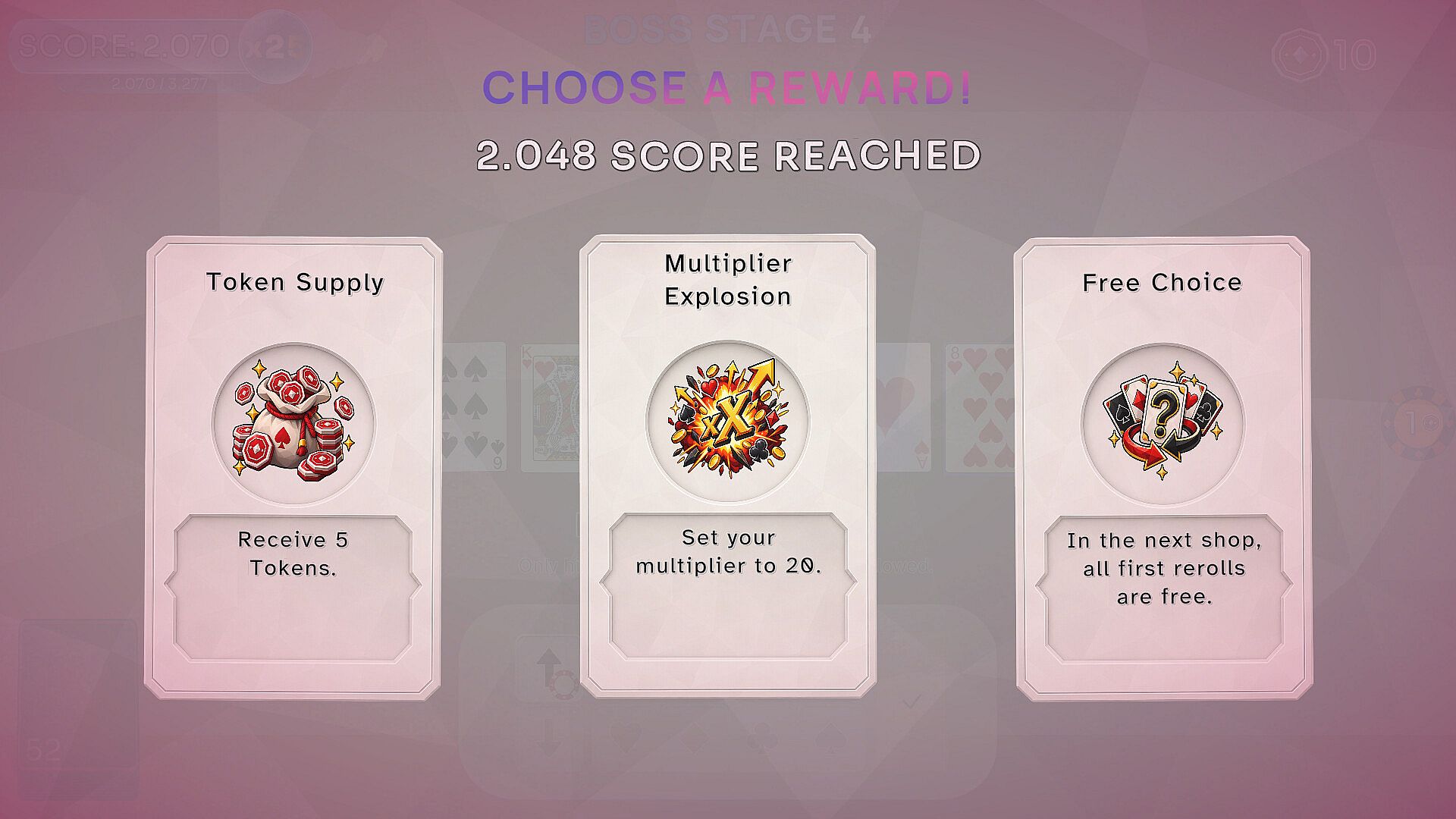
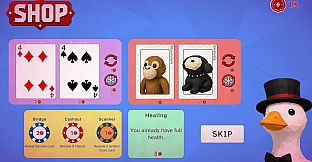
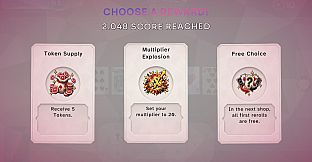
Powerful stakes appear in the shop as rule-changing elements. These function like wildcards or jokers, enabling new combinations, altering prediction rules, or anchoring an entire build. Selecting and combining stakes encourages experimentation, as different pairings support distinct approaches to risk and reward. Trumps become available after reaching score milestones, offering permanent boosts or special effects that carry forward within a run.
Game Modes
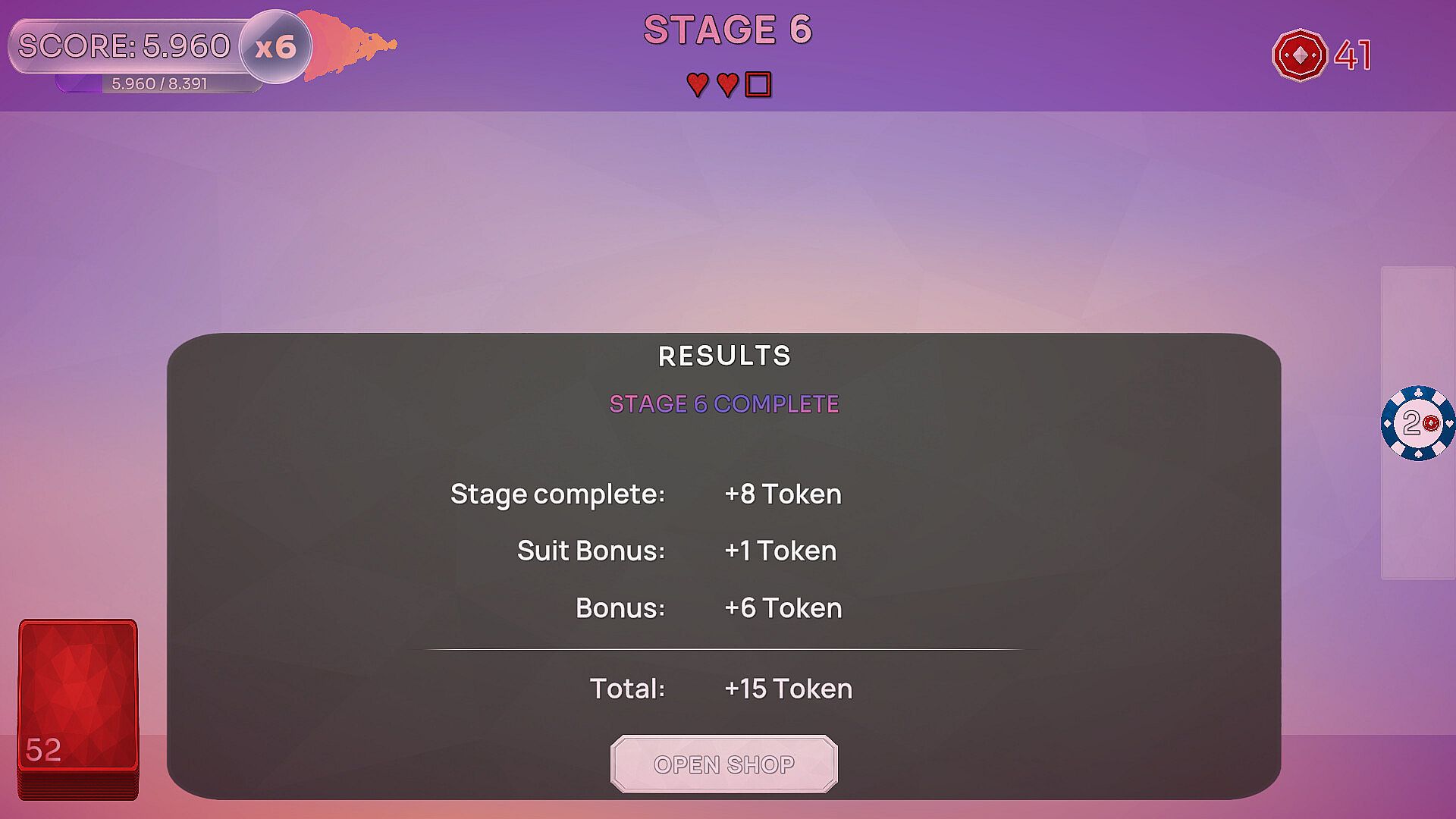
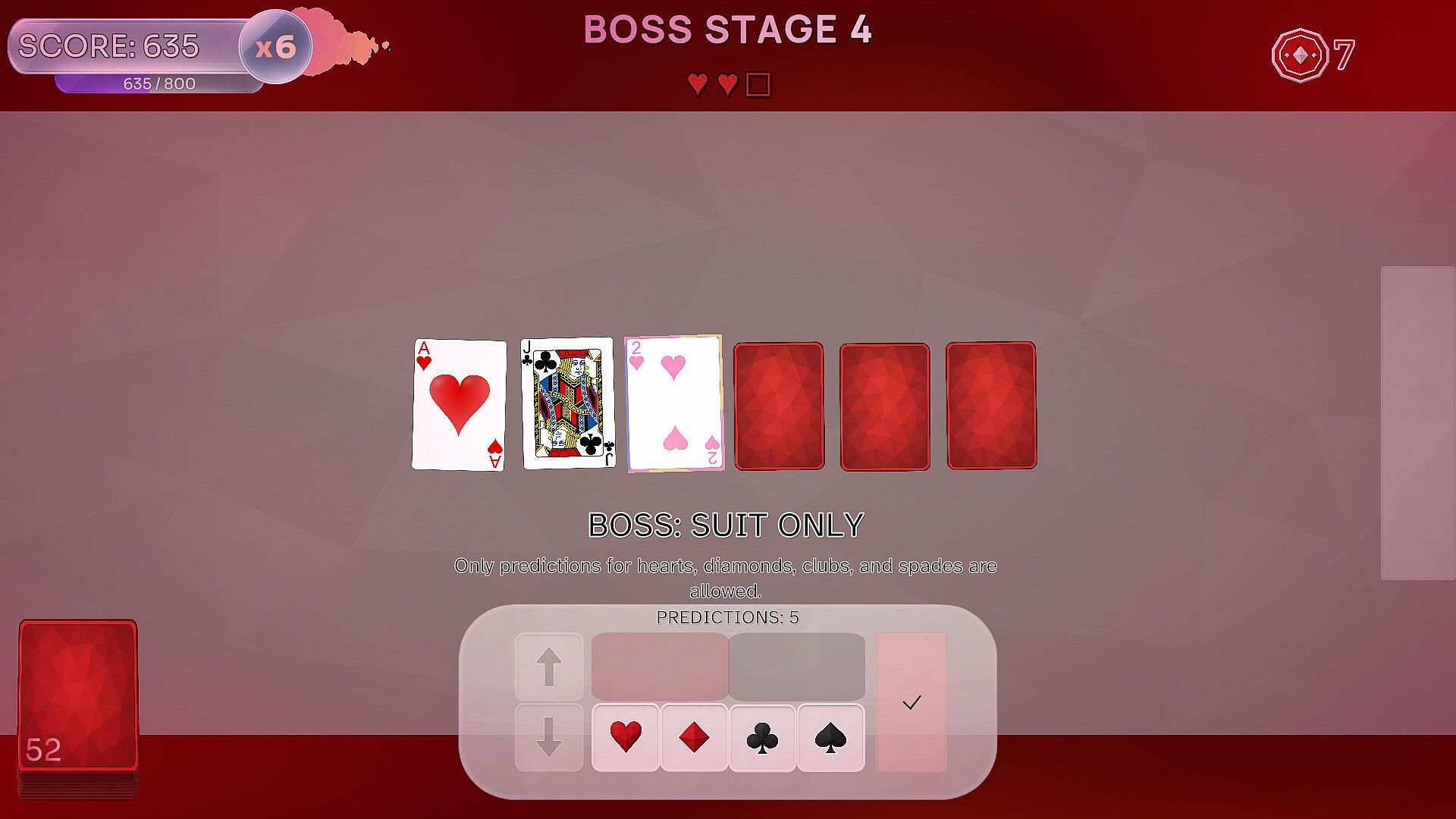
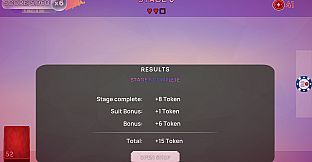
High Stakes structures its experience around progressive stages that increase in complexity. Standard stages focus on core prediction mechanics, while every fourth stage introduces a boss that modifies the rules in unique ways, requiring immediate strategy shifts. The shop phase follows each stage, where tokens earned from performance allow purchases of chips, additional cards, or new stakes to prepare for upcoming challenges.
Multiple starting decks provide distinct entry points, each with its own rules and playstyles that influence how predictions and resources are managed from the outset. Runs continue through endless stages, with decisions compounding as the multiplier rises and resources dwindle. This format emphasizes adaptation over repetition, as procedural elements and boss variations keep each attempt fresh.
Progression and Customization
Tokens collected after stages fund the shop, where players balance immediate needs like chips against long-term investments in stakes and deck expansion. Unlocking new stakes, chips, trumps, starting decks, and card designs occurs through successful runs, gradually broadening options for future attempts. The emphasis remains on developing personal strategies rather than following a single path, as combinations of stakes and trumps create varied builds.
Boss stages test this progression by imposing altered rules that disrupt familiar patterns. Players must adjust prediction priorities or resource timing on the fly, often relying on previously acquired stakes or trumps to navigate the changes. This structure rewards foresight in deck building and careful management of limited predictions throughout longer runs.
Is It Worth Playing?
High Stakes suits players who enjoy roguelike card games that blend prediction mechanics with deck-building decisions and risk assessment. The focus on higher or lower gameplay combined with color and suit options creates a steady stream of meaningful choices, while limited predictions and chip usage add tension without overwhelming complexity. Different starting decks and boss variations provide replayability for those who appreciate refining strategies across multiple runs.
The game appeals to fans of casual strategy titles that reward careful planning and adaptation over pure chance. Shop progression and milestone rewards encourage experimentation with stakes and trumps, supporting varied playstyles within the single-player format. Those seeking a focused experience centered on card prediction and resource management will find consistent depth in the core systems.