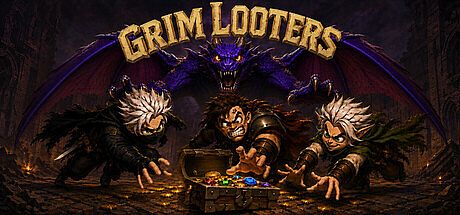




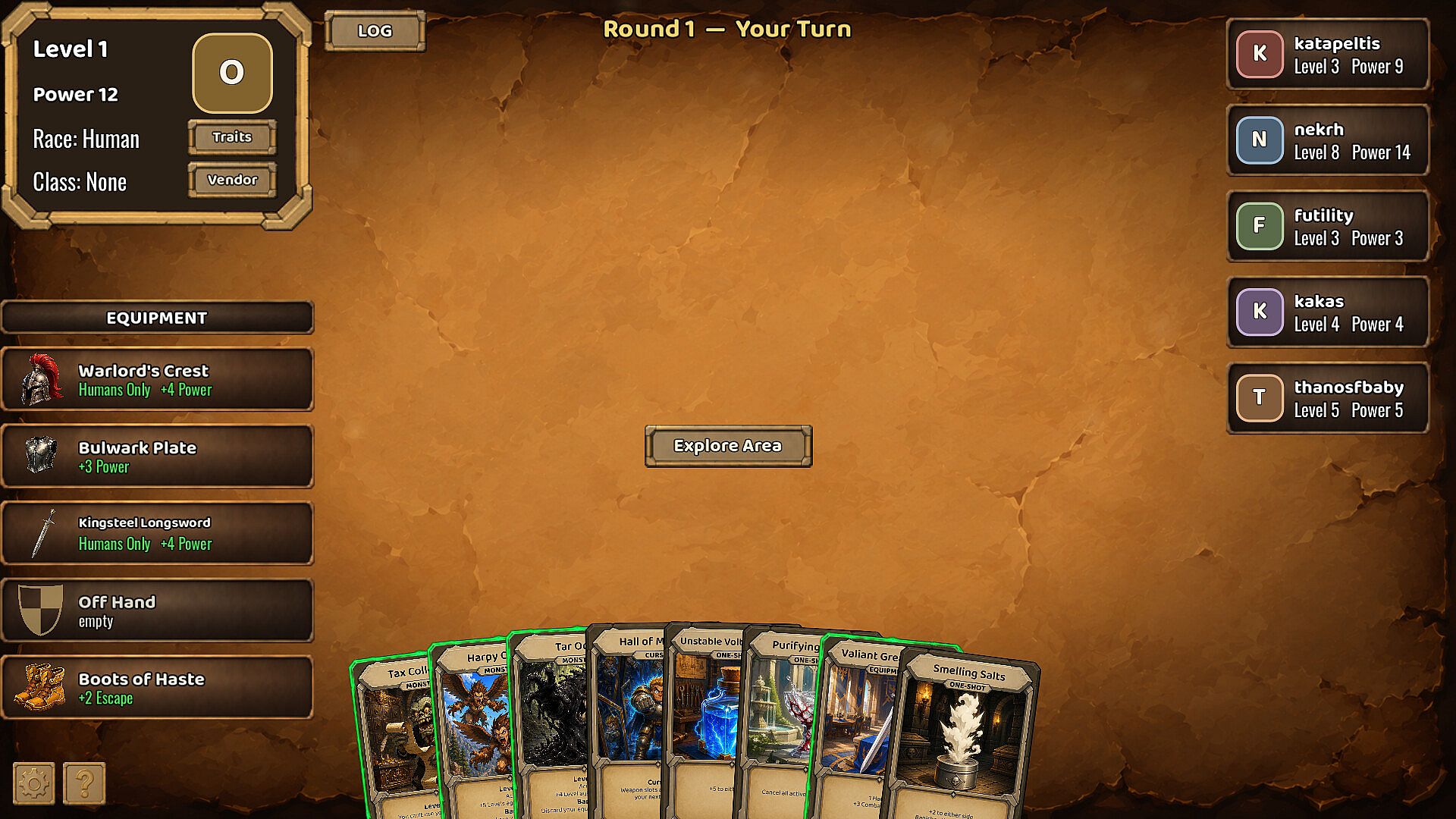
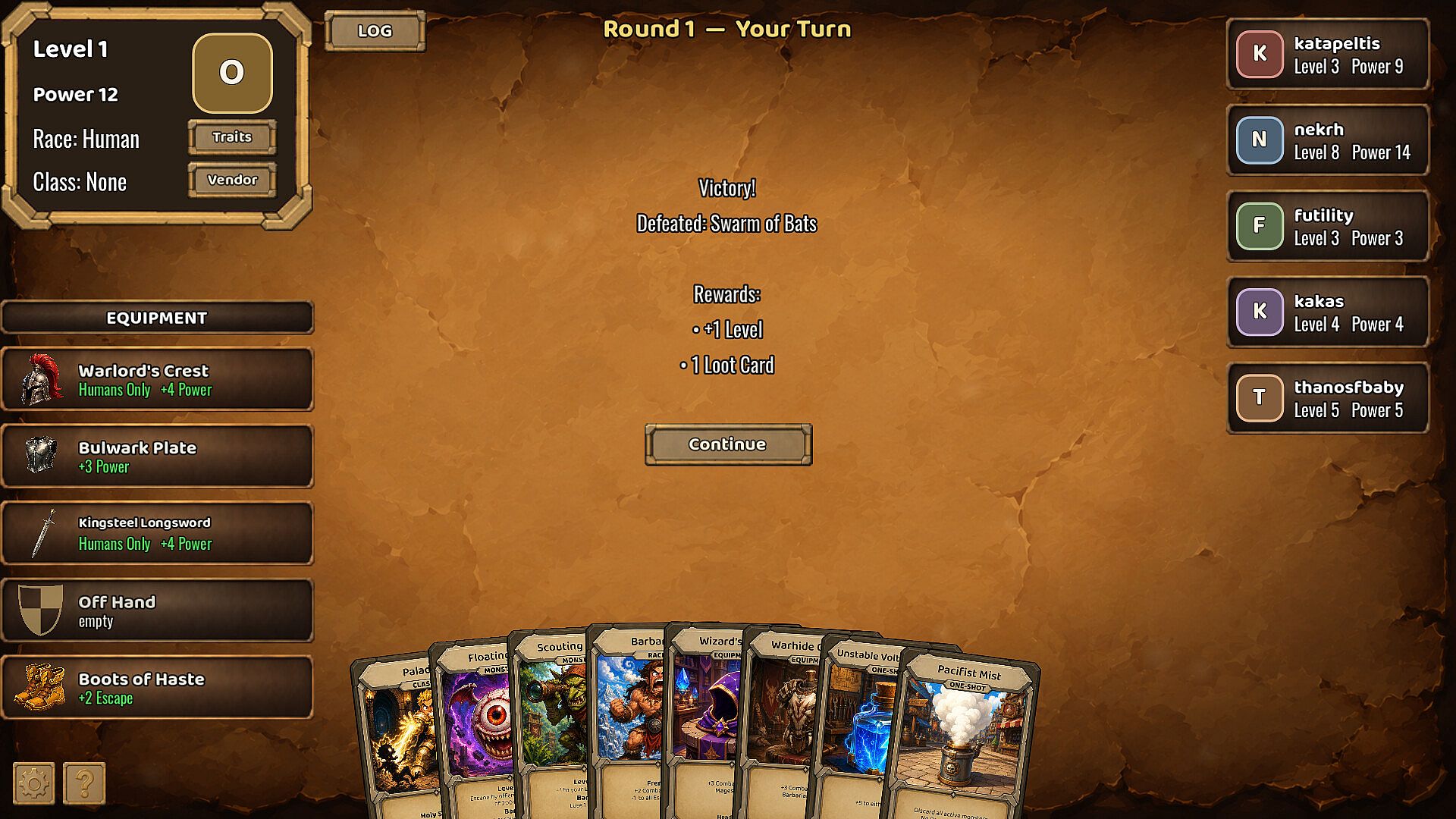
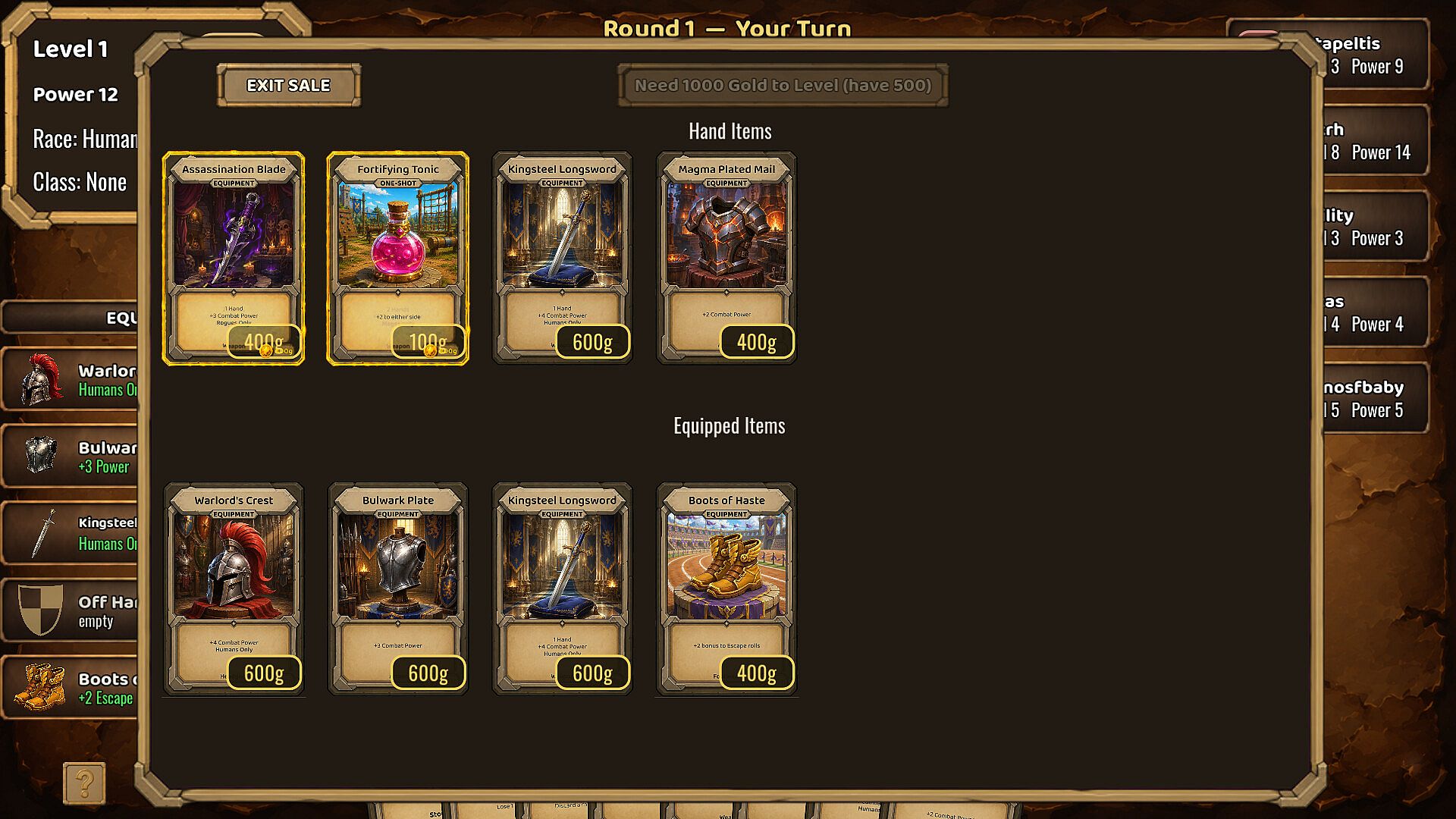
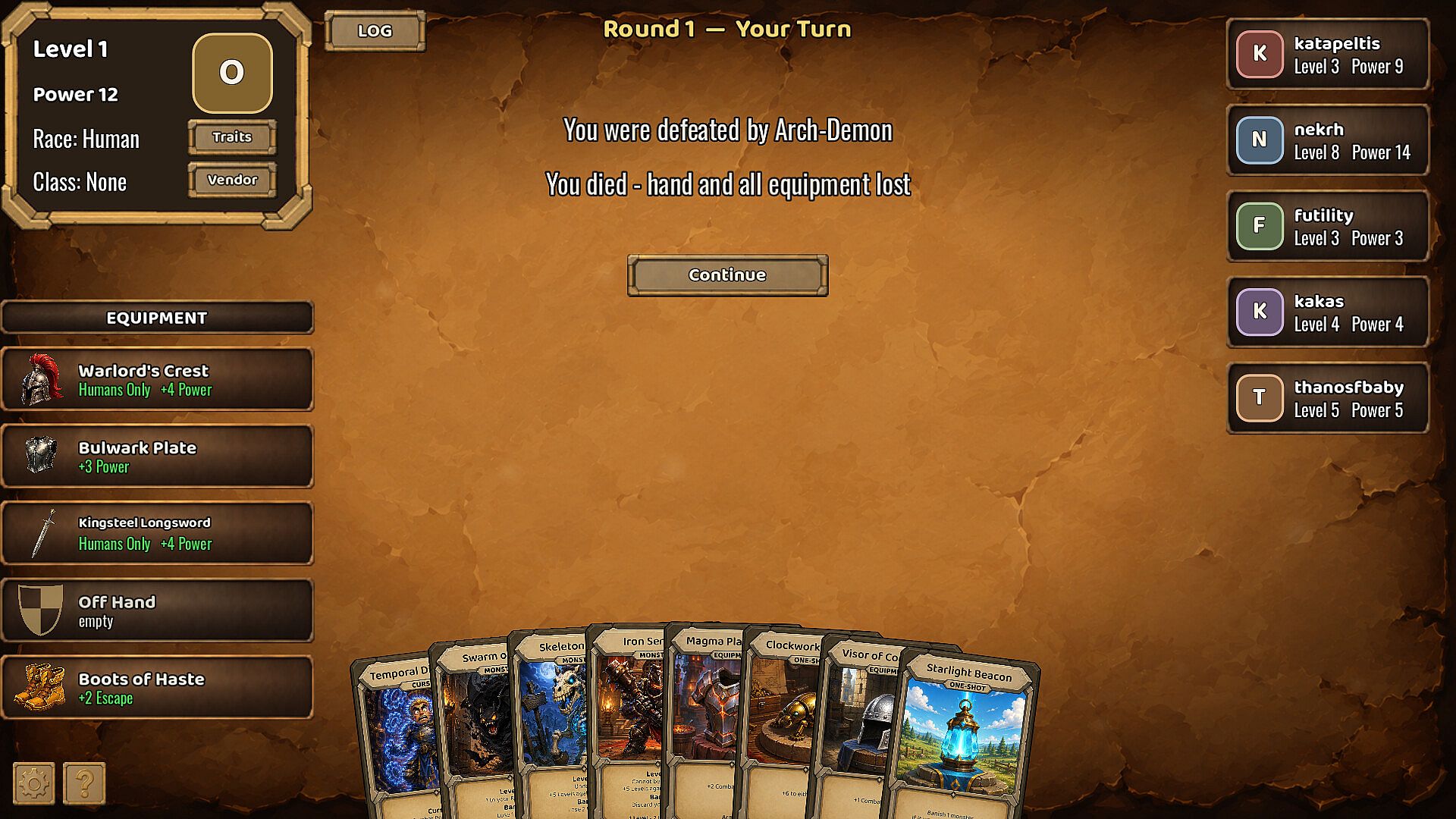
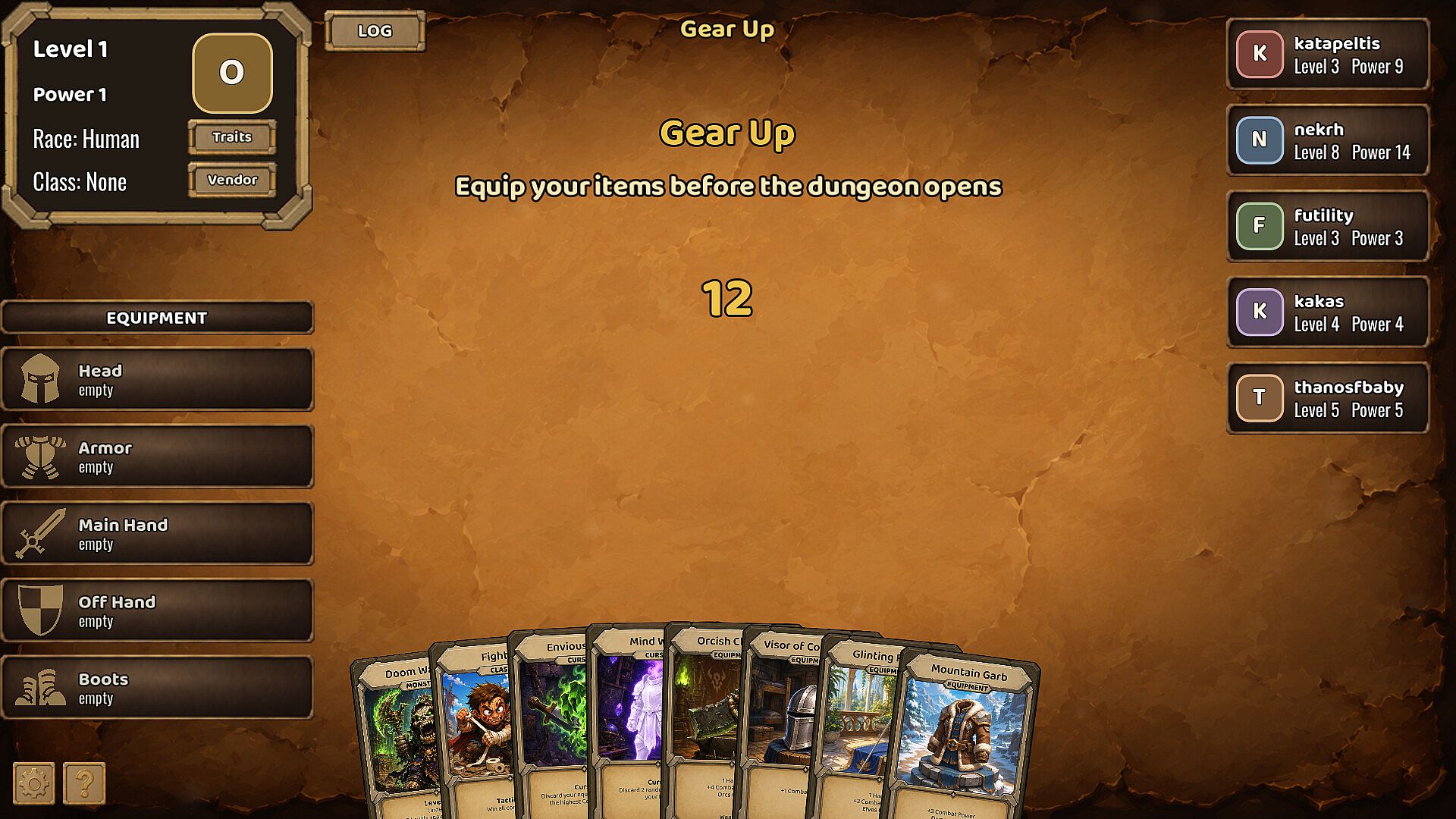
Grim Looters stands out as a strategy card game built around quick sessions of competitive looting and rivalry. Players compete online to reach level 10 first in matches that blend exploration, combat, and direct interference with opponents. The core experience centers on a shared deck of encounters that each participant draws from during their turn, creating a race where personal progress and sabotage both matter equally.
Gameplay
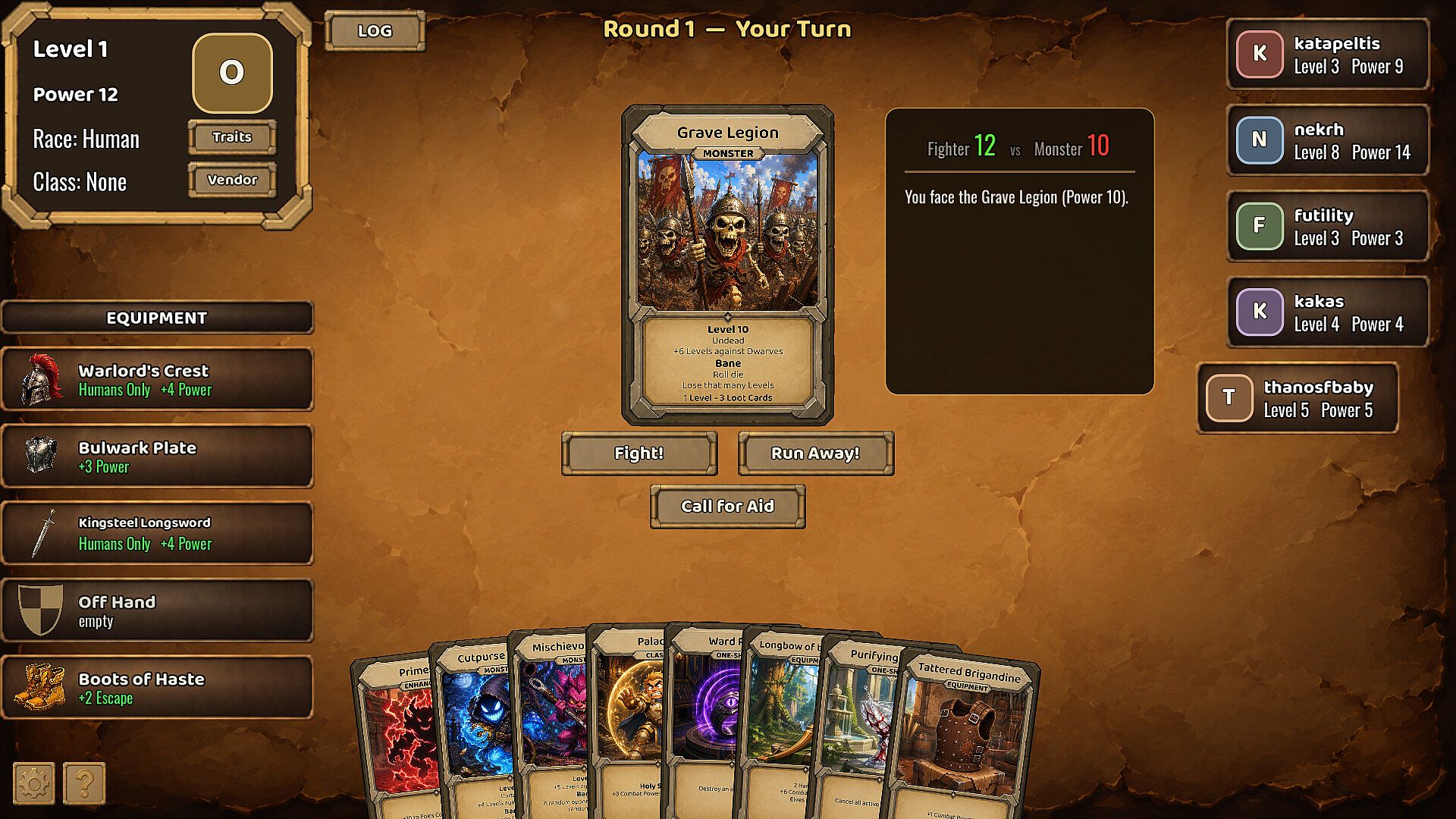
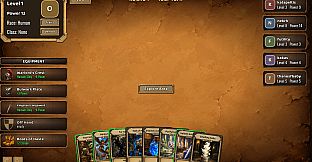
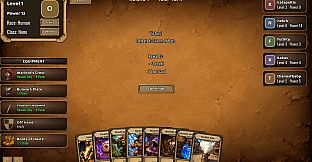
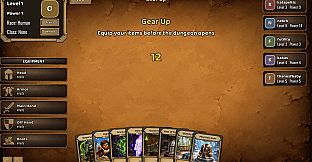
Each turn begins with exploring the current area, which reveals either a monster to battle, a curse to endure, or equipment to claim. Combat relies on equipped weapons and armor that increase combat power, allowing stronger players to defeat threats more reliably while weaker ones risk setbacks. Equipment stacks provide cumulative advantages, rewarding careful selection of items that complement each other across multiple turns.
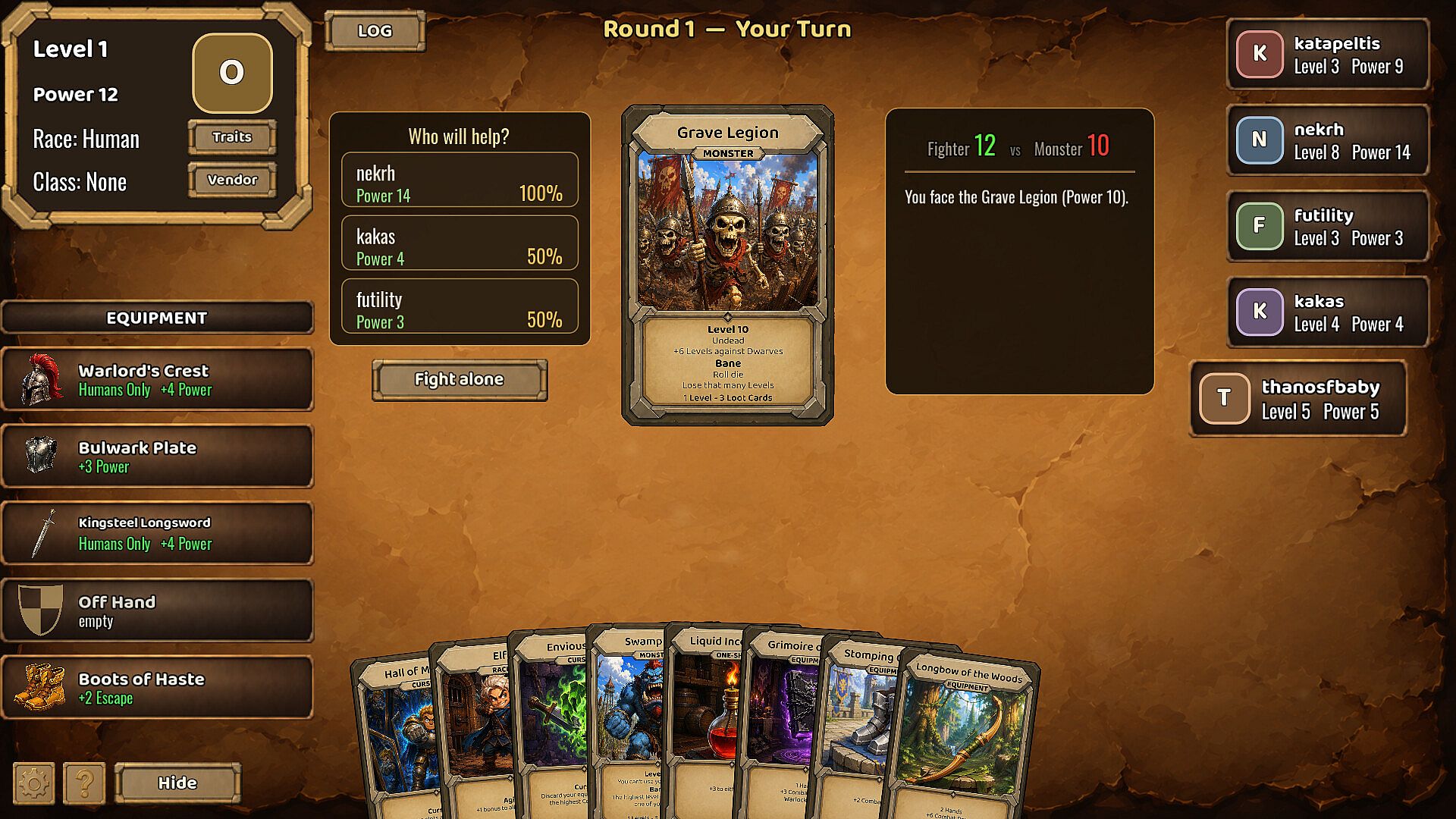
Interference forms a major part of strategy. Curses target rivals directly to hinder their fights or slow their leveling, while sabotage opportunities arise during opponents' encounters. Backstabbing happens at critical moments, such as when another player is close to victory or struggling with a tough monster. These mechanics encourage constant awareness of everyone else's board state rather than isolated play.
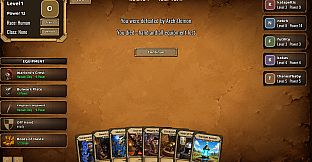
Escape attempts add tension when a player encounters an overwhelming threat. A dice roll determines success in fleeing, with failure resulting in the monster's bane applying penalties that affect future turns. This risk-reward element keeps decisions sharp, as staying to fight might yield loot but could also lead to greater losses if the odds turn against the player.
Game Modes
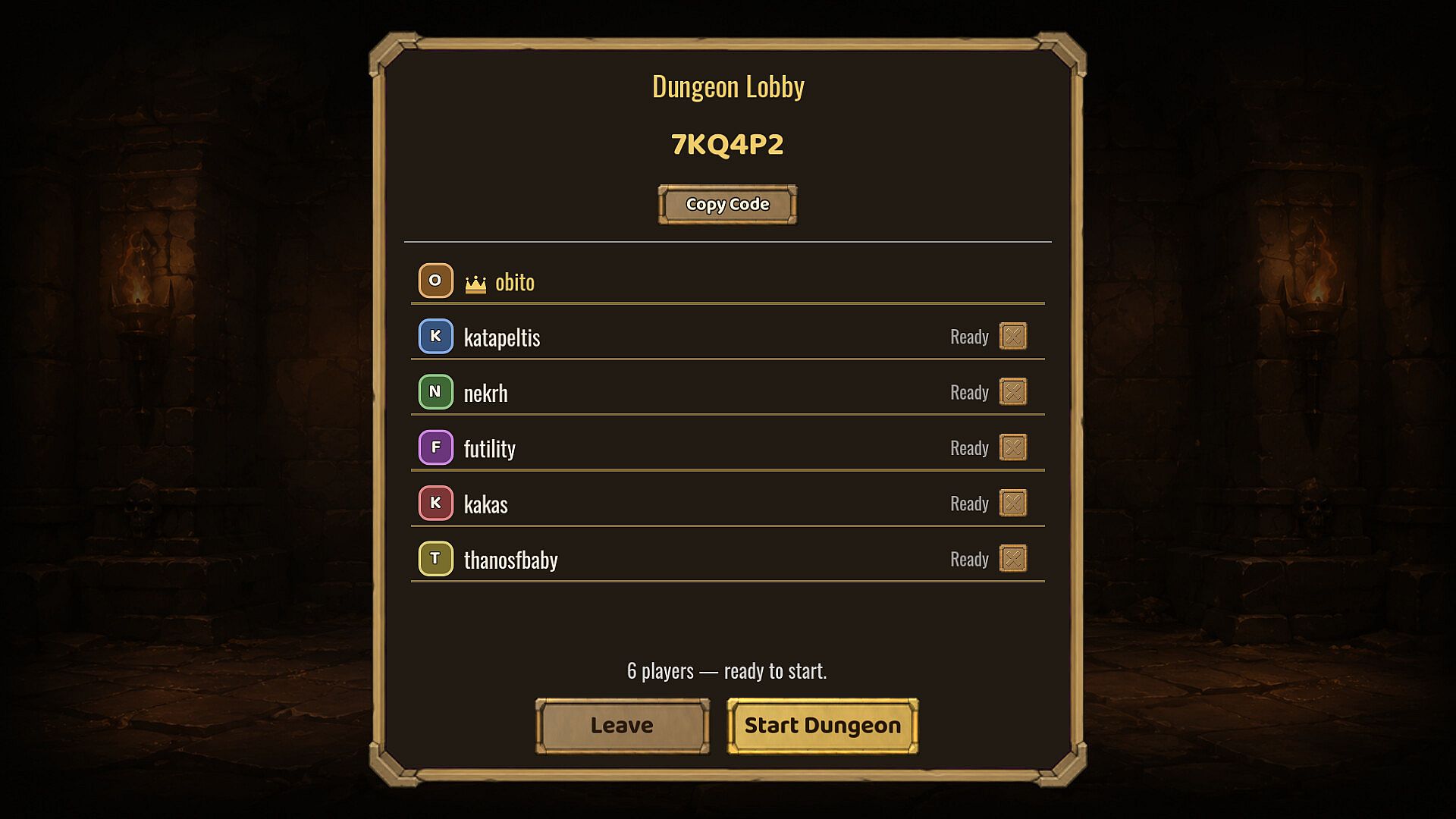
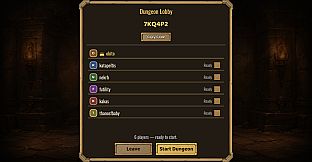
The game operates exclusively through online multiplayer sessions hosted by one participant. Hosts create a room and distribute a code for others to join, supporting groups of three to six players. Matches emphasize fast pacing with chaotic interactions that resolve in relatively short playtimes compared to longer campaign-style titles.
No additional single-player or cooperative modes appear in the available details. All activity revolves around the competitive player-versus-player structure where every participant pursues the shared goal of leveling up faster than the rest. The host-authoritative setup ensures consistent rules enforcement across the table regardless of connection quality.
Key Mechanics and Strategy
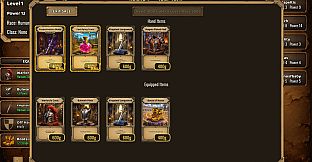
Level progression drives the entire session, with each successful monster defeat or loot acquisition contributing toward the level 10 target. Gear management requires balancing immediate combat boosts against long-term advantages, since items persist and influence later encounters. The combination of direct confrontation and indirect disruption means optimal play involves reading the table and choosing when to advance personally versus when to stall others.
Dark fantasy themes appear through monster types, curses, and equipment flavor, though the focus remains on mechanical interactions rather than narrative depth. Turn-based resolution keeps outcomes clear and allows all players to respond to events in sequence. The indie casual approach prioritizes accessibility for groups seeking light strategy sessions without heavy rules overhead.
Is It Worth Playing?
Grim Looters suits groups that enjoy competitive card games with strong social elements and opportunities for clever interference. Its emphasis on quick matches and host-based online play makes it convenient for regular sessions with friends across different locations. The blend of building personal power through loot and actively undermining rivals creates replayability through shifting alliances and memorable moments of sabotage.
Since the title remains in a pre-release state with no widespread player data available yet, potential buyers should consider their preference for turn-based strategy card experiences that reward both construction and disruption. Those drawn to party-style multiplayer where table talk and timing matter will likely find the core loop engaging once it launches.