

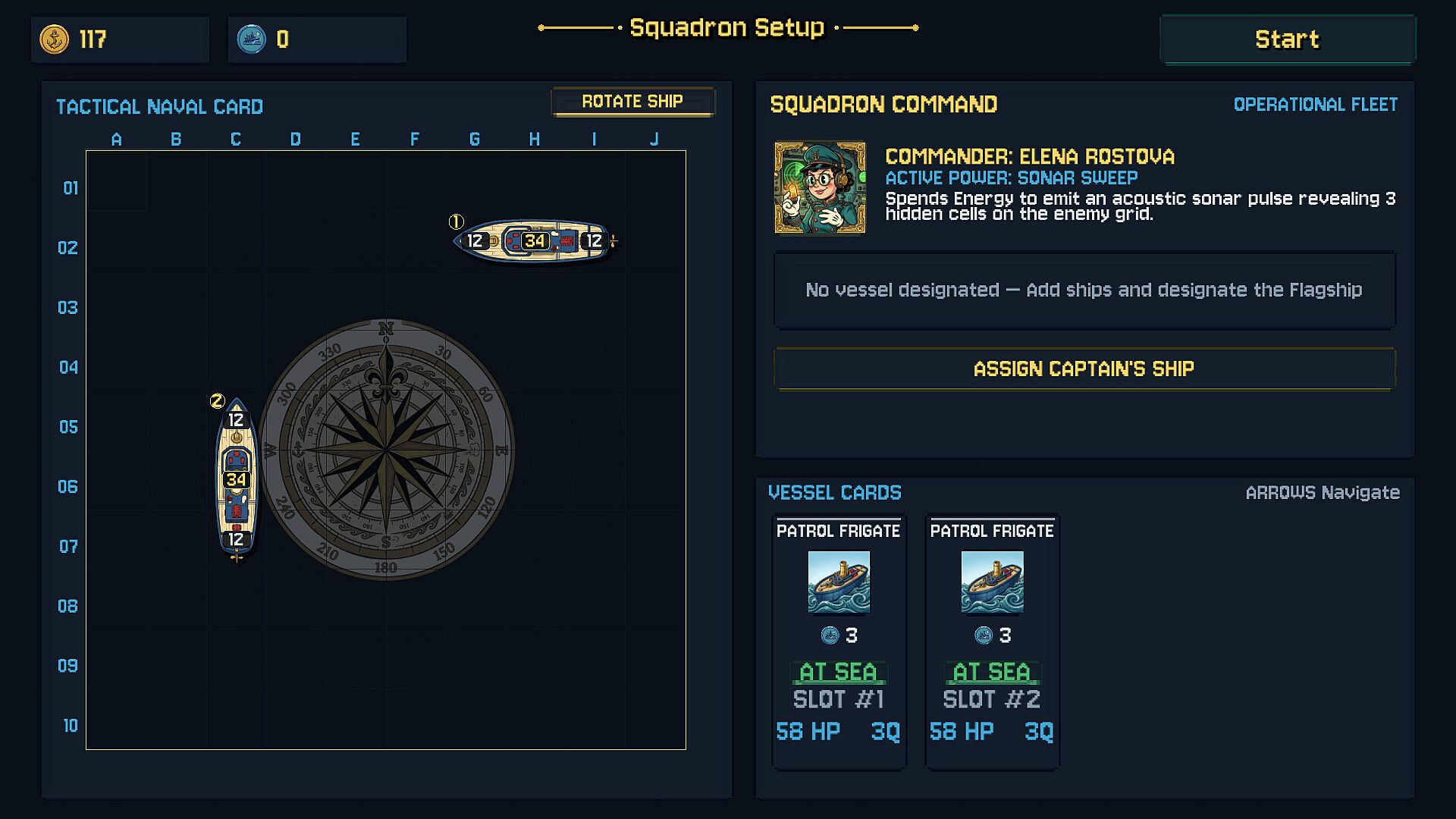

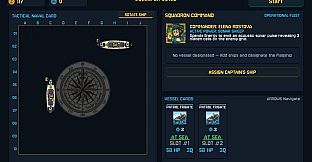

Fog & Iron: Broadside is a strategy game that places players in command of a dieselpunk naval flotilla on PC. It blends turn-based tactical combat on dual grids with roguelike progression, where hidden information and resource management drive every decision during expeditions across unpredictable seas.
Gameplay
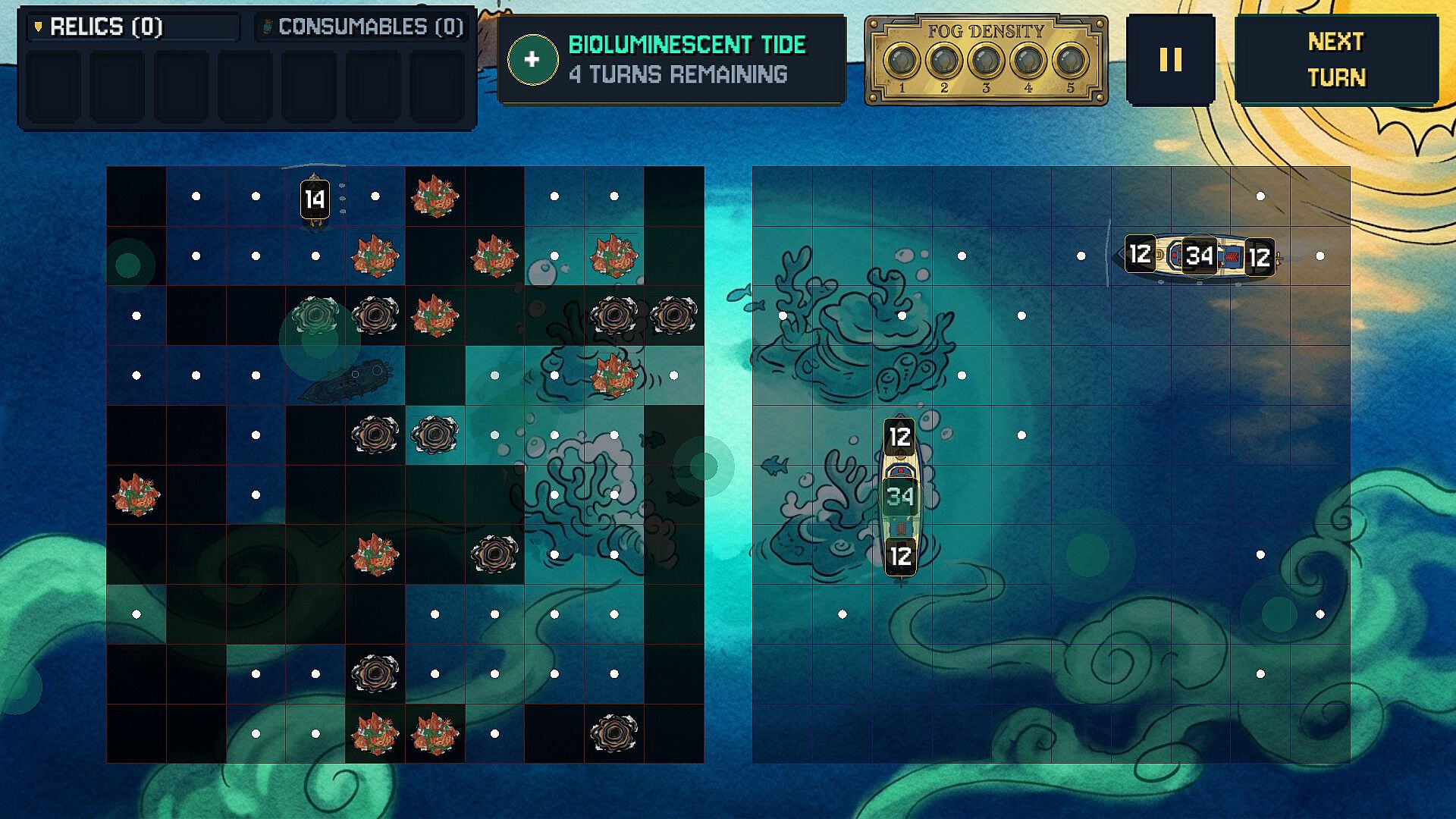
Combat unfolds on paired 10x10 grids that emphasize deduction and positioning rather than direct confrontation. Players direct individual ships in sequence, balancing sonar sweeps to reveal enemy positions, artillery barrages that briefly illuminate the battlefield through muzzle flashes, and torpedo launches that must account for environmental hazards. Sea fog returns during lulls, restoring the fog of war and forcing constant adaptation.
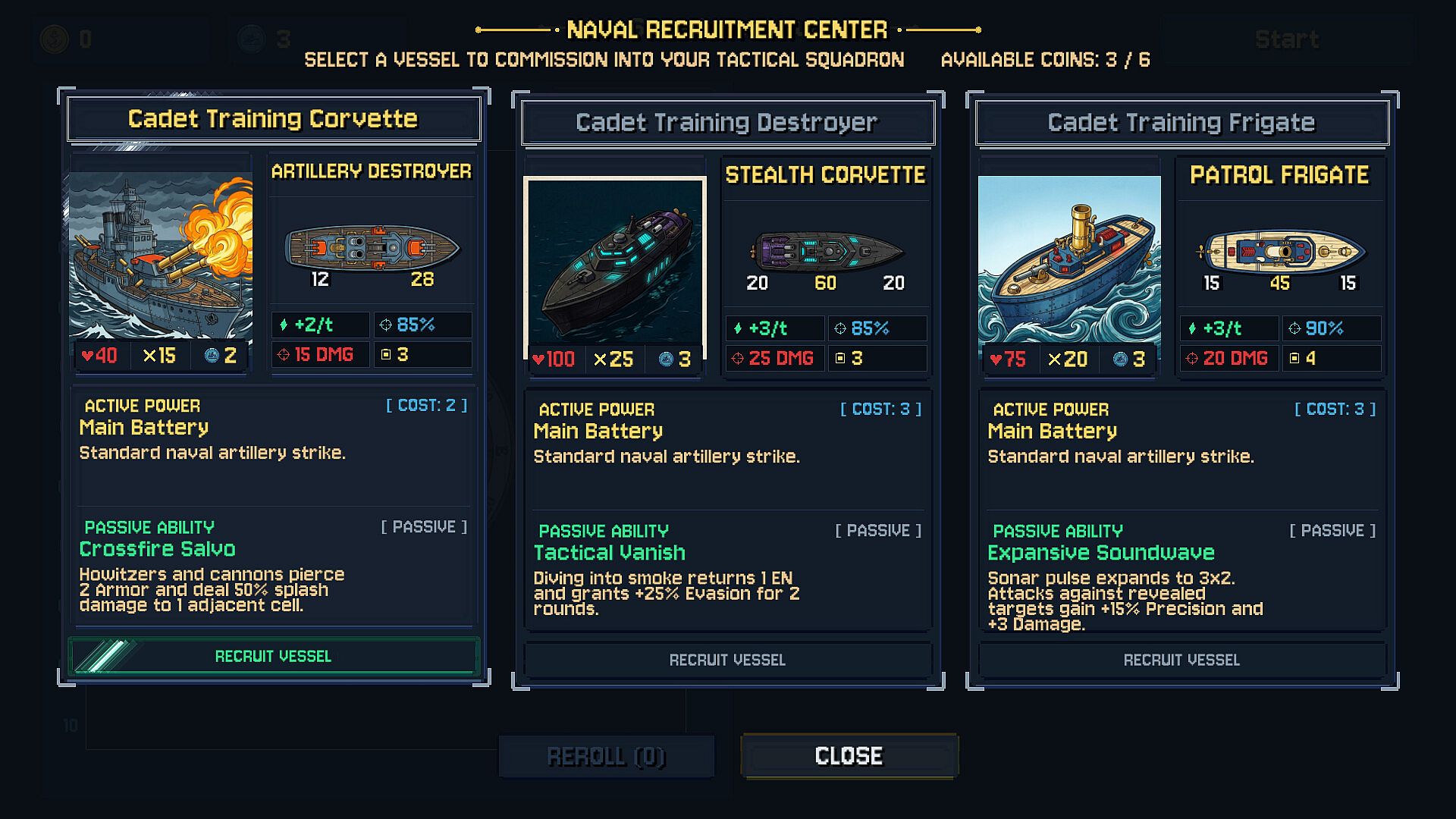
Each vessel operates its own steam boiler, creating distinct energy economies across the fleet. Nimble corvettes recharge quickly for repeated skirmishes, while artillery destroyers accumulate pressure for powerful broadsides capable of cracking heavy armor. Coordination matters because repairs, scans, and salvos occur ship by ship rather than through a shared pool.
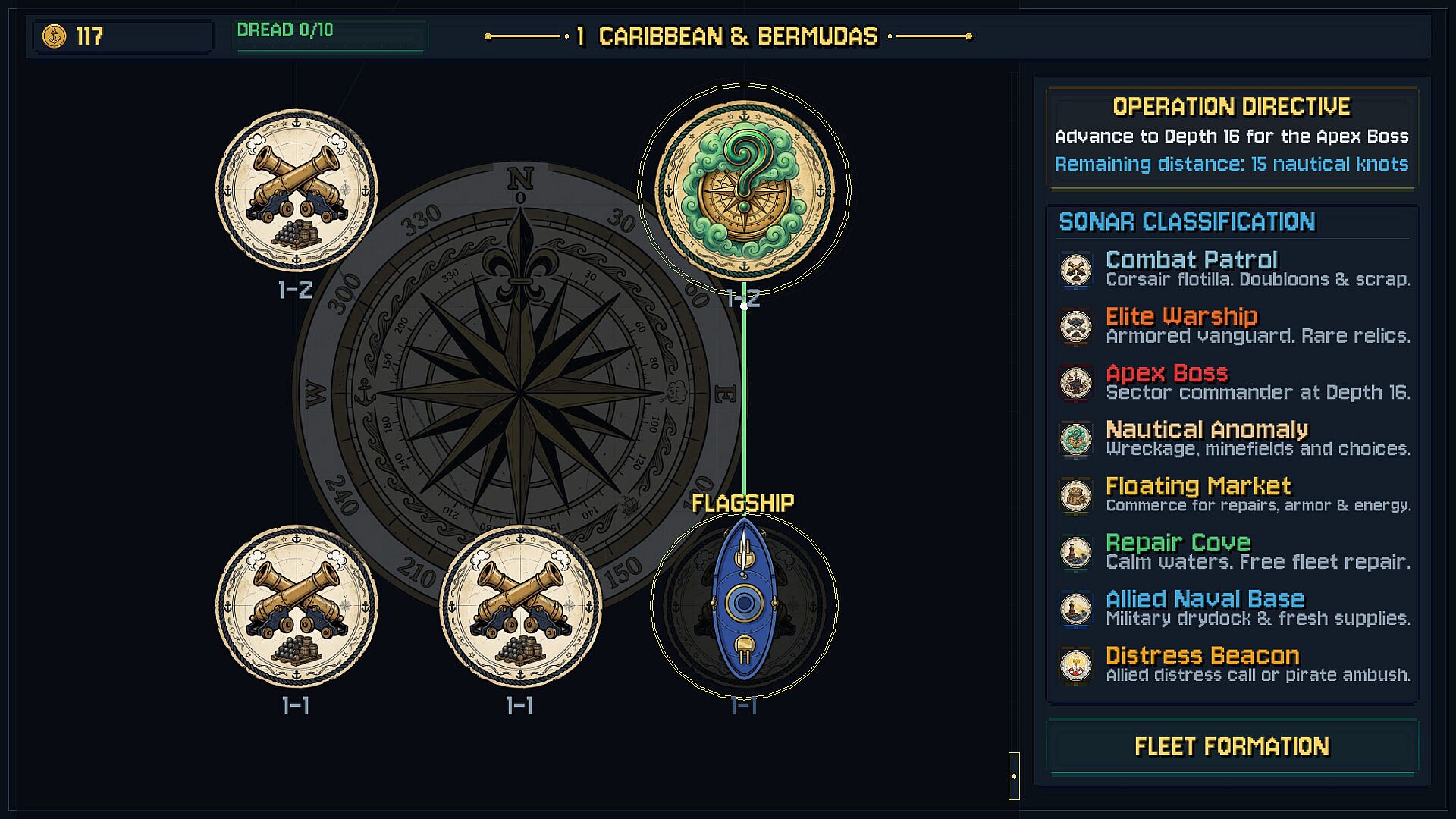
The environment actively shapes engagements. Icebergs deflect cannon fire, reefs snag torpedoes, and oil slicks ignite under the right spark. Ten weather states, including typhoon winds and lightning storms, alter trajectories and visibility. Branching choices during expeditions, such as aiding survivors or engaging smugglers, increase a dread meter that invites stronger phantom threats and altered boss encounters.
Game Modes
The core experience centers on charting roguelike expeditions through living seas. Each run involves navigating dynamic hazards while engaging 16 types of Caribbean hostiles that range from agile raiders to armored ironclads. Runs culminate in multi-phase confrontations against apex threats like the galleon Queen's Revenge.
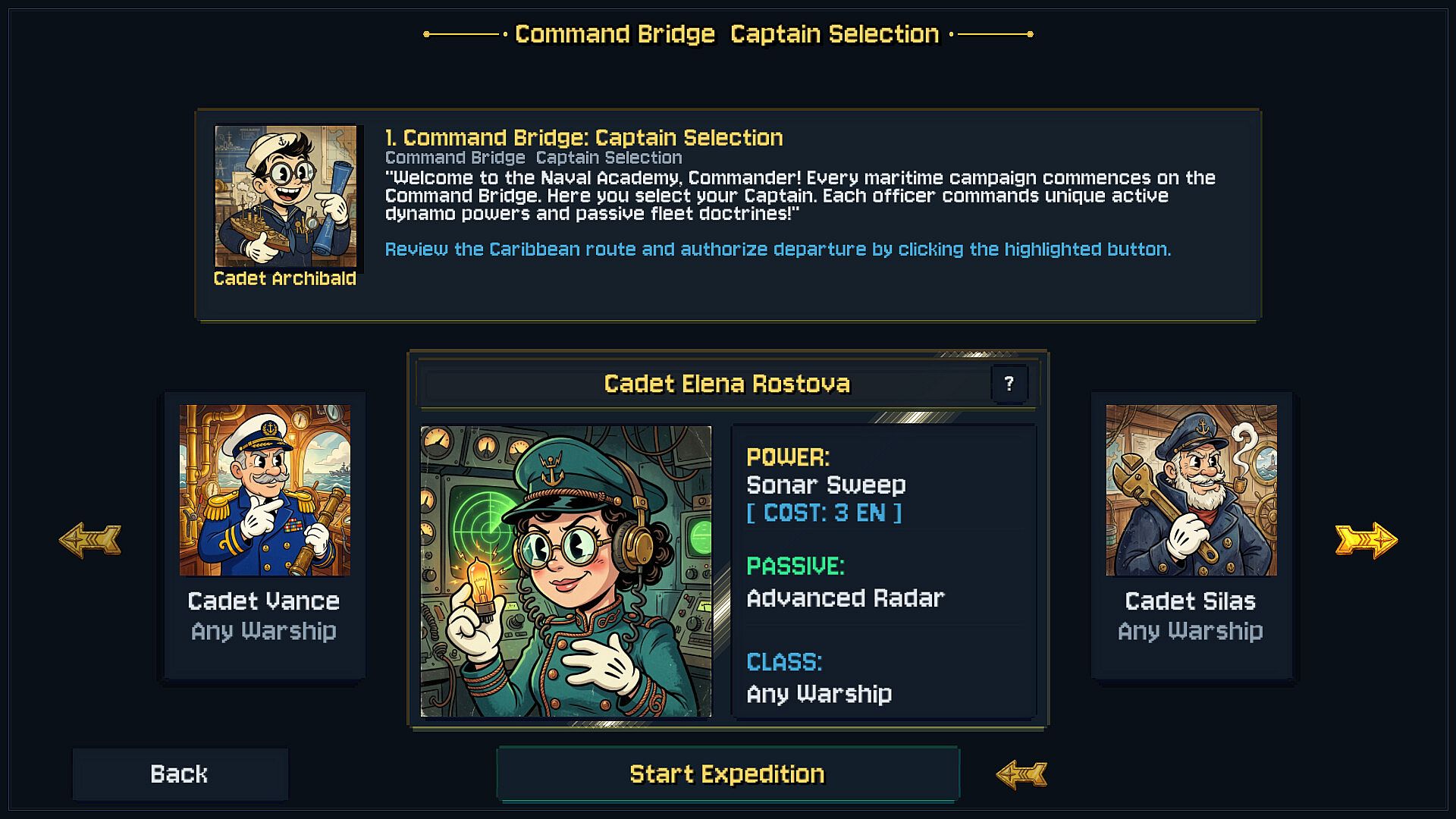
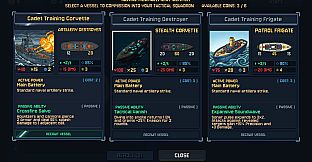
Progression carries across expeditions through earned doubloons spent on a skill tree for permanent upgrades, recruitment of mercenary vessels, and selection of passive relics that modify fleet capabilities. Fleet commanders bring active flagship abilities and passive perks that influence entire formations.
Ship classes evolve across five tiers, allowing players to draft and upgrade patrol frigates, stealth corvettes, and artillery destroyers to suit different tactical preferences. An interactive naval academy provides combat drills that introduce mechanics through guided instruction.
Key Mechanics and Features
Acoustic sonar and radar provide directional detection tools that reveal silhouettes without committing to full engagement. Muzzle flash recon turns offensive actions into temporary information sources, while prolonged inaction lets fog thicken again. This system rewards precise sequencing over brute force.
Decentralized energy management forces careful planning. Fast-recharging ships handle scouting and harassment, whereas slower vessels store power for decisive strikes. Environmental interactions add layers, as weather and terrain can block lines of fire or create new opportunities for ambushes.
Metagame elements reward repeated expeditions. Technological advancements, vessel recruitment, and relic selection create varied fleet compositions that alter how each run feels. Moral dilemmas tied to the dread meter introduce risk-reward tension that affects future encounters.
Is It Worth Playing?
Fog & Iron: Broadside suits players who enjoy turn-based strategy games that reward careful information management and fleet coordination over rapid reflexes. The roguelike structure supports multiple runs with meaningful progression, while the grid-based naval combat emphasizes positioning and resource sequencing.
Those drawn to deduction-heavy tactics and environmental interaction will find depth in sonar usage, weather adaptation, and boiler management. The single-player focus keeps attention on expedition planning and ship evolution without external competition.
Availability of a demo allows direct testing of the core loop before committing. The combination of tactical grids, roguelike variability, and persistent upgrades provides replay value for strategy enthusiasts comfortable with deliberate pacing and hidden-information gameplay.