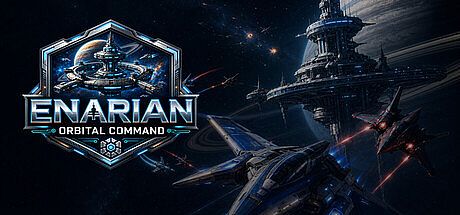


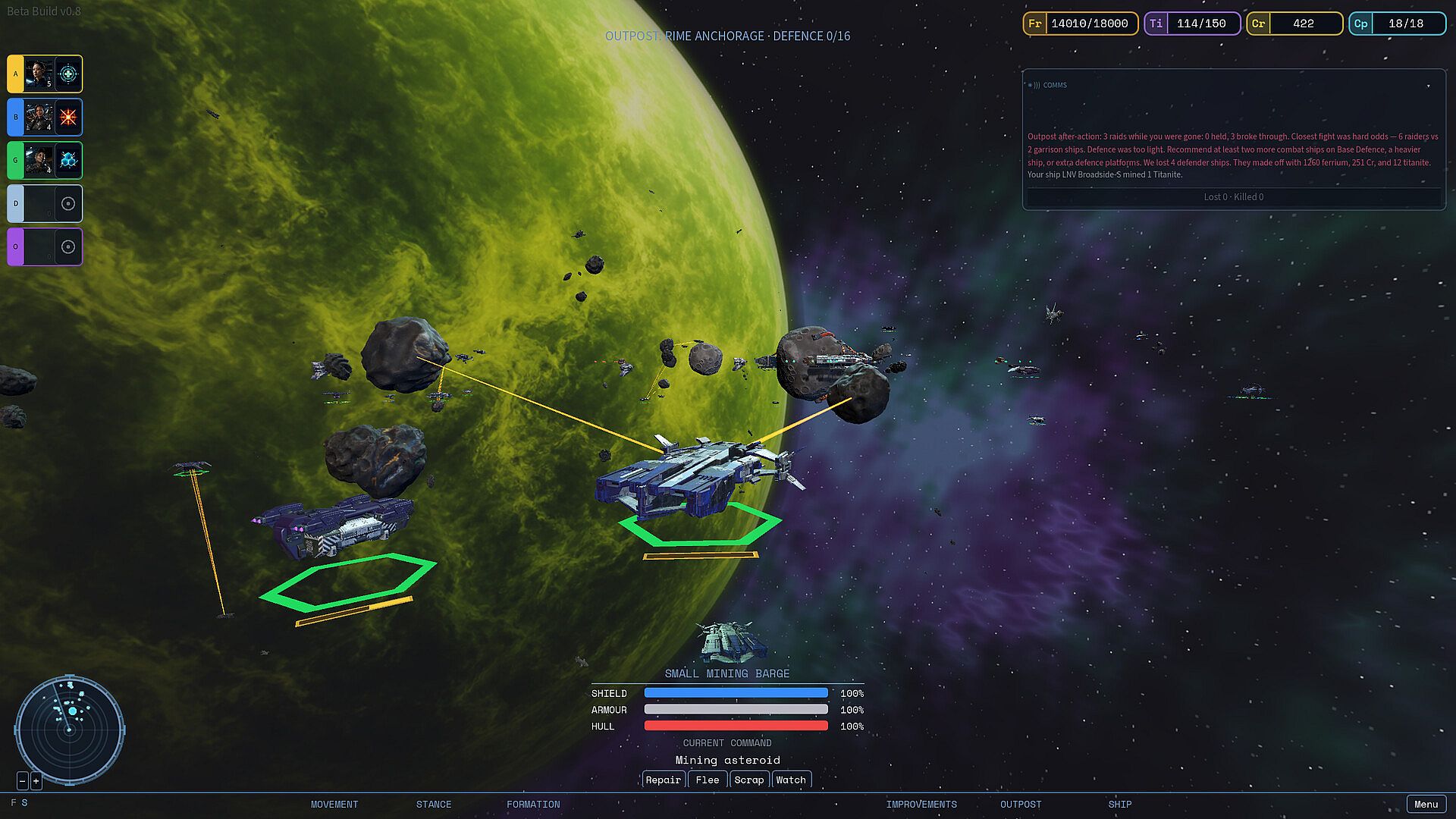
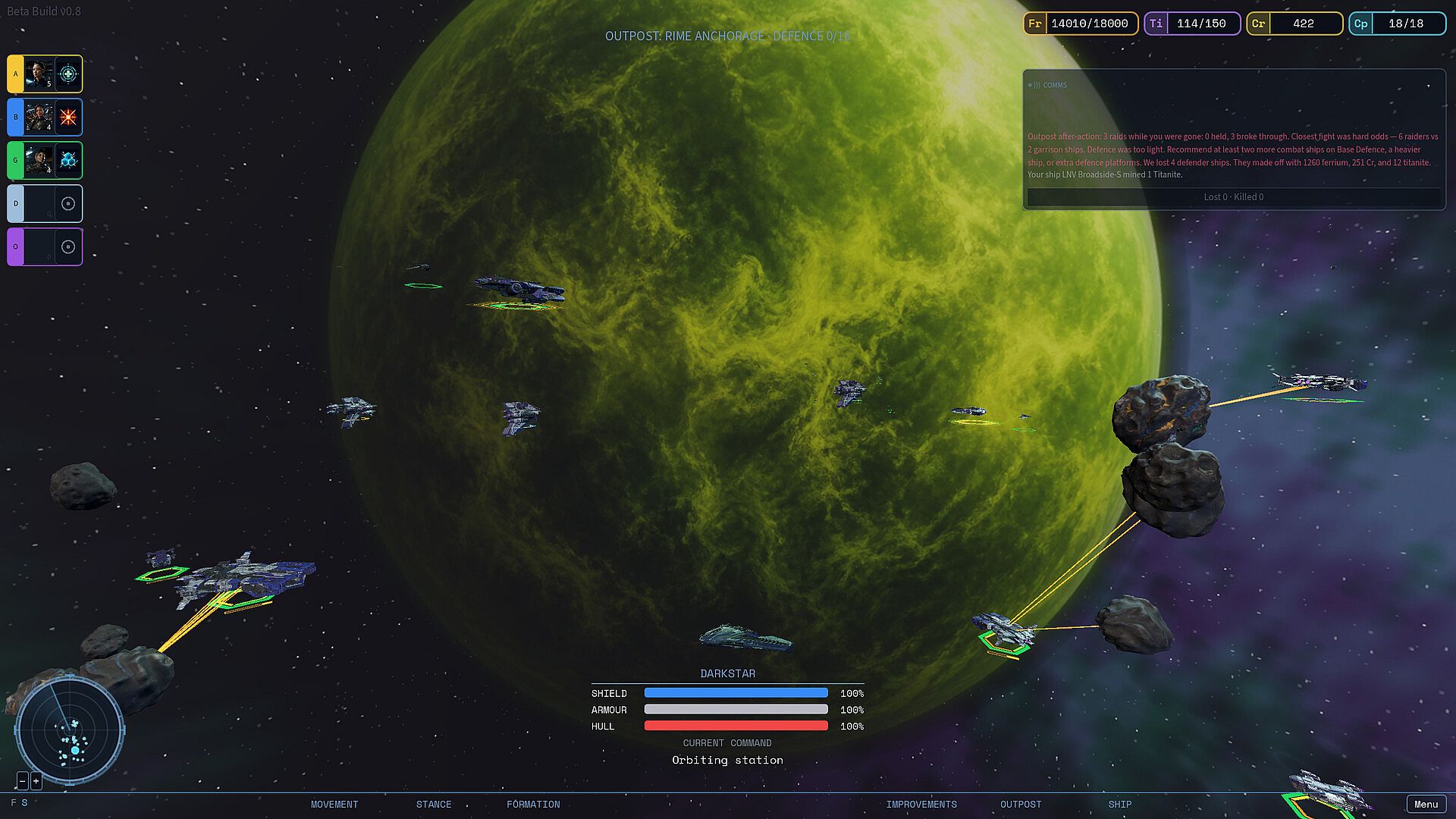
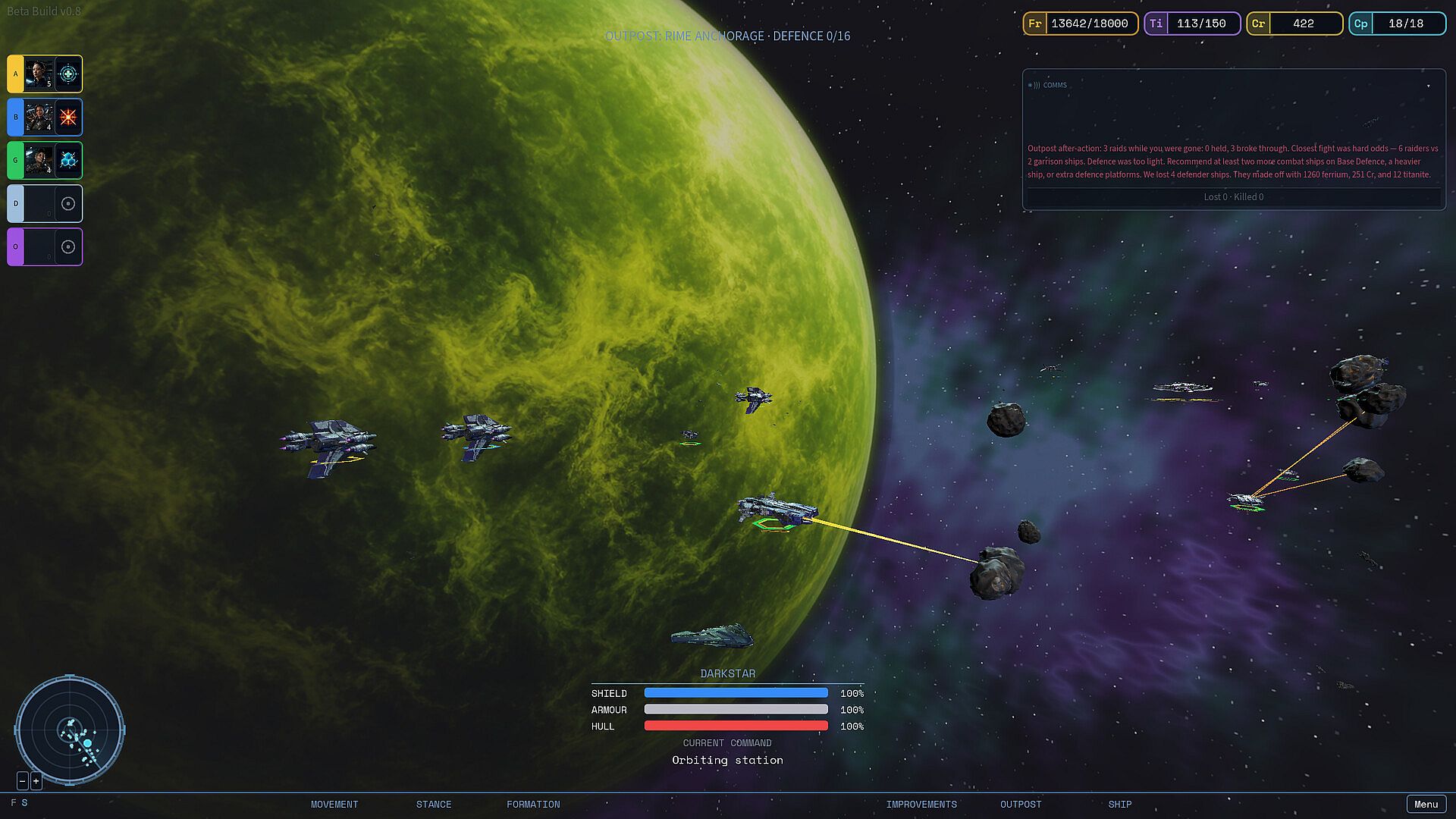
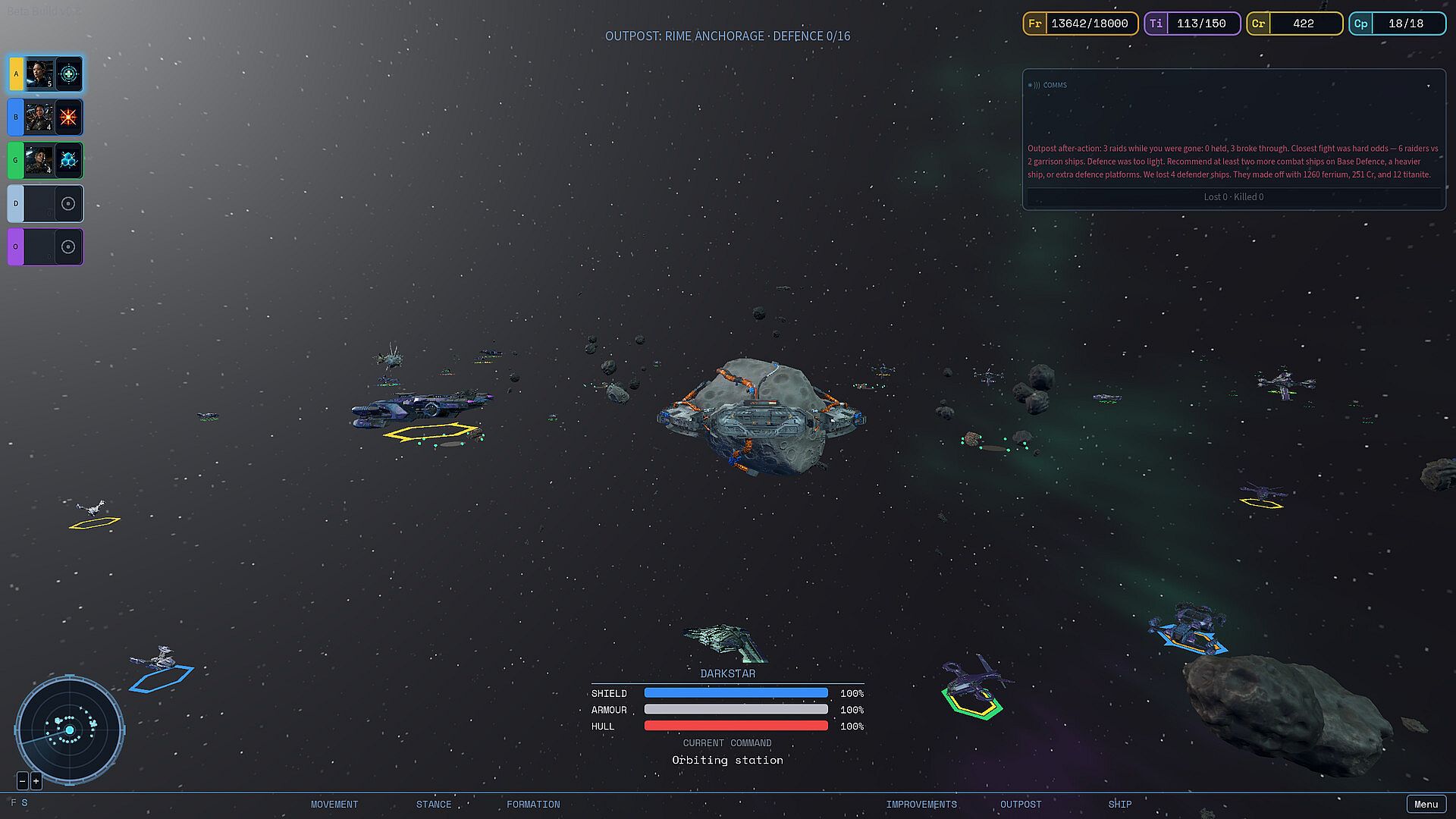
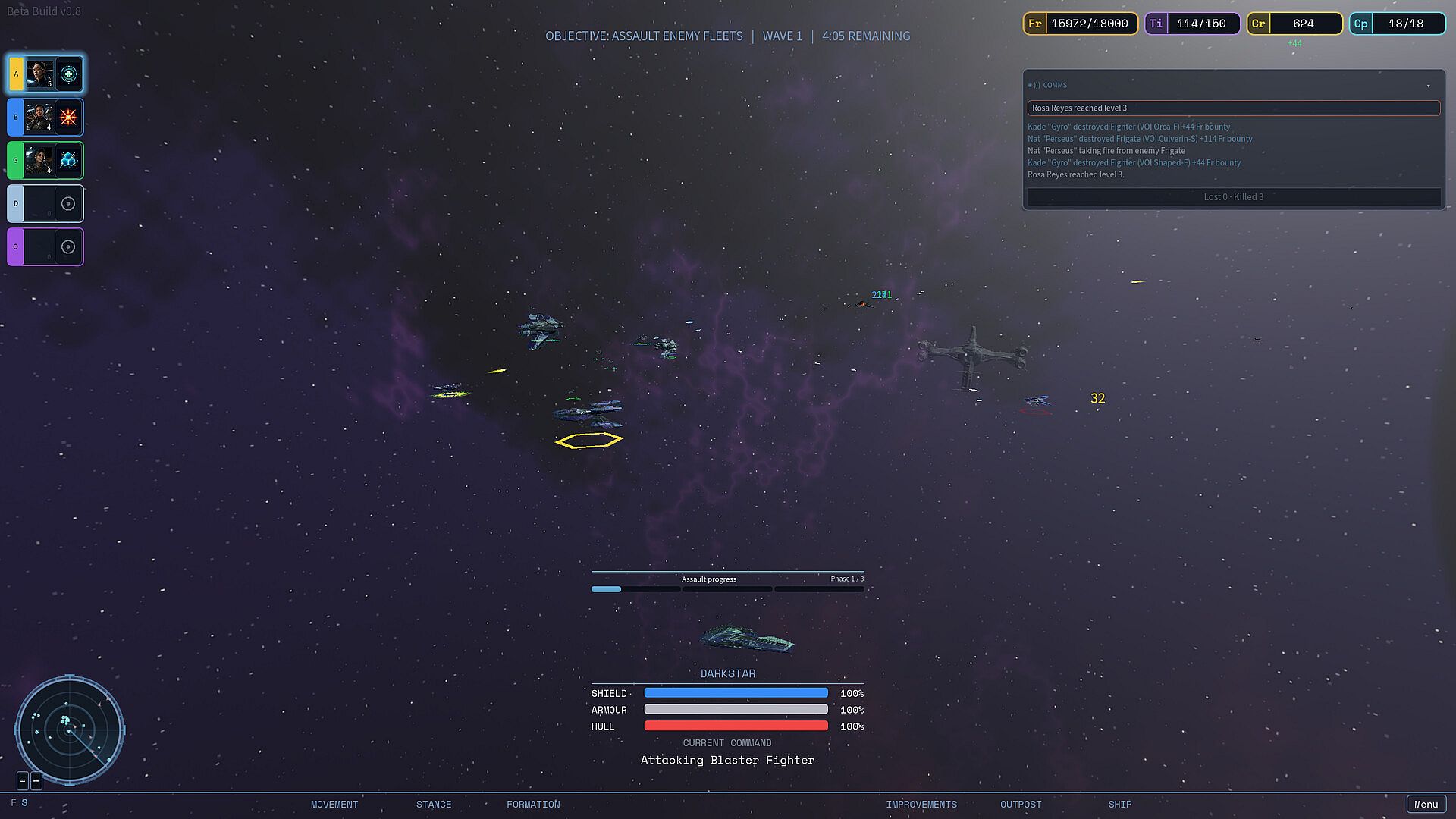
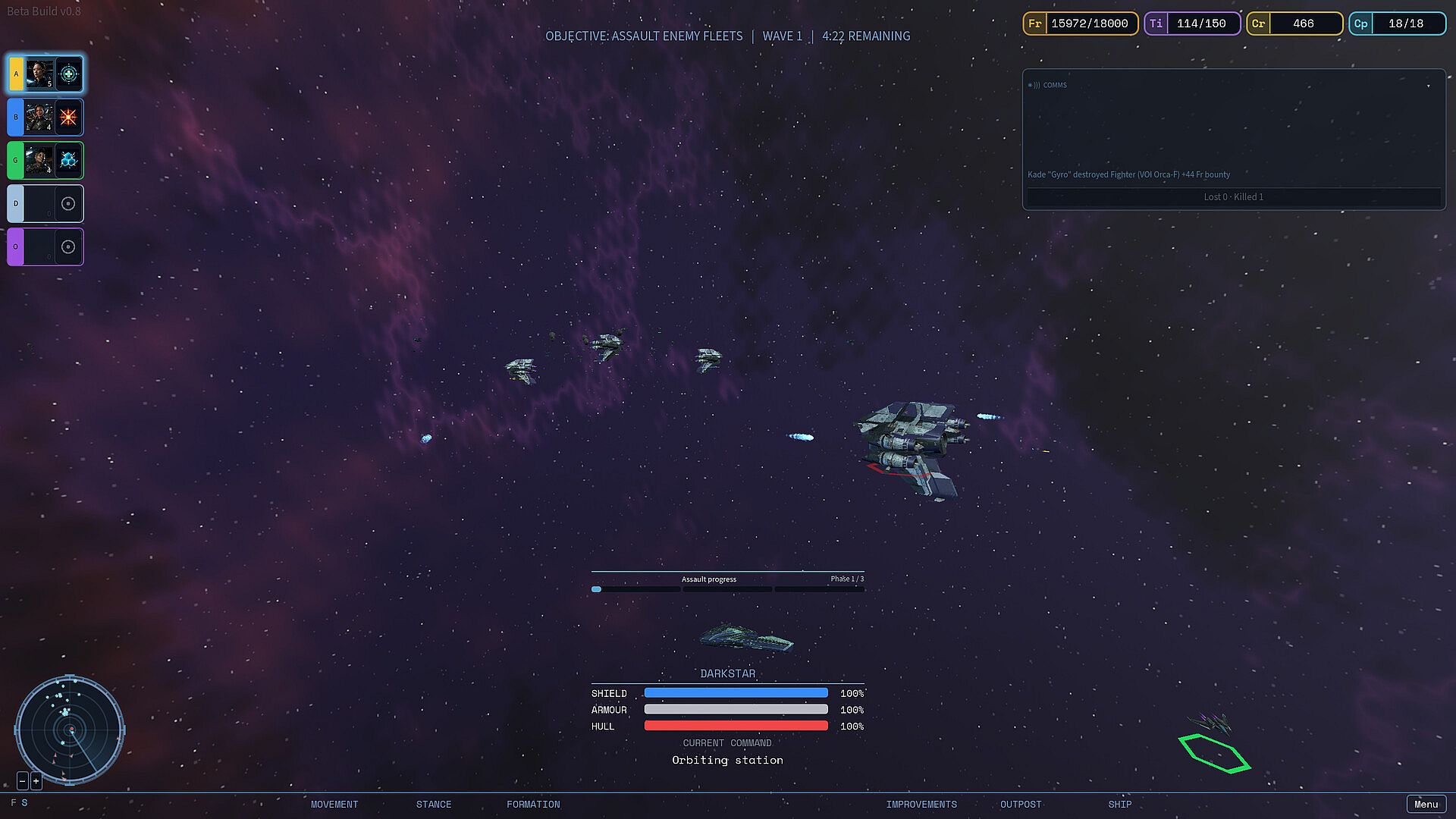
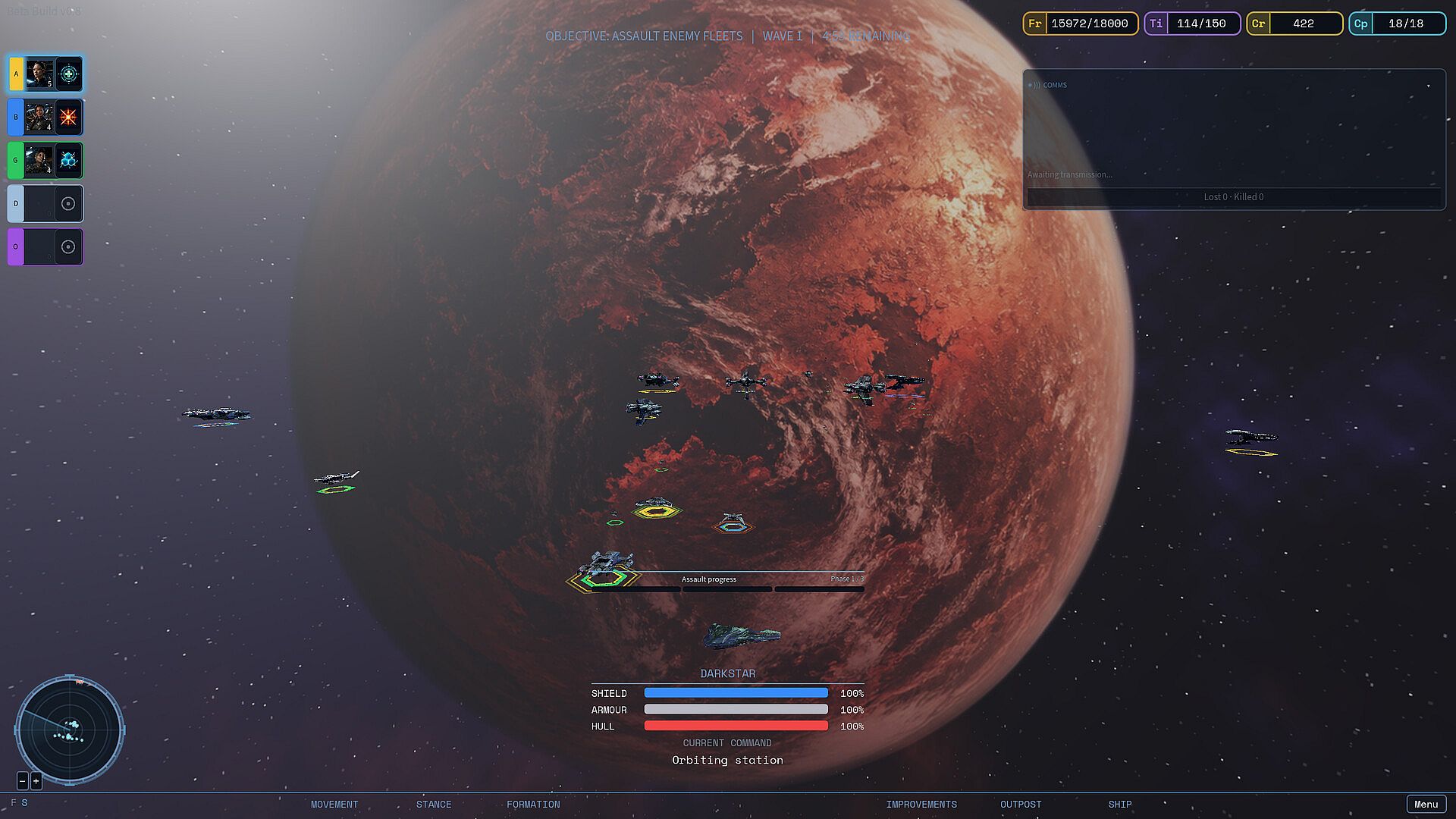
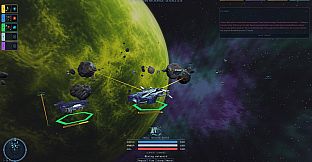
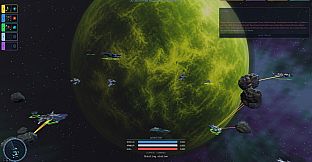
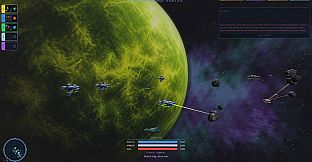
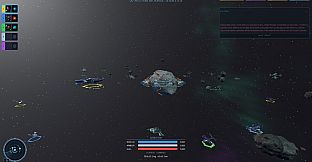
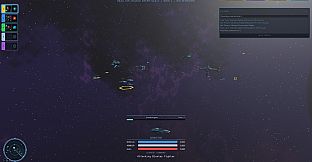
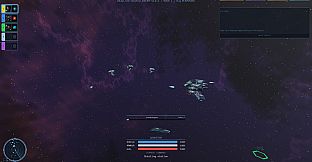
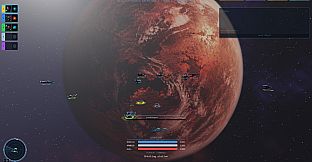
Enarian: Orbital Command is a strategy RPG that blends real-time fleet command with progression systems in a space setting. Players step into the role of a newly graduated commander who inherits a derelict mining station and must build a reputation through short-term contracts offered by corporations and pirate factions. The core experience centers on leading ships from a personal vessel while managing resources, upgrades, and a growing fleet.
Gameplay
The gameplay loop revolves around resource gathering, fleet construction, and contract completion. Mining and salvage ships extract ores such as Ferrium and Titanite to produce new vessels. These range from interceptors and fighters to bombers, destroyers, frigates, cruisers, carriers, and dreadnaughts. Support craft including covert ops, repair, and logistics ships provide buffs, repairs, and other tactical advantages during operations.
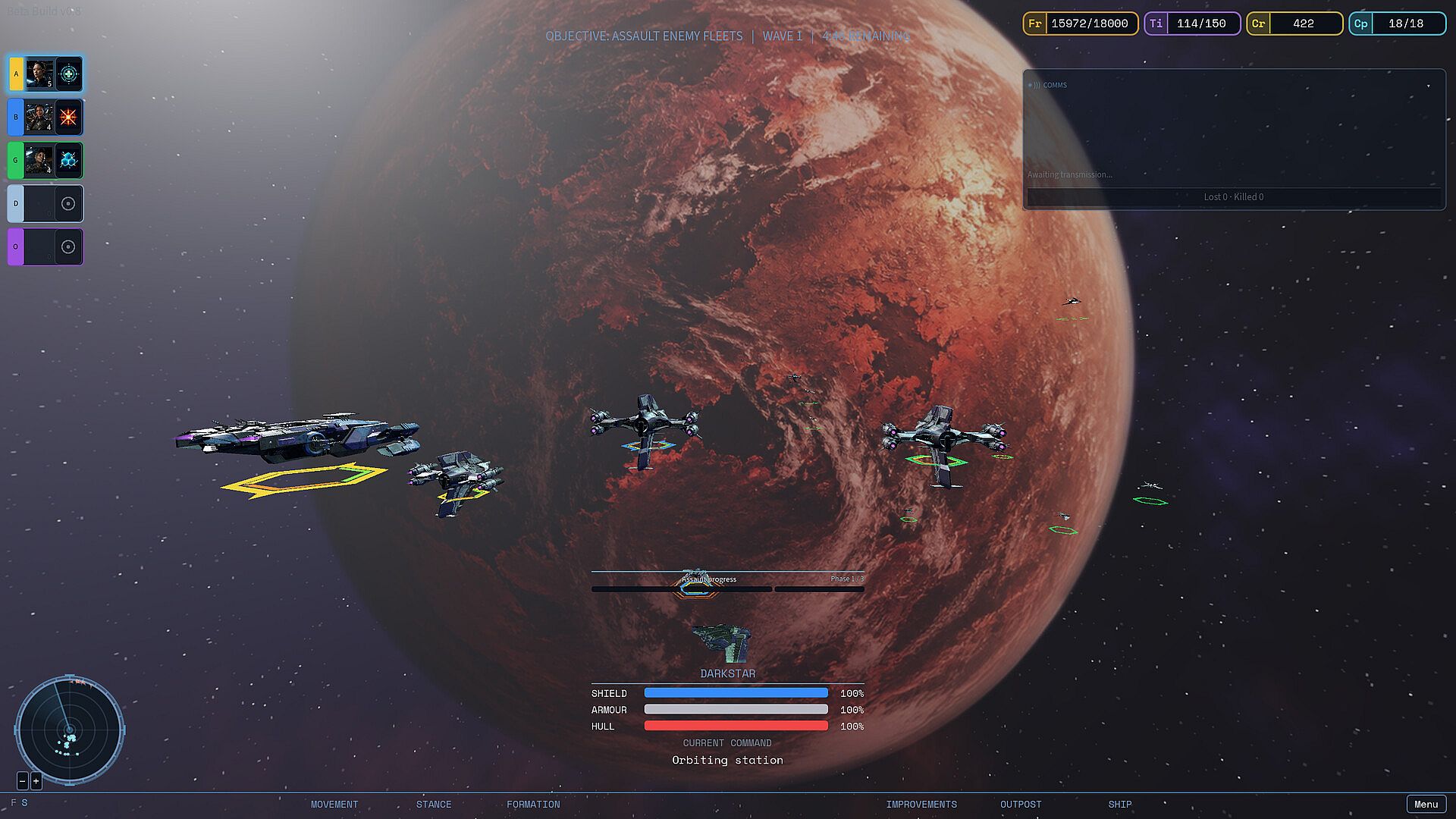
Command occurs directly from the player's customizable ship. Loadouts consist of a hull that determines ship type and base stats, weapons such as pulse lasers, beam lasers, cannons, and missiles, support modules like tractor beams or shield repair lasers, engines for speed and maneuverability, and shields for defense. Loot from destroyed enemies and completed contracts yields upgrades in various rarities that can be equipped to improve performance or unlock additional slots. Experience gained from combat and missions levels up the commander, opening access to higher-tier contracts and more command points for larger fleets.
Additional pilots can be rescued to lead up to four extra wings. These companions receive their own equipment and upgrades, then follow orders to operate independently or join the main formation. Base defense relies on assigning ships to protect the asteroid-field outpost from pirate raids while expansion continues through new vessel production.
Game Modes
Contracts form the primary structure for missions and appear on a job board with varying difficulty levels that affect rewards. Defence tasks require protecting a station from incoming threats until the danger passes. Recovery missions involve tracking stolen cargo to its location, eliminating guards, and securing the goods. Repair contracts focus on stabilizing damaged stations while repelling attackers.
Assault missions target enemy fleets before they reach full strength. Colossus objectives demand the destruction of massive relics before they become operational. Espionage contracts send players to stations to hack servers and retrieve data, often under time pressure with enemy interference. Optional bonus objectives on many contracts increase challenge in exchange for greater payouts.
Progression ties directly into these activities. Successful contracts improve standings with specific factions while lowering them with rivals, influencing future job availability and rewards. Resources and loot flow back into ship upgrades and fleet expansion, creating a cycle of preparation and execution.
Progression and Fleet Management
Resource management extends beyond initial construction. Salvage operations supplement mining output, and credits earned from contracts fund permanent upgrades to ship systems. Command points limit fleet size until the commander advances, encouraging careful selection of which vessels to field on each mission.
Pilots add depth through specialization. Equipping them with looted or purchased systems grants unique abilities that complement the main fleet. Players can issue targeted commands such as movement to a location with engagement rules, guarding positions, or focusing fire on specific enemy classes via radial menus. Recent updates have introduced combat drones deployable from carriers and dedicated drone frigates, expanding tactical options without altering the fundamental command flow.
Is It Worth Playing?
Enarian: Orbital Command appeals to players who enjoy single-player space strategy with RPG elements. The combination of fleet building, personal ship customization, and contract-based missions creates a focused loop centered on incremental growth and tactical decisions. Faction standings and loot systems add layers of choice without requiring multiplayer coordination.
The game remains in active development with updates that refine combat interfaces and add features such as drones. Availability on Windows and Android supports flexible play sessions. Those seeking a deliberate pace with emphasis on preparation and execution rather than fast-paced action will find the systems rewarding. The absence of confirmed player counts or aggregate review scores means expectations should rest on the described mechanics rather than external benchmarks.