






Dungeon Forge is an indie RPG on PC that combines roguelike dungeon exploration with resource gathering, crafting, and village management. Players select a class at the start of each run, descend through procedurally generated floors, collect materials, fight enemies, and return to improve their setup before attempting deeper levels. The loop emphasizes preparation and risk management, where progress can be lost upon death but carries forward through permanent village upgrades.
Gameplay
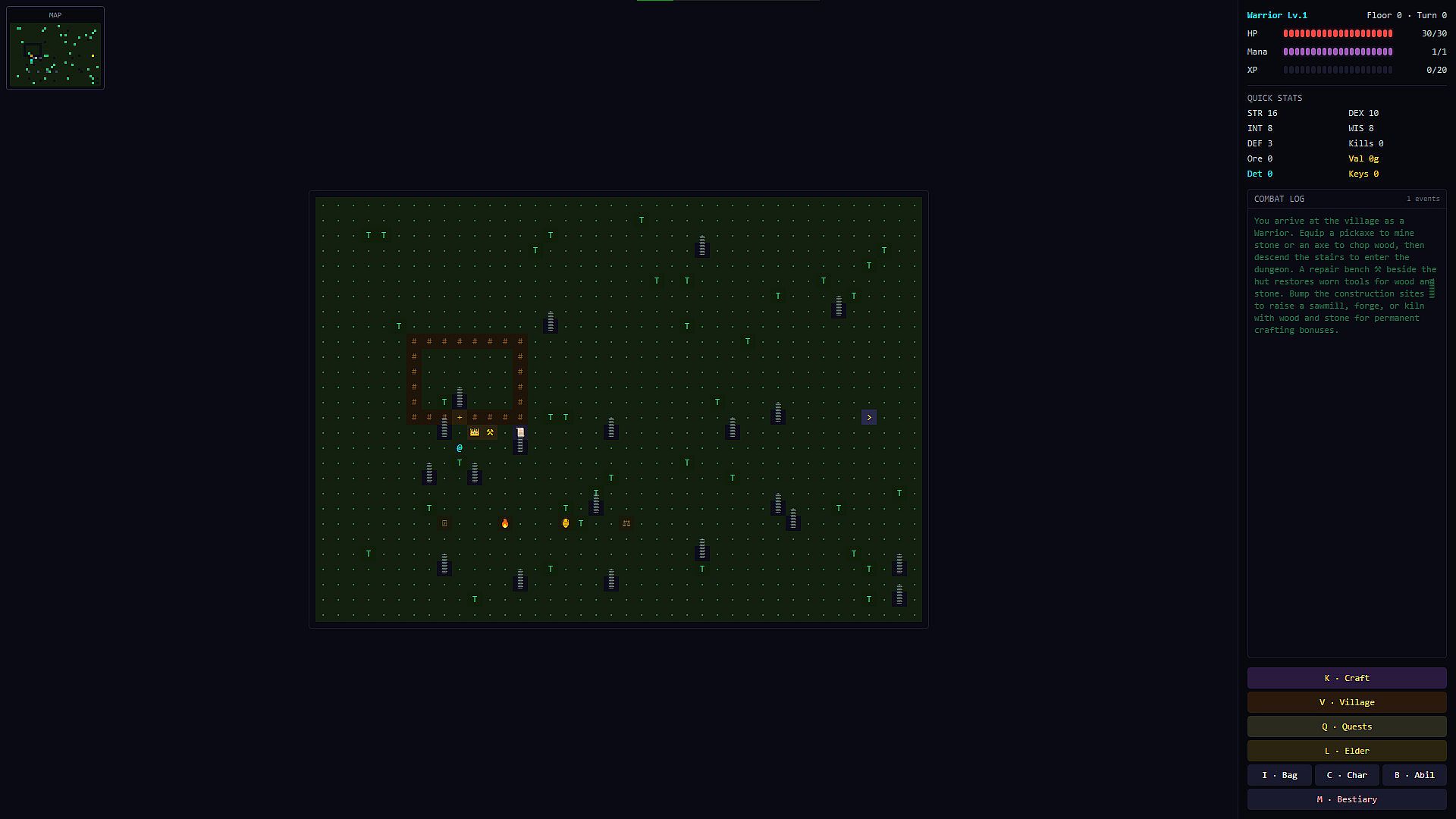
The core experience revolves around repeated runs into the dungeon. Each attempt begins in a village where players choose from several classes that influence combat approach and stat priorities. The Warrior focuses on direct confrontation, the Rogue emphasizes speed and dexterity, the Mage relies on spells, the Ranger attacks from distance, and the Paladin blends offense with supportive abilities. Starting stats guide early decisions on equipment and tactics.
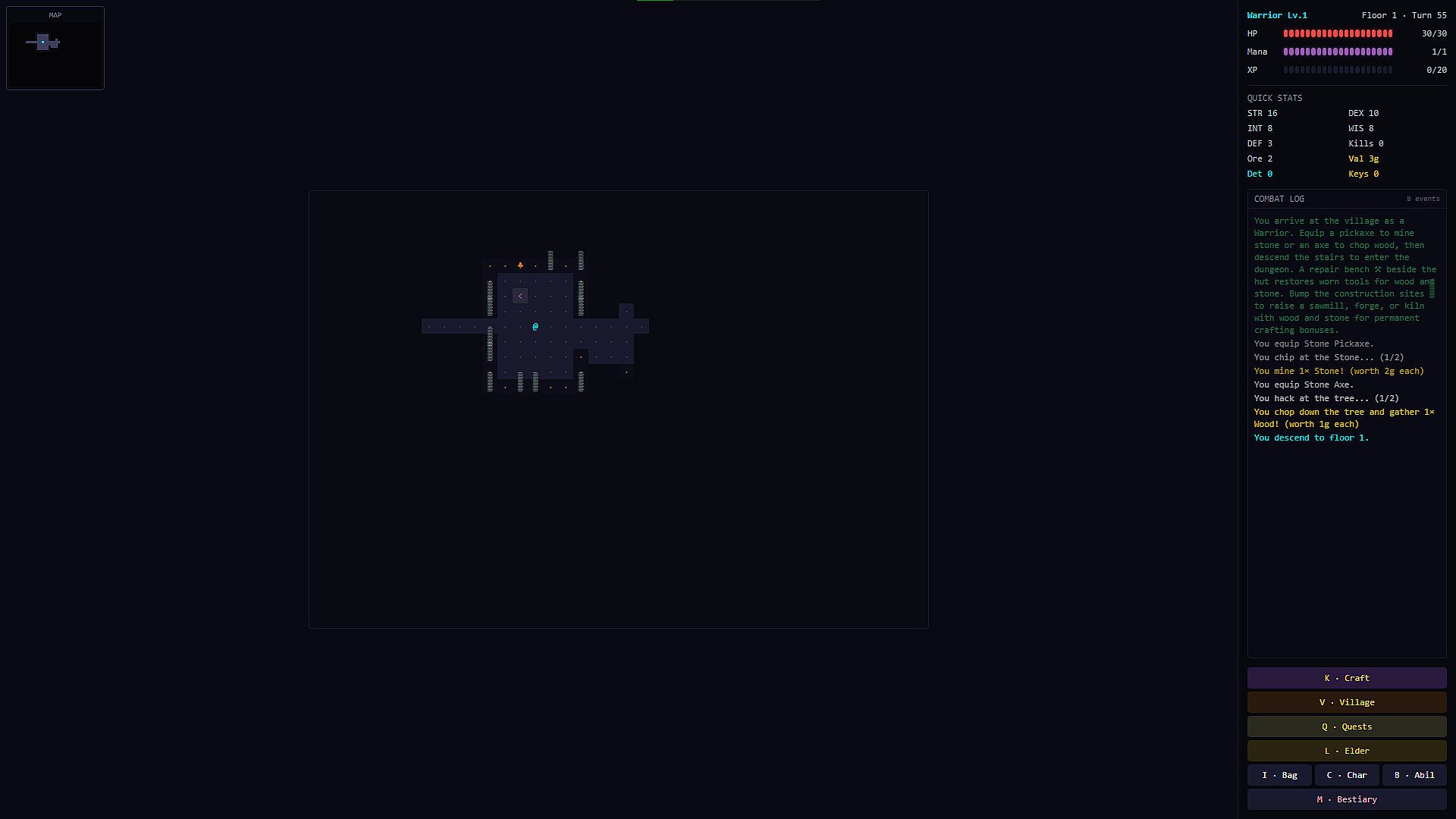
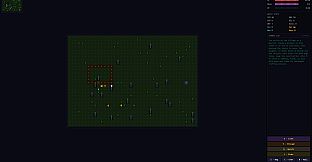
Exploration takes place floor by floor in dark chambers. Players navigate the map, defeat enemies for experience, search containers for items, and manage health, mana, and inventory while seeking paths to lower levels. Resource management grows critical as depth increases, requiring careful balancing of combat risks against collection opportunities.
Gathering extends beyond combat. Players chop trees for wood, mine stone and ores, and use improved tools to increase efficiency. These materials return to the village for crafting or construction, making surface activities as vital as underground survival.
Crafting uses collected resources to upgrade tools, weapons, and armor. Basic items advance through tiers involving iron, copper, and mithril. A forge unlocks advanced recipes, forcing choices on resource allocation between personal gear and village infrastructure.
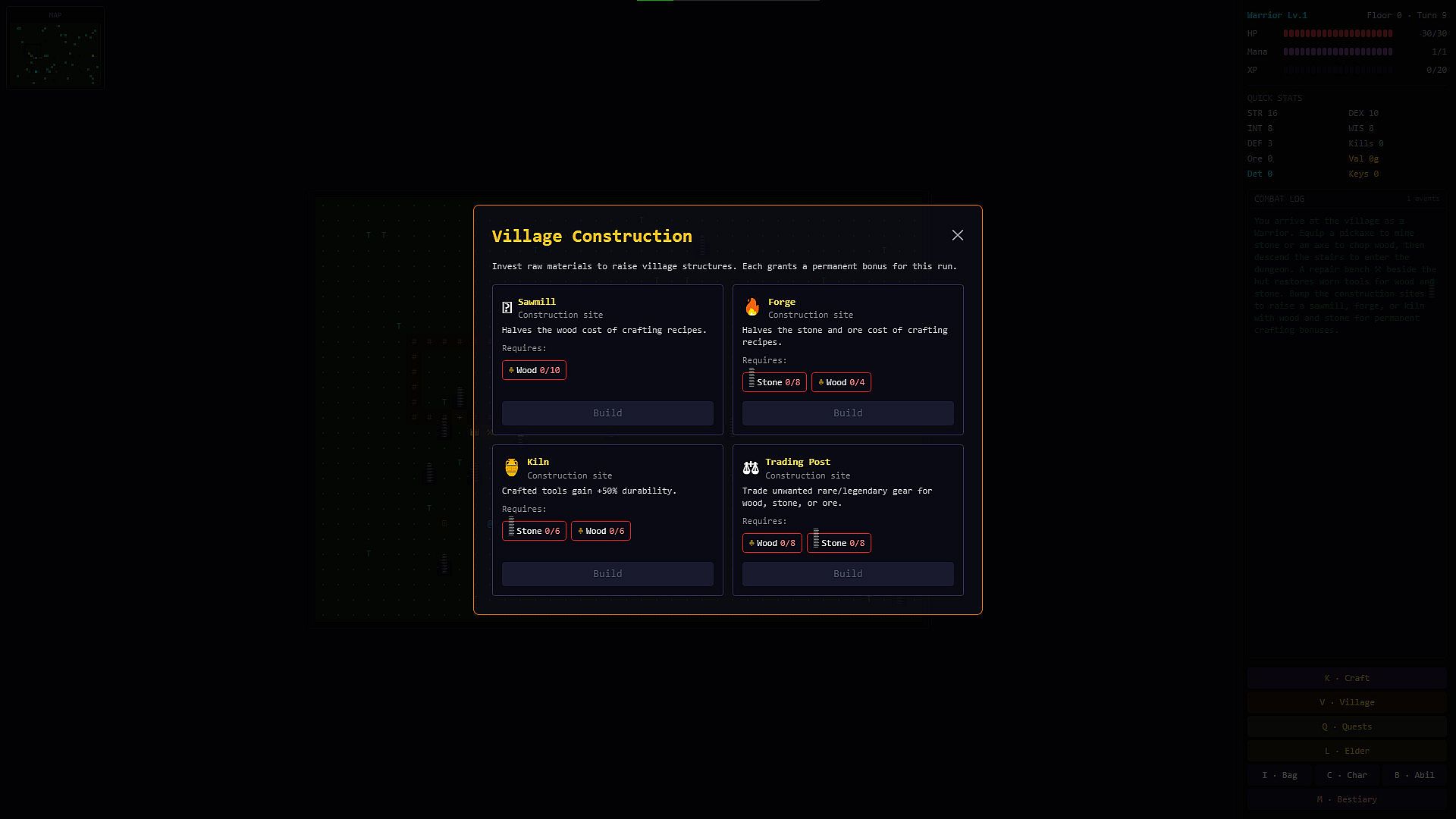
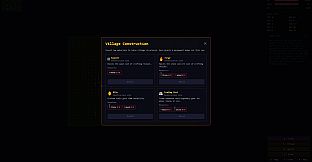
Village development provides lasting benefits. Wood and stone fund buildings such as a Sawmill, Forge, Kiln, and Trading Post, each granting bonuses like better crafting options or trade access. Early investment can ease future runs, while saving materials supports immediate equipment needs.
Quests from a board add optional objectives. These tasks involve hunting specific enemies or delivering materials in exchange for experience and rewards, offering structured goals alongside open exploration.
Progression occurs through enemy defeats, leveling, and equipment improvements tailored to the chosen class. Every floor presents opportunities to grow stronger alongside the constant threat of losing accumulated items on death.
Game Modes
Dungeon Forge operates as a single-player roguelike experience centered on repeated runs. There are no separate named modes or multiplayer components. The gameplay consists of procedurally driven descents where each attempt starts fresh in terms of carried equipment but benefits from village advancements made across multiple runs. This structure encourages experimentation with classes and resource strategies without branching into distinct variants.
Village Development and Progression
Returning from the dungeon allows investment in permanent structures that alter future runs. Buildings provide efficiency gains or new crafting paths, creating a meta-layer of decision-making. Players weigh spending limited resources on immediate power versus long-term advantages, shaping how subsequent attempts unfold. Leveling and gear upgrades further customize playstyles, with class strengths dictating viable builds over time.
Is It Worth Playing?
Dungeon Forge suits players who enjoy roguelike runs combined with crafting and light base-building elements. The class variety and resource choices create meaningful decisions on each descent, while village upgrades reward consistent play. Those seeking deep single-player progression without multiplayer distractions will find the loop engaging. The game remains in active development with its core systems focused on exploration, combat, and incremental improvement. Prospective players should consider their preference for high-risk runs where preparation determines survival depth.