

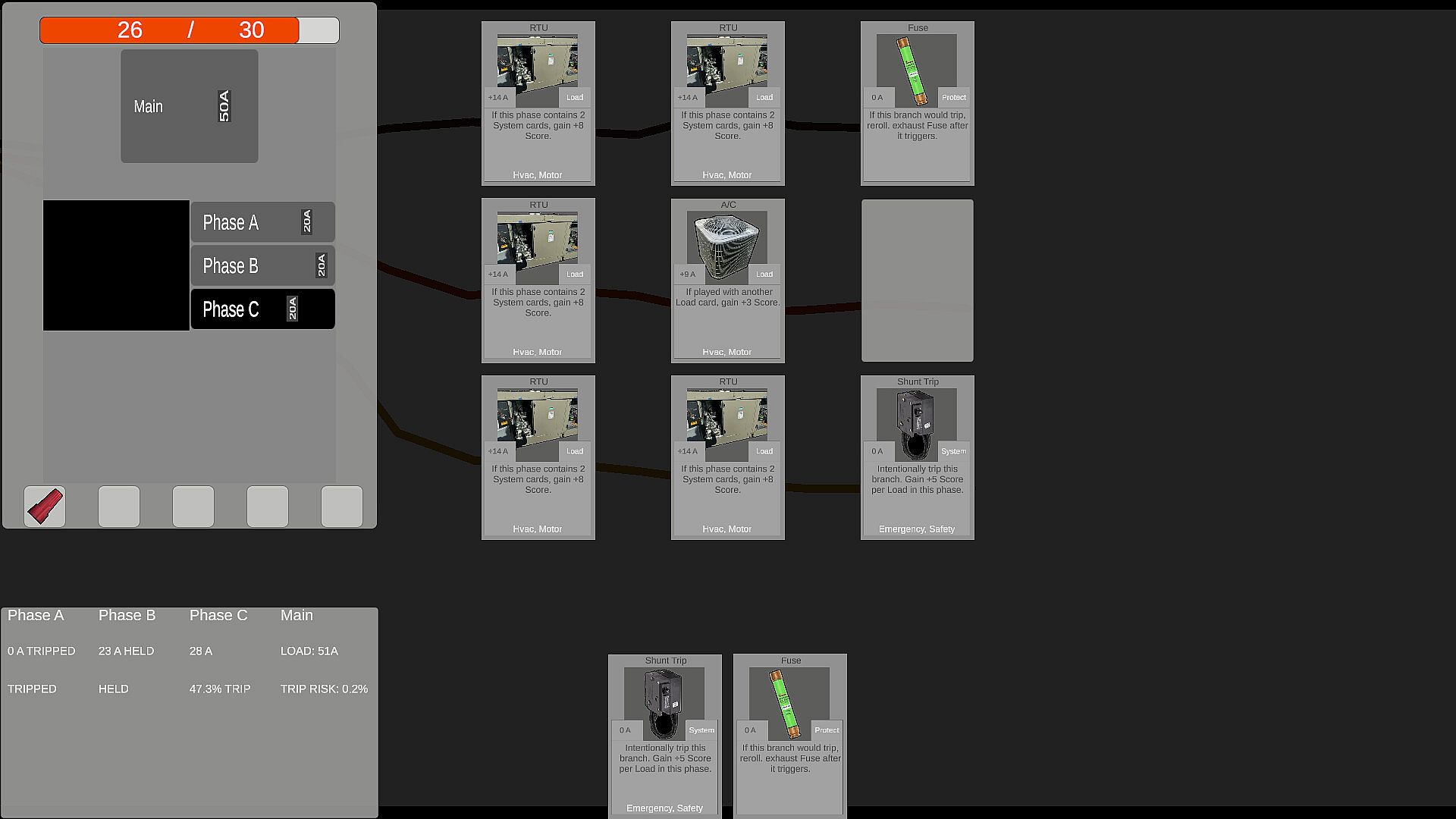
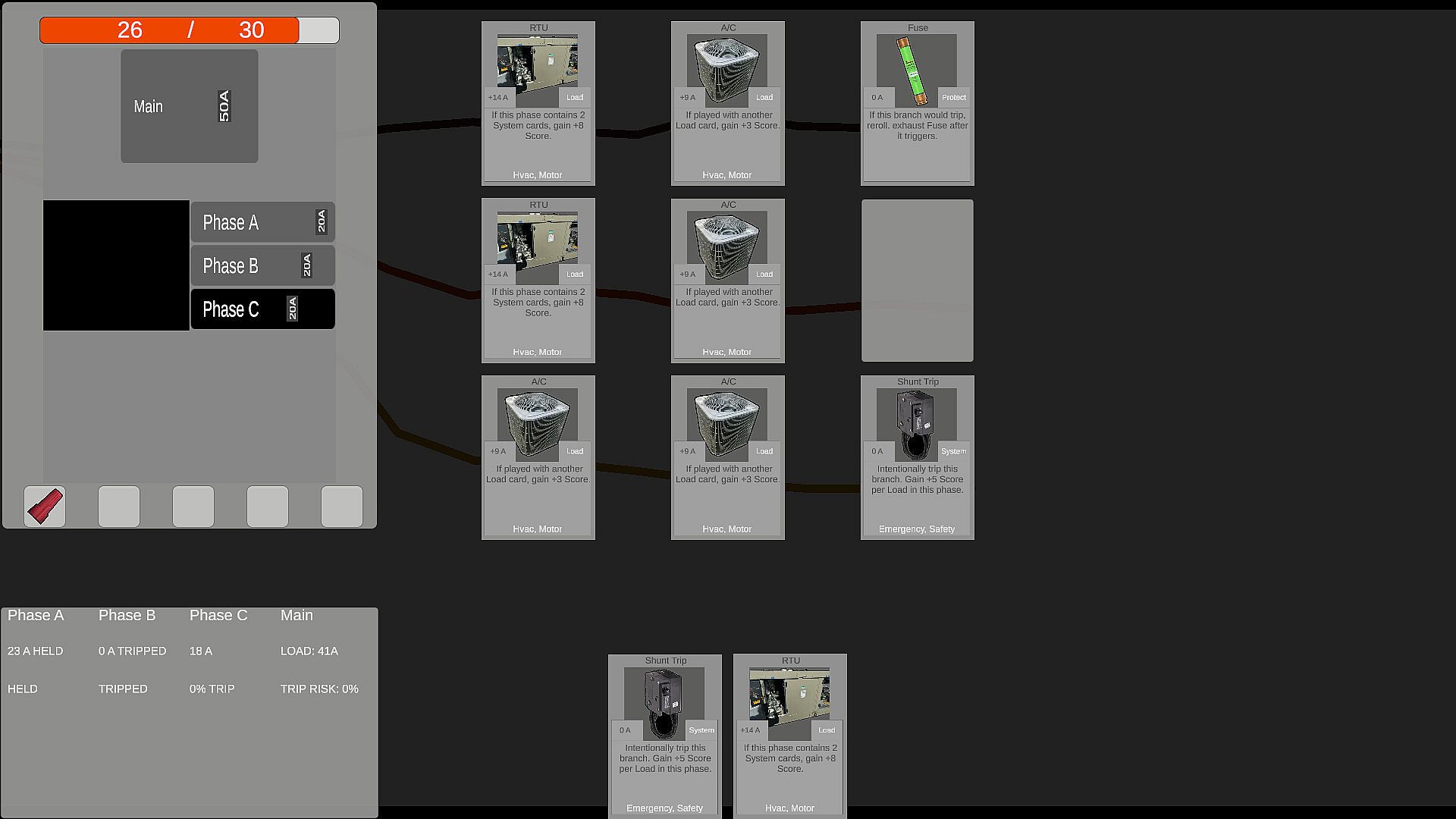
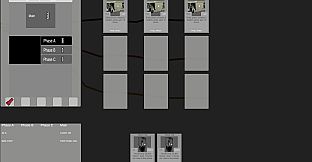
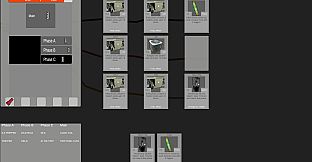
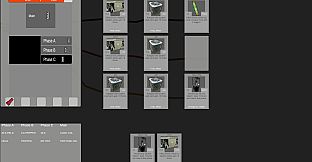
Current Draw is a strategy indie casual game for PC that puts players in charge of an electrical panel through roguelike deckbuilding mechanics. The core experience centers on managing power distribution across three phases while building card synergies to maximize scores before a breaker trips or the panel fails.
Gameplay
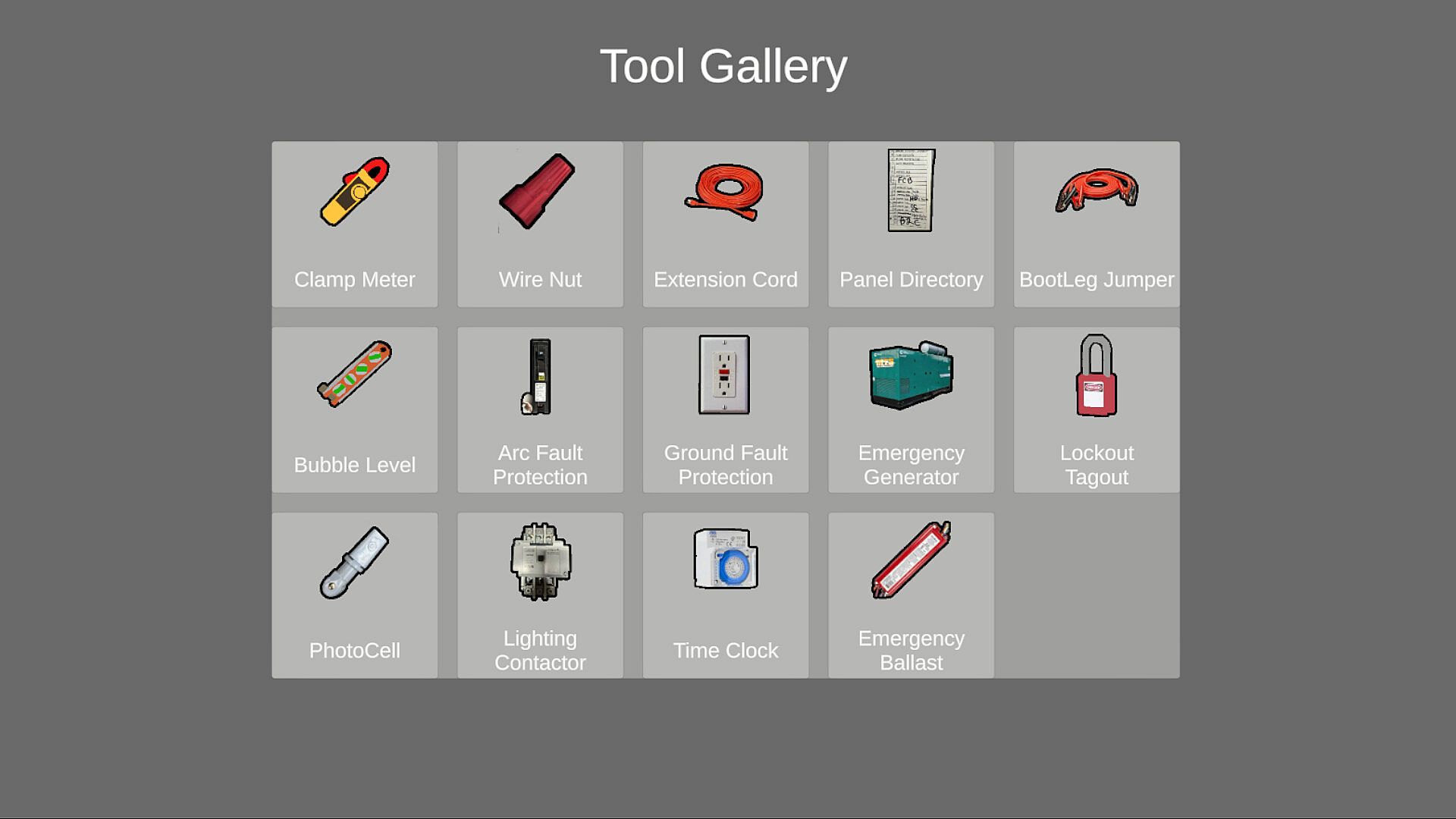
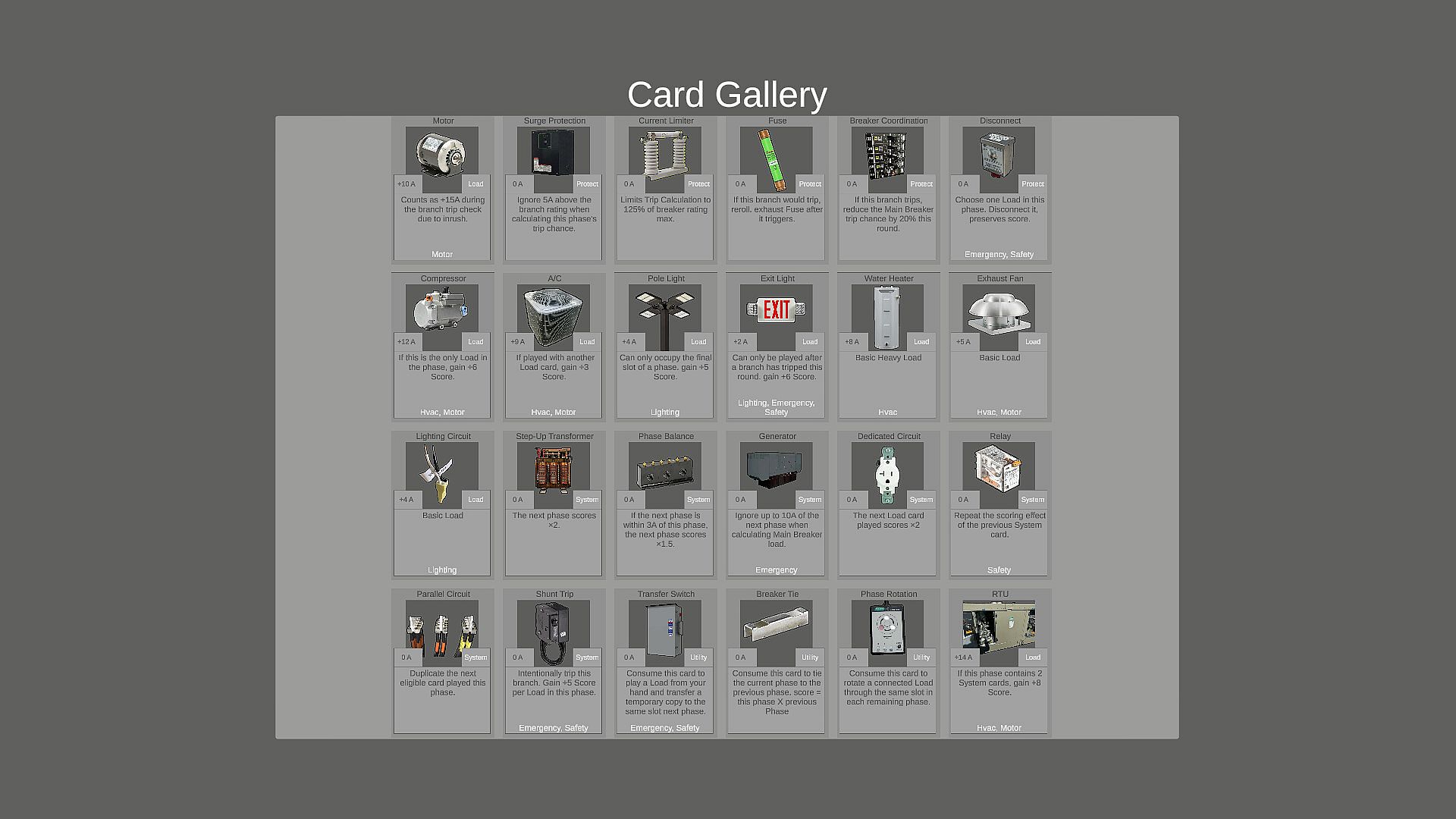
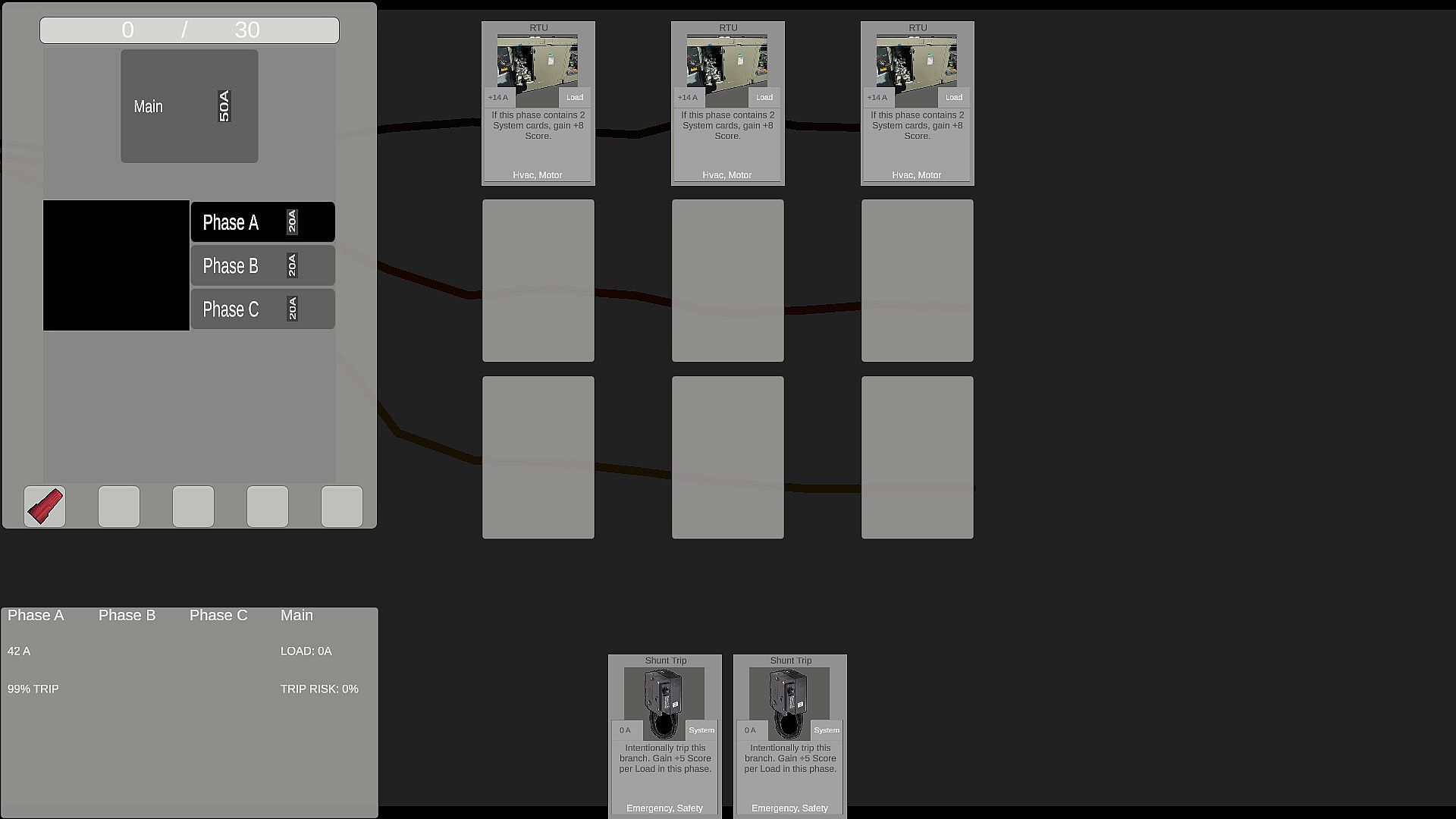
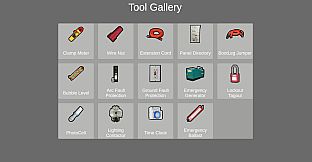
Players construct and refine a deck of Load, System, and Protection cards during each run. Cards are played across Phases A, B, and C to energize circuits and accumulate points. Limited space and breaker ratings force careful decisions about load distribution. Overloading a circuit offers higher rewards but risks tripping breakers and ending the round prematurely. The loop emphasizes sequencing cards to create synergies that reward balanced phases, specialized circuits, or controlled overloads. Tools collected in the shop further modify scoring potential and deck composition for subsequent rounds.
Score targets increase with each successful round, pushing players to adapt their builds and manage risk levels. Money earned from meeting targets funds purchases of new cards and tools that introduce fresh combinations while altering future draws. The roguelike structure means every run presents randomized elements that test different electrical strategies, from lighting loads to rotating equipment and protection systems.
Game Modes
Current Draw focuses on a single-player roguelike campaign structure built around successive rounds and shop visits. Runs involve building decks, arranging cards across electrical phases, and pursuing higher scores while avoiding catastrophic breaker trips. The format supports repeated attempts with evolving strategies as players discover new synergies between card types and tools.
Core Mechanics and Strategy
Balancing power and risk forms the foundation of every decision. Players distribute loads while respecting breaker limits and panel space constraints. Safe play yields steady points, whereas calculated overloads can deliver larger payoffs if the circuit holds. Synergies emerge from combining cards that interact with phase balance, trip control, or high-current scenarios. Shop upgrades allow customization of the deck and scoring rules, creating opportunities for specialized builds around particular load types or protection strategies. The rising score requirements across rounds demand ongoing adaptation to maintain progress through a run.
Is It Worth Playing?
Current Draw suits players who enjoy strategy games with deckbuilding elements and risk-reward systems. The electrical theme adds a distinct layer to standard roguelike deckbuilder loops through its focus on phase management and breaker mechanics. Those drawn to indie titles that reward experimentation with card synergies and careful planning will find repeated value in refining runs. The casual accessibility of the core loop pairs with deeper strategic layers for longer sessions. Availability on PC makes it straightforward to try for anyone interested in this specific blend of engineering-themed gameplay and roguelike progression.