


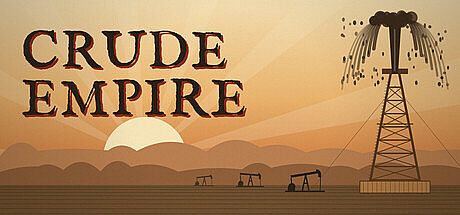


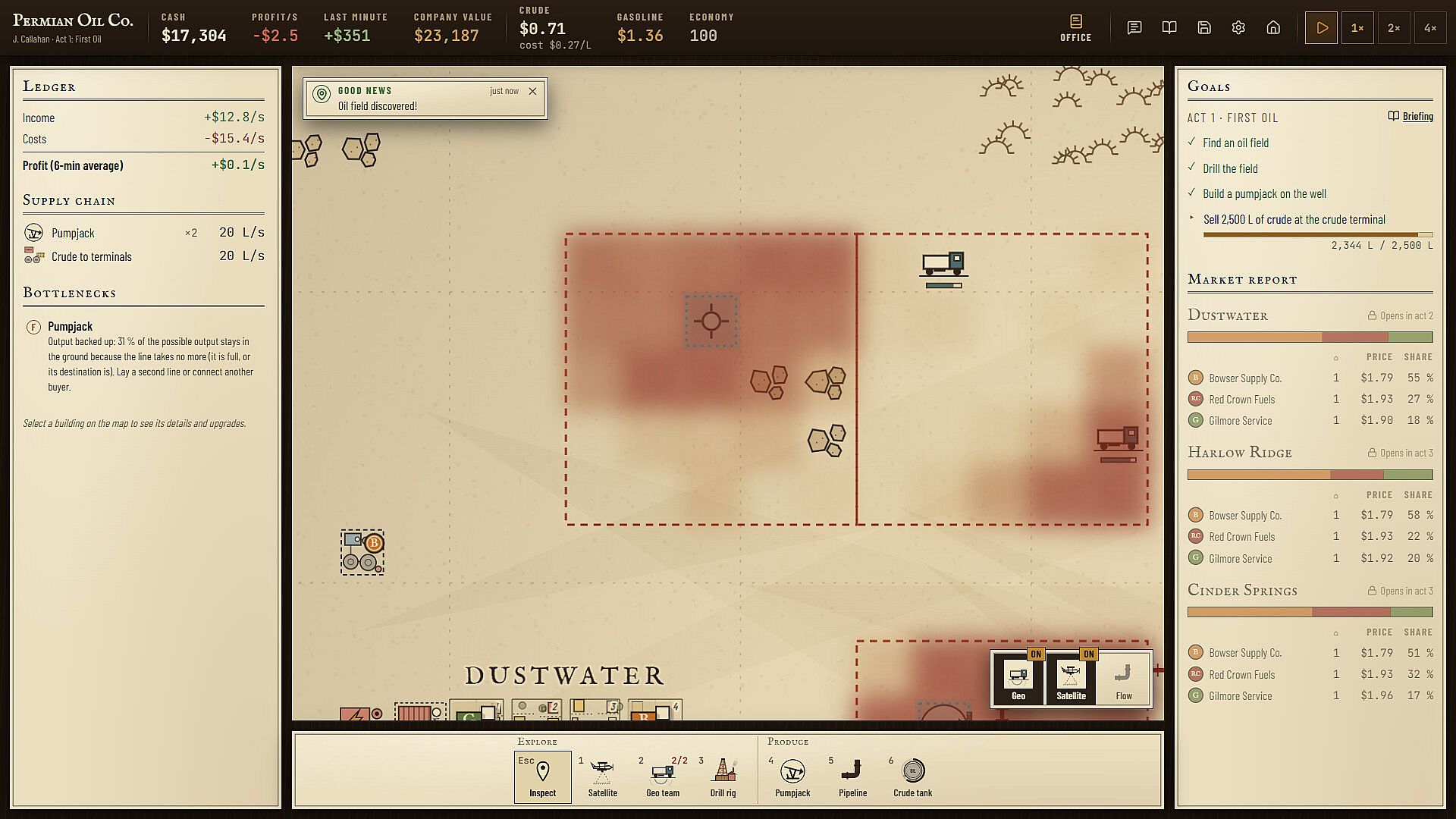
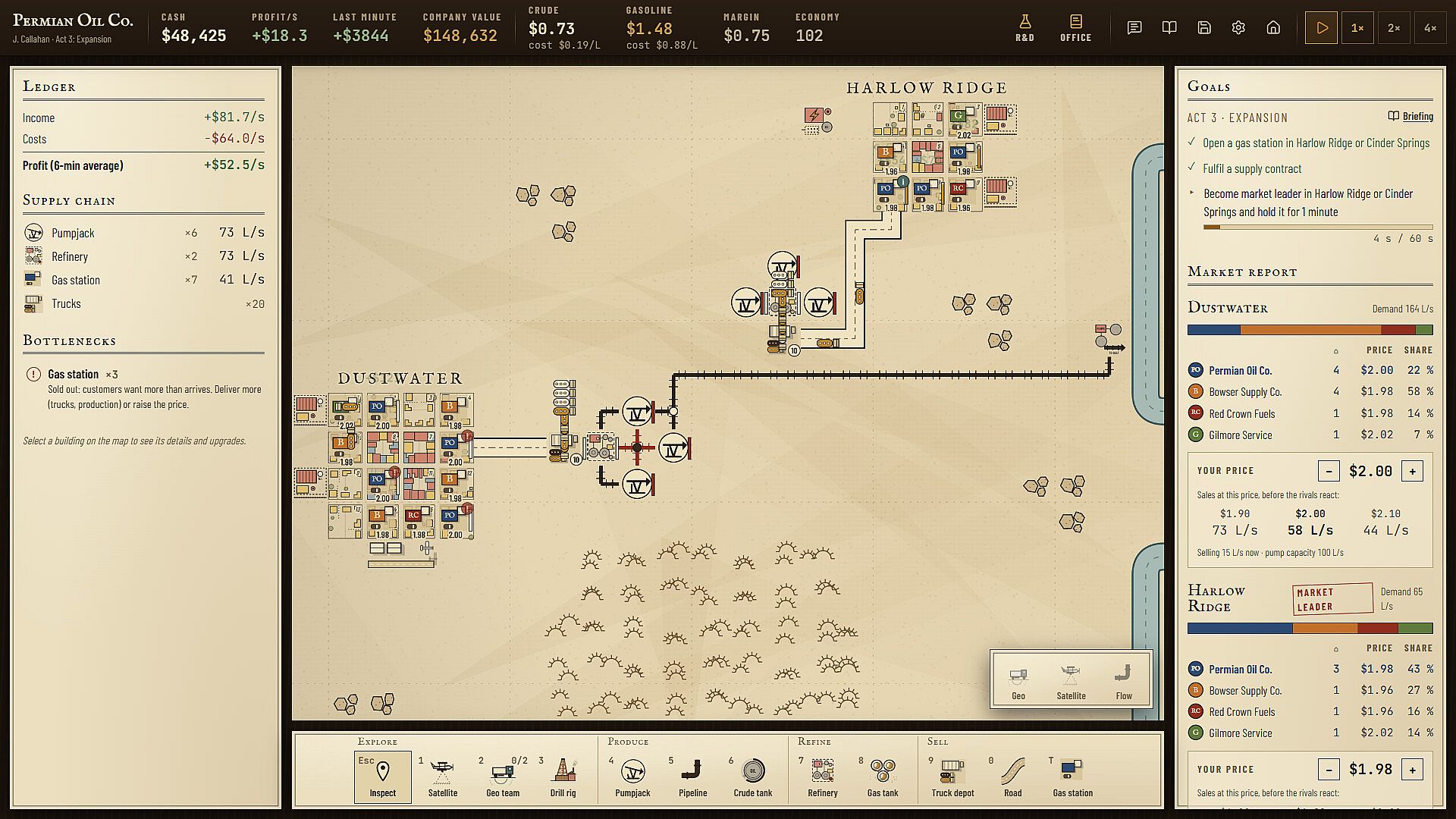

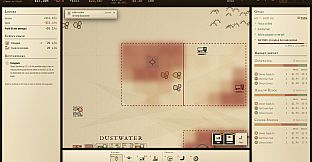
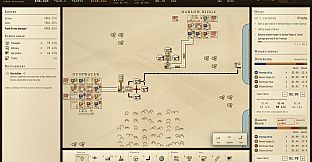
Crude Empire is a single-player strategy and simulation game set during the Texas oil boom in West Texas. Players build and manage a complete oil supply chain from exploration in the Permian Basin to selling gasoline at their own stations while competing against rival companies for fields and customers.
Gameplay
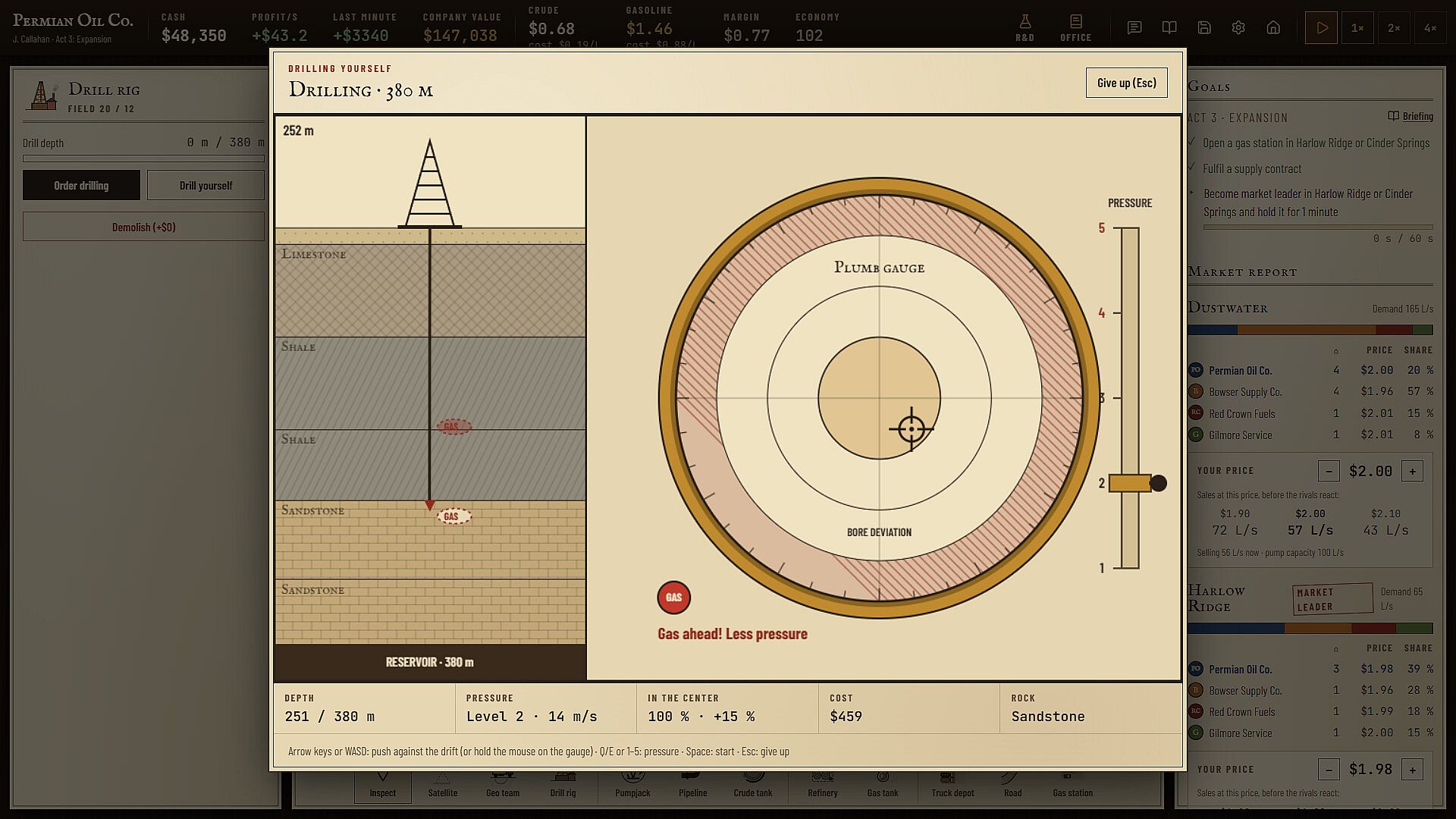
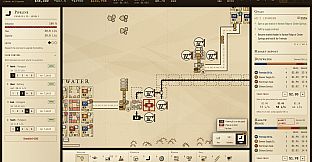
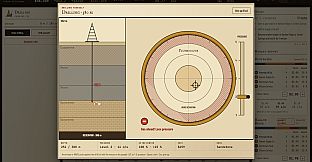
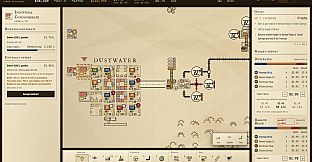
The core loop centers on managing every stage of oil production and distribution. Players begin with a limited budget and a survey map, then use aerial scans and geology teams to locate oil fields. Drilling requires manual precision on a plumb gauge and gas lamp indicator to maximize output, though the option exists to delegate to a crew. Once oil flows, the focus shifts to constructing pumpjacks, pipelines, tanks, refineries, truck depots, roads, and gas stations. Terrain features like rivers and hills increase costs for routes, so careful planning prevents expensive detours.
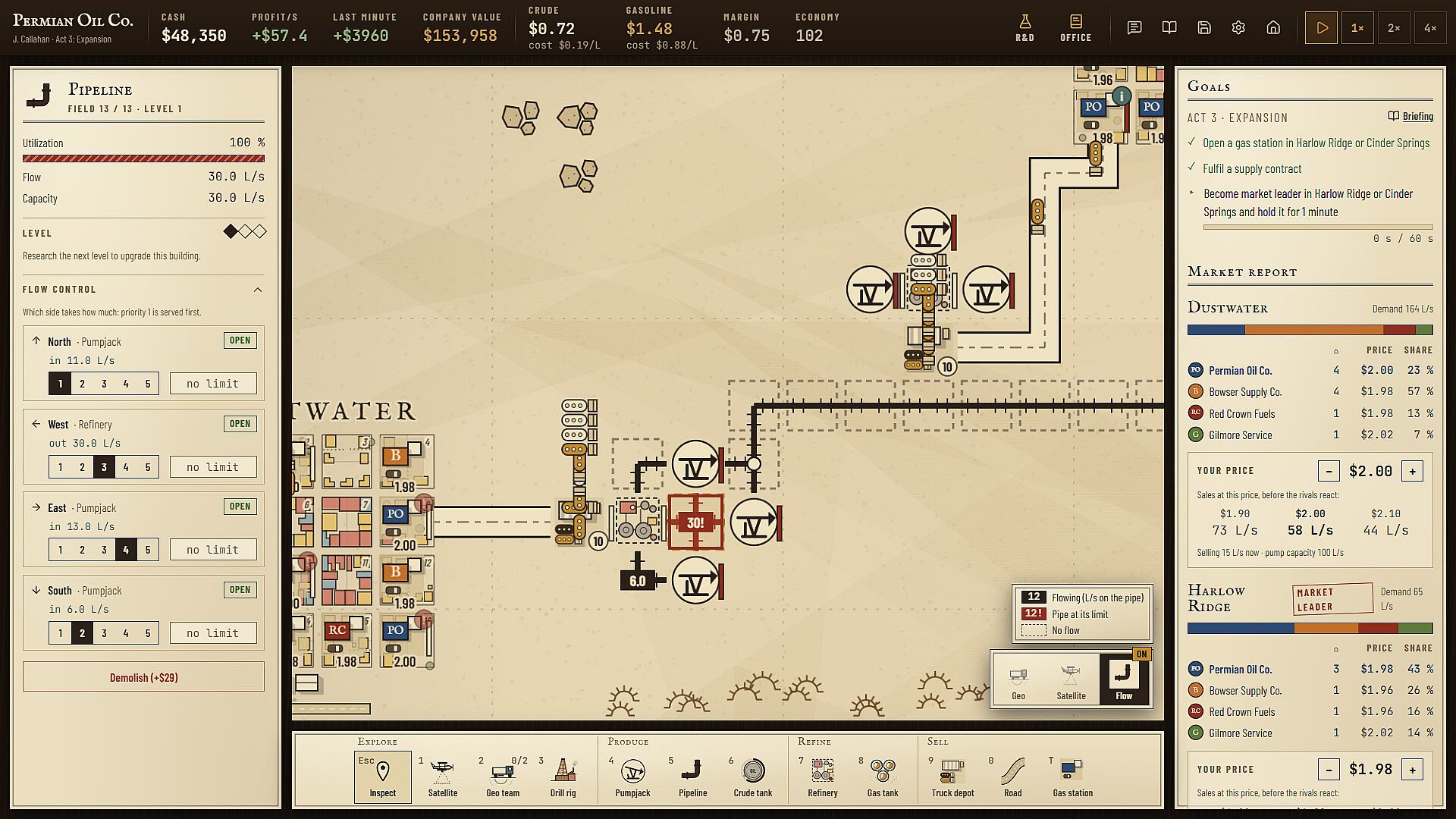
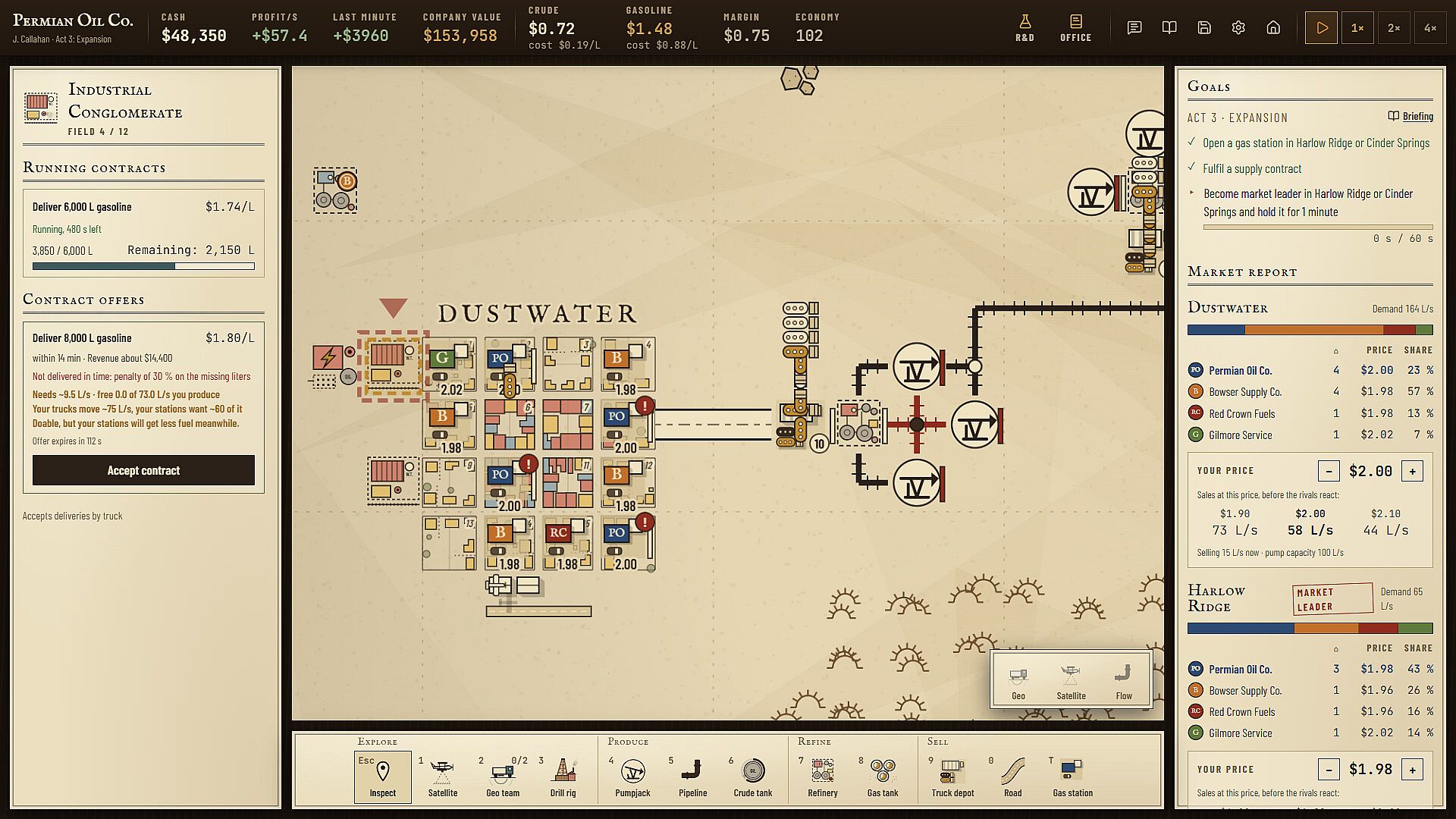
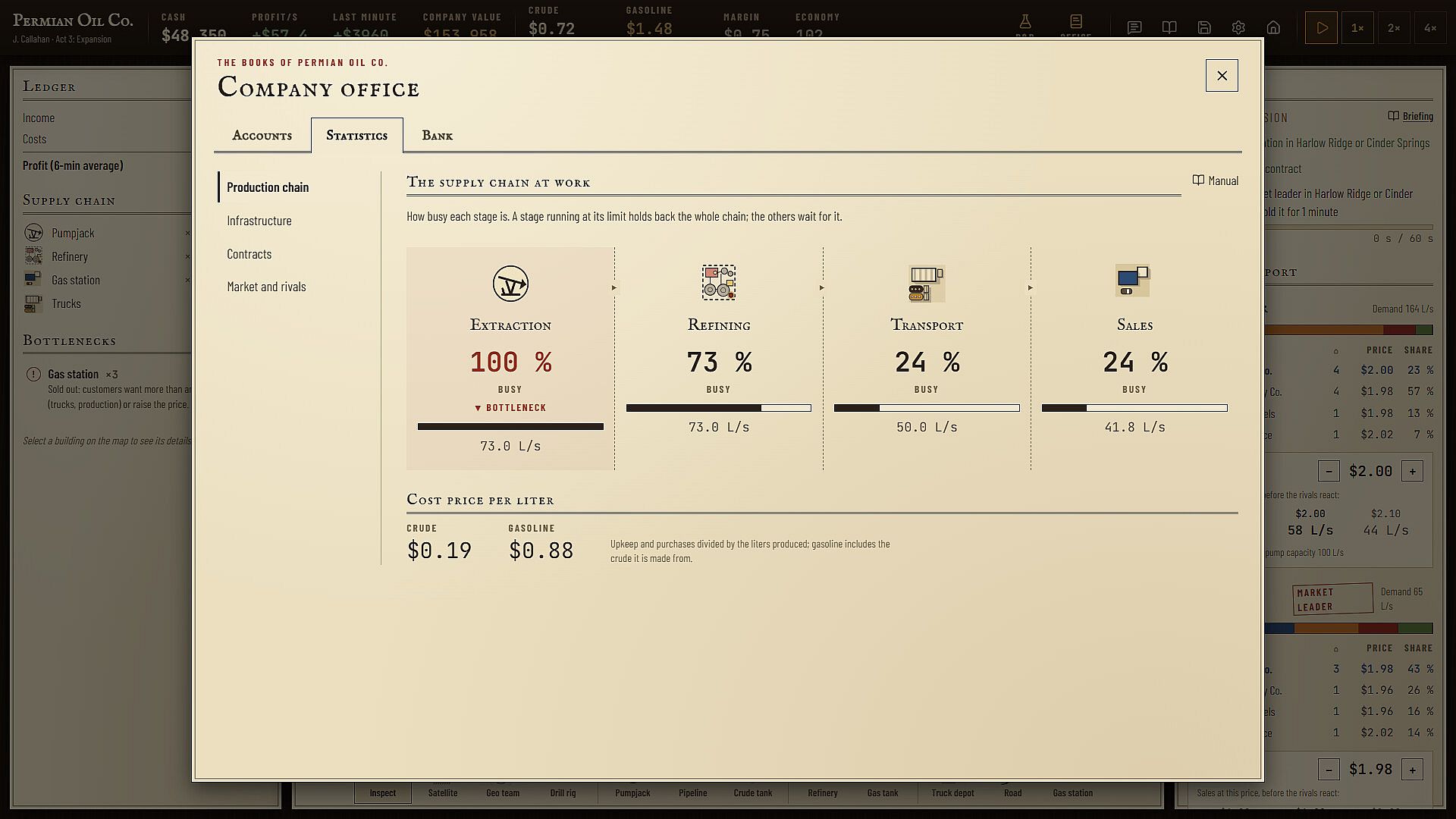
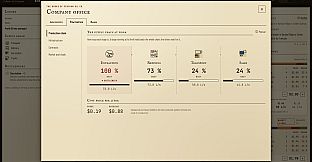
Supply chain management demands constant attention because bottlenecks appear at any link. Pipelines transport crude while trucks move gasoline over player-built roads. Insufficient trucks cause queues at depots and empty pumps. A dedicated flow view displays throughput at every junction, allowing players to set priorities and limits. The office interface tracks progress stage by stage, identifies the current constraint, and suggests fixes. Financial tracking shows revenue sources and expenses in detail.
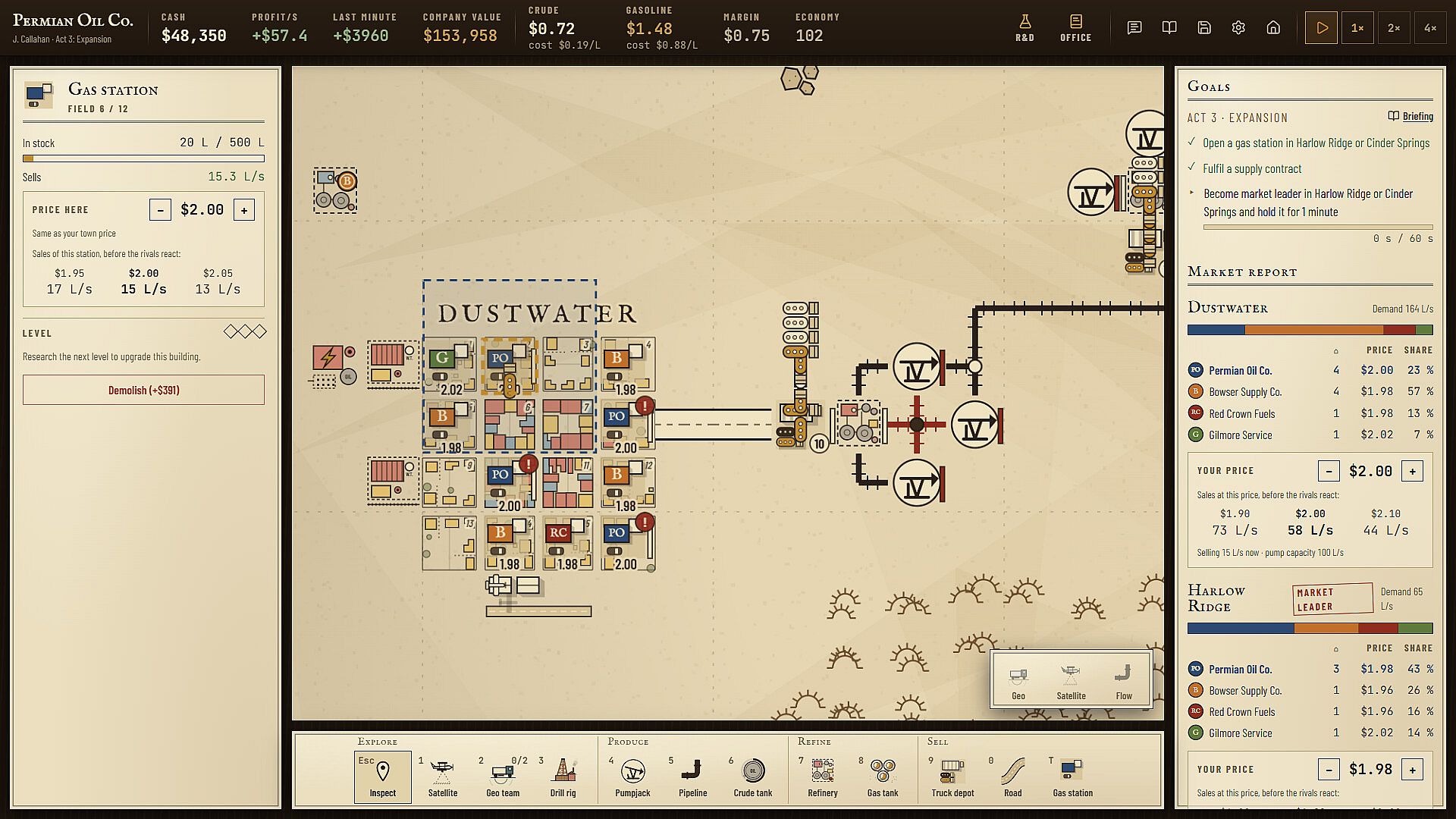
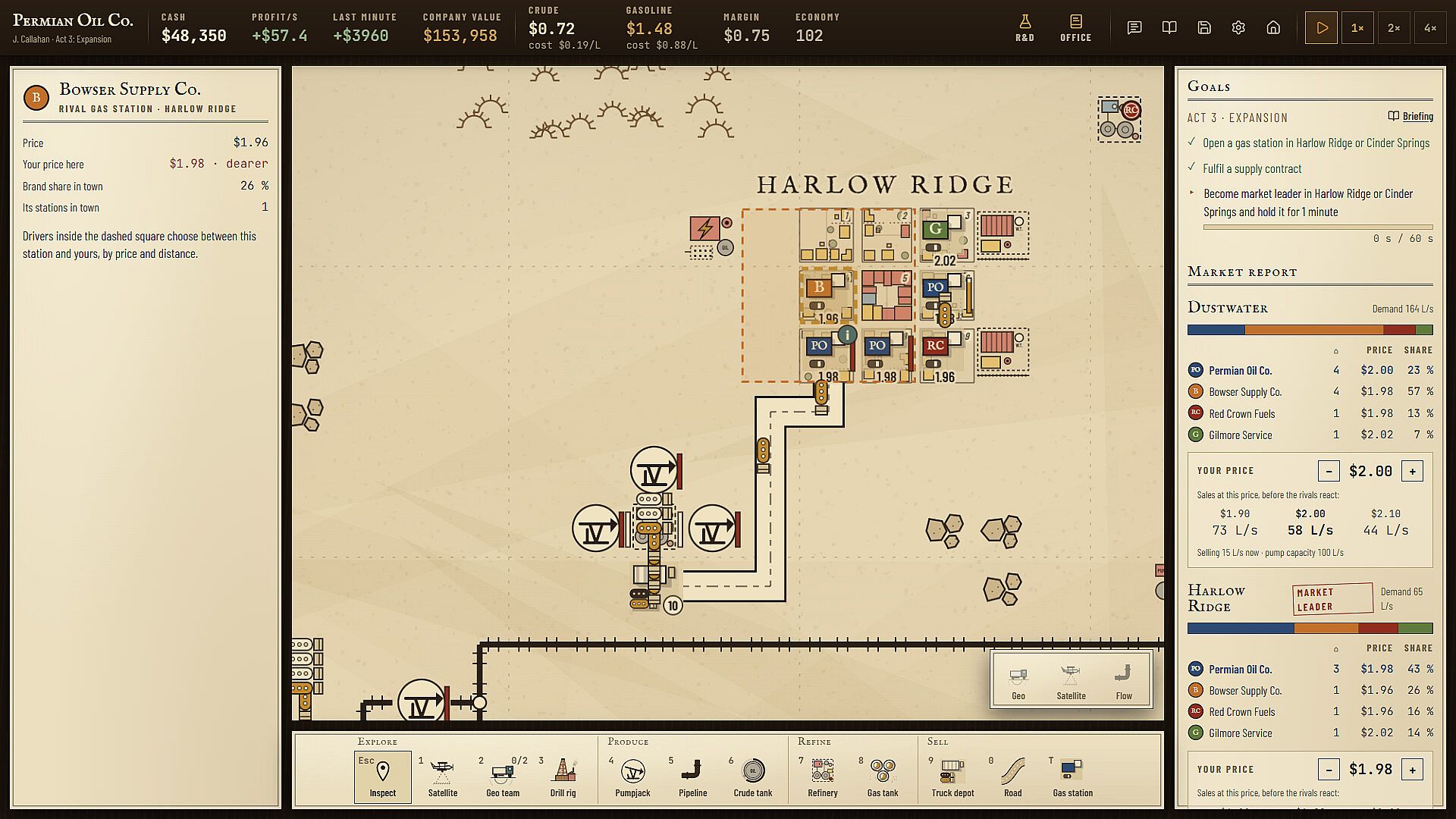
Market dynamics add pressure. Players set prices per town or individual station, with forecasts predicting sales volume before rivals respond. Large contracts with power plants, industry, and airports require checking production capacity and transport availability to avoid penalties. Crude and gasoline prices fluctuate, refining margins shift, and random events such as leaks, strikes, or price wars demand quick adjustments. Drilling rights come through auctions, and neighbors sharing a reservoir reward faster pumping. Sabotage options against competitors exist alongside defensive measures. Financing tools include loans, bonds, stock trading, and price hedging. Research unlocks upgrades for buildings and trucks.
Game Modes
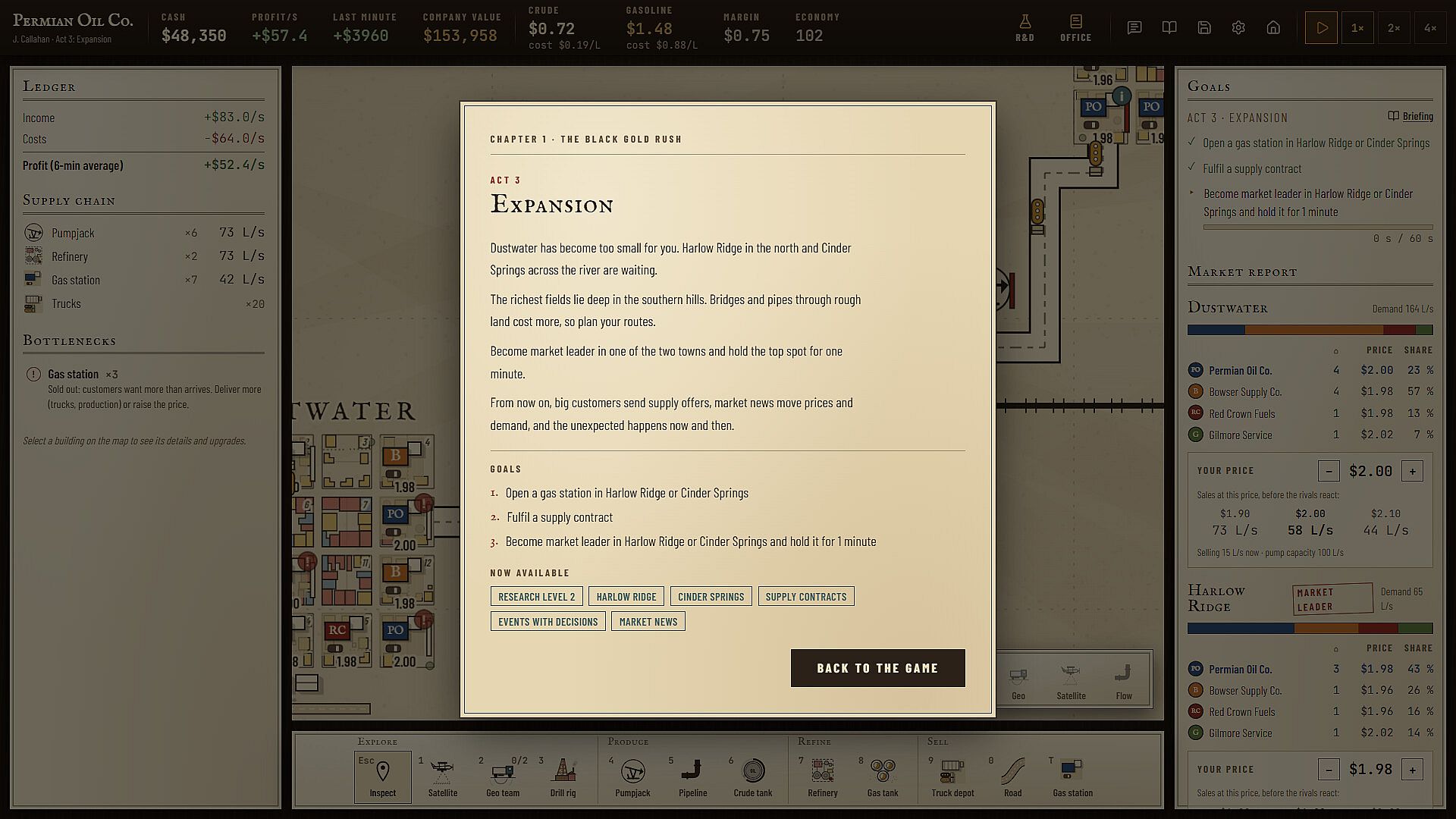
The game offers a single-player campaign. Players start as an employee of an established oil company and progress through successive regions by meeting board targets. Each completed region grants larger maps, increased budgets, and access to new oil areas beyond the Permian Basin. A narrative unfolds through letters and telegrams that connect the regional challenges into a larger story of corporate advancement.
No multiplayer modes are present. The experience remains focused on solo management of the full supply chain, competition with AI rivals, and steady expansion from field operations to boardroom decisions.
Supply Chain and Market Challenges
Every element of the chain can limit overall performance, forcing players to balance exploration, extraction, refinement, and retail simultaneously. Rivals mirror the player's actions by exploring, drilling, and building their own infrastructure while reacting to price changes. Auction bidding for fields introduces direct competition, and shared reservoirs create a race to extract more oil. Contract fulfillment adds another layer of planning because late deliveries incur penalties that affect cash flow and reputation.
Price setting requires reading sales forecasts and anticipating rival reactions. One price across a town simplifies management, while station-specific pricing allows finer control at the cost of extra oversight. Market news and price swings create opportunities and risks that reward timely hedging or rapid expansion. The system encourages iterative adjustments rather than one-time setups.
Is It Worth Playing?
Crude Empire targets players who enjoy detailed resource management and supply chain optimization in a single-player format. The campaign structure provides clear progression through increasing scale and complexity, with the narrative elements adding context to regional goals. Mechanics such as manual drilling precision, bottleneck identification, and contract evaluation reward careful planning and ongoing monitoring. Because the game remains in development with a planned 2027 release, no player reviews or ratings exist yet. Those drawn to simulation titles centered on building infrastructure, managing logistics, and navigating economic variables will find the described systems align closely with that preference. The absence of multiplayer keeps the focus entirely on personal empire building against AI opposition.












