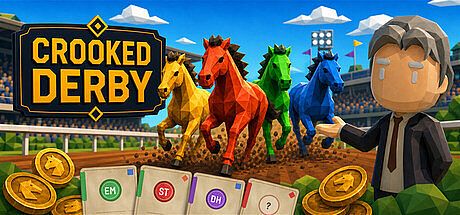


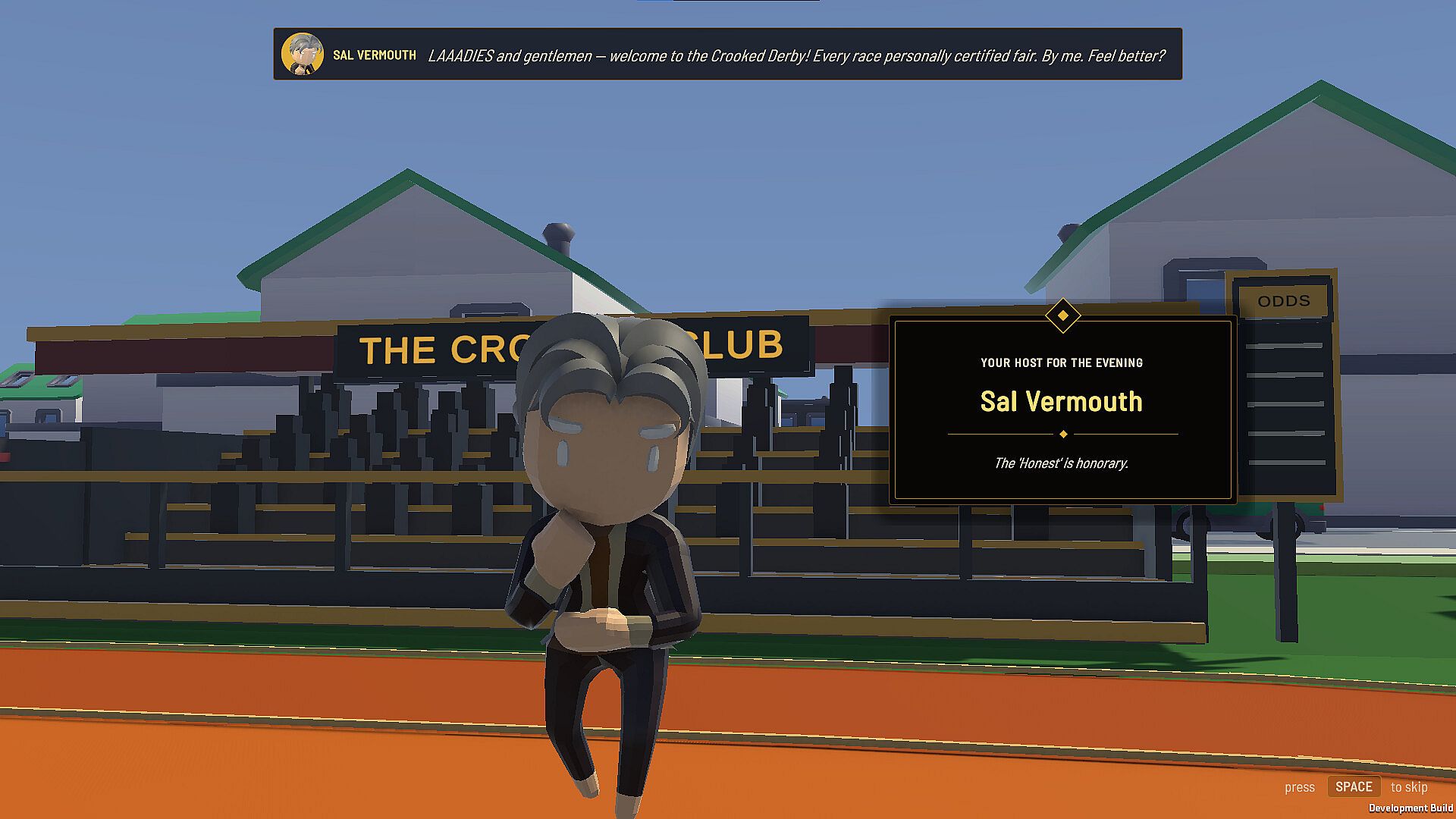
Crooked Derby es un juego de estrategia por turnos que combina faroles, deducción y manipulación de carreras mediante cartas en una experiencia compacta de tablero digital. Los jugadores adoptan el papel de apostadores poco honestos en lugar de jinetes, eligiendo en secreto a cuál de los seis caballos respaldar mientras gestionan apuestas visibles y elaboran relatos públicos para despistar a los rivales. Los géneros estrategia, indie y casual encajan con su mecánica accesible pero profunda, que premia la observación cuidadosa y los riesgos oportunos en lugar del control directo de los caballos.
Gameplay
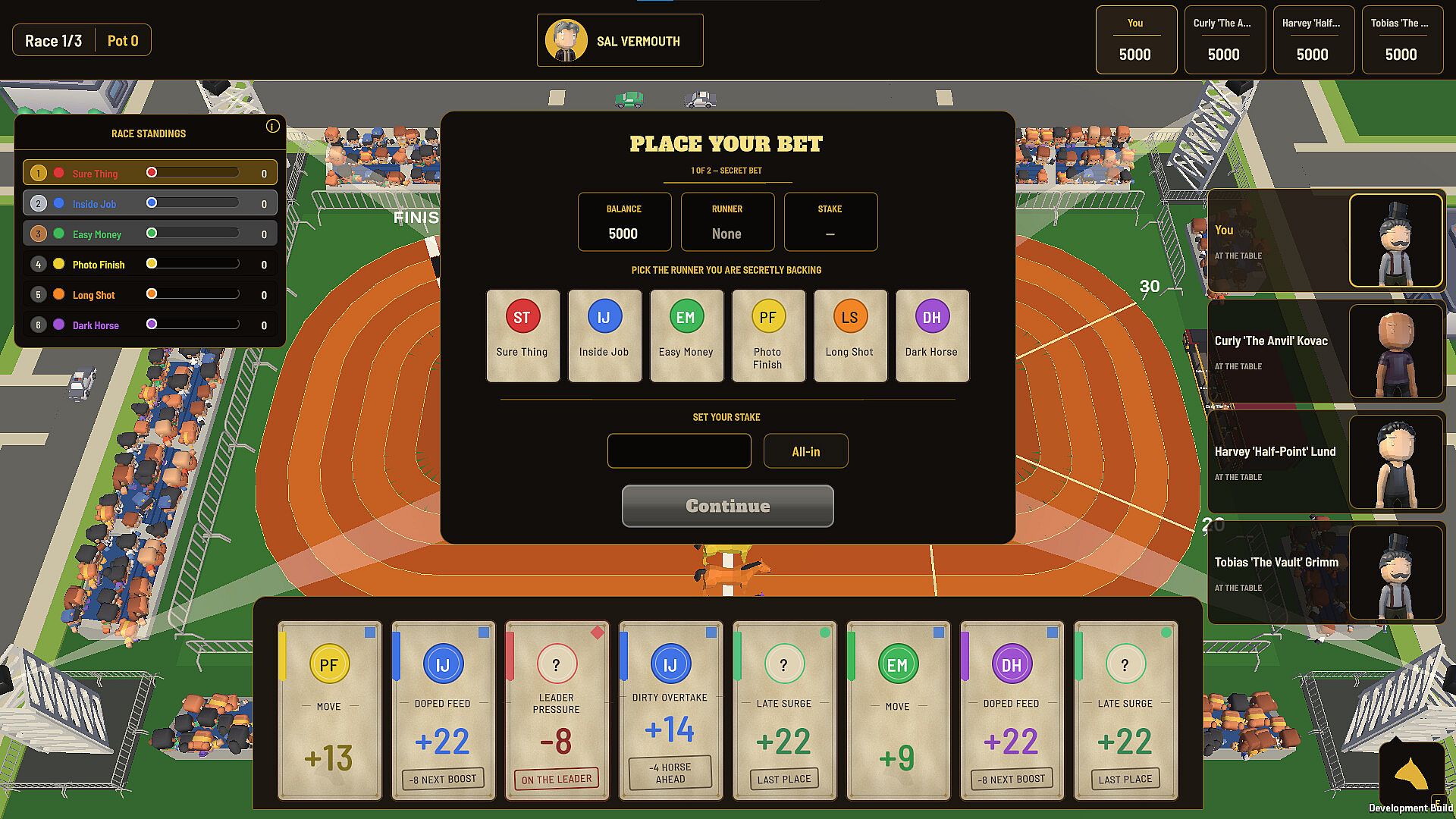
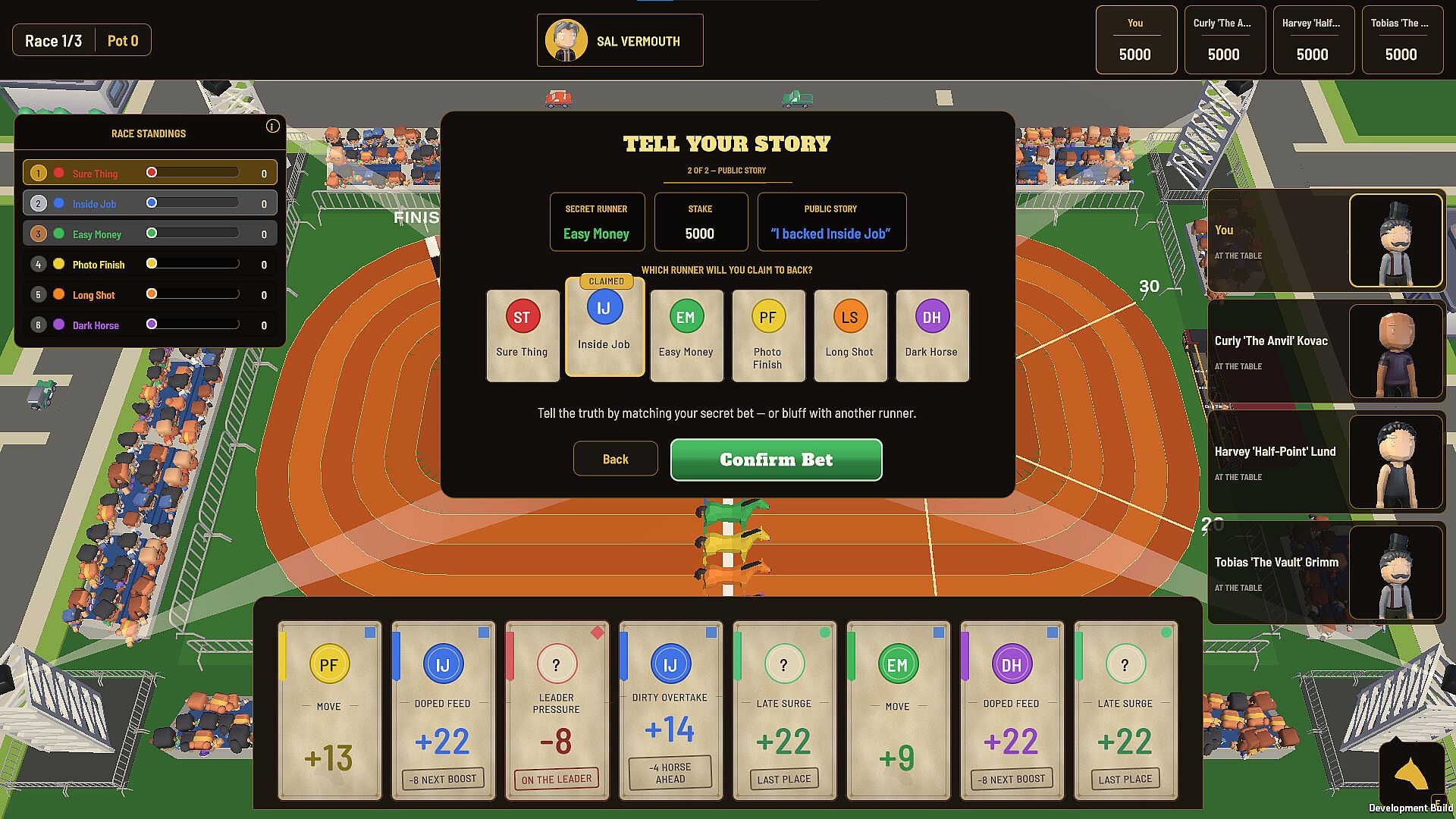
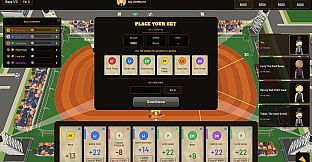
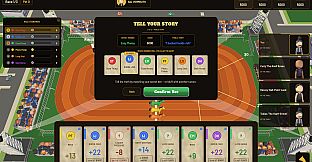
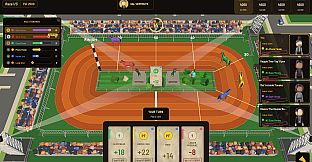
El ciclo principal comienza antes de cada carrera con una apuesta secreta a un caballo y una cantidad extraída de un fondo compartido. Todos ven el tamaño de las apuestas, pero el caballo elegido permanece oculto hasta el final. Cada apostador anuncia entonces una Historia Pública, nombrando un caballo que afirma apoyar, que puede coincidir con la realidad o servir como distracción deliberada.
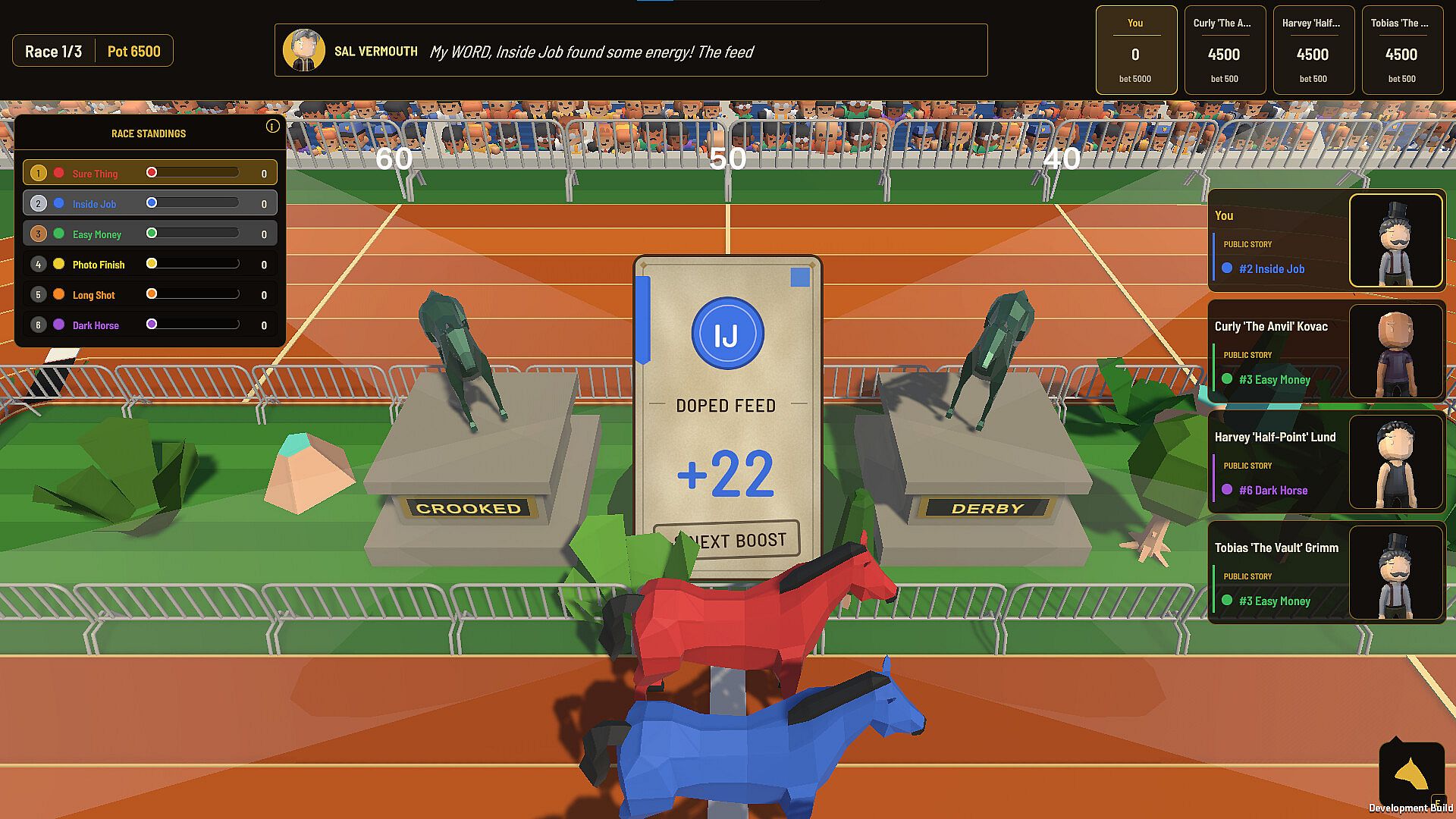
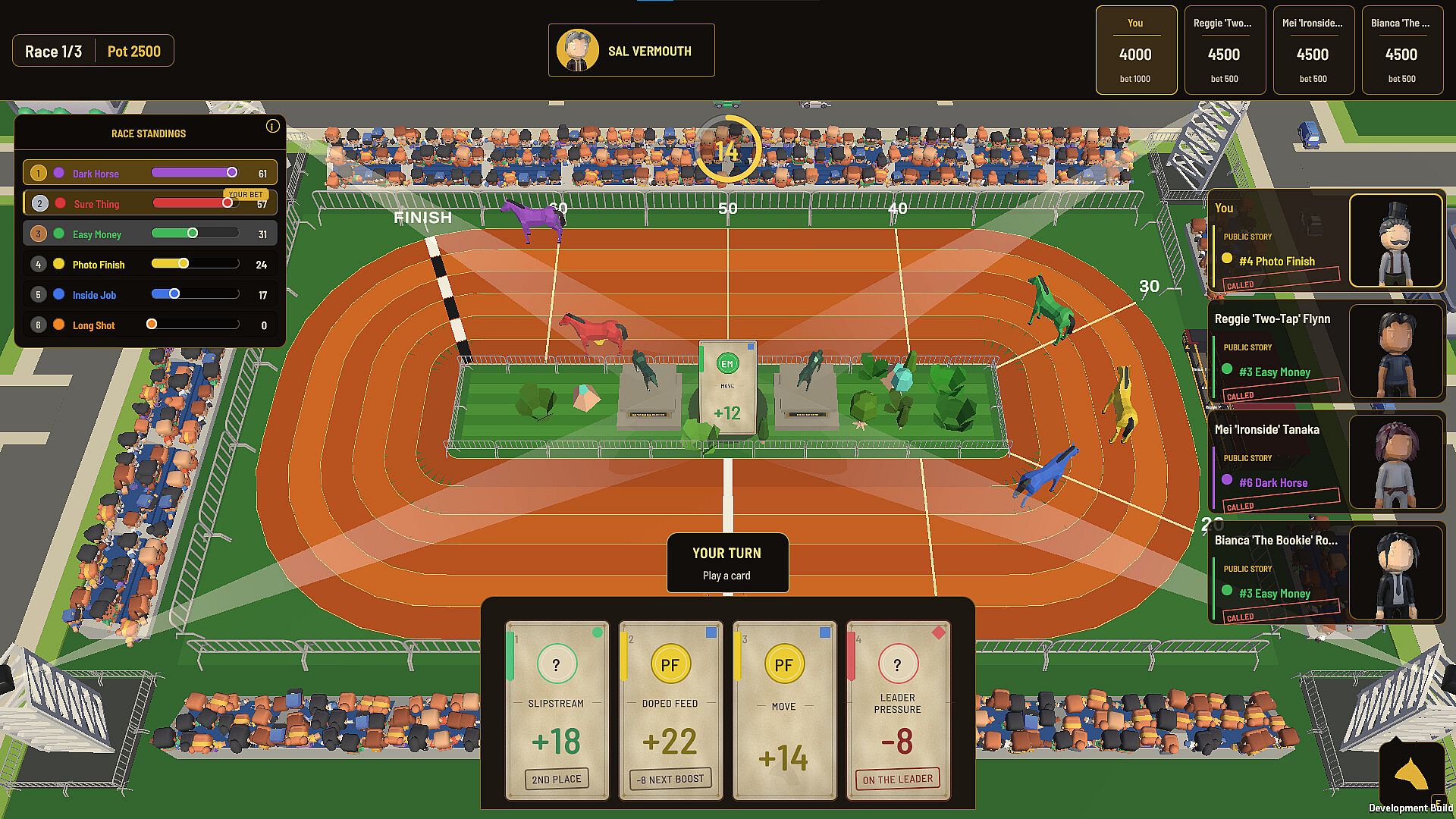
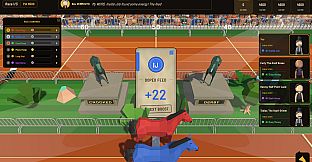
Durante la fase de carrera, las cartas se juegan abiertamente para influir en los seis caballos. Las acciones permiten avanzar a un caballo concreto, frenar al líder actual, impulsar a un contendiente rezagado o preparar posiciones futuras. Como la mano de un jugador suele contener cartas que no favorecen directamente su apuesta secreta, cada movimiento visible ofrece pistas sobre su posición real. Los oponentes observan estas jugadas y las comparan con las historias anunciadas para confirmar o refutar sospechas.
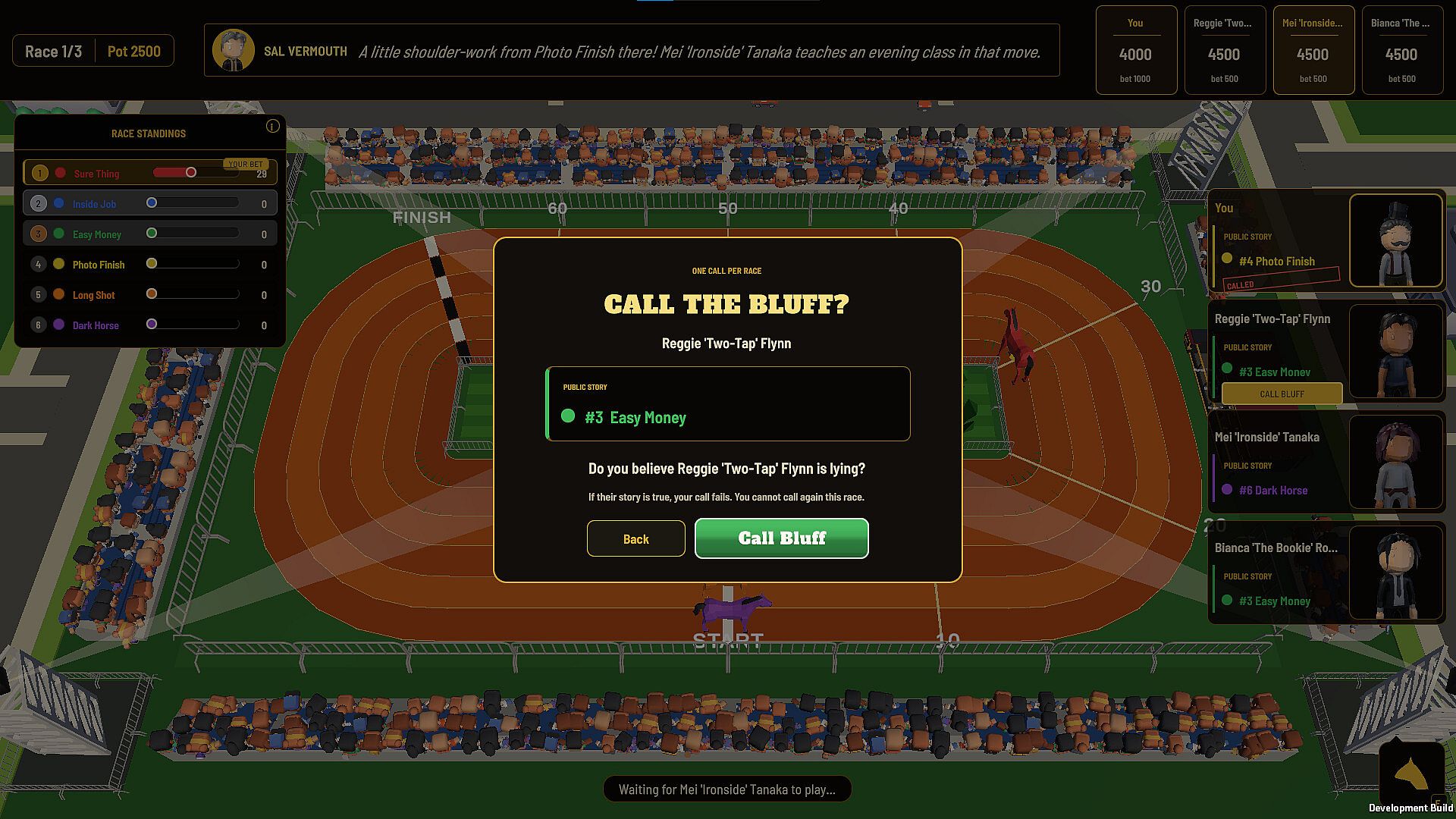
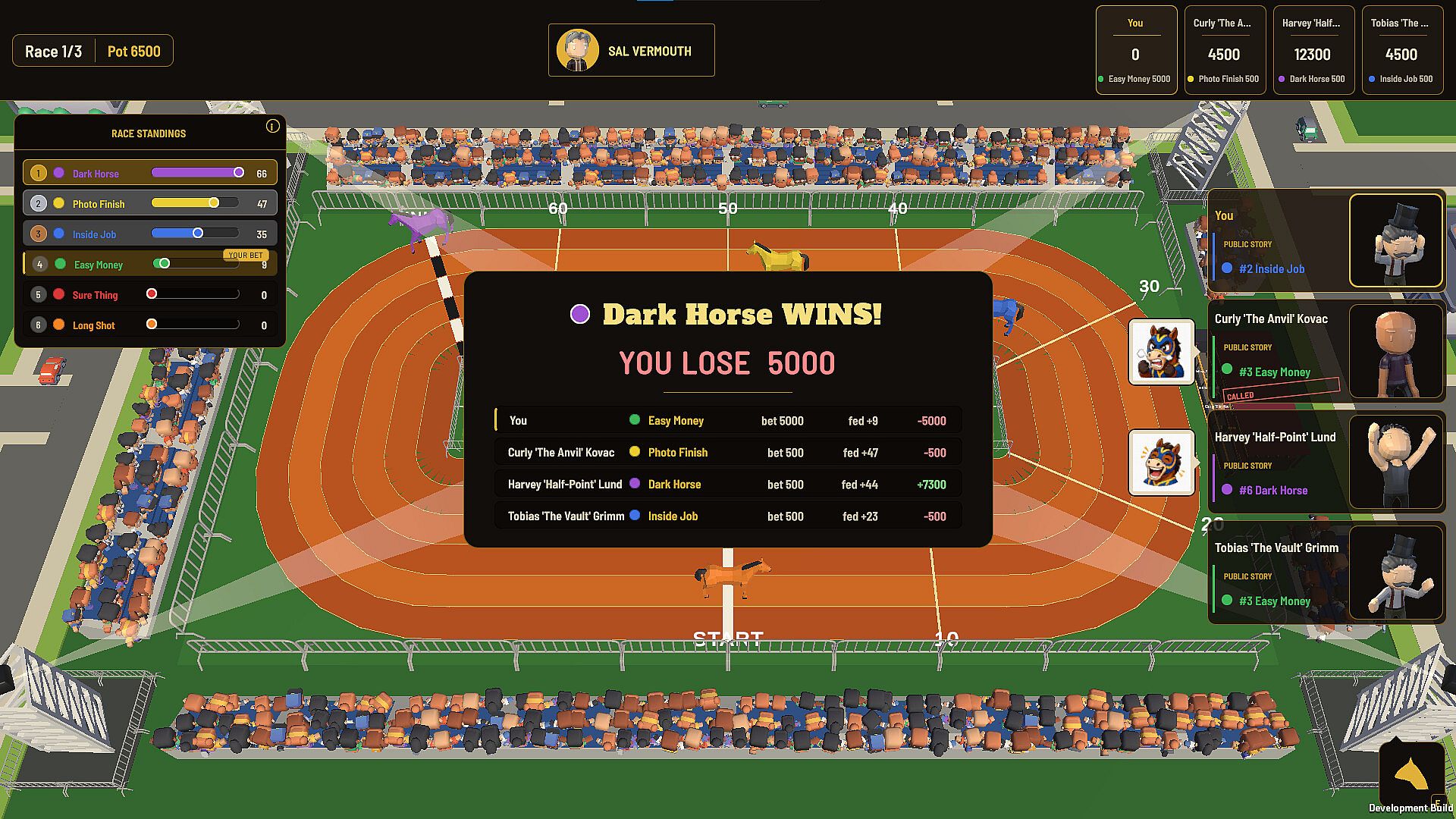
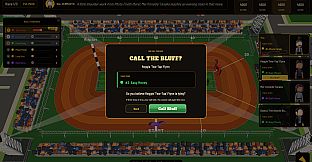
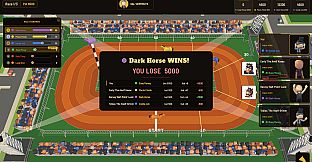
En cualquier momento antes de la meta, un jugador puede intentar Descubrir el Farol de otro participante. Si acierta, revela la mentira y modifica el reparto de la bolsa; si falla, beneficia al apostador honesto. Cuando un caballo cruza la línea de llegada, se revelan todas las apuestas y relatos secretos, y se distribuye el bote. Varias carreras forman una partida, y gana quien acumula el mayor fondo total.
Modos de juego
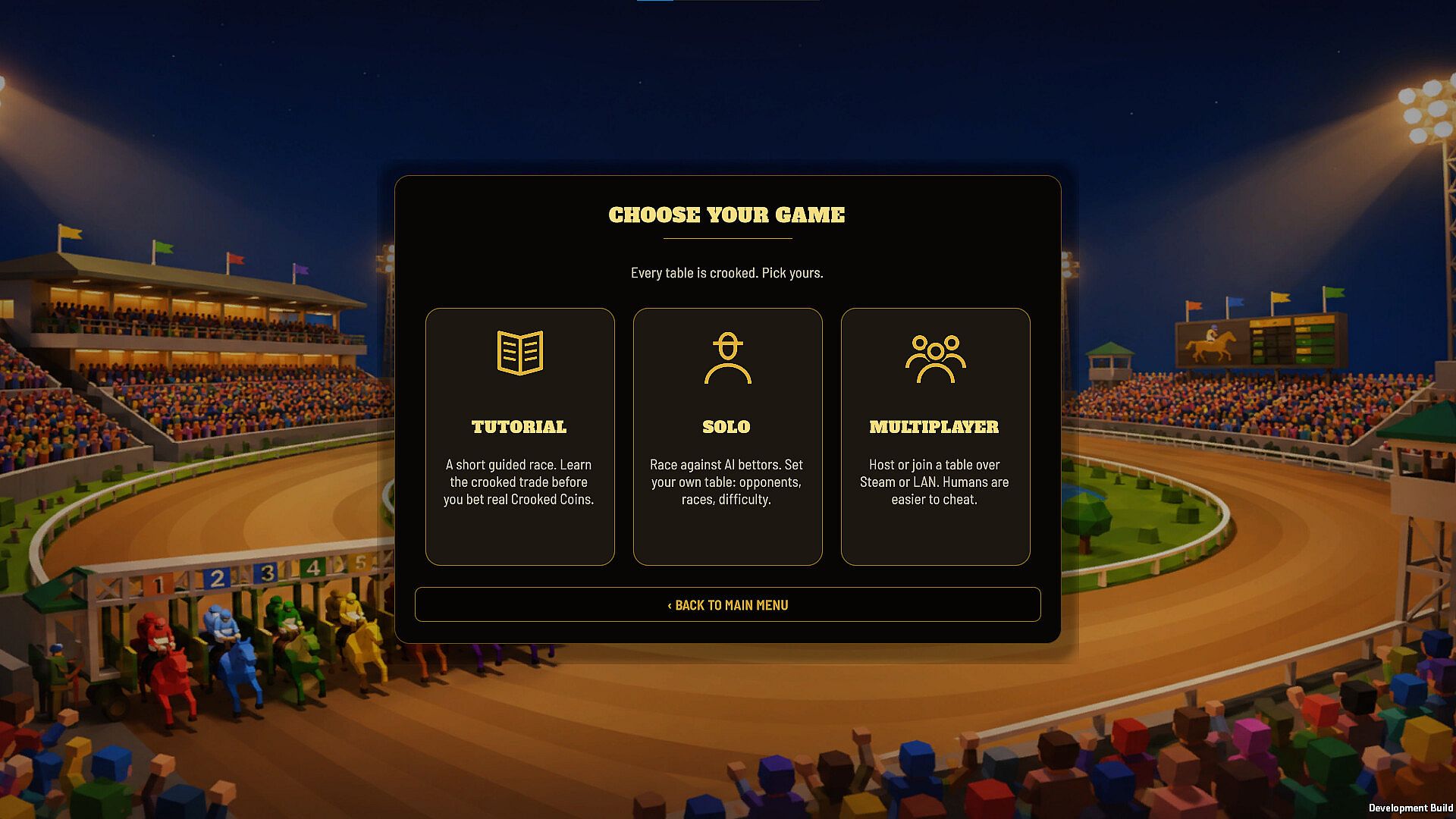
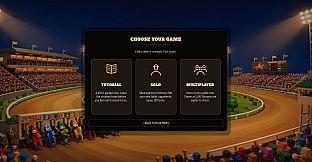
Las partidas admiten entre dos y seis jugadores. El modo individual enfrenta a un humano contra bots que siguen las mismas reglas de apuestas, relatos y juego de cartas. Las opciones en línea incluyen mesas públicas abiertas a cualquiera y mesas privadas por invitación para grupos controlados. Cada sesión consta de una serie de carreras dentro de una misma partida, centrada en rondas repetidas de faroles y deducción en lugar de eventos aislados。
Mecánicas clave y presentación
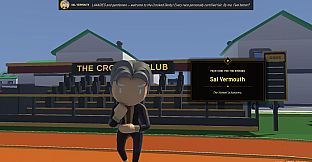
Todos los caballos parten en igualdad de condiciones, por lo que el resultado depende exclusivamente de las cartas jugadas en conjunto, sin ventajas preestablecidas. La visibilidad de las apuestas y los efectos de las cartas convierte cada manipulación en posible evidencia, generando tensión entre proteger la apuesta personal y mantener una coartada creíble. Un tablero tridimensional colorido muestra caballos animados, modelos expresivos de los apostadores y revelaciones animadas al final de cada carrera.
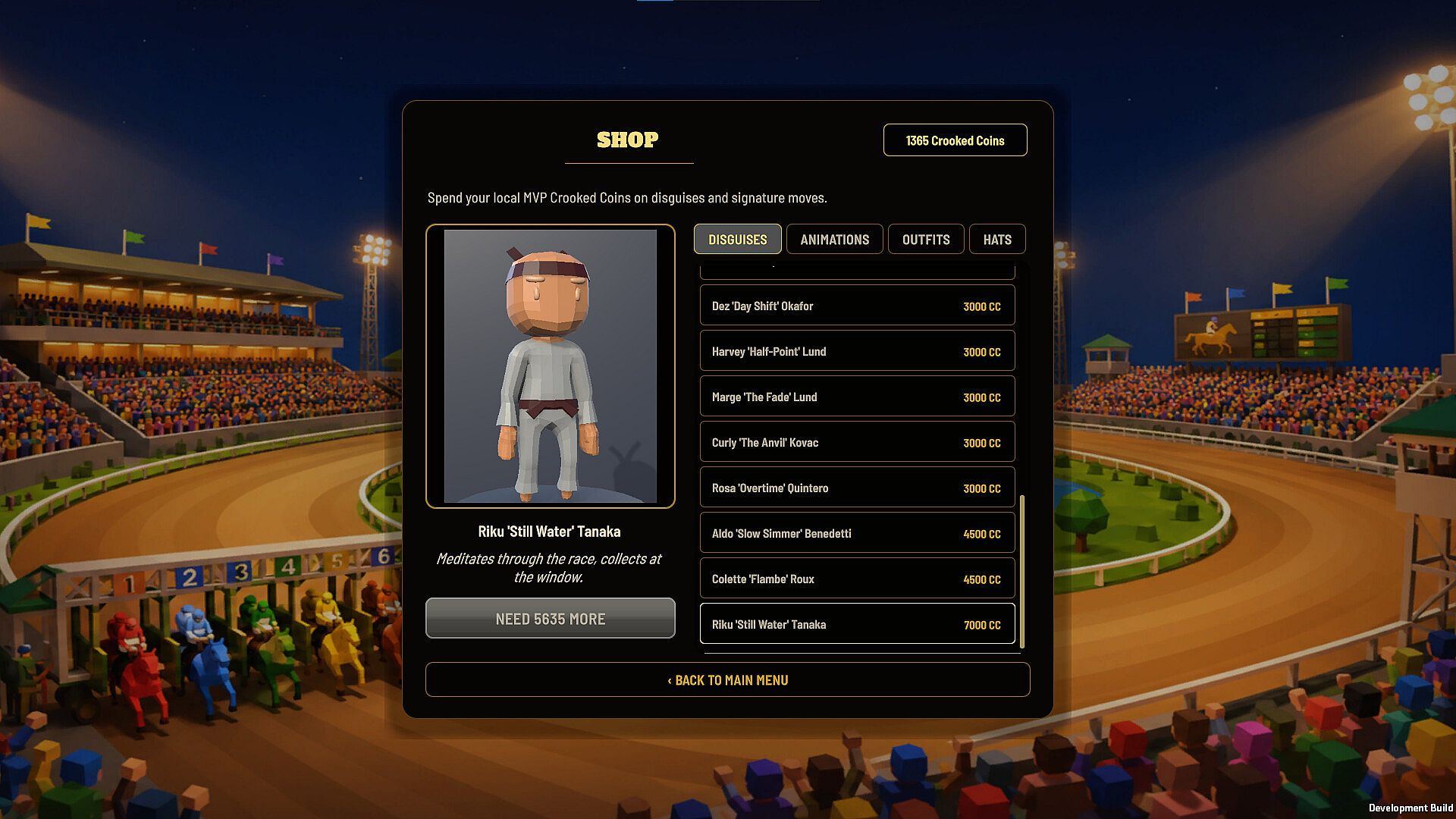
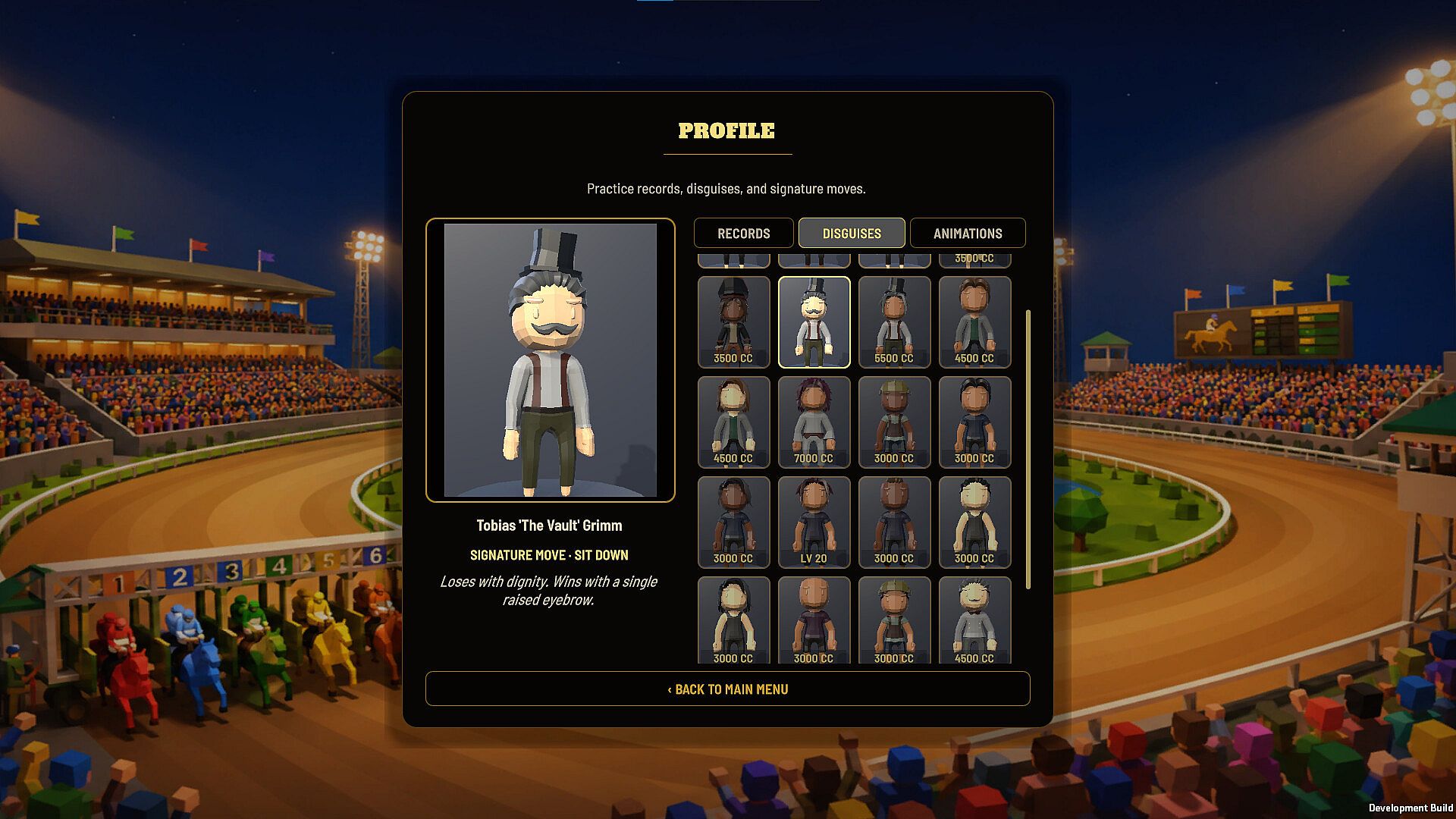
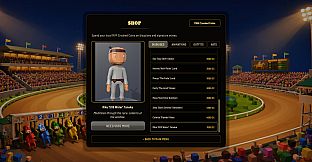
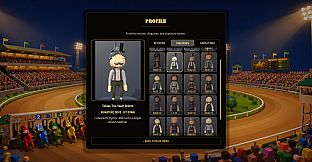
La progresión es únicamente cosmética: desbloquea elementos visuales y de perfil como disfraces, títulos, reversos de cartas y emotes mediante el juego repetido. Las partidas se mantienen breves y autocontenidas, centradas en secuencias cortas de carreras que ofrecen oportunidades constantes de engaño y giros sin campañas largas.
¿Merece la pena jugarlo?
Crooked Derby está dirigido a jugadores que disfrutan de juegos de mesa con fuerte componente deductivo y elementos de farol social en formato digital. Su combinación de información oculta, acciones visibles y desafíos directos recompensa la lectura atenta de los oponentes sin complicarse demasiado para sesiones casuales. Con soporte para partidas contra bots y mesas en línea de distintos tamaños, el juego se adapta a diferentes grupos y horarios. Al encontrarse aún en fase de prelanzamiento sin reseñas de jugadores disponibles, su atractivo a largo plazo dependerá de cómo se mantenga la tensión entre apuestas secretas y jugadas visibles a lo largo de múltiples partidas. Quienes busquen títulos de estrategia centrados en el engaño y la conversación en mesa encontrarán en estos sistemas una propuesta muy cercana a sus preferencias.