

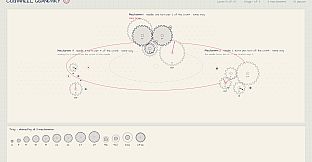
Cogwheel Quandary is an indie casual puzzle game for PC in which players arrange gears to transmit rotary motion from a fixed crank to a target needle at an exact rate. The core challenge rests on precise placement rules that emerge directly from gear sizes rather than any overlaid instructions or timers.
Gameplay
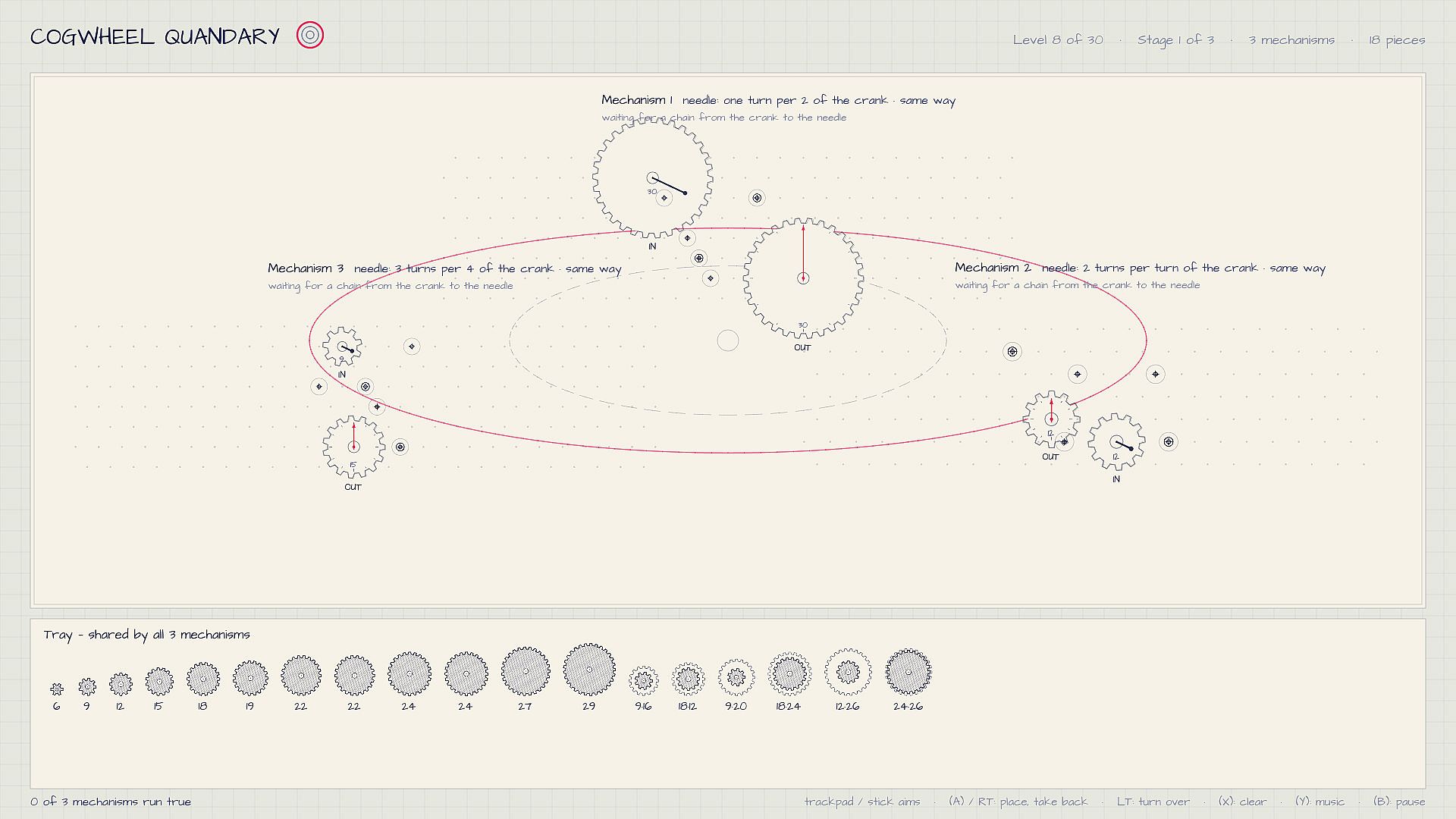
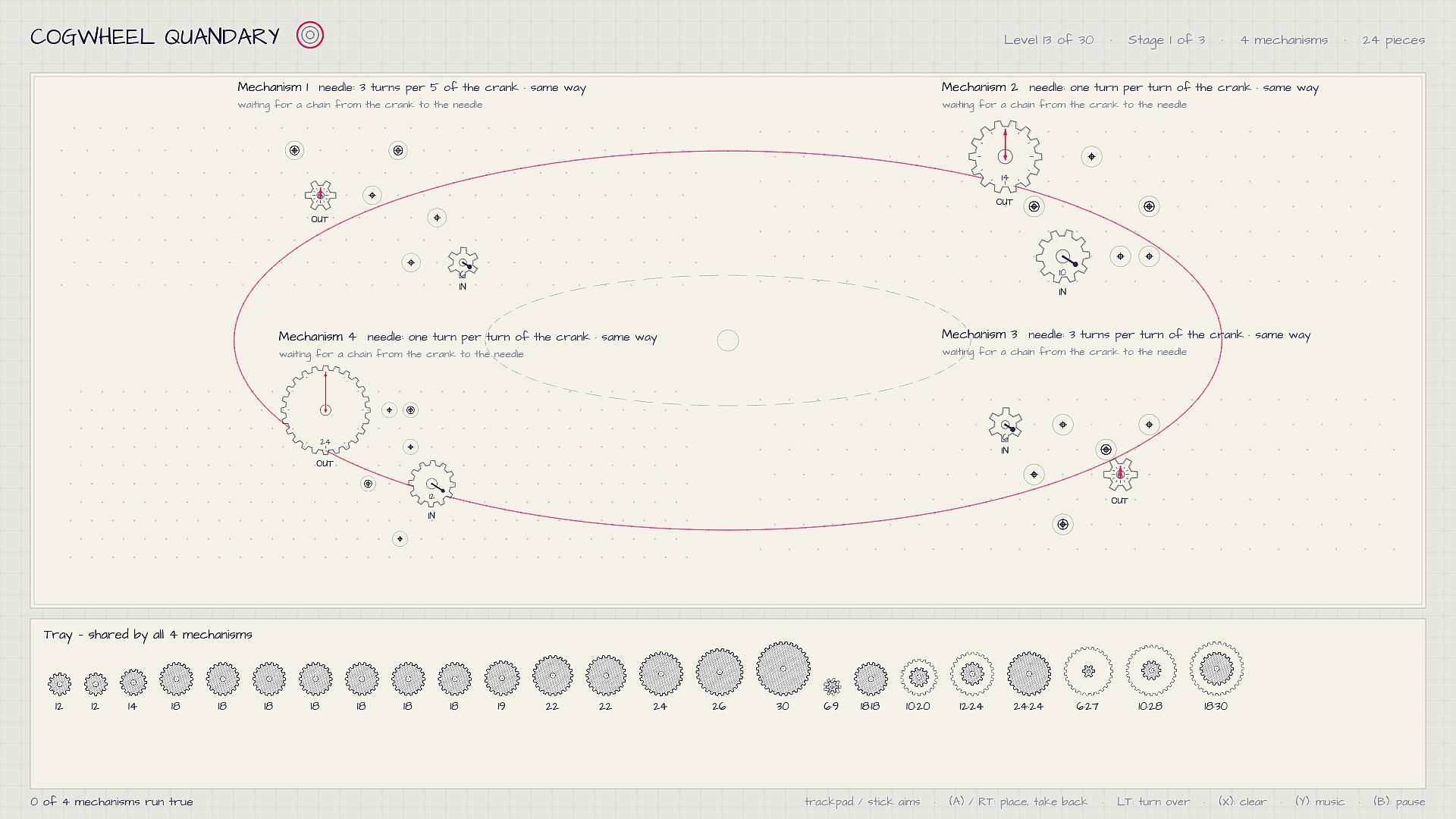
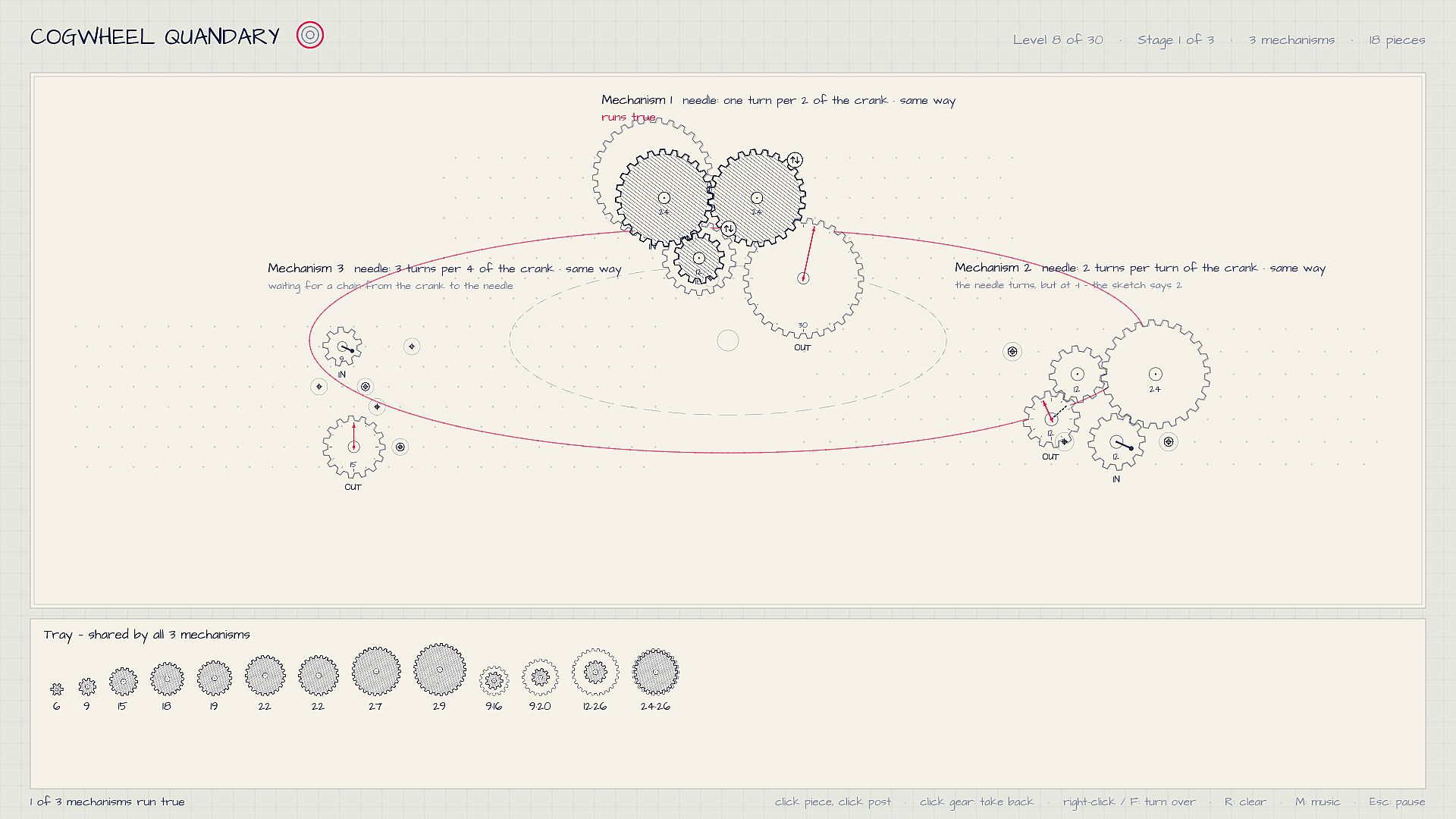
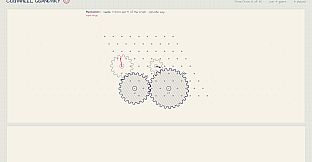
Every gear functions as a number. A twelve-tooth gear has a radius of twelve, and two gears mesh on the same plane only when their teeth sum exactly matches the distance between their posts. One extra tooth causes grinding while one fewer leaves them unconnected. Motion flows continuously from the crank, so any gear attached to a post rotates everything it touches. Players build chains that reach the needle and match the speed shown by a dashed ghost outline. A working chain that spins at the wrong rate fails the stage just as surely as a broken one.
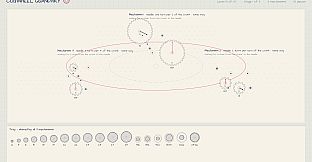
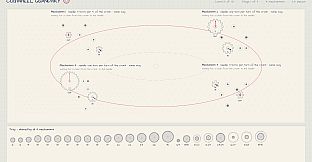
The shared gear tray adds another layer of constraint. Multiple mechanisms on a single sheet compete for the same limited set of physical pieces, forcing careful allocation across the three concentric rings. The outer ring holds smaller assemblies, the middle ring holds medium ones, and the center holds the largest. All of them draw from one common pool, so a gear used early cannot appear later on the same sheet.
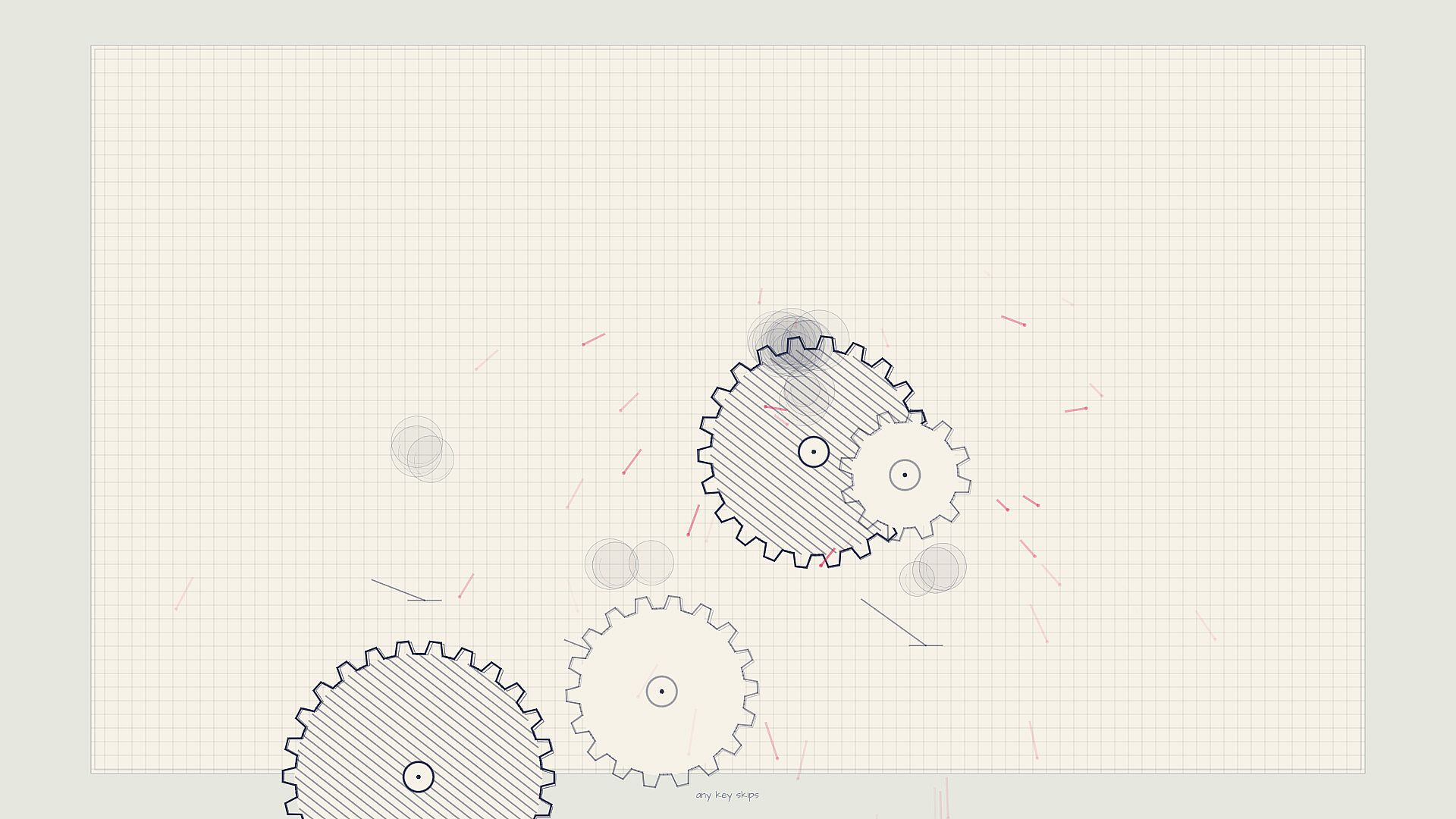
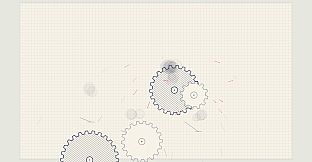
Visually the game renders every element as hand-lettered graphite on paper. No scanned textures or audio samples appear anywhere. The soundtrack itself is generated inside the engine by a virtual music box that responds to the clock and the turning mechanisms, producing a unique arrangement for each completed sheet.
Game Modes
The main campaign presents thirty fixed machines, each built around three rings. Players must connect the crank to the needle while satisfying the ghost target using the fewest gears possible in some cases and exact matches in others. The shared tray mechanic means decisions on one ring directly affect what remains available for the others.
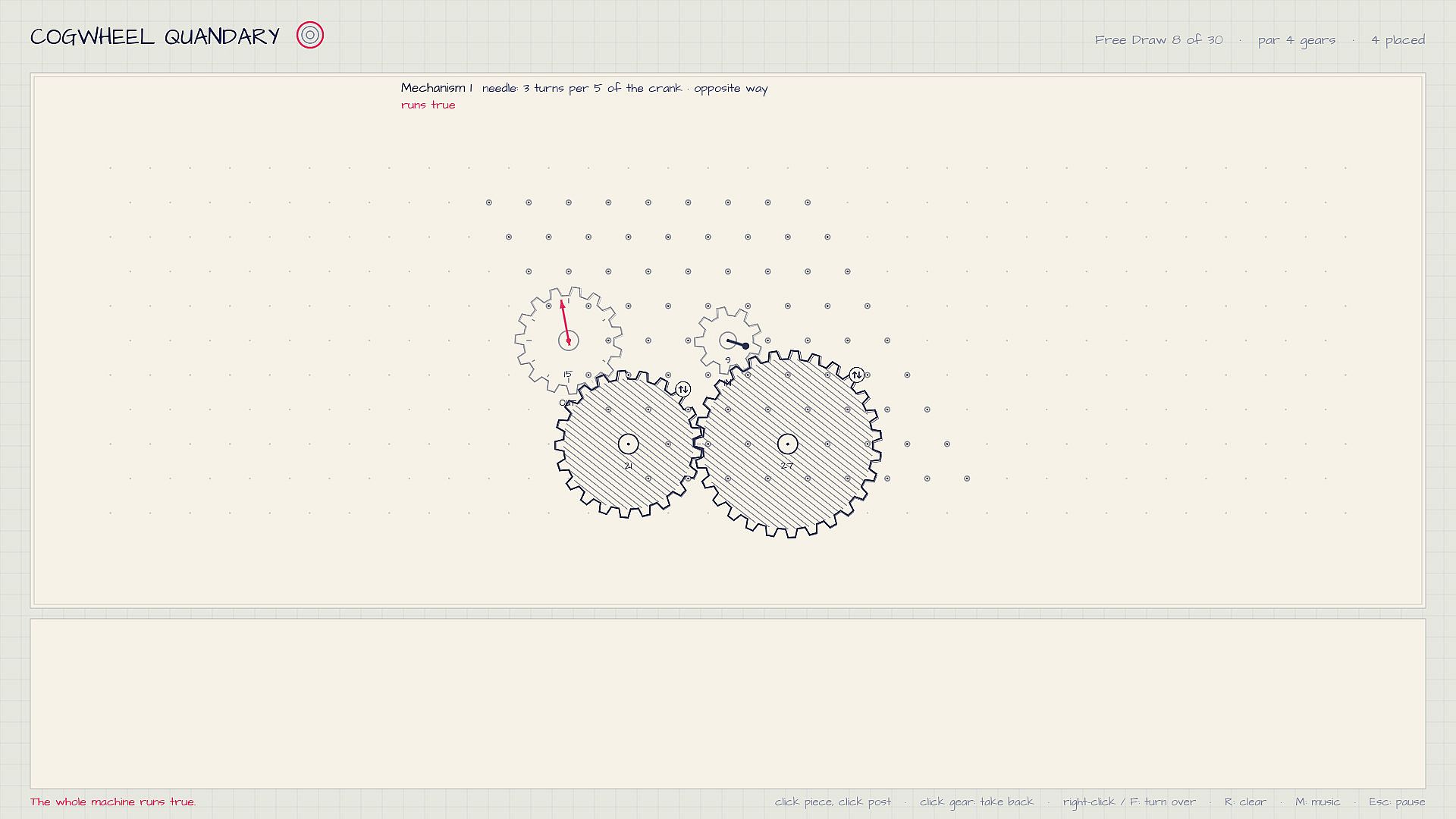
Free Draw supplies thirty additional blank sheets that contain only the crank, the needle, and the target rate. Here players may place any gear on any post in either of the two planes, including stacked pairs on a single post to create stepped ratios. The objective remains the same: reach the target speed with the smallest number of gears. This mode removes the pre-placed ring structure and lets players experiment with arbitrary layouts.
Visual and Audio Presentation
The entire experience stays within a consistent hand-drawn aesthetic. Lines appear as pencil strokes, numbers sit beside each gear in neat script, and the background suggests loose paper sheets. Sound follows the same principle: every tone and melody originates from the in-game music box simulation rather than pre-recorded files. The result is a quiet, focused atmosphere that matches the mechanical logic at the center of play.
Is It Worth Playing?
Cogwheel Quandary suits players who enjoy deliberate, rule-based puzzle solving without narrative distractions or time pressure. The gear meshing system rewards careful observation of ratios and spatial planning, while the shared tray and ring structure introduce resource management within each sheet. Free Draw extends the experience for those who prefer open-ended construction challenges over guided stages. An Amiga 1200 edition has been released alongside development of the PC version, confirming active support for the core concept. Anyone drawn to compact, self-contained logic puzzles with a distinctive handmade presentation will find a consistent and focused game here.