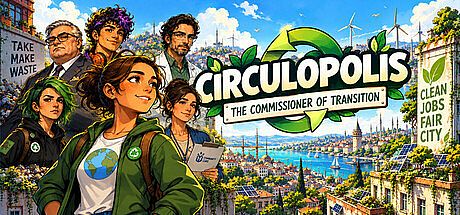


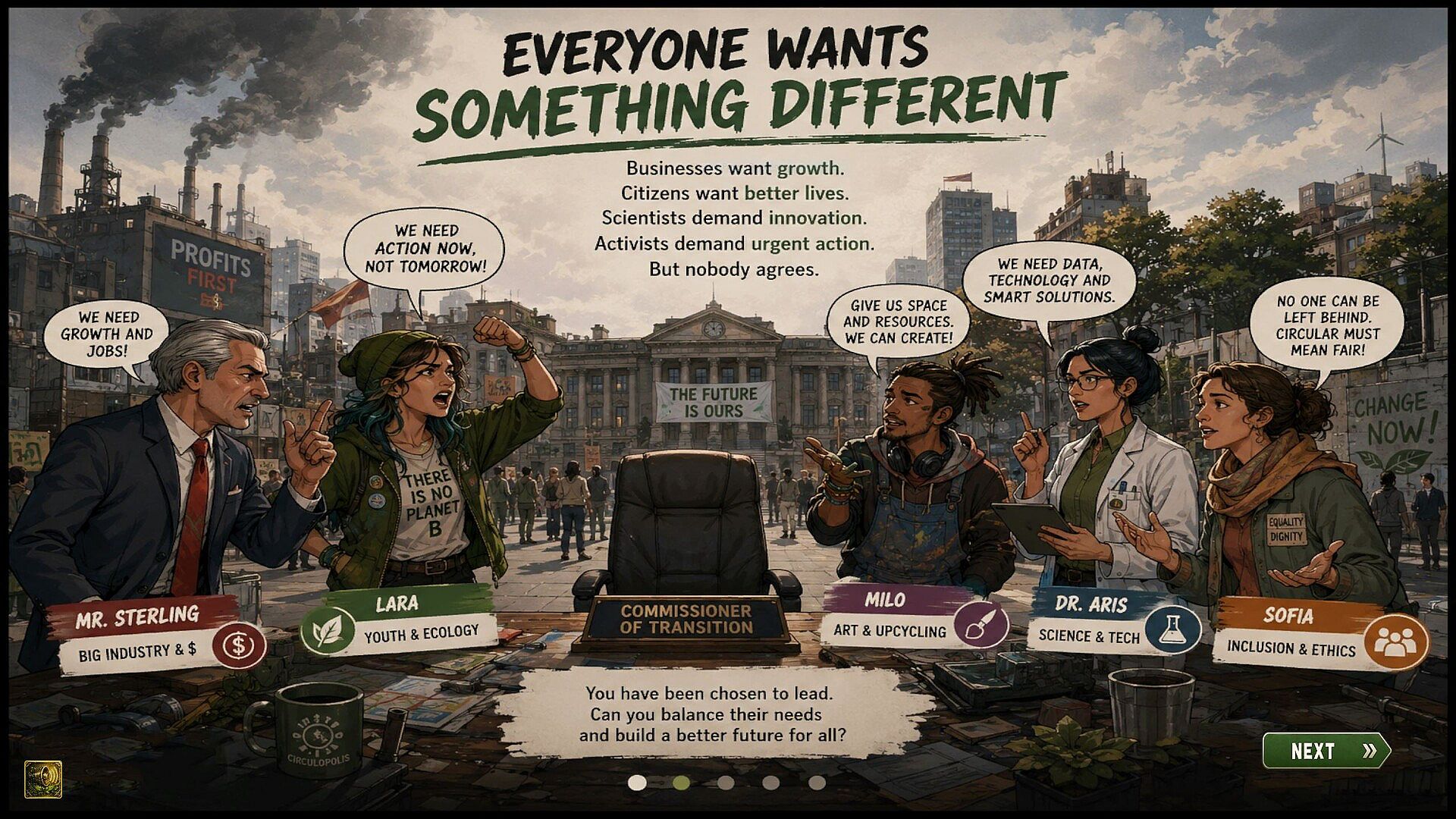



Circulopolis: The Commissioner of Transition is a free-to-play strategy and simulation game for PC that places players in charge of shifting a district from wasteful linear practices to a sustainable circular model. In this indie casual title, every choice shapes the balance between economic stability, environmental health, community fairness, and public support.
Gameplay
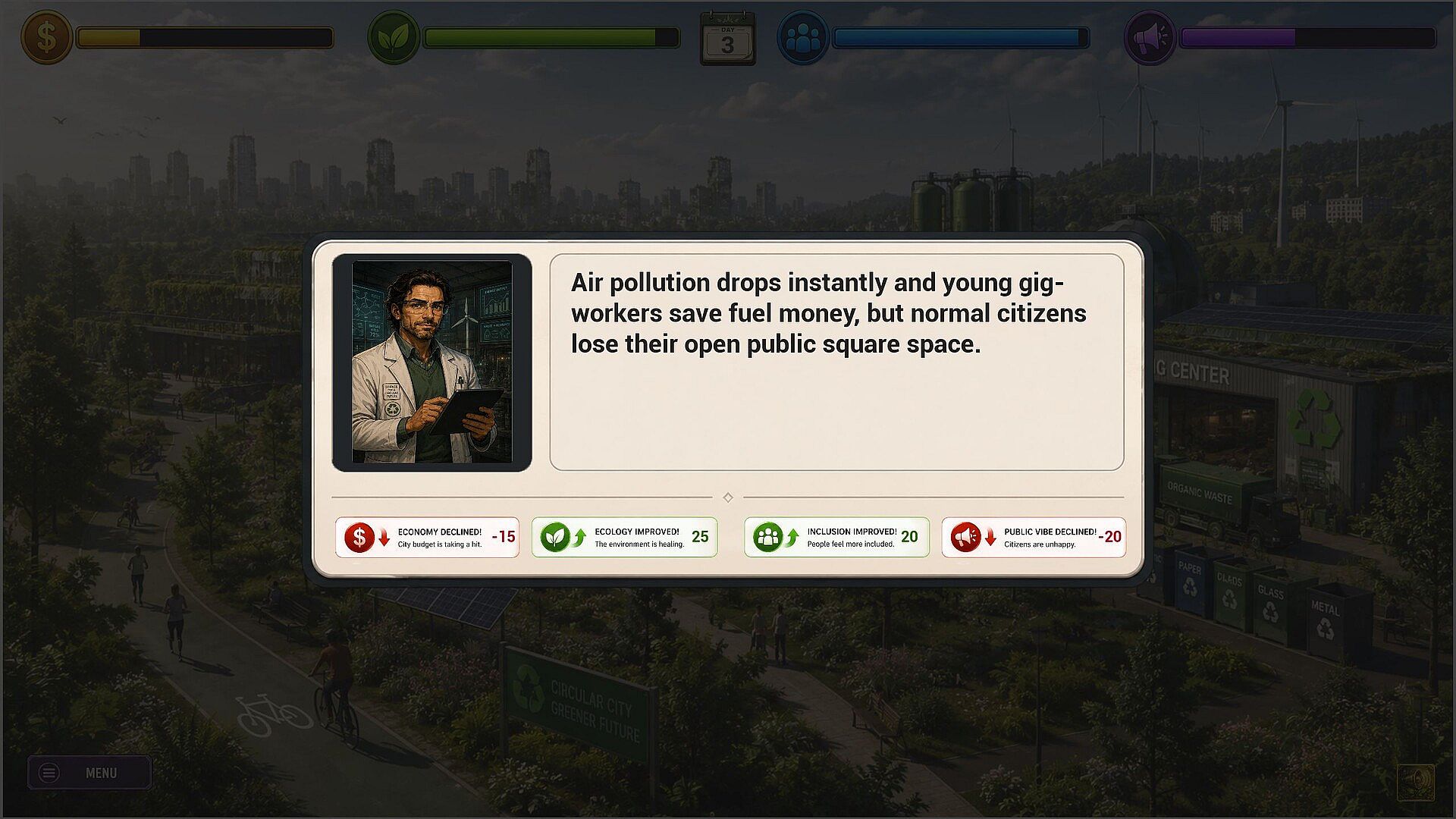
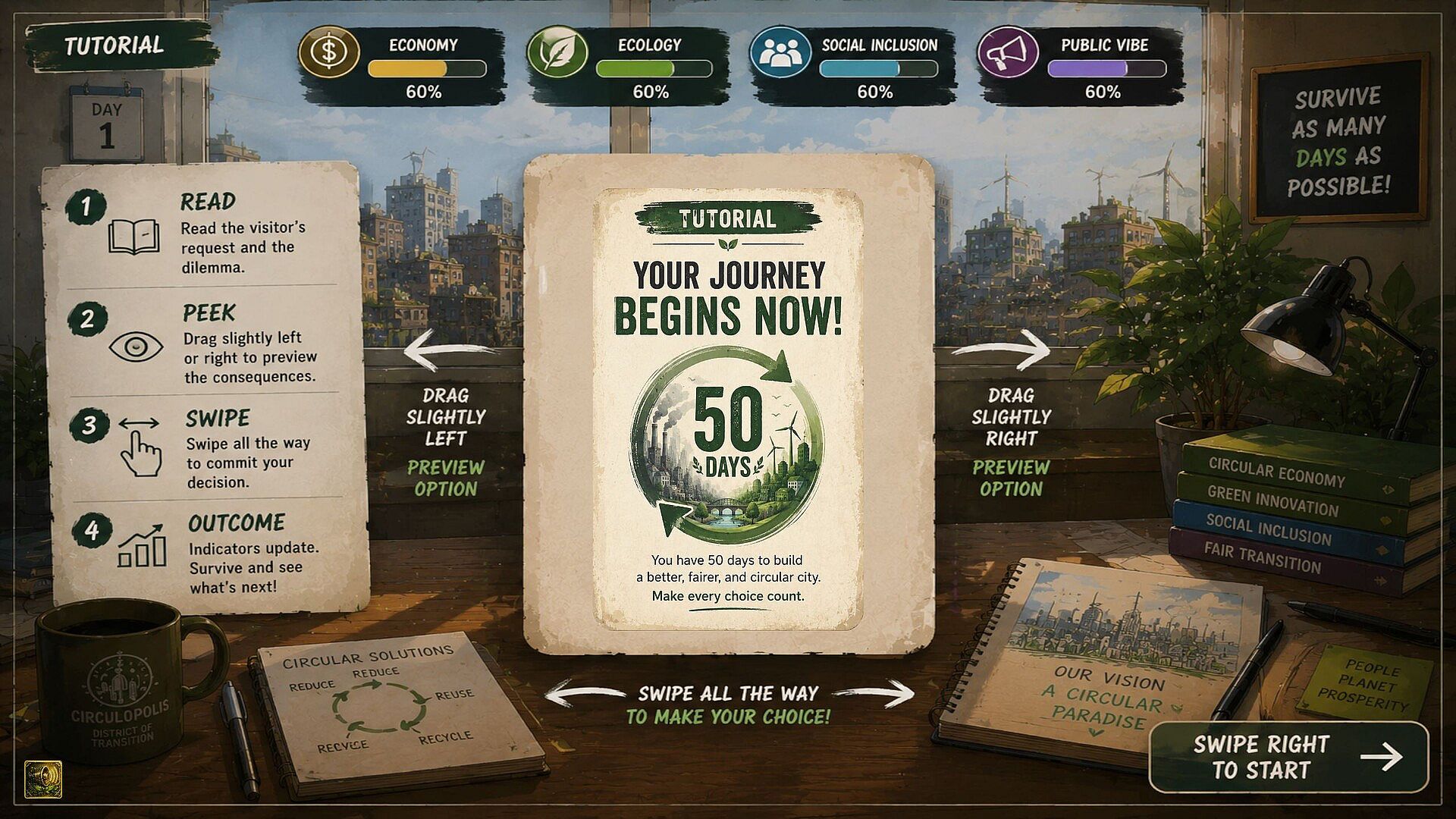
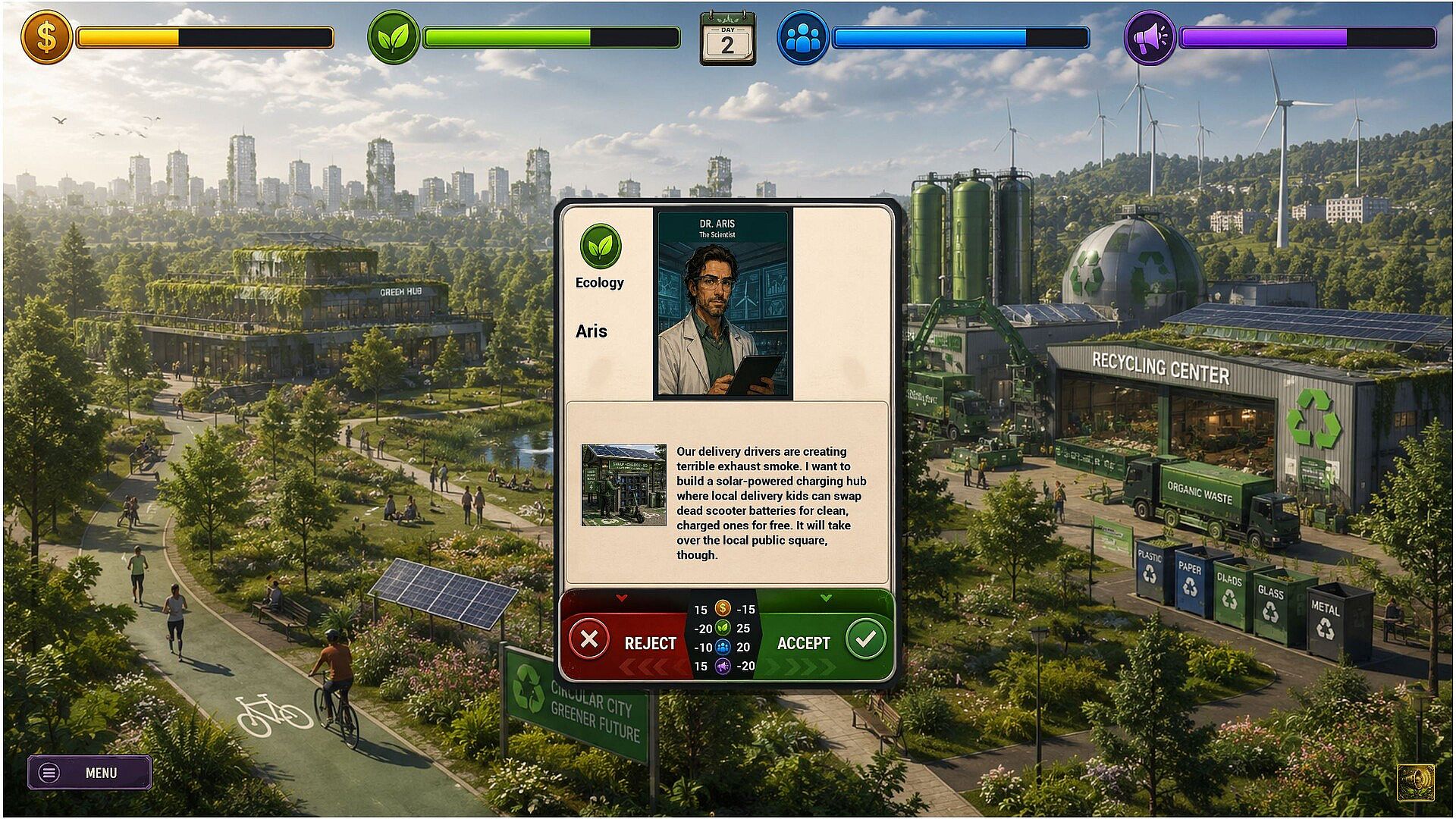
The core loop centers on daily dilemmas presented by visitors to the district. Players read each scenario, consider the competing interests involved, and swipe left or right to select a response. These decisions directly influence four tracked indicators that must remain stable for continued play. Economy tracks financial viability, Ecology measures waste reduction and environmental protection, Social Inclusion focuses on opportunities and equity, and Public Vibe reflects community trust. A single bold move in one area often creates trade-offs in others, forcing careful consideration of short-term gains against long-term district health. The simple swipe mechanic keeps sessions accessible while the underlying systems reward thoughtful planning across multiple days.
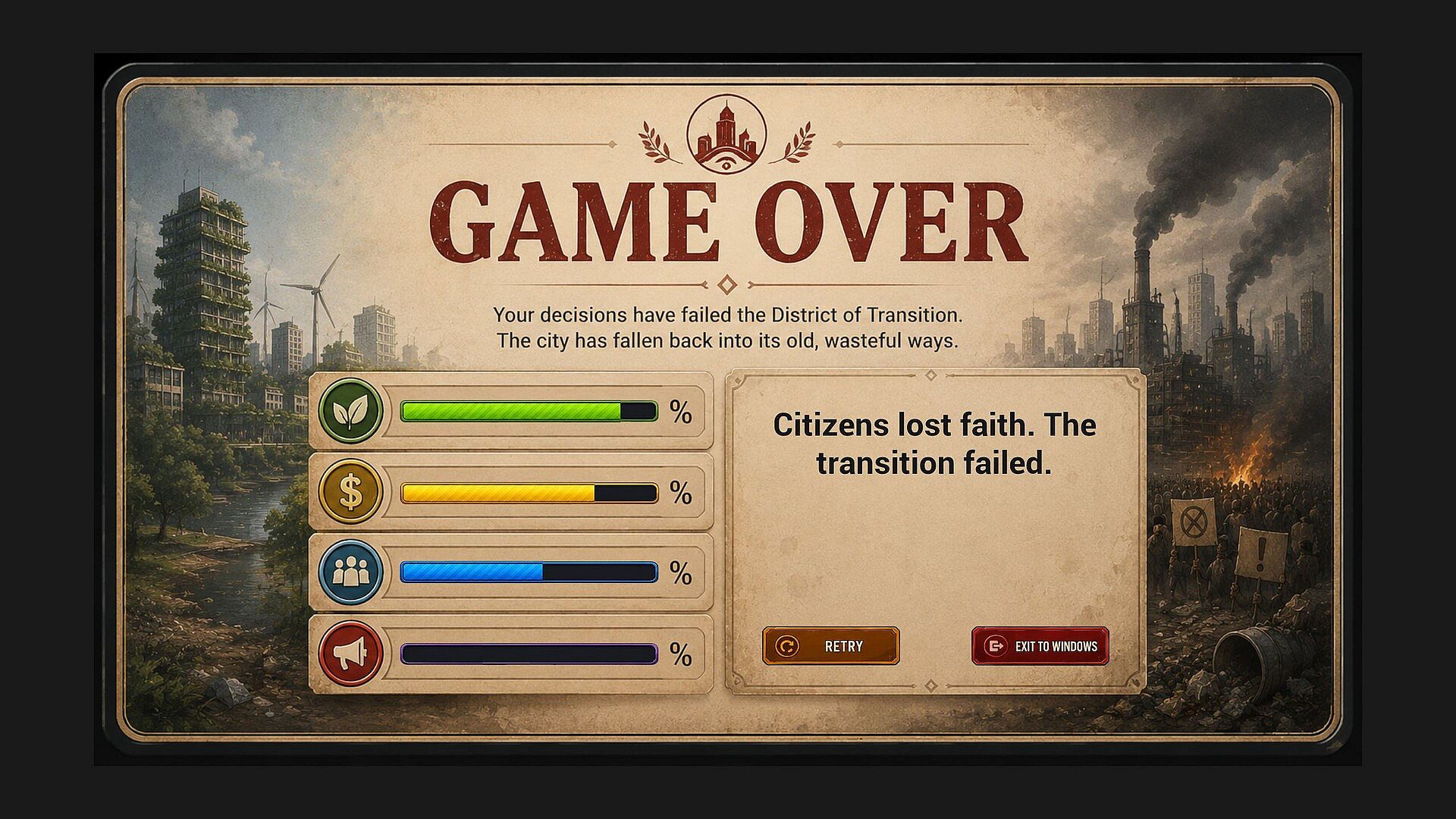
Recurring characters appear with consistent priorities that influence available options and outcomes. Lara pushes for rapid ecological shifts, Mr. Sterling emphasizes jobs and industrial stability, Milo explores creative reuse of discarded materials, Dr. Aris introduces technological solutions, and Sofia advocates for inclusive policies. Interactions with these figures add personality to the decision process without altering the fundamental balance mechanics. Progress comes through surviving successive challenges until one indicator drops too low, at which point the run ends.
Game Modes
The game operates through a single continuous survival format where the objective is to last as many days as possible while maintaining all four indicators above critical levels. Each new visitor brings a fresh dilemma drawn from circular economy themes, and choices accumulate effects that can steer the district toward greater sustainability milestones. There are no separate competitive or multiplayer variants described; the experience remains focused on personal decision sequences and score chasing through extended survival runs. Players aim to reach turning points that transform the Linear District into a Circular Paradise by keeping systems in equilibrium over time.
Key Mechanics and Systems
Four interconnected indicators form the central tension. Boosting one area through a policy choice can drain resources from another, creating natural risk-reward scenarios that mirror real-world transition challenges. The swipe interface streamlines input so attention stays on weighing consequences rather than complex controls. Dozens of dilemmas appear across runs, each tied to themes like waste reduction, job preservation, green innovation, and social equity. Character encounters recur with evolving context based on prior decisions, though the primary systems stay rooted in the four-indicator balance. Milestones serve as long-term markers of progress, rewarding consistent management rather than isolated high scores.
Who This Game Appeals To
Players interested in lightweight strategy and simulation experiences will find the swipe-driven format approachable for short sessions or longer attempts at high survival counts. The emphasis on trade-offs between economy, ecology, inclusion, and community support suits those who enjoy resource management without heavy micromanagement. Casual audiences can engage quickly, while those seeking deeper reflection on sustainability themes may appreciate how individual choices compound across days. Free-to-play availability on PC lowers the barrier for trying the core loop of dilemma resolution and indicator balancing.
Is It Worth Playing?
The described systems deliver a focused loop of meaningful decisions that directly affect district development. Survival runs test the ability to navigate conflicting priorities without any single indicator collapsing, which provides clear feedback and replay motivation through score improvement. The character-driven dilemmas add variety within the established framework, and the progression from linear to circular district offers tangible long-term goals. For players who value thoughtful choice-making in a casual strategy simulation setting, the game presents a coherent experience centered on sustainable transition management. Those drawn to free-to-play indie titles with simple controls and interconnected systems may find repeated runs engaging as they refine their approach to keeping all four indicators stable.